

What do you think?

A Sudden Dawn
This epic historical fiction novel opens with a young man named Sardili born of the Indian warrior caste in 507AD. Sardili realizes that he would rather seek enlightenment than follow his family's military legacy and sets out on a life-long quest for truth and wisdom. Sardili becomes the Buddhist monk Bodhidharma, known as Da Mo in China. He travels throughout India, brings Buddhism to China, and establishes the Shaolin Temple as the birthplace of Zen and the Martial Arts.
500 pages, Paperback
First published July 3, 2006
About the author
Goran Powell
12 books62 followersGoran is a writer who holds a 5th Dan in Goju Ryu Karate. He lives in London and teaches and trains at Daigaku Karate Kai, one of the UK's strongest clubs. In 2006 his first book Waking Dragons was an instant bestseller on Amazon's martial arts listing and is now in its second edition. In 2008 he co-produced the highly acclaimed Four Shades of Black written by his Sensei Gavin Mulholland.
Goran's first novel 'A Sudden Dawn' tells the story of Bodhidharma (Da Mo / Daruma) who founded Zen and Martial Arts in the Shaolin Temple. His second novel CHOJUN is historical fiction set on Okinawa around the time of WW2 and tells the story of young man training in karate with the renowned master Chojun Miyagi (the 'real' Mr Miyagi).
Goran’s martial arts experience began in 1972 when he took up Judo In 1984 he moved to London and trained in Shotokan karate, Kyokushinkai and Taekwondo before settling on Goju Ryu karate. In 2002 he completed the gruelling 30 Man Kumite, writing up the experience in his bestselling book Waking Dragons.
In 2007 he achieved the rank of 4th Dan after demonstating skill in modern and traditional weaponry. Goran still teaches and trains regularly and is assistant coach to the MMA team DKK Fighters.
Goran's first novel 'A Sudden Dawn' tells the story of Bodhidharma (Da Mo / Daruma) who founded Zen and Martial Arts in the Shaolin Temple. His second novel CHOJUN is historical fiction set on Okinawa around the time of WW2 and tells the story of young man training in karate with the renowned master Chojun Miyagi (the 'real' Mr Miyagi).
Goran’s martial arts experience began in 1972 when he took up Judo In 1984 he moved to London and trained in Shotokan karate, Kyokushinkai and Taekwondo before settling on Goju Ryu karate. In 2002 he completed the gruelling 30 Man Kumite, writing up the experience in his bestselling book Waking Dragons.
In 2007 he achieved the rank of 4th Dan after demonstating skill in modern and traditional weaponry. Goran still teaches and trains regularly and is assistant coach to the MMA team DKK Fighters.
Ratings & Reviews
Friends & Following
Create a free account to discover what your friends think of this book!
Community Reviews
Displaying 1 - 20 of 20 reviews

January 3, 2021
“Ученията са само мост към истината, не самата истина.”
Интригуващо пътешествие от царствата на Южна Индия през 6-ти век, през ледената красота на Хималаите и разпенените бързеи на река Яндзъ, чак до портите на Шаолин.
Един необичаен индийски монах, поел по пътя на Буда, извървява неизброимо количество километри път, за да търси и проповядва своето тълкуване на Пътя. Включително, че силният ум иска и силно тяло, а пътят на бойните изкуства е също и път на просветлението.
Историческият фон не е добре разгърнат, главните герои звучат неестествено и съвременно, но пък приключения има доста.
2,5 звезди
Интригуващо пътешествие от царствата на Южна Индия през 6-ти век, през ледената красота на Хималаите и разпенените бързеи на река Яндзъ, чак до портите на Шаолин.
Един необичаен индийски монах, поел по пътя на Буда, извървява неизброимо количество километри път, за да търси и проповядва своето тълкуване на Пътя. Включително, че силният ум иска и силно тяло, а пътят на бойните изкуства е също и път на просветлението.
Историческият фон не е добре разгърнат, главните герои звучат неестествено и съвременно, но пък приключения има доста.
2,5 звезди
October 4, 2010
A Sudden Dawn is a work of historical fiction, tracing the legendary path of Bodhidharma, a Buddhist master from India, as he traveled to China and brought Zen and the martial arts to the Shaolin Temple.
Powell makes for some exquisite characterizations. Bodhidharma comes across as a like-able, even charismatic, monk, who gives simple, common sense advice to anyone who asks for it... Even an emperor. Kuan/Ko is a sympathetic guy who always seems to get stuck with the short straw. We meet Liang half-way through the book, and even as a maid in the royal palace, she is a character to love almost instantly.
The only thing stronger than his characters, are his action scenes. As a martial artist, the author is familiar with hand-to-hand combat, and it shows. Fans of R.A. Salvatore may find this kind of writing welcome, and familiar.
A Sudden Dawn's five hundred pages are used to the fullest, keeping the plot moving at a brisk pace. If I had only one wish, it would be for more description of the exotic (to me) scenery of Bodhidharma's journey, but this is a minor concern, and didn't stop me from plowing through it in three days. The story has a little something for everyone: epic scale, martial arts action, romance, and adventure.
Not recommended for children/young teens, due to explicit depictions of sex, sexual harassment, and graphic violence.
Powell makes for some exquisite characterizations. Bodhidharma comes across as a like-able, even charismatic, monk, who gives simple, common sense advice to anyone who asks for it... Even an emperor. Kuan/Ko is a sympathetic guy who always seems to get stuck with the short straw. We meet Liang half-way through the book, and even as a maid in the royal palace, she is a character to love almost instantly.
The only thing stronger than his characters, are his action scenes. As a martial artist, the author is familiar with hand-to-hand combat, and it shows. Fans of R.A. Salvatore may find this kind of writing welcome, and familiar.
A Sudden Dawn's five hundred pages are used to the fullest, keeping the plot moving at a brisk pace. If I had only one wish, it would be for more description of the exotic (to me) scenery of Bodhidharma's journey, but this is a minor concern, and didn't stop me from plowing through it in three days. The story has a little something for everyone: epic scale, martial arts action, romance, and adventure.
Not recommended for children/young teens, due to explicit depictions of sex, sexual harassment, and graphic violence.

September 23, 2010
A Sudden Dawn drew me right into the story of Bodhidharma and keep me entranced with his long trek into China. Rich and intriguing, it sets the Way at the forefront of the story and the interesting people that paths interconnect along the journey. Well written with an eye towards not only the history and myth but the martial arts angle, definitely kept me interested and it's earned a place on my shelf. This was a freebie through goodreads.

March 30, 2019
Това е книга за пътешествието от Индия до Китай на Бо Да Мо (Бодхидхарма), за който се знае малко и авторът си е поиграл с легендите, за него той е индиец, макар в някой текстове да е описан ”като синеок дявол”може да е бил от някое хунско племе или даже наш далечен роднина (иска ми се), но тук като родината на будизма е Индия и е логична етническата му принадлежност на южен (огромен) индиец. А все пак кой е той? - http://tebeshirche.blogspot.com/2019/....

February 18, 2017
Enjoyed it from page 1 to the very end. Awesome story, great writing.

September 13, 2010
I enjoyed 'A Sudden Dawn' from start to finish. In the book Powell creates a fictionalized interpretation of the Buddhist monk Da Mo's life. The story explains why and how Da Mo became a monk, the difficulties he experienced during his road to enlightenment, and the people he met and trained along his journey. 'A Sudden Dawn' introduces the reader to a simplistic early history of the Shaolin Temple and the Zen philosophy, it also gives readers who know very little about the Buddhist religion a bit of insight. The book is so well written that the reader does not even realize they are picking up aspects of history and religion along the way, and I was almost disappointed when I got to the end of the book. I wanted to keep reading to see how the Shaolin Temple continued to develop and I did want an answer to 'where did Da Mo move on to...even if there isn't any real answer! The book cover suggests that the book is perfect for the martial arts enthusiast, and it probably is. However, I am not a martial arts enthusiast and I also really enjoyed the story line, so don't let that promotional statement scare you. I can't wait until some of my friends get a chance to read 'A Sudden Dawn' so that we can discuss the story.

January 6, 2013
Някъде из представянията на „Внезапна зора”, прочетох, че е сравнявана с „Шогун”. Това е твърде смело твърдение, предвид мащаба и доста по-задълбоченото проучване на Джеймс Клавел за неговия роман. Но въпреки това Горан Пауъл е успял да пресъздаде историята на Бодхидхарма по един увлекателен и интригуващ начин. В допълнение, стилът му е лек и приятен за четене и със сигурност ще се хареса не само на почитателите на бойните изкуства, но и на всички любители на исторически романи. Има от всичко по-малко, приключения, пътувания в далечни страни, малко любов, хумор и източна философия. Накратко, не подценявайте книгата, само заради заглавието и сюжета. Да, ще се хареса предимно на хора, занимаващи се и интересуващи се от бойни изкуства, но ще допадне и на всички почитатели на Изтока и историческите романи.
http://bookcompass.wordpress.com/2013...
http://bookcompass.wordpress.com/2013...
March 9, 2012
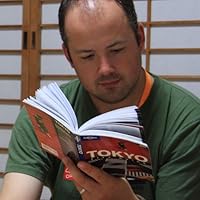
The story of a simple Buddhist priest travelling from India to China in the 5th Century doesn’t sound like something that would make for an interesting novel, but the after effects of this solitary man’s journey still reverberate today. In all parts of the far east, the name Bodhidharma is still very well known. In Japan, for example, little girls have Bodhidharma key-chains and all sorts of other cultural influences and footprints can be found. And not only in the geek fringes or the religious halls, no his is a visage often seen in paintings; most of the time shown as an old priest with a particularly fierce expression of concentration, and it is for this ability that he was most highly prized. Bodhidharma didn’t bring Buddhism to China or Japan, but he started a school of Buddhist thought that spoke to something deep inside the Eastern people that heard it. Spoke to their marrow with a simple and unselfish message of compassion, dedication and submission.
This effect changed them forever.
Can anyone claim to “know” the east without knowing the message of this man? His sandals touched the ground lightly, but his teachings thundered across half the world like a spreading earthquake. This was the effect of the Chan school of Buddhism, known in Japan and in the west as Zen.
As with many classical figures from Buddhism, and indeed many other religions, Bodhidharma’s journey has a few undisputable facts that have been the skeletal bones around which many tall tales have been spun. Some tell of his almost magical ability to stare, even to the point of literally “drilling” into rock with his eyes. Others say that he cut off his own eyelids, so that he couldn’t fall asleep when meditating (something that gets you a whack around the head with the stick in Zen training). All these tales have been worn smooth like pebbles on a beach and over the last thousand years have come to a “standard version”. That Goran Powell diverts from the standard version in A Sudden Dawn is not relevant at all. His tale is the mythical idea that Bodhidharma not only brought Chan to China, but also brought Kung Fu along with it. That Kung Fu descended from India is almost too obvious to be true and many have seen traces of Yoga in the Chinese martial arts. The idea is that Bodhidharma was born into a martial class in India, which became knowledge he carried with him. Knowledge that he taught and that he used. However, such origins are hardly conclusive, as it is worth noting that the Buddha himself came from a martial class (again in the “standard version”), and he certainly never raised his staff in anger. Anyway and regardless, it is a very enticing idea and the martial reputation of the Song Buddhist monasteries such as Shaolin means that there must be some explanation to how the knowledge travelled from India. That is unless, like the calculus, it was discovered in two places at the same time. I am quite happy to imagine that it was Bodhidharma who brought it, whatever the real history.
The other “deviation” from the standard version is that he walked. Common lore says that he caught a boat, but this is mainly due to the belief that walking into China from India was impossible. Nothing could be further from the truth. The walk to Tibet from Himachal Pradesh is not for the unprepared and unfit, but it isn’t impossible. I have been to the starting point and spoken to guides who say it is not only possible, but that many amazing sights and temples await the brave. I plan to do it 9 years from now (Chinese government willing.) Bodhidharma could certainly have done it if he picked his time of year.
In many respects this novel is in the classic old-fashioned genre of Historical Action Adventure. Whereas very modern writing is obsessively focussed on the details of exactly what happened, here we have an attempt to tell us why. Why did Bodhidharma tell the Emperor of China that he had achieved nothing by building hundreds of Buddhist temples? Why did he sit in a cave staring at a wall for months? The answers that Goran finds to these questions illuminates some of the fundamental truths of Zen and the genre this novel belongs to is the same as that of Siddhartha by Hesse and Musashi by Yoshikawa. It is a genre that is fascinated with the East, see’s it through a certain idealised point of view and gazes at it like one would gaze at a beautiful flower. It is somewhat similar to Shogun, in that its idealised depiction of the characters and situations follows certain tropes. So here Bodhidharma is a giant of a man, able to amaze all around him very quickly. He has a diamond-hard stare, a firm staff hand, a kind heart, and knows his Buddha Nature like no one has since the great B himself. He is also a folk hero and protector of the weak, someone who is humble (a priest) but also someone able to stand up and be counted amongst the highest in the land (and to back-chat the Emperor of China!). The reason that Goran gets away with this is that by all known accounts Bodhidharma was exactly like this.
I loved this book. I found that it spoke to me personally in many ways. Firstly, the action is well written and clearly from someone who knows the martial arts inside and out. I have trained with and under Goran in Goju Karate and I can attest that he has a very high level of skill with the Bo Staff, which is the “weapon” wielded by Bodhidharma in the novel. The fighting depictions raised my pulse level and I found myself imagining the fight in my mind. And this wasn’t the cold style of combat writing, again more modern, that permeates the works of writers such as Iain M Banks and William Gibson. Goran brings the emotionality and desperation of combat into the writing enabling an intimate connection. These fight scenes bare this emotion out on the page and the reader is taken along with it. An effect similar to watching Star Wars for the first time and something of a rollercoaster ride. This feeling is also there with the other emotional scenes. There are a number of sex scenes in the book and they are handled well by not being over written and too involved. They also, mostly, manage to stay away from the purple overused prose of sex writing (again something that terrifies modern authors; because they fear the winning of a “bad sex award”). Goran handles the fact that we know Bodhidharma makes it to Song, by putting those he travels with under the hardest pressure and in danger and although I guessed the end scene I was still deeply involved with its conclusion.
The second way it touched me was that, as mentioned above, my wife and I have almost exactly covered the journey made by Bodhidharma in the novel. We have stood in the mountains of Northern India looking at the mountains of Tibet in the distance, we have stood on the other side (we flew over) in the Tibetan city of Shangri-La where I drank Yak Butter Tea (its horrible!). We have walked Tiger Leaping Gorge . We have seen the Buddhist treasures of the Emperors (now in the Forbidden City in Beijing). We have even been to a great Chinese martial-arts mountain (although, being Daoists, we went to Wudang Shan rather than Song). Reading about Bodhidharma’s journey and realising that Cesca and I, unconsciously, echo’d it was a great pleasure and brought memories of China flooding back to me – what an amazing place and people! I can’t wait till I get to that part in the writing on this site (it’s not long now before the Buddhism parts of our journey start, with a visit to the Bodhi Tree in northern India.) This definitely increased my enjoyment of the book and made me long to return there. If you have an urge to visit the far east, this book may well be your tipping point!
Finally, there is Zen itself. Zen is a jewel; a world treasure. It is incredible. The happiness that comes from a Zen Satori will stick with you forever, touch you deeply and change you in many ways. However, obtaining a satori is one of the hardest things it is possible to do, because you can only do it by not trying, by breaking down barriers in your mind, in your life and accepting a big leap. While Buddhism in general demands dedication and practice, learning and the gaining of wisdom, Zen cuts through all this with a transmission outside the scriptures. Its formation comes from the famous sermon given by the Buddha where he stared a flower and said nothing. However some Buddhist sects claim that this never happened. Whether they are right or wrong is not relevant as the Buddha definitely said, “Buddhism is like a raft across a river. Once to the other side, you no long need the raft.” You can’t argue with that! Goran handles the Zen parts of the book exceedingly well. Bodhidharma’s own enlightenment moment is swift and not drawn out – which to my mind is correct and just as it should be. Zen is romantically un-romantic. No great peal of thunder. No Vangelis music and no Matrix slow-mo. Just a switch in your head. Bodhidharma’s understanding of Zen is driven by strife and is grasped only after going through traumatic experiences, and this shows that Goran too clearly understands Zen. In a book where Zen is the “main” character, exemplified by Bodhidharma, this is the vital element in the book’s literary success.
I loved it and feel it would read well for people interested in Bodhidharma, Buddhism, historical fiction, martial arts, the far east or even just a good read. I think, you will surely agree, that this is almost everyone.
This effect changed them forever.
Can anyone claim to “know” the east without knowing the message of this man? His sandals touched the ground lightly, but his teachings thundered across half the world like a spreading earthquake. This was the effect of the Chan school of Buddhism, known in Japan and in the west as Zen.
As with many classical figures from Buddhism, and indeed many other religions, Bodhidharma’s journey has a few undisputable facts that have been the skeletal bones around which many tall tales have been spun. Some tell of his almost magical ability to stare, even to the point of literally “drilling” into rock with his eyes. Others say that he cut off his own eyelids, so that he couldn’t fall asleep when meditating (something that gets you a whack around the head with the stick in Zen training). All these tales have been worn smooth like pebbles on a beach and over the last thousand years have come to a “standard version”. That Goran Powell diverts from the standard version in A Sudden Dawn is not relevant at all. His tale is the mythical idea that Bodhidharma not only brought Chan to China, but also brought Kung Fu along with it. That Kung Fu descended from India is almost too obvious to be true and many have seen traces of Yoga in the Chinese martial arts. The idea is that Bodhidharma was born into a martial class in India, which became knowledge he carried with him. Knowledge that he taught and that he used. However, such origins are hardly conclusive, as it is worth noting that the Buddha himself came from a martial class (again in the “standard version”), and he certainly never raised his staff in anger. Anyway and regardless, it is a very enticing idea and the martial reputation of the Song Buddhist monasteries such as Shaolin means that there must be some explanation to how the knowledge travelled from India. That is unless, like the calculus, it was discovered in two places at the same time. I am quite happy to imagine that it was Bodhidharma who brought it, whatever the real history.
The other “deviation” from the standard version is that he walked. Common lore says that he caught a boat, but this is mainly due to the belief that walking into China from India was impossible. Nothing could be further from the truth. The walk to Tibet from Himachal Pradesh is not for the unprepared and unfit, but it isn’t impossible. I have been to the starting point and spoken to guides who say it is not only possible, but that many amazing sights and temples await the brave. I plan to do it 9 years from now (Chinese government willing.) Bodhidharma could certainly have done it if he picked his time of year.
In many respects this novel is in the classic old-fashioned genre of Historical Action Adventure. Whereas very modern writing is obsessively focussed on the details of exactly what happened, here we have an attempt to tell us why. Why did Bodhidharma tell the Emperor of China that he had achieved nothing by building hundreds of Buddhist temples? Why did he sit in a cave staring at a wall for months? The answers that Goran finds to these questions illuminates some of the fundamental truths of Zen and the genre this novel belongs to is the same as that of Siddhartha by Hesse and Musashi by Yoshikawa. It is a genre that is fascinated with the East, see’s it through a certain idealised point of view and gazes at it like one would gaze at a beautiful flower. It is somewhat similar to Shogun, in that its idealised depiction of the characters and situations follows certain tropes. So here Bodhidharma is a giant of a man, able to amaze all around him very quickly. He has a diamond-hard stare, a firm staff hand, a kind heart, and knows his Buddha Nature like no one has since the great B himself. He is also a folk hero and protector of the weak, someone who is humble (a priest) but also someone able to stand up and be counted amongst the highest in the land (and to back-chat the Emperor of China!). The reason that Goran gets away with this is that by all known accounts Bodhidharma was exactly like this.
I loved this book. I found that it spoke to me personally in many ways. Firstly, the action is well written and clearly from someone who knows the martial arts inside and out. I have trained with and under Goran in Goju Karate and I can attest that he has a very high level of skill with the Bo Staff, which is the “weapon” wielded by Bodhidharma in the novel. The fighting depictions raised my pulse level and I found myself imagining the fight in my mind. And this wasn’t the cold style of combat writing, again more modern, that permeates the works of writers such as Iain M Banks and William Gibson. Goran brings the emotionality and desperation of combat into the writing enabling an intimate connection. These fight scenes bare this emotion out on the page and the reader is taken along with it. An effect similar to watching Star Wars for the first time and something of a rollercoaster ride. This feeling is also there with the other emotional scenes. There are a number of sex scenes in the book and they are handled well by not being over written and too involved. They also, mostly, manage to stay away from the purple overused prose of sex writing (again something that terrifies modern authors; because they fear the winning of a “bad sex award”). Goran handles the fact that we know Bodhidharma makes it to Song, by putting those he travels with under the hardest pressure and in danger and although I guessed the end scene I was still deeply involved with its conclusion.
The second way it touched me was that, as mentioned above, my wife and I have almost exactly covered the journey made by Bodhidharma in the novel. We have stood in the mountains of Northern India looking at the mountains of Tibet in the distance, we have stood on the other side (we flew over) in the Tibetan city of Shangri-La where I drank Yak Butter Tea (its horrible!). We have walked Tiger Leaping Gorge . We have seen the Buddhist treasures of the Emperors (now in the Forbidden City in Beijing). We have even been to a great Chinese martial-arts mountain (although, being Daoists, we went to Wudang Shan rather than Song). Reading about Bodhidharma’s journey and realising that Cesca and I, unconsciously, echo’d it was a great pleasure and brought memories of China flooding back to me – what an amazing place and people! I can’t wait till I get to that part in the writing on this site (it’s not long now before the Buddhism parts of our journey start, with a visit to the Bodhi Tree in northern India.) This definitely increased my enjoyment of the book and made me long to return there. If you have an urge to visit the far east, this book may well be your tipping point!
Finally, there is Zen itself. Zen is a jewel; a world treasure. It is incredible. The happiness that comes from a Zen Satori will stick with you forever, touch you deeply and change you in many ways. However, obtaining a satori is one of the hardest things it is possible to do, because you can only do it by not trying, by breaking down barriers in your mind, in your life and accepting a big leap. While Buddhism in general demands dedication and practice, learning and the gaining of wisdom, Zen cuts through all this with a transmission outside the scriptures. Its formation comes from the famous sermon given by the Buddha where he stared a flower and said nothing. However some Buddhist sects claim that this never happened. Whether they are right or wrong is not relevant as the Buddha definitely said, “Buddhism is like a raft across a river. Once to the other side, you no long need the raft.” You can’t argue with that! Goran handles the Zen parts of the book exceedingly well. Bodhidharma’s own enlightenment moment is swift and not drawn out – which to my mind is correct and just as it should be. Zen is romantically un-romantic. No great peal of thunder. No Vangelis music and no Matrix slow-mo. Just a switch in your head. Bodhidharma’s understanding of Zen is driven by strife and is grasped only after going through traumatic experiences, and this shows that Goran too clearly understands Zen. In a book where Zen is the “main” character, exemplified by Bodhidharma, this is the vital element in the book’s literary success.
I loved it and feel it would read well for people interested in Bodhidharma, Buddhism, historical fiction, martial arts, the far east or even just a good read. I think, you will surely agree, that this is almost everyone.

June 14, 2018
This book has been on my list to read for quite a while. None of the local libraries have stocked it in any of the cities I have lived in the last number of years so I finally bought it on Amazon.
It did not disappoint. From the beginning the author pulls you in to the world of each character and immerses the reader in their emotions bringing everything to life.
It satisfied in bucket loads the "martial arts" reason that I wanted to read the story. The training sequences, the discipline, the introduction to the Way were woven wonderfully in to everything.
My only disappointment was the ending...it happened so fast. It built up and built up and then in a few pages it was all done. As I got closer and closer to the end, with so little pages left - I presumed the meeting of the Captain and the Monks would be a whole second book.
Regardless, this is a wonderful read.
It did not disappoint. From the beginning the author pulls you in to the world of each character and immerses the reader in their emotions bringing everything to life.
It satisfied in bucket loads the "martial arts" reason that I wanted to read the story. The training sequences, the discipline, the introduction to the Way were woven wonderfully in to everything.
My only disappointment was the ending...it happened so fast. It built up and built up and then in a few pages it was all done. As I got closer and closer to the end, with so little pages left - I presumed the meeting of the Captain and the Monks would be a whole second book.
Regardless, this is a wonderful read.
October 26, 2025
A Sudden Dawn pulled me in right from the start with its retelling of Bodhidharma’s long journey from India to China. Goran Powell does a great job blending history, myth, and martial arts into an adventure that’s both exciting and thought-provoking. The landscapes are beautifully described and make the journey feel real.
It’s not as heavy on historical detail as something like Shogun, but that’s not a bad thing. What stands out here is the spirit of the story—the “why” behind Bodhidharma’s path. Powell’s answers give real insight into Zen philosophy without ever feeling preachy.
There’s a bit of everything: action, travel, humor, a touch of love, and a lot of heart. If you enjoy stories like Musashi or Shogun, or if you’re just interested in Buddhism, martial arts, or Eastern history, it’s worth the read.
It’s not as heavy on historical detail as something like Shogun, but that’s not a bad thing. What stands out here is the spirit of the story—the “why” behind Bodhidharma’s path. Powell’s answers give real insight into Zen philosophy without ever feeling preachy.
There’s a bit of everything: action, travel, humor, a touch of love, and a lot of heart. If you enjoy stories like Musashi or Shogun, or if you’re just interested in Buddhism, martial arts, or Eastern history, it’s worth the read.
January 19, 2010
The life of Bodhidharma has given rise to countless myths and legends, ‘A Sudden Dawn’ is one version of his story. Born to the warrior caste, Bodhidharma gives up a promising future as a soldier to become a monk and seek enlightenment. After many years of searching in vain, he finally becomes enlightened in a single moment.
He accepts a mission to venture into China and spread the Buddha's wisdom. Crossing the Himalaya, he travels down the Yangtze river, where he meets an unlikely disciple, a young Chinese fugitive named Ko.
Together they travel across China to the Emperor’s palace in Nanjing and beyond to a little temple in the mountains called Shaolin. On the journey, Ko learns Bodhidharma’s unique ‘Way’ of spirituality and martial arts.
But there are powerful forces at work to destroy the Indian master, and Ko’s violent past catches up with him outside the temple gates, where a deadly reckoning takes place.
'A Sudden Dawn' is due for publication in June 2010 by YMAA Fiction.
He accepts a mission to venture into China and spread the Buddha's wisdom. Crossing the Himalaya, he travels down the Yangtze river, where he meets an unlikely disciple, a young Chinese fugitive named Ko.
Together they travel across China to the Emperor’s palace in Nanjing and beyond to a little temple in the mountains called Shaolin. On the journey, Ko learns Bodhidharma’s unique ‘Way’ of spirituality and martial arts.
But there are powerful forces at work to destroy the Indian master, and Ko’s violent past catches up with him outside the temple gates, where a deadly reckoning takes place.
'A Sudden Dawn' is due for publication in June 2010 by YMAA Fiction.
November 14, 2011
A Sudden Dawn has everything. It's an exciting story that follows a Buddhist monk from India to 6th-century China, where he starts the Shaolin monastery that we know today. The tale is intertwined with relevant historical facts, and real people and places. There's lots of fast-paced action, of course, since it's a martial arts novel. However that's balanced with spirituality that's amazingly believable and well-explained. The book incorporates fascinating historical themes that I didn't expect in a martial arts book - the silk trade, the origins of tea, the expansion of Buddhism.
I rarely read fiction books, and I couldn't put this down.
I rarely read fiction books, and I couldn't put this down.

April 18, 2013
A sudden dawn is easily one of the greatest pieces of mythical fiction I have ever read. I thoroughly enjoyed every single page. There were no low points, and the story captivated me from the opening line right to the last line, so much so that i was still looking for more to read even when I knew the story was finished.

December 5, 2013
the book is just powerful with such relatable and surprising tale of man that sadly his own people doesnt know but is cherished by the people miles apart from his own birth land...goran powell has done an amazing job in telling his story in a ficticious manner. his research efforts are well seen in the narration
August 7, 2015
Calling this simply a Martial Arts novel is in my opinion a slight disservice, the good story telling, gentle pace and beautiful prose speaks volumes and several messages are being oh so subtlety conveyed at the same time as the monk's journey unfolds.. Well worth a read.

May 10, 2010
I loved it.
Really was a great read and the story was so descriptive itmade me feel as if I was taking the journey with the charaters.
Really was a great read and the story was so descriptive itmade me feel as if I was taking the journey with the charaters.

Read
November 14, 2011Excellent read, I can't wait to read his forthcoming Miyagi book.
February 28, 2012
Excellent book for those Martial Artists that aspire to get something more than just the physical self-improvements from their training.

January 25, 2013
If you practice a martial art that ends in a "Do" you'll find yourself nodding along with the philosophy in the book.

February 8, 2019

THE GOOD: Promises you a tale of historical drama loosely based around the real-life events of the founder of Zen meditation and the emergence of Shaolin temple onto the world stage.
THE BAD: Written somehwat like a YA novel, that is to say, at time shows that the author is lacking in experience and not necesarily vivid prose but complex characters and plot.
THE UGLY: The story fails to contain enough dramatic moments and conflict because you can tell there are lessons and morals behind it all. You can see them coming a mile away. This is the biggest reason why the book failed to keep my interest because the story and adventure itself was full of potential.
Displaying 1 - 20 of 20 reviews