

What do you think?

Der Mann im Eis. Die Ötztaler Mumie verrät die Geheimnisse der Steinzeit
Book by Spindler, Konrad
351 pages, Hardcover
First published January 1, 1993
Ratings & Reviews
Friends & Following
Create a free account to discover what your friends think of this book!
Community Reviews
Displaying 1 - 30 of 55 reviews

May 12, 2024
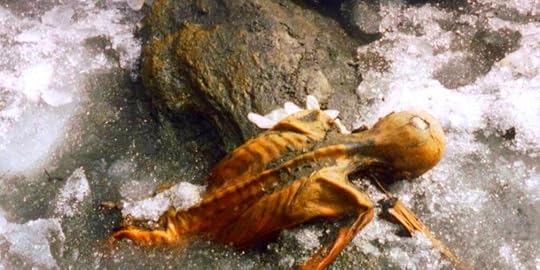
Five thousand years ago, in the Late Neolithic period, a man died in the mountains that eventually would be known as the Ötztal Alps, mummified in the glacier for millennia while in the world around civilizations rose and fell, Egyptian pyramids were built and Stonehenge erected. We know now that he was killed -shot by an arrow and bled to death, but at least he enjoyed a full meal beforehand. He was in his mid-forties, short and thin, and likely lactose intolerant, had no wisdom teeth, and was tattooed.
None of this was suspected when a body was found partially above the ice in the Alps on the border between Austria and Italy in September 1991 by a pair of hikers. A few decades to at most a few centuries was the guess of those trying to free the body from the ice, and only after the release from the ice the estimate was made by an archaeologist Konrad Spindler that the Iceman - the “Hauslabjoch man” in Spindler’s account and Ötzi to most eventually - was at least 4 millennia old, the estimate eventually revised to about 5300 years.
The book by Konrad Spindler, published in 1993, lacks a lot of information about Ötzi that time and modern technology allowed us to glimpse later, but it is still a very worthy read for the Iceman enthusiasts like yours truly. What it shows is the excitement of the first few days and months of discovery and realization of the immense age of the Iceman, the challenges of the body recovery frozen into the ice during unfriendly weather, the huge task of piecing together the remnants of Ötzi’s belongings and figuring out what was what after five millennia in the ice. There is much more known about the Iceman now, and a lot of Spindler’s conclusions and theories do not hold up now with more information and technology and understanding of glacier archeology, but as a wonderful account of the first days and months of discovery and the efforts required to at least partially uncover Ötzi’s story from the sheer enormousness of time passed are deserving of quite a bit of respect.
I had a great time reading it, and my fascination with everything Ötzi has been rekindled.
4 stars.
————
(Oh, and thanks to Justin for showing me an aisle in the library (and not the “isle” 😅) where hidden speakers create unexpected page-turning sounds - an isle that I managed to find again and unexpectedly saw this book there, the first book my eyes landed on. It’s like Ötzi was saying hello across the vastness of time.)
None of this was suspected when a body was found partially above the ice in the Alps on the border between Austria and Italy in September 1991 by a pair of hikers. A few decades to at most a few centuries was the guess of those trying to free the body from the ice, and only after the release from the ice the estimate was made by an archaeologist Konrad Spindler that the Iceman - the “Hauslabjoch man” in Spindler’s account and Ötzi to most eventually - was at least 4 millennia old, the estimate eventually revised to about 5300 years.
The book by Konrad Spindler, published in 1993, lacks a lot of information about Ötzi that time and modern technology allowed us to glimpse later, but it is still a very worthy read for the Iceman enthusiasts like yours truly. What it shows is the excitement of the first few days and months of discovery and realization of the immense age of the Iceman, the challenges of the body recovery frozen into the ice during unfriendly weather, the huge task of piecing together the remnants of Ötzi’s belongings and figuring out what was what after five millennia in the ice. There is much more known about the Iceman now, and a lot of Spindler’s conclusions and theories do not hold up now with more information and technology and understanding of glacier archeology, but as a wonderful account of the first days and months of discovery and the efforts required to at least partially uncover Ötzi’s story from the sheer enormousness of time passed are deserving of quite a bit of respect.
I had a great time reading it, and my fascination with everything Ötzi has been rekindled.
4 stars.
————
(Oh, and thanks to Justin for showing me an aisle in the library (and not the “isle” 😅) where hidden speakers create unexpected page-turning sounds - an isle that I managed to find again and unexpectedly saw this book there, the first book my eyes landed on. It’s like Ötzi was saying hello across the vastness of time.)

July 17, 2022
Around 5000 years ago a man lay down to rest in a gulley in the high Alps. He was badly injured and did not recover. By a freak of nature he was covered in snow before scavenging animals could get to him and then entombed in ice until he emerged from the retreating glacier in 1991.
This book is by an insider to the rescue of the man, named Otzi by the papers, and the subsequent scientific analysis of the body and its clothes and equipment.
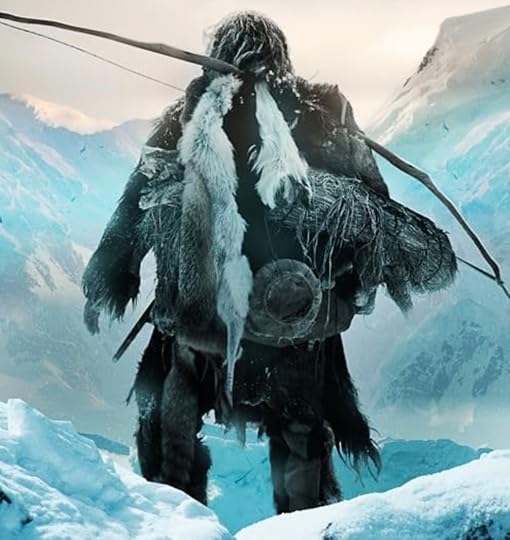
What they found was astonishing. The man had access to a range of technologies and adaptations that suited his surroundings perfectly. He had winter clothing, carried fire and had a range of weapons and tools that would meet most eventualities. Sadly it appears there was one last event that was too much for him, as he had a recent arrow injury that did for him (NB: not know at the time that the book was written).
Science has been able to determine what Otzi had for his last meal and where he lived in the months and years before he died. It seems that he was an Italian, before Italy existed.
The most impressive artifact found with Otzi was a bronze axe, with a composite handle that showed that the ancients understood which wood was best for this task, and were able to use wood, pitch and sinew to make a durable and robust tool.
A fascinating read.
This book is by an insider to the rescue of the man, named Otzi by the papers, and the subsequent scientific analysis of the body and its clothes and equipment.
What they found was astonishing. The man had access to a range of technologies and adaptations that suited his surroundings perfectly. He had winter clothing, carried fire and had a range of weapons and tools that would meet most eventualities. Sadly it appears there was one last event that was too much for him, as he had a recent arrow injury that did for him (NB: not know at the time that the book was written).
Science has been able to determine what Otzi had for his last meal and where he lived in the months and years before he died. It seems that he was an Italian, before Italy existed.
The most impressive artifact found with Otzi was a bronze axe, with a composite handle that showed that the ancients understood which wood was best for this task, and were able to use wood, pitch and sinew to make a durable and robust tool.
A fascinating read.

August 3, 2020
After having visited the Ötzi the Iceman exhibition in the Museon museum in The Hague I remembered I still had an unread copy of the book of Konrad Spindler, the Austrian leader of the scientific investigation.
In this book he gives a factual overview of the find of the 5,000 year old mummy in the glacier in the Alps. When he was brought in by the forensic experts, and when he sets his eyes on the corpse for the first time:
In this book he gives a factual overview of the find of the 5,000 year old mummy in the glacier in the Alps. When he was brought in by the forensic experts, and when he sets his eyes on the corpse for the first time:
On the slab lies the shrivelled corpse of a man, naked except for a strange, grass filles shoe [...] Laid out on the same slab, on a piece of green cloth, are the other finds - the axe, a small dagger and a wooden stick with holes in it. I only need a few seconds. This is something that any first-year archeology student could identify [...] I straighten up and give my verdict: "Roughly four thousand years old". [The forensic experts] look at me with total disbelief.Most of his conclusions (for example that Ötzi died of exhaustion or was possibly buried) are already outdated at this time of writing (August 2020) but for this he can be excused of course, as this book was written in 1994. In later times, for example with the DNA technology, a lot more interesting facts came to be known. All in all, this book might be a good choice for somebody wanting to read about the initial discovery and subsequent consternation. For somebody looking for an up-to-date overview of all the findings, this book might not be the right choice.

May 7, 2017
Although a lot has been added to Otzi's story since the publication of this book in 1994, this is still a relevant, in-depth look at what is arguably the most significant anthropological find of the twentieth century. Spindler's style, while academic, is not overly technical. It's obvious that he was as excited to write about Otzi and all of his trappings as I was to read about him. For those interested in human prehistory and/or forensic anthropology, this is a must-read.

July 21, 2008
You can never have to many books about bizarre scientific discoveries.

May 14, 2009
This book reviews what had been learned about the approximately 5,300-year old body found in the Italian Alps in 1991--the oldest Neolithic body recovered intact to date--by the first archaeologist on the scene. Illustrated by drawings and many fine colored plates, the text is written for the layperson.

April 14, 2012
the first 3rd of the book is spent on the location and extraction of the body...i just didn't care about learning how to pronounce all those swedish locations and so it was a bit tedious for me to get through that section. once the body is in the lab and they analyze what is actually there, i couldn't put it down. with my background in horticulture i was especially intrigued that they found 17 plant materials on his person, with uses for clothing, tinder, weapon parts, etc.

March 17, 2024
For someone who was never interested in the Stone Age, it was a really captivating book. The illustrations and photographs really bring it to life, and the author has a great voice. Definitely glad to have read it, and hope who has it now likes it too.

Read
January 6, 2018In 1991, tourists hiking in the Alps along the Austrian-Italian border, found a body partial visible in the melting iceberg. Over 5000 years old, these were the oldest human remains and cultural artifacts of Homo sapiens sapiens. This individual had been mummified by encapsulation in an iceberg, this ancient human came partly to the surface in September 1991. This mummified ancient human was dubbed Ötzi, a German affectionate nickname based on the Alps location.
This is a compelling and detailed portrait of the earliest culture of "modern humans" in European pre-history, told in the personal story of this ancient human in the Alps. The detail of the investigation by an elite international scientific team is staggering, right down to the evaluation of the DNA of pollen and grains in this man's personal effects.
Extensive clues in the Ice Man's personal effects provide the basis of an accounting of the final events of his last day of life. DNA was recovered from the body and scientists were able to sequence a full genome. A similar detailed DNA study was able to determine the type of grain in his leather bag carrying his tools and other paraphernalia. The find also included pollen, providing additional insights into Ötzi's historical period. The viable DNA recovered from the Ice Man, with related findings from various disciplines of study and investigation reconstructed Ötzi's diet and likely family history.
Later ongoing worldwide DNA comparisons began to fill out a picture of the kinship of all modern humans and their migrations across the world. In 20112, an extensive reconstruction ofor the people of Europe was detailed by Brian Sikes, reporting on his studies in Europe, Polynesian Islands and the Pacific Rim. In reporting his comprehensive historical and cultural history of Europe from his DNA findings, compared with similar historical reconstructions from other disciplines Sykes actually found a modern Irish woman who had the exact same mtDNA sequence as Ötzi, the Alps Ice Man.
This ancient European preserved by a glacial freeze was determined to be 5200 or 5300 years old. Spindler includes background on the era, other findings that throw light on this find, and vice versa, and is able to reconstruct in considerable detail the lifestyle and events that led to the death of this shepherd hunter from the Neolithic era of prehistory.
There is as much detail here as any avid reader will want, in a very readable story.
This is a compelling and detailed portrait of the earliest culture of "modern humans" in European pre-history, told in the personal story of this ancient human in the Alps. The detail of the investigation by an elite international scientific team is staggering, right down to the evaluation of the DNA of pollen and grains in this man's personal effects.
Extensive clues in the Ice Man's personal effects provide the basis of an accounting of the final events of his last day of life. DNA was recovered from the body and scientists were able to sequence a full genome. A similar detailed DNA study was able to determine the type of grain in his leather bag carrying his tools and other paraphernalia. The find also included pollen, providing additional insights into Ötzi's historical period. The viable DNA recovered from the Ice Man, with related findings from various disciplines of study and investigation reconstructed Ötzi's diet and likely family history.
Later ongoing worldwide DNA comparisons began to fill out a picture of the kinship of all modern humans and their migrations across the world. In 20112, an extensive reconstruction ofor the people of Europe was detailed by Brian Sikes, reporting on his studies in Europe, Polynesian Islands and the Pacific Rim. In reporting his comprehensive historical and cultural history of Europe from his DNA findings, compared with similar historical reconstructions from other disciplines Sykes actually found a modern Irish woman who had the exact same mtDNA sequence as Ötzi, the Alps Ice Man.
This ancient European preserved by a glacial freeze was determined to be 5200 or 5300 years old. Spindler includes background on the era, other findings that throw light on this find, and vice versa, and is able to reconstruct in considerable detail the lifestyle and events that led to the death of this shepherd hunter from the Neolithic era of prehistory.
There is as much detail here as any avid reader will want, in a very readable story.

February 3, 2020
This book was written two years after the discovery of the "ice man" in the mountains between Austria and Italy. The discovery, in 1992, was something of a fluke, it turned out. It was only visible for about 11 days, as I recall. If it had not been seen then it would have disappeared again.
Frozen in the ice, the body was almost upright when found, with the top half of the body out of the ice. Archaeologists converged on the site and a team spent a few days getting the body out, damaging parts of it in the process.
Many bodies are found in the alps, as in all mountain areas where people climb, but this was different. This one is about 5000 years old. It is also the body of a man who died there, as opposed to being buried there. Most archaeological finds have been from burial sites, so this brought something new to the table.
Because of its age and its circumstances the body drew a lot of media attention and false stories. Spindler, one of the first on the scene and one of the many who examined the body, tries to set the record straight here.
In addition to describing the find and its recovery, Spindler describes how the body is now maintained in temperatures similar to where it was found. He also describes in detail what was found with the ice man: clothing, weapons, tools, and what scientists determined these elements meant. Through the examination of the body and the materials near it, scientists put together a general idea of what the man was (probably a hunter who also managed herds of sheep in some months), where he might have lived (generally, no specific location has been found), and what circumstances led to his death in this lonely place.
In a way, the story reads like a forensic examination, with Spindler going through the possible scenarios for each element and then deciding on the most likely. For those who want to know exactly what was found, where, and in what condition, this book provides the answers. I found it hard-slogging in these areas, and thus put the book aside and then came back to it, reading other books in between.
It is a window into the world of forensic archeaology and anthropology and related sciences. It tells a lot about how certain conclusions are reached in these discoveries. But no, we mortals can't go see the ice man ourselves (although we can buy souvenirs) because of how he must be maintained. Even scientists are allowed only brief periods of time to examine the body.
Frozen in the ice, the body was almost upright when found, with the top half of the body out of the ice. Archaeologists converged on the site and a team spent a few days getting the body out, damaging parts of it in the process.
Many bodies are found in the alps, as in all mountain areas where people climb, but this was different. This one is about 5000 years old. It is also the body of a man who died there, as opposed to being buried there. Most archaeological finds have been from burial sites, so this brought something new to the table.
Because of its age and its circumstances the body drew a lot of media attention and false stories. Spindler, one of the first on the scene and one of the many who examined the body, tries to set the record straight here.
In addition to describing the find and its recovery, Spindler describes how the body is now maintained in temperatures similar to where it was found. He also describes in detail what was found with the ice man: clothing, weapons, tools, and what scientists determined these elements meant. Through the examination of the body and the materials near it, scientists put together a general idea of what the man was (probably a hunter who also managed herds of sheep in some months), where he might have lived (generally, no specific location has been found), and what circumstances led to his death in this lonely place.
In a way, the story reads like a forensic examination, with Spindler going through the possible scenarios for each element and then deciding on the most likely. For those who want to know exactly what was found, where, and in what condition, this book provides the answers. I found it hard-slogging in these areas, and thus put the book aside and then came back to it, reading other books in between.
It is a window into the world of forensic archeaology and anthropology and related sciences. It tells a lot about how certain conclusions are reached in these discoveries. But no, we mortals can't go see the ice man ourselves (although we can buy souvenirs) because of how he must be maintained. Even scientists are allowed only brief periods of time to examine the body.

August 21, 2020
Love it. A great insight into how these scientists drew their conclusions. I appreciated the honesty of declaring that with just this one corpse and the gear he carried it would be impossible to assess how society was way back then. Who knows, he have been a John the Baptist-esque societal outcast.
I was fascinated by what was extrapolated from the pollen in his clothes, the types of wood he used for weapons, and the flint he carried.
Had he been in a fight? Well, he had no usable arrows only shafts without arrowheads, a fresh cut on the palm and he had been shot with an arrow. So what do you say? This begs the question of why the battle was fought on top of a mountain and against whom? The author draws interesting conjectures.
Years after reading this book I gave it away and immediately regretted it. So now I have another copy.
I was fascinated by what was extrapolated from the pollen in his clothes, the types of wood he used for weapons, and the flint he carried.
Had he been in a fight? Well, he had no usable arrows only shafts without arrowheads, a fresh cut on the palm and he had been shot with an arrow. So what do you say? This begs the question of why the battle was fought on top of a mountain and against whom? The author draws interesting conjectures.
Years after reading this book I gave it away and immediately regretted it. So now I have another copy.

November 14, 2024
A good account on what could easily have been sensationalised or just become a droll, dry scientific work. Instead the author who was a primary in the research of the unfortunate fellow who froze to death in the Tyrolean Alps has delivered a book that deals in great detail while remaining really easy to read and absorb. Each facet is examined in minute detail to build up a picture of the probable life and times of the Iceman. A book for those who seek to discover just how we were.

June 5, 2017
Good details, but I wish I had looked for a more up to date edition (if one is available). This was written in the 90's, and I would like information on what research has accomplished since that time.
That said, I'm glad I read it. I skimmed some portions, and dug into the details in others, which is about what I expected.
That said, I'm glad I read it. I skimmed some portions, and dug into the details in others, which is about what I expected.
January 25, 2018
An interesting and overly factual book but worth plodding though it as l have taught about the man in ice and had the immeasurable pleasure of visiting him at the Bolzano Museum in ltaly. Since the finding of his body, he has predated the copper age by 1,000 years. His body is continually being used for medical/scientific research.

August 29, 2022
Interesting account by one of the lead investigators of the finding and analysis of the "man in the Ice" in the mod '90s.
Authoritative, clear, easy to read and well organized.
Evidently there were other books written just to exploit the news cycle that were full of half-truths and others outright lies, glad I read one from someone scientific and honest.
Authoritative, clear, easy to read and well organized.
Evidently there were other books written just to exploit the news cycle that were full of half-truths and others outright lies, glad I read one from someone scientific and honest.

August 25, 2024
Absolutely fascinating if a trifle dry. Exhaustive detail provides an insight into the eye-opening amount of information that can be drawn from an archeological discovery. My eyes may have glazed over at times but I was nevertheless gripped by Spindler's honest and straightforward account of this remarkable discovery.
July 11, 2026
In the first 3/4 of the book I was loving it. Perfect for a person who loves history, sciences, and forensic type stories. Unfortunately the end threw me off a bit, there were a few negative comments sprinkled throughout which you can ignore but the last chapter or so drags you down. Other than that, it was a joy to read and learn.

December 7, 2018
The subject is interesting and the the original theories have not changed too much in the quarter century since this book was published. It bogged down about three fourths of the way through as it leaned heavily to the science side at that point, but I thought it ended well.

February 14, 2018
As a child my eldest son made me watch the TV programme of this situation most days, so actually getting to read the book with the more details was a pleasure

June 1, 2022
A very good book. Konrad Spindler did a wonderful job presenting the finds and determining what may have happened using data and facts from other finds.

Read
October 19, 2022To be honest I didn't finish this book. I found it very dry at the end. I made it to page 207 out of 305. The first parts of the book were alot more interesting.
January 24, 2025
Amazing story!
July 13, 2025
Sehr interessant, gerade was die Hintergrundinformationen und die Chronologie der Ereignisse bei der Entdeckung betrifft. Nicht mehr aktuell in Fragen der Untersuchungen und Forschungserkenntnisse!!!

August 1, 2025
the ice-man cometh and stayeth.
June 7, 2026
Intriguing, but the details are repetitive.

January 8, 2023
Ever since hearing about Otzi for the first time, I've followed the stories that have come out over the years. I actually found this in a used book store, without really knowing about the history of books written about him. This one, published in 1994, seems to be the first one, by one of the original principal investigators. I can recommend it! The book is laid out well, the writing is clear and objective, and the author properly disclaims the newness of various hypotheses. From my understanding of the "case", there have been so many hypotheses posed and overturned over the years, that it's hopeless to read any book about Otzi that's not horribly out of date. This one is no exception. I'd be very interested to read a more recent book in order to compare.
October 30, 2013
Spindler was among the first group of scientists to study "Otzi," the man found in the Swiss/Italian Alps in 1991 who proved to be a mummy some 5,000 years old. The first half of this book is in fact mummy-dry, as Spindler recounts, step by painstaking step, the discovery of the body, how it was secured, etc., and the international media frenzy that followed. The second half is much more interesting: a forensic account of the body and Otzi's Paleolithic possessions, which were scant but fascinating. His gear included an unfinished bow, arrows, a copper-headed axe, and various other stone tools and leather and plant-fiber clothing. We can marvel along with Spindler at how well-made some of the tools are (to near-machine tolerances). Equally fascinating is the researchers' detective work to try to figure out what Otzi did for a living -- shepherd? farmer? -- and how and why he died. Addendum: I read a '90s edition of the book, some years before it was discovered that Otzi had an arrowhead lodges in his back. (oops.) But if you read an early edition, there's a whole website dedicated to Otzi to learn the latest, for the research continues. On the whole, the book's a fascinating glimpse into one of our ancestors who lived on a geographic border (mountain range) and also on the border between a hunter-gatherer's world as it shaded into settled village life.

September 13, 2014
Loved this! I like stories about pre-historic people anyway (one of my favorite series is Jean Auel's Earth's Children). I remember when they first announced the discovery of the Iceman, it almost sounded like they might be able to thaw him out and bring him back to life. Turns out that was never really an option. But the real story is almost better.
Konrad Spindler tells us how the Iceman was discovered and how, along with pretty much all of his equipment he was retrieved. In this book, written about two years after the body was found, he tells about the Iceman and his clothes and equipment - apparently by far the most complete set of everyday objects from the late Neolithic period found in that part of Europe (this was in the Alps between Austria and Italy, near enough to the border that deciding which side of it he was on is a big part of the story). He explains each piece of the equipment, what it was made of and how, and what it was likely used for, and how the body came to be so well preserved. He talks about the cultures around that part of the Alps near in distance and time to where and when the Iceman lived to try to figure out what he likely did and/or what probably happened to him to leave him at the bottom of a glacier for so long. If you like a good tale of pre-history, this one is fascinating.
Konrad Spindler tells us how the Iceman was discovered and how, along with pretty much all of his equipment he was retrieved. In this book, written about two years after the body was found, he tells about the Iceman and his clothes and equipment - apparently by far the most complete set of everyday objects from the late Neolithic period found in that part of Europe (this was in the Alps between Austria and Italy, near enough to the border that deciding which side of it he was on is a big part of the story). He explains each piece of the equipment, what it was made of and how, and what it was likely used for, and how the body came to be so well preserved. He talks about the cultures around that part of the Alps near in distance and time to where and when the Iceman lived to try to figure out what he likely did and/or what probably happened to him to leave him at the bottom of a glacier for so long. If you like a good tale of pre-history, this one is fascinating.

January 11, 2026
Interesting science. An inside look at what happens behind the scenes with a scientific/archeological find. A 5,000 year old body, somewhat well-preserved in ice. This book is well laid out, going over every detail of the find, the man, the implements and tools surrounding the body, the speculation of how the man met his demise, etc. All interesting. One of the most interesting things to me was the desiccation of the body in the ice.
As a side note: My mind kept going back to a book I listened to recently about a young prehistoric girl found in ice (fiction, of course as she was thawed out and was alive) which was an enjoyable listen, even though far-fetched. Even though the book about the girl was far-fetched, the remote setting and the characters involved were interesting. It was a nice change. The book was called Girl in Ice by Erica Ferencik.
Anyway, the true science of the desiccation of the man in the ice, the breakdown over time of the body was an interesting contrast to the girl in ice (which I knew at the time of listening was fantasy). This answered the question for me of How would a human body actually fare being frozen in ice? The man was partially buried in ice and snow and somewhat mummified by the elements, the dry winds, etc.
As a side note: My mind kept going back to a book I listened to recently about a young prehistoric girl found in ice (fiction, of course as she was thawed out and was alive) which was an enjoyable listen, even though far-fetched. Even though the book about the girl was far-fetched, the remote setting and the characters involved were interesting. It was a nice change. The book was called Girl in Ice by Erica Ferencik.
Anyway, the true science of the desiccation of the man in the ice, the breakdown over time of the body was an interesting contrast to the girl in ice (which I knew at the time of listening was fantasy). This answered the question for me of How would a human body actually fare being frozen in ice? The man was partially buried in ice and snow and somewhat mummified by the elements, the dry winds, etc.

August 4, 2013
Like a lot of people, my curiosity was piqued when a 5000 year old man was found preserved in the ice. That's what I wanted to read about. The hour-by-hour unfolding of how the find unfolded suggested the author was actually a frustrated crime or murder/mystery writer. I felt it was there to extend the page-count of the book. The details of the state the body was found in (and it was damaged in an effort to remove it) the artefacts that were also uncovered at the site, the scans they performed to find out as much as they could about the body and the lifestyle he would have led were all interesting, but the conclusion the author derived that the body *had* to be that of a shepherd (a hunter is very probably given the evidence, but where were there any suggestions that he was a shepherd?) I felt were narrow-minded and hard to agree with. Again, I felt a lot of unnecessary "filler" had been added to make this a bigger (though less effective) book. It wwas a disappointment.
Displaying 1 - 30 of 55 reviews