

What do you think?

Anime alla deriva
E' un freddo pomeriggio invernale: un vecchio, seduto in una stanza che si affaccia sul mare, guarda il sole che tramonta dietro le onde. Sono passate ventiquattr'ore da quando sua moglie è morta a Seton Castle, la casa che hanno condiviso per più di quarant'anni. Mentre scende la notte, l'uomo cerca di capire il senso della propria vita e di spiegarsi come un uomo pacifico, quale lui è sempre stato, abbia potuto uccidere a sangue freddo, dopo mezzo secolo di felice convivenza, la sua compagna. Ma le risposte non si trovano facilmente. Ogni tentativo di spiegazione implica la rievocazione di eventi vecchi di cinquant'anni, risalendo all'epoca in cui un giovane virtuoso del violino s'innamorò, ricambiato, di Ella, la cugina di sua moglie.
332 pages, Hardcover
First published March 25, 1999
About the author
Richard Mason
18 books130 followersLibrarian Note: There is more than one author in the GoodReads database with this name.
Ratings & Reviews
Friends & Following
Create a free account to discover what your friends think of this book!
Community Reviews
Displaying 1 - 30 of 241 reviews

February 5, 2023
PARENTI SERPENTI

St Michael’s Mount in Cornovaglia vicino alla cittadina di Penzance: nel romanzo diventa il castello di Seton.
La trama – anche se in alcuni passaggi sembra poggiare su un sostegno di esile credibilità – è a suo modo avvincente.
Si sviluppa tra Londra, e un castello sul mare in Cornovaglia – o meglio su un isolotto collegato alla terra secondo le maree, a metà tra Mont St Michel in Normandia e Isolabella a Taormina – tra Praga e un paio di località nella campagna francese.
Il tutto si svolge dalla metà alla fine degli anni Novanta, l’ultimo decennio del millennio precedente, con qualche pagina nel prologo e in coda dedicate all’oggi. Viene raccontato dal protagonista – un io narrante particolarmente in vena di essere allo stesso tempo narratore – mezzo secolo dopo.
E quindi, la prima particolarità è che la storia inizia, nel breve prologo di due pagine, intorno al 2050. Il lungo racconto a ritroso comincia invece nel 1995.

Praga, altra location importante: è dove si sviluppa l’amicizia tra James ed Eric.
L’io narrante, James, è stato un violinista di successo. Nelle prime righe ci informa che ha ormai più di settanta anni e che:
Mia moglie si è sparata ieri pomeriggio.
Per poi subito dopo aggiungere:
O almeno questo è quanto ritiene la polizia, e io interpreto la parte del vedovo affranto con entusiasmo e con successo.
Poche righe più in basso, a scanso di dubbio, chiarisce:
Sono stato io a ucciderla.
E più o meno da qui parte il lungo flashback, che ha momenti di intensa piacevolezza: solo per citarne uno, quando ci porta alla presenza di quei magnifici amori sturm und drang che vivevamo a vent’anni.
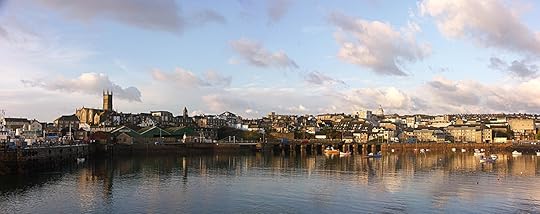
La cittadina di Penzance, dalla quale si accede al castello.
Trattandosi di un thriller, sulla trama non aggiungo altro. Ho detto quanto basta: godibile, a momenti avvincente, in altri un po’ inverosimile.
E sappiamo subito anche che non è tanto l’whodunnit che ci interessa, il colpevole si è subito dichiarato reo confesso. Siamo all’inseguimento del perché e del cosa: vogliamo capire perché lui, l’io-narrante, ha ucciso sua moglie Sarah, qual è la colpa.
E presto vogliamo scoprire perché sua moglie è Sarah e non la cugina Ella.
E subito dopo, invece, ci si chiede se…
Durante la lettura di questo romanzo d’esordio di uno scrittore all’epoca poco più che ventenne, oggi quarantacinquenne, nato in Sudafrica e presto trasferito in Inghilterra, ho spesso sentito la compagnia (in positivo) di Daphne du Maurier e di Alex Michaelides (in negativo).

La famiglia di Eric vive in Provenza: hanno perso il castello di famiglia.
Il problema, per me, è stato lo stile, la scrittura, ricoperta di “cipria ottocentesca” – da cui la sensazione di una storia che non si svolge nell’epoca indicata ma un buon secolo prima. Scrittura manierata, artificiosa, esageratamente melodrammatica. A tutto scapito della credibilità, anche se di invenzione si tratta.
Qui e là, fin troppo spesso, Mason spaccia somme verità che a mala pena nascondono profonde banalità: succede, per esempio, ogni volta che parla di giovinezza, e poi vecchiaia, della vita in genere.
Chissà cosa ha spinto un ventenne ad adottare la voce di un uomo più vecchio di un abbondante mezzo secolo? E proprio una voce davvero così “anziana”.
Il senso della trama è buono, promosso: lo stile è da rimandare a settembre, se si vuole essere generosi e non stroncarlo del tutto.

St Michael’s Mount in Cornovaglia vicino alla cittadina di Penzance: nel romanzo diventa il castello di Seton.
La trama – anche se in alcuni passaggi sembra poggiare su un sostegno di esile credibilità – è a suo modo avvincente.
Si sviluppa tra Londra, e un castello sul mare in Cornovaglia – o meglio su un isolotto collegato alla terra secondo le maree, a metà tra Mont St Michel in Normandia e Isolabella a Taormina – tra Praga e un paio di località nella campagna francese.
Il tutto si svolge dalla metà alla fine degli anni Novanta, l’ultimo decennio del millennio precedente, con qualche pagina nel prologo e in coda dedicate all’oggi. Viene raccontato dal protagonista – un io narrante particolarmente in vena di essere allo stesso tempo narratore – mezzo secolo dopo.
E quindi, la prima particolarità è che la storia inizia, nel breve prologo di due pagine, intorno al 2050. Il lungo racconto a ritroso comincia invece nel 1995.
Praga, altra location importante: è dove si sviluppa l’amicizia tra James ed Eric.
L’io narrante, James, è stato un violinista di successo. Nelle prime righe ci informa che ha ormai più di settanta anni e che:
Mia moglie si è sparata ieri pomeriggio.
Per poi subito dopo aggiungere:
O almeno questo è quanto ritiene la polizia, e io interpreto la parte del vedovo affranto con entusiasmo e con successo.
Poche righe più in basso, a scanso di dubbio, chiarisce:
Sono stato io a ucciderla.
E più o meno da qui parte il lungo flashback, che ha momenti di intensa piacevolezza: solo per citarne uno, quando ci porta alla presenza di quei magnifici amori sturm und drang che vivevamo a vent’anni.
La cittadina di Penzance, dalla quale si accede al castello.
Trattandosi di un thriller, sulla trama non aggiungo altro. Ho detto quanto basta: godibile, a momenti avvincente, in altri un po’ inverosimile.
E sappiamo subito anche che non è tanto l’whodunnit che ci interessa, il colpevole si è subito dichiarato reo confesso. Siamo all’inseguimento del perché e del cosa: vogliamo capire perché lui, l’io-narrante, ha ucciso sua moglie Sarah, qual è la colpa.
E presto vogliamo scoprire perché sua moglie è Sarah e non la cugina Ella.
E subito dopo, invece, ci si chiede se…
Durante la lettura di questo romanzo d’esordio di uno scrittore all’epoca poco più che ventenne, oggi quarantacinquenne, nato in Sudafrica e presto trasferito in Inghilterra, ho spesso sentito la compagnia (in positivo) di Daphne du Maurier e di Alex Michaelides (in negativo).
La famiglia di Eric vive in Provenza: hanno perso il castello di famiglia.
Il problema, per me, è stato lo stile, la scrittura, ricoperta di “cipria ottocentesca” – da cui la sensazione di una storia che non si svolge nell’epoca indicata ma un buon secolo prima. Scrittura manierata, artificiosa, esageratamente melodrammatica. A tutto scapito della credibilità, anche se di invenzione si tratta.
Qui e là, fin troppo spesso, Mason spaccia somme verità che a mala pena nascondono profonde banalità: succede, per esempio, ogni volta che parla di giovinezza, e poi vecchiaia, della vita in genere.
Chissà cosa ha spinto un ventenne ad adottare la voce di un uomo più vecchio di un abbondante mezzo secolo? E proprio una voce davvero così “anziana”.
Il senso della trama è buono, promosso: lo stile è da rimandare a settembre, se si vuole essere generosi e non stroncarlo del tutto.

May 27, 2020
I really, really enjoyed this great thriller by a not so well known but undoubtedly very gifted author. It was quite a surprise, considering the mixed reviews and the corresponding relatively low expectations with which I embarked on reading it.
Very well written, riveting and highly atmospheric, this book had me from the first few pages and it did not lose its grip on me until its very end.
Reminiscent of the 19th-century atmospheric settings of Edgar Allan Poe works, even bringing to mind Oscar Wilde's "The Picture of Dorian Gray", this is a book that I greatly enjoyed reading.
I loved it - 5 stars.
Very well written, riveting and highly atmospheric, this book had me from the first few pages and it did not lose its grip on me until its very end.
Reminiscent of the 19th-century atmospheric settings of Edgar Allan Poe works, even bringing to mind Oscar Wilde's "The Picture of Dorian Gray", this is a book that I greatly enjoyed reading.
I loved it - 5 stars.

December 27, 2010
Yes, everyone said it and I agree, the opening sentences are riveting. Sadly, the novel doesn't live up to their promise. I knew how young the author was before I started the book and from that perspective I'm very impressed with his work, however I found the book to be too predictable and much too long for a predictable novel for my taste. I also felt that the Gothic feel of the book would have benefited from being set in a more appropriate decade, it's a bit distracting to be occasionally reminded of it being set in the 90s when cell phones and computers were easily available, yet the characters rely solely on handwritten letters among other archaisms. On the positive note, the characters were very well drawn out for having been written by someone as young and some of the writing was quite remarkable. This would make a nice BBC film adaptation.

July 1, 2011
Told from the point of view of the 70-year-old James Farrell, who has just recently murdered his wife, "Drowning People" tells the tragic, desperate tale of the chain of events which ultimately led him to murder.
In the style of Fyodor Dostoevsky's "A Gentle Creature", the story begins shortly after the wife's death, with James deciding to make sense of the situation by reviewing their history together.
But the comparison ends there, for where "A Gentle Creature" is short and punchy, "Drowning People" is a rambling, desperate and at times nostalgic memoir of James' forgotten youth, mainly focusing on his tragic romance with his wife's cousin.
At its core, this book is an excellent soap opera -- melodramatic, with the ego of young love, impetuous mistakes and missed opportunities -- there is certainly something gripping about James' misadventures, however predictable the events.
However, the flow of the story was broken several times by the 70-year-old version of James, reminding himself to hurry up and finishing organising his thoughts -- a frustrating interruption.
Furthermore, the writing suffers from the self-consciousness of a young author (being at times overwritten and heavy-handed in terms of foreshadowing), and the plot is fairly rambling, with no clear direction.
But perhaps the most disappointing element of this book is its setting, which does little to complement the plot. The story is set in 1994, when James was in his 20s, but the gothic overtones, use of handwritten letters, and other archaisms lend themselves better to an older time period -- meaning that the occasional appearance of technology such as mobile phones and computers was distracting.
That isn't to say I didn't enjoy the story, but for what is ultimately a popcorn read this book is far too long. I'd recommend this to the more patient reader who enjoys memoir-style fiction with a healthy dose of melodramatic love.
In the style of Fyodor Dostoevsky's "A Gentle Creature", the story begins shortly after the wife's death, with James deciding to make sense of the situation by reviewing their history together.
But the comparison ends there, for where "A Gentle Creature" is short and punchy, "Drowning People" is a rambling, desperate and at times nostalgic memoir of James' forgotten youth, mainly focusing on his tragic romance with his wife's cousin.
At its core, this book is an excellent soap opera -- melodramatic, with the ego of young love, impetuous mistakes and missed opportunities -- there is certainly something gripping about James' misadventures, however predictable the events.
However, the flow of the story was broken several times by the 70-year-old version of James, reminding himself to hurry up and finishing organising his thoughts -- a frustrating interruption.
Furthermore, the writing suffers from the self-consciousness of a young author (being at times overwritten and heavy-handed in terms of foreshadowing), and the plot is fairly rambling, with no clear direction.
But perhaps the most disappointing element of this book is its setting, which does little to complement the plot. The story is set in 1994, when James was in his 20s, but the gothic overtones, use of handwritten letters, and other archaisms lend themselves better to an older time period -- meaning that the occasional appearance of technology such as mobile phones and computers was distracting.
That isn't to say I didn't enjoy the story, but for what is ultimately a popcorn read this book is far too long. I'd recommend this to the more patient reader who enjoys memoir-style fiction with a healthy dose of melodramatic love.

July 3, 2017
Very well written, but this introspective, intriguing story often wanders off-piste and thereby loses its flow.

September 14, 2017
Se avete avuto la sfortuna di leggere la Solitudine dei numeri primi, potete risparmiarvi questo
Sua moglie è una stronza e lui l'ha sparata, e questo non è uno spoiler visto che lo dice lui subito all'inizio.
Alla ricerca di un romanzo gradevole e non troppo impegnativo, fuorviata da benigne recensioni anobiane, mi sono imbattuta in questo libercolo che si è rivelato alla fine un mattonazzo post-vittoriano con rigurgiti Harmonyci. Un po' come frullare Wharton, Forster e James in chiave romance.
Libro strano, ma strano forte. E' ambientato negli anni '90 del 1900 ma i comportamenti e i patemi d'animo e le distinzioni sociali sembrano di più appartenere agli anni '20.
Sembra scritto da un 60enne ma in realtà è stato scritto da un 20enne che con questo si è guadagnato il titolo di "rivelazione" dell'anno.
La storia raggiunge vertici di assurdità parossistica (spoilero?, si, spoilero da qui in poi) con episodi di altissima improbabilità* (l'eredità a Praga?).
SPOILER La storia: James, che ha 70 anni –siamo nel 2050 circa - e ha appena ucciso la moglie Sarah con una fucilata, racconta quel che accadde nel 1990. Dunque, James – nobile ma povero – studente violinista, conosce Ella bella e nobile ma ricca e fuori di balcone. Si amano ma lei è fidanzata con Charles che ha rubato alla cugina Sarah per farle un dispetto, dispetto che la cugina stronza – somigliante come una gemella – non le perdonerà visto che già la odia per svariati motivi, tra cui il fatto che Ella erediterà un titolo e una tenuta di cui non le frega niente, mentre lei, Sarah, sarebbe più adatta (e qui si capisce che se i francesi nel 1789 avessero attraversato la Manica con un po' di accette forse gli si sarebbe fatto un favore, agli inglesi).
La nonna di Ella si è suicidata (era americana, si sa che sono strani), la zia si è suicidata (non mi ricordo perché), la mamma è morta in un incidente e tutti temono che Ella possa avere pensieri mortiferi. Per inciso, nonna e zia sono in comune con Sarah, che per di più ha perso entrambi i genitori nello stesso incidente, ma nessuno si preoccupa per lei (eccerto, sarà stata stronza anche da piccola).
Sorvoliamo su una serie di accadimenti inutili troppo complicati da spiegare, per arrivare al viaggio di James con Eric (pianista) a Praga per vendere un'eredità. Poi vanno nel Sud della Francia dove l'Amore sembra finalmente vincere, ma il destino cinico e baro è dietro l'angolo.
Ella chiede a James come pegno d'amore di baciare Eric, James lo fa, Eric muore (c'è un limite anche allo spoiler). James ed Ella si separano. Ella sbarella. Poi tornano insieme, ma Sarah in agguato prepara la sua vendetta.
Da qui in poi ho saltato un bel po' di pagine quindi si arriva al finale, ma io ero mortalmente annoiata e non ho più voglia di riassumere.
Mason confonde la personalità del protagonista, che scrive in prima persona con un tono talmente lamentoso da preferire le unghie sulla lavagna, con lo stile del romanzo.
AVVERTENZA: se avete letto "LA SOLITUDINE DEI NUMERI PRIMI" potete far finta di aver letto anche questo. Uguale uguale, la storia, lo stile (cioè l'assenza di entrambi).
Elementi di altissima improbabilità
1) James si accorge che Eric è per le unioni civili a 2/3 della storia (il lettore attento l'ha nasato due righe dopo averlo presentato)
2) l'ambaradan che la futura moglie stronza mette in piedi per uccidere il conte e far ricadere la colpa sulla cugina, pur se elaborato da una mente psicopatica, può funzionare solo in una puntata di CSI
3) Ella va in galera e a nessuno, neanche a James viene in mente di chiederle quale è la sua versione dei fatti.
Sua moglie è una stronza e lui l'ha sparata, e questo non è uno spoiler visto che lo dice lui subito all'inizio.
Alla ricerca di un romanzo gradevole e non troppo impegnativo, fuorviata da benigne recensioni anobiane, mi sono imbattuta in questo libercolo che si è rivelato alla fine un mattonazzo post-vittoriano con rigurgiti Harmonyci. Un po' come frullare Wharton, Forster e James in chiave romance.
Libro strano, ma strano forte. E' ambientato negli anni '90 del 1900 ma i comportamenti e i patemi d'animo e le distinzioni sociali sembrano di più appartenere agli anni '20.
Sembra scritto da un 60enne ma in realtà è stato scritto da un 20enne che con questo si è guadagnato il titolo di "rivelazione" dell'anno.
La storia raggiunge vertici di assurdità parossistica (spoilero?, si, spoilero da qui in poi) con episodi di altissima improbabilità* (l'eredità a Praga?).
SPOILER La storia: James, che ha 70 anni –siamo nel 2050 circa - e ha appena ucciso la moglie Sarah con una fucilata, racconta quel che accadde nel 1990. Dunque, James – nobile ma povero – studente violinista, conosce Ella bella e nobile ma ricca e fuori di balcone. Si amano ma lei è fidanzata con Charles che ha rubato alla cugina Sarah per farle un dispetto, dispetto che la cugina stronza – somigliante come una gemella – non le perdonerà visto che già la odia per svariati motivi, tra cui il fatto che Ella erediterà un titolo e una tenuta di cui non le frega niente, mentre lei, Sarah, sarebbe più adatta (e qui si capisce che se i francesi nel 1789 avessero attraversato la Manica con un po' di accette forse gli si sarebbe fatto un favore, agli inglesi).
La nonna di Ella si è suicidata (era americana, si sa che sono strani), la zia si è suicidata (non mi ricordo perché), la mamma è morta in un incidente e tutti temono che Ella possa avere pensieri mortiferi. Per inciso, nonna e zia sono in comune con Sarah, che per di più ha perso entrambi i genitori nello stesso incidente, ma nessuno si preoccupa per lei (eccerto, sarà stata stronza anche da piccola).
Sorvoliamo su una serie di accadimenti inutili troppo complicati da spiegare, per arrivare al viaggio di James con Eric (pianista) a Praga per vendere un'eredità. Poi vanno nel Sud della Francia dove l'Amore sembra finalmente vincere, ma il destino cinico e baro è dietro l'angolo.
Ella chiede a James come pegno d'amore di baciare Eric, James lo fa, Eric muore (c'è un limite anche allo spoiler). James ed Ella si separano. Ella sbarella. Poi tornano insieme, ma Sarah in agguato prepara la sua vendetta.
Da qui in poi ho saltato un bel po' di pagine quindi si arriva al finale, ma io ero mortalmente annoiata e non ho più voglia di riassumere.
Mason confonde la personalità del protagonista, che scrive in prima persona con un tono talmente lamentoso da preferire le unghie sulla lavagna, con lo stile del romanzo.
AVVERTENZA: se avete letto "LA SOLITUDINE DEI NUMERI PRIMI" potete far finta di aver letto anche questo. Uguale uguale, la storia, lo stile (cioè l'assenza di entrambi).
Elementi di altissima improbabilità
1) James si accorge che Eric è per le unioni civili a 2/3 della storia (il lettore attento l'ha nasato due righe dopo averlo presentato)
2) l'ambaradan che la futura moglie stronza mette in piedi per uccidere il conte e far ricadere la colpa sulla cugina, pur se elaborato da una mente psicopatica, può funzionare solo in una puntata di CSI
3) Ella va in galera e a nessuno, neanche a James viene in mente di chiederle quale è la sua versione dei fatti.

April 7, 2012
I enjoyed this book very much. Richard Mason's first novel was quite impressive. I was hooked from the first page. His characters jumped off the page, they seem so real to me. I also read The History of a Pleasure Seeker, which I also loved. I had the honor of meeting Richard Mason in April at Booktopia 2012 Vermont. I look forward to reading other novels by Mr. Mason.

April 30, 2023
Un romanzo pazzesco, incredibilmente sottovalutato. Una storia intricatissima di amore, gelosia, vendetta e, a tratti, follia, resa chiarissima attraverso un “io narrante” sviluppato quasi alla perfezione. Il focus dell’autore è, tra i tanti, soprattutto lo stretto rapporto tra le nostre azioni e le relative conseguenze, che spesso viene nutrito (e amplificato) anche dal Caso, vitreo giudice delle nostre esistenze e noncurante della nostra e altrui sofferenza. Dal punto di vista stilistico, la prosa è armoniosa come poche lette finora, le tante descrizioni (di persone, luoghi, momenti, sensazioni) sono il punto di forza assoluto del libro, differentemente dalla maggior parte dei casi, in cui rallentano il dinamismo della narrazione. In questo romanzo, oltre ad amplificarne la gradevolezza, risultano essenziali all’inquadramento delle vicende. Londra, Praga e la Cornovaglia emergono come le uniche ambientazioni possibili per ciò che accade, dipinte così bene da far pensare che nessun altro posto sarebbe stato altrettanto perfetto come scenario.
In sostanza, una storia tragica e travolgente, il cui unico (quasi impercettibile) difetto sta nei dialoghi: per quanto ben strutturati, veloci, dinamici, forse a volte risultano un po’ teatrali e poco realistici.
Per il resto un capolavoro.
In sostanza, una storia tragica e travolgente, il cui unico (quasi impercettibile) difetto sta nei dialoghi: per quanto ben strutturati, veloci, dinamici, forse a volte risultano un po’ teatrali e poco realistici.
Per il resto un capolavoro.

October 20, 2012
La trama di "Anime alla deriva" può apparire più o meno interessante rispetto ad altri melodrammi simili, ma non è questo il suo punto di debolezza.
Il problema è invece che, per motivi anche imperscrutabili, il romanzo non riesce minimamente ad avvincere il lettore e questo per un melodramma è un guaio serio! I monologhi, i tormenti e le crisi interiori dei personaggi sembrano scritti da una mano furba ma sempre poco ispirata o poco partecipe, con fastidiose ripetizioni e colpi di scena prevedibili e previsti, con uno stile che suona spesso falso e personaggi troppo inattendibili, a tratti tirato via, a tratti fin troppo introspettivo; sembra insomma il romanzo di un dilettante ed è incomprensibile il successo (a dire il vero, solo di pubblico, perchè la critica l'ha abbastanza ignorato...) che ha ottenuto.
In conclusione riesce abbastanza difficile immedesimarsi nel protagonista e questo distacco che prende il lettore pregiudica quello che si può ritenere un tasto fondamentale per trarre piacere dalla lettura di un melodramma: se non c'è coinvolgimento le vicende emotive divengono stucchevoli, le passioni risibili, gli struggimenti del cuore noiosi a meno che lo scrittore sia un asso in grado di coinvolgerti con la sola capacità di scrivere ma questo non è proprio il caso di questo furbo ragazzotto mezzo sudafricano mezzo inglese...
Breve appunto personale: ho riflettuto ma non sono riuscito a mettere a fuoco con sicurezza le motivazioni per cui "A Voce Alta", un altro melodramma che si dipana nell'arco di decenni, scritto anch'esso in prima persona, imbevuto di passione e morte, (peraltro da uno scrittore che non ha certo lo stile di Proust...) sappia profondamente colpire e generare commozione, e questo lasci indifferente e alla fine infastidito. Ecco, "commozione" è forse la parola chiave: Anime alla Deriva è un libro che forse vorrebbe, ma non riesce per nulla a commuovere.
Il problema è invece che, per motivi anche imperscrutabili, il romanzo non riesce minimamente ad avvincere il lettore e questo per un melodramma è un guaio serio! I monologhi, i tormenti e le crisi interiori dei personaggi sembrano scritti da una mano furba ma sempre poco ispirata o poco partecipe, con fastidiose ripetizioni e colpi di scena prevedibili e previsti, con uno stile che suona spesso falso e personaggi troppo inattendibili, a tratti tirato via, a tratti fin troppo introspettivo; sembra insomma il romanzo di un dilettante ed è incomprensibile il successo (a dire il vero, solo di pubblico, perchè la critica l'ha abbastanza ignorato...) che ha ottenuto.
In conclusione riesce abbastanza difficile immedesimarsi nel protagonista e questo distacco che prende il lettore pregiudica quello che si può ritenere un tasto fondamentale per trarre piacere dalla lettura di un melodramma: se non c'è coinvolgimento le vicende emotive divengono stucchevoli, le passioni risibili, gli struggimenti del cuore noiosi a meno che lo scrittore sia un asso in grado di coinvolgerti con la sola capacità di scrivere ma questo non è proprio il caso di questo furbo ragazzotto mezzo sudafricano mezzo inglese...
Breve appunto personale: ho riflettuto ma non sono riuscito a mettere a fuoco con sicurezza le motivazioni per cui "A Voce Alta", un altro melodramma che si dipana nell'arco di decenni, scritto anch'esso in prima persona, imbevuto di passione e morte, (peraltro da uno scrittore che non ha certo lo stile di Proust...) sappia profondamente colpire e generare commozione, e questo lasci indifferente e alla fine infastidito. Ecco, "commozione" è forse la parola chiave: Anime alla Deriva è un libro che forse vorrebbe, ma non riesce per nulla a commuovere.

September 3, 2011
Wow! I really loved this book, the writing was so "smart". The imagery the author created through detailed descriptions of feelings and thought allowed me to feel almost as a voyeur inside the mind of James Farrell. This story begins in the latter years of one man's life, immediately after killing his wife. This is not a spoiler to the story as it is on the book jacket and basically is the opening line of the whole journey. What the author (Richard Mason) then does is goes back to when James was just a young man and allows us to follow the intimate progression of how James came to the point of murdering his wife.
This is a tale that is really relatable in the respect that for every action we take there is a reaction or consequence. In the heat of the moment, we, like James, may think that we are doing the right thing or perhaps the only possible option just to find out years, months, weeks or in some cases only minutes later that we've made a grave error that will be with us forever. This is that kind of story.
I will say that while reading page 295 (and I did make a mental note) that I pretty much knew exactly how the final 50 pages would go. Even with that being said, I was not disappointed in the storytelling or the manner in which it was relayed. Richard Mason is a talented writer, I definitely would recommend this to others.
This is a tale that is really relatable in the respect that for every action we take there is a reaction or consequence. In the heat of the moment, we, like James, may think that we are doing the right thing or perhaps the only possible option just to find out years, months, weeks or in some cases only minutes later that we've made a grave error that will be with us forever. This is that kind of story.
I will say that while reading page 295 (and I did make a mental note) that I pretty much knew exactly how the final 50 pages would go. Even with that being said, I was not disappointed in the storytelling or the manner in which it was relayed. Richard Mason is a talented writer, I definitely would recommend this to others.

January 3, 2012
Despite the rave reviews, I didn't like this book at all (as is often the case with over-hyped books these days). This is a so-called psychological mystery but I just didn't see the mystery in it. The characters are not likeable at all and very irritating...

October 28, 2016
I've read this book years ago and I remember loving it. I've read in itt in Italian and the Einaudi's transaltion was beautiful. I don't agree with the critic, this book was well written and well structured. Recommended for those who loved "The secret history"

February 11, 2014
This book had me from the very first page. The narrator is James Farrell, who when we begin the book, has just admitted to shooting his wife of over forty years in the head. He doesn't feel a stitch of remorse over it, in fact, he feels as though he has served a just punishment. Wow, ok. Way to draw a reader in. The rest of the novel is his retelling of his life and that of his true love, Ella, his dear friend, Eric, and the intertwining of all their lives with his now deceased wife, Sarah. James reflects back to when he first met Ella as a young man in his early twenties. He was an aspiring violinist just out of Oxford but still very naive in the ways of the world. He is from a family of some stature - enough to be connected to the more well-to-do, though not yet a part of them. He is young and itching for adventure, thinking that his life is too boxed in and predictable yet unable to really break free from the mold when he meets a kindred spirit in Ella. Through chance circumstances and mutual friends, they continue to bump into one another and infatuation grows into what can only be, as a young man who hasn't felt such passion before, true and abiding love. It is the progression of their story that leads James to leave his innocence behind and make choices that force him out of naive childhood and into adulthood, and that will, after fifty years, still haunt him.
I really enjoyed this novel, the pacing of it was great and it had such an air of suspense that really kept me interested. The writing was good and the characters both likable and flawed. Plus, it was set in such great areas: London, Prague, France, Seton Castle. Such wonderfully romantic settings for the unveiling of some rather dark secrets. It felt rather Victorian, in a good way. I would certainly recommend it even on writing alone, because Mason spins such a good story and keeps you guessing even after he's told you the ending. You grow your assumptions as the pieces come together, but you keep reading because you're so invested. It is very well done.
I am going to give away some spoiler here very soon, so if you'd like to read the book, and I definitely recommend that you do, DO NOT continue reading!
While there are many relationships in this novel, the most complex, and my favorite, is the one between James and his friend, Eric. Now, James tells you early on that Eric is dead, but as much as I knew it was coming, I was still heartbroken when it happened. Eric and James meet when they play a concert together, Eric as James' accompaniment on the piano. They grow to be fast friends and James goes along with Eric to Prague to help close out his deceased aunt's apartment. While they spend three months together in Prague, James is waiting for Ella to end things in London with her fiancé (quick version here: she is marrying out of familial obligation and her intense and secret courtship with James has led her to want to break things off with the fiancé and be with James instead). James and Eric are carefree and fun in Prague and before long you realize that there is more between them that James is letting on. At least there is for Eric, but James doesn't see it. However, when Ella joins them, she sees it. The problem is that Ella, due to secrets of her own that you will discover, is distrusting and wants James to prove that he doesn't feel anything for Eric in return. Her request for proof though turns out to be something that is rather cruel to Eric, and is something that James cannot come back from. It leads them all down a dark path that ends with Eric killing himself and James feeling so guilty and heartbroken for his part in his friend's suicide, that he cuts himself off from Ella as a source of punishment. The scenes with Eric and James are so poignant and painful that it was at times difficult to read since I could kind of guess what was coming even though I was dreading it at the same time.
After Eric's death, unfortunately, I felt like the book fell into a bit of a lull. James spiraled deeper and deeper into his cocoon of guilt and self-inflicted punishment and the older James reflects much on his pain during this time. It seemed to lack the urgency and momentum that the first half of the book had. Even when we get to the events that lead to James eventually discovering his wife's secret and killing her, I wasn't as invested as I was with Eric's story. It was still interesting, and still somewhat suspenseful, but not nearly as much as in the beginning of the novel. It was almost as though I had expended so much emotion on Eric's death that I didn't have as much left for Ella's downfall. It was a satisfying end seeing James finally come to an understanding of his mistakes, but I think that in the end he is still acting like the coward. He has punished Sarah for her sins regarding Ella, but has done nothing about his part in Eric's death, or his denial of Ella when Sarah framed her. Although he has finally admitted to the reader what he had done, he hasn't really taken accountability. It was an interesting statement to end on and definitely resonated with me for a bit. It was a bittersweet ending I think. Satisfying in that I finally knew the secrets that were laying hidden for so long, but sad because Eric still doesn't have justice or truth given to his story.
I really enjoyed this novel, the pacing of it was great and it had such an air of suspense that really kept me interested. The writing was good and the characters both likable and flawed. Plus, it was set in such great areas: London, Prague, France, Seton Castle. Such wonderfully romantic settings for the unveiling of some rather dark secrets. It felt rather Victorian, in a good way. I would certainly recommend it even on writing alone, because Mason spins such a good story and keeps you guessing even after he's told you the ending. You grow your assumptions as the pieces come together, but you keep reading because you're so invested. It is very well done.
I am going to give away some spoiler here very soon, so if you'd like to read the book, and I definitely recommend that you do, DO NOT continue reading!
While there are many relationships in this novel, the most complex, and my favorite, is the one between James and his friend, Eric. Now, James tells you early on that Eric is dead, but as much as I knew it was coming, I was still heartbroken when it happened. Eric and James meet when they play a concert together, Eric as James' accompaniment on the piano. They grow to be fast friends and James goes along with Eric to Prague to help close out his deceased aunt's apartment. While they spend three months together in Prague, James is waiting for Ella to end things in London with her fiancé (quick version here: she is marrying out of familial obligation and her intense and secret courtship with James has led her to want to break things off with the fiancé and be with James instead). James and Eric are carefree and fun in Prague and before long you realize that there is more between them that James is letting on. At least there is for Eric, but James doesn't see it. However, when Ella joins them, she sees it. The problem is that Ella, due to secrets of her own that you will discover, is distrusting and wants James to prove that he doesn't feel anything for Eric in return. Her request for proof though turns out to be something that is rather cruel to Eric, and is something that James cannot come back from. It leads them all down a dark path that ends with Eric killing himself and James feeling so guilty and heartbroken for his part in his friend's suicide, that he cuts himself off from Ella as a source of punishment. The scenes with Eric and James are so poignant and painful that it was at times difficult to read since I could kind of guess what was coming even though I was dreading it at the same time.
After Eric's death, unfortunately, I felt like the book fell into a bit of a lull. James spiraled deeper and deeper into his cocoon of guilt and self-inflicted punishment and the older James reflects much on his pain during this time. It seemed to lack the urgency and momentum that the first half of the book had. Even when we get to the events that lead to James eventually discovering his wife's secret and killing her, I wasn't as invested as I was with Eric's story. It was still interesting, and still somewhat suspenseful, but not nearly as much as in the beginning of the novel. It was almost as though I had expended so much emotion on Eric's death that I didn't have as much left for Ella's downfall. It was a satisfying end seeing James finally come to an understanding of his mistakes, but I think that in the end he is still acting like the coward. He has punished Sarah for her sins regarding Ella, but has done nothing about his part in Eric's death, or his denial of Ella when Sarah framed her. Although he has finally admitted to the reader what he had done, he hasn't really taken accountability. It was an interesting statement to end on and definitely resonated with me for a bit. It was a bittersweet ending I think. Satisfying in that I finally knew the secrets that were laying hidden for so long, but sad because Eric still doesn't have justice or truth given to his story.

September 3, 2011
"Anime alla Deriva" - Richard Mason(1999)
James Farrell, anziano violinista ormai in pensione uccide sua moglie, e non ne è pentito, perchè? Il perchè ce lo racconta nelle 350 pagine che ripercorrono tutta la sua vita, gli avvenimenti tragici e assurdi, le tristi coincidenze che hanno fatto di una vita innocente, un inganno perpetuo.
Un amore difficile per Ella, ricca rampolla londinese, egoista e insicura che richiederà a James una prova d'amore, e lui ignora nella sua inesperienza di ventenne,che la prova è per lei soltanto la richiesta di dimostrazione della sua assoluta devozione a lei; ma lui prende questa prova come un esame di coraggio, e la accetta, dando la spinta alla prima tessera del domino che farà poi crollare tutte le altre.
L'assoluzione può avvenire soltanto dopo la confessione, e nessuno, dei personaggi che inconteremo avrà mai il coraggio di affrontare le proprie bugie, costruiranno vite di carta, che crolleranno non appena i fili intrecciati sotto si stringeranno troppo perchè "le bugie sono le sbarre di una prigione; che col tempo si solidificano; che una volta che le hai costruite e te ne sei circondato, tutto è perduto" (Pg 188).
Un libro corposo, a tratti faticoso a causa dello stile di scrittura saporito e consistente e del profondo scavo psicologico a cui sono sottoposti tutti i personaggi.
Un libro che ho apprezzato, che è riuscito a incuriosirmi e a farmi passare sopra allo stile eccessivamente zelante e puntiglioso che rendevano la lettura pesante e noiosa a tratti; ma se teniamo di conto che Richard Mason ha scritto questo libro a 18 anni come sua prima opera, possiamo perdonarlo.
"Ho fatto ai ricordi quello che gli altri fanno alle fotografie: li ho censurati; ma non è possibile distruggerli come si distruggono le fotografie, li possiamo soltanto seppellire sotto la polvere delle banalità di una vita intera"
James Farrell, anziano violinista ormai in pensione uccide sua moglie, e non ne è pentito, perchè? Il perchè ce lo racconta nelle 350 pagine che ripercorrono tutta la sua vita, gli avvenimenti tragici e assurdi, le tristi coincidenze che hanno fatto di una vita innocente, un inganno perpetuo.
Un amore difficile per Ella, ricca rampolla londinese, egoista e insicura che richiederà a James una prova d'amore, e lui ignora nella sua inesperienza di ventenne,che la prova è per lei soltanto la richiesta di dimostrazione della sua assoluta devozione a lei; ma lui prende questa prova come un esame di coraggio, e la accetta, dando la spinta alla prima tessera del domino che farà poi crollare tutte le altre.
L'assoluzione può avvenire soltanto dopo la confessione, e nessuno, dei personaggi che inconteremo avrà mai il coraggio di affrontare le proprie bugie, costruiranno vite di carta, che crolleranno non appena i fili intrecciati sotto si stringeranno troppo perchè "le bugie sono le sbarre di una prigione; che col tempo si solidificano; che una volta che le hai costruite e te ne sei circondato, tutto è perduto" (Pg 188).
Un libro corposo, a tratti faticoso a causa dello stile di scrittura saporito e consistente e del profondo scavo psicologico a cui sono sottoposti tutti i personaggi.
Un libro che ho apprezzato, che è riuscito a incuriosirmi e a farmi passare sopra allo stile eccessivamente zelante e puntiglioso che rendevano la lettura pesante e noiosa a tratti; ma se teniamo di conto che Richard Mason ha scritto questo libro a 18 anni come sua prima opera, possiamo perdonarlo.
"Ho fatto ai ricordi quello che gli altri fanno alle fotografie: li ho censurati; ma non è possibile distruggerli come si distruggono le fotografie, li possiamo soltanto seppellire sotto la polvere delle banalità di una vita intera"

August 18, 2016
This was not bad, it was pleasant even, however not the gripping thriller I took it for.
In short, the plot itself was interesting enough, albeit not surprising. The "twists" [all both of them I think] were rather predictale the mintute you read the ground laying of them. Yet it was interesting to go on. My issue were some chapters that were too long and too descriptive, with their biggest sin being their placement.
Just as you reached a very interesting part you got a quite boring chapter.
The prose in itself was alright, nothing phenomenal but nothing disappointing either. A bit contrived though, giving the feeling that this was a first novel by a writer who wanted to write "literature".
The characters were a bit indifferent, you couldn't really care about any of them and the most interesting one, had little presence yet great impact.
In all this is a fine read which reminded me a bit of Barnes [Sense of an Ending] but not nearly as well crafted and delivered.
Recommened not as a mystery or a "Rebeca"-esque read but as a nice story of love and regret.
In short, the plot itself was interesting enough, albeit not surprising. The "twists" [all both of them I think] were rather predictale the mintute you read the ground laying of them. Yet it was interesting to go on. My issue were some chapters that were too long and too descriptive, with their biggest sin being their placement.
Just as you reached a very interesting part you got a quite boring chapter.
The prose in itself was alright, nothing phenomenal but nothing disappointing either. A bit contrived though, giving the feeling that this was a first novel by a writer who wanted to write "literature".
The characters were a bit indifferent, you couldn't really care about any of them and the most interesting one, had little presence yet great impact.
In all this is a fine read which reminded me a bit of Barnes [Sense of an Ending] but not nearly as well crafted and delivered.
Recommened not as a mystery or a "Rebeca"-esque read but as a nice story of love and regret.
August 15, 2011
I started reading this book, only to discover I had already read it. It was just as bad the second time around. The plot is intriguing, but the writing is so over the top melodramatic, and the two main characters are so droll that you don't care about them very much.

June 10, 2026
This was a bit of a slow burn. It starts off with a shocking confession that begins “My wife of more than forty-five years shot herself yesterday afternoon. At least that is what the police assume….” And then it takes over 300 pages to fully understand how what led up to this moment as the 70 year old protagonist, James, explains himself.
Even though the story takes place in the mid-90’s, and the characters are all posh upper class Brits, there is a subtle Gothic undercurrent that I enjoyed. It was actually hard to imagine the correct era - there was nary a mention of technology like TVs, computers, or cell phones.
The writing was really excellent, though at times a bit repetitive and drawn out. And I’ve seen some reviews that felt the story was predictable but I disagree. The story isn’t so much about solving the mystery as it is about youth, innocence, guilt, and penance.
Even though the story takes place in the mid-90’s, and the characters are all posh upper class Brits, there is a subtle Gothic undercurrent that I enjoyed. It was actually hard to imagine the correct era - there was nary a mention of technology like TVs, computers, or cell phones.
The writing was really excellent, though at times a bit repetitive and drawn out. And I’ve seen some reviews that felt the story was predictable but I disagree. The story isn’t so much about solving the mystery as it is about youth, innocence, guilt, and penance.

April 5, 2026
Interesting read. Set in the 1990's but felt more like the 1890's. In some ways it felt like a quick moving book, but it really wasn't. Not really a 4 for me, but much better than a 3.

February 12, 2011
Everyone alive today will or has already felt the haunt of growing old. We’ll all tremble at the thought of regrets and maybe even fear the sweeping hand of death. When we approach the end we will all look back on our lives, pose ‘what if’s to ourselves and wonder what would, should, could have been. The aging James Farrell is no different from us. He knows his time is coming; His judgement day is dawning. He also knows that what has happened has happened and no amount of urging will make his younger self choose a different path when entering the crossroads of life.
When James was twenty-one years old he was just breaking into life. He was embarking on an existence separate from the one he had shared with his parents for so long and he was finally becoming the man he had been waiting to turn into. There was no way he could have seen how life changing his meeting Ella in the park could be for him. Maybe if he had seen the devastating outcome he wouldn’t have sat down on the bench with her and maybe he wouldn’t have let himself be pulled into her tornado of family politics and hatred spanning generations. Unfortunately, all James saw was a gorgeous woman alone and seemingly distressed and, being the young man that he was, he couldn’t just pass up this opportunity. So began the downward spiral of young James’s life. But how was he to know?
The Drowning People is told from elderly James’s memories of all the events that led to his eventual and fatal punishment of his wife, Sarah. Due to the strange inner workings of the human mind, some of James’s memories are blurry and undefined while others that seem far less important are bizarrely sharp and distinct but what stands above all else is the truth and his firm belief that we will all be punished in the end.
Richard Mason constructs an extraordinary story with resounding themes of family, trust, hatred, justice and the overwhelming influence of love. The characters’ lives intertwine flawlessly and yet their very connections seem to be the cause of their eventual downfalls. At some times told in a voice dripping with regret and others times with a superiority that one could only feel when they’ve reached the end, The Drowning People exhibits Robert Mason’s expertise in the fields of human regret and that urge to reach back in time to just explain to your younger self all the things they should have known before they had to make the decisions of their lives. It’s spectacular writing with a haunting underlying reality.
When James was twenty-one years old he was just breaking into life. He was embarking on an existence separate from the one he had shared with his parents for so long and he was finally becoming the man he had been waiting to turn into. There was no way he could have seen how life changing his meeting Ella in the park could be for him. Maybe if he had seen the devastating outcome he wouldn’t have sat down on the bench with her and maybe he wouldn’t have let himself be pulled into her tornado of family politics and hatred spanning generations. Unfortunately, all James saw was a gorgeous woman alone and seemingly distressed and, being the young man that he was, he couldn’t just pass up this opportunity. So began the downward spiral of young James’s life. But how was he to know?
The Drowning People is told from elderly James’s memories of all the events that led to his eventual and fatal punishment of his wife, Sarah. Due to the strange inner workings of the human mind, some of James’s memories are blurry and undefined while others that seem far less important are bizarrely sharp and distinct but what stands above all else is the truth and his firm belief that we will all be punished in the end.
Richard Mason constructs an extraordinary story with resounding themes of family, trust, hatred, justice and the overwhelming influence of love. The characters’ lives intertwine flawlessly and yet their very connections seem to be the cause of their eventual downfalls. At some times told in a voice dripping with regret and others times with a superiority that one could only feel when they’ve reached the end, The Drowning People exhibits Robert Mason’s expertise in the fields of human regret and that urge to reach back in time to just explain to your younger self all the things they should have known before they had to make the decisions of their lives. It’s spectacular writing with a haunting underlying reality.

June 23, 2017
True rating would be 2.5 stars if possible.
Well, I didn't hate it! Therefore it gets 2.5 stars begrudgingly. I guess that's not a glowing review is it? Actually the author really is vey talented and has obvious good story-telling abilities. However, and this seems to get me all the time, I really disliked the characters. In this case, there were no redeeming supporting characters so I had to slog through pages of pages of these shallow dimwits without reprieve. I'm not sure I'd try reading another book by this author. I suppose it will depend on Goodreads ratings and weather the synopsis pulls me in. I can also hope as the author matured and his writing did too. I hope he doesn't feel the need to use so many long rarely used words. It got to be annoying to have to read around them in just about every sentence. My thesaurus got a work out in the first part of the book. The second part it didn't because I just did not care any more.
Well, I didn't hate it! Therefore it gets 2.5 stars begrudgingly. I guess that's not a glowing review is it? Actually the author really is vey talented and has obvious good story-telling abilities. However, and this seems to get me all the time, I really disliked the characters. In this case, there were no redeeming supporting characters so I had to slog through pages of pages of these shallow dimwits without reprieve. I'm not sure I'd try reading another book by this author. I suppose it will depend on Goodreads ratings and weather the synopsis pulls me in. I can also hope as the author matured and his writing did too. I hope he doesn't feel the need to use so many long rarely used words. It got to be annoying to have to read around them in just about every sentence. My thesaurus got a work out in the first part of the book. The second part it didn't because I just did not care any more.

November 24, 2009
Ok, I thought I was on a roll, two 5 star books in a row. But this one doesn't quite merit 5 stars. Which is not to say that it isn't a rollicking good yarn, filled to bursting with melodrama, intrigue, young love, madness, egotism, etc. It has a fabulous opening line, where the author confesses to murdering his wife, and the following pages do not dissapoint much. I guess when we take into account that the author was 20 when the book was published, we can forgive him the overblown tone and the redundant parts. I liked his Natural Elements a lot and the two books share much that I like: an old mystery which has a bearing on the present and which gets solved neatly.
I am a bit confused on the time frame. In places it sound like the book is set in the future (50 years since 1994), but how could people have such 1950s ideas about homosexuality? Am baffled on that point.
I am a bit confused on the time frame. In places it sound like the book is set in the future (50 years since 1994), but how could people have such 1950s ideas about homosexuality? Am baffled on that point.

June 16, 2012
La storia � bella, anche se il finale � prevedibile. E' un noir gotico che ricorda un po' i libri di McGraw. Ma poi secondo me si perde in elucubrazioni, e diventa un po' pesante, ossessivo; a tratti sa di feuilletton decadente. Ma quello che non gli perdono � il filo di tutto il libro: che la natura umana ha bisogno di punizione per espiare le malefatte. Per� l'ho letto in fretta e volentieri.

January 20, 2017
Reilun kolmensadan sivun mittaansa pidemmän tuntuinen romaani. Alkaa ja jatkuu melko pitkään varsin vakuuttavana salaisuuksia sisältävänä tarinana, mutta muuttuu jossain vaiheessa melkoisen dramaattiseksi soossiksi, joka alkaa lähinnä ärsyttää ja laahata. Plussaa annan asetelmasta ja henkilöistä, jotka ovat niin kaukana ankeasta reaalimaailmasta, että ovat jo viihdyttäviä.

April 15, 2009
Overhyped overheated overwrought eyewash.
December 5, 2025
E se Lory del Santo facesse uno spin-off di The Lady ambientato nel Regno Unito posh e si aiutasse nella scrittura con Edoardo Prati? Immagino che questa fantasia vi tenga svegli la notte. Ecco, questo libro risponde ai vostri desideri.
Le prime 200 pagine non scorrono manco a pagarle (dialoghi surreali, situazioni da Bridgerton noir ambientate negli anni ‘90, intrecci abbastanza telefonati). Dopo che hai superato le prime 200 pagine, il resto inizia ad essere meno pesante e pure tu vuoi capire dove l’autore vuole andare a parare (il travestimento ricorda una scena di Scooby Doo, ma ok).
Beh che dire follettini e follettine, si stava bene anche senza, però ci sta leggere qualcosa di diverso (immagino).
Le prime 200 pagine non scorrono manco a pagarle (dialoghi surreali, situazioni da Bridgerton noir ambientate negli anni ‘90, intrecci abbastanza telefonati). Dopo che hai superato le prime 200 pagine, il resto inizia ad essere meno pesante e pure tu vuoi capire dove l’autore vuole andare a parare (il travestimento ricorda una scena di Scooby Doo, ma ok).
Beh che dire follettini e follettine, si stava bene anche senza, però ci sta leggere qualcosa di diverso (immagino).

December 24, 2016
Хороший сюжет для экранизации, просто прекрасный. Но сама книга могла бы быть"сделана" и получше, потому что слишком много растеканий мыслью по древу: когда герой возвращается к событиям прошлого, он так долго добирается до сути, что уже всем давно понятно, что там произошло, хотя он этого все еще не рассказал. Это как барахтаться в чьем-то омуте памяти. При этом повествование очень монологично, слишком. Хотя кто-то называет это невероятно тонким психологизмом и бла-бла-бла, но по факту получается болото.
Короче, сюжет неплохой, декорации, в котором он разворачивается - тоже, а вот форма повествования - не слишком удачная.
Короче, сюжет неплохой, декорации, в котором он разворачивается - тоже, а вот форма повествования - не слишком удачная.

August 18, 2026
Le ultime centocinquanta pagine mi hanno tenuta incollata (alla fine ero parecchio curiosa) ma nel complesso l’ho trovato piuttosto forzato, sia l’intreccio che le riflessioni esistenziali dell’autore.

August 16, 2022
A good story, just a slow starter
July 8, 2026
I can appreciate the insightful introspection of the characters’s lives and their personal justifications for their actions but the telling of it overall really dragged for me.

October 18, 2023
Such a great read. A thriller, a murder, but really a masterpiece of character development, the author so young to be writing, such a detailed, emotional story of love and loss.
Displaying 1 - 30 of 241 reviews