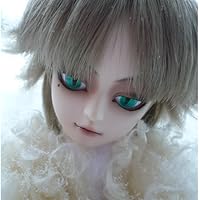
The Phoenix begins in London, 1882, with the main character, Jack Rourke, a beautiful young Artful Dodger, straight out of Oliver Twist (a delightful coincidence that Artful Dodger’s name was Jack as well, which solidified young Rourke’s boyish rogue image in my mind from the first scene).
Jack and his twin, Michael, whose health is frail, are the sons of the demon-in-the-flesh, Tom Rourke. The boys, along with their mother, suffer brutality at the hands of the monster, which eventually leads to tragedy on a wide scale and sends the mother fleeing—without her sons.
As usual, no plot will I divulge; but I will tell you that, early in the book, young Jack finally breaks under the strain of fear and hatred when his despicable, heartless father commits the inevitable crime that you WILL see coming. And this even sets the boy’s future into motion, not only propelling him to his life’s ultimate course, but implanting the seeds of torment that follow Jack relentlessly throughout the novel. And, as horrible as he is, this sadistic creature, Tom Rourke, is a corrupt thread that weaves deliciously in and out of the story, keeping me on edge with pure, palpable tension. I, like Jack, wondered through the entire story—is he a bad dream, or is he real?
One thing I DO have to reveal is that Jack is taken under the wings of a wealthy family, the St. Denys, where he is pampered, educated, introduced to a life on the stage, and—most importantly and most heart-warming—loved. His name is changed to Christopher “Kit” St. Denys, and he becomes a famous stage presence. Beautiful, talented, cocky, confident, graceful, sexy.
As a result of his nightmarish past, Kit enlists many lovers. Partly for pleasure—as he is quite the sexual aficionado and loves the sensuality of it all—but mostly because he needs strong arms about him to ward off the taunting, merciless nightmares that trail him at night. Desperation to escape these awful visions drive him into his relationships, not love.
At this point, let me say: I have, from the beginning of the novel, fallen in love with Jack/Kit—hopelessly in love. Not only with his beauty, but his spirit of survival, the agonizingly wonderful goodness at his core that is so necessarily and carefully camouflaged by a jaunty nature.
Having said that, I was ecstatic when my beloved Kit met and fell for Nicholas Stuart, the handsome, dark-haired, blue-eyed son of a God-fearing Baptist family.
Nicholas, “Nick”, is very devout, very sexually inhibited. His first encounter with a man was a beautifully depicted, highly sensual, a very sexy portrayal of a young man’s first brush with ‘fornication’: Nick was struck motionless by the sight of Hugh with his trousers down around his ankles. Other than babies he had never seen another human male naked; Hugh was a wonder to behold! When he did not move, Hugh fell to his knees, yanked Nick’s trousers down, and fell upon him, gasping and rubbing hard against him, hard hot flesh against hard hot flesh. Nick shut his eyes tight as the fiery pressure in his groin built up until he thought he would explode. And he did. He let out a raw moan just as Hugh yelled, “Oh, St. Peter-in-the-pocket!” Thick wetness that was not his spewed over Nick’s belly; Hugh collapsed on top of him.
I’ll pause here to quickly say that I adore Sims’ presentation of sex scenes. I can’t put my finger on what makes them so arousing to me, as they certainly are not explicit, but quite controlled. But the fervency that seems to break through the stitches of their very deliberate restraint makes them all the more sensual. Perhaps the tease, like the proverbial preacher’s daughter flashing a thigh from beneath petticoats, or the peek of a man’s taut belly when his shirt slips up—you know, the titillation of the sensual hint which is sometimes a thousand times more powerful than full frontal. It works so well with Sims’ prose. She IS that preacher’s daughter with her wordage. She DOES know the score, but has just the precise talent to deliver the whole show in a very abridged, very sexy version by a careful choice of words.
Back to Nicholas.
Here’s where I will stray from my path of gushing to scratch my head and try to explain what my beautiful Kit saw in Nick, what made him so mad to have him, to keep him. Polar opposite—unadventurous Nick, adventurous Kit. I could not, even by the time I’d finished the book, answer that for myself.
But. Ah. That, my friend, IS the answer. The chilling, beautiful, makes-my-heart-scream I know-I know answer. Do you see? I don’t have to know. Kit has to know, not me.
That very NOT knowing, to me, was the most powerful force in the book. One of the reasons I beg for you to read it, one of the reasons I’ll read it again and again.
Because Sims proved, so eloquently, that love is just love. Period. It has no explanation, it doesn’t have to, it never has, never will. And, damn, that makes me walk on clouds.
That is the key to any good book, any good character—that we can love this character so much, that if he loves something, we’re so invested in him that we will love it, too.
We will gladly scour the world with Kit to connect with Nick every time they’re separated. We might not see what he sees, but he wants it so damn bad, we want him to have it. It is THE thing that makes Kit whole, that makes him safe, makes him happy. What more is there? Who are we to take that from him? Me? I love him so much at this point, I’ll just throw myself off a bridge if Kit cannot have what makes him most content.
Sims (is this going to tell too much?) did throw one element into this story that made me tense—Nick got married. During this era, relations with the same sex were dangerous, but sex with the same sex who also happened to be married was simply impossible.
And Nick’s wife was a meek, cheerful, lovely young woman when she fell for him and married him. They even had a child.
Nick’s unfaltering devotion to his Kit proved to be the knife that slowly turned in his wife’s soul, turning her into a bitter, almost unrecognizable creature. As I sympathized with her, at the same time I loved how Sims allowed her to transform into such hatred that it did not cause me to resent Kit as the dividing force in the marriage. Sims presented the situation in such a way that I could not help but understand how helpless Nick was in trying to do “the right thing”. Love, so deep in the heart, cannot die. You can smother it with the pillow of wishful thinking, but it cannot be extinguished.
The reference to the phoenix in the story is to a painting that Kit buys of a phoenix in flames. The phoenix destroys itself in fire of its own making, then gives birth to itself again, endlessly. He saw the painting, and immediately bought it, exclaiming, “He’s painted my soul,” he whispered. “My very soul.” And, yes, by the time you’ve parted with Kit, when you’ve closed the book, you will know exactly what he means.
One last thought. Between Ruth Sims and me. Listen, you brilliant author you. I am on to you. You have a pattern, and I have discovered it, blown your cover. You have this unique talent for creating these characters who I should hate. They are so damn cocky, so NOT perfect, I should thrash them about just to knock them down a notch or two. I begin the book, I see so many things about them that I should loathe; and, indeed, I DO try to not like them. But those pesky little characters taunt me from the pages, smirking, hollering, Na-na-na-na-boo-boo! You do SO like me! You LOVE me!
And go figure. They’re right. I DO end up loving them. In fact, I love them the moment I meet them, despite their annoyances, their bristling pride. I picture myself like in the vintage Mark Twain movie where ol’ Mark walks off into the sunset with Huck and Tom.
Me? I’m walking off into the sunset with MY new buddies, Kit and Nick. Love you guys.
Thanks for letting me meet them, Ruth.