George Oppen's New Collected Poems brings together all of the great Objectivist poet's published work, together with a selection of his previously unpublished poems. George Oppen's New Collected Poems gathers in one volume all of the poems published in books during his lifetime (1908-84), as well as previously uncollected poems and also a selection of his unpublished work. Oppen, who won a Pulitzer Prize in 1969, has long been acknowledged as one of America's foremost modernists. A member of the Objectivist group that flourished in the 1930s (which also included William Carlos Williams, Charles Reznikoff, Carl Rakosi, and Louis Zukofsky), he was hailed by Ezra Pound as "a serious craftsman, a sensibility which is not every man's sensibility and which has not been got out of any other man's book." Oppen's New Collected Poems (which replaces New Direction's earlier, smaller Collected Poems of 1975) is edited by Michael Davidson of the University of California at San Diego, who also writes an introduction to the poet's life and work and supplies generous notes that will give interested readers an understanding of the background of the individual books as well as references in the poems.
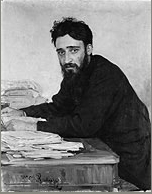
George Oppen (April 24, 1908 – July 7, 1984) was an American poet, best known as one of the members of the Objectivist group of poets. He abandoned poetry in the 1930s for political activism, and later moved to Mexico to avoid the attentions of the House Un-American Activities Committee. He returned to poetry—and to the United States—in 1958, and received the Pulitzer Prize in 1969.
While Oppen's poems might at first appear to be thorny, opaque, elliptical to the point of incomprehensibility, and ultra-modernist - all of which qualities can be attractive or repellent depending on the reader and his/her relationship to poetry - once their potentially off-putting crust is broken with a clean whack of the reader’s brain, they reveal themselves to be extremely readable, embodying a remarkable marriage of clear vision, clear thought, exquisite aesthetics, and the intensified essence of a life lived with all-around integrity and engagement. Here is a man who could build boats and could bring the same sense of watertight craft to the building of poems without those poems becoming fussy or over-crafted or academic, and without sacrificing pure art in the process. Oppen was a consummate artist and his poems are literally alive with his focused life; and like so many fascinating lives, they are indefinable, partially private, partially products of a community, and are decidedly not easy. I wouldn't want them any other way... Reading these poems with the focus they require can have an actual clarifying effect on the mind and eyes, a real physical sensation that helps one see deeper and clearer into the “thingness” of things; for Oppen had no patience with the theoretical or the metaphysical or the murky netherworlds of the Jungian unconscious. Oppen’s poetry is all about things, and, as poetry should be, it’s also all about words.
I’ve been reading Michael Davidson’s superb anthology of George Oppen’s verse, Collected Poems, forcing me to the keyboard to ponder some connection with Wallace Stevens . with whom he shares an obsession with how the human personality tries to speak to those things that will never let themselves be revealed.The massive solitude in Oppen's work, wholly devoid of Romantic despair, seems an intrinsic part of his recognition that the Earth itself can never be known.Oppen is connected to Wallace Stevens, I think, in that there is awareness that language has the habit of taking on the personality and delusions of the speaker and thus disguises nature, "reality" under layers of wordy assumptions that miss the mark of the mystery of experience. Stevens, though, exults in his search and wonder, and views the finalizing that eludes him as occasion for joy, wonder, a reason to intensify one's attention on the very nature of being in the world; Stevens thinks it enough for the witness to be staggered by the realization that existence is absent of final, metaphysically fixed perimeters, and that one should relish the more profound miracles in the details of their own senses.
Oppen comes to know his loneliness, and there is in his work some longing for old myths that gave comfort to a restless mind. Oppen, though, denies the lure of nostalgia and presses forward on some path that has an end only beyond his own death, that language will be restored to it's ability to correctly assess the world and ourselves in it, and avail us with some ideas of assembling a world that operates on good acts and deeds and not a high rhetoric that amounts to sighing, whimpering and casual bad faith, in Oppen's estimation.
I'd be interested to hear your ideas regarding Oppen's path that leads beyond his own death, as that seems alien to his poetry, at least as far as it refers to poetry.A bad habit of mine is to use dramatic language when I'm the full boil of writing, so forgive me for possible vagueness and overstatement.I am thinking , of course, of Oppen's leftist politics and his association with what's come to be called the Objectivist movement, spearheaded by Louis Bukowski, and whose members, as such, included Charles Reznikoff, Carl Rakosi, with older American modernists such as W.C. Williams and Pound having close affiliations with this loosely defined group of writers.
In the broadest sense, Objectivist writers, following Zukofsky's lead, developed styles that evolved from Imagism, but sought to come up with a kind of unblinkered epic poetry that wasn't hampered the symbolic obscurantism. The idea was to write, according the poet's personality, a verse that presents concrete things and realities not for the purpose of making them mere props for some metaphorical system whose results wind up with dead tropes and forgone conclusions that reaffirm only bad faith, but rather gloried in those things and their uniqueness.
Zukofsky, along with Charles Olson, sought to expand the aesthetic into the social areas, the geographical, into areas the names of which define us in relation to nature and the world humans build within it. Where a modernist like Pound (as opposed to Stevens) sought to legitimize the poet as an insurmountable authority on the exactness of nature and meaning and hence establishing him or her as an arbiter of Power, Oppen's wanted to use his poetics to make the discerning habit of mind, the ability to use language in unsentimental ways, to the general population. This would have been his ultimate gift of love, and there is a tone in his writing that I get, sometimes, that he is aware that such revolutions are started in one's lifetime but often not finished. I've no doubt that he wished that what started as a preferred compositional practice would grow into a self-renewing alignment of the population's right-sized perception of itself within Nature. Some of that loneliness might as a result abate. Zukofsky, Oppen and the work of the Objectivist Poets, as such, are a huge influence on the work of the L=A=N=G=U=A=G=E Poets, whose ranks include that charged inversions,reversals and redirected practice of Ron Silliman, Rae Armentrout, Bob Perelman, and Michael Davidson himself. It's a stretch to refer to these poets as a school or movement at all, which is why I preface the remark with the tired qualifier "In the broadest sense...."
These poets come at time when the American modernists were getting older and their ideas had been assimilated by a younger generation. The poets share some similar attitudes regarding poetic language and the quest for unassailable truth, but calling them a coherent movement is a stretch, as you say; literary critics, needing to classify styles and writers, pounced on "Objectivism" as a the term to use, and in fact wrote the manifesto, in the form of their varied systematized remarks, that Zukofsky et al never got around to composing. The poets were off into the American wilderness, distinct in style, attack, voice. Oppen's attraction to the general attitude with the Objectivists, to compose a phonologically responsible poetry, is understandable, but his personality and his style are his own, after the association. It might also be said that Oppen's poetry is the best of this generation of writers
L=A=N=G=U=A=G=E poetry, unlike what's been called Objectivistism, was an actual poetry movement, replete with manifestos, several anthologies, and an intimidating backlog of criticism and commentary by the poets themselves addressing what are conspicuously shared ideas and aims, stated succinctly as this: the theme of Language poetry is language.It was an inevitable development, I'd guess, coming out of the Sixties new left affiliations, and riding in along the tide of structuralist -inspired art where making a consume aware of the art's own mechanisms and intentions, was a common card to play; along with the writings of Ron Sukenic, Barthelme, and the films of Godard and Snow, Language Poets seemed to think that exposing the mechanics of syntax and grammar would make readers aware of how they're being manipulated.
Not a bad idea, perhaps, but it's something that expressed whatever was interesting it had rather quickly. Lately, it seems more a strong addition to a poet's resume so they can acquire an academic position. Not surprisingly, there are younger student poets who've been seduced into this style, and one prays they move from the semi-Marxist psycholinguistic braying of that peculiar school and find their own voice, through which they can trust the authority of their senses.
For current concerns fascinating to find Oppen BUILT HOUSES IN MEXICO. Should reread for his concerns with space (other than space/place as manufactured). Should then come back to poem "The Space" : Brood then / 'in love and care' / Over this little space. Brooding, dwelling, inhabiting, restoring inner heft/interior of 'things' seems to be inline with his project. Was surprised how 'light shot' his final poems become--if just for "The Powers" of the Selected Unpublished Poems this edition is the one you should have. Wonder if there is a complete unpublished somewhere. Would be worthwhile to suss out necessary nature of his elliptical approach RE: the content. If only to help see if such an approach elsewhere is a necessity or just a comfy posture. Goodbye notes.
There's so much fan lit on Oppen. And it's always by people who are true blue- ie Lyn Hejinian. They can dissect his genius really well. I can just say he's special. I used to have a cd of his poems. I'd play it in the car. At that time I was living in the middle of nowhere on the west coast of Ireland. I had four CDs on repeat- Oppen. Beckett's three novels. Best of Sade. And Lou Reed's The Blue Mask. I can still hear Oppen's voice. Haha. I just remembered he has this one poem where he goes like- "an advertisement sign in a subway / with a brassy young blond and beneath her / in graffiti / COPS BITCH". That's the thing, Oppen had a great moral compass, but he was also funny and generous. Plus he lived on Polk Street in San Francisco. I'd like to actually find his house one day.
2nd reading finished February 6, 2021. Some of the most affecting, least aloof poems are among the uncollected, where Oppen comes closer to letting himself express emotion.
Review after first reading: I didn't actually read all of this. I read Oppen's own collections inside it, and the grouping of previously published poems not included in his other books, but I mostly skipped the previously unpublished poems. Oppen is interesting quite often, but not always; but isn't by any means in the first rank of poets. Sociological concerns, the place of people in society and groups, are often paramount, and this can be kind of tedious. But still, he's worth looking into.
First discovered George Oppen through an ep of Pome Talk with Al Filreis. The panel read and talked about "Ballad." That led me to discover the recordings of Oppen reading "Of Being Numerous" on Pennsound. I bought the New Direction Selected Poems and have read it a couple of times since college. This is the first time I've work all the way through the Collected. It was incredibly rewarding. I read Oppen, still, trying to discern what draws me to his work. The sparseness of the verse paired with the metaphysical density of his writing is so powerful. The introduction and notes are really helpful, placing the poetry in the context of Oppen's incredible life.
The sizable collection of unpublished poems that concludes the volume was perhaps the biggest and most pleasant surprise. Chosen from Oppen's voluminous working papers (His Daybooks, which are fascinating on their own). The editors focus on poems that became the basis of published poems. Throughout the fifty odd pages, passages and phrase from some of the most recognizable published poems bubble up in sometimes shockingly different context. Oppen's process was one of accumulation. His correspondence, reading, and writing formed the building blocks of his poems, which would accrue over time.
This collection is for the true believer, but if you are already a fan of Oppen's work, this is a must have.
I feel kind of bad loving this book as much as I do. For years now I've maintained that the white New Directions paperback of Oppen's Collected Poems is the single best book of poetry I've ever read, that one book you'd read aloud from before being shot by a firing squad, or the one you'd read to someone immediately after having sex with them in a filthy sleeping bag. And it still is that book. But this is the book Oppen himself most deserves, in that classic, kind of snooty sense of binding things in hardback and keeping them on shelves. And more importantly than that, much more importantly, it includes his last book and a collection of unpublished work. Oppen apparently had a tendency to leave beautiful things scribbled on cereal boxes and envelopes and things, and whoever went and gathered them, and preserved them for the rest of us, has done the cause of beauty a service.
This is the most complete set of Collected Poems, and the audio does help getting a feel for tone of Oppen's often challenging work. Davidson's digging brings a lot of the work that had not been republished or anthologized to light. Oppen Objectivist poetry seems to have developed out of Pound's imagism but his later more political poetry does have much more social concern than his early work. While the newly anthologized poems are interesting, but I feel like Oppen's strengths are most on display in "The Materials" and the book-length poem "Of Being Numerous, which earned Oppen the Pulitzer. The later unpublished poems are both bare-bones and raw, but very strong in the skeletal form.
This is an essential collection for an essential American poet.
Oppen was not alone among writers on the left in rejecting the Popular Front imperatives to write socially relevant work. Rather than compose elegies for Lenin, as Zukofsky did, he channeled his labor in a different direction, joining the Communist Party, organizing tenant strikes, and working as an organizer. However much one may want to textualize his silence by seeing it as a lacuna in a long--a very long--poem, the facts of economic depression at home and the growth of Fascism abroad placed demands on his aesthetics that could not be resolved through aesthetics.
I don't know if I would be a different person if I never read George Oppen, but ever since I was introduced to his poetry, I turn to it all the time. The way I feel about certain poems of his is probably similar to the way my Christian sister feels about certain Psalms.
Still some of the most relevant and vital work I know. I’m never really comfortable with the inclusion of unpublished work in a posthumous collected, but Davidson’s insightful introduction, the re-setting of the Discrete Series, and long-overdue addition of Primitive make this book a necessity.
George Oppen writes beautiful stark poetry. Minimalist and thoughtful, this book encompasses the majority of his poetical works from the 1930s until the 1960s.