The Balkans―the gateway between East and West―are also Europe's soft underbelly, a rough neighborhood where organized crime and terrorism present a constant threat. This eye-opening book details how 15 years of misguided Western interventions, political scheming, and local mafia appeasement, compounded by a massive infusion of Arab cash, fundamentalist Islamic preaching and mosque-building have allowed radical Islamic groups to fill in the cracks between internal ethnic and religious schisms and take root in key areas of the Balkans.
With all eyes currently focused on the widening conflict in the Middle East and the terrorist threat coming from the region, the West is in danger of overlooking a potent new battleground in the greater war on terror―the Balkans. This historically volatile region saw some of the worst violence of the late 20th century in the Yugoslav Wars of Secession. During these conflicts, stunningly shortsighted and politically motivated policies of the United States and its allies directly allowed Islamic mujahedin and terrorist-related entities to establish a foothold in the region―just as with the progenitors of the Taliban a decade earlier in Afghanistan.
Although the 9/11 attacks caused a partial reassessment of Western policy, it may already be too late for a region still largely ignored. The proliferation of foreign fundamentalist groups has had a cancerous effect on traditional Balkan Islamic communities, challenging their legitimacy in unprecedented and often violent ways. Well-funded groups like the Saudi-backed Wahabbis continue to exploit internal schisms within local communities, while the international administrations in Bosnia and Kosovo have actually strengthened the grip of local mafia groups―business partners of terrorists. Worst of all, the Western peacekeepers' chronic don't rock the boat mentality has allowed extremist groups to operate unchallenged. Nevertheless, regional demographic and cultural trends, coinciding with an increasingly hostile attitude in the larger Muslim world over Western military actions and perceived symbolic provocations, indicate that the lawless Balkans will become increasingly valuable as a strategic base for Islamic radicals over the next two decades. Utilizing the post-al-Qaeda tactics of a decentralized jihad carried out through small, independent cells (leaderless resistance) while seeking to fundamentally and violently remold Muslim societies, such Balkan-based extremists pose a unique and tangible threat to Western security.
"I ovdje se djelovanje islama pokazalo kao krajnje sputavajuće i neplodno. Govorilo se da je osvajanjem Carigrada 'zadana rana europskoj civilizaciji'. Vjerojatno je malo zemalja koje su okrutnije i bolnije od Bosne osjetile taj udarac.“ Ivo Andrić, "Razvoj duhovnog života u Bosni pod utjecajem turske vladavine"
Ova knjiga tiskana je 2007. godine. Autor detaljno i precizno objašnjava nastanak,djelovanje islamističkih ekstremističkih pokreta i pojedinaca na području Bosne i Hercegovine, Srbije, Makedonije, Albanije i Kosova i njihove veze sa širim djelovanjem islamističkih skupina po svijetu, kao i potencijalnu opasnost koju predstavljaju po Europu i njeno stanovništvo. Upravo nedavni teroristički napadi u Austriji potvrđuju teze ovog autora o balkanskim zemljama kao bazama za obuku radikalnih islamista. Autor polazi od činjenice kako Clintonova administracija za vrijeme rata devedesetih podržala dovođenje muđžahedina u Bosnu, nepredvidjevši dugoročnu opasnost po sigurnost EU, koja u posljednjim godinama dolazi na naplatu. "The irony of the whole situation, however, was that these holy warriors would never have reached Bosnia in the first place had it not been for the Clinton administration’s determination to defeat the Bosnian Serbs at all costs. In comparison to achieving this goal, allowing several thousand Muslim fanatics to establish themselves in the heart of Europe seemed a small price to pay indeed. Preliminary to any historical debate, therefore, it must be acknowledged that high-powered Washington lobbyists and much of the Western media purposefully distorted, omitted, and concealed key facts on the ground. This actually prolonged and intensified the conflict, while also reinforcing wildly exaggerated stereotypes of the Bosnian Muslims as innocent victims and the Serbs as genocidal maniacs. "
Činjenice:
Prvi islamistički teroristički napad na tlu Europe dogodio se 1995. u Rijeci , organiziran i pripremljen od strane islamista iz Bosne.
“Bosnia is the most dangerous place and then Macedonia."
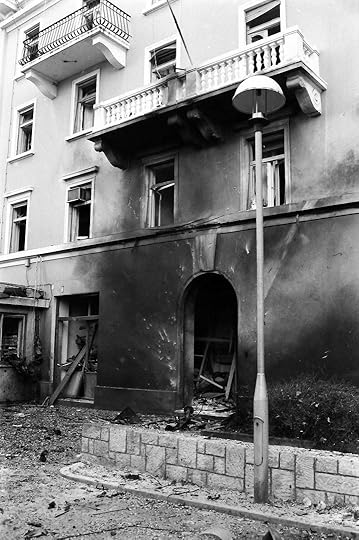
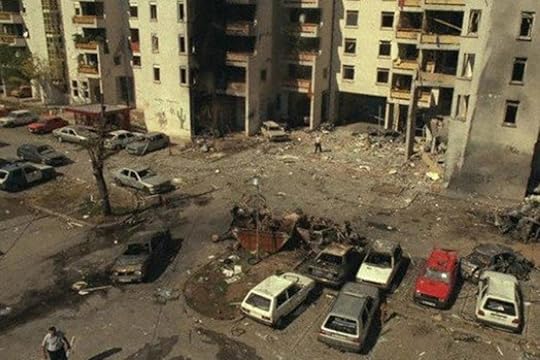
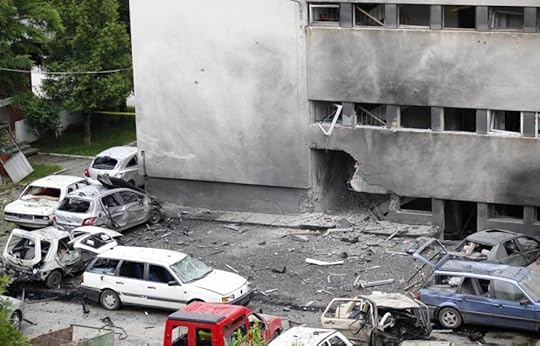
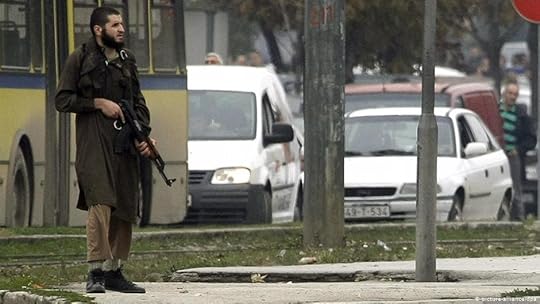
Teroristički napadi na tlu Bosne i Hercegovine od strane islamskih radikalista:
1. Mostar 1997.godine - aktivirana auto-bomba
2. Kostajnica kod Konjica, 2002. godine, pokolj katoličke obitelji Anđelić od strane islamskog radikalista
3. Vitez, 2008. godine, Eksplozija u trgovačkom centru "FIS Vitez"
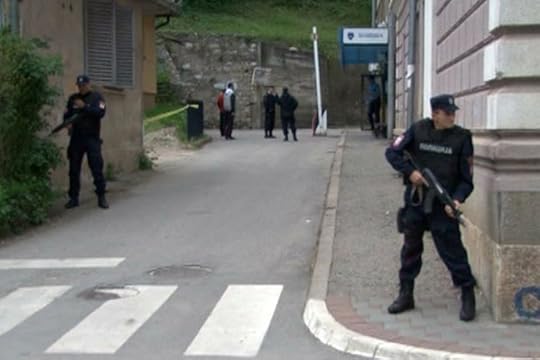
4. Bugojno, 2010, napad na policijsku postaju Bugojno