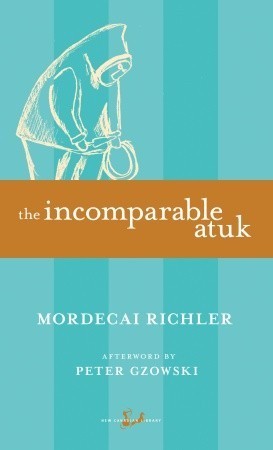
It is a stunning thing when a writer as practiced, precise, and methodical as Richler gives the 'South Park' treatment to the national myths of the day. Although couched in language that is unarguably antiquated and with a sensibility that is sure to ruffle the feathers of more sensitive modern readers, Richler's critique of who we (Canadians) think we are is still poignant and, largely, valid.
'Atuk' is the story of an "Eskimo" poet (already, the language of the novel dates it. Racist terminology peppers the entire novel and speaks to prevailing ideas of race at the time) who, after settling in Toronto, comes to embody the worst aspects of western culture. While projecting an image of the 'noble savage', Atuk runs a sweat shop in his basement where his relatives make 'authentic Eskimo' sculptures, seduces, lies, and cheats his way to the top. For me, this represents the thesis of the novel: not only do the basest aspects of our culture ruin us, but every other culture it contacts.
Along the way, Atuk mixes with characters equally debauched, many of them from minorities as well. Richler is clearly having great fun with this idea: that racism is not exclusive to any one ethnic group and no cultural background is immune to the corrupting influence of success. Memorable moments include a Black character who escapes detection by the man he has just cuckolded by saying, "I guess we all look alike to you". Atuk turns the traditional defenses of Zionism on their head by applying them to Canada. A female reporter and cross-dressing RCMP officer poke holes in our assumptions about sexuality. Richler has minted a universe filled with characters who all undermine our assumptions about race and gender: the resentful liberal who is angered at the all-too-human actions of the minorities he champions, xenophobic and unobservant Rabbis, a self-help guru who shamelessly helps himself. In the world of 'Atuk', The corrupting influence of success, be it financial, academic, or social, pervades everything and undermines our noblest and most cherished values and, worse, our self-image.
'Atuk' is a book that has a great deal to say about the young nation of Canada in the 1960's, much of which is relevant to the Canada of today. If nothing else, it subverts our sense of moral superiority and reminds us that, for all of our enlightened, liberal values, everyone is a little bit racist and if we are unwilling to cross-examine ourselves, Richler will happily do it for us.