

What do you think?

Northlanders
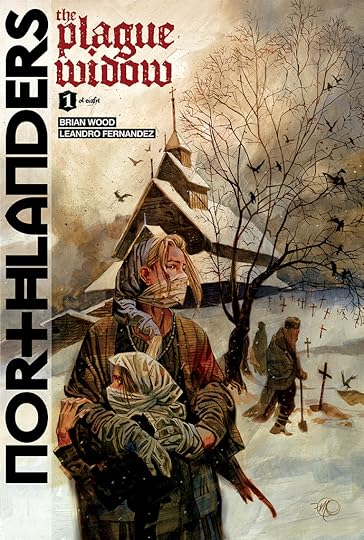
Northlanders, Vol. 4: The Plague Widow
Set in Viking Russia in A.D.1020, "The Plague Widow" examines a year in the life of a remote settlement under siege by a contagious outbreak. The residents of this village are so focused on shutting the outside world out, they don't think about who they're shutting themselves in with. Mixing equal parts crime, history and survival fiction, this is the most brutal NORTHLANDERS story to date!
Collects Issues #21-28.
Collects Issues #21-28.
192 pages, Paperback
First published October 1, 2010
About the author
Brian Wood
1,187 books962 followersBrian Wood's history of published work includes over fifty volumes of genre-spanning original material.
From the 1500-page future war epic DMZ, the ecological disaster series The Massive, the American crime drama Briggs Land, and the groundbreaking lo-fi dystopia Channel Zero he has a 20-year track record of marrying thoughtful world-building and political commentary with compelling and diverse characters.
His YA novels - Demo, Local, The New York Four, and Mara - have made YALSA and New York Public Library best-of lists. His historical fiction - the viking series Northlanders, the American Revolution-centered Rebels, and the norse-samurai mashup Sword Daughter - are benchmarks in the comic book industry.
He's written some of the biggest franchises in pop culture, including Star Wars, Terminator, RoboCop, Conan The Barbarian, Robotech, and Planet Of The Apes. He’s written number-one-selling series for Marvel Comics. And he’s created and written multiple canonical stories for the Aliens universe, including the Zula Hendricks character.
From the 1500-page future war epic DMZ, the ecological disaster series The Massive, the American crime drama Briggs Land, and the groundbreaking lo-fi dystopia Channel Zero he has a 20-year track record of marrying thoughtful world-building and political commentary with compelling and diverse characters.
His YA novels - Demo, Local, The New York Four, and Mara - have made YALSA and New York Public Library best-of lists. His historical fiction - the viking series Northlanders, the American Revolution-centered Rebels, and the norse-samurai mashup Sword Daughter - are benchmarks in the comic book industry.
He's written some of the biggest franchises in pop culture, including Star Wars, Terminator, RoboCop, Conan The Barbarian, Robotech, and Planet Of The Apes. He’s written number-one-selling series for Marvel Comics. And he’s created and written multiple canonical stories for the Aliens universe, including the Zula Hendricks character.
Ratings & Reviews
Friends & Following
Create a free account to discover what your friends think of this book!
Community Reviews
Displaying 1 - 30 of 82 reviews

June 24, 2020
Eleventh century Viking Russia, along the Volga is the setting for a year in the life of a remote settlement under attack by plague! Collecting#21-28, bringing more insights in to the ways of pre-Dark Age life in Europe. 6.5 out of 12
 2017 read
2017 read
September 20, 2011
It’s the 11th century and a village in the North is bracing itself to survive a brutal plague that is killing off most of its villagers. And winter is coming. A woman, Hilda, who loses her husband to plague, has to survive the winter by herself and protect herself and her daughter Karin from the patriarchal ways of the village and the increasingly hostile attentions of some of the villagers who see her relative comfort as something to be taken as she has no man.
“The Plague Widow” is a powerful book with its fragile main character proving her resilience in the face of pure adversity. We follow her struggle from the death of her husband to learning to do the things her man used to do, to defending herself and her daughter from far stronger men.
Brian Wood does a great job of bringing all of this to life, and despite criticisms that he hasn’t bothered to write “of the time”, that is he’s done away with any “thous” and “hasts” and has his characters speaking modern English, I don’t view this as a negative.
Leandro Fernandez did some excellent work on Garth Ennis’ Punisher MAX series and he brings his talents to this book, doing a wonderful job in the process.
There’s a lot in the book I want to talk about, about how excellent some of the set pieces are, how well the characters are written, but I don’t want to give anything away to the new reader. Suffice it to say, Northlanders is an excellent series and “The Plague Widow” is the best book in the series so far but also works as a standalone book. Definitely worth a read, it’s a brilliant work that any comics fan would enjoy.
“The Plague Widow” is a powerful book with its fragile main character proving her resilience in the face of pure adversity. We follow her struggle from the death of her husband to learning to do the things her man used to do, to defending herself and her daughter from far stronger men.
Brian Wood does a great job of bringing all of this to life, and despite criticisms that he hasn’t bothered to write “of the time”, that is he’s done away with any “thous” and “hasts” and has his characters speaking modern English, I don’t view this as a negative.
Leandro Fernandez did some excellent work on Garth Ennis’ Punisher MAX series and he brings his talents to this book, doing a wonderful job in the process.
There’s a lot in the book I want to talk about, about how excellent some of the set pieces are, how well the characters are written, but I don’t want to give anything away to the new reader. Suffice it to say, Northlanders is an excellent series and “The Plague Widow” is the best book in the series so far but also works as a standalone book. Definitely worth a read, it’s a brilliant work that any comics fan would enjoy.
July 26, 2017
Okay this was the first volume since the first that I "REALLY' enjoyed. Volume 2 and 3 were solid but they had a few missteps. This volume is lengthy and tells a story of mother and daughter immune to the plague killing the people in their city and looking to survive once her husband dies. It has a few central characters and gives us the feeling of a harsh winter that most people won't survive.
Hilda and her daughter are truly well developed interesting leads. You also have a few side cast character, Boris probably being the best one, and the villain = Gunborg. The fact the priest in this book uses facts over religion to explain why they must close in the village so the disease doesn't spread is surprising and leads the book into a feeling of doom and gloom while feeling like you're also in a tight space at all times.
What I liked: Loved the interaction with Hilda and her daughter. All well done and you can feel the fear and love between them. Boris was also a great side character and you always felt he was the only one making sense. Gunborg played his role well and a true asshole throughout. I also really enjoyed the ending and that the way we did it isn't all "happy" but "hopeful."
What I didn't like: The pacing could have been a tad better at times. I also thought, for the first time, sometimes the art was hard to follow. Certain fight scenes made it tough to keep up.
Overall Northlanders remains to keep me coming back. It's not mindblowing but with 2 solid volumes, and 2 great volumes, this might go down as one of the best ongoing series without a dud. I hope 5-7 finish up nicely!
Hilda and her daughter are truly well developed interesting leads. You also have a few side cast character, Boris probably being the best one, and the villain = Gunborg. The fact the priest in this book uses facts over religion to explain why they must close in the village so the disease doesn't spread is surprising and leads the book into a feeling of doom and gloom while feeling like you're also in a tight space at all times.
What I liked: Loved the interaction with Hilda and her daughter. All well done and you can feel the fear and love between them. Boris was also a great side character and you always felt he was the only one making sense. Gunborg played his role well and a true asshole throughout. I also really enjoyed the ending and that the way we did it isn't all "happy" but "hopeful."
What I didn't like: The pacing could have been a tad better at times. I also thought, for the first time, sometimes the art was hard to follow. Certain fight scenes made it tough to keep up.
Overall Northlanders remains to keep me coming back. It's not mindblowing but with 2 solid volumes, and 2 great volumes, this might go down as one of the best ongoing series without a dud. I hope 5-7 finish up nicely!

September 14, 2018
Northlanders continues to wow, after my initial rough start with Book One. The fourth book in the seven-book series was my absolute favorite!
The story takes place in the frozen Volga region in AD 1020. A plague has come to the seven-hundred-person settlement in October, and as winter has started, burials in the cold ground are impossible so pyres of dozens of bodies are lit to dispose of the diseased bodies. Frantic with worry the inhabitants listen to their elderly leader plus the local priest Boris. Boris counsels strongly that the settlement go under quarantine and those who show any sickness be banished so those remaining may live. But what they don’t take into account is how claustrophobia sets in, and they find they locked the greater danger inside their walls with them.
Hilda, a young beautiful widow with an eight-year-old daughter, is caught in the cross-hairs as her former status as a wealthy woman is stripped when her husband dies of the plague. Destitute, with a long winter ahead, she struggles to survive and is targeted by Gunborg, who is the second in command and has it out for her after she votes against him in council. Two other men want her as a wife, but each man has different motivations and their jealousy of one another results in bloodshed. A final battle between Boris and Gunborg comes to a head, and Hilda and her daughter are given a chance to escape.
The art by Leandro Fernandez is a perfect match to the story. He captures the isolation of a Viking settlement shown mostly in dull colors with overlays of blue wash, which effectively shows the icy coldness of Russian winters. Some of the changing artists in this Northlanders series have not been to my liking, but the pairing of this excellent story with Fernandez’s precise artwork made this a winner.
This review (plus Book Five) can be found on my blog: https://graphicnovelty2.com/2018/09/1...
The story takes place in the frozen Volga region in AD 1020. A plague has come to the seven-hundred-person settlement in October, and as winter has started, burials in the cold ground are impossible so pyres of dozens of bodies are lit to dispose of the diseased bodies. Frantic with worry the inhabitants listen to their elderly leader plus the local priest Boris. Boris counsels strongly that the settlement go under quarantine and those who show any sickness be banished so those remaining may live. But what they don’t take into account is how claustrophobia sets in, and they find they locked the greater danger inside their walls with them.
Hilda, a young beautiful widow with an eight-year-old daughter, is caught in the cross-hairs as her former status as a wealthy woman is stripped when her husband dies of the plague. Destitute, with a long winter ahead, she struggles to survive and is targeted by Gunborg, who is the second in command and has it out for her after she votes against him in council. Two other men want her as a wife, but each man has different motivations and their jealousy of one another results in bloodshed. A final battle between Boris and Gunborg comes to a head, and Hilda and her daughter are given a chance to escape.
The art by Leandro Fernandez is a perfect match to the story. He captures the isolation of a Viking settlement shown mostly in dull colors with overlays of blue wash, which effectively shows the icy coldness of Russian winters. Some of the changing artists in this Northlanders series have not been to my liking, but the pairing of this excellent story with Fernandez’s precise artwork made this a winner.
This review (plus Book Five) can be found on my blog: https://graphicnovelty2.com/2018/09/1...

January 4, 2017
The best story so far.
This book is set in 1020 AD at a Russian settlement located on the bank of the Volga. It is about the plight of a woman after losing her husband to the plague, the harsh measures the leaders have to take to keep the disease at bay and the evil that consumes some of them from within. It is a social commentary on the position of women at a time when the males dominated every aspect of the society. Frankly, every story I have read about from that era details the invaders looting and plundering villages and cities and raping the women. That's why this story as well as "The Shield Maidens" story from the previous volume, told from the perspective of women, was a breath of fresh air for me.
Since all the volumes of this series focus on different stories, I would highly recommend picking this volume up even if one has not read the other stories.
This book is set in 1020 AD at a Russian settlement located on the bank of the Volga. It is about the plight of a woman after losing her husband to the plague, the harsh measures the leaders have to take to keep the disease at bay and the evil that consumes some of them from within. It is a social commentary on the position of women at a time when the males dominated every aspect of the society. Frankly, every story I have read about from that era details the invaders looting and plundering villages and cities and raping the women. That's why this story as well as "The Shield Maidens" story from the previous volume, told from the perspective of women, was a breath of fresh air for me.
Since all the volumes of this series focus on different stories, I would highly recommend picking this volume up even if one has not read the other stories.

January 11, 2013
This was the best Northlanders storyline yet. The themes explored are timeless and the actual main plot could've been set in just about any time period.
Hilda's husband, a wealthy merchant, falls prey to a plague that's been ravaging their area. Boris, foreign clergyman advises the council to expel the infected individuals and seal the settlement's gates until the plague has passed. What complicates things is (1)that the settlement relies on trade to get its supplies and (2)the harsh 7-month winter is upon them.
Gunborg, a corrupt official who's also in charge of security, eventually convinces the council to let him (and a small party) go seek out other settlements to get food & supplies from. What he actually does is strike a bargain with a rival settlement: they will annex his village and leave him in charge of it (in exchange for subjugating his own settlement). So Gunborg leads a coup against his own people, killing the elder, burning down the Great Council, and terrorising the population. Forced labour, executions & burned down dwellings follow...
The way Hilda and Boris cope (& deal) with all this makes for great reading. With "Northlanders" Brian Wood had always given his readers great stand-alone stories (so that the different volumes can be read in any order) and even though each new story has a different artist, the art has been mostly consistent in quality, if not in style.
Those of you who've yet to "take the plunge" with this series should hesitate no longer.
Hilda's husband, a wealthy merchant, falls prey to a plague that's been ravaging their area. Boris, foreign clergyman advises the council to expel the infected individuals and seal the settlement's gates until the plague has passed. What complicates things is (1)that the settlement relies on trade to get its supplies and (2)the harsh 7-month winter is upon them.
Gunborg, a corrupt official who's also in charge of security, eventually convinces the council to let him (and a small party) go seek out other settlements to get food & supplies from. What he actually does is strike a bargain with a rival settlement: they will annex his village and leave him in charge of it (in exchange for subjugating his own settlement). So Gunborg leads a coup against his own people, killing the elder, burning down the Great Council, and terrorising the population. Forced labour, executions & burned down dwellings follow...
The way Hilda and Boris cope (& deal) with all this makes for great reading. With "Northlanders" Brian Wood had always given his readers great stand-alone stories (so that the different volumes can be read in any order) and even though each new story has a different artist, the art has been mostly consistent in quality, if not in style.
Those of you who've yet to "take the plunge" with this series should hesitate no longer.

September 15, 2019
Even in the most inhospitable climates, it's people that ultimately create the most dangerous environments. This story, about a woman and her daughter trying to survive a Norse winter in a closed-off village is a powerful tale of strength in the face of adversity, both natural and man-made. Hilda and Karen are left on their own early on, and the target of ire for the ascending power in the village, and things just keep getting worse and worse for them and the entire settlement. The story is grim and dark, but still finds room for hope and strength. The art is powerful as well, not shying away from violence and gore, but also capturing the day-to-day moments with a frosty touch. It's a powerful story of sacrifice and strength, with unexpected heroes and a fitting ending. It's one of the strongest overall volumes of the series so far.

March 31, 2016
This story was ... dark. A typical story of what humans can become when they are isolated, hungry and afraid of sickness. It was also a quite atypical Viking story.
We have a Russian settlement somewhere at the river Volga but the settlement's inhabitants are Christians and their priest, Boris, seems to fluently believe in anything that might help. *lol* However, I liked that he was pracmatic AND smart (he knew a lot of scentific facts). As the title suggests, the sickness striking was the plague and it was Boris who suggested to turn away the sick and close the settlement off. That might sound cruel, but let's be honest: it was the right thing to do.
We also have a guy named Gunborg who, at least from what he looked like, is more of the typical Viking. However, he unfortunately also is a monster and worse than any plague.
The titular widow is Hilde who tries to navigate this new reality together with her daughter Karin.
The plague is the perfect frame for a story of loss - personal loss (Hilde's husband), material loss through corruption and the loss of humanity in some of the characters through violence and shier madness.
I didn't like how Hilde always said that she was worthless now that her husband was dead but, sadly, that was reality. And how could it have been different? Physically she would have never stood a chance against any man in the settlement (she was no shield maid, her husband had been a merchant).
It also is a story about greed, starvation (feeding madness) and survival in a Russian winter when you have nothing to do and nowhere to go. That last point was probably the hardest for me while reading: Brian Wood manages to realistically portray the claustrophobia and isolation those people must have felt (imagine being in a village with no means of communication, not knowing what's going on in the outside world, or how much longer this winter will last).
But I had to deduct one star because the art sometimes wasn't all that good.
The book is a very interesting take on the Dark Ages and - as far as my research has shown - Brian Wood once again manages to write a very authentic story full of (accurate) historical details!
We have a Russian settlement somewhere at the river Volga but the settlement's inhabitants are Christians and their priest, Boris, seems to fluently believe in anything that might help. *lol* However, I liked that he was pracmatic AND smart (he knew a lot of scentific facts). As the title suggests, the sickness striking was the plague and it was Boris who suggested to turn away the sick and close the settlement off. That might sound cruel, but let's be honest: it was the right thing to do.
We also have a guy named Gunborg who, at least from what he looked like, is more of the typical Viking. However, he unfortunately also is a monster and worse than any plague.
The titular widow is Hilde who tries to navigate this new reality together with her daughter Karin.
The plague is the perfect frame for a story of loss - personal loss (Hilde's husband), material loss through corruption and the loss of humanity in some of the characters through violence and shier madness.
I didn't like how Hilde always said that she was worthless now that her husband was dead but, sadly, that was reality. And how could it have been different? Physically she would have never stood a chance against any man in the settlement (she was no shield maid, her husband had been a merchant).
It also is a story about greed, starvation (feeding madness) and survival in a Russian winter when you have nothing to do and nowhere to go. That last point was probably the hardest for me while reading: Brian Wood manages to realistically portray the claustrophobia and isolation those people must have felt (imagine being in a village with no means of communication, not knowing what's going on in the outside world, or how much longer this winter will last).
But I had to deduct one star because the art sometimes wasn't all that good.
The book is a very interesting take on the Dark Ages and - as far as my research has shown - Brian Wood once again manages to write a very authentic story full of (accurate) historical details!

February 6, 2016
One of the best stories so far in the Northlander's series. The plague Widow is dark, gritty, violent and borders on a horror story. In 1020 AD, a settlement of Rus vikings on the Volga falls victim to the plague. The story then revolves around five primary characters- Gornburg, Boris, Hilde and her daughter Karin. Gornburg is a viking lord who wants to run the settlement himself, Boris is a slavic priest who cares for the settlement and Hilde and Karin are trying to survive with the death of her husband. Once the plague hits, the settlement seals its gates and allows no one in and expels all those who are sick. The rest of the story is one of madness, starvation, corruption and survival. It has a claustrophobic feel due to them having to spend 7 months of brutal Russian winter inside this town. Food is running out, Gornburg has taken over control of the settlement and his greed and rapaciousness are taking a toll. Father Boris attempts to combat the plague using scientific means (he correctly argues for quarantine) and combat Gornburg influence. Hilde and Karin are just trying to survive. Anything more would be a spoiler. A powerful story and well illustrated. I enjoyed this dark and grim tale of life in a Rus settlement during the dark ages. Not what most people might expect from a Viking story, but I stand impressed with the quality of the story. Easily one of the best Brian Woods has written so far.

July 1, 2012
Volume four of Northlanders, written by Brian Wood and illustrated by Leandro Fernandez, is the best story of the entire series. It juggles important themes of survival, a special kind of viking cabin fever, man vs nature and, as the cover can indicate, mother and daughter relationships. A simple plot is effectively used to advanced a complex narrative combining a series of events that test the health and sanity of the characters. Fernandez's art is magnificent. His stark portrayal of a northern winter combined with excellent character drawings elevates the art as well as the story to a higher level of storytelling seldom seen in modern comics.
One last great element of The Plague Widow is that like all the other arcs in the series, you can easily read this in a vacuum. The genius behind Brian Wood's Northlanders is that each arc is it's own self-contained story yet the author keeps recurring themes throughout.
One last great element of The Plague Widow is that like all the other arcs in the series, you can easily read this in a vacuum. The genius behind Brian Wood's Northlanders is that each arc is it's own self-contained story yet the author keeps recurring themes throughout.

January 19, 2014
Another fine, strong entry in the series by Brian Wood. This Volume finds a Norse woman widowed in the early pages, after plague hits their settlement. With a young daughter, and a harsh winter coming, there's no time to mourn. This is a great strong female character here, once again, existing outside of the big 2 (DC/Marvel). Apparently no editor here to tell Wood to give her big breasts and a G-String.
Art is good as well, though I still prefer the cover art for each issue.
If there was a reading list for strong Female Characters, this would be high on my list. I really do love the world that Wood has conjured up. Can't wait to get onto the next one.
Art is good as well, though I still prefer the cover art for each issue.
If there was a reading list for strong Female Characters, this would be high on my list. I really do love the world that Wood has conjured up. Can't wait to get onto the next one.

January 2, 2014
Best Northlanders story so far by a wide margin.

February 22, 2018
This is the best story so far in the Northlanders series, but unfortunately it still just didn't hit the right notes for me. At first I was very into this. Wood sets aside the over-the-top violence and vengeance and genre re-appropriation from the previous volumes in favor of a smaller, more personal story of a small Viking village in Russia that shuts itself off from the rest of the world in the middle of a plague. The tension rises, characters are pushed to their limits, people have to fight to survive. I was into it.
Then, a few small problems I had started ballooning as they became more important to the story. For starters, this is a story that seems to be priding itself on historical accuracy and attention to detail. And yet, in this story set in the 11th century, there is a priest in this tiny Viking village who seems to fully grasp the concept of germs. I could maybe forgive this if he only thought disease was spread by touching the sick. But no. He goes into detail about how disease is spread by spit, blood, and other bodily fluids. At one point he tells someone that "some people will not be affected by the disease, even if they come into contact with the infected," essentially displaying a full understanding of immunity. He also says he knows all this because "people in the cities have been theorizing about it." They certainly had not! Not in the 11th century! This is hundreds of years before the actual Black Death that killed nearly half of the people in Europe, which confounded every scientist and doctor around. It just simply isn't possible a priest knew this much about disease, or that anyone would've listened to him back then.
Now, all of this is in the story mostly to allow for the setup: the town locking itself off from the outside world. And that would be fine if it were only setup. But then, it worms its way into the characters. The main bad guy, Gunborg, a ruthless killer and mob boss type, is also largely defined by his inability to listen to the priest. He dismisses his science as mumbo jumbo, and we, the reader, are meant to be frustrated by that. But everyone would've thought the priest was insane. It's not really fair to set up that a character in 1040 is an idiot because he doesn't believe in things that weren't discovered for hundreds of years after his death.
This conflict between the priest and Gunborg is a huge part of this story, and as such, the ridiculousness of this ended up coloring my opinion quite a bit. Also, the story manages to be very grounded and believable right up until the last couple of chapters, when Wood once again just falls into action genre tropes and been-there-done-that scenarios like he has in the previous volumes. It's unfortunate, because I thought this was going to be the first Northlanders story I truly enjoyed.
As such, it's "fine." There's some decently thrilling plot and character work here, and I'm glad he finally focused one of his longer stories on a woman in this time period. But, it's still ultimately a derivative story with a Viking coating to make it seem new. Can't say I'm all that surprised.
Then, a few small problems I had started ballooning as they became more important to the story. For starters, this is a story that seems to be priding itself on historical accuracy and attention to detail. And yet, in this story set in the 11th century, there is a priest in this tiny Viking village who seems to fully grasp the concept of germs. I could maybe forgive this if he only thought disease was spread by touching the sick. But no. He goes into detail about how disease is spread by spit, blood, and other bodily fluids. At one point he tells someone that "some people will not be affected by the disease, even if they come into contact with the infected," essentially displaying a full understanding of immunity. He also says he knows all this because "people in the cities have been theorizing about it." They certainly had not! Not in the 11th century! This is hundreds of years before the actual Black Death that killed nearly half of the people in Europe, which confounded every scientist and doctor around. It just simply isn't possible a priest knew this much about disease, or that anyone would've listened to him back then.
Now, all of this is in the story mostly to allow for the setup: the town locking itself off from the outside world. And that would be fine if it were only setup. But then, it worms its way into the characters. The main bad guy, Gunborg, a ruthless killer and mob boss type, is also largely defined by his inability to listen to the priest. He dismisses his science as mumbo jumbo, and we, the reader, are meant to be frustrated by that. But everyone would've thought the priest was insane. It's not really fair to set up that a character in 1040 is an idiot because he doesn't believe in things that weren't discovered for hundreds of years after his death.
This conflict between the priest and Gunborg is a huge part of this story, and as such, the ridiculousness of this ended up coloring my opinion quite a bit. Also, the story manages to be very grounded and believable right up until the last couple of chapters, when Wood once again just falls into action genre tropes and been-there-done-that scenarios like he has in the previous volumes. It's unfortunate, because I thought this was going to be the first Northlanders story I truly enjoyed.
As such, it's "fine." There's some decently thrilling plot and character work here, and I'm glad he finally focused one of his longer stories on a woman in this time period. But, it's still ultimately a derivative story with a Viking coating to make it seem new. Can't say I'm all that surprised.

November 25, 2012
Set in Viking Russia in A.D.1020, "The Plague Widow" examines a year in the life of a remote settlement under siege by a contagious outbreak. The residents of this village are so focused on shutting the outside world out, they don't think about who they're shutting themselves in with. Mixing equal parts crime, history and survival fiction, this could be the most brutal NORTHLANDERS story to date!
It's the beginning of a long 7 months of the coldest winter the characters seem to be able to remember. The plague is rampant and killing loved ones left and right. People are being cast out and shot from the walls to try and cull the plague-ridden ones from the healthy ones.
Add to all that a Mafia-like viking boss that's only looking out for his best interest and the rest be damned.
A woman, Hilda, who loses her husband to plague, has to survive the winter by herself and protect herself and her daughter Karin from the patriarchal ways of the village and the increasingly hostile attentions of some of the villagers who see her relative comfort as something to be taken as she has no man.
"The Plague Widow" is a powerful book with its fragile main character proving her resilience in the face of pure adversity. We follow her struggle from the death of her husband to learning to do the things her man used to do, to defending herself and her daughter from far stronger men.
A foreign catholic priest, in all probability a converted warrior, is portrayed in a positive way. He does his best to un-selfishly protect the "good" people of the village, standing up to, and even posing a challenge to the head mafia-viking and his men. It's a nice twist as the church so oftens gets a bad rap in these sort of stories.
All-in-all, Brian Wood gives us a great story about lesser used characters from the era and how their lives are affected.
This could be the very best Northlanders stgory-arc.
It's the beginning of a long 7 months of the coldest winter the characters seem to be able to remember. The plague is rampant and killing loved ones left and right. People are being cast out and shot from the walls to try and cull the plague-ridden ones from the healthy ones.
Add to all that a Mafia-like viking boss that's only looking out for his best interest and the rest be damned.
A woman, Hilda, who loses her husband to plague, has to survive the winter by herself and protect herself and her daughter Karin from the patriarchal ways of the village and the increasingly hostile attentions of some of the villagers who see her relative comfort as something to be taken as she has no man.
"The Plague Widow" is a powerful book with its fragile main character proving her resilience in the face of pure adversity. We follow her struggle from the death of her husband to learning to do the things her man used to do, to defending herself and her daughter from far stronger men.
A foreign catholic priest, in all probability a converted warrior, is portrayed in a positive way. He does his best to un-selfishly protect the "good" people of the village, standing up to, and even posing a challenge to the head mafia-viking and his men. It's a nice twist as the church so oftens gets a bad rap in these sort of stories.
All-in-all, Brian Wood gives us a great story about lesser used characters from the era and how their lives are affected.
This could be the very best Northlanders stgory-arc.

November 1, 2022
Recommendation: A brutal yet somehow hopeful story about fear, adversity, and power struggles in a northern Russian settlement in the 11th century during the ravages of the bubonic plague.
Critique: This is just as brutal and as bleak as the other Northlanders books, but it ends up feeling more hopeful than many of the others, because there are a couple of sympathetic characters. While most of the characters are awful, there are some that are awful only because the circumstances force terrible decisions on them.
For that reason, this may be my favorite of the Northlanders series. But I like it also because each character is more complicated than they seem at first. Boris is a Christian monk, but he's also the least superstitious of the lot, advocating quarantine in the time of the Plague. Hilda is a fierce woman who grieves for her husband but still must make whatever choices are needed to protect and support her young daughter, Karin. Gunborg is a superstitious thug, but he's cunning. Gens is a lovesick psychopath who sometimes does the right thing but always for the absolute wrong reasons.
Review: Here's a review of the plot.
Critique: This is just as brutal and as bleak as the other Northlanders books, but it ends up feeling more hopeful than many of the others, because there are a couple of sympathetic characters. While most of the characters are awful, there are some that are awful only because the circumstances force terrible decisions on them.
For that reason, this may be my favorite of the Northlanders series. But I like it also because each character is more complicated than they seem at first. Boris is a Christian monk, but he's also the least superstitious of the lot, advocating quarantine in the time of the Plague. Hilda is a fierce woman who grieves for her husband but still must make whatever choices are needed to protect and support her young daughter, Karin. Gunborg is a superstitious thug, but he's cunning. Gens is a lovesick psychopath who sometimes does the right thing but always for the absolute wrong reasons.
Review: Here's a review of the plot.

May 31, 2012
Wood pro jednou nechal své nabušené vikingské geroje, co si klestí cestu za pomstou skrze lesy těl odpočívat, a zpracoval nepoměrně zajímavější námět. V zimě léta páně 1020 je v jedné z obchodních osad na Volze vyhlášena karanténa kvůli epidemii moru, navíc probíhá jedna z nejtužších zim posledních dekád. Ve vísce to vře, nálady bují, probíhá politický i náboženský střet, dochází zásoby a to vše sledujeme pohledem čerstvě ovdovělé ženy, která se snaží zimu přežít se svou dcerkou.
Co se vyvedlo kromobyčejně je atmosféra. Kresba tu krutou zimu, skučící vítr, metrové závěje, strach z moru i situace, kdy již nikdo nevěří nikomu, navozuje tak, že to skutečně vše (po)cítíte na vlastní kůži. Největším záporem je nevhodně zvolený konec. Mělo to skončit o něco dříve (v zásadě po sedmém sešitu či "tím" pohledem holčičky pár stran před koncem) či naopak ještě chvíli pokračovat...
Přesto jednoznačně nejlepší v sérii a doufám, že se Wood zase nevrátí k těm přímočarým rubačkám, ale vytrvá u takových to "malých velkých" lidských příběhů.
Co se vyvedlo kromobyčejně je atmosféra. Kresba tu krutou zimu, skučící vítr, metrové závěje, strach z moru i situace, kdy již nikdo nevěří nikomu, navozuje tak, že to skutečně vše (po)cítíte na vlastní kůži. Největším záporem je nevhodně zvolený konec. Mělo to skončit o něco dříve (v zásadě po sedmém sešitu či "tím" pohledem holčičky pár stran před koncem) či naopak ještě chvíli pokračovat...
Přesto jednoznačně nejlepší v sérii a doufám, že se Wood zase nevrátí k těm přímočarým rubačkám, ale vytrvá u takových to "malých velkých" lidských příběhů.

August 6, 2011
So, I decided a while back that I should try out a "graphic novel"--although I am not sure I understand the difference between a graphic novel and a comic... Anyway, I received this from my hubby as a gift and read it. I have to give him the credit for choosing a graphic novel that takes place in the middle ages, is about Vikings, Plagues and a MOM--all things that appeal to me. I found myself really getting into the quick story line wondering about the characters and excited at points to turn the page--go figure. Although I started in the middle of the series it was accessible and the drawings are very compelling as well... The ending was very cliff-hanger comic book, but all and all for what it is-- I found this to be very good.

September 4, 2015
This seems the most memorable of the three out of four volumes of Northlanders I have read so far, perhaps because of the mom and daughter protagonists, as well as a warrior priest.
January 5, 2017
Tercer tomo de Northlanders que en este caso presenta 2 historias.
La primera, “La Viuda de la Plaga”, de 8 partes, es protagonizada por una madre y su hija que intentan sobrevivir durante una plaga mortal que asola un asentamiento Vikingo a orillas del río Volga.
Historia cruda y dura que Wood maneja magistralmente, explorando esta vez el clásico tema del “enemigo interno” y abordando nuevamente lo relacionado al papel de la mujer en la cultura Vikinga.
El buen dibujante argentino Leandro Fernández esta a cargo del arte, su narrativa es clara y limpia, y colabora de manera acertada en el dinámica de la historia.
La segunda, “La ruta marítima”, trata sobre Dag, un navegante con intenciones de expandir su negocio de transporte de mercancías.
El dibujo esta en manos de la gran Fiona Staples que es sinónimo de perfección y calidad.
La primera, “La Viuda de la Plaga”, de 8 partes, es protagonizada por una madre y su hija que intentan sobrevivir durante una plaga mortal que asola un asentamiento Vikingo a orillas del río Volga.
Historia cruda y dura que Wood maneja magistralmente, explorando esta vez el clásico tema del “enemigo interno” y abordando nuevamente lo relacionado al papel de la mujer en la cultura Vikinga.
El buen dibujante argentino Leandro Fernández esta a cargo del arte, su narrativa es clara y limpia, y colabora de manera acertada en el dinámica de la historia.
La segunda, “La ruta marítima”, trata sobre Dag, un navegante con intenciones de expandir su negocio de transporte de mercancías.
El dibujo esta en manos de la gran Fiona Staples que es sinónimo de perfección y calidad.

September 20, 2020
So far one of the best in this series, book one is also my fav. But this one is so timely. Of course I read a book about a plague and how the men of the village disagree to the extent of extreme violence. Is this our nature? C’mon, let this be a lesson. Everyone doesn’t have to die because men disagree about who gets power. Anyway. An excellent read with beautiful art and a storyline that while horrifying and scary and disheartening and painful to read, gives me the emotions. So it’s done well in that respect. A beautiful warning. Being to close to our current state of affairs, well I can only hope that peace and hope exists in more people than violence and hatred.

November 1, 2020
See the review of volume 1...
Read
December 19, 2020Very touching and sad story about Vikings' mothers and their children.
April 17, 2023
Me lo compré sin saber absolutamente nada, solo porque me llamó la atención la portada, y me ha encantado. Muy duro, eso sí.
November 17, 2023
3.75 - The story was pretty enjoyable all the way through, but had a weak and disappointing ending.

December 30, 2024
El par de historias son muy entretenidas. En la viuda de la plaga nuevamente me queda faltando fuerza en el final. En la ruta maritima si me dieron algo más interesante en el final.

August 28, 2017
This volume is definitely one of the most memorable ones out of the whole series. I hated the antagonists so much!

October 29, 2011
One of the first comic books I really got into, (I'd never really read the medium before, more or less a dibble-dabbling when I was kid) but once I did, the story went all kinds of places. (And I'm glad I picked one written by Brian Wood, whom I've come to find out is a big name in comics these days, for obvious reasons. -- If I'm not mistaken Mr. Wood took a year out of his life to study up on the entire history of the area written about, and the people in it.)
This is a story about a deadly plague during 1020 A.D. in a remote Russian town/village, and its subsequent effect(s) on and the unraveling of the normal social system. It follows a freshly-widowed mother and her only daughter, trying to survive alone in a small house in the middle of a town that's slowly deteriorating around them. The mother's husband used to be on the town council, and had a vote in things, but after he perished it's up to her to take his place.
And that's where things begin. (Trust me there's no spoilers here; just general info.) No one respects her. There's a guy named Boris who's kind of an evil Fonzi of the place, always saying tough guy things and getting in people's faces -- and oh yeah, killing a bunch of people as well, while also amassing a squad of goons to go along with whatever he says.
I got the single editions, so this wasn't a straightforward read like everyone else who presumably got the collected graphic novel, but even so, at the end of every issue I found myself looking ever more forward to the next.
And the ending is a pretty swell one.
I'd recommend it to anyone who appreciates a good story, and good artwork along with it. (I give it five stars because, at this point in time, with my limited comics experience, I don't know if this is really as good as it seems when stacked up to all the rest, or the 'usual good comics story,' but that's all I have to go off of. Still, I'd recommend it to anyone.)
This is a story about a deadly plague during 1020 A.D. in a remote Russian town/village, and its subsequent effect(s) on and the unraveling of the normal social system. It follows a freshly-widowed mother and her only daughter, trying to survive alone in a small house in the middle of a town that's slowly deteriorating around them. The mother's husband used to be on the town council, and had a vote in things, but after he perished it's up to her to take his place.
And that's where things begin. (Trust me there's no spoilers here; just general info.) No one respects her. There's a guy named Boris who's kind of an evil Fonzi of the place, always saying tough guy things and getting in people's faces -- and oh yeah, killing a bunch of people as well, while also amassing a squad of goons to go along with whatever he says.
I got the single editions, so this wasn't a straightforward read like everyone else who presumably got the collected graphic novel, but even so, at the end of every issue I found myself looking ever more forward to the next.
And the ending is a pretty swell one.
I'd recommend it to anyone who appreciates a good story, and good artwork along with it. (I give it five stars because, at this point in time, with my limited comics experience, I don't know if this is really as good as it seems when stacked up to all the rest, or the 'usual good comics story,' but that's all I have to go off of. Still, I'd recommend it to anyone.)
November 12, 2013
I read Vol.1 ages ago and couldn't stand it--way too many blatant, jarring modernisms ruining the setting--but this volume, which feels like a stand-alone, was much better.
An 11th-century Russian village is struck with a deadly plague during winter and opts to quarantine itself. The main plotline follows a mother recently widowed by the plague, trying to survive as supplies dwindle and tempers and ambitions flare in the anti-quarantine faction.
PROS: the art in generally quite good and conveys the setting well. The basic survival story is compelling and the warring personalities are interesting.
CONS: the artist can't seem to decide on the daughter's age; is she 7 or 12? She is waist-high but her features change every time you see her, so at some points she looks like a little kid, then she seems to have applied lipstick and looks like a mildly sexualized tween, then she reverts again. A few modernisms creep in--words like 'biology' and 'protein' show up (it's the 11th century, we say 'meat') though at least this happens only a few times this volume; a Viking woman who calls her husband 'husband' calls her working-aged child 'baby'; and an 11th-century village woman has long, polished nails and has supposedly never slaughtered an animal before.
OVERALL: Despite the annoyances, I did enjoy the look, the feel and the story, so I came out of this with an overall positive reaction.
An 11th-century Russian village is struck with a deadly plague during winter and opts to quarantine itself. The main plotline follows a mother recently widowed by the plague, trying to survive as supplies dwindle and tempers and ambitions flare in the anti-quarantine faction.
PROS: the art in generally quite good and conveys the setting well. The basic survival story is compelling and the warring personalities are interesting.
CONS: the artist can't seem to decide on the daughter's age; is she 7 or 12? She is waist-high but her features change every time you see her, so at some points she looks like a little kid, then she seems to have applied lipstick and looks like a mildly sexualized tween, then she reverts again. A few modernisms creep in--words like 'biology' and 'protein' show up (it's the 11th century, we say 'meat') though at least this happens only a few times this volume; a Viking woman who calls her husband 'husband' calls her working-aged child 'baby'; and an 11th-century village woman has long, polished nails and has supposedly never slaughtered an animal before.
OVERALL: Despite the annoyances, I did enjoy the look, the feel and the story, so I came out of this with an overall positive reaction.

September 22, 2012
The Plague Widow pantas disebut cerita terbaik dari seluruh seri Northlanders (sampai dengan Northlanders vol.4). Padahal The Plague Widow agak berbeda dengan seri Northlanders sebelumnya. The Plague Widow tidak menampilkan aksi bantai membantai yang menjadi suguhan utama pada seri sebelumnya. The Plague Widow justu menampilkan lebih banyak drama yang menceritakan Hilda, seorang wanita yang ditinggal oleh suaminya karena wabah penyakit yang sedang melanda desa tempat tinggalnya, Volga.
Hilda yang berjuang seorang diri untuk menyelamatkan sekaligus membesarkan anaknya, Karin, harus berjuang melawan sulitnya hidup kala itu. Wabah penyakit di musim dingin yang sangat hebat, juga gangguan dari Gunbord dkk yang bertindak semaunya.
Very good story.
Hilda yang berjuang seorang diri untuk menyelamatkan sekaligus membesarkan anaknya, Karin, harus berjuang melawan sulitnya hidup kala itu. Wabah penyakit di musim dingin yang sangat hebat, juga gangguan dari Gunbord dkk yang bertindak semaunya.
Very good story.

July 25, 2014
Thus far, this is my favourite volume of the series. Wood has convincingly tackled a handful of female leads/characters before, but this longer story arc gives him time to truely explore the role of widows in Viking culture. Obviouosly the society was very patriarchal, but free women did enjoy many rights that were absent in other contemporary cultures. Even after her husband's death by the plague our protagonist stands her ground as a leading member of her community and for the most part retains her stats. She runs into problems with one jerk, and is eventually ousted from the settlement, but I think that Wood is trying to make the point that while some men would abuse a widow others would support her as a member of the community in her husband's stead.
This entire review has been hidden because of spoilers.
Displaying 1 - 30 of 82 reviews