Jump to ratings and reviews
Rate this book

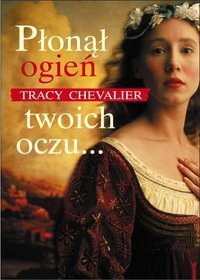
Płonął ogień twoich oczu...

Rate this book
Tracy Chevalier, author of the international bestseller Girl With a Pearl Earring, returns with another brilliantly rendered historical tale set in the waning days of eighteenth-century London.

Poet, artist, and printer William Blake works in obscurity as England is rocked by the shock waves of the French Revolution. Next door, the Kellaway family has just moved in, and country boy Jem Kellaway strikes up a tentative friendship with street–savvy Maggie Butterfield.

As their stories intertwine with Blake’s, the two children navigate the confusing and exhilarating path to adolescence, and inspire the poet to create the work that enshrined his genius.

311 pages, Hardcover

First published March 20, 2007

432 people are currently reading
7127 people want to read

About the author

Tracy Chevalier

74 books11.5k followers
Born:
19 October 1962 in Washington, DC. Youngest of 3 children. Father was a photographer for The Washington Post.

Childhood:
Nerdy. Spent a lot of time lying on my bed reading. Favorite authors back then: Laura Ingalls Wilder, Madeleine L’Engle, Zilpha Keatley Snyder, Joan Aiken, Susan Cooper, Lloyd Alexander. Book I would have taken to a desert island: Anne of Green Gables by L.M. Montgomery.

Education:
BA in English, Oberlin College, Ohio, 1984. No one was surprised that I went there; I was made for such a progressive, liberal place.

MA in creative writing, University of East Anglia, Norwich, England, 1994. There’s a lot of debate about whether or not you can be taught to write. Why doesn’t anyone ask that of professional singers, painters, dancers? That year forced me to write all the time and take it seriously.

Geography:
Moved to London after graduating from Oberlin in 1984. I had studied for a semester in London and thought it was a great place, so came over for fun, expecting to go back to the US after 6 months to get serious. I’m still in London, and still not entirely serious. Even have dual citizenship – though I keep the American accent intact.

Family:
1 English husband + 1 English son.

Career:
Before writing, was a reference book editor, working on encyclopedias about writers. (Yup, still nerdy.) Learned how to research and how to make sentences better. Eventually I wanted to fix my own sentences rather than others’, so I quit and did the MA.

Writing:
Talked a lot about becoming a writer as a kid, but actual pen to paper contact was minimal. Started writing short stories in my 20s, then began first novel, The Virgin Blue, during the MA year. With Girl With a Pearl Earring (written in 1998), I became a full-time writer.

Ratings & Reviews

What do you think?
Rate this book

Friends & Following

Create a free account to discover what your friends think of this book!

Community Reviews

5 stars
2,137 (13%)
4 stars
4,976 (31%)
3 stars
6,160 (39%)
2 stars
1,947 (12%)
1 star
408 (2%)
Displaying 1 - 30 of 1,582 reviews
Profile Image for Shan O.
18 reviews8 followers
March 18, 2008
I have long enjoyed Tracy Chevalier's historical novels, particularly "Girl With a Pearl Earring," which imagines the daily home life and creative process of 17th century Dutch painter Johannes Vermeer, as viewed from the vantage point of a teenage, Protestant maid. This more recent book,"Burning Bright," is set in 18th century Lambeth, a suburb of London, and imagines the public life and creative mind of painter and poet William Blake, seen through the eyes of two adolescents. While both books are entertaining and show good evidence of the author's grasp of the context in which each of these artists found himself, the former novel stands out above "Burning Bright" in terms of its character development and the richness of the setting.

While Chevalier's symbolism tends to be heavy-handed in both books, she does have a gift for evoking the sense of place and time in which her novels are located, and she offers fairly well-rounded (though not dynamic) characters whose relationships are complicated and unpredictable. She has a knack for revealing something about the now-famous artists in her novels by surrounding them with rich characters and interesting locations. Vermeer's growing family includes a roiling gaggle of children, a spoiled and demanding wife, and a business-woman for a mother-in-law; these people, not to mention Vermeer's men friends, help the reader to gain a sense of Vermeer by looking at those with whom he surrounds himself in his most private moments. We see Blake by coming to know his rather taciturn wife, Catherine; the two young people who follow him even to his mother's funeral across town; the neighbors who are suspicious of him for being so insular and odd; and Lambeth's pro-monarchy association, whose members try to bully Blake into supporting their cause; these characters help the author depict the political and social side of Blake's life, giving us less insight into his private world. In any case, Chevalier's Vermeer and Blake both benefit from the swirl of life going on all around them.

What makes "Burning Bright" less compelling a read than the novel about Vermeer is the distance she keeps from Blake. In her earlier novel, she brings her heroine, Griet, the Protestant maid, directly into the Vermeer household, where we can see him in action as an artist and as a husband and father; we do not get this view of Blake. Instead, Blake is spied on by an Jem and Maggie, who imagine him to be strange and curious and who come to know him during the course of the novel as strange, creative, and caring. While Chevalier attempts to narrate Blake's creative process, the reader never gets enough continuity from the various scenes that show him, in one moment, having conversations with his dead brother, Robert, and, in another moment, etching a copper plate for eventual use in the printing press. While we get a sense of what makes Vermeer tick, we never gain that knowledge about Blake. This could be less Chevalier's failing than it is the reality that Blake was truly enigmatic and odd, set apart in his ways from the mainstream of British art and writing even as he wrote and drew, etched and painted his way into history (and anthologies and museums!).

If I am to be bluntly honest, I must admit that it is, perhaps, my own knowledge of Blake, more than it is Chevalier's writing, that makes me view the novel as weak. Having written more than enough of my own about Blake and his work, I probably know too much to enjoy Chevalier's development of Blake's character and creative process. In my mind, he is not quite the same man that she depicts on the novel's pages. I suppose I'll have to write my own novel in order to understand the Blake I think I know!
Profile Image for Gary.
1,021 reviews252 followers
November 9, 2023
A gritty, exciting, sometimes sad and often heartwarming take about three teenage children in late 18th century London. Jem Kellaway and his sister Maisie are new to London, having come with their parents from the Piddle Valley in Dorset shire, and are befriended by street wise, spunky and warmhearted London girl, Maggie Butterworth.
This is at the time of the French Revolution, and there is alarm, suspicion and tension in England as a result. Maggie and Jem become fast reins and become acquainted with there neighbor poet and social reformer William Blake, and his wife. While the Kellaways must live under their mean spirited and cruel landlady Miss Pelham

The John Anstey circus is established near bye and soon Anstey's cold blooded Casanova sun ruins lives as Maggie must struggle with her unloving parents and her evil older brother Charlie. The neighborhood will soon be terrorized by the
The Association for Preserving Liberty and Property against Republicans and Levellers. Our young friends Jem, Maggie and Maisie will be faced with a myriad and threats and problems. They will be guided helped by the kindly Blakes who are under threat from the Association. A tale of the tribulations and suffering faced by the English working class which exists to this day. A engaging adventure, sometimes sad and frequently heartwarming.
Profile Image for Sammy.
207 reviews1,046 followers
April 13, 2008
UGH! I'm thinking I may have rated this book to high, but then again it wasn't that bad. This rating/grade is pretty much reflective of it's mediocrity. It wasn't good, it wasn't bad. Beautiful language, fun descriptions, interesting situations. No plot, random and half-developed characters. Those were the main pros and cons for this book that are popping up right now.

This book wasn't long but for some reason it felt like it took forever to get through and I think that was the main reason I didn't like the book as much. I believe the reason behind this book feeling like such a long read was that there was no clear thing carrying the novel along, not character, not story. It was disconnected and didn't flow so I was constantly wondering where it was going, what was happening? That could have possibly been remedied had I been attatched the characters but I wasn't. I didn't like any of them, they weren't interesting nor were they sympathetic.

But like I said, the book is mediocre. If you're still determined to read the book feel free, it's average and nothing special, at least for me, maybe it will be different for you.
Profile Image for Chip.
278 reviews
March 12, 2011
It can't be easy to be Tracy Chevalier - everyone expects a home run when her next book comes up, and ten billion critics all judge whether or not her effort succeeded. Few of her critics are willing to research the setting, the subject, or the historical context before espousing their opinions. Not so for Ms. Chevalier: the time and care she took in her research shows throughout this book and is invisible to most of the readers. (What I really want to say is 'what a bunch of whiners!' Here is a great book, well written, interesting subject, great characters, excellent context, and you want to complain that it failed to meet the amorphous anticipations even you can't articulate? Puleese!)

With this book I have completed the Chevalier canon, and I can assure everyone that she is a gifted writer, a conscientious researcher, an imaginative storyteller, and has a wonderful sense of compassion. Any of her books will have you thinking about their characters for a long time after you put the book away. Considering her body of work as a whole there is an interesting consistency of characters from book to book - you could almost lift them from one timeline and place them in another, change the name, and have the same person. There is a graduate student thesis here, in connecting the characters from work to work and what that would indicate about the creative process...

While the inclusion of Wm Blake as the historical figure anchors Burning Bright, the main plot line of the book is the growing relationship between Jem and Maggie. By the time the book ended I wanted to know how their story ended, and while we have an idea where they're headed we don't really know (a tribute to their unpredictable natures, perhaps). It is true that Blake figures less directly in this book, which only reflects what we know, or more accurately don't know, about the man. We can only know him at a distance. What we can do, and what Chevalier did, was to illuminate the moment in which he lived and worked. Standing in Blake's shoes, his poetry suddenly reads differently and I am enriched in my understanding. Who could ask for more? Thank you Ms. Chevalier. Well done.
Profile Image for Joyce McCombs.
111 reviews10 followers
January 5, 2009
As with Chevalier's "Girl with Pearl Earring".. .this book is a YOU ARE THERE experience. I couldn't put it down and devoured it in a few hours one recent afternoon. Set in 18th century London, with William Blake as a main character, the story revolves around the children who live next door to him and how they experience growing up in a turbulent political time, as well as understanding their roles in society and as young adolescents. Chevalier makes it seem perfectly possible that William Blake and his wife would of COURSE come to the aid of one of the children in the story and the readers believes it utterly, also. The rich prose transports one to the market, the circus, the pea soup fog of London, the Thames River (before good sewer systems!) and the every day hardscrabble existence of those living on the fringes of society -- no middle class here, though one seems to be emerging throughout the story. Although this is the story of an ordinary family, there's nothing less than extraordinary about this writing.. another Chevalier triumph, in this reader's opinion!
Profile Image for Heidi.
1,377 reviews267 followers
June 8, 2025
While Chevalier is great at taking the reader into another time and immersing them with the sights, smells and sounds of another world, this book was a little too similar to Falling Angels. Same set up, different time period. I did love the world of a 19th century circus in London and the way the author tied William Blake's famous poetry into the story, but the characterization wasn't as solid as Girl with a Pearl Earring.

(Reviewed 2/27/09)
Profile Image for Sara.
Author 1 book928 followers
June 22, 2011
I have truly liked other books by Chevalier, so I found this one a bit disappointing. I never got involved in the characters or felt like I knew them or cared what happened to them. It was far too much of an outside-looking in story for me. It seemed false to weave Blake into this novel, as if she couldn't proceed without a historic figure and she had picked him out of a hat.
Profile Image for Malcolm.
Author 41 books89 followers
February 17, 2009
London at the time of the French revolution takes center stage in this beautifully written novel featuring location and themes over plot. When craftsman Thomas Kellaway moves his wife Anne and teen-aged children Jem and Masie from the Piddle Valley in Dorset to London in March of 1792, they are all but overwhelmed by the contrasting grandeur and ugliness of the big city. Thomas hopes he can better support the family making chairs for the circus and Anne hopes distance will heal her tortured mind after the accidental death of their son Tommy.

Tracy Chevalier has drawn a deep and richly detailed portrait of London, especially the Borough of Lambeth where the noisy, dirty and boisterous lifestyle of the poor that differs so greatly from the quieter world of Dorset is accentuated when the circus comes to town.

Contrasts flow through the Kellaway's lives as surely as the Thames flows through London, and here the author draws upon William Blake's focus on "contraries," or pairs of opposites, for the novel's theme. London, in "Burning Bright" becomes an alchemist's athanor wherein the Kellaways will undergo their transformations beneath the piercing gaze of Blake, the adept who applies his "Songs of Innocence" and "Songs of Experience" within the novel as Holy Scripture.

Blake serves as a catalyst within the story line, yet he is a one-dimensional character who primarily speaks in philosophic riddles and quotes from his favorite poems. While Jem, Masie and their new, streetwise friend, Maggie, view the home of William and Kate Blake as calm sanctuary within a world where the trials of childhood are greatly magnified by the dangerous environment, the reader will come away having learned more about the Borough of Lambeth and than the famous poet and print maker.

Like her adult characters in "Burning Bright," Chevalier appears unwilling to step past Blake's fame, notoriety and fiery persona and confront the poet head on. Doing so would have brought closure to the novel for readers and characters alike. We have a well-crafted slice-of-life portrait of a rural family's brief sojourn into the big city. What we don't have is an overt look at what it finally meant to them.
Profile Image for Allie Riley.
508 reviews208 followers
September 20, 2013
Disappointing. I felt that she should have picked either Philip Astley or William Blake as her focus - attempting them both diluted the impact somewhat. She could, for example, have really dealt with the Dissenters issue in more depth had she just written about William Blake. I think there would have been more dramatic tension that way and a far more entertaining novel. As it was, despite the flowing prose, I found this an effort to read. Nowhere near as good as "Girl with a Pearl Earring", in my opinion. More's the pity.
Profile Image for Steffi.
1,118 reviews269 followers
December 31, 2019
Erst einmal deutliche Kritik am Verlag, der nur um an Chevaliers Erfolgsroman Das Mädchen mit dem Perlenohrring anzuknüpfen, diesen extrem kitschigen Titel wählte, der nichts mit dem Original (Burning Bright) zu tun hat.

Warum nun diesen Roman lesen, der sicher nicht gerade ein literarisches Meisterwerk ist? Weil ich seit einiger Zeit um William Blake herumeiere, von dem ich einige Illustrationen und Bilder kenne, aber keines seiner literarischen Werke. Weil mich die zwar einerseits interessieren, aber andererseits abschrecken: Zu religiös inspiriert, zu komplex, zu sehr in einem Jahrhundert verhaftet, das so weit entfernt ist, zu wenig weiß ich, welcher Übersetzung ich vertrauen soll (und dem Original bin ich hier wirklich nicht gewachsen).

Andererseits begegnet er mir gerade ständig. In Olga Tokarczuks Der Gesang der Fledermäuse übersetzt die Hauptfigur zusammen mit einem ehemaligen Schüler seine Texte. Gerade habe ich Philip Pullmans ersten beiden Bände der Trilogie His Dark Materials gelesen und beim Recherchieren stößt man immer wieder darauf, dass Pullman von Blake und seinen Kommentaren zu Miltons Paradise Lost beeinflusst war. Als ich jetzt den Chevalier-Roman las, kam die Sprache auf den Friedhof Bunhill Fields. Ich erinnerte mich, dass ich dort vor Jahren das Grab Blakes sah. Aber ach nein, wie ich jetzt herausfand, handelt es sich gar nicht um den Originalplatz des Grabes, wenn auch um den richtigen Friedhof. Erst vor ganz kurzer Zeit hat sich jemand bemüht, den historischen Ort des Grabes zu ermitteln. Und wer wohl? Philip Pullman, Präsident der Blake Society (https://en.wikipedia.org/wiki/Bunhill...). So schließt sich wieder ein Kreis.

Gerade eben läuft so nebenbei eine der Dokus auf ZDFNeo. Es geht um Berge und Reinhold Messmer spricht darüber, dass es kein Freude ist, die ihn mit Bergsteigen verbindet, sondern dass es um die Begegnung mit sich selbst geht, wenn man einen Berg besteigt. Und er zitiert Blake, der einmal davon sprach, das Großes passieren kann, wenn sich Mensch und Berg begegnen.
Blake ist gerade überall!

Und nun das Buch von Chevalier. Kein Meisterwerk, aber sehr lesbar, sehr gut recherchiert. Es enthält ein bisschen weniger Blake als erhofft, auch wenn ein paar seiner Verse angenehm eingestreut sind, wir ihn erleben, wie er mit Kindern fast besser klarkommt als mit Erwachsenen, dass er mit der Französischen Revolution sympathisiert.

Das ist alles nett, für mich wurde aber ein anderer Aspekt bedeutsamer: Der Roman beschreibt das London des späten 18. Jahrhunderts sehr gut. Das trifft vor allem auf Astleys Theatre (https://en.wikipedia.org/wiki/Astley%...) zu, in dem der moderne Zirkus, mit runder Manege und Clowns, quasi erfunden wurde. Wie die Menschen wohnten, wie die Kneipen funktionierten, welche Berufe es gab, welche Vergnügungen, welche Armut. Das alles gefällt mir sehr, auch wenn ich an mancher Stelle fast das Gefühl hatte, Chevalier versucht zu viel Historisches reinzupacken (dass die Kinder einmal auch noch an Bedlam (https://en.wikipedia.org/wiki/Bethlem...) vorbeikommen, schien mir z.B. zu viel, aber Bedlam als Kulisse ist natürlich auch arg verlockend). Mir gefiel auch, wie die Arbeit ds Knöpfemachens beschrieben wird – ein Handwerk, das wir uns alle kaum noch vorstellen können. Diese Details machen den Roman lesenswert.

Wer also etwas über das London dieser Zeit erfahren möchte, wird hier auf jeden Fall fündig. Wer wirklich etwas über Blake wissen möchte, sollte nicht (wie ich) weiter um ihn herumeiern, sondern anfangen seine Bücher zu lesen.
Profile Image for Albus Eugene Percival Wulfric Brian Dumbledore.
573 reviews96 followers
December 1, 2023
«The Imagination is not a State: it is the Human Existence itself» (1) (William Blake, Milton. A Poem in Two Books)

Londra. Lambeth, marzo 1792. Thomas Kellaway, valente costruttore di sedie, insieme alla moglie Anne e due dei suoi figli, Jem e Masie, dopo aver lasciato il piccolo villaggio Piddletrenthide nel Dorset, giunge nel quartiere di Lambeth, a Londra. Thomas è convinto di essere stato invitato dal padrone dell’Astley’s Amphitheatre, Philip Astley (1742-1814), a lavorare per lui come carpentiere nel circo...

Nel 2001 Tracy Chevalier visita una grande mostra di opere di William Blake (1757–1827, poeta, pittore e incisore britannico), allestita alla Tate Gallery di Londra.
La scrittrice ne rimane impressionata ed affascinata e decide di ambientare un suo nuovo romanzo a Londra nel 1792, traendo ispirazione dai due volumi di poesie di Blake, Songs of Innocence e Songs of Experience. Alla fine deciderà di concentrarsi su Songs of Experience: «to me the acquiring of experience contains more of a story than being in a state of innocence. The story of Adam and Eve is interesting because they tasted the apple, after all; otherwise there is no story.» (2)
E così, Jem e Maisie faranno amicizia con l’esuberante Maggie e, tutti e tre, affascinati dall’esempio e dagli insegnamenti, alle volte oscuri, del poeta, intraprenderanno un percorso di crescita e di superamento dell’Innocenza.
La Chevalier, sullo sfondo di una Londra di fine secolo caotica e turbolenta, racconterà con pensosa delicatezza della realtà domestica dei giovani protagonisti ed esplorerà i loro stati di innocenza e di esperienza, proprio come Blake lo aveva fatto nelle sue poesie.
Coinvolgente!

(1) «L'immaginazione non è uno stato mentale: è l'esistenza umana stessa.» William Blake (1757 – 1827), Milton. A Poem in Two Books (1804-1810)
(2) «per me l'acquisizione dell'esperienza contiene più storia dell'essere in uno stato di innocenza. La storia di Adamo ed Eva è interessante perché, dopo tutto, hanno assaggiato la mela; altrimenti non c'è storia.».
Profile Image for Gumble's Yard - Golden Reviewer.
2,188 reviews1,795 followers
January 22, 2020
Like most of Chevalier's books based around the back story to a work of art - in this case William Blake books: Songs Of Innocence And Of Experience, And Other Works (including "Tiger Tiger ...").

Harmless enough story and simple enough to read but very simplistic at times - the references to Blake's poems and clumsy and almost all the characters either thinly sketched or unconvincing (with their characters and motivations often clumsily set out in the text rather than described for the reader to judge). Even the opening of the book is full with repeated references to how big London seems compared to Dorset and the book closes with lots of comments from Maggie on how quiet the country is compared to London.
3 reviews
June 7, 2008
This is the third Chavalier book I have read the other two being The Virgin Blue and Girl with a Pearl Earring. As with the other two I found this an enjoyable and easy read. As well as having a story line Chavalier does a heck of a lot of research on the period and actual historic facts. Burning Bright is set in London in the late 1700's and follows a family's move there from the county of Dorset, from country to city is a dramatic change for all the family members and Chavalier manages to capture their experiences by describing the sights and smells of 18th century London. A thoroughly good read which made me want to next read a non-fiction book on William Blake who is one of the characters in Burning Bright.
Profile Image for Anna.
902 reviews33 followers
May 29, 2008
Burning Bright is a story about the middle ground between opposites: city/country, boy/girl, experienced/innocent. Unlike Chevalier other works this novel did not as clearly develop the primary historical character (William Blake) or the link between the action of the story the creation of his work (Songs of Experience, Songs of Innocence). The story was unfocused. There were too many characters and too many subplots. Chevalier's other works are far superior.
Profile Image for Len.
707 reviews22 followers
April 9, 2025
I am not certain if this was written specifically for an adult audience. There is a rape scene involving a fourteen year old girl, some sexual banter between the younger characters, and threatening physical violence in the community; however, it is nothing one of today's young adults would be unable to handle mentally. As a Young Adult historical novel its structure is very traditional. There is a young boy who comes with his family from rural Dorset in the southwest of England to find work in the city. He is amazed by all that he sees around him in late eighteenth-century London. Filled with innocence, he has fallen into a den of thieves and charlatans. Very quickly he meets a local girl, streetwise and with the experience of urban survival techniques, and they fall in love.

In an adult novel the love affair would be everything, probably tinged with tragedy, but here it hovers in the background until the very final pages. What matters is the adventure plot, exploring old London from the backstreets of Lambeth to Westminster Abbey, and meeting real historical people on the way: Philip Astley, proprietor of Astley's Circus and, above all, William Blake who knew about innocence and experience, though may have been a little in the shade when it came to the habits of tigers.

One feels that Blake should have become the main figure in the story, yet he remains stubbornly in the background. Some of his poems are recited and a little information is provided to explain who he was, yet his character is muted by an overriding appearance of avuncular concern for young Jem and Maggie and their seeing him as someone requiring protection from himself. It simply doesn't work very well. The descriptions of London working class life are fine, people struggle to earn a living and keep themselves fed and clean, they enjoy having a drink and going to Mr. Astley's circus if they can afford it, there is crime and prostitution, and there is camaraderie and friendship. The London smog is perhaps a little overdrawn for 1792, but the build-up to the rape scene required it. What it needed as a Young Adult historical adventure was an adventure plot. Jem and Maggie, for all their varieties of innocence and experience, are simply caught up in the lives of other people and end up trying to find a way out and survive.

Not bad as a history lesson. Very good when it comes to making Windsor chairs or Dorset buttons. Not inspirational as a guide to promoting interest in William Blake. And a bit of a struggle to read as much more than a series of set pieces pushing Jem and Maggie toward adulthood.
Profile Image for Laura.
7,128 reviews606 followers
June 25, 2017
From BBC Radio 4 - Book at Bedtime:
Tracy Chevalier's novel, abridged in 10 parts by Jane Greenwood, is set in London in 1792.

1/10. The Kellaway family, having arrived from Dorset to make a new life in Lambeth, find themselves living next door to the unconventional poet William Blake.

2/10. Jem and Maisie Kellaway and their new friend Maggie cross Westminster bridge to see the sights of London. They have two strange encounters with their new neighbour William Blake.

3/10. Jem and Maggie engineer a visit to the Blakes, where they are fascinated to find a full-size printing press on which the poet produces his own books.

4/10. When William Blake's mother dies, the children decide it would be a great adventure to follow the funeral party to Bunhill Fields burial ground.

5/10. After the funeral, the night closes in. Jem, Maggie and Maisie find themselves wet, lost and frightened in a maze of unfamiliar streets.

6/10. Maisie has taken a shine to John Astley, the local circus owner's son. A chance encounter leads the innocent girl into danger.

7/10. Maisie has been seduced by John Astley but Maggie enlists the help of the Blakes to save her from utter ruin.

8/10. When Lambeth holds a public meeting to demonstrate loyalty to King and Country, Maggie and Jem join forces to warn Mr Blake that he is to be targeted as a revolutionary.

9/10. Maggie confesses her guilty secret to Jem. Despite their growing closeness, when the Kellaways decide to return to Dorset he goes with them.

10/10. Maggie discovers that the pregnant Maisie has stayed behind and is being cared for by the Blakes. She takes charge of the situation and soon both girls are on the road to Dorset.

Read by Jenny Coverack.


http://www.bbc.co.uk/programmes/b008cqjt

4* Girl With a Pearl Earring
2* The Lady and the Unicorn
1* The Virgin Blue
2* Falling Angels
2* Burning Bright
8 reviews2 followers
February 2, 2011
The utter lack of resolution, both in terms of character growth and in terms of historical detail, was extremely disappointing. I can't say I expected anything better from the snailian pace; nor was I ready to forgive the author's annoying tendency to build one character to an emotional pitch of trauma, then leave off before that character can react and talk about another one who is even then idling languidly. Like many of you, I was unimpressed with the way William Blake remained only a minor character throughout, his views only an idle curiosity, and the childrens' influence on his work being--except for the practical matter of the mob--almost wholly absent. I reached the last page (actually, the last track on the CD) with the exultant relief that the book wasn't going to get any better, I was never going to find out what would happen to any of the main characters, and I could finally begin reading something else!
Profile Image for Tasha .
1,124 reviews37 followers
March 24, 2020
I enjoyed this slice of late 1700s London life. This follows a few young adults through a year in London. We get a taste of the times, no major drama, just a good feel for life in that year. The catalyst for the book seems to be the poet William Blake whom we meet as well through his friendship with these kids.
Profile Image for Chiara Pagliochini.
Author 5 books450 followers
September 20, 2015
«La tensione fra due forze contrarie fa di noi ciò che siamo. Noi le abbiamo entrambe, mescolate nel cuore, dove si danno battaglia e mandano scintille. Non siamo solo luce, ma anche tenebra, non abbiamo solo la pace ma anche la guerra. Siamo innocenti eppure smaliziati […] E c’è una lezione che faremmo bene a imparare: il mondo si rispecchia intero in ogni fiore».

Quando un romanzo della Chevalier finisce, qualcuno nel mondo si ritrova con la testa ciondoloni da un lato, una guancia appoggiata al pugno chiuso, il gomito puntellato sul tavolo, a chiedersi perché abbia intrapreso quella lettura e cosa sperava di trovarvi che invece non c’è.
Dopo aver letto due libri di questa autrice statunitense (il primo fu Strane creature), ho infatti l’impressione che la sua scrittura continuerà sistematicamente a mancare l’obiettivo che io pretendo da essa, lasciandomi perplessa e spazientita. E, se sono un po’ dura, è perché mi rattrista pensare che un romanzo di così belle promesse come L’innocenza, che scomoda persino il signor William Blake, finisca per non mantenerne alcuna.
Londra, fine Settecento. La famiglia Kellaway si trasferisce dal bucolico Dorsetshire alla caotica capitale inglese inseguendo un circo. Di essa fanno parte Thomas, intagliatore di sedie, sua moglie e due figli adolescenti, Jem e Maisie. Maisie si innamora di John, acrobata a cavallo, donnaiolo e figlio del proprietario del circo. Jem si innamora (ma non lo sa) di Maggie, monella londinese che nasconde un segreto. Vicini di casa dei Kellaway sono niente di meno che William Blake, poeta e incisore dalle scomode idee politiche, e la sua consorte. Il tutto è condito da una buona dose di pericolosa nebbia, pub, tagliagole, sfruttamento e prostituzione minorili, innocenza rubata, poesia…

Sembrerebbe un romanzo fantastico, neh? Ecco perché mi arrabbio: poteva essere un romanzo storico davvero ben riuscito, se la Chevalier non si fosse limitata ad accennare a ognuno di questi elementi senza approfondirne alcuno (sulla questione dell’approfondimento si veda alla voce: caratterizzazione psicologica mancata dei personaggi). Non basta la varietà degli ingredienti per fare una buona insalata: bisogna condirla. E, a mio avviso, qui c’è poco sale.
Persino il Blake tratteggiato dall’autrice risulta appena abbozzato, non più che una figura trasognata, estremamente gentile e con i Canti dell’Innocenza sempre sulle labbra. E qui lasciate che esprima tutto il mio risentimento verso le scelte editoriali: sono d’accordo sul fatto che i versi di Blake di cui la Chevalier infarcisce la narrazione andassero tradotti, ma non si poteva scegliere una traduzione graziosa, che almeno non tradisse l’irrinunciabile musicalità dell’originale? Incontrare i Canti dell’Innocenza e i Canti dell’Esperienza in questa veste mi suscita un moto di spontanea repulsione. Vi sfido a confrontare (rigorosamente con lettura ad alta voce):

Io mi aggiro per ogni strada urbana,
dell’urbano Tamigi lungo il corso,
e impressi in ogni volto segni incontro,
segni di sofferenza e abbattimento.
In ogni grido di qualunque Uomo,
nel pianto di paura d’ogni Bimbo,
in ogni voce e proibizione avverto
le manette forgiate dalla mente.


Con:
I wander thro’ each charter’d street,
Near where the charter’d Thames does flow.
And mark in every face I meet
Marks of weakness, marks of woe.
In every cry of every Man,
In every Infants cry of fear,
In every voice: in every ban,
The mind-forg’d manacles I hear…


Tutta questa filippica e alla fine hai dato ben 3 stelline?, vi starete chiedendo. Certo, perché L’innocenza non è un brutto romanzo. Solo, secondo me non è abbastanza bello. È in queste sfumature che si annida il risentimento del lettore.
Profile Image for Roberta.
2,000 reviews336 followers
April 18, 2022
Ho finito L'innocenza

Per ora il romanzo meno riuscito che abbia letto, tra quelli della Chevalier.
Il mio preferito è Strane creature, anche se l’ho conosciuta grazie alla La ragazza con l'orecchino di perla.
Anche Falling Angels, quello sulle suffragette, mi è piaciuto, ma qui la presenza di William Blake è una forzatura inutile. I 3 ragazzi avrebbero potuto vivere accanto a chiunque e il romanzo si sarebbe sviluppato nello stesso modo. Ha più impatto storico il signor Astley e il suo circo delle incisioni di Blake, che si muove sullo sfondo come uno zio eccentrico più che come un poeta. Persino l’eco della rivoluzione francese è debole.
Francamente mi aspettavo un contesto storico più dettagliato, più accurato, come mi ero abituata nei romanzi precedenti.
Non che la storia di Jem, Maggie e Maisie sia brutta, per carità: ma è una storia neutra, senza alti né bassi, piacevole per passare un pomeriggio rilassante e nulla più.
Profile Image for Gerry.
Author 43 books119 followers
June 28, 2023
Tracy Chevalier presents us with a real and vivid kaleidoscope of London in the late 18th century, complete with a visit to William Blake's work rooms. And it all makes for an interesting tale.

Jem Kellaway and his family move from Dorsetshire to London at the invitation of Philip Aspley of the circus fame as his father Thomas was a carpenter and Aspley wants to employ him.

The family then find themselves living next door to Blake and Jem, his sister and friend Maggie become friendly with the author/artist and his wife.

Circus life is fully explored as Thomas, with Jem as his assistant, become stage carpenters but there is all sorts of strife within the circus and the couple, plus sister Maisie, find themselves embroiled in it all.

Blake supports the French revolutionists and finds himself ostracised by fellow Londoners when he won't sign a petition but Jem and company take his side. And later when Maisie comes a cropper, Blake is there to help out.

Eventually Aspley moves on to Dublin for the winter, the Kellaways move back to Dorsetshire but Maisie stays behind. When friend Maggie discovers her hiding away she escorts Maisie back to her family for them to look after her. On arriving back at their village, Maggie delivers Maisie to her family and disappears but Jem is determined to find her ... he does so and, with presents sent by William Blake for them both, they enjoy the countryside together and dwell on the lessons learned from the great man himself.
Profile Image for Michael.
1,094 reviews1,968 followers
July 30, 2012
Great atmospherics in this tale about a family that moves from the county to the slums of London in 1792. As in the two other books of hers I read ("Girl with a Pearl Earring" and "Remarkable Creatures"), Chevalier is marvelous in her ability to immerse the reader in another place and time. Her cast of characters this time focuses on three young teens, siblings Jem and Maisey Kellaway, who are children of a furniture maker, and Maggie, a street-wise kid who befriends them, the daughter of a con man. The Kellaway's landlord is circus impresario Astley, who hires the Kellaway's father. Another tenant is the poet William Blake, who captivates the children with his poetry and art at a time when he is working on "Songs of Innocence and Experience." As the children negotiate many moral choices in the face of their budding sexuality and dangers from amoral adults of this world, Blake and his wife have an important impact on their choices. Conversely, the children are called upon to help the Blakes, whose radical sympathies with the French Revolution brings them much hostility from the community concerned about a parallel threat to the British monarchy.
Profile Image for Beth Bonini.
1,410 reviews326 followers
July 4, 2017
I've really enjoyed several of Chevalier's novels - especially The Girl with the Pearl Earring and Remarkable Creatures - but for some reason, and despite its wealth of historical detail, this one never really came to life for me. I plodded along with it for weeks, always waiting for it gain momentum, and it never did. I would rate it somewhere between 2.5 and 3 stars; at best, I had a tepid sort of liking for it.

It promises revolution - the French Revolution is taking place in the background - but never quite delivers. The poet William Blake is a character in it, but ultimately a rather shadowy one. His Songs of Innocence and Experience are woven into the text - particularly Tiger, Tiger and London, which are repeated on several occasions - and obviously the young characters of Jem (the innocent country boy from Dorset) and Maggie (the more worldly, streetwise Londoner) are also meant to represent innocence/experience. But for all of its sometimes vivid scenes of London life, not much seems to happen. I enjoyed the scenes involving Philip and John Astley- and their equestrian circus acts - but despite the latter's scoundrel behaviour, these real-life Londoners mostly just provide a bit of colour. The novel felt like a series of snapshots - scene, scene, scene - that have to stand in for an actual plot. It's pleasant enough, especially if you are fascinated by this time period in history, but it never really goes anywhere . . . other than back to Dorset, I guess.

"I wander through each chartered street,
Near where the chartered Thames does flow,
A mark in every face I meet,
Marks of weakness, marks of woe." (From London, Songs of Experience, William Blake)
Profile Image for Chris.
757 reviews15 followers
October 30, 2019
2.5 stars. This book overall and unfortunately, fell flat for me. It was just an okay read.

What was of interest and kept me reading, was that there was a circus element in the story and the family of which the book was about, got sucked into the magic and promise of the circus boss and the atmosphere. If it were not for the circus thread running throughout the entire book, I might not have forced myself to finish the book; I have a thing for the circus. Anything circus related and I’m in.

As it was, there were some other engaging parts of the story, but not enough to propel a higher rating.

I like this authors writing but feel that this particular one fell short of expectations. I’ve got another one of her books in my TBR stack and am hoping it will elicit a more pleasurable reading experience than this one.
Profile Image for Sooz.
159 reviews28 followers
April 10, 2017
The most prominent characters in this story are "Jem" -- a boy of maybe 16 -- and a girl of the same age by the name of Maggie. The story begins in a small village in 18th century England and very soon moves to London, where Jem's family moves to find work. Here, Jem meets Maggie, who shows him city ways but also comes to rely on his more stable and grounded personality. As I read this, I was appreciating Chevalier's research and thinking back to a couple of her other novels I've very much enjoyed, two of them being "Remarkable Creatures" and "Girl with a Pearl Earring". Her books make such engaging reading by including interesting historical details. In "Burning Bright", Chevalier describes how women in the small village of Piddletrenthide did "buttony" -- the making of delicate buttons, at the rate of up to sixty a day, which were then sold to a "button agent" for a bit of money. I also noted the details about the poet and illustrator, William Blake, who was included in the story as a neighbor, and this led me later to read more on the internet about him. All in all, an interesting and well-written tale, though not a tremendous amount of mystery or action here. Still, I enjoyed the read.
Profile Image for Rebecca.
2,173 reviews3 followers
July 15, 2014
This was a good story, but didn't have the most captivating plot. It took a while to get into it and still I felt like I was waiting for more. The characters were good, if a little under-developed. I would have liked to know more about Mr. Blake and his "revolutionary" ties. I would also like a little more emotion from Jem and Maisie. This book was not as good as "Girl with a Pearl Earring", so I was a little disappointed. I was left thinking "that was it?" when I finished. It got better in the end, but I still wasn't totally hooked. A quick and entertaining enough read. I still look forward to reading other books by Chevalier.
Profile Image for piperitapitta.
1,049 reviews462 followers
June 18, 2017
romanzo+circo+falegname+londra

era da un po' di tempo che mi tornavano alla mente brandelli della trama di questo romanzo.
la famiglia povera che abbandona la campagna del dorset approdando a londra in cerca di fortuna, il padre che trova un impiego come falegname in un circo, la mamma che ricama o intreccia vimini, la figlia minore che scopre il mondo degli adulti, la politica e l'amicizia segnando così il suo addio alla spensieratezza e alla fanciullezza in un clima di grandi cambiamenti sociali e politici.
però non riuscivo proprio a ricordare di quale libro si trattasse, niente, neanche un indizio.
così oggi ho inserito un po' di parole chiave su google (romanzo+circo+falegname+londra) e come d'incanto è uscito il titolo di questo libro, che per assurdo non ricordavo assolutamente di aver letto: se qualcuno mi avesse chiesto a bruciapelo se avessi letto l'innocenza, l'ultimo romanzo della chevalier senza fare un minimo accenno alla trama, sicuramente avrei detto di no, che non l'avevo letto!
cosa vuol dire questo, che non mi è piaciuto?
o al contrario che in fondo mi ha colpita abbastanza perché a distanza di tempo sono riemersi parecchi elementi della storia, pur non riuscendo a ricollegarli al titolo e all'autrice?
ai posteri l'ardua sentenza :-)
January 4, 2012
Tracy Chevalier has written some excellent books in the past but this definitely isn't one of them! I found it dull (the plot is particularly weak and lacked substance) and didn't really care for any of the characters (they are one-dimensional, predictable and never really come alive). Chevalier fails to bring the London of 1790s alive as she did with Delft in "Girl With A Pearl Earing" and her description of the city is never-ending and rather forgettable. The book completely lacks passion and is neither burning nor bright.
Displaying 1 - 30 of 1,582 reviews

Can't find what you're looking for?

Get help and learn more about the design.