What do you think?
Rate this book


New York Times bestselling author Michael Gruber, a member of "the elite ranks of those who can both chill the blood and challenge the mind" (The Denver Post), delivers a taut, multilayered, riveting novel of suspense
Somewhere in Pakistan, Sonia Laghari and eight fellow members of a symposium on peace are being held captive by armed terrorists. Sonia, a deeply religious woman as well as a Jungian psychologist, has become the de facto leader of the kidnapped group. While her son Theo, an ex-Delta soldier, uses his military connections to find and free the victims, Sonia tries to keep them all alive by working her way into the kidnappers' psyches and interpreting their dreams. With her knowledge of their language, her familiarity with their religion, and her Jungian training, Sonia confounds her captors with her insights and beliefs. Meanwhile, when the kidnappers decide to kill their captives, one by one, in retaliation for perceived crimes against their country, Theo races against the clock to try and save their lives.
400 pages, Hardcover
First published December 24, 2009



Indus Valley Civilization
Civilization Name: Indus Valley Civilization
Period: 2600 BC -1900 BC
Originated Location: Around the basins of the Indus River
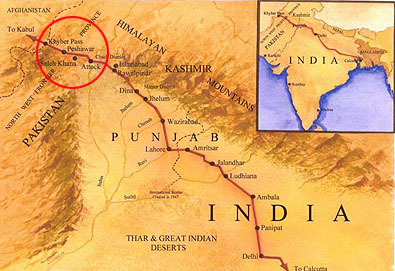
Current Location: Northeast Afghanistan to Pakistan and northwest India
Major Highlights: One of the most widespread civilization, covering 1.25 km
Indus Valley Civilization
One of the oldest civilizations in this list, the Indus valley civilization lies at the very cradle of subsequent civilization that arose in the region of the Indus valley. This civilization flourished in areas extending from what today is northeast Afghanistan to Pakistan and northwest India. Along with Ancient Egypt and Mesopotamia, it was one of three early civilizations of the Old World, and of the three the most widespread, covering an area of 1.25 million km. Entire populations of people were settled around the basins of the Indus River, one of the major rivers in Asia, and another river named Ghaggar-Hakra which once used to course through northeast India and eastern Pakistan.
Also known as the Harappan civilization and the Mohenjo-Daro civilization – named after the excavation sites where the remains of the civilization were found, the peak phase of this civilization is said to have lasted from 2600 BC to around 1900 BC. A sophisticated and technologically advanced urban culture is evident in the Indus Valley Civilization making them the first urban centers in the region. The people of the Indus Civilization achieved great accuracy in measuring length, mass, and time. And based on the artifacts found in excavations, it is evident the culture was rather rich in arts and crafts. [1. 10 Oldest Ancient Civilizations ever]
This is now the nightmare of the Pashtun male. The women are out of control and it is the women who have the honor of the men in their hands. The women know everything. They know who likes to fuck boys, and who is a drunk, and who can’t get it up in the marriage bed, and for this reason they can never be allowed to escape the iron grip of the men. (162)
That’s what I was thinking while the briefing was going on, and I was thinking also about the strange gravity of American soldiers, how isolated they are from their own society, where death is ignored or, when it comes, gets treated like an unfortunate mistake, or sentimentally, with the candles, the ribbons, the teddy bears, and how they struggle to make war safe for their guys, like it was pro football or something. And the heaviness of their wit, their American joshing, the sports talk, so different from that of my grandfather and his friends or my Pashtuns. They are terrific men; I admired them, but right there in that meeting I understood that I was not and never would be like that. I would never be easy with such men, nor they with me, and my American self sort of dribbled away. I looked out at the meeting through Pashtun eyes and felt like the oldest man in the room. (337)
It’s no mystery why shepherds have featured so much in the great religions; being out in all weathers, under nothing but the sky, you can feel the eye of God on you all the time, and also the stupidity of the sheep, the constant worry over what they’re getting into, makes you think you should try your hand at fixing the stupidity of men. That, and the land itself, the bony country of the Pashtun: looming hills, red and tan and black above the evergreen forests, and the other colors I can’t name, depending on the light and the season; and the softness of the floodplains, their green more gracious and lovely for the contrast with their setting of flint. The white of the apricot trees in the spring, and in early summer the whole valley would be red with poppies, and in their midst you could see from the heights the glittering, braided river. And the air of the place, sharp as glass shards in the winter, like breathing live flame in deep summer, and the nights, ear-hissing silent except for the imbecile moaning of the sheep and the eternal wind in the stunted thornbushes, and overhead a million stars wheeling over the black rim of our canyon.
Why don’t you look at me properly?/Why do you magnify my suffering?/The torturer flays for a reason./What’s yours, beloved?/Ask your fierce eyes/Why they cut me to pieces.--Rahman Baba