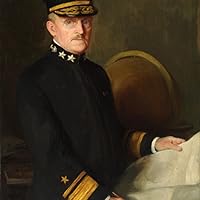
Geoffrey F. Miller, Associate Professor of Psychology at the University of New Mexico, is an American evolutionary psychologist, and author of four books.
He's interested in psychology, polyamory, politics, Effective Altruism, existential risk, AI, animal welfare, and science fiction.
Miller is a 1987 graduate of Columbia University, where he earned a BA in biology and psychology. He received his PhD in cognitive psychology from Stanford University in 1993 under the guidance of Roger N. Shepard. He was a postdoctoral researcher in the evolutionary and adaptive systems group in the School of Cognitive and Computing Sciences at the University of Sussex, UK (1992–94); Research Scientist at the Center for Adaptive Behavior and Cognition, Max Planck Institute for Psychological Research, Munich, Germany (1995–96); Senior Research Fellow, Centre for Economic Learning and Social Evolution, University College London (1996–2000); he has worked at the University of New Mexico, Albuquerque, since 2001, where he is now Associate Professor. In 2009, he was Visiting Scientist, Genetic Epidemiology Group, Queensland Institute of Medical Research, Brisbane, Australia.
Long ago I watched a debate on Youtube about whether or not the British should have intervened in the First World War. I was thoroughly disappointed that none of the historians on the panel, all of whom were British, even mentioned the naval aspects prior to the war, apart from some vague allusions to the Anglo-German Naval Race.
This was incredible to me, given the intimate awareness of seapower at the time. The British have since, apparently, become seablind.
The greatest argument for intervention was, of course, the British abandonment of the Mediterranean and the general weakness of the British position in that sea.
Already in the time of Salisbury the British were reorienting their global strategy, and seeking to find foreign assistance in maintaining their position. Scholars like Cedric Lowe and Paul Schroeder have argued that the Franco-Russian alliance constituted the first crisis in the Mediterranean and England's association with Austria and Italy.
These same scholars argue that the British quietly shifted their focus from Constantinople to Alexandria, and thereby no longer felt obliged to support Austria in the Balkans against Russia.
All of this was well before the events described in this work, but it establishes that 'millstone' is an apt description. The British commitment to the Mediterranean was already constituting a glaring weakness in England's geopolitical configuration.
The necessity to defend extensive Mediterranean interests was to put increasing pressure on the British Government after the advent of the German naval challenge.
Here Miller is quick to point out that when the Anglo-French Entente was first made the British were relatively secure in the Mediterranean, but they became increasingly less so.
The crux of the work, then, is the increasing, if subconscious, British dependence upon France.
Scholars such as Jon Hendrickson and Paul Halpern have published works examining the pre-war Mediterranean situation and have drawn attention to the surprising influence of the Austrian Navy, a small but very efficient and respected force. As well as to the growing Italian Navy.
It is an irony that Mahan published his seminal work in 1890, which concluded by stating that France and Britain were traditionally the greatest sea powers, and, at that time, still were. Mahan assumed that was likely to continue for the foreseeable future.
He was wrong. In the glory days of British seapower France was the only peer competitor. Jeremy Black wrote an insightful essay on the importance of the Spanish Navy, but apart from those two all other navies were no serious challenge.
Thus the structure of the British Empire began to erode once the age of navalism, partially provoked by Mahan himself, resulted in the rise of navies all over the world.
Navies that had never existed before, at least not in any large or serious form. The newly united Italy and Germany began building powerful fleets. Russia and Austria, never serious naval powers before, became ones. Even small states like Turkey, Spain, Greece, the Latin Americans, China, and Japan, all began building or buying dreadnoughts. The US Navy grew rapidly too.
The era of Trafalgar was over, and as Miller quotes more than once, Admiral John Fisher said we cannot be strong everywhere.
Once upon a time England could be strong everywhere, because there was only France to consider. Now France was joined by a half-dozen new major naval powers, and a half-dozen more minor ones.
Fisher's tenure at the Admiralty reflected this change in global affairs by the withdrawal of foreign stations, and by the Foreign Office's agreements with foreign powers. An agreement was made with the US over the Caribbean and the Panama Canal. An actual alliance was signed with Japan following the withdrawal of British seapower from the Far East.
The last citadel was the Mediterranean, where at last the demands of the German challenge forced the British to enter a de facto alliance with France to secure their own interests.
Miller stated that he meant this to be the first book of his series, but ultimately made it the final entry. I seem to have began it backwards because I have not read his other two works yet.
This contained less information on the Austrian and Italian navies than I had hoped, and there is not much about the German Navy either.
Understandably given that Miller seems to be an independent scholar working with limited means (a very commendable and impressive effort), this focuses primarily on British policy and is supported by documents from the British Government.
It had endless excerpts of memoranda, of minutes, of speeches, and so on from all of the major players in the British Government. It starts with Fisher and Beresford, Lansdowne's original negotiations, the arguments over strategy between the two Wilsons (Henry for the Army and Arthur for the Navy), the decision to deploy the BEF to the continent, and much more.
Some very interesting episodes are Miller's comments on the arguments of Andrew Lambert on Churchill's supposed substitution of battleships for submarines and destroyers, and the debates between McKenna and Churchill as to the utility of pre-dreadnoughts where Churchill appears to have been rather inconsistent.
McKenna, among others, began to fear the drift towards reliance on France and we receive many quotes to that effect. That some politicians would rather make the attempt to hold in the Mediterranean using Britain's own resources than abandon it on the supposition that France would come to the rescue.
They realised that this engendered a moral commitment on the part of England in the event France went to war. I feel that the majority of the book thus revolves around substantiating this moral commitment, and especially revolves around the policies and actions of Edward Grey as Foreign Secretary.
Another point Miller makes is that the real reason for British intervention was for fear of French collapse, and by extension collapse of Britain's own position in the Mediterranean, and not the issue of Belgian neutrality. There is even an interesting passage from Asquith as to the obligation of England to uphold the neutrality of Belgium alone when all other signatories have repudiated it.
Belgium was, however, a useful rallying point and something more tangible than 'conversations' with France.
Despite Churchill's insistence that France and England had carried out their naval dispositions to their full advantage, independently, France saw England as committing herself to defending France's Atlantic coasts.
Churchill's argument is strong, and echoes Fisher who said it was pointless being strong in a secondary theatre at the expence of the primary theatre. And France, knowing she could not beat the German Navy at any event, was determined to be supreme in the Mediterranean.
Nonetheless France was able to blackmail England to a considerable degree by claiming that she had made her naval dispositions on the assurance of British assistance. The British had never committed themselves to anything, and one might refer to their policy as one of strategic ambiguity.
Like the more modern cases of that phenomenon, many have argued that Britain's position was potentially deterrent. Many critics have said since 1914 that had England made her decision to stand by France clear early on in the crisis, that Germany would have backed down.
Miller does not think so. Germany was unconcerned about British intervention and would not be deterred, but he also presents an interesting flip side to this in that he suggests such a declaration might have hardened the attitudes of France and Russia, and have made France less sensitive to British interests.
Miller argues that instead the British ought to have entered into an alliance with France in 1912 when Arthur Balfour proposed it, and argues that the British would have been better off if they had abandoned the Mediterranean entirely as many in the Navy since the eminent historian William Laird Clowes demanded as early as the 1890s.
His conclusions are solidly established and very convincing, backed up by a mountain of paperwork. You will find yourself bogged down in cabinet meetings, conferences, correspondences, and everything in between. The book will take a long time, but it will provide much information on the importance of the Mediterranean to British policy, and its relation to the Anglo-German Naval Race.
As a final aside, Miller quotes a number of Navy officials who believed that the Austrian Navy was built as a deliberate support to Germany, to draw as many British ships as possible from the North Sea. Miller states that the Austrians did deny this, but it is a tantalising theory that would at least explain the purpose for the Austrian Navy, a primarily telluric state that never had any seapower prior to age of navalism.