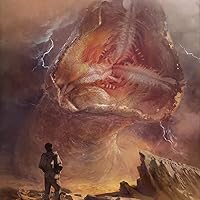
Centauri Prime declares war on the Interstellar Alliance in Book Three of the epic trilogy that continues Babylon 5's brilliant legacy . . .
Blind to the fact that he is a pawn in the Drakh's deadly strategy, Centauri prime minister Durla launches an overwhelming blitzkrieg, sending Centauri warships to devastate other races' homeworlds and pave the way for total conquest. Yet Durla is forced to fight a war on two fronts. Even as he mobilizes the massive space fleet for its glorious attack, resistance leader Vir Cotto works feverishly to counter the Drakh's evil influence on Centauri Prime.
Emperor Londo Mollari possesses the key that can reveal the presence of the Drakh, but to do so would spell disaster, so he is forced to remain silent. But when the Drakh bring another pawn into play--David Sheridan, son of Alliance president John Sheridan--the time for silence may be past. If Vir and the Resistance are to prevail, it will be only through action, and with help from very strange allies . . .
Peter Allen David (aka David Peters), often abbreviated PAD, was an American writer of comic books, novels, television, films, and video games. His notable comic book work includes an award-winning 12-year run on The Incredible Hulk, as well as runs on Aquaman, Young Justice, SpyBoy, Supergirl, Fallen Angel, Spider-Man, Spider-Man 2099, Captain Marvel, and X-Factor.
His Star Trek work included comic books and novels such as the New Frontier book series. His other novels included film adaptations, media tie-ins, and original works, such as the Apropos of Nothing and Knight Life series. His television work includes series such as Babylon 5, Young Justice, Ben 10: Alien Force and Nickelodeon's Space Cases, which he co-created with Bill Mumy.
David often jokingly described his occupation as "Writer of Stuff", and he was noted for his prolific writing, characterized by its mingling of real-world issues with humor and references to popular culture, as well as elements of metafiction and self-reference.
David earned multiple awards for his work, including a 1992 Eisner Award, a 1993 Wizard Fan Award, a 1996 Haxtur Award, a 2007 Julie Award, and a 2011 GLAAD Media Award.
4.0 stars. Satisfying conclusion to a really good tie-in series to Babylon 5. Probably more enjoyable to fans of the show (of which I include myself) as it is assumed that the reader is familiar with much of the backstory. A fast paced, enjoyable read.
I had a hard time rating this book. On the one hand it brought the story full circle and wrapped up plots left over from the show and first two books nicely. On the other hand parts were very rushed and the characters created for the books were undeveloped.
Characters from the show: Peter David did a fantastic job writing the already established characters. You could hear their voices while reading and their growth in the years between the end of the show was (mostly) handled very well. I wish Peter had done more with Marial . The whole love spell that Galen put on her from book 2 turned her into more of an accessory than a character. She was relegated to be a tool used to show Vir's development (more on that later) and to show how much of a prick Durla is. It's a shame that David went to the well of victimizing a woman in the story in order to provide a source of guilt for the main character. Granted this was written pre- Women in Refrigerators movement but the fact that this is in there feels dated. Especially when the show didn't go that route. Marial was NOT a sympathetic character on the show or when she first came around in the books but by the end she was pathetic. This was the one point regarding Vir's growth that I couldn't get behind. He purposely put her in harms way even though she was not in her right mind leading to her being regularly abused by Durla. He had to make a lot of hard decisions but that one was impossible to forgive.
Characters created for the books: Everyone from Durla, to the members of the Centauri ruling class, to Vir's resistance members were undeveloped. They were either cookie cutter characters (the Centauri general is no nonsense and by the book, the former miner thats with Virs group is gruff and unassuming, etc) or so expendable that they didn't warrant any additional development. This left it so when something happened to one of them you didn't really care.
There were several parts that I would have liked more on. Vir's resistance doesn't show up too much. G'kar is just left in a call to rot and mostly forgotten about until the end. David's kidnapping by the keeper happens so close to the end that there was little time to give that event the depth it deserves.
Initially I gave this a 4* review. As I started with the review though I really saw the flaws. A lot of the flaws come from the rushed feeling of the book. It's like watching a 3 hour movie that had to be edited down to under 2 hours for TV viewing. It's still entertaining but there isn't a lot of meat to it. This may not be fair to the book itself. The entirety of the trilogy is less than 900 pages. Whether this was the authors choice or the publishers (considering most of the B5 books are the same size I suspect the later) I dont know. Whatever the reason, that necessitates a condensed story and the book as a whole suffers for it. I still enjoyed it in spite of the flaws. It brings the story to a satisfying yet quick conclusion.
It also delivers one of the best Garibaldi lines: He's just about to kill the main Drakh in order to save Vir. Before pulling the trigger he says "What's up Drakh". That sums up the characters humor to a T and made me laugh out loud.
This entire review has been hidden because of spoilers.
In this final book of the “Legions of Fire”-trilogy we get an answer to almost every question the Babylon 5 TV-series left unanswered.
The famous Star Trek author Peter David offers a story that is structured in a way that doesn't allow the reader to lose any interest for a second. The story is packed with insightful characterization, story twists and dramatic moments, is emotionally stimulating yet by no means is it sentimental or overly melodramatic.
“Out of the Darkness” is necessary reading for anyone who watched the TV-series, since it offers so many answers so many viewers have been searching for. It gives you something to think about for days.
"Out of the Darkness" is, without a doubt, the best Babylon 5 novel so far. Indeed it’s one of the best if not the very best Babylon 5 story ever told in any medium. A masterpiece, truly and honestly.
While I loved the first book of the Legions of Fire trilogy, and the focus on the Centauri characters in general, I felt this book and the middle book had a great deal of wasted potential. The kidnapping of David Sheridan was a momentous enough event that it could have covered the entire book and added a tight thriller/political conflict element. Not to mention the fact that how the kidnapping took place and the events that surrounded it was one of the greatest questions left over from the episode "War Without End, part 2" in Babylon 5.
A few other things that irritated me in books 2 & 3:
- Senna is almost entirely missing from this book, despite the fact that Londo made major concessions to the Drakh to save her in Book 1. Also, despite being portrayed as an intelligent woman she has somehow, inexplicably, become no better than a governess. I liked the tie in to "In the Beginning", but I would have preferred a better reason for her becoming the caretaker of those children than "she has nothing better to do". - The Prime Candidates in general. I understand that Nazis were bad, but does every evil empire have to be modeled after them, including obvious Hitler Youth analogies? I found it hard to believe that the Centauri as a culture would ever become Fascist. In my mind they were all too egotistical and aristocratic to allow themselves or their children to become the faceless drones to another man's ambition as they do with the Prime Candidates. Basically I just felt it would have been less lazy on the part of the author to pick a different "evil empire" to model the Drakh takeover after, perhaps the French Terror or the Roman proscriptions.
- Mariel's mind rape. I found this plotline infuriating beyond words and insulting to the characters of both Vir and Mariel. Vir would never allow such a thing to happen, and even if he could not prevent it due to ignorance he would never continue to associate with those responsible, in this case the Techno Mages. The fact that the Techno Mages blame the horrific lobotomy they commit against Mariel on Vir is disgusting, as they drop terrible news on him in the worst way possible, ask his permission to take revenge on her while he's in a moment of weakness, then essentially destroy her mind and personality without any forewarning that this was the step they were going to take. While Vir is at fault for giving permission, he never could have anticipated the abhorrent steps the Techno Mages would take, and I found it especially despicable that the author presented this event as if it were a moral failure on Vir's part, rather than the tragedy/murder that it was. Nevermind that Vir of all people would know not to ask for favors from mysterious strangers! That's the whole point of his conflict with Morden! He would never in a million years acquiesce to a bargain with people like the Techno Mages, he knows better and to show otherwise is to ignore his character development in the series. Also, was it really necessary at all to have this plotline at all? Why couldn't Mariel have been involved in events of her own power, perhaps as a double-agent, rather than as a mind-wiped slave?
-The lack of G'Kar. We are told that G'Kar and Londo, two of our favorite characters from the series, spent months together in the palace and yet we see almost none of it. I can't help but wonder if the author did not feel up to the task of writing G'Kar, as in general he should have had a much larger role in the way events played out. My personal pet peeve was the fact that he always addressed Londo Mollari as "Londo" in this book, even though in the TV series he almost uniformly refers to him as "Mollari" and no reason for this sudden familiarity is given.
- Vir was incredibly out of character in books 2 & 3. I understand that there was some character development, along the lines that he has had to grow up and take on the responsibility of saving his people, but that's basically ignoring all the character development he had in seasons 4 & 5. Book 1 gave Vir some great, in character lines, but by the end of the trilogy he was unrecognizable.
- Durla, the author's original character and Londo's villainous Prime Minister, was an utterly uninteresting and pathetic character for all the screen time he received. He felt like a straw man and a buffoon. I would have much preferred that he was shown as intelligent and dangerous, along the lines of Lord Refa. At least then his rise to power would have been believable. His obsession with Mariel in the face of her apathy was frankly pathetic.
- The wrap up and salvation of Centauri Prime felt extremely flat to me, like it was rushed towards the end of the book. Multiple plotlines (like the mining planet?) got dropped along the way and the plot threads couldn't seem to tie together at all. It seems as if the author either got lazy or just ran out of time. A huge disappointment for a book that had all the built in elements for a great epic.
Elements I liked were largely confined to Londo's POV, which the author pulled off fairly well. I understand that as a prisoner, Londo couldn't really be central to events but as the best written character in the story this too was a huge disappointment. I generally like Peter David as an author, and I love the material that was covered in these books. It just felt like the author lost focus on the characters after Book 1 and made a very sloppy effort to wrap up one of the most interesting storylines in the Babylon 5 universe. Honestly it deserved better.
This entire review has been hidden because of spoilers.
We circle back to season 3 for the climax of the fight for Centauri Prime. We saw brief flashes of this in season 3, but this book puts a few of them in a completely different light. It's must reading for fans of the TV show.
And so it begins - AGAIN. If you read the three books of Legions of Fire you get the "behind the scenes" lives and machinations within Centauri Prime during Emperor Mollari's reign until his death. Thrown in are a few of his wives, minions of the Shadows, unexpected heroes and helpers. If you've watched all 5 seasons of B5, this series is a great way to satisfy so many loose ends.
The last book of the Centauri Chronicles is so desperate to finish itself that you almost feel bad for it. Anything exciting is shoved into brief dialogue exchanges or diary entries.
Vir is horrible. Senna has been reduced to a boring love-interest desperate to get into Vir's waist coat. The technomages are just as useless as always. Sheridan is angry. Delenn is a wilting flower. David Sheridan is under-utilized. Doctor Franklin is a doctor.
When this book isn't dull, it's infuriating.
I guess that's the problem with the whole series. It was like someone realized that the fans wanted to know more about Centauri culture and Londo's fate. But then the books were sent through a bizarro filter and we end up with sex-jokes, Centauri quoting Winston Churchill and Londo hiding out in his throne room and writing in his journal about stuff that would be much more exciting to go into than say... David Sheridan's birthday party!
I would do anything to go back in time and stop myself from reading this series.
And even if you sit there, shaking your head, thinking like me all those years ago that ‘surely, it can’t be that bad’, and that I am overreacting…
then fine.
But when the inherent awfulness has seeped into you, and you realize you can’t even enjoy the show the same way you used to, remember that I warned you.
First, I need to give Peter David massive credit. The show did a lot of foreshadowing regarding prophecy and whatnot and I am always a little skeptical that when something like that happens a writer is going to be able to weave the plot together in a way that makes sense and holds true to expectations. David did an amazing job of that.
Book 3, Out of Darkness, is without a doubt the best book in this trilogy in my opinion. The trilogy as a whole got better as it went along which is rare. It picked up speed and quality like a boulder made of science fiction awesomeness rolling down the hill.
One thing I noted as I made my way through this trilogy, is that the quality of the writing was generally much better than I've come to expect from comparable Star Trek novels which are all kind of mediocre in general. This was genuinely pretty good.
It's a decent conclusion to the trilogy, but there are some elements that should have been given a LOT more space (eg. David's kidnapping and recovery). I was also annoyed that Mariel was so poorly treated as a character, without an ending befitting what she has gone through. And Senna and Timov felt like window dressing rather than characters... hmm so the female characters in the Legions of Fire trilogy didn't get much to do. Funny that. Anyway, I stayed up late to finish this book, so I must have liked something about it...
Whenever Peter David was asked to play in other people's sandboxes the novels he produced were always decent. This is no exception. It's a fine conclusion to the trilogy and dovetails well into the Babylon 5 universe. The next time I rewatch B5 the experience will be further improved by having read this and the preceding novels. Why 4 stars, not 5? Well, as with the other books in the trilogy, I can't help but think that the story could have got where it needed to more than a little faster. But that's the only caveat. It's a still a must for a true B5 fan, hunt out a copy if you can.
make no mistake: this is not a well-written book. but if you're a b5 fan, there are three or four moments in this book that will really nail you to the wall, emotional-hackles-wise. enough for me to flag it for a fast friendly reread or two later in life.
the same most definitely cannot and should not be said for its two predecessors in this trilogy. both came back with a warning: do not approach. this should have been one 400-page novel, not three 250-page ones.
Probably the weakest of the official books outlined and sanctioned by JMS. I'd say, if you're a huge B5 fan/completionist, read it, otherwise skip it. There's a lot of important dangling plot threads from the show(s) that get wrapped up here which is great for completionists...but as a standalone book, or even as the finale to a stand-alone trilogy, it doesn't work wonderfully.
Great tying up of the bits left outstanding from the series. Does Vir become emperor? What happened when Sheridan jumped forward? Did David get the Drakh implant? And very satisfying as an ending.
A very good end to this trilogy couldn't put this book down. Thanks to Peter David for telling this story. Loved the character development especially that of Vir.
The joke in the second last chapter is the most out of the blue (and fantastically delivered) in the franchise and the book gets an extra star for it alone
Babylon 5: Legions of Fire: #3 Out of the Darkness by Peter David This final part of the Centauri trilogy is perhaps the weakest one - it's a fast read, suspenseful and, of course, leading to the prophesized conclusion... but maybe that's its problem right there: it's too straight-forward, too predictable.
While Durla, the prime-minister, gains ever more power, and starts to resemble Cartagia in his power-lust and self-aggrandizing folly, Londo's getting weaker by the year. Vir's busy leading the resistance-movement (getting veiled hints from Londo), and David Sheridan turns 16 years old. Honoring Londo's request his parents gift him with an old urn, unleashing the ultimate battle for the boy's soul, and, on a larger scale, Centauri Prime.
Much of the culmination was already shown within the series, so that's turning practically the final third of the book into a retelling (In the Beginning, War Without End, just to name a few), albeit with some interesting insights. And of course, the Drakh aren't eliminated yet as a species, they're just driven away at the end - and they might well have lost their hold on Centauri Prime due to their arrogance.
This trilogy definitely was the story of Vir Cotto, coming into himself, much more so than it was Londo's, even if he's the tragic figure who perhaps started all this by allying himself with Morden. But it was also the story of unlikely allies, Centauri, techno-mages, a Narn, a former Hitler Youth-member, in some ways even the President of the Alliance. And it was a story about redemption and finding rays of light where you wouldn't have been looking before (such as Londo and his wife, if just for a short time); but also about overreaching and blinding arrogance and thinking that you can do no evil because you were chosen (such as with Durla, his wife Mariel, and his followers who all turned on him in the end).
But actually, the question of why Londo didn't interfere earlier, was not quite answered. He let himself be bonded to the Keeper because of the Drakh threat to detonate bombs on Centauri Prime... his life and service so that his people may survive. And of course, there was always the threat that they'd turn the next emperor, Vir, into their puppet if he refuses. The decline of his mental faculties was rather drastic, especially in this last novel, but did it have to take another 5 years, after Vir discovers the Drakh with the help of the Technomages, up until he helps Vir reveal the Drakh presence on Centauri Prime to the public? Or did he time it with David's "infection", knowing Sheridan and Delenn would rush after their son and come to Centauri Prime, enabling him to show them what's going on and therefore securing their help? And the other interesting question that wasn't quite solved was whether or not the Drakh plague or Earth could be cured - I realize that they possibly didn't know yet how Crusade would fare in the ratings, which would after all have told that story, and that's why David couldn't explore that facet a bit more, but since Crusade was cancelled, this didn't get resolved (unless it was in the Psi Corps-trilogy which I haven't read yet).
Overall, a good novel which brings all the plotthreads to a neat and plausible conclusion, even if it can't quite keep up the suspense till the end (but again, that's more due to the fact that the end was already known). A definite recommendation for the entire trilogy because one of the main questions, what happened next on Centauri Prime, is finally answered here.
Peter David's Centauri trilogy comes to a conclusion with a rivetting and entertaining book. To say I'd been looking forward to this one is a bit of an understatement. But I will admit I approached this book with a bit of excitment--and a bit of dread. After the superlative set-up not only by Babylon Five but also by the first two parts of this trilogy, part of me was prepare for a disappointment.
It never happened.
In a short 250 pages that literally fly by, David answers the questions raised by such superb B5 episodes as "War Without End" and "Coming of the Shadows." He brings to a close the character archs for Londo and G'Kar in satisfying ways. And even though long-time B5 fans know how it all ends, the journey there and the emotional ramifications of what we discover in the end may surprise you. I will admit they surprised me.
I would love to sit here and bring up plot points from the book, but to do so is to ruin the reading expereince. You've got to come to it with a set of fresh eyes to really enjoy what happens here. I will say this--if you watched and enjoyed Babylon Five, pick-up this trilogy. It's got the goods. And if you've got someone you are trying to hook on B5, this is a good place to start. David does a nice job of keeping the plot going while giving subtle reminders of important points to the readers. He doesn't summarize who episodes but he does give enough clues so that it will jar memories of long-time fans and let fans who might not have seen the series yet in on the fun. I will warn you this trilogy is far more satisfying if you've seen all of Babylon Five's run, but if you're a new fan or just want a good read, you can't go wrong here.
It was the dawn of the third age of mankind, ten years after the Earth/Minbari war. The Babylon Project was a dream given form. Its goal: to prevent another war by creating a place where humans and aliens could work out their differences peacefully. It's a port of call, home away from home for diplomats, hustlers, entrepreneurs, and wanderers. Humans and aliens wrapped in two million, five hundred thousand tons of spinning metal, all alone in the night. It can be a dangerous place, but it's our last best hope for peace. This is the story of the last of the Babylon stations. The year is 2258. The name of the place is Babylon 5.
The final entry in the Legion of Fire Trilogy, and pretty much the best of the bunch.
It clues in the events that happened after the final episode, and satisfactory resolves the issue of Vir becoming Emperor, a question that I had since the finale.
On a side-note, by god, I hate that cover. Not all of it, but the colours look muted, and dry, and Delenn, by god Delenn. I suppose that she's meant to be clinging to Sheridan in fear, but it looks like she's sneezing. The cover artist does know that she doesn't look like that, right? I should know, I have met Mira Furlan twice.
As with any TV series, I am very reluctant to read most novels based on the series because of the simple fact they tend to diverge significantly at certain points. Peter David is one of the few authors whose works I am a genuine fan of, for no other reason than he stays faithful to the series itself. "Out of the Darkness" takes Babylon 5 fans and casual readers alike down a rabbit hole of intrigue, lies, war, politics, and redemption with amazing imagery, brilliant dialogue, and the sort of expounded plot that keeps your attention while providing critical details. David develops the characters of the Babylon 5 universe in such a way one wonders why this trilogy was never made into a movie series in first place (thanks for nothing, Warner Bros!) A few small glitches in style and continuity vis-a-vis book and series are easily resolved using some inventive flashback moves, but what this book lacks in minor issues it makes up for in so many other ways.
In the third book the series plot comes to a head, while intersecting well with the flashes in time we saw in the TV movie.
As I said about the first and second books, aside from the fact that the author has a tendency to get in a character's head and have them go over the same thoughts just in slightly different wording two or three paragraphs in a row, which gets frustrating after a while and is hard to believe no one helped him edit out so many redundancies and duplications, it's also a well written book with a strong, driving plot and I'd recommend it to anyone who enjoyed the Babylon 5 television series.
The final book of the trilogy, and it does not disappoint. Vir rises up and becomes the leader of his people before he even wears the crown. The final days of Londo are filled with mystery and intrigue, along with some excellent witty commentary between himself and his nemesis/friend G'Kar. Overall, an excellent ending to a most excellent side-story in the Babylon 5 storyline. All three books are well worth your time to pick up and read, especially if you enjoyed the sniping between Londo and G'Kar in the tv series.