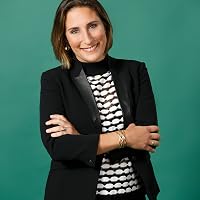
Now available in paperback, Hungry is an uplifting memoir with a universal message about body image, beauty, and self-confidence, and an inspiring, cautionary tale for women of all ages.
At fourteen, I was a regular junior high school student in Clinton, Mississippi, when a modeling scout told me: You could be a supermodel...but you'll have to lose a little weight.
For glamour, fame, and escape, I lost seventy pounds.
This is a photo of me at sixteen, when I signed a big modeling contract, moved to New York City, and started traveling around the world.
It is also when I developed a ferocious case of anorexia and exercise bulimia.
Until I decided enough was enough—I wanted to live.
And so I ate. And ate.
Offering a behind-the-scenes peek into the modeling industry, as well as a trenchant look at our weight-obsessed culture, Hungry is an inspiring and cautionary tale that will resonate with anyone who has battled society’s small-minded definitions of beauty.
This is me now, the leading plus-size model in America.
Crystal Renn's story is very interesting. And extremely important for people - especially young girls - to hear. (The moral of Renn's story: Be yourself, be comfortable in your own skin, and good things will happen to you.)
But this book was definitely not the best way it could be told.
It's poorly written, and just as poorly edited.
There are name errors; the popular girl at Clinton Junior High goes from being Madysson Middleton to Madysson Morgan. The chronology is unclear in many places and confusing: In one paragraph, Renn is breaking up with a boy in 9th grade, and she's in 7th grade in the next paragraph.
The narrative is overspiced with quotes from Important People. The quotes relate, but they seem like a little too much - like Renn or Marjorie Ingall (the "Self" writer who helped Renn write the book) is trying to say, "Look at me. I read stuff. I know stuff."
In the early chapters, she talks about the connection between her OCD and her anorexia. She says some psychiatrists/therapists would say that the OCD and anorexia are also linked to an emotional emptiness she feels from the absence of her biological mother, but that it has nothing to do with her anorexia. She then talks throughout the rest of the book about that emptiness. If it's not related, and this is a book about starving yourself to achieve, why talk about it?? This is supposed to be a memoir (which focuses on an event in a person's life) and not an autobiography (which tells all the details of a person's life).
The narrative is interesting, nonetheless, until about half way through the book.
At just about the half-way point, Renn and Ingall break the narrative to go into a 20-page analysis of when super-skinny became popular in fashion and why it's still popular. This book is a little over 200 pages, so that's about 10 percent of the whole book! There are lots of statistics and informational tidbits that could have been much more effective if they had been incorporated into the narrative. I honestly can't imagine a teenage girl reading all of this stuff, especially since I had a really difficult time slogging through it.
The narrative returns. And then, a few pages later, Renn and Ingall go on a fat-is-not-always-unhealthy diatribe that borders on hating-on-thin-people. They talk about healthy body weight, "set point," how some people are genetically predisposed to be fat, etc. etc. These kind of diatribes always annoy me because they tend to also say that thin is not healthy. I'm a skinny person from a family of fatties, including an aunt who a doctor once called "morbidly obese." And I can tell you that most people who are fat are NOT supposed to be that way. They might be genetically predisposed to be bigger (I've known a lot of people who are), but they get REALLY big because they don't exercise and don't eat right. All my "morbidly obese" aunt eats are Armor hot dogs, Kraft macaroni & cheese, tuna salad, the occasional piece of grilled trout and cookies. All she drinks is Diet Coke. No water. No milk. No veggies. No fruit. I'm not kidding. And she wonders why she's diabetic and her hair breaks off when it reaches her shoulders. My parents are both genetically predisposed to be thinner and were thin into their 30s. But now they drink Rutter's iced tea (which is basically gallons of high fructose corn syrup), eat lots of potatoes and potato chips and chocolate. And they sit in front of the TV pretty much all day, getting up only to go to work (where they then sit all day) or to bed. People aren't supposed to live like that!
Renn's diatribe seems really ridiculous when you learn later that she smokes and barely exercises. Um... how is that healthy?
The narrative returns for a little bit, only to be interrupted again by complaints about thin people.
I read the first page of the last chapter and then skimmed the rest... it was a bunch of "You go girl, it's OK to be fat" kind of stuff that just bores me. We need to stop saying things like "thin is in" and "it's OK to be fat" and "real women have curves." And we need to start saying things like "eat right and exercise and you'll be beautiful no matter what your size."
Why didn't the co-writer, who is supposed to be a professional, fix some of these problems? Why didn't the editors make them fix these problems?
The book is so sloppy that I can't help but wonder if it was rushed to press to capitalize on the fat-is-OK trend in some fashion magazines right now. I wish Renn and Ingall had taken it a little slower and been a little more careful... The book could have been really awesome.
I liked this but didn't love it. Crystal Renn's story is intriguing, shocking, and ultimately inspiring, but the writing is poor. At no point was I expecting great literature, but I think I'm done with reading ghostwritten celebrity memoirs (and celebrity memoirs that aren't ghostwritten, if such things exist).
At least Renn was wholly open and honest about her struggles. She also added some heft to her memoir by shifting focus away from herself to muse on societal expectations for women's weight, especially for models. As she makes clear, the modeling industry is brutal. A thick skin and an unshakeable sense of confidence really are essential to surviving the profession psychologically.
By the end, I was left wondering only about her mom. Renn talked about her a lot throughout the first half or so but left her out completely during the second half. It would have been nice to know what their relationship was like (especially her mom's reaction to Renn's eating disorder) during Renn's modeling years when she was a "straight-size" (aka not plus-size) model.
When she conquers her eating disorder, her relief is palpable; finally she feels at peace and genuinely happy. I was struck by how easily she conquered her demons, however. She didn't need therapy. She simply stopped the insanity. One day she just began really eating again and stopped going to the gym altogether. I don't believe most suffering from eating disorders can go this route. Therefore, although Renn's story is riveting, I can't say her book is the right one to place in the hands of anyone suffering from an eating disorder as it can set unrealistic expectations.
It's best to view Hungry as not a book about body image (although that does feature heavily), but as the memoir it actually is. Otherwise, it's too easy to be derailed by jumping from manifesto to descriptions of her dogs (cute though they sound) and Renn and her husband's love for browsing real estate. The authors tried to make these powerful statements about body image and feminism but undermined them through drifting focus.
I felt the book was overshadowed by a couple of things. It is about ten years old and in the time since it was written, Renn has divorced said husband, but also more significantly has lost rather a lot of weight. Now I'm not trying to suggest that she's relapsed, that she wasn't truly happy being "plus sized", or that she doesn't have the right to determine what she does with her own body without being judged BUT this certainly undermines her oft-mentioned theory about each person's body having a set size range it likes to stay within. So I'll say this - I'm not judging her body, I'm judging her science.
Now let me level with you here: I have an eating disorder. I've had one for around twenty years now. For the period with some of the most damaged eating, I was at university and had unlimited access to thousands of articles and research papers. You'd better believe I read just about every piece of research I could find on weight loss, fasting, "starvation mode", VLCDs, HIIT and so on. While that reading came from an unhealthy place, it's still fair to say that I'm reasonably well read on what science has to say about weight and so my patience for pseudo science is non existent. Renn isn't necessarily wrong to point out correlation vs causation. Not all of what she says is pseudo science but a lot of it is debatable or reductive. I was disappointed because I'd hoped to see her look more at the balance between physical and mental health in eating disorders and recovery. Alas, she writes as though she all-but recovered overnight, without any more help than a few books on nutrition. Perhaps that was the case, but it isn't a path many people in recovery would recognise.
It was also overshadowed by a question I have regarding embracing diversity in modelling. It's all well and good saying that - but diversity should be about so much more than dress size. In fairness, Hungry does also mention race and, to a lesser degree, age but that's not enough. What about, say, gender identity? Scars? Disabilities? It should all be part of the narrative, not just plus-sized models with well proportioned bodies and high cheekbones.
That said, Hungry has some moments of brilliance. The comments on feminism could've been powerful if developed further. There are some truly great quotes which I may include at a later stage. It was certainly interesting to read about body image from a woman whose career hinges around her body.
I just finished reading a biography/social commentary written by supermodel Crystal Renn, a.k.a. the most famous plus-sized model in the fashion world right now. As someone who has often struggled with personal body image and self-loathing, it was a poignant book for me to read. To read how Crystal starved and exercised herself to skeletal results, and later embraced health and happiness by accepting her body was an eye-opener. While her story skipped around and seemed like a jumbled autobiography and disordered eating commentary rolled into one, there were a lot of moments during my reading that I thought, “Why do I treat myself the way I do?”
For years, I was a competitive long distance runner. I could eat anything I wanted to. I was running so much mileage and burning so many calories, a plate full of spaghetti or an extra helping of dessert never bothered me. I hovered around 100 lbs. when I started high school, peaking at 115 lbs. when I showed up at West Point, after a 4-inch growth spurt over the previous couple of years. As a runner, all my friends were stick figures. Pretty stick figures that I wanted to emulate. But I never had a problem with my weight, I was happy with how I looked, and I never felt fat.
In college, the Freshman Fifteen arrived, and stuck around. I was suddenly miserable; my metabolism had finally caught up to me. I had curves I'd never had before, natural curves that I could have seen as feminine and beautiful, but I refused to embrace them. By the time I quit running (my junior year), graduated, and got married, I'd put on another fifteen pounds. (Been doing the math? We're up to 145 now.)
My wedding dress was a problem. I'd bought it after graduation, but gained weight during Jon's deployment to Iraq. I left the dress in Indiana, refusing to try it on again, in denial of the added pounds. A month before the wedding, my mother insisted that I try on the dress, and I did, though I could barely breathe in it. When she expressed concern, I shrugged it off, chalking it up to being bloated and saying I had a month to get slimmed down. The weight loss never happened.
Two days before my wedding, my mother again made me try on the dress again. As we struggled to zip it closed, she said, “I thought you were going to take care of this, Aubrey.” I lost it. I couldn't breathe in the dress that I was supposed to wear on the happiest day of my life. Bursting into tears, I left the dress in a pile on the floor.
Mom has always been conscious of my weight, but not in any way that is intentionally cruel. She does not want me to be unhealthy, and she wants me to be confident and happy with the way I look. That day, however, I felt I had failed her, and everyone else who was arriving for my wedding day.
The hero of that day was my father. Dad has struggled with his weight for years, and seeing his daughter so distraught sent him into action. He started calling any tailor in town who could alter wedding dresses, and one of them said they could fix my dress that same day, with an extra fee for express alterations, of course. Wiping my eyes, I gathered my dress and went to the seamstress, Margaret at The Tailored Fit, with Mom. Thankfully, the dress I had picked was not ornate, lacking lace and beading that would make any alterations difficult. Margaret was so kind, seeing how upset I was, and I left my dress in her hands. A few hours later, it was ready. In the end, the grand total of “letting out” needed? Less than an inch. All of the grief, tears, heartache, and misery were for LESS THAN AN INCH of fabric. In my head, I was imagining yards of fabric bridging the gap to cover my fatness. After all the trouble, the dress didn't look any different, I had a beautiful wedding day, and I couldn't have been more pleased with how everything went.
My wedding dress aside, I deployed to Iraq in December weighing more than I ever had before. I didn't want to exercise. I ate anything put in front of me. I always found a way to justify it, knowing I would be “deprived” living on military rations in a Third World, wartorn country. The first time I had to buy a dress or jeans in the double-digit sizes, I almost cried. How had I let it get this far? Was I FAT? To me, "ballooning" to a size 8 had been distressing enough. Double-digits made me think I was plus-size.
Crystal Renn fluctuates between a size 10 and 12, and is considered to be a plus-size model, despite being the same size as most "normal" women. Always a compulsive and perfectionistic person, she was a textbook case for anorexia. Now, she realizes so much of it was about control. Body dysmorphia and the pressure to be a stick-thin model took over her life, and she literally starving. Renn does not believe we should all be overweight; she wants us to be healthy and have a more realistic perception of what healthy and beautiful look like. Some people are meant to be skinny, others find their equilibrium at a higher weight. She quotes Linda Bacon, a nutritionist: “Don't change your body to fit your mind's perception of what it should look like. Change your mind to appreciate your real body.”
Through exercise and paying closer attention to what I eat (I won't call it a diet, I just cut out 5000-calorie binges), I have lost 10-15 lbs. this deployment, over seven months. To be honest, despite what the scales are telling me, I can't tell that I've lost weight. My body image is that messed up; I still see a tummy with love handles, thighs that won't get thinner. But the numbers don't lie like my imagination does, and that's what I have to keep telling myself.
For anyone who has ever struggled with weight, body dysmorphia, or even considered disordered eating behavior, this book is worth a look. It definitely gave me a reality check.
When Crystal was 14-years old, a modelling scout saw her and told her she needed to lose a lot of weight (she was 5’9’’ and 165 lbs), but if she did, she could make it in the modelling world. Crystal decided this was what she wanted to do, and went down to 95 lbs before heading to New York City to seek out that scout and the Agency he was a part of. She suffered for three years with anorexia before she pulled herself together, only to become bigger, still (no pun intended!), in the plus-size modelling world (at a size 12 once her weight settled).
I thought this was really interesting. Horrifying how skinny she became. She did share photos in the book, as well. After her bout with anorexia, she seemed so much more positive about her body-image as a plus model. I did look her up online after, though, to see that she’s gone down a couple of sizes since. What an awful world that is, though – the fashion industry.
This is yet another book read aloud at Chicago's Heirloom Books (Clark and Thome): I've never, ever read a book about the fashion industry and this is the autobiography of a prominent, very young, high fashion model and about her struggle with anorexia. Now, anorexia and bulimia are matters of some familiarity. Although I've read little about them I have known a number of persons, mostly women, with eating disorders. Thus, as in exploring any new topic, I approached this book with some interest and leave it with some greater insight and knowledge. Renn and her co-author, Ingall, have produced a readable account combining autobiography with information about both the fashion industry and nutrition. As should come as no surprise, the fashion and entertainment industries have long favored youth and slenderness. Crystal Renn, like so many others, became a victim of this while still a high school student, starving herself after being proffered a shot in the business. Her guileless account treats of both her disease and its cure within the context of a broader cultural diagnostic. Personally, I found it moving, moving enough to get me to watch the film, 'The Devil Wears Prada", and to broaden my mind a bit about persons suffering from and/or celebrating clothing and appearance.
The first two-thirds of Hungry, wherein she discusses her descent into anorexia and then her recovery in linear, focused fashioned makes it rise to the top of the masses of eating disorder memoirs on the market. Without a doubt this is one of the better written memoirs on the subject, and it has something a lot sorely lack: a sense of humor. Also, there's the feeling while reading (and who knows how accurate this is, but for her sake, I hope it's authentic) that Renn truly is in recovery from her eating disorder and has her whole, healthy life ahead of her now. Far too many of the ED memoirs lack that, are written by women desperate to say they're recovered even as you can feel them teetering on the brink. Some pay lip service to recovery while the opposite is blatantly apparent, undermining claims by providing what is basically a "How To" manual for the likewise ill. (Hornbacher, I'm looking at you.) Well-written, funny, and smart, when Renn is talking about her main focus, the book is great, reads smoothly, and keeps the reader interested.
Unfortunately, when she allows herself to get side-tracked? That's where the last one-third of the book comes in, and it's filled with diatribes about society, the BMI scale, and public opinion that go on for pages and pages too long. (Oddly enough, she never really takes the modeling industry itself to task in a serious, in-depth way. Brave enough to share with the world her inner turmoil; not stupid enough to take on the industry that is her livelihood.) These rants are boring, the writing suffers, and the information is suspect. With no sources cited, Renn's ramblings about health and BMI should be taken with large grains of salt, as she gives no citation to the information she is citing. Until I can study the context of the information she's putting forth, I will remain suspicious. Statistics, numbers, and basic findings can be twisted to suit any aim; it's the context that counts. Unfortunately, there is none presented by Renn's own.
Skip the last chapter entirely. It's nothing but an extended cheerleading section for the healthy and/or overweight.
Her recovery is presented almost as a miracle, which is jarring and fundamentally untrue. "And one day I decided to eat..." is nice, but there's no way that's all there was to it. The decision to get healthier is the first step, a required step, but I do not believe for a second that she simply started eating again and that was that. There had to be a lot more behind-the-scenes machinations: nutritionists, therapists, support, etc. Maybe those memories were too painful or simply too personal for what Renn was trying to accomplish. Fair enough, no blame for that. But even just a sentence to recognize the fact that it wasn't so simple as simply picking up a fork would have kept her success from feeling demeaning to all those young girls, women, and men who haven't been able to make a recovery no matter how hard they tried. There's a reason eating disorders are the deadliest mental illness. And there's no reason to feed into ignorance of the judgmental masses by implying all that one has to do is pick up a plate. Yes, one needs to decide, "I'm going to eat," but there is so much more than that, and on showing that, Renn failed.
A good editor should have taken care of these issues. It's disappointing, because with some liberal cutting and editing near the end, Hungry easily could have earned a five star rating.
But like I said, that's only the final one-third of the book. Read up to the point where she signs with Ford and gains weight along with a healthier outlook, and then stop. At that point, if you close the cover and put it aside, there will be nothing to complain about. A satisfying read.
As cliche as it sounds, there is hope in the pages of Hungry, and for that alone, this is recommended. A stand-out in the genre.
Crystal Renn is a successful editorial model known for being one of the first plus-size women in her industry to walk high-fashion runways and book covers of leading fashion magazines. An outspoken advocate of embracing natural beauty, Renn’s history of anorexia has been widely reported. In Hungry, Renn tells her story, from a childhood in Miami with an absent mother to being “discovered” as a Middle Schooler in rural Mississippi, and from her most unhealthy days, existing on plain lettuce and sugar-free gum, to learning how to embrace food and her body again.
I have such mixed emotions about this book. On one hand, I love the body-positive message Renn learns to adopt and project in this book, but on the other, it feels a bit disingenuous knowing she has lost a significant amount of weight once again since this book was published. Her personal love story, shared at the end of Hungry, has also crumbled in the past 6 years since this book was published. On one hand, I feel a bit deceived after reading how big girls can get a happily ever after and how important it is to listen to your body as it tells you its happy weight and not try to force it into doing something unnatural. On another, I feel like a real bitch, because Renn is a human being and shouldn’t be criticized for changing her mind like everyone else does.
Those feelings aside, Hungry tells a compelling story of embracing yourself for who you are. Renn summarizes some research regarding anorexia and gives valuable insight into what its like for a new model to get signed and start going to go-sees. There were quite a few dry parts when she goes into some of the deeper details of research, and I found myself skimming quite a few pages, which is something I never really seem to do when I’m reading. Sometimes Renn’s personality came off as a bit pretentious, too, which also kind of turned me off while reading.
I think I’m still undecided about this book. I didn’t hate it, but I for sure didn’t enjoy it very much. If you’re interested in modeling or have a more personal experience with eating disorders, this might be worth your time, but I wouldn’t recommend it as a whole.
I don't read many memoirs or autobiographies, I tend to find them poorly written. Usually the person writing it is not a writer, so the less than stellar writing skills make sense. That is also the case with this book.
I loved her story, and for the most part it was told well...but there were editing mistakes that were bothersome, such as "This event happened on Christmas Eve and the next day at school...." There were also parts where I kept thinking "She sounds so young" and then remembered that she is only 22, but I don't think that should be obvious by her writing skills.
Also, in the middle of the book it just went into a long detailed section about weight loss statistics, information and facts regarding eating disorders. In the beginning of the book she would scatter information in between her story, which worked much better. The huge section in the middle of facts and statistics was a little overwhelming and unexpected.
Overall, she had a good message about loving who you are and taking responsibility for your own happiness, so that's what I will try to remember about the book.
Part memoir of an American girlhood, part modeling-industry expose, and part manifesto pleading for a healthier and more diverse view of female beauty, Crystal Renn's story of how she starved herself to get a modeling career, but found success only when she allowed her figure to assume its healthy, larger size is hard to put down. Written with the smart and savvy writer Marjorie Ingall, Renn tells her story with candor and good humor, but also with bite.
It’s no secret that, in recent decades, the overwhelming majority of models in the fashion industry have been and still are incredibly, shockingly underweight. This wasn’t always the case, but once it became the norm for models to appear emaciated as they posed for photos and sauntered down the runway, we as a society became desensitized to the (usually) unhealthy nature of their size. As we began to expect this of them, we stopped thinking about the lengths that must be taken to adhere to this body type. Our concern may have lessened, but the problem only grew as models became smaller and smaller, a fact which is unabashedly portrayed in Crystal Renn’s memoir, Hungry. As a first-hand witness to and victim of the pressure of the fashion industry, Renn’s memoir gives the reader a peek into the difficult journey of a normal girl with model dreams who is driven to dangerous and permanently damaging lengths to lose weight in order to adhere to the expected body type of a model.
Crystal begins her story by describing her childhood, giving insight into what might drive a young girl to starve herself. She describes herself as a determined child who latched onto ideas and projects with fervor, a trait that she attributes to obsessive compulsive disorder. When she is offered the chance, at fourteen, to become a supermodel, she immediately focuses all of her anxious determination on this goal. The modeling scout informs her she must have a 34-inch waist, and she sets out to reach this goal by intense exercise, extreme dieting, and sometimes purging. Despite reaching her goal of being incredibly skinny and being whisked into the modeling world she had dreamed of, Crystal only increases her attempts to lose weight. She suffers mentally and physically as her body is put through a grueling routine of exercise, starvation, and exhausting model work. When she finally frees herself of her eating disorder and reemerges as a healthier, happier, plus-sized model, the fashion industry is shocked as her success skyrockets despite her no longer having the “ideal” model body. As she tells her story, the reader learns all about the true pressures of the fashion industry, and how society reflects these ideas and pressures.
I really enjoyed this memoir, not only because it is witty and interesting to read, but because it teaches the reader much about an industry most of us will never experience, as well as gives insight into how our current society affects this industry and vice versa. Many have criticized the book for having pages and pages of facts, but as a feminist, I was drawn in by the informative way that this story is told. It is not just a story of a girl overcoming her eating disorder, it is the story of a strong, unapologetically ambitious woman who broke barriers as a plus-sized model and refused to stay silent about what is wrong with how women’s bodies are perceived and judged. Despite some lapses in continuity, Crystal’s story is narrated in a humorous but powerful way, and the reader is left with a bit of righteous anger that might spur them to do something to change things.
Hunger is definitely a feminist book. Crystal makes it clear that she disagrees with the way that women are treated by a society that ostracizes anyone who does not fit the standard ideal of beauty. In her defense of those who our culture calls “plus sized” (despite the fact that the average woman is a size 12), Crystal makes sure not to bash thin people - instead she encourages embracing all body types, which is a very important message in a time and society that pressures women of all ages into a beauty ideal that is impossible to fully achieve. This memoir draws attention to the realities of how young girls are harmed by the impossible beauty standards they are bombarded with on a regular basis. Hunger makes it impossible to ignore the reality of how far girls will go to look like the models they see in magazines, commercials, and fashion shows. Crystal makes sure that the reader understands where this pressure and harm is all originating; our sexist society that forces these unreachable goals upon girls by telling them in various forms that their worth is in their appearance. The author also makes sure to impress upon the reader that women can be ambitious, assertive, and independent without having to feel bad about not fitting into the passive box that they are repeatedly told they must fit into.
Despite the feminist ideas in this memoir, anyone who loves a humorous, interesting, and inspiring story would enjoy it. The book is a great way for one to start thinking about how women are mistreated if they hadn’t really considered it much before - it addresses a theme that many can relate to (body image and self acceptance) in a way that isn’t overly complicated. Not everyone must go through an extremely difficult situation in order to learn to love themselves as Crystal Renn did - instead, they can just read Hunger.
Reading 'Hungry' straight after reading 'Wasted' is a little bit like eating low-fat ice-cream. It's sweet, makes you feel quite good about yourself, but it's ultimately a bit watery and unsatisfying.
While it's great to read a story of recovery and plus-size modeling success, the psychological aspects of Crystal's anorexia seem pretty unexamined.
Neglected and abandoned by her biological mother at 3 months, she was brought up by her grandmother (and repeatedly rejected by her biological mother over the course of her life). I find it a little hard to swallow (excuse the pun) when she says: "Some armchair psychologists might also suggest that yearning for my birth mother or the grief at being rejected by her where what detonated my future problems with anorexia. Those people would be wrong. My problems derived from a perfect storm of factors, but none of them triggered by my childhood." None? So be abandoned by your mother had no psychological effects, AT ALL? Hmm.
I also find her depiction of how she just 'snapped out' of her anorexia (without any form of therapy or treatment) problematic. While it's great for her if that happened, it's disheartening for those who can't 'snap out of it'. It's possible that the comparatively short length of her eating disorder contributed to her fast recovery, but projecting the simplistic idea of 'I just started to eat' is frustrating for both sufferers and their families.
I was most interested in the sections where she writes about moral panic over obesity. The statistics were especially revealing:
"Everyone loves to trumpet statistics about how much fatter Americans have gotten in recent years. About 65% of Americans are classified as overweight or obese. But almost no one pointed out that 29 million people became overweight overnight in 1998, when the government changed its body mass index's 'overweight' category from 27 to 25. (Incidentally, seven of the nine members of the government's obesity task force were directors of weight-loss clinics - making thousands more people instantly 'overweight' was great for them!)"
While I found her descriptions of dresses/photo shoots towards the end of the book tedious (I'm not much of a fashion guru, hearing dresses described in detail maketh me yawn), her awareness of the ridiculous aspects of modeling are often very funny:
"There was a photographer who kept screaming, 'I need to SEE WHO YOU ARE! Show me EMOTION!' He wouldn't tell me which emotion he wanted. He just kept repeating, 'EMOTION!' Finally, I started screaming about wanting a fat-free blueberry muffin. I started out yelling about the muffin, but then I started to luxuriate in it, pounding out a prose poem about the muffin...I wound up weeping for my fat-free blueberry muffin. Afterward the photographer clasped my hand, looked deeply into my eyes, and said, 'Beautiful, beautiful blueberry story, man.'"
What is shocking is not Renn's story - it is probably the story of thousands of aspiring models and an estimated 8 million Americans have eating disorders. What is shocking, even to a fashion lover, is how models are seen as commodities, and the lack of care their agencies have about them as humans. Renn can get a self-aggrandizing here - it is her book, so I guess she has the right to do that. I particularly dislike her constant declarations that she went back to her natural body size to be "healthy" (a statement which I wish many people would embrace!) but then started smoking and stopped exercising). But hey, she's human, so I will give her a pass.
While I agree wholeheartedly with her view that the beauty industry should broaden it's view of beauty to include models of color, older models and models of varying weights, I disagree with her statements claiming that overweight people are, on the whole, healthier than fit individuals. It is true that many overweight people engage in healthy behaviors and are, ostensibly healthy. It is also true that many thin people engage in unhealthy behaviors and are, ostensibly, not healthy. Weight is not the sole judge of a person's level of health. But overweight people do face different health challenges than thin people do, and it is foolish and false to suggest this is not the case.
Likewise, it is imperative for society to understand that some people do have a base weight that is bigger than a size 2 or 4, and that is perfectly normal. Just as obese is considered unhealthy, so should "starving".
My love of fashion led me to this autobiography by Crystal Renn and Marjorie Ingall (who used to work for "Sassy", one of the best magazines ever). Renn is a plus sized model who started in the industry as a "regular" model. She describes how unhappy and unhealthy she was at 5'9" and 95 pounds (and even then being told she was too fat). At some point she realized that she just couldn't do it anymore, and she found a way to become a healthier and happier woman at size 12. I enjoyed her insights into the fashion industry and I am happy to see that she is breaking down some barriers regarding fashion's obsession with size 0's. I would recommend the book to readers who love fashion, but who don't believe they need to be any particular size in order to be stylish.
A very good, very intelligent book for such a young writer. Written by a model who turned to anorexia for a few years, and then decided to stop and become a 'plus-size' model. Very fascinating and well-written. She is humble and does not rant. Highly recommended.
A quick, easy read that is also inspiring and refreshing. Renn writes in a down-to-earth manner that feels very personal.
Some quotes from the book that spoke to me: All people are entitled to natural, healthy food that tastes good. It’s a sin that organic, local food isn’t available to everyone at every income level. I wish everyone could eat closer to the land, not because of concerns about weight or even health but because we’re players in a bigger picture. We’re members of a community and citizens of a planet we cherish. When we think about what’s good for the earth—eating locally so we don’t waste fossil fuels by shipping food across the country, choosing foods grown with fewer pesticides, buying more whole grains and less meat—we feel a sense of stewardship and responsibility. Knowing that our choices can help the planet is more empowering than thinking our choices matter only to our hips. (pages 151-152)
Franz Kafka: “There are some things one can only achieve by a deliberate leap in the opposite direction.” (page 154)
… I want to promote health, and I know I’m the size that’s normal and healthy for me. But pretense is everywhere in fashion, on both sides of the thinness divide. Sometimes fakeness is appealing... But sometimes it pervades that which should be real. That kind of falsehood is more ominous. (page 184).
In Health at Every Size, Linda Bacon writes, “Your body is your physical connection to the world. Becoming active can help you chip away at any bad feelings you may have had for your body, enabling you to appreciate its functionality, de-emphasize its looks, and revel in your strength and capabilities.” … (page 189)
I’ve had too much sorrow to be able to turn down pleasure. Haven’t we all? Life’s too short to say no to everything. I’ve lost only one family member to cancer, but I have experiences other losses. I know how easy it can be to close yourself off. But I know that when I started saying yes—to food, to sex, to my authentic self—that was when I became upbeat and self-confident enough to let love into my life. My career took off when I trusted myself enough to reinvent what it could be. Accepting my true shape made me happy. As Linda Bacon writes in Health at Every Size, “Don’t change your body to fit your mind’s perception of what it should look like. Change your mind to appreciate your actual body.” (page 208)
The underlying promise of dieting—a promise as powerful as any industrial-strength foundation garment—is that once we reach our goal weight, our lives will be perfect. That’s the fairy-tale ending glimmering after the credits of a weight-loss reality show. It’s the story written in invisible ink in the margins of the exercise stories in too many women’s magazines. Eating well isn’t about offering our bodies nourishing food—it’s about getting skinnier. Exercise isn’t about becoming strong, managing stress, or supporting heart health—it’s about getting skinnier. Getting skinnier means that life will start playing in Technicolor to the accompaniment of a glorious orchestra. The problem is that real life doesn’t work that way. Even if it were possible for everyone to be thin—and we’ve already proven that it isn’t—thinness does not confer insta-happiness. It’s hard for so many of us (including me, for years) to wrap our brains around the fact. We postpone living—taking beach vacations, buying the foxy dress that shows off our upper arms, asking out the cute guy—because we think that being daring is the province of the thin, and only after we’ve been “good” enough to get thin do we deserve life’s prizes. Weight is the most egregious example of “If only I achieve this one thing, my life will truly begin,” but it’s not the only example. Maybe you’ve thought if you only were more popular, if you only had a boyfriend, if your boyfriend would only marry you, if you only had more money, if you only had a better job, if your parents were only nicer people, your life would be perfect. Guess what? It wouldn’t be. I look back at pictures of myself in the spiral of my anorexia, when my eyes were sunk in my face and tendons stood out in my neck, and I think about where I was mentally back then. I was thinking, If only I were a little thinner, my life would be perfect. The only thinner I could have been was dead. Whatever our size, whatever our history, and whatever our burdens—if we choose not to be happy, we won’t be. So many women spend their entire lives thinking they’re too heavy, and then they look back at pictures of themselves when they were younger and realize they were beautiful. It’s sad that they didn’t know it at the time. (pages 209-210)
One fact is constant: Self-acceptance is a choice. You live in your body every day, and I live in mine. Some days it’s difficult to live in my body, and I imagine it’s difficult for you to live in yours. I used to hear a voice in my head every day telling me to obsess about my thighs. That voice is still there, but now it whispers instead of screams. I told the voice I wouldn’t listen to it anymore. I told the voice, I refuse to let you win. Sometimes I wake up and I feel ugly, or I don’t like the way I look in a picture, or I have a fight with my husband, and the whisper of self-hate gets a little louder. What I’ve learned is that if you give in to the whisper a little, thinking that will make it shut up, the voice gets louder. It starts telling you that you really are ugly, you really are useless, and by the way, do you know how many calories are in that gum? We carry our memories in our bodies. When I get on the treadmill for a reasonable workout, I hear the whisper deep inside me: You could run harder. You could stay on this machine for another hour. But now I growl back at the voice: If I did that, my hip would hurt, and there’d be no further health benefit. Mindfuck self-torture is not a benefit. The voice inside me backs down. (pages 211-212)
Blogs: Shapely Prose Manolo for the Big Girl Too Fat for Fashion Curvy Fashionista Pretty Pear The Rotund
Reading How to Practice: The Way to a Meaningful Life by the Dalai Lama has helped me create a vision for how to live a spiritual life. I do see the mockability of a model quoting the Dalai Lama (OMG, I could equate bitchy hairstylists with the takeover of Tibet!), but Buddhist thinking helps me live in a world that believes the body is everything. Again, modeling is a microcosm of the wider culture. We live in a society that treats the body as if it’s more important than the soul it houses. Reading the Dalai Lama reminds me that the body is a temporary vehicle. “Some people may be quite fat, others thin, some handsome, yet if I look at them with an X-ray machine, I see a room full of skeletons with huge eye sockets,” The Dalai Lama says. “Such is the real nature of our body.” The Dalai Lama’s distillation of the Buddha’s teaching is this: If possible, you should help others. If that is not possible, at least you should do no harm. (page 225)
This could have been a good bio of a woman's descent into an eating disorder in the pursuit of an ideal that was all but unattainable and her eventual rise out of this to become a "plus-size" (and WTF size 12 is NOT plus) sensation. This could have been an examination at an industry that has gone to extremes and displayed models with bodies that are ever more elusive and only obtainable through either the genetic lottery or ever more bizarre eating and workout regimens just this side of starvation. This could have been a look at American and European attitudes towards women and fashion. It was none of these. What it was was unorganized despite the secondary writer's assistance and without an overall focus. The book could not seem to decide if it was going to be mostly about Crystal or about modeling or about eating/eating disorders - and so it was about all of it but in a shallow and disjointed manner. This story did need to be told and it was okay enough but at 226 pages it should not have taken this long to slog through this.
this is an eulogy to the fatness. The book starts with the story of a girl with family troubles, she is obsesive-compulsive and finally she got anorexy in order to get thinner to travel to New York and be famous according to a scout promises. It goes like she was thin, she could not eat, she used to get angry easy, she exercised a lot, and her life was miserable. Then she got fat again, the scout asked her to lose weight or adviced to be a plus size model. Crystal preferd the pluse size model and went to Ford Agency.
Here started the eulogy to the fatness: while thin: sad, angry and tired while fat: happy, confident, and feeling beauty (also hating skinny).
Crystal repeats ad nauseam that diets are bad, you lose the weight and gain it back and fatness is genetics. She even says that there is no proof that being fat make people more propense to sickness or gives them bad health, and if they get sick, it can be because they are stressed because people critize them for being fat and stress makes people to get sick more easy. She even is outraged beacuse some anorexic models die for heart attack, like if a fat clot couldn't block arteries.
Some of the most shocking pharagraphs:
-I welcomed the chance to spread the notion that the way I look is classically beautiful, and my body's curves should be a symbol of health
-people like me, who are considered slightly overweight according to the BMI chart, have a healthier outcomes than either underweight or "normal" people. And fully half of overweight adults and one third of obese adults have normal blood pressure, cholesterol, and blood sugar, which means they're not at increased risk for diabetes and heart disease, conditions usually blamed on fat. Suck on that, fat-haters.
- But Crystal, you may say to me, Americans have gotten so much fatter! It's unhealthy! Here is my answer: Everyone loves to trumpet statics about how much fatter American have gotten in recent years. About 65 percent of Americans are classified as overweight or obese. But almost no one points that 29 million people became overweight overnight in 1998, when the government changed its body mass index's "overweight" category from 27 to 25. Incidentally, seven of the nine members of the government's obesity task force were directors of weight-loss clinics (...). According to the new classification, many professional athletes are now considered overweight. (This is just a ridiculous way from her to manipulate the definition, though her pounds of fat at that time cannot be compared to the pounds of muscles of the athletes!). Dwayne "The Rock" Johnson and Governor Arnold Schwarzeneger (well, the last one is indeed fat) are both considered obese. Matt Damon and Kobe Bryant are overweight (again pounds of muscle compared to pound of fat, what a sad consolation).
- for most people being "overweight" doesn't seem to be a direct cause of health problems.
-(...) bigs myths about weight, including this commonly cited statistic: More than four hundred thousand Americans die of overweight and obesity every year (...) That's what the U.S. government's Centers for Disease Control and Prevention (CDC) announced in 2004 (...)The only problem: It's flat-out wrong (...) Using better methodology and newer data, the CDC's own epidemiologists reduced the estimate, saying that obesity and overweight are associated with an annual twenty-six thousand deaths; it reduces the estimate of excess deaths by a mind -blowing 94 percent.
-The truth (...) is that "overweight people" (those with body mass index between 25 and 30) actually live longer than normal-weight people. Not just skinny people: normal-weight people.
While she writes this, in a BBC article: "Obesity has a greater impact on the blood pressure of teenage girls than on teenage boys, a US study has suggested (...) "What is certain is that obesity is clearly putting both boys' and girls' health at risk"".
Crystal always said she will not give up and she will get a Vogue being fat, well, she got it fat and recently she got the german Vogue being awfully skinny. You can see her also walking thin in the Zac Posen Runaway Show. All that 256 pages praising her happy fat body, condemning and deploring skinny models (not just talking about anorexic problem), and then she loses weight!
As this article says: <"I'd just been on a trip to Minnesota, where I can only kindly describe most of the people I saw as little houses. There's such an epidemic of obesity in the United States, and for some reason, everybody focuses on anorexia".Ironically, Minnesota is one of the healthiest states in the nation>>.
This just remembers me "Super size me" documentary. Grab a McDo and then you are happy. It seems like if she doesn't know that between anorexic and fat, there can be "normal", "fit", "athletics", and is not about dieting, it is about eating healthy and in normal quantities, not like she said in her book she did: a big mountain of vegetables.
She was way prettier when she was fat but with the mouth closed; to not speak such nonsense like in her book.
Wow. I especially like the beginning part when she first started modeling, and then towards the end became a little too body positive for me. A little too “cheerleady.” The straight size model turns into a plus size model and how she overcame her eating disorder. C
I must admit, I’ve never been one to keep up with models. I adore Heidi Klum for her often ridiculous critiques on Project Runway, but otherwise no one model has won me over as a big fan. However, I have recently become enamored with Crystal Renn. Not only do I find her beautiful, her lack of sexy-face brings something new and interesting to the table. Of course, she is known for more than just her expressive photographs; Renn is a size 12 and the leading “plus-size” model working in the industry right now.
At 23, Cystal Renn has been working as a model for seven years, a career she documents in her memoir Hungry (penned with Marjorie Ingall, a former Sassy contributor). Reviews of the book, or articles about Crystal Renn, all seem to provide the same synopsis of her life. She was discovered at a charm school in Mississippi by a modeling scout who told her she could be a supermodel if she lost nearly ten inches off her hips. To achieve this goal, she began dieting heavily and developed an eating disorder, bringing her weight down to less than 100 pounds. She realized the scope of her illness and was able to recover and has now become a very successful plus-size model that works in mainstream fashion magazines like Vogue. And of course, that is all true, but in this book she engages critically with her past, the industry, and her continuing career as a model in a way that is sold short by a sound bite summary. Her recollections of filling her mouth with peanut butter only to wash it out, crying, are enough to make me hungry. While she writes a personal memoir, Renn’s accounts of sitting starving and miserable in her crappy New York model’s apartment bring into focus a larger reality that exists behind the glossy pages.
The chapters that follow the Renn’s life are staggered, with chapters dissecting body image and the inner workings of the fashion industry. Size and beauty are concepts that are intrinsically linked in our society, and Hungry provides more analysis than I expected. One point that Renn focuses on is how the issue of extreme thinness in the fashion world is consistantly made out to be someone else’s problem. Magazines claim to show women who are thin because designers send them sample sizes, but of course designers say they are making clothing for thin women because the magazines define this size as what is in style. And when blaming each other doesn’t work, it seems that the industry blames the models themselves. The book also discusses how the “waif look” (read: skeletal) seems to be tied to xenophobia. While of course there are waifs of many colours, Renn notes how the seasons that are populated by extremely thin woman on the runway (a recent trend) are overwhelmingly white. She believes this is tied to people’s belief that thinness connotes higher class; marginalized populations (which include millions of people of colour) have higher obesity rates, so therefore whiteness and thinness can be read as signifiers of luxury. And what is luxury if it doesn’t exclude 99.9% of us? Or employ a migrant work force of teenage girls?
Renn comes off as a likable, introspective person. I can definitely see how this book will appeal to WORN readers; she poses some serious questions about how we view our bodies through the lens of fashion, but she still takes time to gush about working with Jean Paul Gautier and Steven Meisel. Her life story is no doubt similar to other young models, but because she has become so successful she has the opportunity to speak out. And luckily for us, she is ready and willing to intelligently examine the fashion industry, while still enjoying the widespread acceptance she has received by it. (reviewed by Hillary Predko)
I appreciate Renn's story. And her message is much needed, even a few years after publishing. While improvements have been made in some ways, there is still far to go. Crystal Renn is candid in her journey through anorexia. My biggest complaint with her book is that sometimes, the timeline was difficult to follow, as she would go off on tangents ever now and then, and they didn't quite feel like they were in the current timeline she had been on.
When Hungry was first released it went straight on my Amazon wishlist, however, as the months whiled by and other books came and went, eventually it fell by the wayside. However, when I spied a copy of it in a charity shop for just £2.50, I kind of had to buy it. The subject matter of Hungry is incredibly important and eye-opening, but for me, there were times when the messages that came through the novel were rather mixed (as a disclaimer, I am in no way a 'plus size').
Hungry tells Crystal Renn's story on how she went from starving herself to be thin, to becoming a hugely successful plus-size (and by 'plus size' we're talking UK 16) model. Renn grew up in a complex family background, but had big dreams of attending university and studying law. However, at the age of about 14 she is told by a modelling scout that she could become a supermodel, so long as she lost a considerable amount of weight. She achieves this, through developing a hugely problematic relationship with food and an obsession with exercise. However, gaining a modelling contract is not as lucrative as she believed and it is only upon her cracking and deciding to become a plus size model that she really found success.
Her story is an important one, that highlights the numerous hypocrisies within the fashion industry. The idea that grown men and women have no problem in telling a fifteen year old that their thighs are too big is utterly heartbreaking. It also shows the growing problems that many young (and even more sadly very young) women have in regards to their bodies-and the fact that few people really know how to talk about eating disorders that don't conform to either anorexia (not eating at all) or bulimia (binge eating & then being sick). Renn also shows the problems with regulations in the fashion industry, which tend to use the words 'should' and 'to the best of our knowledge' in regards to banning young models or those with a dangerously low BMI. Hungry is also an engaging read, whilst it's unclear whether Renn or Marjorie Ingall was mostly behind the writing, the book is pacey and I read it over a four hour babysitting session.
However, despite the fact that Renn continually says that there can be naturally slender people some of her writing does fall into the camp of bashing one group to empower another. She point blank dismisses the idea that skinny people can quite suffer in the same way that larger people do with body confidence, the only women who are described as truly sexy and attractive are other plus size women; and she also brings up the idea that men prefer curvy women. Although, no doubt, larger women who have struggled with body confidence issues will find this welcoming, as a smaller person this largely left me feeling worse than I did when I started reading the book. I feel that Renn or Ingall should have made more of an effort to celebrate body acceptance for all sizes; which was attempted but undermined by the idea that 'skinny people have it easy' (as someone who has had total strangers comment on my weight & who has been told the reason I'm single is due to my lack of curves, that is far from the case).
Hungry tells an important story, and Renn's tale should be used as an example of body acceptance. However, as a book to me it lacks a cohesion that could make the message empowering for all women.
“We can always find each other, we girls with secrets.” is the line from this book that resonated with me the most. I read Renn's story for a few reasons. I had first heard about Renn on Shapely Prose when I first heard of size positivity in the middle of a relapse. I loved hearing interviews she gave, Renn was articulate and relateable in addition to being unapologetically beautiful. I had been meaning to read "Hungry" and ramping it up in my mind for years. I think I expected I would read it and have some epiphany about my own food history and body issues. Granted, having read the book now I know this isn't why Renn wrote the book.
Renn's story of her slide into an eating disorder happens quickly. There were times when the narrative seemed to move too quickly. I wanted more detail, more introspection. But dwelling on those thoughts, no matter how distant the years may be can be dangerous. Renn shows so much self-insight that the fact she leaves out a long winded arm-chair psych explanation for her behavior doesn't matter. I actually finished the book wanting to become her best friend. This is the strength of the book, it has a conversational tone that helps the reader take in harsher topics and happy occasions. Renn also uses research well and cites her sources diligently. She doesn't make wild assumptions based on one study. She's clearly intelligent and witty which is comes across in her writing.
However, once Renn talks more about her current plus size work I had a really hard time staying with the book. This is where the conversational tone feels like a problem. If these sections were a conversation, they would be the section where I was smiling and nodding but not listening. I can feel her excitement but she's so lost in the details that it isn't as accessible for a reader. This may be because I'm personally not a huge fashion person. I recognize the names she uses but they don't have a lot of special meaning to me.
All in all, Renn's message is positive and it's one of the few books about someone with an ED that I felt hopeful and happy after reading. This is a very personal book about Renn's journey to size acceptance and how it has helped her, but I think her journey could inspire others.
"Het stereotype luidt dat modellen dom zijn, maar sommigen van ons zijn gewoon uitgehongerd."
Crystal Renn doet een boekje open over haar strijd tegen anorexia, haar modellen carrière als gewoon en plussizemodel en de modewereld.
De eerste paar hoofdstukken over haar jeugd waren wat van de hak op de tak en rommelig geschreven, maar de schrijfstijl verbetert daarna gelukkig wel. Renn vertelt open en eerlijk en met een goede dosis humor over de moeilijke periode waarin ze worstelde met haar ziekte anorexia en de periode daarna waarin ze leert houden van haar lichaam. Vooral dat laatste vormt een belangrijke boodschap van dit boek: vind een gezond gewicht dat bij je past en waarbij je je prettig voelt en leer houden van je lichaam. Heel mooi en overtuigend - vanuit haar eigen visie, maar ook onderbouwd met veel interessante literatuur - weet ze dit over te brengen. Ze uit daarbij onder andere veel kritiek op de modellenwereld en de maatschappij en betoogt dat er meer diversiteit moet komen in de media: jonge, oude, blanke, donkere, dunne en dikke modellen. Iedereen is mooi op zijn of haar eigen manier!
Een beetje ironisch is dan wel dat Renn het afgelopen jaar flink is afgevallen. Dat maakt het hele boek een beetje minder geloofwaardig: misschien was Renn helemaal niet zo gelukkig met haar maat 42 als ze ons wil doen geloven... Daarbij roept het boek nog een aantal vragen en twijfels bij mij op. Anorexia is een ernstige ziekte waarbij herstel vaak gepaard gaat met intensieve psychische hulp en terugvallen. Renn beweert echter van de ene op de andere dag besloten te hebben weer te gaan eten. Op mij komt dit niet heel realistisch over. Een ander punt is haar jeugd, waar de eerste paar hoofdstukken over gaan. Deze gaan niet altijd over rozen. Toch beweert Renn heel stellig dat de ziekelijke relatie met haar moeder (met een mes tegenover je moeder staan is niet heel erg gezond) absoluut geen invloed heeft gehad op het ontwikkelen van haar anorexia. Hmmm...
Kortom: een verhaal met een mooie boodschap, al laat de schrijfstijl nog wat te wensen over.
I have finally finished this book that I picked up months ago at a Barnes & Noble. It was $15 but I bought it, which is strange for me since I rarely buy books, most of the time I go to the library. I was right though, this book was worth it twice over. This was an amazing book and I'm happy that Crystal Renn decided to write her story down. From anorexia at 14 to the point of dying at 17 due to a diet of lettuce and steamed vegetables for three years.. This story is about that struggle for a young girl in overcoming her anorexia and the circular and constantly harmful mindset that keeps many women anorexic. Renn also talked a lot about America's relationship with weight and the obsession with skinniness. What surprised me most about this book was how lush it was. She talks about how and why she fell in love with fashion, clothes, and why it really can be art. Here is a passage that I just found absolutely romantic, in a haunted but real sort of way..
'For another shoot with Ellen, I went to the beautiful country-side outside Paris, where we shot at a glamorous old chateau. Ellen had all us models rolling around in the mud - it had been raining off and on - in fabulous clothes. We were filthy. Mud was everywhere, and I do mean everywhere. Ellen went back to Paris for the night, and we models were supposed to return to our hotel in a nearby town to sleep. But just before we were scheduled to leave, a giant rainstorm rolled in. We were trapped at the chateau. We showered off the mud, but we had not fresh clothes. So we just gathered around the fireplace, all of us wrapped in towels. As the rain slashed against the stained-glass windows of the castle and lightning lit up the sky, the chateau's owner brought us a huge, antique platter of glorious French cheeses and grapes. I played Fur Elise on the piano, and the other models lounged about, licking their fingers, the towels now abandoned on the two-hundred-year-old carpet. I thought, This is a moment. Always remember this.'
I finished reading this at 3am during a fit of insomnia. After reading Andre Agassi’s book, Open, last week I wanted to stay away from autobiographies for awhile, because it would be hard to find one just as good. I had requested Crystal Renn’s book from the library awhile ago, and it happened to come in just when I’d sworn to read something like a novel, or Vikings: A History (to go with my Swedish themed 2010). The book on vikings didn’t work out, so I tip-toed into this, and ended up devouring it in two days.
If you aren’t familiar with Renn, she is a former straight size model, turned plus size model after a bout with anorexia early in her modeling career. She was 14 when she was discovered and told she could be a supermodel—as long as she trimmed nine inches off her hips. Eager to escape a small town in Mississippi, she diet and exercised her way down to 98 lb. and moved to New York City when she was 16 to make it big. After struggling to book jobs and dangerously maintain her weight, she decided to try being a plus size model. At 24, she is now the highest paid plus size model in the world. She currently shares the cover of Glamour magazine (in a bikini), and walked the runway at a Chanel show in Paris.
Her story continues to be inspiring because she openly talks about the mis perceptions of weight and health in various media outlets, and is trying to establish herself in the fashion industry as not just a plus size model, but a model, period.
Her story and her book are really great for anyone who has struggled with their body image, or tried to mold themselves into something they weren’t to be successful. Hearing about someone blazing their own path is inspiring and invigorating. Renn tells her story candidly, and with a lot of humor. She comes across as smart, well read, and really fun. I kind of want to hang out with her now so she can tell me where to shop and we can trade book recommendations.
I didn't realize the author of this book is famous (which I think is kind of funny. She sounds a little self-important in the book). I thought the book was going to be mostly a memoir of the author's struggle with an eating disorder, but it was more like a full auto-biography. The bulk of the story was split between her eating disorder (which, for better or worse, is fascinating to me) and the modeling industry (which, for better or worse, has absolutely no appeal to me). Then there were a handful of chapters tacked on to the beginning and the end, I guess in order to completely tell her life story. I think it would have been more cohesive and interesting if it had done more of a glazing over of the parts of her life that were not central to the story she was telling. But then, I didn't know she was famous: maybe if I'd been a fan instead of an accidental reader I would have been more interested in knowing every detail about her. And maybe if I were more interested in fashion and modeling I would have enjoyed reading precisely detailed descriptions of what clothes she was wearing on any given day.
This is one of those celebrity books with the itty-bitty second author tacked below the famous byline. As far as writing quality goes, it felt like someone overused her thesaurus to try to make the book sound intelligent. The sentences were straight-forward and uniform (I don't think there was a single semi-colon or colon in the entire book). The descriptions were unimaginative. The emotions were whatever the opposite of poignant is. But I did find her eating disorder fascinating. Don't judge me. It was a New York Times bestseller. I can't be the only one.
Here's the thing: We Americans love food, we hate fat people, and we are obsessed with celebrity updates. Crystal Renn does a wonderful job of showing the conflicts between these three ideas, while telling a terrific personal story.
Renn discusses her history, but adds lots of scientific information about weight loss and culture.
She talks about popular culture and the dearth of curvy role models (page 114): "(in recent years we've been able to look to Grey's Anatomy, Medium, Nip/Tuck, America's Next Top Model, Mad Men, Ugly Betty and American Idol, to name a few) and in the music business (Jennifer Hudson, Queen Latifah, Beth Ditto, Leslie Hall, Adele, Jill Scott and Beyonce come to mind)."
Big Kudos to Renn for mentioning my home-town, gold-pants-wearing Lady Rapper, Miss Leslie Hall!
This is a good story with good data. (page 146): "But almost no one points out that 29 million people became overweight overnight in 1998, when the government changed its body mass index's "overweight" category from 27 to 25. (Incidentally, seven of the nine members of the government's obesity task force were directors of weight-loss clinics--making thousands more people instantly 'overweight' was great for them!)"
I was saddened to learn in the fall 2010 New York Times' Style magazine that Renn and her adorable English teacher husband have divorced. She is still a very successful model, according to Style magazine, "the world's most sought-after size 10 model." Good for her, and thank you Renn and Marjorie Ingall (My Goodreads friend!) for telling this story.
Book: Hungry: A Young Model’s Story of Appetite, Ambition and the Ultimate Embrace of Curves I am probably not the first to tell you that Hungry is a must-read this fall. The book is a first-person narrative of plus-sized model Crystal Renn and her struggles and triumphs with the modeling industry and the relentless pursuit of weight perfection. Renn was a teenager in small-town Mississippi when a talent scout gave her the opportunity to move to New York–as soon as she lost 10 inches off her waist. What follows is an account of how her obsession with becoming fashion royalty consumed her life and led her to drop 40% of her body weight until only 95 pounds remained on her 5’8″ frame.
Renn is a fantastic writer and her voice is universally relatable. Perhaps not all of us have been on the fast track to a modeling career, but most women can relate to the temporary (or unrelenting) insanity that comes from feeling inadequate in your own skin. Renn’s story is also inspiring as she makes the decision to become a plus size model so that she can be the weight her body is naturally, and learns to weather the judgments of her industry even as she continues to achieve great commercial success.
The modeling industry and its unwavering support of one waifish body type has been a topic of discussion for years now, but Renn’s book arrives at a time when we’re seeing some of the seams let out to make room for beautiful women whose bodies look more like the rest of us. Maybe this will be the tipping point.