Jump to ratings and reviews
Rate this book

Routledge History of the Ancient World

The Beginnings of Rome: Italy from the Bronze Age to the Punic Wars

Rate this book
Using the results of archaeological techniques, and examining methodological debates, Tim Cornell provides a lucid and authoritative account of the rise of Rome. The beginnings of Rome, once thought to be lost in the mists of legend, are now being revealed by an ever-increasing body of archaeological evidence, much of it unearthed during the past twenty-five years. This new material has made it possible to trace the development of Rome from an iron-age village to a major state which eventually outstripped its competitors and became a Mediterranean power. The Beginnings of Rome offers new and often controversial answers to major questions such as Rome's relations with the Etruscans, the conflict between patricians and plebeians, the causes of Roman imperialism and the growth of a slave-based economy.

507 pages, Paperback

First published January 1, 1995

33 people are currently reading
991 people want to read

About the author

Tim J. Cornell

13 books5 followers

Ratings & Reviews

What do you think?
Rate this book

Friends & Following

Create a free account to discover what your friends think of this book!

Community Reviews

5 stars
89 (41%)
4 stars
83 (38%)
3 stars
37 (17%)
2 stars
7 (3%)
1 star
0 (0%)
Displaying 1 - 27 of 27 reviews
Profile Image for Evan Leach.
466 reviews164 followers
June 19, 2012
Writing a history of Rome’s early years is a tricky business. The earliest surviving works of Latin literature weren’t written until about 200 BC, and the earliest surviving Latin histories came 150 years after that. To put that in perspective, the nearby Greeks had been cranking out poems, plays, and philosophers for at least 350 years by that point, and probably longer (depending on when you date Homer). Rome’s written record is scant indeed before the Punic Wars, which makes life tough for historians.

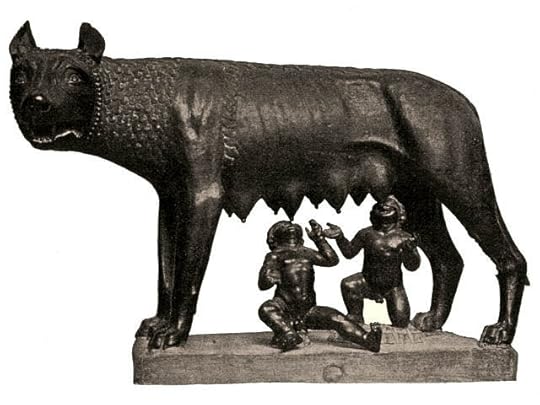
img: Romulus & Remus

THE BEGINNINGS OF ROME (approximation)


To reconstruct Rome’s origins, historians have to rely heavily on archaeological evidence. This involves a lot of educated guessing. In The Beginnings of Rome, T.J. Cornell does about a good a job of this as one could ask. The problem is that this kind of history can be dull reading for non-specialists. This is no fault of Cornell’s, who’s merely playing the hand he was dealt. But reading about what might have happened based on either (1) ancient legend or (2) information gleaned from pottery shards gets old fast. This kind of archaeological approach to history is no surprise when reading about the Xia Dynasty or something, but it’s truly incredible that this is what we’re reduced to for Rome in 300 BC. 300 BC!!! By that time, their Greek neighbors directly to the east had (1) defeated Persia; (2) fought another really famous war; (3) gone ahead and conquered the eastern world almost to the Ganges; and most importantly took the time to sit down and write about it. Meanwhile in Rome they were perfecting tortellini squabbling with the Etruscans (maybe?) and basically just mucking around. Or they could have been perfecting string theory for all we know, since there’s barely any written record to inform us about it. Who knows!

So ultimately this is a difficult book to rate. If you are truly interested in the early history of Rome, and are aware of the difficulties involved in reconstructing it, I would recommend this book without reservation. Short of diving into the Cambridge Ancient History series (The Cambridge Ancient History, Vol 7, Part 2: The Rise of Rome to 220 BC), this is as thorough a history as you will find. It is extremely well organized, well written, and contains some nice illustrations. Again, I thought T.J. Cornell did a great job considering the difficulties surrounding early Roman history.

But those difficulties are real. If you are more interested in ancient history generally, I’m not sure I would recommend this. What we really know about Rome’s early years is just too vague and tenuous to make for a very arresting read. Cornell spends a great deal of time carefully considering different interpretations of the archaeological/mythological record and discussing how he ultimately came to his conclusions. This is good scholarship, but not exactly thrilling for a non-specialist. I liked this book, but it definitely gets a little dry at times. 3.5 stars.
Profile Image for Mary.
243 reviews11 followers
January 1, 2013
(Note to publishers: 400+ pages of detailed arguments printed on glossy paper bound together into a heavy book are physically difficult to read. Honestly, I shouldn't need an anti-glare filter for a book!)

This is Cornell's synthesis of early Roman history. The challenge is that there are very few primary sources for this early period and most of those are archaeological artifacts that must be interpreted. The earliest histories we have were written generations later, and while those authors had access to sources that have not survived, contemporary historians still have to decide how reliable the information is.

The basic approach here is to summarize the traditional account of a topic, raise some questions and/or summarize other historians' interpretations, then present Cornell's analysis of the source material to answer the questions (usually while dismissing most other interpretations as faulty readings of the sources or simply based on no evidence whatsoever...). Cornell does a pretty good job of making sure his conclusions don't get buried in the mass of details. I've no academic background in history, but I was able to follow most of his arguments.

Profile Image for Andrew Ashling.
Author 19 books175 followers
March 18, 2019
What I liked most about this book is that the author didn't try to make the facts fit a preconceived theory. Another plus is that the author uses several disciplines, among which archeology and its latest discoveries.

Cornell works in a strict chronological order, working his way through what is known, what can be conjectured and what's probable. He neatly presents all options, and then indicates his preferred scenario with the reasons for his choice. However, he leaves some leeway for the reader to disagree with him.

As this book is rather detailed, it may not appeal to those who like sweeping historical stories. No disrespect meant: I'm a great fan of John Julius Norwich. This book, though, is another species. It will appeal to people who'd like to find out what really happened to make a few hamlets on some hills near a bight of a river into a community, a city and a central Italian power.

Well organized, extremely readable (which is no mean feat seeing there was a wealth of scholarship involved in writing this book) and ultimately satisfying.

After reading this book, I got the impression to have a fair idea what can truly be known about the origins of Rome, where we must use conjecture and where there are still lacunae in our knowledge.
Profile Image for Philip.
232 reviews1 follower
October 1, 2025
Some quick, pretty much obvious, topics made evident in this brilliant book:

- There is not any alignment between the stories of Livy, Dionysius and other ancient historians on one hand and the Varonian chronology on the other. And such should not be looked for.
- There quite possibly have been more than seven kings of Rome, and their chronology pretty much certainly is different from the established.
- Ancient Greek influence is evident from the very early stages of Roman history, according to archaeology finds.
- Lars Porsena might have actually removed Tarquin Superbus himself, not trying to reinstate him.
- The Senate seems to have played very different and insignificant role in the beginning of the republic; real power apparently rested with some kind of oligarchy and the magistrates, while the Senate was assembled rarely. It's known power came in place only at the end of the 4th century B.C.
- The patrician-plebeian struggles were apparently also different from what is usually stated.
- Slavery reliance was common practice even before the Punic wars, though of course not in the same scale.

And a lot more.
Profile Image for Bonnie_blu.
988 reviews28 followers
November 16, 2020
First my credentials: I have a Master Degree in history and have studied ancient Rome for decades, including primary sources.

Cornell has done an amazing job in investigating ancient Rome from the Bronze Age to the Punic Wars. However, and this is a BIG HOWEVER, the book was written in 1995, and enormous strides have been made since then. For example, Cornell states that the first settlements of Rome were small groups of people in scattered huts in 1,000 BCE. Recent archeological investigations have shown that modern humans lived in the area at least 100,000 years ago, and maybe as long ago as 200,000 years. In addition, small settlements were in place more than 5,000 years ago. Of course, Cornell could not have known this.

Also, it is now much more common for ancient historians, archeologists, etc. to incorporate experts in geochemistry, climatology, dendrochronology, chemistry, physics, astronomy, DNA analysis, and many more disciplines in their research into ancient peoples. Incorporation of these diverse disciplines has added enormous amounts of information to the investigation into pre-history.

As a result, I cannot recommend this book to anyone who is not very familiar with the latest findings. Anyone not familiar with them will be misled by the data in the book. There is valuable information in Cornell's book; however, only someone conversant with the latest findings will be able to pick out the valid data from the outdated.
Profile Image for Aiden Hunt.
61 reviews4 followers
April 5, 2021
A well-written and nuanced text on the Early Roman Republic.

I read this in tandem with a lecture series and the first five books of Livy’s histories. It deals well with the complex nature of telling a historical narrative with few and fragmentary sources. The author notes the disagreements when events are uncertain and makes well-reasoned arguments on what he thinks most likely.

Livy’s account is definitely more entertaining, but I would recommend this to readers interested in a rounded, detailed picture of the historical period. (Note: Very academic, not for the casual reader.)
92 reviews11 followers
March 9, 2011
Excellent book full of great scholarship. Challenges a lot of the assumptions made by many classical scholars, and rebuts a lot of unscientific theories.
19 reviews
Read
December 19, 2024
There may be some recency bias here but I think this is my favourite history book that I read this year. I was a bit reluctant to read about this period of Roman history because after reading SPQR, I got the impression that the sources for archaic Rome were so scant that nothing could really be known for certain, and that most of the traditional history was more or less completely fictionalized. This book did a really great job at challenging this point of view by really digging deep into the available evidence and creating a fairly coherent account of what likely happened during this period, while simultaneously acknowledging and accounting for the gaps in our knowledge and the limitations of the evidence appropriate.

The author spends a lot of time analyzing some of the most popular scholarly inrerpretations of the evidence, rebutting those that he finds incorrect, and then trying to arrive at the most likely interpretation. I found this process highly interesting to go through, seeing things through the eyes of an expert and reading their process of reasoning that at times felt like he was solving ancient mysteries with Sherlocke-esque deductions. The result is that although many aspects of this period remain uncertain, the general outline of what happened and the reasons behind each development become unexpectedly clear. It's a bit tricky to follow at times, but overall I really enjoyed it.
Profile Image for Ned Holt.
93 reviews
November 23, 2024
Well documented and researched and I really appreciated the historiography and in-depth analysis of the sources. I came away from this book with a great appreciation of how the Roman Empire was formed. The author included plenty of timely maps, pictures and graphs to explain the salient points.

Sometimes I felt he was arguing over how many plebes could dance on the head of a pin and effectively govern the empire.

The final chapter introduced too many concepts (minted coins and the economy/international trade) to be of worth. I wish he had done a better job of encapsulating his points and what he believed to be the accepted or probable history of the era.
25 reviews1 follower
February 2, 2025
This was tough to finish, I'm not going to lie. The absence of reliable sources for this period means the author spends most of the book debating the probability of different possibilities based on what little information is available. Unless you are a specialist or unusually interested in this period, it makes for a tough slog.
Profile Image for Emmanuel Wallart.
147 reviews
April 2, 2021
Impressionnant d'érudition, on en apprend à chaque page. Une magnifique synthèse des connaissances sur les début de Rome, un merveilleux voyage dans le temps.
Profile Image for Jack O'Connell.
30 reviews
July 26, 2023
An interesting examination of an age with extraordinarily little evidence. It falls short when Cornell focuses too much on trying to find definitive truth with so little to go off of.
Profile Image for Tim.
117 reviews
August 20, 2023
Yeah, that was a good one. Will definitely be citing from it for years to come.
Profile Image for Kallinikos.
21 reviews
September 6, 2025
thorough and decisive, but more written for people already well familiar with the period and sometimes reads more like a collection of jstor articles than a history book
Profile Image for Olga.
158 reviews
January 26, 2022
I find early history of… really anything so fascinating. It’s always interesting to find out where does a thing come from. That being said, this book was a bit hard to get through. It really makes you put in the work, as if you were untangling the confusing mess of insufficient evidence yourself. The end result is very satisfying, but it takes a while to get there
Profile Image for Michel.
466 reviews31 followers
August 30, 2015
Al wat we op school geleerd hebben over het ontstaan van Rome is verkeerd!

Ja, natuurlijk dat ze ons gezegd hebben dat Romulus uitgevonden is, maar daarna: dat Rome eigenlijk maar boeren waren, dat ze al hun cultuur van de Etrusken haalden, dat de Etrusken trouwens lang de baas waren in Rome. En hoe zat dat met de grote P en de kleine p, de patriciërs en de plebejers, die waren er altijd al, juist? Oh, en de senaat tijdens de republiek, die waren altijd de baas, toch?

Nope, er zijn ons allemaal dingen wijsgemaakt!

Zoals in wel meer velden waar een mens het niet zou vewachten, is er de laatste twintig jaar ook in de geschiedenis van het oude Rome vanalles veranderd: van de positie van Rome ten opzicht van de rest van Italië (geen niet-innovatieve boeren) over de geschiedenis en de positie van senaat en consuls en de staat-in-de-staat van de plebejers en hoe het eigenlijk aristocraten/oligarchie versus populisme/democratie was, tot wat de koningen misschien wel waren (een soort condottieres?).

Boeiend, en Cornell is een grappige mens ook, vooral in zijn voetnoten. Bijvoorbeeld!
The only text to support this intepretation is Isidorus, Orig. 9.4.11, a secondary source with no independent authority. Cicero’s reference to a pater conscriptus (Phil. 13.28) is ironical. This text ‘ist natürlich ein Scherz’, said Mommsen (Staatsr. III. 863 n.), who knew a joke when he saw one.
2 reviews
February 14, 2021
A thorough and authoritative overview of early Rome from Bronze-Age settlements to mid-Republic conquest of the entire Italian peninsula. Excellently researched and written, with valuable sources and bibliography. Superbly unbiased historical account of fragmentary and much debated issues. Twenty-five years since published so a few minor archaeological and socio-linguistic points are outdated, but still the definitive account of a wide period of archaic history.
Profile Image for Davide.
8 reviews
March 2, 2010
The founding of Rome is shrouded in mystery. There are many stories from the likes of Livy and Vergil which have many falacies as can be expected from a source such as them writing fully believing in the stories of Rome's founding.
If you like the genre you must read it. However, it is very easy to read.
Profile Image for Jody.
40 reviews
February 27, 2016
6 stars. The best Roman history book I have ever read. T. J. Cornell is scholarly without being pedantic. He is honest about the limitations of the source material, both literary and archeological, yet his narrative is extremely plausible. And, in my opinion, he successfully challenges the established 'fact' that an Etruscan Rome ever existed. Highly recommended for Roman history buffs.
Profile Image for Guillem Balaguer.
53 reviews2 followers
June 15, 2024
Not finished.
8/10
Això és el que hauria de ser un manual d'història. No li poso un 10 perquè té algunes hipòtesis complicades de defensar que encara no puc dir si hi estic o no d'acord. Però si hom vol entrar en la història de Roma, aquest és el punt de partida.
124 reviews15 followers
Read
April 19, 2011
I enjoyed this, but I think I wasn't really in its target audience. Much of the book seems to assume the reader already knows the historical sketch of the topic at hand.
Profile Image for Traveller.
239 reviews784 followers
look-for
March 11, 2012
I thought Romulus and Remus did it.. ;)

This book looks extremely interesting ; count me in when we're looking at archeological evidence.
Profile Image for C. Çevik.
Author 44 books214 followers
July 9, 2014
A very detailed source for the earliest period of Rome.
Profile Image for Elodin.
4 reviews
January 10, 2023
Good book on the beginnings of Rome, I didn't know almost anything about Rome history so it was a bit hard to follow at first, but great book overall and easy to understand.
Displaying 1 - 27 of 27 reviews

Can't find what you're looking for?

Get help and learn more about the design.