

What do you think?

The Sonderberg Case
From the Nobel laureate and author of the masterly Night, a deeply felt, beautifully written novel of morality, guilt, and innocence.
Despite personal success, Yedidyah—a theater critic in New York City, husband to a stage actress, father to two sons—finds himself increasingly drawn to the past. As he reflects on his life and the decisions he’s made, he longingly reminisces about the relationships he once had with the men in his family (his father, his uncle, his grandfather) and the questions that remain unanswered. It’s a feeling that is further complicated when Yedidyah is assigned to cover the murder trial of a German expatriate named Werner Sonderberg. Sonderberg returned alone from a walk in the Adirondacks with an elderly uncle, whose lifeless body was soon retrieved from the woods. His plea is enigmatic: “Guilty…and not guilty.”
These words strike a chord in Yedidyah, plunging him into feelings that bring him harrowingly close to madness. As Sonderberg’s trial moves along a path of dizzying yet revelatory twists and turns, Yedidyah begins to understand his own family’s hidden past and finally liberates himself from the shadow it has cast over his life.
With his signature elegance and thoughtfulness, Elie Wiesel has given us an enthralling psychological mystery, both vividly dramatic and profoundly emotional.
Despite personal success, Yedidyah—a theater critic in New York City, husband to a stage actress, father to two sons—finds himself increasingly drawn to the past. As he reflects on his life and the decisions he’s made, he longingly reminisces about the relationships he once had with the men in his family (his father, his uncle, his grandfather) and the questions that remain unanswered. It’s a feeling that is further complicated when Yedidyah is assigned to cover the murder trial of a German expatriate named Werner Sonderberg. Sonderberg returned alone from a walk in the Adirondacks with an elderly uncle, whose lifeless body was soon retrieved from the woods. His plea is enigmatic: “Guilty…and not guilty.”
These words strike a chord in Yedidyah, plunging him into feelings that bring him harrowingly close to madness. As Sonderberg’s trial moves along a path of dizzying yet revelatory twists and turns, Yedidyah begins to understand his own family’s hidden past and finally liberates himself from the shadow it has cast over his life.
With his signature elegance and thoughtfulness, Elie Wiesel has given us an enthralling psychological mystery, both vividly dramatic and profoundly emotional.
178 pages, Hardcover
First published September 3, 2008
About the author
Elie Wiesel
244 books4,736 followersEliezer "Elie" Wiesel was a Romanian-born American writer, professor, political activist, Nobel laureate, and Holocaust survivor. He authored 57 books, written mostly in French and English, including Night, a work based on his experiences as a Jewish prisoner in the Auschwitz and Buchenwald concentration camps.
In his political activities Wiesel became a regular speaker on the subject of the Holocaust and remained a strong defender of human rights during his lifetime. He also advocated for many other causes like the state of Israel and against Hamas and victims of oppression including Soviet and Ethiopian Jews, the apartheid in South Africa, the Bosnian genocide, Sudan, the Kurds and the Armenian genocide, Argentina's Desaparecidos or Nicaragua's Miskito people.
He was a professor of the humanities at Boston University, which created the Elie Wiesel Center for Jewish Studies in his honor. He was involved with Jewish causes and human rights causes and helped establish the United States Holocaust Memorial Museum in Washington, D.C.
Wiesel was awarded various prestigious awards including the Nobel Peace Prize in 1986. He was a founding board member of the New York Human Rights Foundation and remained active in it throughout his life.
In his political activities Wiesel became a regular speaker on the subject of the Holocaust and remained a strong defender of human rights during his lifetime. He also advocated for many other causes like the state of Israel and against Hamas and victims of oppression including Soviet and Ethiopian Jews, the apartheid in South Africa, the Bosnian genocide, Sudan, the Kurds and the Armenian genocide, Argentina's Desaparecidos or Nicaragua's Miskito people.
He was a professor of the humanities at Boston University, which created the Elie Wiesel Center for Jewish Studies in his honor. He was involved with Jewish causes and human rights causes and helped establish the United States Holocaust Memorial Museum in Washington, D.C.
Wiesel was awarded various prestigious awards including the Nobel Peace Prize in 1986. He was a founding board member of the New York Human Rights Foundation and remained active in it throughout his life.
Ratings & Reviews
Friends & Following
Create a free account to discover what your friends think of this book!
Community Reviews
Displaying 1 - 30 of 117 reviews

Read
September 23, 2010This was an uneven read & too slim of a novel for the scope of the story and plot. I needed more (why was Yedidyah's wife so completely undone by his assignment to cover the trial? riddle me that). That being said, there were parts of this book that were complex and moving. Elie Weisel is at his best when he is exploring the moral implications of war & its survivors. Sadly, there were too many characters and storylines introduced and not enough words to understand it all.

May 5, 2014
This is not a book for people who want an action packed, plot driven story. Think of this as sipping brandy, savoring and reflecting on the components of what you are tasting. A lot of food for thought, especially for someone interested in pondering moral issues.
When I was a younger reader, I read a lot of holocaust literature, starting with the Diary of Anne Frank -- so much so that I finally determined that I would consciously avoid books about it, because I wanted to think about other issues and life experiences. So when I pick up a book like this, it has to do more than tell a tragic tale. Elie Wiesel gives readers challenging looks into life's questions.
As a Christian, I read this book with interest in all references to God, and viewpoints about His activity in light of the evil of the holocaust. The grace of God, so prominent in Christian literature, plays almost no role in this discussion, whereas revenge and philosophies of retributive justice play a large role -- unusual and challenging thinking for a Christian reader. I'm not saying I agree with those viewpoints, but Wiesel is posing things as questions to think about, and he often portrays it in an argument, so that there is an opposing viewpoint given.
I understand that there is a need for justice, and that God's grace does not obviate the issue of opposing and punishing evil. Still, I think that Wiesel displays the limits of justice as a basis for life. Even the most moral person in this book has a feeling of being justified in his disdain and hatred of people who are evil. It struck me how similar in attitude the "good guys" and the "bad guys" are.
The framework of the book is that the title of the book is about one of two plots -- one involving the trial of Sonderberg (a young German), and the other involving the life of the reporter (Jewish)who covered the trial. The two stories eventually come together.
When I was a younger reader, I read a lot of holocaust literature, starting with the Diary of Anne Frank -- so much so that I finally determined that I would consciously avoid books about it, because I wanted to think about other issues and life experiences. So when I pick up a book like this, it has to do more than tell a tragic tale. Elie Wiesel gives readers challenging looks into life's questions.
As a Christian, I read this book with interest in all references to God, and viewpoints about His activity in light of the evil of the holocaust. The grace of God, so prominent in Christian literature, plays almost no role in this discussion, whereas revenge and philosophies of retributive justice play a large role -- unusual and challenging thinking for a Christian reader. I'm not saying I agree with those viewpoints, but Wiesel is posing things as questions to think about, and he often portrays it in an argument, so that there is an opposing viewpoint given.
I understand that there is a need for justice, and that God's grace does not obviate the issue of opposing and punishing evil. Still, I think that Wiesel displays the limits of justice as a basis for life. Even the most moral person in this book has a feeling of being justified in his disdain and hatred of people who are evil. It struck me how similar in attitude the "good guys" and the "bad guys" are.
The framework of the book is that the title of the book is about one of two plots -- one involving the trial of Sonderberg (a young German), and the other involving the life of the reporter (Jewish)who covered the trial. The two stories eventually come together.
December 14, 2010
I love books that really engage me psychologically and philosophically, and this book by Elie Wiesel does just that
****SPOILER ALERT****
in the latter part of this book, the title character, Werner Sonderberg, argues with his grandfather, Hans, about Hans's past as a Nazi
Hans had been an SS officer who killed Jews; in fact, he commanded a group of SS soldiers whose primary goal was to facilitate the killing of Jews
yet Hans is not ashamed of his past; he boldly states that he has no regrets, no remorse for what he has done
Werner is sickened by his grandfather's past and his unregenerate attitude
Hans challenges Werner: had you been in my position at that point in history and under the horrible circumstances in Weimar Germany under which we lived, you, Werner, would have embraced Hitler, too; you would have been a Nazi, just like me
as an American whose ancestors were, for the most part, German, I have to ask myself the same question: would I have embraced Hitler and Nazism had I lived then, too?
how much of who I am is just a product of my current environment, and how much of who I am is something intrinsic to me?
do these questions, ultimately, even make any sense?
if a person with my exact genetic make-up had been born in Germany in 1920 and grew up under circumstances radically different than America in the 1970s and 1980s, would it even make sense to call the 1920s era person, genetic identity notwithstanding, the same person as I am today?
in fact, if genetic identity were the sole factor in determining identity, then we would have to say that identical twins are the same person, but of course, we do not say such a thing, so obviously, our environment plays a huge role in determining our identity: we are not just our genes
but putting aside these difficulties, had a person with my exact genetic make-up been 19-years-old in Leipzig in 1939, would that 19-year-old kid have proudly donned a Nazi uniform? would he have embraced the anti-Semitism of the Third Reich? would he have turned a blind eye to the suffering and oppression of his Jewish neighbors?
looking back upon the person that I was 19-years-old (a kid whose beliefs and values are quite different from my beliefs and values now), I was a kid who considered himself to be very patriotic and who greatly loved and esteemed his country and who would have considered it his duty to take up arms if his country drafted him (I was just barely too young to have gone to the first Gulf War)
I think I would have initially been somewhat susceptible to Hitler's rhetoric because of the very patriotic nature that I had at 19, but the Nazi recruiters would not have been able to draw me into their cause
oh, the 19-year-old kid very likely would have seen nothing wrong with Hitler's grandiose dreams of a German Reich ruling all of Europe (just as the 19-year-old kid that grew up in America would have thought an American empire would have been a good idea), but where the Nazis would have lost me would have been in their mistreatment of the Jews: I have always been repelled at injustices carried out against minority groups; I have always felt a strong sense of empathy with oppressed groups and a deep-seated outrage at injustice perpetuated against them
I felt when I was a kid and still feel now that America's poor treatment of various and sundry minority groups has been and continues to be a grave injustice and a scar upon our nation, and I believe that I would have felt the same exact way about Nazi anti-Semitism
so, upon careful introspection, I don't believe that I would have, like Hans, happily goose-stepped through the streets saluting Hitler; rather, I would have despised the Nazis
of course, had I been not 19 but 37 in 1939, if the 37-year-old me in Germany had been pretty much the same person as the 37-year-old me today, I would almost certainly have found myself, for numerous reasons, in a Nazi death camp
****SPOILER ALERT****
in the latter part of this book, the title character, Werner Sonderberg, argues with his grandfather, Hans, about Hans's past as a Nazi
Hans had been an SS officer who killed Jews; in fact, he commanded a group of SS soldiers whose primary goal was to facilitate the killing of Jews
yet Hans is not ashamed of his past; he boldly states that he has no regrets, no remorse for what he has done
Werner is sickened by his grandfather's past and his unregenerate attitude
Hans challenges Werner: had you been in my position at that point in history and under the horrible circumstances in Weimar Germany under which we lived, you, Werner, would have embraced Hitler, too; you would have been a Nazi, just like me
as an American whose ancestors were, for the most part, German, I have to ask myself the same question: would I have embraced Hitler and Nazism had I lived then, too?
how much of who I am is just a product of my current environment, and how much of who I am is something intrinsic to me?
do these questions, ultimately, even make any sense?
if a person with my exact genetic make-up had been born in Germany in 1920 and grew up under circumstances radically different than America in the 1970s and 1980s, would it even make sense to call the 1920s era person, genetic identity notwithstanding, the same person as I am today?
in fact, if genetic identity were the sole factor in determining identity, then we would have to say that identical twins are the same person, but of course, we do not say such a thing, so obviously, our environment plays a huge role in determining our identity: we are not just our genes
but putting aside these difficulties, had a person with my exact genetic make-up been 19-years-old in Leipzig in 1939, would that 19-year-old kid have proudly donned a Nazi uniform? would he have embraced the anti-Semitism of the Third Reich? would he have turned a blind eye to the suffering and oppression of his Jewish neighbors?
looking back upon the person that I was 19-years-old (a kid whose beliefs and values are quite different from my beliefs and values now), I was a kid who considered himself to be very patriotic and who greatly loved and esteemed his country and who would have considered it his duty to take up arms if his country drafted him (I was just barely too young to have gone to the first Gulf War)
I think I would have initially been somewhat susceptible to Hitler's rhetoric because of the very patriotic nature that I had at 19, but the Nazi recruiters would not have been able to draw me into their cause
oh, the 19-year-old kid very likely would have seen nothing wrong with Hitler's grandiose dreams of a German Reich ruling all of Europe (just as the 19-year-old kid that grew up in America would have thought an American empire would have been a good idea), but where the Nazis would have lost me would have been in their mistreatment of the Jews: I have always been repelled at injustices carried out against minority groups; I have always felt a strong sense of empathy with oppressed groups and a deep-seated outrage at injustice perpetuated against them
I felt when I was a kid and still feel now that America's poor treatment of various and sundry minority groups has been and continues to be a grave injustice and a scar upon our nation, and I believe that I would have felt the same exact way about Nazi anti-Semitism
so, upon careful introspection, I don't believe that I would have, like Hans, happily goose-stepped through the streets saluting Hitler; rather, I would have despised the Nazis
of course, had I been not 19 but 37 in 1939, if the 37-year-old me in Germany had been pretty much the same person as the 37-year-old me today, I would almost certainly have found myself, for numerous reasons, in a Nazi death camp

June 1, 2023
Definitely more of a philosophical book than a crime book. An interesting interpretation of religion, Germans and Jewish people post holocaust, purpose, and love.

November 18, 2011
I have the utmost respect and admiration for Elie Wiesel. I do. And I'm embarrassed to say that up until now, I've never read any of his books. Not even Night.
(Although, my embarrassment on not reading Night is probably not as great as the embarrassment of a certain former college president of my alma mater who, upon introducing Mr. Wiesel as a keynote speaker during an event, REFERRED TO WIESEL'S BOOK NIGHT AS A WORK OF FICTION! I kid you not. Mr. Wiesel himself kindly but firmly set this dingbat straight.)
I digress. But that is an unbelievable story, is it not? I mean, can you imagine? I'm not much of a fan of this woman, truth be told.
Anyway, so I had high expectations going into The Sonderberg Case. This short novel is the story of Yedidyah Wasserman, a drama critic living in New York City with his actress wife and two sons. Because of his theatrical background, Yedidyah is assigned by the newspaper for which to cover the trial of one Werner Sonderberg, who is accused of killing his (Werner's) uncle. Werner pleads "guilty and not guilty," setting in motion a series of courtroom scenarios captured by Yedidyah, to much acclaim.
(I was picturing Yedidyah as somewhat of a Dominick Dunne, man-about-town type of character.)
For the first part of the novel, there are passages of writing that were fluid and poetic, almost causing me to slow down and take in the prose. But then it seemed as if the plot became too heavy for what is a less than 200 page novel. In that span, Wiesel gives his reader the Sonderberg trial and the effect it has on Yedidyah personally, as well as on his marriage. He presents some unspoken business of Yedidyah's family history, their experiences and fate during the Holocaust, and the dynamics between Werner and the uncle. There's also the mention of something medically wrong with Yedidyah, which I'm thinking is cancer but we never quite figure out.
It's all a little hard to keep straight. (Oh, and through all of this, the narration changes (often) from first to third person, and back again.) It makes for a choppy story. Perhaps this is because the novel was translated from the French. (If so, this is the second translation from the French I've had difficulty with - the first being The Elegance of the Hedgehog.)
(Cringes and shudders at the memory of that particular book.)
I wanted to like this one more than I did, but The Sonderberg Case failed to win my favor. However, it won't deter me from giving Wiesel another chance by reading more of his work - fiction AND nonfiction - in the future.
(Although, my embarrassment on not reading Night is probably not as great as the embarrassment of a certain former college president of my alma mater who, upon introducing Mr. Wiesel as a keynote speaker during an event, REFERRED TO WIESEL'S BOOK NIGHT AS A WORK OF FICTION! I kid you not. Mr. Wiesel himself kindly but firmly set this dingbat straight.)
I digress. But that is an unbelievable story, is it not? I mean, can you imagine? I'm not much of a fan of this woman, truth be told.
Anyway, so I had high expectations going into The Sonderberg Case. This short novel is the story of Yedidyah Wasserman, a drama critic living in New York City with his actress wife and two sons. Because of his theatrical background, Yedidyah is assigned by the newspaper for which to cover the trial of one Werner Sonderberg, who is accused of killing his (Werner's) uncle. Werner pleads "guilty and not guilty," setting in motion a series of courtroom scenarios captured by Yedidyah, to much acclaim.
(I was picturing Yedidyah as somewhat of a Dominick Dunne, man-about-town type of character.)
For the first part of the novel, there are passages of writing that were fluid and poetic, almost causing me to slow down and take in the prose. But then it seemed as if the plot became too heavy for what is a less than 200 page novel. In that span, Wiesel gives his reader the Sonderberg trial and the effect it has on Yedidyah personally, as well as on his marriage. He presents some unspoken business of Yedidyah's family history, their experiences and fate during the Holocaust, and the dynamics between Werner and the uncle. There's also the mention of something medically wrong with Yedidyah, which I'm thinking is cancer but we never quite figure out.
It's all a little hard to keep straight. (Oh, and through all of this, the narration changes (often) from first to third person, and back again.) It makes for a choppy story. Perhaps this is because the novel was translated from the French. (If so, this is the second translation from the French I've had difficulty with - the first being The Elegance of the Hedgehog.)
(Cringes and shudders at the memory of that particular book.)
I wanted to like this one more than I did, but The Sonderberg Case failed to win my favor. However, it won't deter me from giving Wiesel another chance by reading more of his work - fiction AND nonfiction - in the future.

May 31, 2017
There were a few too many story lines going on in this book to have a clear message for me. The longer introductory chapters concerning his relationship with theater and it's impact on his identity almost made me give up on the book altogether. No doubt Mr. Wiesel knows his craft well, I just had difficulty staying engaged.
February 8, 2021
Gives a whole different perspective on things.

January 4, 2020
I'm struggling with finding something to say about this book. I can't say I enjoyed it, or that I learned something from it. I feel like I followed the story just fine (although the pages of philosophical questions the narrator asks himself tended to make my eyes glaze over), but I still feel like I didn't get out of it what I was supposed to. I will definitely try another of Wiesel's though.

February 15, 2021
Meandering philosophical thought is fine between friends who engage in discussion, but lonely such theorectical musings belong at home. (My opinion) Well, maybe not but the beginning of this (fortunately) small book annoyed me. I wanted him to get on with the story promised by the title: The Sonderberg Case.
And the segment about the actual case was interesting for Yedidyah was a theater reviewer for the newspaper and was given the task of covering the Sonderberg muder trial. What is truly clever is how as a neophyte crime reporter, he looks at everything, from jury to onlookers to lawyers to judge with the eyes of theater. That portion of the book strongly gathered my attention. Apparently it did so for reviewer Yedidyah, for the trial haunted him for years until he could understand his family and why there had been a dark cloud over him from his heritage.
And the segment about the actual case was interesting for Yedidyah was a theater reviewer for the newspaper and was given the task of covering the Sonderberg muder trial. What is truly clever is how as a neophyte crime reporter, he looks at everything, from jury to onlookers to lawyers to judge with the eyes of theater. That portion of the book strongly gathered my attention. Apparently it did so for reviewer Yedidyah, for the trial haunted him for years until he could understand his family and why there had been a dark cloud over him from his heritage.
February 8, 2011
I have admired previous Wiesel books, but this one misses the mark. Way too many life lessons, philosophical questions, ethical dilemmas piled on. Way, way too many questions; pick a random page and count the question marks-5,10,15. It became really irritating. The plot needs either to be tightened or expanded and some of the characters serve no purpose. Huge disappointment.
August 4, 2016
An engaging psycho-drama, moving seamlessly from the past to the present and back again, often without too much warning, thus the reader must be alert and and be ready to go with the flow.

September 13, 2020
A great inspiring book. It’s a triumph of humanity when a survivor of holocaust opens heart and counsels those who inflicted suffer upon them!

August 15, 2024
A happily married theater critic in New York City gets taken away from his usual work and is assigned to cover a high-profile murder case. On trial is a man, a student from Germany, who took frequent walks with his uncle in the Adirondacks in upstate New York. They talked about their upbringings and their ancestors. After one of their walks, the older man is found dead in the woods. The younger man is charged with his murder. He pleads “Guilty and not guilty.” The journalist becomes obsessed with the case. What happened to result in this plea gives the book a bit of the feel of a mystery since we don't get the answer until near the end.

The critic’s wife (they have two kids) starts to feel that his obsession with the case is taking time away from his interest in the theater, and from her and their marriage. She's a professional stage actress, off Broadway, and she goes to the theater every single night to see new plays, for her own rehearsals, and to watch rehearsals of her friends. Her husband would accompany her until he started working on this case. I think this is ironic because she’s the one who is obsessed with theater. It’s as if she is saying ‘There’s only room for one obsession in this family, and that’s mine.’ There's enough about theater that I put this book on my theater shelf.
A major theme in this book is, how do we deal with our ancestry? Especially when we find out late in life that our ancestors are not who we thought they were. Or when you learn your father was not your father, The main character, Yedidya, is of Jewish ancestry, so a lot of ancestral history involves the Holocaust. This was also a theme when the accused man walked with his uncle.
This is a short book, about 175 pages, and the first third or so is Yedidya’s reflections on his upbringing, especially his interactions with male members of his family - his father, uncle and grandfather. A lot of the middle of the book follows the legal case. The last section of the book becomes what I'll call ‘pop philosophy,’ like the writings of Paulo Coelho that I don't enjoy. The story is told mainly in the first person, but it jumps around to the third person at times, and we feel the author intruding when he has the main character talk to the reader by saying things like “Let me explain…”
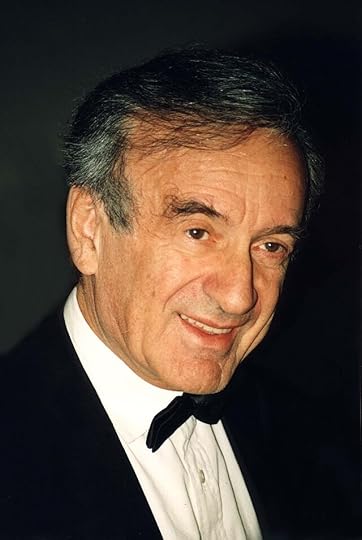
The author, who was imprisoned at Auschwitz and Buchenwald, earned distinction as one of the first authors who wrote about the horrors of the Holocaust. He became most famous for his memoir NightNIGHT. He won the Nobel Peace Prize in 1986. On the cover of the edition of The Sonderberg Case that I read, the publisher proclaims “Nobel Prize-winning author of Night.” Of course, that is true but he did not win the Nobel Prize in Literature. This book was translated from the French. The author wrote 37 books. Night is his best-known work with more than a million ratings on GR. With only 600 ratings, The Sonderberg Case is certainly one of his lesser-known works.
Top photo of the Adirondacks from Garnet Hill Lodge at garnet-hill.com
The author from Wikipedia
The critic’s wife (they have two kids) starts to feel that his obsession with the case is taking time away from his interest in the theater, and from her and their marriage. She's a professional stage actress, off Broadway, and she goes to the theater every single night to see new plays, for her own rehearsals, and to watch rehearsals of her friends. Her husband would accompany her until he started working on this case. I think this is ironic because she’s the one who is obsessed with theater. It’s as if she is saying ‘There’s only room for one obsession in this family, and that’s mine.’ There's enough about theater that I put this book on my theater shelf.
A major theme in this book is, how do we deal with our ancestry? Especially when we find out late in life that our ancestors are not who we thought they were. Or when you learn your father was not your father, The main character, Yedidya, is of Jewish ancestry, so a lot of ancestral history involves the Holocaust. This was also a theme when the accused man walked with his uncle.
This is a short book, about 175 pages, and the first third or so is Yedidya’s reflections on his upbringing, especially his interactions with male members of his family - his father, uncle and grandfather. A lot of the middle of the book follows the legal case. The last section of the book becomes what I'll call ‘pop philosophy,’ like the writings of Paulo Coelho that I don't enjoy. The story is told mainly in the first person, but it jumps around to the third person at times, and we feel the author intruding when he has the main character talk to the reader by saying things like “Let me explain…”
The author, who was imprisoned at Auschwitz and Buchenwald, earned distinction as one of the first authors who wrote about the horrors of the Holocaust. He became most famous for his memoir NightNIGHT. He won the Nobel Peace Prize in 1986. On the cover of the edition of The Sonderberg Case that I read, the publisher proclaims “Nobel Prize-winning author of Night.” Of course, that is true but he did not win the Nobel Prize in Literature. This book was translated from the French. The author wrote 37 books. Night is his best-known work with more than a million ratings on GR. With only 600 ratings, The Sonderberg Case is certainly one of his lesser-known works.
Top photo of the Adirondacks from Garnet Hill Lodge at garnet-hill.com
The author from Wikipedia

June 28, 2025
De nazi's en hun handlangers hebben Europa door de moord op zes miljoen Joden niet alleen beroofd van zes miljoen mensenlevens, maar daarmee ook van een rijk cultureel, religieus, sociaal en economisch leven. Door de rijke bijdrage die onze Joodse medemensen aan de ontwikkeling van Europa hadden kunnen leveren, is door het misdadige Derde Rijk een streep gezet. Zo werpt de Holocaust lange schaduwen in de geschiedenis: van de moord op zes miljoen Joodse mensen in de oorlogsjaren en daardoor de verarming van de Europese cultuur en economie tot actuele effecten zoals de oorlog tussen Hamas en Israël. In Het Proces-Sonderberg laat Elie Wiesel die lange schaduwen zien: bij de schuldigen van de Holocaust en bij de nabestaanden van de slachtoffers ervan. De schuld van de daders en de identiteitscrisis van de nabestaanden: Wiesel weeft die twee lijnen aan elkaar. Het resultaat is een verhaal waarin de innerlijke overwegingen en de journalistieke verrichtingen van de hoofdpersoon, nabestaande van Holocaustslachtoffers en verslaggever van het proces-Sonderberg, centraal staan. Het proces zelf lijkt slechts bijzaak, maar de geladenheid ervan komt aan het eind van het boek aan het licht.

February 9, 2026
Le livre traverse trois grandes thématiques : la vie du journaliste de théâtre et son amour pour sa discipline, le procès de Sonderberg, et une réflexion plus large sur le bien et le mal à travers l’Histoire (Auschwitz, Hitler, etc.).
L’histoire se lit, d’une certaine manière, assez facilement. Cependant, elle est aussi extrêmement mal découpée. Quitte à aborder trois sujets, autant le faire pleinement. Ici, les coupures m’ont parfois sortie de certaines idées fortes du livre.
On sent que l’auteur parle de sujets qui le touchent profondément, ce qui rend le récit globalement fluide. Mais, à contrario, certaines formulations viennent briser cette fluidité. Le « du coup » de la page 104, par exemple, m’a complètement sortie du texte : déjà agaçant à l’oral, il m’a semblé particulièrement déplacé à l’écrit.
Malgré cela, l’analogie du théâtre transposée à la vie quotidienne et au procès est plutôt bien menée. Le livre regorge aussi de nombreux points intéressants, peut-être même trop, ce qui peut finir par perdre certains lecteurs (ce qui a été mon cas).
June 12, 2017
Wiesel’s later novels are mostly mediocre, reproducing familiar stock elements. Of the mediocre novels, this is one of the better ones. The plot isn’t much, and the protagonist is, again, a less interesting version of Wiesel—this time as theater journalist—ruminating on several disconnected aspects of his memory. First there is his relationship with the theater and his actress wife which goes nowhere without much character development. Second is the journalist’s discovery that he is adapted; his true parents perished in the Shoah and he was rescued by a righteous gentile maid. The journalist goes on a trip to Eastern Europe to meet the maid, complete with stock anti-Semitic gentiles. Random bits of Hasidic storytelling: check. Finally is the Sonderberg case itself, which is an interesting first act, but only comes back for a didactic and wooden final act. A German philosophy student may or may not have killed his German uncle, who, predictably, turns out to be an unrepentant Nazi.

June 3, 2011
Couple of weeks back, I went to the library to pick a book from the new books shelf, but found it suddenly unavailable. Which was good because I found this book instead - The Sonderberg Case by Elie Wiesel. I still have Elie Wiesel's Night sitting on my shelf, and I really want to read it - I promise, except I'm not sure what I'm waiting for. Night is a slim book, but if The Sonderberg Case is any indication, I'm sure it also packs in a whopping punch! Since I had no idea regarding what this book was about, and I found the cover very alluring, I went home with this book instead.
In The Sonderberg Case, drama critic Yedidyah is asked to cover the murder of Werner Sonderberg's uncle by the nephew himself. Not having even an iota of knowledge about courts and their operation, Yedidyah did not think it a great idea for him to write about a very important trial, but his editor had full faith in him. Rather than view the trial as a routine courtroom event, Yedidyah focuses his drama-trained lens at the proceedings and writes about it as he would review a play. The trial ends up making a huge impact on Yedidyah, causing him to rehash old memories and question choices made by him and his ancestors.
I absolutely loved Elie Wiesel's prose. I found it a truly delightful and introspective experience as I pondered over Yedidyah's thoughts and questions. I found myself hooked right from the first sentence, and that was without knowing anything about the book or what to expect. Most of the book gave me the feel of reading a drama, in honor of the lead character's passion. It's not a play at all, but it's not regular fiction either. We follow a few characters whose choices constitute the book, and it is those choices that we as readers deliberate on.
There are several powerful themes explored in this book. Significant among them is that of guilt - Not exactly a guilt brought on by your own actions, rather the one caused by the actions of your ancestors - guilty because your ancestor was a Nazi; guilty because you survived WW2 when your whole family was murdered. Guilty because you feel you are responsible for your ancestor's actions. Guilty because you now live for a million other people. I found this a very interesting premise, because I usually read WW2 novels set in that period, or books that follow the survivors years later. But it's rarely that we come across one that actually makes you look at the descendants and wonder what they are going through. (I do understand that it's not meant to be generic, but there are probably people who go through the same emotions.) I thought the author covered this aspect impressively, because I did get the impression that it's not a black and white issue, rather the feelings run deep, deep enough that it can affect your choices for the rest of your life. How do you try to isolate your past from the present?
Yedidyah as a character felt like a sponge to me - someone who doesn't know what to do or what he wants, but finds out on the way through conversations with people. His grandfather was his biggest influence. In one sense, he was adventurous, in the other, not so steady. Most of the time, he questions about life, chance and existence. In fact, the book is philosophically charged, but never preachy. I loved how the questions asked were ones to which even as a reader I couldn't give an answer.
One interesting thing I noted was the switch between first and third person narration in this book, even though both are from the perspective of the same person. While in the first person narration, Yedidyah is mostly looking at his current state of affairs and desparing over his life. The third person narration mostly establishes the past and what led Yedidyah to his present state. There is some overlap, since the distinction isn't exactly set in concrete. But, I didn't find the switch distracting - it only made me curious. The only problem with having a single narrator (a device I no longer seem to enjoy as much) is that the other characters felt a bit flat and one-dimensional to me. I found I could easily stereotype the other cast.
The narration, however, is not straight-forward. At one moment, the author is talking about the trial, in the next moment, the focus is on the narrator's grandfather, then his education, then the defendant, then the trial again, the professor, then Jerusalem and back to the grandfather and the Holocaust. It took me a while to get used to it. But I never got lost. Rather, I savored it - the author was really able to hold my interest in all the threads. At first, I couldn't understand the purpose for the jumping around, but soon it became clear that most of it is the build-up. In the present, Yedidyah is very disillusioned and it is evident the trial had something to do with that. But eventually, it turned out to be something much deeper and the trial a trigger. What I did find confusing was the timeline. There were some events that I couldn't exactly place chronologically. I knew if they were the before or the after, but not exactly when before or when after.
Except for those jarring points, I thought the book was powerful. Eventually the timeline didn't matter to me, as I felt very moved by this book. I kept vacillating between 4 and 5 stars, but when I wasn't boxing the book into a rating, I found myself wondering about the questions the book was asking. I also happened to read it at the right time - when I was looking for something significant and profound to get me out of my reading rut. Eventually, I realized that I enjoyed the book a lot, isn't that what matters in the end?
In The Sonderberg Case, drama critic Yedidyah is asked to cover the murder of Werner Sonderberg's uncle by the nephew himself. Not having even an iota of knowledge about courts and their operation, Yedidyah did not think it a great idea for him to write about a very important trial, but his editor had full faith in him. Rather than view the trial as a routine courtroom event, Yedidyah focuses his drama-trained lens at the proceedings and writes about it as he would review a play. The trial ends up making a huge impact on Yedidyah, causing him to rehash old memories and question choices made by him and his ancestors.
I absolutely loved Elie Wiesel's prose. I found it a truly delightful and introspective experience as I pondered over Yedidyah's thoughts and questions. I found myself hooked right from the first sentence, and that was without knowing anything about the book or what to expect. Most of the book gave me the feel of reading a drama, in honor of the lead character's passion. It's not a play at all, but it's not regular fiction either. We follow a few characters whose choices constitute the book, and it is those choices that we as readers deliberate on.
There are several powerful themes explored in this book. Significant among them is that of guilt - Not exactly a guilt brought on by your own actions, rather the one caused by the actions of your ancestors - guilty because your ancestor was a Nazi; guilty because you survived WW2 when your whole family was murdered. Guilty because you feel you are responsible for your ancestor's actions. Guilty because you now live for a million other people. I found this a very interesting premise, because I usually read WW2 novels set in that period, or books that follow the survivors years later. But it's rarely that we come across one that actually makes you look at the descendants and wonder what they are going through. (I do understand that it's not meant to be generic, but there are probably people who go through the same emotions.) I thought the author covered this aspect impressively, because I did get the impression that it's not a black and white issue, rather the feelings run deep, deep enough that it can affect your choices for the rest of your life. How do you try to isolate your past from the present?
Yedidyah as a character felt like a sponge to me - someone who doesn't know what to do or what he wants, but finds out on the way through conversations with people. His grandfather was his biggest influence. In one sense, he was adventurous, in the other, not so steady. Most of the time, he questions about life, chance and existence. In fact, the book is philosophically charged, but never preachy. I loved how the questions asked were ones to which even as a reader I couldn't give an answer.
One interesting thing I noted was the switch between first and third person narration in this book, even though both are from the perspective of the same person. While in the first person narration, Yedidyah is mostly looking at his current state of affairs and desparing over his life. The third person narration mostly establishes the past and what led Yedidyah to his present state. There is some overlap, since the distinction isn't exactly set in concrete. But, I didn't find the switch distracting - it only made me curious. The only problem with having a single narrator (a device I no longer seem to enjoy as much) is that the other characters felt a bit flat and one-dimensional to me. I found I could easily stereotype the other cast.
The narration, however, is not straight-forward. At one moment, the author is talking about the trial, in the next moment, the focus is on the narrator's grandfather, then his education, then the defendant, then the trial again, the professor, then Jerusalem and back to the grandfather and the Holocaust. It took me a while to get used to it. But I never got lost. Rather, I savored it - the author was really able to hold my interest in all the threads. At first, I couldn't understand the purpose for the jumping around, but soon it became clear that most of it is the build-up. In the present, Yedidyah is very disillusioned and it is evident the trial had something to do with that. But eventually, it turned out to be something much deeper and the trial a trigger. What I did find confusing was the timeline. There were some events that I couldn't exactly place chronologically. I knew if they were the before or the after, but not exactly when before or when after.
Except for those jarring points, I thought the book was powerful. Eventually the timeline didn't matter to me, as I felt very moved by this book. I kept vacillating between 4 and 5 stars, but when I wasn't boxing the book into a rating, I found myself wondering about the questions the book was asking. I also happened to read it at the right time - when I was looking for something significant and profound to get me out of my reading rut. Eventually, I realized that I enjoyed the book a lot, isn't that what matters in the end?

December 6, 2017
Un libro molto particolare. Dal titolo originale si potrebbe pensare che sia attorno al processo Sonderberg. In realtà il processo diviene lo spunto per indagare sul cronista di teatro a cui viene affidato dal proprio giornale di raccontare ai lettori il processo e diviene il filo conduttore che ci riporta sulle tracce delle sue origini. Un libro intimista e intricato, fatto di emozioni che sembrano piano piano trasudare e consolidarsi dal racconto di fatti apparente estranei. Due vite intrecciate nella storia e nel difficile rapporto con l'olocausto e la storia.

October 15, 2016
This was pretty good. Not overlong, full of Wiesel's unescapable melancholy and nostalgia, tinged with moments of both anger and hope. An actor-turned-journalist is assigned to cover a court case, and the defendant's cryptic plea of "Guilty . . . and not guilty" provokes the journalist into questioning his identity as husband, father, nephew, son, and grandson. Both the journalist's story and the defendant's are overshadowed, like so much of Wiesel's work, by the Holocaust.
The plot organization reminded me of Kazuo Ishiguro's method (Remains of the Day, When We Were Orphans). That is to say, the broadly linear timeline is braided in epicycles that tease future and past information. Sometimes this is frustrating, as we'll be on the verge of an important new development when we're suddenly diverted into an extended memory. The book reads like the free reminiscences of the elderly, easily distracted from the main point by memories, which in turn generate other memories, so that we're almost surprised when the original trunk of narrative is revived.
Not a thriller, not a tear-jerker, not unpredictable, but still not a bad read.
The plot organization reminded me of Kazuo Ishiguro's method (Remains of the Day, When We Were Orphans). That is to say, the broadly linear timeline is braided in epicycles that tease future and past information. Sometimes this is frustrating, as we'll be on the verge of an important new development when we're suddenly diverted into an extended memory. The book reads like the free reminiscences of the elderly, easily distracted from the main point by memories, which in turn generate other memories, so that we're almost surprised when the original trunk of narrative is revived.
Not a thriller, not a tear-jerker, not unpredictable, but still not a bad read.
January 8, 2023
Een boek waarin ik even heb moeten doorbijten om het verder te lezen (Misschien heeft de wisselende tijdlijn doorheen het verhaal hier wel mee te maken?).
Plots greep het me, hield het me vast en heeft het me niet meer losgelaten. Een prachtig verhaal met veel filosofische vraagstukken. De opbouw is traag, maar wat er volgt stelt niet teleur. Ik ben heel blij dat ik verder heb gelezen en raad aan dat u hetzelfde doet.
Plots greep het me, hield het me vast en heeft het me niet meer losgelaten. Een prachtig verhaal met veel filosofische vraagstukken. De opbouw is traag, maar wat er volgt stelt niet teleur. Ik ben heel blij dat ik verder heb gelezen en raad aan dat u hetzelfde doet.
August 6, 2024
This is a difficult book to rate on a 5 star scale.I learned things. I love books that introduce new perspectives and this book did that. It's rather poorly written with loose ends and introspective rambling. It reads like a memoir but is a work of fiction... But It's a story that needs to be told and I will be reading more books by this author so... 4 stars...
What time book is actually about: the life story of a Jew in a post Holocaust world and how is after effects influenced his life.
What time book is actually about: the life story of a Jew in a post Holocaust world and how is after effects influenced his life.

October 12, 2018
Don't expect a novel that is well-organized or straightforward. Wiesel uses his considerable talent to tell a tale of family secrets. There are two mysteries: The mystery of the Sonderberg Case in which a young man is accused of murdering his uncle, and the mystery of the true identity of the narrator, who served as a reporter for the trial.
Worth the time.
Worth the time.
January 27, 2022
This book is a psychological/ philosophical exploration of the power of history over the present and how people wrestle with guilt on a personal and societal level. The non-sequential way it is written may put some readers off, yet when the patient reader arrives at the latter half, an interesting exploration of the impact of difficult histories-in this case the Holocaust.
June 6, 2025
A little disjointed but raised many questions on responsibility and communal and generational guilt. "The question is not if we are all guilty, it is if we are all judges? Who will judge the judges?". As someone else said in their review "Elie Weisel is at his best when he is exploring the moral implications of war & its survivors." The last few chapters would have been 5 stars.

April 8, 2023
This novella explores the aftermath of the holocaust and its effect on the survivors and descendants. The twist at the end causes you to think about the effects on both victims and survivors. No one comes out unscathed.

February 25, 2025
Frases grandiloquentes, mas de significado raso; trama previsível, alteração de narradores um pouco desnecessária.
O "Noite" do mesmo autor, mais autobiográfico (e, portanto, mais real) é muitíssimo superior a este, inclusive do ponto de vista, digamos, estilístico.
O "Noite" do mesmo autor, mais autobiográfico (e, portanto, mais real) é muitíssimo superior a este, inclusive do ponto de vista, digamos, estilístico.

July 23, 2018
Trial courts are a form of drama as elegantly illustrated by Wiesel. And we are all guilty and not guilty.

July 26, 2018
What a difficult amazing book. I thought I believed in collective guilt, but this book has made me rethink that issue. This is huge for me.

January 3, 2019
A little too dry for me.
Read
April 29, 2020This book could have been 30 pages long.
Displaying 1 - 30 of 117 reviews