Its two heads, Vicia and Heinox, were fighting for control of its massive body. For centuries, it had sat quietly at Dragonsgate, content with its tribute of slaves for food. Now it took to the air, burning villages at random throughout the Three Lands to vent its rage and confusion. With Dragonsgate open for the passage of armies, war and chaos beset all the Lands.
It was all the fault of Pelmen the player, who had confused the heads to gain escape for himself and the Princess Bronwynn. Pelmen the player, Pelmen the powershaper--now Pelmen the Prophet of the Power! And only Pelmen could end the evils that threatened to destroy everything.
But Pelmen was helpless, locked in the King's dungeon, waiting to be executed on the drawing blocks. Should he escape, the prophecy of the Priestess foretold an even more terrifying fate at the mouths of the dragon!
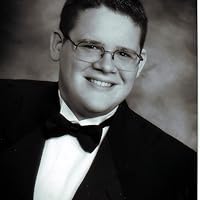
Dr. Robert Don Hughes (born 1949), is an American educator and writer, author of both mainstream fantasy and science fiction and evangelical non-fiction. Born within a mile of the beach in California, he now teaches missions, evangelism, world religions and apologetics at Clear Creek Baptist Bible College in Pineville, Kentucky. He spent two terms as a missionary in Africa, first in Zambia and then Nigeria. He regularly assists churches as interim pastor or revival leader. He’s better known on the Internet as the author of such fantasy and science fiction novels as The Prophet of Lamath and The Eternity Gene.
Ok.. sorry about the delay. I started reading book 2 and kinda forgot about reviewing this first book. I had not read this series since I was in college (yes that was many many years ago.... LOL) so I was not sure how much I would like it some 30 yrs later. Well I have to say it more than hold its own, I must say I like it even more this 2nd time. Much of this increased liking is very much due to the fact that 30yrs later I am a much more experienced person with the ability to see much more deeply into the author's writing. Even the first time through I could see that the author's ability to create a world and characters was masterful, but I appreciated how good he was even more this time through. His world and story are fascinating, complex and spellbinding. Normally at this point I would say something like "on to book 2", however since I just finished it I will just jump next to my review for it instead. I highly recommend this book and series to anyone who loves classic epic fantasy!
I haven't read this since high school, so when I picked it up 25 years later, I was prepared for a really awful reading experience. However, aside from some too-convenient plot-twists and some other new-writer clumsiness, Hughes can be proud of this first novel. The two-headed dragon is a plus, and the addition of the layer of Western religious archetypes to a fantasy world (a tad more complex, sorry to say, than C. S. Lewis's _Narnia_ books) makes this a most interesting fantasy novel.
Fun story that I enjoyed reading. Hughes was creative in his approach to the two-headed dragon and the world it inhabits. In a similar vein to Robert Jordan, Hughes uses multiple POVs to convey a broader image of what is happening in the world; however, whereas Jordan uses the POVs to build suspense, Hughes uses them primarily to inform the reader of what else is going on. Hughes also switched POVs far more frequently than Jordan, meaning the less entertaining ones did not drag on for over a hundred pages like in Wheel of Time. It is evident that Hughes was a preacher, and I am curious to learn more about the Power that is the clear analogy to God. I am looking forward to reading the second book.
This first book in the series is only a solid 3 for me.. but unlike most of the genre,..improvements come in book 2. This is a good intro to the series but a little 2d with its characters.
On the surface this is your standard fantasy paperback from the early 80s. ..but it has hints of some new things or at least new to the genre at the time.
The central character is Pelmen who is plagued with a problem fantasy readers will recognize from Piers Anthony’s 1977 novel “ A Spell for Chameleon”. Instead of the Mother/Maiden/Crone transformation from that book we get Sorcerer/Cleric/Rogue.
The world we find ourselves in is divided into three regions by mountains / dangerous ocean currents/ and a two headed dragon at the only navigable pass in the mountains.
Chaomonous: A land devoid of magic ( but the most resource rich and militaristic society )
Lamath: Theocratic society that worships the two headed Dragon
Ngandib-Mar: patterned loosely off the Scottish Highland ‘barbarian’ clans who are only truly united behind their high King when invaded.
Pelmen is a powerful sorcerer when in Ngandib-Mar, Prophet/heretical cleric when in Lamath, and merely a roguish traveling actor/jester when in Chaomonous.
This world is run by various ethically impaired Merchant clans that have made a deal with the devil ..or to be more accurate the Dragon at the only navigable pass. They run an international slave trade to feed the dragon and maintain monopolistic control of trade between the three regions. Some obvious subtexts here between this and present day multinational corporations.
The action starts with an international crisis sparked when Pelmen is brought before the two headed Dragon and in a desperate attempt to escape..talks the two heads into having an argument with itself. ( also a kidnapped Princess who gets ‘ rescued’ in there..but won’t spoil it too much for you)
There are some interesting things that pull this above the crowd of novels from this period.
A: The character with the Dickensian name of Flayh is the evil baddie trying to “ take over the world” and the merchant clans. He is definitely ‘ bad guy’TM but unlike most bad guys who just make illogical moves at just the right moment..he is intelligent, just plagued by a system that encourages corruption and incompetence.
B: The “Power” source of magic here was later explored by Eddings in the Belgariad. (I wonder if Eddings read this book while writing his?) The Prophet scenes very much explore the power of ‘ true belief’ and a religious idea fans of Star Wars will recognize...that there is a ‘power’ that infuses everything around us and is at some point manipulating events all around us to seek a balance. Also that this Power may be almost deific in nature?
Keeping this from a Four Star is that the only characters that we get some actual in depth look at are a couple of older men side characters who are on opposite sides of the impending war. While this was a fun fairly fast paced fantasy story..most of the characterizations were pretty typical 2d.
I might revise up as series develops though..onto the next “Wizard in Waiting”
I've known Bob Hughes for years and have always known he was a great writer and a great thinker, but I recently found this fantasy novel he wrote years ago. I must have bought it before I met him and never read it. I loved it. His story is engaging. His characters are rich and full. And the backdrop is a land that has history and texture and is not like anything I've read before. I am hoping I can find the other books in the series somewhere.
Interesting. This is the first book in a while that I didn't get by recommendation - just picked it up in a bookshop with a Groupon. The author sets up an unusually divided land (magic, religion, and science?), and plants great character seeds. Enjoyed it more than the last set, so hopefully the entire trilogy will be rewarding.
The The Prophet of Lamath was an engaging read that brought a different set of fantasy rules to the table. The characters were well fleshed out, and plot was dynamic but not overly complicated. I was pleased to learn that this is the first in a trilogy so I can look forward to more time in the world spent with these characters. Also of note that while I had my suspicions about the author while reading his handling of religion and belief I was pleased to see my suspicions confirmed in that he is a Baptist preacher and missionary. Although Christianity is not present in this world the behavior of the main character and others belies the writers own firm belief in the truth and how one should behave when one knows the truth. A good read for sure!
I rate this item five stars. Not because it was amazingly written, had an amazing storyline, or characters that I fell in love with, but because it was the first set of books that brought humor into the fantasy genre for me - and worked. I know, I know. Many others will cry foul and all out the names of Robert Asprin, Allan Dean Foster, and Craig Shaw Gardner. But those were different for me. Those were comedies written in fantasy worlds. Mr. Hughes wrote a fantasy that contained comedy. It had an impact on me.
The Prophet of Lamath (1979) by Robert Don Hughes, is a humorous Game of Thrones before there even was a Game of Thrones, with Pelman the Powershaper as the main protagonist and the main antagonist. (It's a noteworthy trick pulling that one off.) The book reads smoothly but not engagingly, plots along bumpily, offers stock archetypes who never really get to stay archetypical, with a narrative that bouncing about like a pingpong ball.
The work is a non-Tolkienesque fantasy, featuring no gods, elves, orcs, quests, or anything like that. It's pretty much humans running about mucking up each other's lives, and a two-headed dragon (mistaken for a god) that Pelmen gets into a rather vicious argument with itself.
The work is eminently skimmable, which I did as I found the finer description rather tepid.
A very unplotted book, the characters do their own things, bringing the story repeatedly into odd locations and dislocations. Sometimes this worked, and sometimes this didn't. In this respect, it's more like a fantasy narrative from the 40's to the 60's than anything like the 80's and beyond.
In terms of literary orthidoxy, it breaks many rules. The head hopping and POV slides about extensively, but rarely destructively.
The novel features a loose Christian theme, that being the Power. Don't worry about it beating you about the head. It's there, and it's part of the work, but stays rather low key through the story. Being published after Star Wars, it's like the Force, except not the Force, but does something of the same thing.
Refreshingly, the book contains little to no cynicism, and no flat-out "bwa-ha-ha" villains. If there's any villain, it's pride, vanity, sloth, gluttony, avarice, and wrath (the seven deadly sins sans lust). You won't have any problem figuring out which character represents which sin. For the most part, this works amazingly well.
While being no page turner, the book does have its fun moments. If you need a good change of pace, or need to get Game of Thrones out of your soul for a little while, this is a good pick.
A great story, with horrible editing for the e-book release.
I love the story, and have paperbacks from long ago. The editing for this kindle release is atrocious. I found so many spelling errors/wrong words used that were not in the paperbacks which detracted from the read as a whole. Why can't publishers get proper editorial work done for e-book releases? This is such an injustice to the author!
The Prophet of Lamath is an old fantasy novel which has stood the test of time.
It's set in an interesting and unique divided world, where the three kingdoms have different specialities, faith, science, and sorcery and are divided by a monstrous two headed dragon.
The book has interesting characters, plots, treachery, mass battles, individual combat. What's not to like!
Not a deep book by any stretch, and possibly written for a younger audience (but definitely NOT a YA novel), but I like it. The world-building is superficial and the characters tend towards cliché, but it carries me on in a perfectly satisfactory manner.
Such an exciting beginning to the story, every scene with the dragon is unforgettable. Pelmen the Player is a silver tongue and the other antagonists are very fun to read. The worldbuilding is intriguing and had potential to be exciting. A land ruled of traveling merchants and not kings? The premise is perfect for so many stories to be told but this one was not one of them sadly. Starts as a zinger, continues as a drag. The ending is triumphant, but not satisfying. The dragon is dealt with too swiftly, and I am not convinced the wounds dealt to them would have taken that beast down. The first half is a good time, the later half loses itself to new characters we don’t have the time to care about. This story also struggles with too many names that sound all too similar. Vicia-Heinox, is such a perfect name though.
My favorite part was where Pahd-El and Tohn forfeit their petty war and be brothers as true Maris. Made me smile and it was built up well. Probably the second best part of the story, first being the very beginning. The story just wobbles and loses focus sometimes, only held together by the dragons double headed rage.
The king jumping straight into Pahds sword though in the last battle? Laughably stupid.
Justice for Pezi, fatshamed by the characters and author alike. I felt sorry for the guy. Not an ounce of evil in him. Man is an innocent victim to Pelmen and Flayh.
This entire review has been hidden because of spoilers.
Great first book by this writer. Very interesting way the magic uses the main character rather than the other way around. Good engaging read. Very recommended