This introduction to major topics in the field of Arabic sociolinguistics examines key issues in diglossia, code-switching, gendered discourse, language variation and change, and language policies. It introduces and evaluates various theoretical approaches and models, and it illustrates the usefulness and limitations of these approaches to Arabic with empirical data. Reem Bassiouney explores how current sociolinguistic theories can be applied to Arabic and, conversely, what the study of Arabic can contribute to our understanding of the function of language in society.
Graduate students of Arabic language and linguistics as well as students of sociolinguistics with no knowledge of Arabic will find this volume to be an indispensable resource.
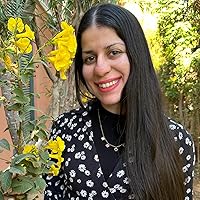
Reem Bassiouney (Arabic: ريم بسيوني), is a renowned Egyptian author and Professor of Applied Linguistics at the American University in Cairo. The first Egyptian woman to earn a PhD in Linguistics from Oxford University, she is a leading authority in Arabic sociolinguistics. As a celebrated novelist, she has won several prestigious awards, including the Sheikh Zayed Book Award (2024) for Al-Halwani: The Fatimid Trilogy, the Naguib Mahfouz Award (2020) for her bestseller Sons of the People: The Mamluk Trilogy, and the National Prize for Excellence in Literature (2022). Her work, which bridges academic expertise and historical fiction, has been widely translated and recognized globally.
This is an outstanding book, I suggest to read to it to anyone interested in the field of Arabic Sociolinguistics, but not only. While reading it you will not only learn theoretical aspects on Arabic Sociolinguistics, but you will also have the great oportunity to understand more on Arabic culture and society. The book is complete and deep, I have truly learnt a lot from it and at the same time I have enjoyed a lot the reading
Extremely dense and academic… but it’s a textbook so that’s to be expected.
I was really impressed with how the author gave such a comprehensive view of modern day Arabic Sociolinguistics without requiring too much prior knowledge in the field. As someone who has spent time in the field, I found the book a helpful refresher for many concepts that I was rusty on in Sociolinguistics more broadly as well.
I found her assessment of the current state of diglossic communities across the Arab world in contrast to examples in other languages especially insightful.
This is a pretty interesting and thorough breakdown on the social politics in and around the Arabic language; I studied sociolinguistics in school and it felt like a return for me which I appreciated.