The Global Resistance Movement is one of the 21st century’s most active and influential organizations. It is a global coalition of millions united in resisting and building alternatives to an out-of-control global economy. It emerged in Mexico in 1994 when the Zapatista rebels rose up in defiance of the North American Free Trade Agreement. The West first noticed it in Seattle in 1999 when the World Trade Organization was stopped in its tracks by 50,000 protesters. More significantly, the anti-capitalist street protests are only the tip of its iceberg. It aims to shake the foundations of the global economy and change the course of history. But what exactly is it? Who is involved, what do they want, and how do they aim to get it? To find out, Paul Kingsnorth traveled across four continents to visit some of the epicenters of the movement. In the process, he was tear-gassed on the streets of Genoa; painted anti-WTO puppets in Johannesburg; met a tribal guerrilla with supernatural powers; took a hot bath in Arizona with a pie-throwing anarchist; and infiltrated the world's biggest gold mine in New Guinea. Along the way, he found a new political movement and a new political idea. It is united in what it opposes and deliberately diverse in what it wants instead.
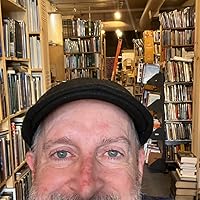
Paul Kingsnorth is an English writer and thinker. He is a former deputy-editor of The Ecologist and a co-founder of the Dark Mountain Project. He lives in the west of Ireland.
He studied modern history at Oxford University, where he was also heavily involved in the road protest movement of the early 1990s.
After graduating, Paul spent two months in Indonesia working on conservation projects in Borneo and Java. Back in the UK, he worked for a year on the staff of the Independent newspaper. Following a three year stint as a campaign writer for an environmental NGO, he was appointed deputy editor of The Ecologist, where he worked for two years under the editorship of Zac Goldsmith.
He left the Ecologist in 2001 to write his first book One No, Many Yeses, a political travelogue which explored the growing anti-capitalist movement around the world. The book was published in 2003 by Simon and Schuster, in six languages across 13 countries.
In the early 2000s, having spent time with the tribal people of West Papua, who continue to be brutally colonised by the Indonesian government and military, Paul was instrumental in setting up the Free West Papua Campaign, which he also helped to run for a time.
Paul’s second book, Real England, was published in 2008 by Portobello. An exploration of the changing face of his home country in an age of globalisation, the book was quoted in speeches by the Prime Minister and the Archbishop of Canterbury, helped inspire the success of the hit West End play ‘Jerusalem’ and saw its author compared to Cobbett and Orwell by more than one newspaper.
In 2009, Paul launched, with Dougald Hine, the Dark Mountain Project – a call for a literary movement to respond to the ongoing collapse of the world’s ecological and economic certainties. What began as a self-published pamphlet has become a global network of writers, artists and thinkers. Paul is now the Project’s director and one of its editors.
In 2011, Paul’s first collection of poetry, Kidland, was published by Salmon. Since the mid-1990s, Paul’s poetry has been published in magazines including Envoi, Iota, Poetry Life and nthposition. He has been awarded the BBC Wildlife Poet of the Year Award and the Poetry Life Prize, and was narrowly pipped to the post in the Thomas Hardy Society’s annual competition.
Paul’s journalism has appeared in the Guardian, Independent, Daily Telegraph, Daily Express, Le Monde, New Statesman, Ecologist, New Internationalist, Big Issue, Adbusters, BBC Wildlife and openDemocracy, for which he has also worked as a commissioning editor. He has appeared on various TV and radio programmes, most shamefully ‘This Morning with Richard and Judy.’ He is also the author of ‘Your Countryside, Your Choice’, a report on the future of the countryside, published in 2005 by the Campaign to Protect Rural England.
Seeing George Monbiot's endorsement of this book on the front cover may have raised some alarm bells, but the book itself was tremendously educational, entertaining, human, accessible and generally hopeful, with a hint of revolution. More than a hint.
The only truly depressing takeaway from this, was looking through the links provided in the back pages to "keep up with the movement" as it were, only to find out they had disappeared, or (particularly in the case of the Papuans, and the anti corporation folks) still fighting exactly the same fight, with even bigger and powerful allies. This book was lent to me by a lecturer, for a social movements class. Maybe he has better ideas of where to look.
An interesting relatively un-spun read that takes the reader behind the smokescreen & media portrayal of the coalescent global political resistance dissident movement. The author uses his own first-hand experiences and witnessing movements on the inside - in such seminal areas as Chiapas and the Zapatistas, the infamous G8 protests in Genoa which ended in the death of Carlo Giuliani, Soweto township... - to actively put across his viewpoint there might be many different problems and acts of injustice, one answer (a resistant NO!) and many yeses (multiple different solutions).
At times it does feel like a thinly-veiled soapbox sermon without the adrenalizing effect of the likes of John Pilger or Noam Chomsky, at other times it comes across as more of an incidental travelogue sprinkled with a dollop of politics on top. Combined, those factors mean that it doesn't quite feel like your usual political book nor have the same inspirational motivating effect I've felt elsewhere.
There's also some rather glaring omissions on the topics covered. For example, the book is about a global network of active resistance to state oppression and persecution yet there is no mention whatsoever of the burgeoning international BDS (Boycott, Diversity, Sanctions) movement which promotes boycotting Israel for it's barbaric treatment of Palestinians; a movement which is vividly active in Europe, South Africa and beyond yet isn't deemed worthy of mention in Kingsnorth's book. Whether it's omission is down to the big villain of the piece being a contentious state and not 'The global capitalist machine' or down to the author's own undisclosed personal political inclinations is not clear.
Overall, you could summarise this book as saying it's almost like Mark Thomas without the jokes and satire. A good start but far from authoritative. It's probably more deserving of a 3 out of 5 generally but I based my score on the fact I'd file it far more under 'it was ok' than I'd be confident to say 'I liked it'.
Paul Kingsnorth has been heralded as a prophetic voice akin to the agrarian writer Wendell Berry. Neither writer fits in a box. Both are cultural critics, both are writing with a rootedness in the earth, both are crying out to an industrial society that has lost it's moorings. In this book, I believe one of his first, Kingsnorth documents his journalistic exploration of (and personal involvement in) the anti-globalization movement. This is an older book but a great place to start in understanding Kingsnorth's journey as a writer. Also, if you have no idea how transnational corporations are running rampant over large swaths of the planet, and making life a living hell for communities and tribal peoples, this book would be a good introduction into issues that will disturb and challenge you. To be blind to these injustices and oppressive economic powers is to continue in a deadly kind of ignorance. Paul Kingsnorth is one of the most important voices today, in our time of ecological, political, and economic upheaval.
Once again a very informative (though confronting) book by Kingsnorth. Not only does he explore some of the wonderful things happening locally to fight back against corporate growth and dominance, he also offers solutions. I think, though, I should have read this book before I read his later Confessions. I think between the two books he became rather disillusioned about whether or not the poorer, less powerful types CAN actually change things and has opted, instead, to live a quiet, rather secluded life learning about gardening and scything. Sigh. Lots of chew on....
I encountered Kingsnorth last year in his current iteration, as a farmer-mystic living in rural Ireland and who believes that our great problem is a spiritual crisis, not merely an economic or political one. Here, though, I find the young Paul Kingsnorth, the 20-something writer who wanted to set the world on fire. He travels across the world and spends time with local movements which are resisting corporate rule, political elitism, and the destruction of their local economies in the name of our global god, Mammon.
A great account of the lives of many - separate - yet unified in a similar feeling, in a time of growing global interconnectedness. Paul gives way for the author to test their own predispositions, whilst also providing some recommendations on how to build an alternative.
I loved this book. If you want an introduction into the various counterculture movememnts taking place around the world...this is the book to pick up. He travels to various resistance groups around the world discussing with people why and how they resist the mainstream culture and/or exploitation. If anything the book was too short.
Brings together lots of examples of global resistance, many very small but all significant. It's inspirational. One person can't change the whole situation but lots of people can make many small changes and they add up! Let's start making some now!