Corleu was different from the typical dark-haired Wayfolk. His blond hair and his fascination with the legends and children's rhymes about the Cygnets, Gold King, Blind Lady, Dancer, and Warlock set him apart.
When Corleu and a band of Wayfolk become trapped in an endless swamp, he crosses a threshold (an unthinkable act for Wayfolk) seeking a means of escape. This impetuous act puts him on a collision course with the legends of his childhood. This is not a simple novel. The intricately woven plot laced with surrealist qualities will appeal to mature fantasy lovers.
Patricia Anne McKillip was an American author of fantasy and science fiction. She wrote predominantly standalone fantasy novels and has been called "one of the most accomplished prose stylists in the fantasy genre". Her work won many awards, including the World Fantasy Award for Lifetime Achievement in 2008.
They're just tales, how could there be danger? Just stars our eyes picked out and made into patterns so the night would be less lonely with faces looking back at us. But because of stars and smallfolk rhyme, I've lost everything I ever knew.
Corleu, the hero of this early fairytale from the pen of Patricia McKillip, is an insignificant speck on the landscape in the eyes of most of the Hold people who consider his nomadic tribe as wild, dirty and uncouth. He is a target of ridicule and bullying even within the ranks of his gypsies, because his hair is silver-white while the rest of the people are raven haired. Corleu takes refuge in the stories told by his grandmother in in the books left behind by his father. He even invents his own adventures to tell at night around the campfire.
She danced on a hill, she danced in a rill, She danced on a moonbeam, danced in a dream, Danced on a star, danced very far, Danced in a bear's den, danced home again.
What Corleu didn't expect is for the tales passed down in childhood rhymes and old folk songs to come alive in his lifetime and to plunge him in the middle of a power struggle between ancient magical entities. Just as the young man manages to finally confess his love to his childhood sweetheart, he is pulled into a different universe where the constellations up in the night sky become ordinary people walking the earth and searching for a secret artefact to restore their celestial superpowers.
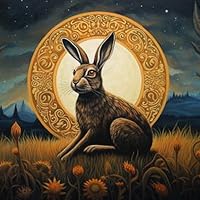
The Gold King hides inside the Dark House and plots to shine again like an Apollonian God; The Old Lady eternally weaves the threads of fate and dreams of recovering her lost sight from the tail feathers of the Peacock; The Dancer sleeps on top of the world in a prison of ice, guarded by the Fire Bear; the Blood Fox hides in the middle of the marshlands waiting for her Guardian Mage to reignite the flames of eternal war. All of these constellations have been defeated centuries ago and locked into their earthbound frames through spells cast by the ruling star sign of the Cygnet (I imagine this swan as a sort of Mily Way cutting across the Zodiac constellations). The avatars represent universal concepts of magic and power like Fire, Time, Dreams, Violence and, in their human form, they send Corleu the Gipsy on a quest for the key to their ultimate emancipation from under the banner of the Cygnet, now represented by the human rulers of Ro Holding.
Corleu needs more than his quick thinking and his smallfolk lore to get to the bottom of this mystery, and help comes from Nyx - a daughter of Ro Holding who left home years ago to become a sorceress. Nyx plays with dark forces and unsavoury spells imvolving the killing of small birds and the harvest of dead things, but Corleu has little choice in the matter of allies. Time is running against him, as the Holding of Ro sends its own guardian, a woman warrior named Meguet, to put a stop to his attacks against the power of the Cygnet. But is Nyx a person to be trusted in this quest of Corleu? Or does she have her own agenda against the Ro Holding?
Power is power. It's neither good nor evil, it's simply there to be used, either way. It's like fire. If you feed it silver it will shine like a summer's day and speak to you fairly, and if you feed it gall wood, it will turn black and stink like the dead, and prophesy sickness, storm, misfortune. All that matters is what you put into it.
>><<>><<>><<
I have taken some liberties in summarizing the plot, a complex weave of mysteries and almost forgotten legends, of secret ambitions and unexpected kindnesses that lure the reader into a labyrinth of mists and shadows that enchant more than explain. It's a dance of allusions and allegories that Patricia McKillip is so adept at in all of her novels, where she often makes the journey more interesting than the destination. The patient reader is rewarded hyere with a resolution of sorts, one that comes closer to the spirit of ancient fairytales than to the tenets of modern epic fantasy. Best of all, this tale is not the usual stand-alone fable that the author prefers, and there is a sequel that is already waiting its turn by my bedtable.
... whatever sun touches, whatever dreams, whatever works magic, whatever flies ... When the heart casts a shadow instead of dancing light, there story begins.
I tend to appreciate the McKillips where she uses her lyricism in service of story. This is not one of those books. But this is classic McKillip: it’s dreamy and beautiful, and it’s about constellations and myths made real, and the writing is lyrical and brilliant - and I’m not actually sure I followed the story. I certainly don’t remember much of it beyond “myth” and “magic” and “maze”, and I think the average McKillips are characterized by that haziness.
There’s one writing slip up, a shift in point of view which is pretty abrupt - I was surprised out of the dream, and it took a while to adjust.
This is not your typical average book, because of the overall quality of the writing, but it’s average for McKillip. Not one of her great ones.
The Sorceress and the Cygnet is two plots intertwined: Corleu, a member of a wandering tribe, realizes they have wandered off the map into mythology; Meguet, niece of the Holder (ruler) of Ro Holding, stumbles into a heritage she never suspected. The link between the two is the titular sorceress Nyx, daughter to the Holder of Ro Holding and so-called bog witch, who has spent nine years traveling the holding to learn magic from any source, including some that appear disgusting and cruel. Corleu stumbles into Nyx's swamp with an impossible task, and ever-curious Nyx decides to help him. Since Corleu can't (and Nyx doesn't want to) tell anyone what he's searching for, he and Nyx butt heads with Meguet and the rest of Nyx's family, who see (correctly) Corleu's quest as a threat to Ro Holding itself.
Patricia McKillip's books are as much about language and poetry as they are about story. She has this unique way of describing ordinary things that makes them seem like magic, and describing magical things that make them seem unfathomable. I sometimes think that the point of reading her books is not the plot, but the way she lays it out--something about her language makes me see things differently, and phrases from her stories sometimes rise up in my memory for no reason. I liked The Sorceress and the Cygnet for the vivid descriptions and for the way McKillip describes Nyx's magic, as well as how close-knit the Ro family is. I could do without the stupid cover, though.
Mckillip has a way of taking me right out of the waking state logical mind, and into a realm of dreamlike fantasy, with a subtle undercurrent of menace. This is really the point of fantasy for me. I remember spending most of my time being confused when reading this novel, and at the same time, it kept me totally enthralled. Mckillip has made no attempt to make this novel, or its characters relatable, in the normal sense. These are fantasy characters, and like magical people, somewhat ineffable in terms of their motivations. The story is riddled with obscure, arcane archetypes, (but not recognizable ones), and the story unfolds like a dream. In spite of the fact that fantasy has the ability to be boundless in terms of imagination, much of it follows a very set pattern: Unlikely boy hero, prophesied to save the realm, finds sword, goes on quest to defete dark lord, at some point dragon appears, flailing maiden needs to be rescued. Mckillip takes us far beyond the confines of this model, and leaves us almost giddy with the sensation of falling in a realm of baffling supernatural wilderness. I wish more fantasy writers had this kind of vision.
I was really rooting for this book—finally a swords-and-magic fantasy quest that follows almost none of the typical tropes. Constellation-magic, bog ghosts, and ancient town traditions, all told in dreamy, misty prose that suits the swamps and midnight town gates. But, alas, McKillip's dreamy language runs away with the book, until at times it's difficult to understand what she's even describing. Not in a good way. Not like, say, Faulkner. More in a "I literally can't understand what's happening" sort of way. I couldn't begin to tell you what exactly happened in the surreal climax, or, more importantly, why. I'm not sure the characters could, either. Each of them is asked, in the final pages of the book, to describe what exactly went on, and each of them politely declines.
The first chapter features some of the author's most poetic writing, as she introduces Corleu, a young man out of place among the restless Wayfolk who, his great-grandmother tells him, long ago wandered out of the stars. Corleu is a "child of the horned moon," white-haired where all of the other Wayfolk are dark. He gets it from his grandfather, and his great-grandfather, a stranger whom his great-grandmother once coupled with among the corn one summer day. Who was he? A lord? A commoner? A sorcerer? One of his great-gran's dreams and stories? No one knows for certain.
I love the culture, the lore, and the world of the Wayfolk, and in this chapter McKillip provides one of the most beautiful descriptions of falling in love I've ever read:
"Venn's younger sister, Tiel, crossed the camp one day carrying a bucket of water from the stream, and Corleu, chopping wood, glanced up to find that in the interim between her going to the stream and returning, the world had transformed itself under his nose. The wooden ax handle was of a finer grain; the ground her bare feet touched had never been walked on before. Even the air was different: too shallow to breathe...."
When the Wayfolk choose to go south to the Delta for winter rather than the usual Hunter Hold, Corleu's father and mother see danger in this departure from custom, but Corleu follows the rest on account of Tiel. As they journey along through the hazy south, Corleu starts to notice that they aren't making any real progress, that time isn't passing, that they are trapped in some kind of enchantment. He finds a doorway out himself, but in order to free his people and his love, he must find the heart of the Cygnet for the Gold King, whom Corleu previously thought was a story, a constellation in the sky, the sign of one of Ro Holding's four Holds.
But this isn't only Corleu's story. It's also the story of Nyx Ro, a mysterious sorceress who lives in a swamp, and whom he goes to for help in finding the Cygnet. And it's the story of Meguet Vervaine, Nyx's cousin, who serves the Holder and is sworn to protect the country and royal family.
I like Meguet; she's got grit. I like her relationship with the Gatekeeper, one of the most grounded and mature romances I've written in a fantasy book. And I do like the royal family in general. There's one particularly wonderful scene where Iris, the daughter who seems the least magical of the lot, is the only one who is able to perform an important spell. It's a great character moment. And there's a great sense of tension as figures out of legend begin to appear in Ro Holding, although I still missed the Wayfolk after the first few chapters.
The structure bothered me a bit: Part One was from Corleu's point of view, Part Two from Meguet's, and Part Three switched between the two. One sad casualty of this set-up is Nyx. By the time you get to the end of the book, you come to realize that Nyx is in reality the most important character to the story, and it's she who changes the most in the course of it. But we are never able to see that change from the inside. Heck, we barely see it through Corleu's and Meguet's eyes. We have to be told about it. Weak.
I'm finding more and more that my enjoyment of McKillip novels varies depending on their endings. All of her books feature beautiful prose, complex and inimitably human characters, and a wonderful air of mystery. In the best of her novels, all of the mysteries come together and are explained in startling but entirely logical ways (well, logical for fantasy novels that place such a high value on symbolism and illusion). My least favorite of her novels are those that build up a great threat and then reveal it to be no threat at all, merely some kind of ploy by the universe to teach the characters a lesson. The Tower at Stony Wood and Solstice Wood fit this category. So does The Sorceress and the Cygnet. So despite the beautiful poetry of the writing, despite the Wayfolk, despite Meguet and her Gatekeeper, I can't say that it's a favorite.
In Patricia McKillip's The Sorceress and the Cygnet, song and story literally come to life. Constellations fall from the sky and become breathing, dangerous beings. A sorceress cooks spells with impossible ingredients. A fighter wields the spirit, knowledge, and time of the thousand come before her.
At least, I think that’s what happened.
Here’s how it goes: Corleau leads a wandering gypsy-life, until he gets stuck in a timeless place. The only way to free himself—and the woman he loves—is to find something for a tinker who seems to be an incarnation from tales. The sorceress Nyx, hungry for knowledge and power, agrees to help him. Their foil is Meguet with her ancient sword, quirky extended family, and determination to save her house. None of them fully know what they’re getting themselves into. Neither does the reader.
This novel reads like poetry. For people who enjoy poetry, you’ll love the bends and twists of McKillip’s prose. The text is laced with whimsical and multi-faceted imagery. Characters do not have conversations; they dance around each other. The reader only gets a sense of seeing what they see, be it through half-bleared eyes or mysterious mirrors.
I, however, am not one for poetry. I get snagged in the details. I absolutely adore fantasy, but I like my fantastical worlds to make sense. I like my unicorns to have one horn, my basilisks to kill with a single glance, and my Spidermans to soar on Tarzan-like webbing according to the laws of physics.
I found myself confused. I could not always follow the fanciful storyline or the action described in flashes. Too often I was left with what does that mean, why’d he do that, why’d she say what? My basic questions prevented me from getting fully wrapped up in the story.
Prose and poetry aside, the characters are three dimensional. They are full people with strengths, foibles, and intelligence. The history and mythology are well-defined, even if it takes a while to figure it out. And in what other novel do characters research? In-between spells and swordplay, they sat down to sift through books. Definitely fantasy.
There are two ways to read this book. You can stay on your toes with laser-like attention and reconstruct clues half-explained. Or you can go with the flow. You can tolerate the confusion and relax into the eddying streams, murky depths, and waves crystallized with sunlight. And don’t be startled when Pisces appears and water starts flowing upstream.
This is not an especially long book and I've gotten about two thirds of the way into it, but I've been wavering on giving up or reading on for a while and I kept trying to push on. The writing is oh so lovely, numinous and lyrical and lush, and I like what it's doing with constellations coming to life and myth and story shimmering into reality. I want to like this so much, and yet I can't find any traction on it. I think the characters ought to be interesting and at the same time I don't really want to read about them. I can't figure out what's causing me to be so disconnected to this book and that's why I kept trying to push myself to read on, and it's not as if it's a long book, but I am finally confessing that this just isn't working for me.
(reading the first book after the sequel, let's go)
Ehhrrrgggggh. Three stars or two? McKillip's writing is sensory and intelligent and wields at moments rare emotional power. I love Meguet; I love her herself as much as I love the concept of her, which is as much as I love the powers behind the constellations and the organic-ness of the magic (it's the way you should write it). I like Nyx a lot too and enjoyed her development.
But...I could not care less about Corleu. And Really???!???!?
4.5 / 5 stars McKillip writes beautiful fantastic worlds, where the line between reality and magic are razor thin; where magic does not have clear Rules and actually feels fantastic; but whose dense prose and unwillingness to explain can occasionally make what is happening unclear.
What is reality and what is allegory? Isn't that what makes it...magic?
I’ve read this previously, years and years ago. I used to own a paperback copy but have displaced it at some point so got a new copy on Kindle. The book was great then and is great now. Maybe I should do an extensive McKillip reread.
I read this book back in the mid 90s when I first moved to Minnesota. In those days the library was my best friend and I was going through a fantasy novel a day.
I don't remember how I found this book. I think it was new at the time and was displayed so you could see the cover.
I remember liking it, thinking the story was complicated and well thought out. I also remember that the surreal prose (like the description said) sometimes left me wondering whether something described was really happening or not.
For example, in the sequel to this book, the opening paragraph describes a woman standing on guard as having "swans flying at her back and shoulder and wrists, swans soaring out of her hands." And I was "are there magical swans here? Or is she wearing armor decorated with swans?"
I still don't know.
But that was the sequel. I cite that line because it stood out, but you get the point.
As for THIS book, the Cygnet and the Sorceress.
The book is set in a medieval type ... I don't know if I'd call it a "kingdom." To me that conjures up something a little bigger than what's going on here. A sort of small feudal type state with five regional territories, I guess you'd say. Distinct areas that seem to work together, each called a "Hold."
Ro Hold is the dominant one. The other Holds seem to operate independently but have some kind of loyalty to Ro Hold. (In case you're wondering, I think they're Hunter Hold, Delta Hold, Withy Hold and Delta). None seem super large or wealthy. Ro Hold is (as I said) the dominant one, but it seems to amount to one castle and the area around it, as far as I can tell.
Now, I don't want to detour too much into the world building, but it's related to the plot and I'll say that Patricia McKillip did a good job of working this world and the history behind it into the story without dumping in pages of textbook style exposition.
Again, about the world building, the dominance of the main hold (Ro Hold) seems to have come about 1,000 years prior when a powerful mage named Chrysom seems to have been key in winning a war amongst the Holds and establishing magic in Ro Holding. (Sometimes "Ro Holding" sounds like it's talking just about the castle and sometimes about the territory. I can't tell).
But the magic seems to be infused into the castle. And while it doesn't seem active today, people even now a thousand years later know about this mage Chrysom, and know that a lot of his artifacts and powers are infused in the castle. But not just the castle, but in the families that run the place. The person who established Ro Holding back in that time was named Moro Ro and his name gets brought up a lot. Characters use his name as an oath like "By Moro Ro!" and things like that.
I'm guessing that in a thousand years, no one will be talking about all the things I've done. But that's not important.
Anyway, that's their world. It doesn't seem big. You can caravan from one end of this feudal Hold territorial to the other in a matter of weeks, maybe? There doesn't seem to be an influence or thought of anybody or anything outside these Holds.
That's a lot of background. And like I said, Patricia Mckillip does a good job of introducing all this gradually.
As for the actual story, the plot is told from the point of view of two main characters.
The first is Corleu. He's a young man who is a lower-class type person in this world. He's part of a group of, I guess you'd call them migrant workers? They live in caravans and go farm in one of the Holds in the summer and then to a different Hold in the winter. Back and forth.
They have a simple, traditional culture. They do the same route year after year. Everyone seems to have a similar appearance. Notably, everybody's got dark hair.
They're called Wayfolk. Because they travel. They don't live in cities and they don't like to walk through doors.
I realize I'm giving a lot of world building and background without giving plot and characters.
Sorry.
Anyway, the book opens by describing one particular Wayfolk boy who is different. The first lines of the book are "He was a child of the horned moon," which gives you a sense of Patricia McKillip's prose - magical, descriptive.
We find that Corleau, unlike other Wayfolk, has white hair. But it took me a while to figure that out. The first reference to it is that it's "old man's hair." (I think, "Is he bald?") Then a few lines later, we hear that Corleu's hair is "moon hair." After a few pages, I got it. But I have trouble following that sort of thing. I think I'm a more literal person than Patricia McKillip (may she rest in peace).
Anyway, the book opens showing us a lot about Corleu and about Wayfolk culture. And as I was reading along I thought I was getting a lot of background of these people mainly to learn about Corleu, but it turns out that all of it is important to the plot and then I wound up looking back to read it again later.
We learn that Corleau is different from the other Wayfolk. Not only does he have white hair (for which he is made fun of growing up) but he has odd interests. He likes to read. Almost no Wayfolk can. He likes learning and telling stories. Also not common.
Most of the stories have to do with constellations. Patterns in the stars.
The Gold King (in his little house) The Blind Lady (with her ring of time) The Dancer (and the fire bear that guards her) The Warlock (who lives in a fox's shadow)
All the Wayfolk know about these constellations and the stories around them. They are woven into almost every children's game that is played. Corleu becomes an expert in these and children come to listen to him tell these stories.
Mind you, it took me a while to realize that these were CONSTELLATIONS. One of the earliest sections that talks about them happens when three teenager boys (Corleu one of them) are up late, drinking and talking and we get this:
"Early in the morning, tales took a turn from fathers, girls and ghosts, to the stars above them, thick as sheep in a shearing pen."
Ok that's your cue that when one of them says "There's Peacock" (with a capital P) that he's talking about a constellation.
Maybe it's me. I need someone to say. "Three teenagers were lying on their backs. The looked at constellations in the sky, identified them and began to discuss stories associated with them."
And it doesn't help that these constellations are also the emblems of the different Holds and so are interchangeably referred to as "Hold Signs."
Long and short of it, when the Wayfolk caravan sets off, they travel through a misty, surreal swamp. And Corleua slowly notices that nothing changes. When he tells others, nobody notices. Eventually he realizes that they're trapped in a dream.
When gets off the path he meets a tinker, with a little wagon house, cooking food. And he goes into his house (which all the stories say you're not supposed to do).
And he's stepped into the Dark House of the Gold King.
And now the Gold King has trapped him and his people and wants Corleu to find a "small thing" for him and in exchange the Gold King will set Corleu's people (and his love interest) free.
The Gold King was my favorite character in this whole book. He appears looking human, like a tinker with messy hair, with a few clues to suggest that he might be something else. He always seems to be cooking something or cutting an apple. And he always seems to want to share his food.
When Corleu first meets the Gold King (in human form), the first thing he offers him is the fish he (The Gold King/tinker) is frying.
I think there's something in human nature that makes you want to like a person who offers you some of his food.
This sets Corleu on a path. And it sounds small at first but it gets larger and more complicated as it goes. And you feel how Corleau feels, that he's getting in deeper and deeper over his head. But it seems that as he gets in deeper, the only way out is to keep going further.
And it keeps you reading.
During the course of his journey, Corleu winds up interacting with the ruling family of Ro Holding.
Mainly, he winds up at the house of Nyx Ro. She's one of the daughters of the woman who rules Ro Holding - Lauro Ro. I don't want to call her a "queen" because, like calling it a "kingdom," conjures images of something bigger, grander, more civilized than what they have there.
But the ruling family is this Lauro Ro/queen person (the book calls her the "Holder of Ro Holding") and her family. (No husband).
Anyway, Nyx Ro has left her family, and lives in a swamp as part of her nine-year quest to learn magic. (She's the sorceress in the title of the book). She helps Corleu out of curiosity and part of her desire to acquire knowledge and power.
This Nyx woman is a main character. Corleau is the main perspective character for half the book and a different member of the royal household for another. So we never get inside Nyx's head.
But her decisions drive most of the plot and she's the only character who has an arc.
And she's annoying as heck.
She unabashedly uses anyone and anything to get what she wants. She tortures animals to learn magic and all the other characters in this world find it disgusting. The book hints that she's helping Corleau out of some measure of feeling for his plight, but it's really hard to see. Maybe you can infer it a little from how Mckillip talks about Nyx looking at Corleau during some quiet moments.
But still.
And it doesn't help me like her more when most of her family defends her to others (like the Gatekeeper). Something along the lines of "Maybe she lives in the swamp and tortures animals for her own selfish ambitions, but she's a good person inside." (That's my way of saying it. Patricia McKillp says it much more poetically).
The relationship between Nyx and her mom the queen/ruler is believable. Mom wants her daughter back. Daughter wants her independence. Etc.
But her core trait is that she uses people. And though there's a moment at the end where the book seems to tell you that she's changed, its hard to see.
The other point of view character is Meguet, who is peripheral member of "royal" household. While she's a type of royalty in this world, she acts mostly as a soldier. Because of that she's often sent from Ro Holding to go talk to Nyx (the sorceress) in her house in the swamp. Meguet works well for this, because she can go back and forth, and tie together Corleau and Nyx's actions (which are stirring up ancient powers) to the concerns of the royal family, who the book presents as the rightful guardians of order in this world.
Meguet is stoic, capable, honest, a good fighter. She's also beautiful, which isn't bad, but to me felt a little cliche.
Meguet also develops a relationship with the Gatekeeper. Though the book never goes out and says "The Gatekeeper is beneath Meguet's station" it shows it to you without being heavy handed.
I liked the early scenes between these two. The mutual respect. The way Meguet hangs around the gate a little too long after returning from a journey. The way the Gatekeeper notices all the details about Meguet.
But when they become an official item, they acted too cutesy towards each other and then I was annoyed by them.
So I liked the world. I thought the point of view characters were pretty good. I thought the mystery they were unraveling was excellent.
Oh, and as for the world, Patricia McKillip does an EXCELLENT job of keeping it mysterious. A lot of things aren't exactly explained. For example, a lot of Brandon Sanderson's stuff seems to explain every little thing and give you the detailed background of every supernatural being down to the date on their birth certificate and it ruins the mystery. (Ironic because I bet Brandon Sanderson worked hard on those details).
A few words about the prose.
It's lyrical and surreal. And in spite of that, Patricia McKillip makes the grounded, practical characters (the Wayfolk, the Gatekeeper) sound practical and grounded, even though they sound more poetic than people in our world. But you can tell from their speech, their metaphors is different than that of the nobility, and it gives the whole book a believable feel, even while being dreamlike.
The only thing, is that sometimes (like I said), I lost track of what was going on.
For example at one point the royal family are talking about what to do and the mom/queen gets annoyed. And the bratty prince character says something insulting (about Nyx I think) and the text says something like:
"She never struck out before. She did then."
And you have to figure out that means she punched the prince guy in the nose.
I had to go back and re-read it a few times.
And Patricia McKillip has this habit of breaking up speech with dialogue tags a lot. Like this:
"What I think," Calyx said, raising her delicate voice as much as she ever did, "is that if Nyx and the tinker were working together, this is where she would be."
Ok that doesn't read too badly.
But pile enough of those up, one after another, in the same dialogue and it becomes distracting.
Right after Calyx says all that ("What I think...")
The next character responds like this:
"What I want to know," Iris asked, "is: Are they sorcerers? Or something to do with the Holds."
That's not as dramatic as Calyx's long descriptive dialogue tag, but they build up, you might say if you were so inclined to, over the course of a book.
Other things I got from this book:
Apparently "ensocerelled" is a verb meaning "to be under the influence of socerery."
And, try as I might, I can't figure out how to spell "sorceress."
All that aside, I liked this book. Its dreamlike style worked for me. The worldbuilding was woven into the story really well. The characters weren't super standout, but the mystery they were unravelling compelling enough to make you want to follow them.
I really liked this book when I first read it and I liked it now on a re-read.
I'm not sure how to feel about this book. I enjoyed it, but it was very vague. What was good was really good, and it gave me quite a lot of Dark Souls vibes...but it's a bit misty, truth be told. 🤷♀️
Although I didn't understand everything and had to read the first few chapters again a couple of times to make sure everything was clear, the prose was gorgeous and the imagery stunning.
The story doesn't move forward using definite events, but rather evolving symbolism and imagery. Little by little, the stories-within-the-story become real, functionning as riddles that unlock each other one by one. The physical journey of Corleu, the protagonist, who asks the help of a sorceress to save his people and the woman he loves, is intertwinned in his symbolic journey from story to story, which is itself intertwined in the politics of the various countries of the world, politics of which the hero, as a member of a wandering folk that doesn't care about boundaries or governance, is completely unaware.
The multiple levels of symbolism in this book thus mix the temporal and the mythical, the material and the symbolic, the personal and the collective. The results are arresting. I didn't understand everything, but I'm not sure that the plot is meant to be "understood", one event after another, in a conventional way. This is the kind of book that should be approached like poetry: I think it's best to read it several time, paying attention to the way the images and symbols echo through the story. Even if you only have time to read it once, though, it's a lovely read.
Still working my way through McKillip’s backlist. When Corleu and his caravan are trapped in a never-ending summer, he impulsively plunges through a strange doorway– and into a world of myths and stars. He’ll have to complete a strange bargain and work with a mysterious sorceress if he ever wants to rescue the rest of his group.
McKillip is one of those authors, like Valente, where the line-by-line prose and imagery is gorgeous, nearly poetry, but sometimes the overall plot and characters fail to cohere. This is one of those books. The characters are flat, and the plot wanders through a series of unfamiliar and opaque myths that are never really explained. And it’s also particularly long for a McKillip novel.
Beautiful in small pieces, but disappointing as a whole.
It took me a much longer time to read this than I was expecting. It's one of McKillip's most complex works, as well as one of her most poetic, filled with all kinds of allegories and mysteries. I couldn't always follow the storyline or the action, but I just went with the flow.
SECOND REVIEW, 2024:
Well, I'll be damned. Read it all practically in one sitting this time on a long train trip, but I had zero recollection of this book. It was only when I wanted to log it that I discovered I'd read this before. It's still a very abstract work, especially near the end.
C’est la curiosité qui m’a mis ce livre dans les mains. J’avais entendu parler de l’autrice mais n’avais encore rien lu d’elle. Le titre, la couverture, le résumé… j’étais interpellée.
Nous suivons Corleu. Corleu est un Errant aux cheveux blancs, en dépit de son âge (c’est un jeune homme). Une chevelure héritée d’un ancêtre, selon l’histoire de son arrière-grand-mère qui raconte à qui veut l’entendre comment elle fut séduite par un cavalier étranger, dans un champ de maïs. Une chevelure qui accompagne certains dons, paraît-il, mais Corleu ne sait que lire et conter des histoires, ce qui n’est, à ses yeux, pas un don en soi, au contraire de sa mère, capable de lire l’avenir dans des pétales de fleurs. Lorsque la troupe d’Errants se met en route pour changer de Tenure, la saison se terminant, ils se rendent au Delta, une région marécageuse. Mais Corleu se rend compte, seul, que la caravane tourne en rond dans une contrée étrange, où rien ne meurt. Et quand il découvre une maison noire, comme celle décrite dans les comptines, comme celle formant une constellation bien connue, il se pourrait que ce soit le début des ennuis.
Voilà pour le point de départ de cet excellent roman de fantasy qui cache bien son jeu ! Car, durant les premières pages, j’étais plus que dubitative. Mais tout change quand Corleu entre dans cette maison noire. Petit à petit, je me suis retrouvée ensorcelée par cette histoire où constellations comme comptines prennent vie, où une forteresse est dirigée par une femme et ses filles (malgré l’ouverture du roman qui suit Corleu, le roman est aussi narré par un personnage féminin, Meguet, que j’ai beaucoup apprécié !), où l’héritage n’est pas qu’un mot vain mais bien une chose encore très vivante dans les vies des descendants.
Original, doté d’un univers passionnant (des constellations vivantes ! J’ai adoré !) et de personnages attachants (dont de nombreux personnages féminins, ce qui m’a fait plaisir), sachant doser son suspense (jusqu’au bout, je me suis demandé ce que ce serait le fameux objet qui suscitait tant de convoitises), une plume fluide et poétique, le tout saupoudré de romance (Meguet et Hew ❤), la recette réussie d’un très bon roman de fantasy qui, s’il n’est pas tout jeune, m’a enchantée !
This novel revolves around the intertwining stories of Corleu of the Wayfolk (akin to the real-world Roma or Travellers) and Nyx Ro and her family. Corleu and his band of Wayfolk find themselves trapped in an endless swamp, and his attempt at escape brings him face to face with figures of legend and folklore in their attempt to manipulate their stories. This in turn leads Corleu to the house of Nyx Ro, a sorceress and one of the daughters of the Holder of Ro. As she helps him in his quest to free his people, she and her family become entwined in the stories that are unfolding and the dangers they hold. The Sorceress and the Cygnet is a very subtle and finely wrought novel. The language is as beautiful as ever. McKillip is able to weave a lot into a relatively short book, without anything feeling rushed or glossed over. However, there are a lot more mysteries and allusions than in her other books. Much like the ancient tales, folklore, and legends it evokes, there is a lot that is only hinted at, a lot that remains shrouded in mystery and metaphor. Yet it is not at all unsatisfying. All of this reminded me a lot of Little, Big, which I also enjoyed a lot.
This book is very quiet. It's not a grab you by the throat novel, and even if there are swords and sorcery, those swords and spells don't accomplish as much as conversation. I've noticed the words 'poetic' and 'rich' cropping up around McKillip's writing style, and that's accurate. She is one of those authors who will use seven well-chosen words where one would suffice for others. The result is a deeply textured novel with an astonishing amount of world building, and a dreamy tale that spools out leisurely. And I liked it. The basic story is your typical hero's quest of fairy tale, taking the main story arc from East of the Sun, West of the Moon, which is apt given that this is a world of living children's tales and songs. There is value added by framing the hero's quest in the redemption of a family who are more closely tied to this galaxy of myths than they understood. The characterizations can be a trifle flat for a high concept fantasy, but then again, this is a fairy tale and fairy stories are entirely populated with archetypes. What was most refreshing was how unexpected, yet entirely fitting the conclusion was. A very lovely book with an unusual degree of intelligence.
While I enjoyed some of the imagery and feel of this book, it didn't really grab me with the story or writing style. I got a bit lost in some of the symbolism and the myths that felt like they were trying to get at some inaccessible deeper meaning. The description was too prescriptive for me while the world-building was too vague, with too much detail on small parts of background/scenery but then skimming over huge swathes of culture, expecting you to absorb that through the course of the story. I haven't minded this too much in other books that have similar approaches, but there was something about the style or particular approach here that didn't do it for me.
I've liked other McKillip novels, so I'll continue to read her stuff but this one left me unsatisfied despite being an enjoyable read for the most part.
A fantasy mystery from renowned author Patricia McKillip. A mysterious wanderer named Corleau, with blonde hair among dark-haired wandering people falls in love and his girl is held by the powerful Sun King. All he wants from this white-haired young man is the heart of the Cygnet.
What is it? Where is it? He doesn't know, nor does anyone else. Not even the Sun King.
Corleau awakes in a swamp and then is taken to the home of a swamp sorceress, Nyx. She too is wrapped in unknown power. She becomes interested in his mission--only he is bound to not tell her what he searches for.
How do all these mysteries resolve? It is a story of great and subtle power stretching across the world and time.
Read it if you love mysteries, if you love fantasy.
I picked up the Cygnet duology at the Half Price Book years ago because the cover was a bright yellow with lots of dragons. I kept it in my collection for so long without giving it a try that I became determined this year to finally read it. I wanted to enjoy it. The writing is lyrical and relaxing; however, I struggled to stay focused on the plot and had to reread sentences throughout. I love fairy tale type stories, so I kept going for the fable style writing. I didn't feel the urgency behind the characters motivations. I appreciated the romantic relationship between the Gatekeeper and the swan girl, but I couldn't understand the significance of the gate's power or the symbolism in the swans. This one went over my head.
This was on the slower/weirder side of McKillip's stuff, but I came around to liking it by the end (I did almost give up on it several times during the first third though). It’s about a young man given a quest to complete or his people will be lost in a misty dreamland forever, the sorceress who helps him, and eventually her family (things get much more interesting once they come into play). Good stuff here about families and stories and magic. But slow as hell. B+.
To honor Patricia McKillip, who passed away this year, I have been rereading her classics, and looking for stories I missed from her long career as a master storyteller. "The Sorceress and the Cygnet," is one of the classics. The characters are likable, and the story sweet. If you are in the mood for a story that isn't bitter and jaded, give this title a try!
Like all of this author's books, this one was surprising, fascinating and beautifully written. My favourite thing about her is the seeming lack of world-building while all the time she builds amazing and believable yet utterly fantastical worlds with subtle strokes and hints. Her imagination is unparalleled. Excited that there is a second book in this particular reality.