There are long-held secrets at the manor house in Buckinghamshire, England, where Emilie Selden has been raised in near isolation by her father. A student of Isaac Newton, John Selden believes he can turn his daughter into a brilliant natural philosopher and alchemist. Secluded in their ancient house, with only two servants for company, he fills Emilie with knowledge and records her progress obsessively.
In the spring of 1725, father and daughter begin their most daring alchemical experiment to date—they will attempt to breathe life into dead matter. But their work is interrupted by the arrival of two strangers: one a researcher, the other a dazzling young merchant. During the course of a sultry August, while her father is away, Emilie experiences the passion of first love. Listening to her heart rather than her head, she makes a choice.
Banished to London and plunged headlong into a society that is both glamorous and ruthless, Emilie discovers that for all her extraordinary education she has no insight into the workings of the human heart. When she tries to return to the world of books and study, she instead unravels a shocking secret that sets her on her true journey to enlightenment.
The Alchemist’s Daughter is a gripping, evocative tale. Set against the backdrop of eighteenth-century London society, it is an unforgettable story of one woman’s journey through a world of mystery, passion, and obsession.
Selden Manor was the crucible in which my father, the Gills, and I lived together. I peer into it now with the respectful caution with which I was taught to approach any volatile experiment. I am searching for a day to illustrate our life before 1725, the year when everything changed. And unlike the blacksmith’s daughter, I am an expert in observation. I know what I am looking for—bubbles of gas, a rise in temperature, an alteration in texture—small indications of chemical change that mean something significant is happening. —from The Alchemist’s Daughter
Katharine McMahon is the author of 10 novels, including the bestselling The Rose of Sebastopol, which was a Richard and Judy pick for 2007. The Crimson Rooms and The Alchemist's Daughter.
Her latest book, The Hour of Separation, is our in paperback on 22nd August.
Her fiction is based on the lives of extraordinary women. She loves to explore how women in the past - but with a contemporary slant. The Hour of Separation tells the story of a complex friendship played out against a backdrop of resistance and betrayal in two world wars.
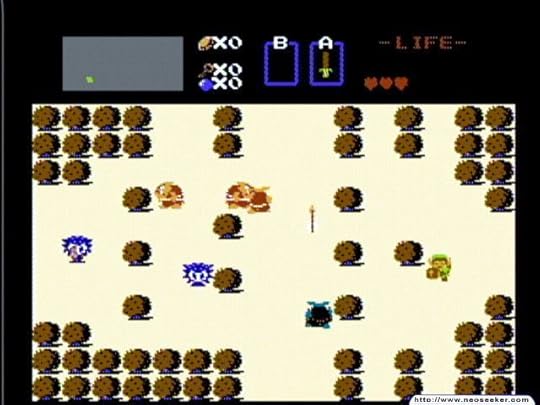
Those of you who are Old School know about the original Legend of Zelda. The first game in the Zelda franchise was epic. It was badass. In my personal opinion, few games have been as awesome since.
This book is a lot like the original Legend of Zelda. Unfortunately, it is like all the crappy and stupid aspects of that game, and none of the cool ones. Witness as I extrapolate.
The main character in this book lacks personality. All of the things that sound kind of cool about her--like she knows about alchemy--in the end amount to practically footnotes as she wanders her way through a storyline, always doing the most obvious thing at the moment. At first, she takes the tools thrust upon her by her father and lets him mold her personality entirely. Like the little old man in the cave who gives Link his first sword, thereby bringing slaughter upon the legions of weird animals wandering Hyrule, Protagonist's father gives her the tools of alchemy and the knowledge of a very limited set of topics (sciences and alchemy are about it). She takes these tools and does the obvious thing with them, seemingly content being her dad's clone.....
....until a MAN walks in. And then, it doesn't matter who he is, she is all hot and bothered and blushing and virginal, unable to focus on her alchemy or science. But, she remains true to her father, not going after any of these guys until one of them rapes her.
After he rapes her, she marries him....you know, because that makes sense.
But, because Link is only capable of following instructions and killing like some little puppet serving the war pigs--let me try that again. Because Protagonist is only capable of doing what she's told, she marries the young and handsome rapist--even though she witnesses signs that he's only out for her money before they even get married.
This is the pattern that she follows through the rest of the book, following the clearest instruction provided for her, slowly gaining cooler clothes and items. But, unlike Link, these items don't give her greater hit points or make it so she can do cooler things. She just continues being a uni-dimensional tool, ignoring the ways those around her are using her or manipulating her.
The plot also shares some common elements with Zelda because everything is foreshadowed way ahead of time. Every plot point is predictable, almost from the point the involved characters enter the storyline. Let me just throw some archetypes at you. Feel free to guess at the ENTIRE PLOTLINE in the comments, and you'll probably be right:
Overly Protective Father Flat Protagonist Kind, Sweet, Widowed Reverend Handsome, Money-Hungry Rapist Husband Sneaky, Distrustful Maid Mother who is Entirely Unknown by Protagonist, and is Never Talked About By Anyone.
The climax wasn't ENTIRELY clear until about two thirds of the way through the book, so that's a mildly good thing. But by the time you get there, end is entirely abrupt and exactly what you'd expect.
And, after reading the other Goodreads reviews of this, I was expecting some serious alchemy porn! I was excited about pages talking about strange experiments, and perhaps digging up bodies or...well, SOMETHING cool. Alchemy was the big draw for me here, but there actually wasn't enough focus on that for me. Mary Shelly can write some passages about science that add texture. This book didn't have texture, and the texture it didn't have wasn't improved by the small amount of alchemy included.
Unlike some of my reviews, I'm not being harsh just because I'm grumpy. I'm actually in a pretty friggin' good mood: It has been a long time since I've read anything by Ann Coulter. I just got a job I'm totally excited about, and I'm buying a beautiful house in a little over a month! So, coming from that frame of mind, let me reiterate: this book sucks. Skip it.
But you should totally play The Legend of Zelda. Link is a flat character, but he's a flat character who'll put his foot up a moblin's ass.
This book was a cross between literary fiction and bodice-ripper romance. Katharine McMahon seems to be sitting over the fence, not quite sure what kind of book she wanted to write. She put her heroine in a similar position - Emilie is not quite sure if she prefers to sit in the lab and peform physical and chemical experiments or if she would rather have that dashing young man grab her and take her, take her like there is no tomorrow. This weird combination worked surprisingly well but must have given McMahon's publisher a bit of a headache. It's not clean cut enough for the publishing world maybe, but isn't it true? We can all be very smart and sophisticated and suddenly, unexplicably we fall for a guy who has a peanut for brain and we don't seem to care. Im our heads we go from 'literary fiction' to 'bodice-rippers' in no time.
I was a little put off by the title because it reminded me of that wretched The Alchemist book by Paulo Coelho. The apple doesn't fall far from the tree, I thought, like father, like daughter. Thankfully, inside I found a rather beautifully written, slowly paced novel that brings the 18th century England to life with all its colours, smells and sounds. It's very introspective too but in a humble, girly way rather than a self-absorbed one.
Some reviewers seem to think that the book would better off without the many sex scenes. I disagree. That was the substance of Emilie and Aislabie's relationship and they were essential to our understanding of that peculiar grip Aislabie held on Emilie. And they were not badly written either; that is, they didn't make me laugh, which is an achievement.
To summarise, "The Alchemist's Daughter" is a book about science and about love, about the errors of judgement, and about accepting defeat. It is pretty much the same for both, love and science. It's chick-lit with a smart twist, I would say.
Katharine McMahon is an excellent example of the problem I have with modern writers. In reading (or listening to, in this case) her book I found I was transported through the ailes of a book store. One moment I was reading something out of historical fiction, then scientific theory, and then a trashy romance novel..and there lies my problem. I wish modern authors had enough imagination as to address sex scenes as they did, in this case, the 1700's. I don't mind sex in a book when I can see the necessity of it as it pertains to the story, and it doesn't detract. This was not accomplished in this book. Is she unfamiliar with Jane Austen or even "Tom Jones" by Henry Fielding? Do I need every sordid detail of what Wickham does to Lydia after they run off together? No, I have enough imagination and life expierence to tell me what they are up to and that information does nothing to move the story along. Tom Jones sleeps with every woman he meets and still the reader isn't subjected to pages of description. Though I can see the role sex has in this book, as the main character discovers the world and passions she has never been familiar with, how she is manipulated and controlled by her husband, and eventually realizes she isn't loved, but I do believe Katharine McMahon would be hard pressed to justify all of the details she has put into her book. As I heard the lines "..and that was the last time I slept with my husband"..I thought "finally!!" **I will now step off my soap box*** The story itself was fairly good, but I did have a hard time believing any of the characters. I didn't find any of them possessed with real emotion and I couldn't feel for them in any way. There was enough mystery, however, that I did want to finish so I could find it all out. I was not dissapointed in the ending eventhough is leaves a lot of questions unanswered. It was a tale of coming full circle. As far as recommending this book, I wouldn't. There are plenty of better written books that explore similar themes and storylines and I would seek those out instead.
I just didn't really get into this book but trudged my way through hoping it would get interesting. It sounded interesting - beautiful, intelligent Emilie, raised in seclusion by her father to be an alchemist and natural philosopher is swept off her feet by the first handsome man she sees and exiled to London where she begins "her shocking journey to enlightenment".
However, it did not live up to the blurb. Emilie's character was flat and boring and she seemed to spend most of the novel wandering around in a blinkered trance feeling sorry for herself. The romance was soon over once she found out her handsome lover was only after her money and property. The secret of Emilie's mother wasn't all that interesting and a bit of a let down. Even the alchemy wasn't very interesting as Emilie tries to bring a dead rose back to life by a process she seems to have no great passion for. The ending is somewhat expected and inevitable. So sorry, but thumbs down from me :(
It is rare for me to say this about a book, but I did not like this book. It was disappointing and not at all satisfying. I'm not sure what I expected, perhaps for it to be a bit more like the conservative, 19th century England of Austen novels, which it wasn't. It was well-written and seemingly well-researched, but the characters were dull and the plot was dumb. I didn't like the storyline at all. I really thought it would grow on me or even get better as it progressed, but it never did. The scientific dialogue goes over the reader's head, unless one happens to be an expert in 18th century alchemy and scientific principles of the time. Um, not so much! I got the distinct impression that the author was really impressed with herself for everything she wrote about those topics, but her time would have been much better spent developing a better storyline and deeper characters. I do not recommend this book to anyone.
SPOILER ALERT:
From the first moment Aislabie is introduced, I didn't trust him for a second and I was unfortunately proven right. What a jerk. And what's really annoying is that Emilie can't do anything about it, which is probably not unrealistic for the time period, she was her husband's possession. Still, it was aggravating. I guess the best part of the whole book was when it ended. Literally, like the last few pages. The author gives the impression that Aislabie dies at sea and Emilie ends up with Reverend Shales, who she should have been with all along, and they raise Aurelie together. An interesting twist, considering neither of them is her biological parent, but somehow that was the most satisfying part of the book.
This entire review has been hidden because of spoilers.
I read halfway through this book one evening, but then it didn't seem worth finishing. The plot description made it sound like an intelligent book about an intelligent woman living/learning at the time of Isaac Newton. But the book wasn't smart and neither was the main character. The author latched onto one concept in alchemy and just repeats it (so the character can impress everyone she meets) rather than giving any additional insight into the philosophies and views of the time. In fact, the book seemed to be some genre I might describe as "woman-recovers-from-youthful-bodice-ripping-incident-to-become-independent-modern-woman." Is that a real genre? If so, I'm not interested.
It's strange the way some stories don't get to you. This one had everything I should love in a novel: an evocative setting, a smart heroine, an exploration of a father-daughter relationship, a touch of mystery, and of course, some romance. But there's something that didn't click. Maybe the lack of elegance in the prose, maybe the intented-to-be well researched long descriptions of scientific experiments; but I found I didn't care a bit about Emily's fate or about the outcome of the story. The characters were unidimensional and not well crafted, the father, an obsessed man, the daughter, too naïve to be believable, the husband a cheater, the reverend a too much well hearted man, who, by the way, appears and disappears from the story when the author thinks suitable and the maid, a poor sinner. Besides, I found the story regarding Emily's mother too far fetched and with too many coincidences. And unlike some reviews below, I think there are no loose ends. The book has a forced happy ending, maybe a predictable and not well worked one though, but it has a conclusion that leaves no doubt. All in all I wouldn't be recommending this book, don't lose your time when there are great books to be read as Du Maurier's or the Brontë's.
Another really good book. I love historical fiction. The main character, Emilie, drove me crazy at some points because she made such bad, crazy decisions. But I had to remind myself that it was the time period she was growing up in and also that she had lived a very sheltered life, which could definitely happen in that time period. I did enjoy the story though and it was based on real situations, Sir Issac Newton was in the book a lot as well as others that I probably had not heard of. So, it was a good read and enjoyable. Would definitely recommend.
I liked this story, it was a fast read, but somehow it missed being something special. It's the story of Emilie Seldon, who was raised during the time of Isaac Newton in the spirit of scientific inquiry, and, despite her sex, to be a natural philosopher--a scientist. But her father forgot to include the social--and hormonal--in his calculations. Motherless, home-schooled, without other family or friends beyond the housekeeper and never allowed beyond the bounds of the estate, Emilie is so isolated she's all too vulnerable to a seductive visitor, Roger Aislabie.
Despite this being told first person, Aislabie comes across from the beginning as trouble to the reader--and to everyone else, except the too-sheltered, naive teen Emilie. McMahon obviously did her homework on the period, and she's good at getting the esoteric concepts of those early scientific inquiries across and the story is told in a clean style. There's also a mystery at the heart of this book about Emilie's parentage I found quite moving. However, I feel that's more because her situation hit home for personal reasons--and because of my own personal experience, I think part of the problem is that in the revelation scene is too detached--nor do I ever buy how it leads to her change of heart over Sarah.
I also think part of why I wasn't more taken with Emilie is that she's too passive. I don't blame her too much for that, or find her stupid like some reviewers--not given her upbringing and the lack of power women had in the period. But it makes it hard to care. I kept waiting for Emilie's scientific mind and training to kick in somehow for her to find a way out of her problems, but the science and the alchemy is really mere trappings in this novel. I also felt dissatisfied with the lack of resolution at the end. Not a novel I wanted to hurl against the wall once finished--but not one I'd want to put on my bookshelf either.
I know I'm not doing this book justice with this review. Sometimes it's difficult to say exactly what you liked about a book without talking about the specific events within the story itself. Not wanting to spoil the story for potential readers I'm going to stick to a rather vague review, my apologies.
I liked the protagonist Emilie Selden; I was curious about her relationship with her father and was eager to follow along as she recounted the events of her life and how she learned about her family history.
I really enjoyed this novel. I thought the writing was very good, the characters were well drawn, the story was logical; the events that unfolded were interesting and believable. I liked incorporation of science and the experimental method as well as details about scientific thought during this period in time. I enjoyed other period details as well.
I think fans of historical fiction would appreciate this novel. Katherine McMahon is a talented author and I'm looking forward to reading her novel 'The Crimson Rooms' in the near future.
I was entranced by this book's early chapters - it's one of those stories that really draws you in.I would recommend to any readers who enjoy fiction based in the eighteenth century - or who simply love a good plot driven romance. The writing style is vivid and filmic and Katherine McMahon has clearly done an enormous amount of research into the scientific methods described - the materials, the tools, the experiments.
There are many twists and turns of plot which revolves around a passionate love triangle - but with far more emotional intricacy than your run of the mill romance.
My one disappointment was that I wanted more from the 'alchemy' thread. One character hopes for the elusive creation of gold but does not push for this end as much as I would have suspected. There is one experiment with a rose that does mirror the heroine's affair of the heart - but something more substantial might have made this book perfect.
This book was sitting out in the library's display area, so I though "ooh - great, they've recommended some historical fiction for me!" It looked promising - a girl is raised as a scientist/alchemist in her father's laboratory with the expectation that she will follow his footsteps in the field. And at first, the descriptions of their experiments and of the period were quite good. But then, this seemingly intelligent girl falls for whatever adult male falls into her path. She spends the rest of the book just being an airhead idiot, the interesting field of alchemy and science is painfully sidelined, and none of the characters really developed. Though some of the historic descriptions were good, I felt she could have done a lot more with it. The sex scenes didn't really fit with the rest of the book either - occasionally I felt like I'd been dumped in a trashy romance novel.
I initially feared that this novel would turn out to be a vehicle for an over-abundance of gratuitous sex, but as I progressed, I found that the explicitly erotic scenes at the start contributed to the understanding of Emily Seldon, a 19 year-old raised by her alchemist father as both a bit of an experiment and as his apprentice. Having been raised in almost complete isolation in rural 1700s England, it is no surprise that her accomplishments in alchemy and natural philosophy, and her meticulously analytical approach to all things offer Emily no protection from the seductions of a handsome and conniving entrepreneur. I became intrigued by the mystery of Emily's past as well as the evolution of the character of this most unconventional heroine. The father's journal entries alternating with Emily's reactions to reading them made a very effective device for unraveling her past. I enjoyed both the writing style and the period detail. Since my rating evolved (along with Emily) from 2 stars to 4, I'll give this one 3 stars.
I absolutely loved this, so much that I didn't want it to finish.
The Alchemist's Daughter is above all a beautifully told story, but like all of McMahon's books that I've read, it's a lot more than that. At the centre of the story is Emilie, the product of her father's experiment to raise her as a 'pure' alchemist to carry on his work. Cut off from the world, she is a first-class natural philosopher with absolutely no concept of basic things, like how to make choices, how to understand the consequences of her father's lifestyle on the people who live on his estates, no idea even that she is a beauty. Naturally, Emilie falls hook line and sinker for the first man who comes her way, and naturally he's a baddy! Emilie, deep in lust, becomes pregnant and hands herself and her inheritance over to her fortune-seeking husband, a man with a passion for unusual collectibles. Emilie quickly discovers that she is one of them, that she has lost her father and her life, and soon loses her baby.
The rest of the story is about Emilie's voyage of discovery. Who is she? What is her past? Who is her husband? Her life unravels, as does that of her tenants, as does her tender relationship with the local priest, whom she quickly realises ought to have been the love of her life. The loss of her child makes her slightly mad. She turns to alchemy in a desperate attempt to restore the world as it once was.
This is a brilliant story, as I've already said. It's a very moving story, seeing Emilie struggle to come to terms with the loss of her child. It's a story that makes you mad, seeing her vain, flighty husband destroy so many lives while she is powerless to stop him, and it makes you frustrated too, because McMahon keeps Emilie true to her upbringing. There is no lion emerging from the frail feminine vessel, she doesn't roll her sleeves up and fight patriarchal power on its own terms - she turns to the one weapon she has, alchemy, and reading this is even harder, because of course we know it's not a weapon at all. Or is it? I turned the last page with a smile on my face, expecting an ending, only to discover that was the ending. It couldn't have been any other way - or it could have, but that would have been a cop out - and though I was gutted that the book had come to an end, it is that rare thing, a brilliant book with a brilliant ending.
I tried very hard to like this book, but in the end I just couldn’t. I had no sympathy for the main character, I found her more than a little pathetic and irritating. I tried reading around that, which I can sometimes manage, the writing was decent enough but then I came upon THE SCENE that just completely ruined it for me and for the rest of the novel, I couldn’t get it out of my mind.
I usually don’t include spoilers in my reviews but I’m going to go ahead and mention this bc it’s not pivotal to the plot, was really just a small moment in the book but it so completely disgusted and troubled me that I even had dreams about it.
I’m referring to a moment in the third chapter (I think) where the main character describes with a disturbing amount of detail a horrid experiment she conducted with her father on a live dog, wherein they tied it down, slit its larynx and proceed to torture it by reviving it multiple times just to figure out how breathing worked.
Yes, it was fictional and yes I am very aware that there is still to this day a lot of horrifyingly real animal abuse, torture and experimentation. I’m ashamed that due to my MS, I am required to use several different medications that are ruthlessly tested on mice. I hate that my existence requires any participation in that. I’m also aware that the horrible practice of vivisection was in use during the time period in which this novel is set and that some will feel that I am just way too sensitive about a fictional account. And that’s ok, I know this to be a topic that I react strongly to and that not everyone will agree. I’m totally fine with that.
But here’s the thing for me: Since it wasn’t necessary to the plot and the author took a little more than half the page describing it, all it accomplished was making me loathe her characters. I guess I can say that since it had such a profound impact on me that it shows that the author writes well. But that point is moot because I will never again pick up another novel written by her. If you commit that much space on the page to describing something, in my humble opinion, you had better make damn sure there’s a reason for it and that it doesn’t turn readers off.
This entire review has been hidden because of spoilers.
Just finished The Alchemist's Daughter (large print version) this evening and I really enjoyed it. Katharine McMahon is a fine author; her prose zips along and I thought the story was interesting and thought provoking. Set in Buckinghamshire and London about 1725, McMahon uses her novel to explore the limitations on women's lives during the 18th century. Emilie Selden is unique: she's nineteen years old and has been educated solely by her scientifically minded father since the moment she was born; her mother having died in childbirth. By 19, she has a brilliant mind and a vast curiosity for the natural world, but she doesn't have a clue on how to be a woman and cope in the real world. She does not realize that she's beautiful; she does not know how to dress, cook or sew, and most importantly she does not know how to deal with her feelings for a man. Suddenly, two eligible men enter her world and are smitten by her beauty and brains. Emilie discovers, too, that she is attracted to their attentions, but is naive as to how to deal with them. Her journey is a complicated one and, at times, exasperating, but Emilie's strength of character helps her to become the woman she wants to be.
There is an animated discussion somewhere here on Goodreads outlining the fact that familial titles lead to bad star ratings and a whole lot of zzzzzzz's...
the 'somebody's wife' the 'third cousin twice removed of xxx'
Let's see how this will pan out....
In one of my earliest memories I walk behind my father to the furnace shed.
Page 10 - I am searching for a day to illustrate our life before 1725, the year when everything changed.
From The Concise Encyclopaedia of World History, 1725:
Ottoman Army takes Tabriz Peter the Great dies, aged 52. Chiswick House is completed, as are the Spanish Steps, Rome.
Main book is Gradus ad Parnassum by Johann Fux Music - Giulio Cesare; Tamerlano Handel Easter Oratoria Bach The Four Seasons Vivaldi
-----
Another one to the hoisted over the shoulder. Next! (and please let it be interesting)
This entire review has been hidden because of spoilers.
I think I enjoyed the audio narration better than the story.
There were parts of it that had real potential and did not go anywhere and others that just fell flat. I could not really drag up any real feeling for the girl that was the main character, hated her husband, disliked her father and his servants, and could not figure out the rector at all, until the ending. I actually liked the beginning and ending of the story the best.
An interesting read, but not really what I expected. I was thinking this would be more of a coming of age and empowerment type story, but it kind of breezes through the growing up part and settles itself in a rather depressing part of this girl's life. It pretty much bummed me out through most of it.
Katharine McMahon can really write a good piece of historical fiction. I adored her book The Rose of Sebastopol, and this one didn't disappoint. Not that any of us were alive at those times, but it's so believeably real, just submerging you in the time. On the back of my copy it is described as an historical romance, which... well, yes, there is that element, but more I think it's a tale of the parent-child relationship; and in particular the one between the main character and narrator, Emilie Seldon, and her father. It's interesting because a large chunk of the book is her story from her perspective (obviously), and then through journal entries, the truth of her birth, her father and also what was going through his mind at the time of specific events. And you see how complex things are, how relationships are not easy, and how children bring the best joy but also the most heart wrenching moments.
The story is set in the first half of the 1700s, the Age of Enlightenment. The father is an alchemist and a "natural philosopher" - scientist of the age I guess - observing and experimenting and bringing up his daughter schooled in all of this. He's very protective of Emilie, and keen to educate her as much as possible in the sciences. Sadly she's so kept away from the rest of the world that she's very innocent and easy prey for any handsome seducer that might rock up at the estate. And rock up he does. It breaks apart the father-daughter relationship, but out of all that death, something new and good does eventually return to Seldon.
I did wonder at how hard people were on Emilie at one point (Spoilers to come!). When she finds out that her maid has been having an affair with her husband, and is pregnant, she is devastated and sends the maid away. Her own nursemaid and housekeeper from Seldon, Mrs Gill, is so hard on her, with no empathy whatever for the fact of Emilie's ruined marriage, but instead is adamant that Emilie should have taken the maid in and helped her. I don't know... but there are such sad episodes. These are the days before contraception and legal (and more importantly safe!) abortions, so women got pregnant, and would often die in childbirth, or if they survived, just toss the newborn on to the rubbish heap, which is a heartbreaking image. I can understand why Emilie, getting over a miscarriage, obsessed about those dead twins she found. Age of Enlightenment, eh? Still a long way to go for the ladies...
This entire review has been hidden because of spoilers.
"The Alchemist's Daughter" had an interesting premise: could a man, a scientist of his day, raise a child to be purely intellect, w/o emotion distorting her thinking? Said scientist did not consider how he was stunting the child, and leaving her totally unprepared for life. Emilie and her father are alchemists, and as above, they both live for the science of alchemy. Of course, later decades proved that alchemy is closer to magic than to actual science, but even the noted Sir Isaac Newton was an alchemist during the Age of Enlightenment. Emilie knows nothing of her mother, and nothing about how to get along w/ other people, as she is only exposed to her father, the housekeeper and her husband, and occasionally, the village parson. Any reader can see that Emilie is being set up for a hard fall, as an educated WOMAN of her age, but lacking the education as to what it means to be a woman in the early eighteenth century -- merely chattel to men, first the father then the husband. So, as any reader can see from a mile away, when Emilie meets a charming young man in the forest, she falls hard for him, to disastrous consequences for her, her father, and her science. The book should have ended at 75% into it, as Emilie finally realizes how she should behave in her social milieu as opposed to how she has acted. I don't LIKE Emilie at all during this portion of the book, and the ending should just have been removed or written into the earlier section. There's just too much thrown in after 60% of the book or so: Emilie discovers inescapable poverty; how renovating the countryside manor houses (so popular in that time period) destroyed villages and lives; and that much wealth is created through human misery, as exemplified for her in slave-trading and the fate of her ladies' maid. According to the author's notes at the end, "The book’s themes of romance and disillusionment are set against the dichotomies of reason and emotion, discipline and fervor, intellect and compassion. It is a study of the capacity of the mind, the failings of intellect, and the power and responsibility of the truth." (at 99%). I feel the author bit off more than she could chew. If you want a better-written look at a woman making a wrong choice that destroys her life, read "Tess of the d'Urbervilles" by Thomas Hardy instead. I will still give the book 2.5 stars, b/c sections of the story were engrossing.
the book is set in the 1700s, in the scientific community of that time.
The writing is rich with both sensual and scientific detail, the characters intriguing, and the time period was well-researched and very realistically presented. I found the story fascinating. I was completely wrapped up in Emilie, the main character. When we first meet her she is an isolated, brilliant but naive, young scholar/scientist. We are privileged to tag along on her journey as she becomes a strong, resilient, perceptive young woman.
This was an excellent book. Great to read when you need a distraction and have the down time to indulge in a marathon read.
Este povestea evolutiei unei tinere din Buckinghamshire, Anglia rurala la inceputul secolului XVIII-lea. Inocenta ei este spulberata atunci cand firea umana isi arata rand pe rand fetele nu tocmai placute. Emilie Selden, fiica unui alchimist bogat si de rang nobiliar, invata de la tatal sau tainele stiintei misterioase. Viata ei simpla se schimba total atunci cand sarlatanul Robert Aislabie isi pune in gand sa o cucereasca, profitand astfel de averea ei. Naiva Emilie ajunge sa il iubeasca si sa se casatoreasca cu Robert, dar plecand in Londra cu acesta, descopera cu durere ca lumea nu este tocmai asa cum si-o imagina. Un roman tare frumos si usor de citit.
I didn't like this book much at first, but it grew on me as I kept reading, ( which I always hope for but hardly ever happens). By the end I loved the main character despite her flaws and failings because she had the courage to face herself and overcome them. I also liked that she was a whiny self absorbed bitch that took a long time to wake up. But she did!
I liked this book and at times couldn't put it down. Some of the discussion about alchemy went over my head but I was really interested in the reference to sir Isaac Newton and the first 'inoculation' for smallpox. How brave those people were. I was hoping Emelie would be able to save and rebuild the local village and that her husband would get what was coming to him. I wasn't quite satisfied with the ending. I would read more by this author.
I've never read anything during this time period, and I think this one sat on my shelf for a while because I didn't think I'd like it (why did I buy it then?) but as it turns out, people in every time period ever are exactly the same, just with different devices and beliefs. Some are kind, some are horrible, some are pompous jerks, and parents love their children. Well, most of them do.