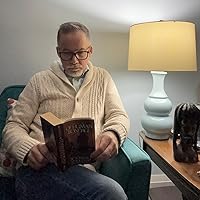
William F. Nolan is best known as the co-author (with George Clayton Johnson) of Logan's Run -- a science fiction novel that went on to become a movie, a television series and is about to become a movie again -- and as single author of its sequels. His short stories have been selected for scores of anthologies and textbooks and he is twice winner of the Edgar Allan Poe Special Award from the Mystery Writers of America.
Nolan was born in 1928 in Kansas City Missouri. He attended the Kansas City Art Institute and worked as an artist for Hallmark Cards. He moved to California in the late 1940s and studied at San Diego State College. He began concentrating on writing rather than art and, in 1952, was introduced by fellow Missouri native (and established writer) Ray Bradbury to another young up-and-coming author, Charles Beaumont. Moving to the Los Angeles area in 1953, Nolan became along with Bradbury, Beaumont, and Richard Matheson part of the "inner core" of the soon-to-be highly influential "Southern California Group" of writers. By 1956 Nolan was a full-time writer. Since 1951 he has sold more than 1500 stories, articles, books, and other works.
Although Nolan wrote roughly 2000 pieces, to include biographies, short stories, poetry, and novels, Logan’s Run retains its hold on the public consciousness as a political fable and dystopian warning. As Nolan has stated: “That I am known at all is still astonishing to me... "
He passed away at the age of 93 due to complications from an infection.
This biography of Steve Mcqueen does for the star what a lot of other celebrity biographies fail to do. They give a balanced picture of a star trying to balance his love of life and his desire to do great films, while trying to put to sleep the ghosts of his past.
Nolan first meet McQueen on the set of the old "Wanted: Dead or Alive" television program. McQueen was unhappy with one of the lines written for his character and complained loudly about it. Nolan, the author of the line, took the blame and fixed it, earning the respect, and beginning a bit of a friendship with McQueen. Later, Nolan interviewed him and their friendship expanded somewhat.
Much of this book is written in McQueen's own words. This must have been difficult, because McQueen was a man of few words. Nolan compiled notes from interviews,personal recollections, magazine articles, and the work of others into a really decent biography that shows McQueen as he really was.
McQueen had a tough childhood. His father deserted his mom when he was only six months old and he lived with an uncle for a number of years on a farm in Missouri. From there, his mom continued her pattern of choosing losers, bringing in a series of these men into Steve's life. When Steve finally stood up to an abusive stepfather, he was sent to a facilty for troubled youth, a juvenile hall. He worked at a number of jobs, really doing little more than surviving on the street.
Later, after he made it in Hollywood, Steve attempted to quietly demonstrate a concern for kids growing up like he did. He visited the juvenile faciltiy often. He gave out clothing and needed items to Native Americans, struggling to survive on the reservation. He sold an expensive sports car to an employee for $1.00. He demonstrated real generosity.
He loved fast machines and the thrill from driving, riding, or flying them fast. He did not consider himself above others on movie sets, often throwing himself into solving physical problems.
Sadly, the cancer he developed moved rapidly through his body and the author takes the time to rebuke the press for their sensationalism of the unorthodox treatment he was undergoing.
Through it all, we get a picture of a good man with some minor flaws, (a temper that he gradually gained conrol over) and a desire to leave this world better than he found it.
The only real disappointment I experienced in this books was finding out that some of my favorite McQueen movies (the Hunter and Tom Horn) had fudged more of the truth than I thought. I know that movies often take dramatic license with true stories. For example, the stupidest movie I ever saw was the George Clooney vehicle about the lost fishing boat, "the Perfect Storm"-- NOBODY knows what went on on that boat because nobody survivied to tell us. So when I read that the story of Papa Thorson wasn't just overly dramatized, but changing in multiple places (the pregnant girlfriend being the more egregious of these alterations) I was distressed. The Tom Horn deviations from history were minor and didn't bother me as much.
Really interesting chronology of the main highs and lows of McQueen's life, I liked the bits about some of his most famous films, Bullitt in particular. Lots of stuff I didn't know before and surprising bits such as his behind the scenes philanthropy and charity. Nolan is a great writer but at times this felt just like a timeline of events with not much exposition.
This one sat on my shelf for 15+ years. Avoided it because it looked like a cheap, dime store bio to me. But I was wrong. All the info you need on the King of Cool is here in Nolan's book. For my full review and many others, head to SoulRideblog.com.
It talked more about his love of motorcycles, cars, etc., than anything, but guess it's partly because that would be all he'd divulge. But it was very insightful reading about his charitable side, and the part of his left surrounding his alternative efforts to cure his cancer.