Discusses the history and culture of Botswana and Namibia, recommends accommodations and restaurants, and provides details on wildlife, itineraries, and outdoor activities.
OUR STORY A beat-up old car, a few dollars in the pocket and a sense of adventure. In 1972 that’s all Tony and Maureen Wheeler needed for the trip of a lifetime – across Europe and Asia overland to Australia. It took several months, and at the end – broke but inspired – they sat at their kitchen table writing and stapling together their first travel guide, Across Asia on the Cheap. Within a week they’d sold 1500 copies and Lonely Planet was born. One hundred million guidebooks later, Lonely Planet is the world’s leading travel guide publisher with content to almost every destination on the planet.
Lonely Planet is one of my least favourite travelling guide series. Main reason?
It’s a travel guide! How can there barely be any pictures??
Yes, yes, there is a lot of information. Lists, tips, history, etc etc, But a travel guide should inspire you to go see something new. Watch! Look! Gaze! Observe! View!
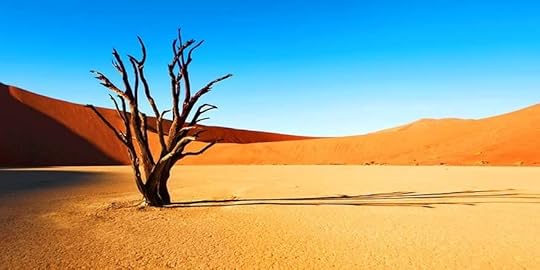
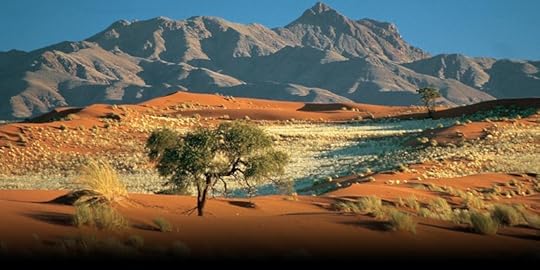
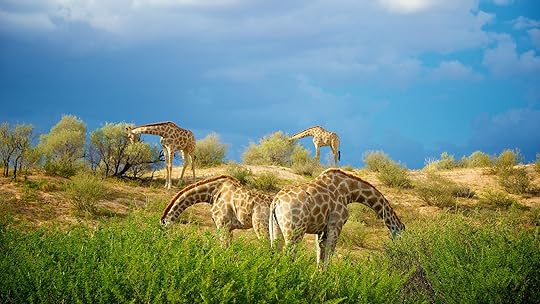
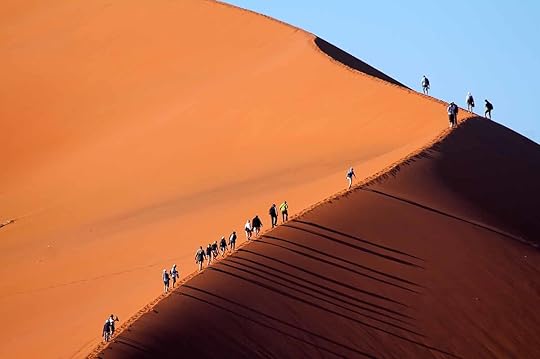
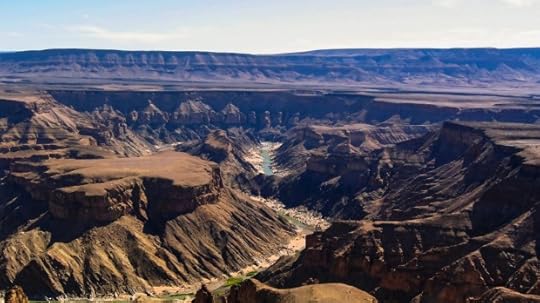
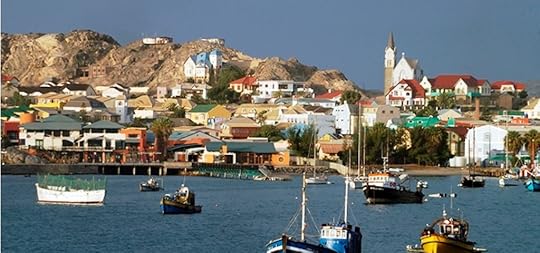
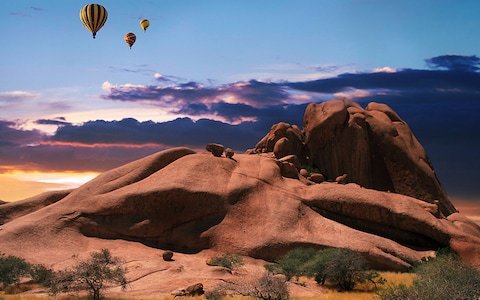
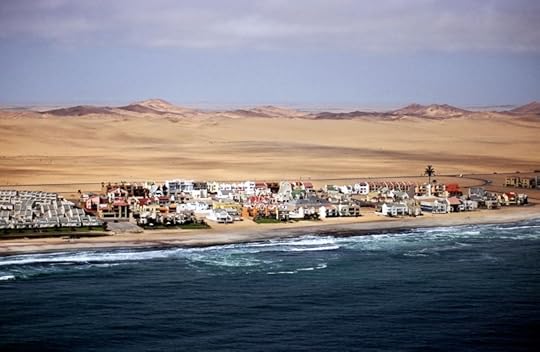
I am going to Namibia for three weeks in September, and it would be nice to at least be able to look at some of the stunning places I am reading about. I mean – look at this country!!
The only reason I bought this book was that my usual travel guide series (DK Eyewitness) does not have one for Namibia. Hopefully this will be my last ever need for Lonely Planet.
Read this book before a recent book to Botswana and then reviewed it again after returning. Excellent travel book and advice written by people who understand the region.
Als langjähriger Fan der Reise-Knowhow-Reihe z. B.: Namibia war ich bisher jedesmal enttäuscht, wenn ich mir einmal einen anderen Reiseführer gekauft habe. Trotz anfänglicher Bedenken (warum ein Reiseführer für zwei Länder?) ist die deutsche Ausgabe des Lonely Planet in der 1. Auflage von 2007 bisher das erste "Fremdfabrikat", das mich rundrum überzeugt hat. Kurz und bündig stellen die Autoren in zwei getrennten Bereichen Namibia und Botswana mit Geschichte, Kultur, möglichen Reiserouten und regionalen Eigenheiten vor. Der eigentliche Text fällt ausgesprochen kurz aus, regt jedoch mit einer Fülle von Querverweisen am Rand des Textes an, sich auf Webseiten, in Foren und mit weiterführender Literatur intensiver zu informieren. Genauer gesagt, man kann gar nicht anders, als Hardy/Firestones Aufforderung zu folgen, sich tiefer mit den beiden Ländern zu beschäftigen. Prägnant und kritisch schildern die Autoren die koloniale Vergangenheit und daraus resultierende vergangene und aktuelle politische Konflikte. Sie scheuen sich nicht vor brisanten Themen wie Landreform, den (bisher kargen) staatlichen Instrumentarien, Arbeitsplätze für die Bevölkerung zu schaffen, Spannungen zwischen den einzelnen ethnischen Gruppen und nicht zuletzt Auswirkungen der erschreckend hohen Aids-Infektionsraten, die in Botswana zu einer durchschnittlichen Lebenserwartung von gerade einmal 30 Jahren führten. Die Auswirkungen des Tourismus auf die Natur und Detailfragen zum Natur- und Tierschutz werden ähnlich kritisch geschildert.
Pluspunkte dieses Reiseführers: + Begriffe, Orte, Karten und Fotos sind in einem gemeinsamen Register zusammengestellt, das ganz hinten im Buch und damit schnell zu greifen ist + das gedruckte Daumenregister am Rand des Textes + die realistische Einstellung der Autoren (nehmen Sie sich nicht zu viel in zu kurzer Zeit vor, bleiben sie auch einmal mehr als eine Nacht an einem Ort) + sehr vernünftige Anmerkungen zur den Fahrkünsten der Besuchern in ungewohntem Gelände, zu Gesundheitsgefahren und für uns ungewöhnlichen Tieren - englische Autoren scheinen in Gesundheitsfragen generell sehr vorsichtig zu sein + zahlreiche Pläne und Detailkarten + interessante Zusatzinformation in separaten Kästen (z. B. die rechtliche und moralische Beurteilung, wem Erträge aus der Anwendung der Hoodia-Pflanze zustehen, die ein traditionelles Heilmittel der San ist) + die Auswahl an Restaurants und Übernachtungsmöglichkeiten von rustikal bis elegant ist vielfältig und berücksichtigt unterschiedlich dicke Geldbeutel. Über weitere Unterkünfte sollte man sich im Netz und in Where to Stay oder Trummis Liste informieren + die allgemeinen Reiseinformationen umfassen auch die Nachbarländer Simbabwe und Sambia (sinnvoll, wenn man vorhat, die Victoriafälle zu besuchen) + gefallen hat mir besonders die kritische, realistische Darstellung Botswanas, das die Autoren nicht nur als großes Naturschutzgebiet mit vielen Tieren betrachten + beiden Ländern steht rechnerisch im Buch der gleiche Platz von circa 230 Seiten zur Verfügung + Buschfliegerfreundliches Gewicht von 365 Gramm
- verbesserungswürdig ist der Druck der an sich sehr detail- und informationsreichen Karten, die durch die Abbildung in Grautönen weniger gut zur Geltung kommen
Ein gelungener Reisefüher nicht nur für Rucksacktouristen, sondern ebenso für Selbstfahrer, die ihre endgültige Reiseroute erst vor Ort festlegen und sich gern über die reinen Sehenswürdigkeiten hinaus über ihr Reiseland informieren wollen.
The book I read to research this post was Lonely Planet Botswana And Namibia which is an excellent book which I bought from kindle. Both these countries have only become independent relatively recently. Botswana has more head of elephants than any other country in the world and is the best place to see them in the wild. The nature reserves in both these countries are the size of small countries. Probably the most impressive sight is the Victoria Falls the most impressive waterfall in the world. It's a UNESCO world heritage site and one of the 7 natural wonders of the world. The spray from the gushing water can be seen for miles around. There is also the Okivango Delta where you can spot crocodiles among other things. There is also the Chobe River Nature Reserve where the river has carved an impressive valley into the rock on a similar scale to the Grand Canyon. Among the cities you can visit and most of them aren't that big is Windhoek the capital of Namibia. There is also Gaborone the capital of Botswana. If you visit Swakopmund it has interesting german colonial architecture. Walvis Bay which is a major port also has some nice beaches. It is also famed for the Skeleton Coast where many a ship lost members of their crew hence the name and was really inhospitable in times past. Most people visiting these areas fly first to Johannesburg and then get a connecting flight. A friend of mine who visited Namibia told me the connecting flight was as costly as the flight from London to Johannesburg. Namibia has the oldest desert in the world and is the driest country in the world south of the Sahara. There has been controversy over the San people being resettled away from their homeland the Kalahari Desert. Diamonds were discovered there in large deposits and even though the Supreme Court ruled in favour of letting them return the government has been slow to respond. Namibia with all its mineral deposits is quite wealthy for an African country although there is no minimum wage and the poor are extremely poor and exploited in terms of wages. I enjoyed reading this book and they do look like interesting countries.
I have travelled in the past using little else but my Lonely Planet guide and common sense. This time around, I was a bit disappointed. This guide, moreso than ones I've utilized in the past, seemed to cater to one specific type of tourist (in this case, the north country, safari-going tourist, which, unfortunately, I was not) rather than provide thorough coverage of all that the country had to offer. The section on the capital city Gaborone, where I spent most of my time, was weak. In its defense, I only went to Botswana, so anyone who went to Namibia may have found the book to be a solid reference. I also was not a fan of the way LP has designed the layout of the book. Important, overall health information is located in the back, unlike before.