

What do you think?

Between the Rivers
In a complex fantasy world on the very edge of human history, Engibil, the easy-going god of the city of Gibil, is threatened by the gods of other cities who do not allow their human subjects to be as creative and autonomous. 35,000 first printing.
381 pages, Hardcover
First published January 1, 1998
About the author
Harry Turtledove
572 books2,045 followersDr Harry Norman Turtledove is an American novelist, who has produced a sizeable number of works in several genres including alternate history, historical fiction, fantasy and science fiction.
Harry Turtledove attended UCLA, where he received a Ph.D. in Byzantine history in 1977.
Turtledove has been dubbed "The Master of Alternate History". Within this genre he is known both for creating original scenarios: such as survival of the Byzantine Empire; an alien invasion in the middle of the World War II; and for giving a fresh and original treatment to themes previously dealt with by other authors, such as the victory of the South in the American Civil War; and of Nazi Germany in the Second World War.
His novels have been credited with bringing alternate history into the mainstream. His style of alternate history has a strong military theme.
Harry Turtledove attended UCLA, where he received a Ph.D. in Byzantine history in 1977.
Turtledove has been dubbed "The Master of Alternate History". Within this genre he is known both for creating original scenarios: such as survival of the Byzantine Empire; an alien invasion in the middle of the World War II; and for giving a fresh and original treatment to themes previously dealt with by other authors, such as the victory of the South in the American Civil War; and of Nazi Germany in the Second World War.
His novels have been credited with bringing alternate history into the mainstream. His style of alternate history has a strong military theme.
Ratings & Reviews
Friends & Following
Create a free account to discover what your friends think of this book!
Community Reviews
Displaying 1 - 30 of 30 reviews

February 12, 2019
A tale from the morning of history when the gods walked among the peoples of the earth.
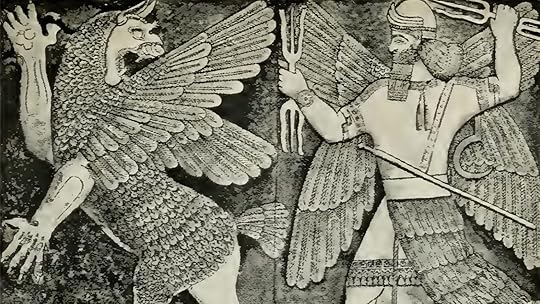
Between the rivers of the middle east is Mesopotamia, which was one of the beginnings of civilization.
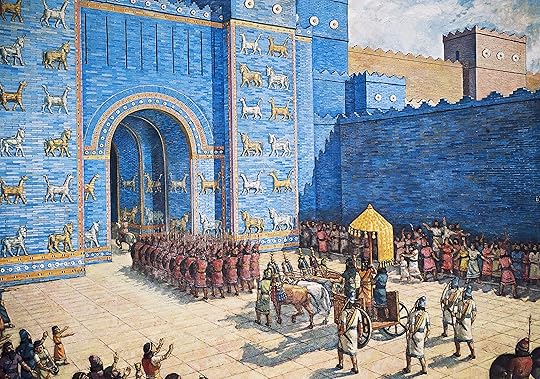
Here many little city states rose and fell.
Each city worshiped their own special god and prayed for protection.
This is Fact.
But what if these gods really existed!
What if they grew in power from the adoration of their people?
What if they hated strangers?
Mere mortals could never control these gods, but could they fool the gods?
Sharur and his family are smiths who work and trade in metal, a new thing that the gods cannot control. Join Sharur as he travels to the Alashkurru mountains of copper, tricks a river goddess, and fights for his city against the men of Imhursag along with their gigantic god.
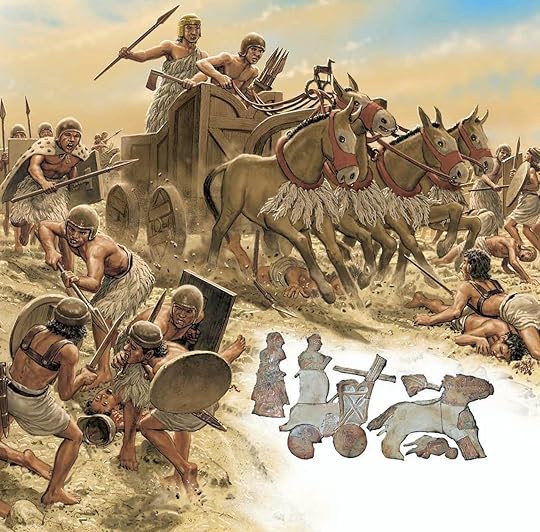
Now mix in;
the voices of dead ancestors,
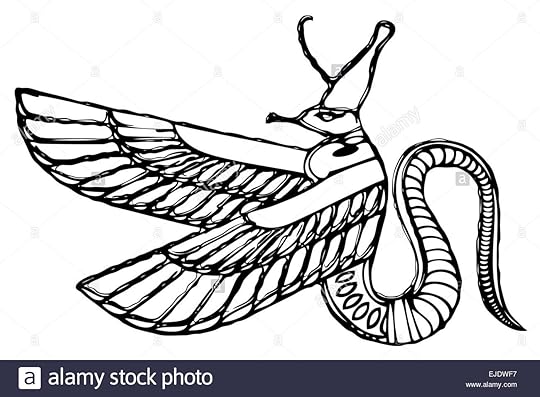
fever demons,
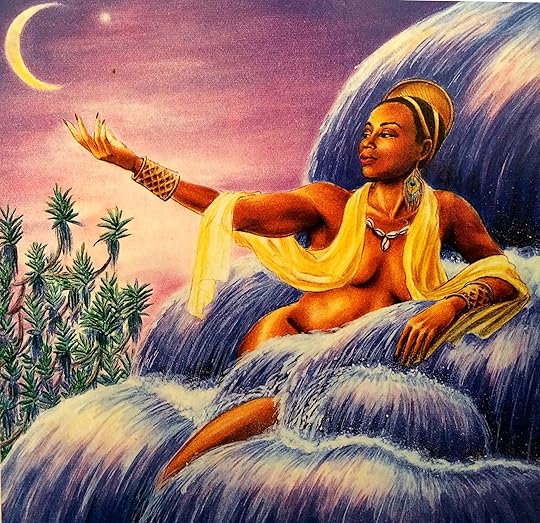
river goddesses
and you have great Alternative History as only Harry Turtledove can create.
Enjoy!
Between the rivers of the middle east is Mesopotamia, which was one of the beginnings of civilization.
Here many little city states rose and fell.
Each city worshiped their own special god and prayed for protection.
This is Fact.
But what if these gods really existed!
What if they grew in power from the adoration of their people?
What if they hated strangers?
Mere mortals could never control these gods, but could they fool the gods?
Sharur and his family are smiths who work and trade in metal, a new thing that the gods cannot control. Join Sharur as he travels to the Alashkurru mountains of copper, tricks a river goddess, and fights for his city against the men of Imhursag along with their gigantic god.
Now mix in;
the voices of dead ancestors,
fever demons,
river goddesses
and you have great Alternative History as only Harry Turtledove can create.
Enjoy!

July 1, 2019
SUCH A DISAPPOINTMENT
So Turtledove is a good writer, who excels at parallel/alternate history. This is a world based on ancient Sumeria (check), has actual gods controlling their city-states, more or less as Mesopotamians imagined them (check), a magic system based on the historical data (check), and a charming use of ancestor spirits, disease as demonic infection, etc.
And then it all goes to hell.
Turtledove makes a terrible decision to try and mimic the speech patterns of Sumerian/Babylonian lit, such as the Epic of Gilgamesh. The end result is stilted, dull and means that your 400 page novel is at least 50 pages shorter, just filled with repetition like this:
"You would go to speak to a god. You would go to speak to a god who rule a city in his own right. You would go to speak to a god who can look into your heart and learn whether you speak truth. You would go to speak to a god who can punish you terribly when he realizes you speak lies."
"I would go to speak to a god who rules a city in his own right," Sharur nodded. " I would go to speak to a god whose own people fawn on him. I would go to speak to a god who will very much want to believe what I whisper in his ear."..
(It goes on for three more sentences.)
This isn't a one off, or even how characters speak formally to each other -- it is all of the dialogue.
"Will you break bread with me? Will you eat onions and meat with me? Will you drink beer with me."
Sharur smiled. "I would break bread with you. I would eat both onions and meat with you. I would drink beer with you."
Passive voice, each clause a sentence. It's awful, and Turtledove must have known that while a poetic device of the culture, it was likely not how the spoken language sounded to its speakers.
Maybe this would still work, since the setting us fun and the characters likable, but it's not even a full story. The plot is more or less about men finding ways to break the power of the gods over them (ie: it's a story about rejecting superstition and taking responsibility for yourself, get it? I hope you do, because Turtledove tells you over and over and over again.), but the resolution has almost no tension in it at all, and is meant to set up an obvious sequel -- that was never written.
Just a disappointment in so many ways.
So Turtledove is a good writer, who excels at parallel/alternate history. This is a world based on ancient Sumeria (check), has actual gods controlling their city-states, more or less as Mesopotamians imagined them (check), a magic system based on the historical data (check), and a charming use of ancestor spirits, disease as demonic infection, etc.
And then it all goes to hell.
Turtledove makes a terrible decision to try and mimic the speech patterns of Sumerian/Babylonian lit, such as the Epic of Gilgamesh. The end result is stilted, dull and means that your 400 page novel is at least 50 pages shorter, just filled with repetition like this:
"You would go to speak to a god. You would go to speak to a god who rule a city in his own right. You would go to speak to a god who can look into your heart and learn whether you speak truth. You would go to speak to a god who can punish you terribly when he realizes you speak lies."
"I would go to speak to a god who rules a city in his own right," Sharur nodded. " I would go to speak to a god whose own people fawn on him. I would go to speak to a god who will very much want to believe what I whisper in his ear."..
(It goes on for three more sentences.)
This isn't a one off, or even how characters speak formally to each other -- it is all of the dialogue.
"Will you break bread with me? Will you eat onions and meat with me? Will you drink beer with me."
Sharur smiled. "I would break bread with you. I would eat both onions and meat with you. I would drink beer with you."
Passive voice, each clause a sentence. It's awful, and Turtledove must have known that while a poetic device of the culture, it was likely not how the spoken language sounded to its speakers.
Maybe this would still work, since the setting us fun and the characters likable, but it's not even a full story. The plot is more or less about men finding ways to break the power of the gods over them (ie: it's a story about rejecting superstition and taking responsibility for yourself, get it? I hope you do, because Turtledove tells you over and over and over again.), but the resolution has almost no tension in it at all, and is meant to set up an obvious sequel -- that was never written.
Just a disappointment in so many ways.

July 1, 2014
This is the only book about the ancient Middle East I have ever read that is written in the style of their literature. Watch for the doubling, a literary device popular in things like the Psalms. Bob says to Sam, "I am going to the house of my father." Sam says back to Bob, "You are going to the house of your father." Expertly done!

February 9, 2026
The writing style and general concept of defying the gods to peruse freedom was unique in theory but in practice had glacial pacing. Women were also completely shunned out of this story entirely, existing only as sexual objects which made it extremely grating to read. I would have dnf’d if not for bookclub.

June 21, 2009
Hmmm. The author is, apparently, a scholar of ancient history. This is a mildly engaging story and the style is presumably deliberately in imitation of the highly repetitive storytelling style of ancient tales like the Epic of Gilgamesh (not that I've read much of that, but I have read extracts). I find it an interesting idea and all that, but it was rather wearying to plod through almost 400 pages of it. The brain keeps wanting to race ahead while the narrative rings the minute changes on descriptions and conversations: "Keep it secret...Let not Gulal your mother know you have it. Let not Dimgalabzu your father, when he comes home from the war, know you have it. Let not the slaves of this household know you have it..." It also lent a curiously dick-and-jane quality to the prose: "Sharur wanted to run. Sharur wanted to hide. Running from Engibil was futile. Hiding from Engibil was useless." I liked the idea of the story and of the telling better than I liked either in the execution.

Read
October 20, 2009Very cool! I like this writer. Difficult to define this, historical fantasy maybe? The story takes place at the dawn of civilization in Mesopotamia, in a land where each city and place has a god that is actually alive and walking around. They are able to feel thoughts and directly control the people within their borders. The main character is a metalsmith and trader who aims to end the rule of the gods and allow a world ruled by men.

August 4, 2010
As much as I normally love Harry Turtledove, the really odd grammar and sentence structure used in the dialogue makes this book a bit hard to read. They have a really formal third-person way of talking that takes some getting used to.
Plus the feminist part of me wanted some justice for their house slave.
Plus the feminist part of me wanted some justice for their house slave.

May 23, 2015
I loved this novel until I realized its understanding of growth, raised consciousness, and liberation did not extend to the female characters within it, particularly those it presented as existing for sexual purpose.

December 26, 2025
A crafty young merchant from a prosperous Sumerian city-state must uncover why the neighboring mountain gods have suddenly forbidden their people to trade with him. He navigates spiteful deities, hostile priests, suspicious nobles, and shiftless demons along the way.
At its most basic, this is an adventure from the dawn of history, the beginning of the Bronze Age, when humankind finally rose up against the vain, petty gods and claimed their independence, wriggling out from beneath the boot of divine domination.
On a deeper level it's about power, and the capacity of humans--when unshackled--to invent, to create, to build, and to become enlightened.
It is apparently written in the style of ancient Sumerian cuneiform texts, making for an exceedingly strange experience. It was an adjustment, but once I adjusted I loved it. The dialogue is strange; the characters using simplistic, overly explanatory, almost ceremonial speech and often sounding like children. Perhaps that's deliberate, as the story is about humans breaking away from domineering, micromanaging, thought-reading gods for the first time ever. Our species entering its rebellious tweens.
At its most basic, this is an adventure from the dawn of history, the beginning of the Bronze Age, when humankind finally rose up against the vain, petty gods and claimed their independence, wriggling out from beneath the boot of divine domination.
On a deeper level it's about power, and the capacity of humans--when unshackled--to invent, to create, to build, and to become enlightened.
It is apparently written in the style of ancient Sumerian cuneiform texts, making for an exceedingly strange experience. It was an adjustment, but once I adjusted I loved it. The dialogue is strange; the characters using simplistic, overly explanatory, almost ceremonial speech and often sounding like children. Perhaps that's deliberate, as the story is about humans breaking away from domineering, micromanaging, thought-reading gods for the first time ever. Our species entering its rebellious tweens.
---------------------------
"Is it Sharur son of Ereshguna, out of Gibil in the land between the rivers?"
"Yes, it is I, Malatyas son of Lukkas. I pray that your mighty wanax, Ramsayas son of Radas, flourishes like the wheat in your fields. I pray that he flourishes like the apple trees in your orchards. I have many fine things to trade with him, or with the merchants who are his servants."
---------------------------
"I require that you succeed. Gibil requires that you succeed. If we are not to return to what we were in the days before we learned to put tin in with copper, if we are not to return to what we were in the days before we learned to set our records down on clay, if we are not to return to the days before we learned to think our own thoughts and act on our own purposes, we all require that you succeed."
---------------------------

March 17, 2026
the idea was fantastic but the plot and characters weren't amazing

January 19, 2016
At times a unique and immersive read, “Between the Rivers” is ably written, but unable to sustain itself for the entirety of the book.
Set in a Mesopotamian-like fantasy world where the gods are ever-present (though not omnipresent) in the lives of its inhabitants, Harry Turtledove’s novel is mostly a break from the traditional fantasy world inspired by Western Europe. It revolves around the son of a “master merchant”, Sharur, who comes from a city where the people are largely freed from the direct control of their local deity thanks to technological and cultural advances--their god is very real and present, but he is content to be uninvolved as long as he is appeased. When Sharur’s trading mission far beyond the city walls goes wrong as the other gods begin to isolate the “new men” of this free(-ish) city, he becomes embroiled in a conflict that pits the future of men against the will of the gods.
Overall, Turtledove’s writing is quite appropriate for the world he is trying to convey. He effectively provides a sense of the world, especially through the dialogue of the characters, but doesn’t get too trapped into the forms and formulas of his ancient Near East setting that might otherwise make the prose inaccessible. It does lead to the occasional odd moment when the author tries to connect directly to the modern reader (such as informing the main character the protagonist doesn’t even give a thought to the perspective of his kitchen slave or the protagonist’s ahistorical-feeling aspirational atheism). Outside Sharur, the characters are a bit flat--some given to a particular defining trait or profession, but mostly bleeding together--and when combined with the similar-sounding Mesopotamian-inspired names few burn themselves easily into memory.
The plot itself is a bit of a mixed bag. When the stakes start out low and personal it is at its best. Here it has the feeling of a mystery, with added suspense coming from the alienness of the world. As the plot gets bigger to include more city-states and gods, it seems to get away from the author--the motivations feel less clear and the actions with less purpose as the book reaches towards a more traditional, world-altering narrative that feels, unexpectedly, anti-climactic.
While it is unlikely to appeal to everyone (which I can say with confidence because when I first read it about a decade and a half I was left unimpressed), I found it to be a pleasant surprise. The uniqueness of the world and the way it is put together makes it worth the small investment of time it requires.
Set in a Mesopotamian-like fantasy world where the gods are ever-present (though not omnipresent) in the lives of its inhabitants, Harry Turtledove’s novel is mostly a break from the traditional fantasy world inspired by Western Europe. It revolves around the son of a “master merchant”, Sharur, who comes from a city where the people are largely freed from the direct control of their local deity thanks to technological and cultural advances--their god is very real and present, but he is content to be uninvolved as long as he is appeased. When Sharur’s trading mission far beyond the city walls goes wrong as the other gods begin to isolate the “new men” of this free(-ish) city, he becomes embroiled in a conflict that pits the future of men against the will of the gods.
Overall, Turtledove’s writing is quite appropriate for the world he is trying to convey. He effectively provides a sense of the world, especially through the dialogue of the characters, but doesn’t get too trapped into the forms and formulas of his ancient Near East setting that might otherwise make the prose inaccessible. It does lead to the occasional odd moment when the author tries to connect directly to the modern reader (such as informing the main character the protagonist doesn’t even give a thought to the perspective of his kitchen slave or the protagonist’s ahistorical-feeling aspirational atheism). Outside Sharur, the characters are a bit flat--some given to a particular defining trait or profession, but mostly bleeding together--and when combined with the similar-sounding Mesopotamian-inspired names few burn themselves easily into memory.
The plot itself is a bit of a mixed bag. When the stakes start out low and personal it is at its best. Here it has the feeling of a mystery, with added suspense coming from the alienness of the world. As the plot gets bigger to include more city-states and gods, it seems to get away from the author--the motivations feel less clear and the actions with less purpose as the book reaches towards a more traditional, world-altering narrative that feels, unexpectedly, anti-climactic.
While it is unlikely to appeal to everyone (which I can say with confidence because when I first read it about a decade and a half I was left unimpressed), I found it to be a pleasant surprise. The uniqueness of the world and the way it is put together makes it worth the small investment of time it requires.
August 16, 2013
An entertaining read. I really like a lot of the little details included in the book like how since coinage wasn't invented yet goods were traded and how everyone was so provincial in their attitudes towards people from other places. Anyway it was an easy read, I finished it in two days so it kept my interest. I've never read anything by this author before but I think I'll look for more of his stuff.
I'm not sure if the author was trying to make some kind of Randian point regarding the freedom and advancement of capitalism and freedom. A lot of the book deals with people seeking to overcome the shackles of their gods and being to explore their inventiveness, resourcefulness and ambition at the cost of loss of security, having others take care of you and being at the mercy of your fellow man's greed (as opposed to being at the mercy of their god's). It wasn't overdone though but was definitely a main theme.
I'm not sure if the author was trying to make some kind of Randian point regarding the freedom and advancement of capitalism and freedom. A lot of the book deals with people seeking to overcome the shackles of their gods and being to explore their inventiveness, resourcefulness and ambition at the cost of loss of security, having others take care of you and being at the mercy of your fellow man's greed (as opposed to being at the mercy of their god's). It wasn't overdone though but was definitely a main theme.

October 13, 2012
As someone who loves to study the ancient Near East, I found this to be a great story. The author took an unusual approach in how he made the gods real, and part of the everyday lives of the characters in this society. It felt as though the author really did a lot of research to make this early civilization as realistic as possible. While I felt the characterizations could have been stronger, the overall story was fantastic, and I was really captivated by how the plot unfolded. Great combination of fantasy and historical fiction.

March 26, 2015
A perennial favorite.
This is without doubt one of Turtledove's finest works. Year after year, re-read after reread...this book delivers fantastic insights as to man's separation from the gods. Just how dangerous and cunning a creature man is. And just how foolish the gods were to assume that they could control such a creature. How I wish that the author would write a sequel!
This is without doubt one of Turtledove's finest works. Year after year, re-read after reread...this book delivers fantastic insights as to man's separation from the gods. Just how dangerous and cunning a creature man is. And just how foolish the gods were to assume that they could control such a creature. How I wish that the author would write a sequel!
December 7, 2013
I like a lot of what Turtledove writes, but while this series wasn't bad, it is no where near as good as his works such as Misplaced Legion and The Tosev series. Not a bad read, but definitely not in the class of his other works.

October 26, 2018
Re-reading this fantasy about the dawn of civilization emerging from idolatry suited my mood for enjoying minds at work, people using their brains to figure things out, people thinking for themselves. If only it were so.

January 14, 2008
Great story set in a bronze-age fantasy land where cuneiform is still a cutting-edge technology and the gods take a very active and personal hand in the lives of men.

September 23, 2008
An alright book, got kind of slow at times, and is VERY wordy, but the characters are kind of clever so it's entertaining.

August 14, 2011
Overall I guess it wasn't a bad book, but I like some of his other books much better. This takes place early in human history.

January 22, 2016
Alternate universe science fiction at its best.

January 30, 2021
A fictionalized alternate Sumeria where the gods were real.

May 31, 2020
Insufferable read for a self-thought long-sufferer.
I greatly appreciate the author's attention to detail - as others have said, it's clear that he's well-educated in ancient history and devoted painstaking (emphasis on the pain) effort into making his fictional work as grounded in historical accuracy as possible. From incorporating traditional Sumerian/Mesopotamian/Babylonian gods and legends to interweaving his own takes on period-appropriate cultural aspects, I highly compliment the work that went into each page.
But there are so many pages of so much repetition. "The Epic of Gilgamesh" is one of my favorite translated ancient pieces of literature, and I appreciate it for its context. I was thrilled to discover a fantasy novel set during one of my favorite historical eras--the dawn of technology and early mankind in the Fertile Crescent--and was expecting (based on others' recommendations) a thrilling tale of man vs. gods. Think Percy Jackson for grown-ups.
This is not that. If I'd gone in with the expectations of Gilgamesh instead of Sumerian wizards with spells on clay tablets, maybe I wouldn't have been disappointed? But it's Tor. And I'm not accustomed to Tor releasing what feels like a required read from my history professor. It's enjoyable in a historical context, but not at all in the spirit of casual--nay, even avid--fantasy reading.
My other bone to pick would be the treatment of the female characters. The protagonist is male, and every woman in the story exists to serve him and his male counterparts. From his mother, to sister, to slaves, to a random harlot walking down the street (with "rolling buttocks"--her sole defining feature), they exist to serve him bread/onions/beer or to lie there and open their legs. There's some serious fetishizing of the taking of a woman's virginity, and some hilarious depictions of the female orgasm--no, it doesn't come that easily. I could have overlooked most of that if there wasn't the scene of our hero raping the maidservant from a neighboring land (because a god told him to, of course) and then his mighty sexual prowess somehow pleases her (you know, despite the rape). I found it repugnant and offensive. Sexual violence can have its historical context, but if we're going to be literary voyeurs, let us be, bare minimum, respectful of the suffering and realistic in regards to its impact. Why the novel's minimal humor tended to revolve around the "taking" of women (jokes between brothers, who share the slave woman, by the way) is beyond me. It felt a bit like reading the author's perspective on women and their sexuality. And I didn't care for that insight.
All in all, the more I consider it, the less enjoyable I found the work. Two stars for the labor and research that went into the worldbuilding; I genuinely liked the inclusion of minor gods and lesser demons, and the depictions of the city gods' forms. It sparked the imagination. It made me go digging in my storage boxes for my textbook on ancient Mesopotamian culture/legends/poetry.
Which, I'm surprised and disappointed to say, is a far superior read.
I greatly appreciate the author's attention to detail - as others have said, it's clear that he's well-educated in ancient history and devoted painstaking (emphasis on the pain) effort into making his fictional work as grounded in historical accuracy as possible. From incorporating traditional Sumerian/Mesopotamian/Babylonian gods and legends to interweaving his own takes on period-appropriate cultural aspects, I highly compliment the work that went into each page.
But there are so many pages of so much repetition. "The Epic of Gilgamesh" is one of my favorite translated ancient pieces of literature, and I appreciate it for its context. I was thrilled to discover a fantasy novel set during one of my favorite historical eras--the dawn of technology and early mankind in the Fertile Crescent--and was expecting (based on others' recommendations) a thrilling tale of man vs. gods. Think Percy Jackson for grown-ups.
This is not that. If I'd gone in with the expectations of Gilgamesh instead of Sumerian wizards with spells on clay tablets, maybe I wouldn't have been disappointed? But it's Tor. And I'm not accustomed to Tor releasing what feels like a required read from my history professor. It's enjoyable in a historical context, but not at all in the spirit of casual--nay, even avid--fantasy reading.
My other bone to pick would be the treatment of the female characters. The protagonist is male, and every woman in the story exists to serve him and his male counterparts. From his mother, to sister, to slaves, to a random harlot walking down the street (with "rolling buttocks"--her sole defining feature), they exist to serve him bread/onions/beer or to lie there and open their legs. There's some serious fetishizing of the taking of a woman's virginity, and some hilarious depictions of the female orgasm--no, it doesn't come that easily. I could have overlooked most of that if there wasn't the scene of our hero raping the maidservant from a neighboring land (because a god told him to, of course) and then his mighty sexual prowess somehow pleases her (you know, despite the rape). I found it repugnant and offensive. Sexual violence can have its historical context, but if we're going to be literary voyeurs, let us be, bare minimum, respectful of the suffering and realistic in regards to its impact. Why the novel's minimal humor tended to revolve around the "taking" of women (jokes between brothers, who share the slave woman, by the way) is beyond me. It felt a bit like reading the author's perspective on women and their sexuality. And I didn't care for that insight.
All in all, the more I consider it, the less enjoyable I found the work. Two stars for the labor and research that went into the worldbuilding; I genuinely liked the inclusion of minor gods and lesser demons, and the depictions of the city gods' forms. It sparked the imagination. It made me go digging in my storage boxes for my textbook on ancient Mesopotamian culture/legends/poetry.
Which, I'm surprised and disappointed to say, is a far superior read.
This entire review has been hidden because of spoilers.

June 23, 2021
Such an interesting read! I don't know how accurate (not taking into account all the magic, of course) this book is, how similar it is to what the lives of ancient peoples were like. Either way, it was illuminating! The writing style, full of repetition and praises to the gods akin to ancient inscriptions, was grating at times, but to my surprise, the author managed to use it to great comedic effect occasionally. The story itself was interesting though meandering. Sharur as a main character was very proactive, and to his detriment I think. All the things he did to propel the plot forward actually took me out of the story because I just kept yelling at him, "Please, don't do that! You're going to get people killed." I enjoyed most side characters, like thief Habbazu and Sharur's father Ereshguna. Also, the ghost of his grandfather was a great idea and a great addition, I throroughly enjoyed his grumpy old manness. Most of the women, though, barely had any role in the story. I was especially disappointed that Ningal didn't have more to do. From the moment she showed up on the page she sounded like a great addition to the story. I was looking forward to seeing her interactions with Sharur and his family, seeing how they would play a bigger part in the story. Oh well. Can't have everything. It was a slow, strange read, but I loved it!

September 19, 2019
A fun read by the master of alternate history. The setting is the dawn of civilization, where every city has a patron god. Sharur, the protagonist, is the sone of a master merchant. Times are good for Sharur, he's about to marry his love, profits are high, and he is lucky to live in Gibil, whose god, Engibil, is lazy and lets men rule themselves.
This has resulted in Gibil being a leader in new ideas like writing and bronze working. Other gods are jealous, but things get bad when Sharur leads a trade caravan and learns that now the mountain gods have forbidden all trade with Gibil. Now Sharur has to scheme against the gods themselves to lift this embargo and marry his true love!
I loved this book, especially for the picture of how people lived "between the rivers" in ancient Mesopotamia. Magic is subtle, wits are favored over brawn, and Turtledove does a nice job or portraying an era on the cusp of a major change.
Runequest players should read this one. The setting is pretty close to Glorantha.
This has resulted in Gibil being a leader in new ideas like writing and bronze working. Other gods are jealous, but things get bad when Sharur leads a trade caravan and learns that now the mountain gods have forbidden all trade with Gibil. Now Sharur has to scheme against the gods themselves to lift this embargo and marry his true love!
I loved this book, especially for the picture of how people lived "between the rivers" in ancient Mesopotamia. Magic is subtle, wits are favored over brawn, and Turtledove does a nice job or portraying an era on the cusp of a major change.
Runequest players should read this one. The setting is pretty close to Glorantha.

July 21, 2020
It is hard giving a bad review to one of your favorite authors. Honestly, I could not stand the lead character. I read multiple books at a time, rotating through them. It is not a good sign when I grimace a picking up the next book in the line-up. It is especially hard to say that when it's an author like Turtledove who normally I become engrossed in his books. It wasn't the writing style but the fact that I couldn't stand the person I'm supposed to be rooting for.
March 1, 2021
Good book about early bronze age in Mesopotamia with the alternate history idea that gods are real. I think the stilted language of dialog is deliberate by Turtledove to try an match the language of the most ancient cuneiform writings. The novel flows well and the dialog is not a problem. It is nice to have novel set in this time period, since very early bronze age is mostly ignored. Fun book.

January 7, 2024
A quick read I picked up at the thrift store. Few authors wade into early, early human history in a fictional sense, and this, done in fantasy, ends up weaving a tale of how humans had the affrontery to not only disobey but then discover ways in which to de-power the gods of their city-state, and thus take our own futures and fortunes and fates into our own hands. Not quite a morality tale but one that does come down on the side of free will.
March 16, 2023
I really like Harry Turtledoves work.

February 13, 2026
3.5 Interesting ideas, liked the language, but it does get a bit repetitive, even if the hesitation etc. are quite in period character. I enjoyed it, but not one of the best of Turtledove's.

January 8, 2013
It starts off fun and interesting, then everything goes to hell.
Displaying 1 - 30 of 30 reviews