

What do you think?

Das Duell
First published in 1891, this morality tale pits a scientist, a government worker, his mistress, a deacon, and a physician against one another in a verbal battle of wits and ethics that explodes into a violent the duel. When Laevsky, a lazy youth who works for the government, tires of his dependent mistress, Nadyezhda Fyodorovna, Von Koren, the scientist, delivers a scathing critique of Loevsky’s egotism, forcing the young man to examine his soul. The Duel is a tale of human weakness, the possibility of forgiveness, and a man’s ultimate ability to change his ways. It is classic Chekhov, revealing the multifaceted essence of human nature.
From the Trade Paperback edition.
From the Trade Paperback edition.
208 pages, Hardcover
First published January 1, 1891
About the author
Anton Chekhov
5,921 books10.2k followers
Antón Chéjov
(Spanish)
Dramas, such as The Seagull (1896, revised 1898), and including "A Dreary Story" (1889) of Russian writer Anton Pavlovich Chekhov, also Chekov, concern the inability of humans to communicate.
Born ( Антон Павлович Чехов ) in the small southern seaport of Taganrog, the son of a grocer. His grandfather, a serf, bought his own freedom and that of his three sons in 1841. He also taught to read. A cloth merchant fathered Yevgenia Morozova, his mother.
"When I think back on my childhood," Chekhov recalled, "it all seems quite gloomy to me." Tyranny of his father, religious fanaticism, and long nights in the store, open from five in the morning till midnight, shadowed his early years. He attended a school for Greek boys in Taganrog from 1867 to 1868 and then Taganrog grammar school. Bankruptcy of his father compelled the family to move to Moscow. At the age of 16 years in 1876, independent Chekhov for some time alone in his native town supported through private tutoring.
In 1879, Chekhov left grammar school and entered the university medical school at Moscow. In the school, he began to publish hundreds of short comics to support his mother, sisters and brothers. Nicholas Leikin published him at this period and owned Oskolki (splinters), the journal of Saint Petersburg. His subjected silly social situations, marital problems, and farcical encounters among husbands, wives, mistresses, and lust; even after his marriage, Chekhov, the shy author, knew not much of whims of young women.
Nenunzhaya pobeda , first novel of Chekhov, set in 1882 in Hungary, parodied the novels of the popular Mór Jókai. People also mocked ideological optimism of Jókai as a politician.
Chekhov graduated in 1884 and practiced medicine. He worked from 1885 in Peterburskaia gazeta.
In 1886, Chekhov met H.S. Suvorin, who invited him, a regular contributor, to work for Novoe vremya, the daily paper of Saint Petersburg. He gained a wide fame before 1886. He authored The Shooting Party , his second full-length novel, later translated into English. Agatha Christie used its characters and atmosphere in later her mystery novel The Murder of Roger Ackroyd . First book of Chekhov in 1886 succeeded, and he gradually committed full time. The refusal of the author to join the ranks of social critics arose the wrath of liberal and radical intelligentsia, who criticized him for dealing with serious social and moral questions but avoiding giving answers. Such leaders as Leo Tolstoy and Nikolai Leskov, however, defended him. "I'm not a liberal, or a conservative, or a gradualist, or a monk, or an indifferentist. I should like to be a free artist and that's all..." Chekhov said in 1888.
The failure of The Wood Demon , play in 1889, and problems with novel made Chekhov to withdraw from literature for a period. In 1890, he traveled across Siberia to Sakhalin, remote prison island. He conducted a detailed census of ten thousand convicts and settlers, condemned to live on that harsh island. Chekhov expected to use the results of his research for his doctoral dissertation. Hard conditions on the island probably also weakened his own physical condition. From this journey came his famous travel book.
Chekhov practiced medicine until 1892. During these years, Chechov developed his concept of the dispassionate, non-judgmental author. He outlined his program in a letter to his brother Aleksandr: "1. Absence of lengthy verbiage of political-social-economic nature; 2. total objectivity; 3. truthful descriptions of persons and objects; 4. extreme brevity; 5. audacity and originality; flee the stereotype; 6. compassion." Because he objected that the paper conducted against [a:Alfred Dreyfu
Dramas, such as The Seagull (1896, revised 1898), and including "A Dreary Story" (1889) of Russian writer Anton Pavlovich Chekhov, also Chekov, concern the inability of humans to communicate.
Born ( Антон Павлович Чехов ) in the small southern seaport of Taganrog, the son of a grocer. His grandfather, a serf, bought his own freedom and that of his three sons in 1841. He also taught to read. A cloth merchant fathered Yevgenia Morozova, his mother.
"When I think back on my childhood," Chekhov recalled, "it all seems quite gloomy to me." Tyranny of his father, religious fanaticism, and long nights in the store, open from five in the morning till midnight, shadowed his early years. He attended a school for Greek boys in Taganrog from 1867 to 1868 and then Taganrog grammar school. Bankruptcy of his father compelled the family to move to Moscow. At the age of 16 years in 1876, independent Chekhov for some time alone in his native town supported through private tutoring.
In 1879, Chekhov left grammar school and entered the university medical school at Moscow. In the school, he began to publish hundreds of short comics to support his mother, sisters and brothers. Nicholas Leikin published him at this period and owned Oskolki (splinters), the journal of Saint Petersburg. His subjected silly social situations, marital problems, and farcical encounters among husbands, wives, mistresses, and lust; even after his marriage, Chekhov, the shy author, knew not much of whims of young women.
Nenunzhaya pobeda , first novel of Chekhov, set in 1882 in Hungary, parodied the novels of the popular Mór Jókai. People also mocked ideological optimism of Jókai as a politician.
Chekhov graduated in 1884 and practiced medicine. He worked from 1885 in Peterburskaia gazeta.
In 1886, Chekhov met H.S. Suvorin, who invited him, a regular contributor, to work for Novoe vremya, the daily paper of Saint Petersburg. He gained a wide fame before 1886. He authored The Shooting Party , his second full-length novel, later translated into English. Agatha Christie used its characters and atmosphere in later her mystery novel The Murder of Roger Ackroyd . First book of Chekhov in 1886 succeeded, and he gradually committed full time. The refusal of the author to join the ranks of social critics arose the wrath of liberal and radical intelligentsia, who criticized him for dealing with serious social and moral questions but avoiding giving answers. Such leaders as Leo Tolstoy and Nikolai Leskov, however, defended him. "I'm not a liberal, or a conservative, or a gradualist, or a monk, or an indifferentist. I should like to be a free artist and that's all..." Chekhov said in 1888.
The failure of The Wood Demon , play in 1889, and problems with novel made Chekhov to withdraw from literature for a period. In 1890, he traveled across Siberia to Sakhalin, remote prison island. He conducted a detailed census of ten thousand convicts and settlers, condemned to live on that harsh island. Chekhov expected to use the results of his research for his doctoral dissertation. Hard conditions on the island probably also weakened his own physical condition. From this journey came his famous travel book.
Chekhov practiced medicine until 1892. During these years, Chechov developed his concept of the dispassionate, non-judgmental author. He outlined his program in a letter to his brother Aleksandr: "1. Absence of lengthy verbiage of political-social-economic nature; 2. total objectivity; 3. truthful descriptions of persons and objects; 4. extreme brevity; 5. audacity and originality; flee the stereotype; 6. compassion." Because he objected that the paper conducted against [a:Alfred Dreyfu
Ratings & Reviews
Friends & Following
Create a free account to discover what your friends think of this book!
Community Reviews
Displaying 1 - 30 of 472 reviews

October 18, 2022
In The Duel Anton Chekhov creates a picturesque gallery of hollow personages… The characters of the story are grotesque caricatures of vanity…
Samoylenko, the army doctor is earthy and amiable, a simple heart, a crock of butter oil…
His friend, Laevsky is a vacuous dreamer, a worthless milksop and a rotten nut…
And Laevsky’s paramour is just a soap bubble carried by the wind…
And the lovers lie and lie… And when they get entangled in their lies like in the spider web everything turns into a farce… And this farce culminates in the preposterous duel…
An ordeal may change a man but stupidity remains invincible.
Samoylenko, the army doctor is earthy and amiable, a simple heart, a crock of butter oil…
With his big cropped head, short neck, his red face, his big nose, his shaggy black eyebrows and grey whiskers, his stout puffy figure and his hoarse military bass, this Samoylenko made on every newcomer the unpleasant impression of a gruff bully; but two or three days after making his acquaintance, one began to think his face extraordinarily good-natured, kind, and even handsome. In spite of his clumsiness and rough manner, he was a peaceable man, of infinite kindliness and goodness of heart, always ready to be of use.
His friend, Laevsky is a vacuous dreamer, a worthless milksop and a rotten nut…
“My God!” sighed Laevsky; “how distorted we all are by civilisation! I fell in love with a married woman and she with me… To begin with, we had kisses, and calm evenings, and vows, and Spencer, and ideals, and interests in common… What a deception! We really ran away from her husband, but we lied to ourselves and made out that we ran away from the emptiness of the life of the educated class.”
And Laevsky’s paramour is just a soap bubble carried by the wind…
She felt perfectly well, and was in a gay holiday humour. In a new loose-fitting dress of coarse thick tussore silk, and a big wide-brimmed straw hat which was bent down over her ears, so that her face looked out as though from a basket, she fancied she looked very charming. She thought that in the whole town there was only one young, pretty, intellectual woman, and that was herself, and that she was the only one who knew how to dress herself cheaply, elegantly, and with taste.
And the lovers lie and lie… And when they get entangled in their lies like in the spider web everything turns into a farce… And this farce culminates in the preposterous duel…
An ordeal may change a man but stupidity remains invincible.

November 1, 2015
Although there is an actual duel—complete with pistols and seconds--in Chekhov's novella The Duel, the important conflict is between the personalities of Laevsky and Koren, two man who lack self-awareness and have allowed themselves to be governed by their distinct--and very different--attitudes toward life.
Laevsky is a finance clerk, an indolent, unremarkable man weighed down by the burden of gambling debts and a mistress. Yet he views himself as a Romantic hero, and feels that he could be some sort of artist—or at the least enjoy life like one—if he could only escape from this seaside town (and his mistress) to St. Petersburg. His rarified views prevent him from seeing himself for what he is: an ordinary man who has allowed himself to become a welcher and a cad.
Koren, a zoologist collecting sea-specimens, thoroughly loathes Laevsky. In line with his biologically deterministic attitude, he believes Laevksy—a worthless burden on the species—deserves to be drowned. Koren thinks of himself as a modern, a cold intellectual, and does not realize his contempt for Laevsky arises from old-fashioned morality and a chivalrous heart.
When the duel finally comes, it is neither a Romantic gesture nor a naturalistic inevitability, but an actual, realistic duel—messy, inconclusive, and more than a little absurd. And yet with it comes a self-awareness that changes at least three lives.
This is a fine novella, with great characters, great talk, sharp irony, and considerable humor. It manages to be very moving without being the least bit sentimental, which is a great achievement in itself.
September 10, 2017
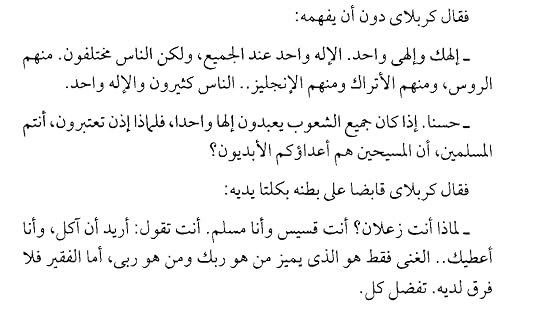
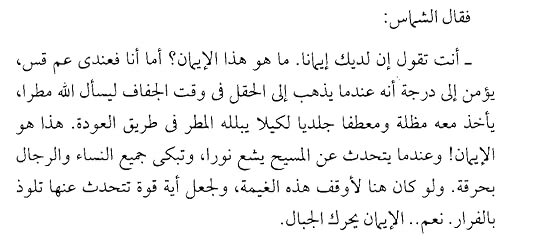
تتساءل طوال الصفحات المائة الأولى أين هي هذه المبارزة بينما المبارزة بين السطور بل في كل سطر من سطور الرواية قبل أن تتحول إلى مبارزة حقيقية كلاسيكية قبل النهاية بعدة صفحات.
لو أن تشيكوف مسلم لقلت أنه استوحاها من هذا الأثر الذى يروى في الرقائق بدون سند:
ذكر ابن قدامة في التوابين: أن بني إسرائيل لحقهم قحط على عهد موسى عليه السلام فاجتمع الناس إليه فقالوا: يا كليم الله ادع لنا ربك أن يسقينا الغيث.لابد أن القصة من الإسرائليات و لابد أنها وردت أيضا و لو بصيغة أخرى في الكتاب المقدس
فقام معهم وخرجوا إلى الصحراء وهم سبعون ألفاً أو يزيدون
فقال موسى عليه السلام : إلهي اسقنا غيثك وانشرعلينا رحمتك وارحمنا بالأطفال الرضع والبهائم الرتع والمشايخ الركع فما زادت السماء إلا تقشعاً والشمس إلا حرارة .
فقال موسى : إلهي اسقنا .
فقال الله : كيف أسقيكم ؟ وفيكم عبد يبارزني بالمعاصي منذ أربعين سنة فناد في الناس حتى يخرج من بين أظهركم ففبه منعتكم .
فصاح موسى في قومه : يا أيها العبد العاصي الذي يبارز الله منذ أربعين سنة اخرج من بين أظهرنا فبك منعنا المطر .
فنظر العبد العاصي ذات اليمين وذات الشمال فلم ير أحداً خرج فعلم أنه المطلوب فقال في نفسه : إن أنا خرجت من بين هذا الخلق افتضحت على رؤوس بني سرائيل وإن قعدت معهم منعوا لأجلي فانكسرت نفسه ودمعت عينه فأدخل رأسه في ثيابه نادماً على فعاله وقال: إلهي وسيدي عصيتك أربعين سنة وأمهلتني وقد أتيتك طائعاً فاقبلني وأخذ يبتهل إلى خالقه فلم يستتم الكلام حتى ارتفعت سحابة بيضاء فأمطرت كأفواه القرب .
فعجب موسى وقال : إلهي سقيتنا وما خرج من بين أظهرنا أحد .
فقال الله : يا موسى سقيتكم بالذي به منعتكم .
فقال موسى : إلهي أرني هذا العبد الطائع .
فقال : يا موسى إني لم أفضحه وهو يعصيني أأفضحه وهو يطيعني
مبارزة هي بالمعاصى و مبارزة في الأفكار
ما بين الزوجة التي هجرت زوجها بدافع حب رجل أخر فتركت كل شيء و سافرت معه إلى أخر حدود الحلم
و رجل هجر دينه و انتهك حرمات المجتمع فأغوى سيدة متزوجة ثم خاصم أمه و هجر بلدته إلى المجهول
مبارزة أخرى بين المدينة الصغيرة بشوقها إلى الحداثة في شخص النسناسين المهاجرين العاشق و العشيقة كما أطلقوا عليهما فالمدينة تشتاق إلى من يحطم التقاليد و يعلمهم لعب الورق و السهر و أصناف الفودكا و لكنهم في الوقت نفسه يحتقرونهم و يتعاملون معهم من أعلى السلم الطبقى الممتلىء بالمشاعر الزائفة و الفضيلة الكاذبة
مبارزة أخرى تجدها في كل قصص تشيكوف عندما يعدد القوميات بلكنة طبقية ساخرة و خصوصا عند الإشارة للتترى و الأبخازى و اليهودى و الأكرانى و الألمان و غيرهم
إلى أن تأتى المبارزة الحقيقية بين عالم الطبيعة و الحيوان الملحد الباحث عن المجد و الشهرة النتشوى المتطرف الذى لا يؤمن بوجود الضعفاء و العاله على المجتمع و بطل الرواية العاشق الملول الذى لا يستطيع أن يتحمل مسئولية أفعاله الهارب من دينه لدنياه فلا أدرك الدنيا و لا استبقى الدين
في الكواليس تجد الشماس و الطبيب و البقال و الضابط كل بشخصيته التي تصبغ الأحداث برؤيتها لأفعال الشخصيات الرئيسية و الحكم عليها و التفكير فيها في تداخل يبدعه تشيكوف دائما فلا يزيد فيه أبدا عما يحتاجه البناء الدرامى للرواية
رواية قصيرة لا تتعدى المائة و خمسين صفحة تحبس أنفاسك فيها أمام مبارزة شهيرة لم تزل تسرى في عالمنا منذ كان. في البدء الذى كانت فيه الكلمة بين الفضيلة و الرزيلة التي يحلو لكليهما دائما تبادل الأدوار و وضعنا في اختبارات صعبة
01
02
03
04

August 11, 2017
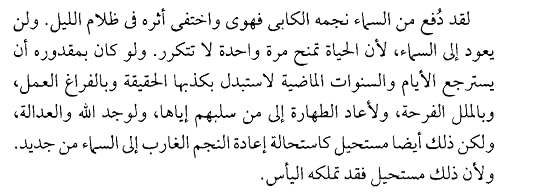
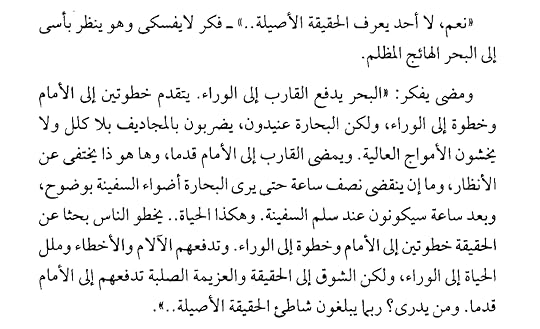
"هكذا هي الحياة.. يخطو الناس بحثا عن الحقيقة خطوتين الى الامام وخطوة الى الوراء، وتدفعهم الآلام والأخطاء وملل الحياة الى الوراء، ولكن الشوق الى الحقيقة والعزيمة الصلبة تدفعهم الى الامام قدما. ومن يدري؟ ربما يبلغون شواطيء الحقيقة الأصلية ."
الكره والحقد بين الناس والذي يجعل الانسان يعيش بجو ممل ومقرف.
هل ممكن ان يكون كرهك لطريقة حياة احدهم داعي لمبارزة وتخليص البشرية من شره.
الانسان يملك طريق تغيير حياته لا يحتاج الى اخرين يقومون بمساعدته. لان مشكلتك تكمن في تفكيرك عقلك ونفسيتك التي تجعل حياتك تعيسه.
فكر في غيرك وما سببته من شرور للناس وانت تظن نفسك أفضل منهم. وان حياتهم البائسة سبب شقائهم.
هل كان هؤلاء الأصدقاء الى مبارزة ليعرفو حقيقة الحياة؟
صراع نفسي مجتمعي رهيب بين أشخاص بتفكير مختلف وافكار متبعينه عن هذه الحياة التي نعيشها معا ...
الكره والحقد بين الناس والذي يجعل الانسان يعيش بجو ممل ومقرف.
هل ممكن ان يكون كرهك لطريقة حياة احدهم داعي لمبارزة وتخليص البشرية من شره.
الانسان يملك طريق تغيير حياته لا يحتاج الى اخرين يقومون بمساعدته. لان مشكلتك تكمن في تفكيرك عقلك ونفسيتك التي تجعل حياتك تعيسه.
فكر في غيرك وما سببته من شرور للناس وانت تظن نفسك أفضل منهم. وان حياتهم البائسة سبب شقائهم.
هل كان هؤلاء الأصدقاء الى مبارزة ليعرفو حقيقة الحياة؟
صراع نفسي مجتمعي رهيب بين أشخاص بتفكير مختلف وافكار متبعينه عن هذه الحياة التي نعيشها معا ...

November 29, 2015
“It flings the boat back,” he thought; “she makes two steps forward and one step back; but the boatmen are stubborn, they work the oars unceasingly, and are not afraid of the high waves. The boat goes on and on. Now she is out of sight, but in half an hour the boatmen will see the steamer lights distinctly, and within an hour they will be by the steamer ladder. So it is in life. . . . In the search for truth man makes two steps forward and one step back. Suffering, mistakes, and weariness of life thrust them back, but the thirst for truth and stubborn will drive them on and on. And who knows? Perhaps they will reach the real truth at last.”
Feb 23, 16
* Also on my blog.
Feb 23, 16
* Also on my blog.

May 25, 2018
المبارزة، او ثنائية الأشياء، او التضاد او حتى "الديالكتيك" ... كلها اسماء تصح لهذه القطعة الأدبية الرائعة.
- مئة وخمسون صفحة، ضخّ تشيخوف فيها من التضاد والتناقضات الكثير الكثير، ليخرج الينا بقصة، قد تكون تتكرر، وقد تكون جانبية وعادية في الحياة، لكنها رسمت مشهداً مخيفاً لتفصايل الحياة السائدة آنذاك، والتي ربما لا يزال الكثير منها سائداً الى اليوم.
- بين المدينة الصاخبة والريف النائي بالمكان، بين المؤمن المزيف والمؤمن الحقيقي بالدين، بين المؤمن والملحد بالفلسفة، بين الفضيلة والرذيلة بالنساء، بين السادية والعطف، الجهل والعلم... ثنائيات كثيرة رمانا تشيخوف بينها في هذه الصفحات.
- البناء القصصي كان مميزاً، فالرواية لا تتصاعد الى ذروة وتبدأ بالانحدار، بل تخللها العديد من الصعود والهبوط وردف لأفكار جديدة وقصص جانبية جعلتها قوية ومتماسكة منذ بدايتها حتى نهايتها.
- لا يفوت تشيخوف نقد للمجتمع والمعتقدات:"الإيمان بلا عمل جسد ميت"و " الغني فقط هو الذي يميز من هو ربك ومن هو ربي، أما الفقير فلا فرق عنده"...
- قرأت نيتشه في العديد من مقاطع هذه الرواية، ورغم ان تشيخوف لا يجنح اليه، لكنه ابدى آراءه على لسان عالم الحيوان والطبيعة.. والبقاء للأفضل.
- خاتمة الرواية كانت رائعة "وهكذا الحياة.. يخطو الناس بحثاً عن الحقيقة خطوتين الى الأمام وخطوة الى الوراء. وتدفعهم الآلام والأخطاء وملل الحياة الى الوراء، ولكن الشوق الى الحقيقة والعزيمة الصلبة تدفعهم الى الامام قدما. ومن يدري؟ ربما يبلغون شاطئ الحقيقة الأصلية"
- مئة وخمسون صفحة، ضخّ تشيخوف فيها من التضاد والتناقضات الكثير الكثير، ليخرج الينا بقصة، قد تكون تتكرر، وقد تكون جانبية وعادية في الحياة، لكنها رسمت مشهداً مخيفاً لتفصايل الحياة السائدة آنذاك، والتي ربما لا يزال الكثير منها سائداً الى اليوم.
- بين المدينة الصاخبة والريف النائي بالمكان، بين المؤمن المزيف والمؤمن الحقيقي بالدين، بين المؤمن والملحد بالفلسفة، بين الفضيلة والرذيلة بالنساء، بين السادية والعطف، الجهل والعلم... ثنائيات كثيرة رمانا تشيخوف بينها في هذه الصفحات.
- البناء القصصي كان مميزاً، فالرواية لا تتصاعد الى ذروة وتبدأ بالانحدار، بل تخللها العديد من الصعود والهبوط وردف لأفكار جديدة وقصص جانبية جعلتها قوية ومتماسكة منذ بدايتها حتى نهايتها.
- لا يفوت تشيخوف نقد للمجتمع والمعتقدات:"الإيمان بلا عمل جسد ميت"و " الغني فقط هو الذي يميز من هو ربك ومن هو ربي، أما الفقير فلا فرق عنده"...
- قرأت نيتشه في العديد من مقاطع هذه الرواية، ورغم ان تشيخوف لا يجنح اليه، لكنه ابدى آراءه على لسان عالم الحيوان والطبيعة.. والبقاء للأفضل.
- خاتمة الرواية كانت رائعة "وهكذا الحياة.. يخطو الناس بحثاً عن الحقيقة خطوتين الى الأمام وخطوة الى الوراء. وتدفعهم الآلام والأخطاء وملل الحياة الى الوراء، ولكن الشوق الى الحقيقة والعزيمة الصلبة تدفعهم الى الامام قدما. ومن يدري؟ ربما يبلغون شاطئ الحقيقة الأصلية"

October 16, 2025
I've read that 'The Duel' is not among Chekhov's best works (and I must admit that I need to re-read his short stories I read a long time ago) but I found the story deeply poignant and inspiring even if 'inspiring' is, probably, not the word one can normally associate with Chekhov's outlook and personality. Nevetherless, there is hope in the story, that is why it seems inspiring to me.
'Duel' is about our weaknesses and sins that often define us. It is also about conflicts, both inner and outer, a tension between idealism and cynicism, moral decay and renewal. The characters have to suffer and stare death in the face in order to find redemption and undergo transformation - become humbler, kinder and more grateful.
Chekhov's writing and attitude really appeal to me - his economical prose, his irony without bitterness and his compassion without sentimentality.
'Von Koren despised him for his weakness, for his sentimentalism, and for that endless lying which was not deceit but habit.'
-------------------------------------------------------------------------
'Love had turned into habit, habit into irritation, irritation into hatred.'
-------------------------------------------------------------------------
'The sea was calm and indifferent, as if it had seen many such quarrels of men.'
-------------------------------------------------------------------------
'He longed not for happiness, but for peace—peace from himself.'
-------------------------------------------------------------------------
'Von Koren’s face expressed that cruel joy which the righteous sometimes feel in punishing the guilty.'
'Duel' is about our weaknesses and sins that often define us. It is also about conflicts, both inner and outer, a tension between idealism and cynicism, moral decay and renewal. The characters have to suffer and stare death in the face in order to find redemption and undergo transformation - become humbler, kinder and more grateful.
Chekhov's writing and attitude really appeal to me - his economical prose, his irony without bitterness and his compassion without sentimentality.
'Von Koren despised him for his weakness, for his sentimentalism, and for that endless lying which was not deceit but habit.'
-------------------------------------------------------------------------
'Love had turned into habit, habit into irritation, irritation into hatred.'
-------------------------------------------------------------------------
'The sea was calm and indifferent, as if it had seen many such quarrels of men.'
-------------------------------------------------------------------------
'He longed not for happiness, but for peace—peace from himself.'
-------------------------------------------------------------------------
'Von Koren’s face expressed that cruel joy which the righteous sometimes feel in punishing the guilty.'

January 4, 2020
In the Olympics of Being Shitty, here’s Laevsky: his mistress’s husband dies and he doesn’t tell her for like a week, because he's afraid she'll want to marry him next. When he finally does inform her she’s a widow, he immediately climbs out a window to escape comforting her.
So he’s 2000 rubles in debt and his big plan is to run off and ghost both debt and mistress. Dude’s a waste of genes, frankly, and someone should kick him out of the gene pool. Shoot this nimrod right in the head, is what someone should do. Right? No, I know it sounds harsh, but can you really argue we wouldn’t all be better off without guys like Laevsky?
This is the argument of von Koren, a scientist who represents that most insidious of villains: someone who has mistaken eugenics for Darwinism. Hoo boy, that never ends well. Let’s just super quick review what we’re talking about:
Darwinism, or evolution: Genetic mutations that give animals an edge in survival are favored, and those that handicap them disfavored, resulting in gradual change in a species.
Eugenics: We can help this along, by simply weeding out the Laevsky’s. Eugenics is dumb because the metric is your opinion about desired traits, rather than empirical survival, and you (meaning humans) very consistently are wrong about everything.

Francis Galton, Darwin’s half-cousin and Man Who Looks Exactly Like A Man Who Would Invent Eugenics, who invented eugenics in 1883
Chekhov is engaging with Darwin here in 1891. “Primitive mankind,” says von Koren, “was protected from the likes of Laevsky by the struggle for existence and selection; but nowadays our culture has considerably weakened the struggle and the selection, and we ourselves must take care of destroying the feeble and unfit.” I’m not sure whether Chekhov himself has confused eugenics with Darwinism, or whether it’s just von Koren. We can definitely guess how he feels about von Koren, though.
But von Koren has a plan, and the book is literally called “The Duel” so that’s what the plan is. Von Koren’s putting his money where his mouth is. And will it work? Is von Koren going to murder a guy?

Chekhov, surely one of our most fuckable authors
I love novellas. I love how they feel like accomplishments, but really easy ones. And I love this novella, one of the best I’ve ever read. It’s a blast all the way through - funny and tragic, full of surprises. I love the characters, who are allegorical enough that you can feel clever for getting it, but not so allegorical as to be boring. I haven’t even talked about the poor mistress, Nadezhda Fyodorovna, who gets this treatment from her best friend: “God marks great sinners, and you have been marked. Remember, your dresses have always been awful!” There are much less funny parts: “God’s world is good,” Chekhov wrote once in a letter. “One thing is not good: us.” The Duel is an exploration of the many ways in which we are not good, and the few ways in which we are.
So he’s 2000 rubles in debt and his big plan is to run off and ghost both debt and mistress. Dude’s a waste of genes, frankly, and someone should kick him out of the gene pool. Shoot this nimrod right in the head, is what someone should do. Right? No, I know it sounds harsh, but can you really argue we wouldn’t all be better off without guys like Laevsky?
This is the argument of von Koren, a scientist who represents that most insidious of villains: someone who has mistaken eugenics for Darwinism. Hoo boy, that never ends well. Let’s just super quick review what we’re talking about:
Darwinism, or evolution: Genetic mutations that give animals an edge in survival are favored, and those that handicap them disfavored, resulting in gradual change in a species.
Eugenics: We can help this along, by simply weeding out the Laevsky’s. Eugenics is dumb because the metric is your opinion about desired traits, rather than empirical survival, and you (meaning humans) very consistently are wrong about everything.
Francis Galton, Darwin’s half-cousin and Man Who Looks Exactly Like A Man Who Would Invent Eugenics, who invented eugenics in 1883
Chekhov is engaging with Darwin here in 1891. “Primitive mankind,” says von Koren, “was protected from the likes of Laevsky by the struggle for existence and selection; but nowadays our culture has considerably weakened the struggle and the selection, and we ourselves must take care of destroying the feeble and unfit.” I’m not sure whether Chekhov himself has confused eugenics with Darwinism, or whether it’s just von Koren. We can definitely guess how he feels about von Koren, though.
But von Koren has a plan, and the book is literally called “The Duel” so that’s what the plan is. Von Koren’s putting his money where his mouth is. And will it work? Is von Koren going to murder a guy?
Chekhov, surely one of our most fuckable authors
I love novellas. I love how they feel like accomplishments, but really easy ones. And I love this novella, one of the best I’ve ever read. It’s a blast all the way through - funny and tragic, full of surprises. I love the characters, who are allegorical enough that you can feel clever for getting it, but not so allegorical as to be boring. I haven’t even talked about the poor mistress, Nadezhda Fyodorovna, who gets this treatment from her best friend: “God marks great sinners, and you have been marked. Remember, your dresses have always been awful!” There are much less funny parts: “God’s world is good,” Chekhov wrote once in a letter. “One thing is not good: us.” The Duel is an exploration of the many ways in which we are not good, and the few ways in which we are.
February 28, 2019
زندگی همین است،انسان در جستجوی حقیقت،دو قدم رو به جلو برمیدارد و یک قدم به عقب بازمیگردد.زجرها،خطاها،و یکنواختی زندگی او را به عقب پرت میکند،اما تشنه ی حقیقت همین طور میرود و میرود و میرود و ادامه میدهد.و خدا را چه دیدی؟شاید راهش را به سمت حقیقت بیابد.
آقای چخوف لازم میبینم یک بار دیگر به احترام شما از جایم برخواسته و کلاهم را بردارم.
اکنون که کتاب را تمام کرده ام به جای آنکه به کتاب و پیامی که به من داد فکر کنم بیشتر به معنی یک واژه فکر کردم،"نبوغ"
به راستی که آقای چخوف نابغه است و حقیقتا خداوندگار داستان کوتاه
فقط اوست که میتواند از دل یک داستان ساده و پیش پا افتاده چنین اثری بیرون بیاورد،فقط اوست که میتواند وادارت کند که یک روزه کتاب را بخوانی و در پی سرنوشت" لاوکسی" باشی
این بار با مفاهیمی چون حقیقت،قضاوت،نفرت،شرافت و غرور طرف هستیم و تعاریف چخوف از این کلمات از زبان کاراکترهای داستان شنیدنی ست.چخوف با ریزبینی هرچه تمام تر جامعه ی روسیه را ترسیم میکند،جامعه ای سردرگم و خرافاتی و فاقد ارزش های راستین
مردمانی متظاهر و ریاکار و آرمانگرا
مردمانی که همانند ربات اسیر عادات تکراری خود هستند و تنها در تخیلاتشان رو به جلو حرکت میکنند.مردمانی منفعل و غرق در رویا و آرزو
و نهایتا دوئل
مبارزه ای دو طرفه برای اعاده ی حیثیت و باز پس گرفتن غرور
به گمانم هرکدام از ما دست کم یک بار دوئل را تجربه کرده ایم،شاید با خانواده یا جامعه یا حتی خود زندگی و سرنوشت،نه لزوما با اسلحه
ما بارها برای باز پس گرفتن غرور خود و به کرسی نشاندن حرف ها یا ثابت کردن عقایدمان دست به دوئل و مبارزه میزنیم.
ولی آیا دوئل دائما لازم است؟آیا لازم است چیزی به کسی ثابت شود؟
کسی چه میداند،شاید همین دوئل با زندگی و اطرافیان است که ادامه زندگی را برای ما ممکن میسازد.
گاه باید زندگی و سرنوشت را در آغوش کشید و تسلیم شد و گاه باید آن را به چالش و دوئل دعوت کرد.
راجع به ترجمه:
ترجمه خانم فرشته افسری به معنای واقعی کلمه افتضاح بود،تنها علاقه به چخوف مجابم کرد تا آخر داستان رو بخونم،اگر ترجمه ی دیگری خوانده اید معرفی کنید لطفا.
آقای چخوف لازم میبینم یک بار دیگر به احترام شما از جایم برخواسته و کلاهم را بردارم.
اکنون که کتاب را تمام کرده ام به جای آنکه به کتاب و پیامی که به من داد فکر کنم بیشتر به معنی یک واژه فکر کردم،"نبوغ"
به راستی که آقای چخوف نابغه است و حقیقتا خداوندگار داستان کوتاه
فقط اوست که میتواند از دل یک داستان ساده و پیش پا افتاده چنین اثری بیرون بیاورد،فقط اوست که میتواند وادارت کند که یک روزه کتاب را بخوانی و در پی سرنوشت" لاوکسی" باشی
این بار با مفاهیمی چون حقیقت،قضاوت،نفرت،شرافت و غرور طرف هستیم و تعاریف چخوف از این کلمات از زبان کاراکترهای داستان شنیدنی ست.چخوف با ریزبینی هرچه تمام تر جامعه ی روسیه را ترسیم میکند،جامعه ای سردرگم و خرافاتی و فاقد ارزش های راستین
مردمانی متظاهر و ریاکار و آرمانگرا
مردمانی که همانند ربات اسیر عادات تکراری خود هستند و تنها در تخیلاتشان رو به جلو حرکت میکنند.مردمانی منفعل و غرق در رویا و آرزو
و نهایتا دوئل
مبارزه ای دو طرفه برای اعاده ی حیثیت و باز پس گرفتن غرور
به گمانم هرکدام از ما دست کم یک بار دوئل را تجربه کرده ایم،شاید با خانواده یا جامعه یا حتی خود زندگی و سرنوشت،نه لزوما با اسلحه
ما بارها برای باز پس گرفتن غرور خود و به کرسی نشاندن حرف ها یا ثابت کردن عقایدمان دست به دوئل و مبارزه میزنیم.
ولی آیا دوئل دائما لازم است؟آیا لازم است چیزی به کسی ثابت شود؟
کسی چه میداند،شاید همین دوئل با زندگی و اطرافیان است که ادامه زندگی را برای ما ممکن میسازد.
گاه باید زندگی و سرنوشت را در آغوش کشید و تسلیم شد و گاه باید آن را به چالش و دوئل دعوت کرد.
راجع به ترجمه:
ترجمه خانم فرشته افسری به معنای واقعی کلمه افتضاح بود،تنها علاقه به چخوف مجابم کرد تا آخر داستان رو بخونم،اگر ترجمه ی دیگری خوانده اید معرفی کنید لطفا.
April 24, 2023
رمانی ساده و جذاب از چخوف بزرگ در توصیف جامعه ومردمانی آشفته وسرگردان زمان وقت روسيه که در فکر وذهن خود اندیشه ای دیگر دارند واززبان و دهان خود حرفی دیگر می زنند،مردمانی که زندگی را رویایی شیرین می پندارند وحقیقت وتلخی آن را باور ندارند و در درون خود شجاعت وقدرت کافی برای تغییر شرایط را ندارند و یا خود را باور ندارند وناگهان دلتنگ و قدردان همین اوضاع آشفته خود می شوند وبا آن انس می گیرند وتسلیم جبر زندگی وحقیقت آن می شوند.
از متن کتاب؛
"ازدواج بدون عشق درست حال عبادت بدون ایمان داره"
از متن کتاب؛
"ازدواج بدون عشق درست حال عبادت بدون ایمان داره"
October 20, 2019
I just have read the cherry orchard by Chekhov and I find his way of storytelling attractive, in which he provides one with sufficient detail, yet one is allowed to add some imagination to the scene. I so very much enjoy the variety of characters he depicts, both in the duel and the cherry orchard one could see almost all type of males with different characteristics, so that one is able to identify with them and follow the story more eagerly. However, I find his female characters annoying, who are merely despairing, weak, and cheap, leaving one to pity them all.
“Any idiot can face a crisis; it's this day-to-day living that wears you out.”
Of all the characters Von Koren amused and influenced me the most, and I really hope to find a friend like him. We all need people like him in our lives to save us from our daily pathetic routine!
“Any idiot can face a crisis; it's this day-to-day living that wears you out.”
Of all the characters Von Koren amused and influenced me the most, and I really hope to find a friend like him. We all need people like him in our lives to save us from our daily pathetic routine!

April 22, 2022
The Duel has been my first experience reading a Chekhov novella, and I must say that I truly enjoyed it.
The author actually knew how to develop his characters, and those characters—who really have their own voice and a different personality—are the most important element in the book. Don't get me wrong, the story itself is also important, but I found characters' thoughts and dialogues absolutely deep and thought-provoking, being the most remarkable aspect of the novel.
As you can imagine, there is a duel in the novel, however, there is no only a real duel, but a symbolic one. Our protagonist, Laevksy, has his own ideology and beliefs about life, which contrast to Von Koren's beliefs, a zoologist, who is not friends with Laevksy at all and tends to be against him frequently.
Some discussions about meaningful topics such as evolution, religion, society, death, etc. (that are constantly taking place in the novel) are so necessary to understand every character's opinion, and to see how each of them is 'playing their role' in the story. I said to a friend of mine that I pictured the characters as the cast of a play, at which everyone has their own role, where they are doing their part properly, and finally, the curtain goes down and the finale turns out to be the beginning of something new, just like in real life. I was completely satisfied with that ending; in my view, the best part of the whole book.
In short, I would highly recommend such a beautiful work. It is very well written, has unforgettable characters, and besides, the author depicts accurately a true portrait of the society. There is even one character who somehow reminded me of Raskolnikov—protagonist of Crime and Punishment—due to they share a very similar ideology (needless to say that this fact made me go back to one of my favorite novels of my life).
I can't wait to read my next Chekhov very soon.
Love cannot last long. You have lived two years in love, and now evidently your married life has reached the period when, in order to preserve equilibrium, so to speak, you ought to exercise all your patience.
The author actually knew how to develop his characters, and those characters—who really have their own voice and a different personality—are the most important element in the book. Don't get me wrong, the story itself is also important, but I found characters' thoughts and dialogues absolutely deep and thought-provoking, being the most remarkable aspect of the novel.
As you can imagine, there is a duel in the novel, however, there is no only a real duel, but a symbolic one. Our protagonist, Laevksy, has his own ideology and beliefs about life, which contrast to Von Koren's beliefs, a zoologist, who is not friends with Laevksy at all and tends to be against him frequently.
Some discussions about meaningful topics such as evolution, religion, society, death, etc. (that are constantly taking place in the novel) are so necessary to understand every character's opinion, and to see how each of them is 'playing their role' in the story. I said to a friend of mine that I pictured the characters as the cast of a play, at which everyone has their own role, where they are doing their part properly, and finally, the curtain goes down and the finale turns out to be the beginning of something new, just like in real life. I was completely satisfied with that ending; in my view, the best part of the whole book.
In short, I would highly recommend such a beautiful work. It is very well written, has unforgettable characters, and besides, the author depicts accurately a true portrait of the society. There is even one character who somehow reminded me of Raskolnikov—protagonist of Crime and Punishment—due to they share a very similar ideology (needless to say that this fact made me go back to one of my favorite novels of my life).
I can't wait to read my next Chekhov very soon.
Love cannot last long. You have lived two years in love, and now evidently your married life has reached the period when, in order to preserve equilibrium, so to speak, you ought to exercise all your patience.

August 3, 2021
Чехов – мастер психологического портрета «маленького человека». Вот и здесь, Лаевский и Надежда Федоровна вывернуты наизнанку во всей их мелкой, подлой, пустой, пошлой и никчемной душонкой. Особенно хороша Надежда Федоровна, с ее кокетством, инфантильной шаловливостью, воображанием, что все ею любуются, как единственной молодой дамой, ее платьями и бельем, ее уверенностью о возможности одним махом избавиться от долга перед Ачмиановым и редкостным самопрощением, что душой она не изменяла. Тем не менее, мне показалась нереалистичной реакция Ивана Андреевича на измену Надежды Федоровны. Он, который за все свои нереализованные прожекты возлагал ответственность на Онегина с Печориным, вдруг понимает свою ответственность за ее падение? Он, которого раздражал даже завиток ее волос на шее, который остро чувствовал ложь и фальшь их отношений, задолго до того, как узнал об измене, вдруг понимает, что роднее ее никого для него нет? Вырисовывая никчемность Лаевского и его содержанки, он противопоставляет им умного, рационального, трудолюбивого фон Корена, однако же в своей личностной идеальности он деспотичен и жесток, и даже готов не на словах физически уничтожить таких, как Лаевский. Романы прошлых столетий дают нам уникальную возможность узнать о быте людей, живших тогда. Что еще совсем удивило, что доктор, дворянин Самойленко самолично готовит еду для своих товарищей, которых кормит за деньги. Так плохо было довольствие в русской армии, стоявшей на Кавказе или это его рачительность и предприимчивость?

September 7, 2019
"He had no need of the truth, and he was not seeking it; his conscience, beguiled by vice and lies, slept or was silent; like a foreigner, or an alien from another planet, he took no part in the common life of people, was indifferent to their sufferings, ideas, religions, knowledge, quests, struggles; he had not a single kind word for people, had never written a single useful, nonbanal line, had never done a groat’s worth of anything for people, but only ate their bread, drank their wine, took away their wives, lived by their thoughts, and, to justify his contemptible, parasitic life before them and before himself, had always tried to make himself look higher and better than them... Lies, lies, lies..."
What a bunch of unlikeable characters! However, what really matters is that Anton Chekhov is an acute observer of human nature, and as such the characterisation is excellent. He carefully ramps up the tension until the inevitable duel where passions reach boiling point. The duel itself serves as a catalyst for change.
"He dislodged his own dim star from the sky, it fell, and its traces mingled with the night’s darkness; it would never return to the sky, because life is given only once and is not repeated."
What a bunch of unlikeable characters! However, what really matters is that Anton Chekhov is an acute observer of human nature, and as such the characterisation is excellent. He carefully ramps up the tension until the inevitable duel where passions reach boiling point. The duel itself serves as a catalyst for change.
"He dislodged his own dim star from the sky, it fell, and its traces mingled with the night’s darkness; it would never return to the sky, because life is given only once and is not repeated."

September 3, 2026
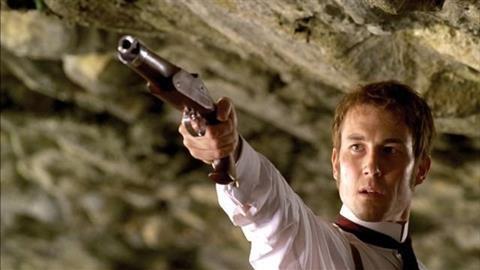
Still from the 2010 film based on the novella
By my reckoning, The Duel by Anton Chekhov counts as one of the greatest novellas ever written—a work I first encountered back in college and a work I've enjoyed reading (and listening to via the audiobook) again and again.
Since Chekhov's novella has prompted a good number of perceptive reviews here on Goodreads, I will take a fresh approach and link my comments to a few memorable lines that continue to resonate with me. Spoiler alert: in order to address several key philosophic dimensions, I'm obliged to write about the novella's unfolding plot and concluding scene.
The tale takes place in a small town on the edge of the Black Sea in the Caucasus (around present-day Georgia), 1,200 miles south of Saint Petersburg. The main characters are:
Ivan Andreitch Laevsky: A civil service clerk, and a weak-willed and disillusioned slacker who spends most of his time idling away—drinking, carousing, playing cards, and piling up debts.
Nadezhda Fyodorovna: Laevsky's mistress. She left her husband to flee south with Laevsky, and is a beautiful young lady inclined to romantic dreams.
Von Koren: A zoologist, and a man of rigid standards who firmly upholds natural selection, social Darwinism, and rationalism. He is Laevsky's prime rival.
Samoylenko: A military doctor, and a warm-hearted, hospitable, peace-loving man.
"With his big cropped head, short neck, his red face, his big nose, his shaggy black eyebrows and grey whiskers, his stout puffy figure and his hoarse military bass, this Samoylenko made on every newcomer the unpleasant impression of a gruff bully; but two or three days after making his acquaintance, one began to think his face extraordinarily good-natured, kind, and even handsome."
Anton Chekhov is universally judged as a master of description, especially regarding his short character sketches. We're given a clear, colorful picture of each player in the unfolding drama, beginning with Samoylenko.
“It’s the Germans who have ruined you, brother! Yes! The Germans!”
Von Koren passes harsh judgment on slackers like Laevsky, continually proclaiming that such lazy weaklings should be either shot or, at the very least, forced into penal service in Siberia where they can provide some benefit to society. Samoylenko tells Von Koren the Germans have infected his thinking, taking away his love for his fellow man. I studied a lot of 19th-century German philosophy in college—such thinkers as Hegel, Marx, Feuerbach, Schopenhauer, and Nietzsche—so I have a good sense of what Samoylenko is driving at here.
Further on, prior to challenging Laevsky to a duel, when asked if he, Von Koren, could really shoot Ivan Andreitch Laevsky, he replies: "With a steady hand."
For me, this curt answer underscores Von Koren as an unflinching rationalist—a scientist who has little use for anything that doesn't accord with his highly dogmatic views of human strength and survival. In particular, it highlights how he believes an ironclad morality and strict social mores prove critical to the improvement of civilization.
"The laugh grew shriller and shriller, and became something like the bark of a lap-dog. Laevsky tried to get up from the table, but his legs would not obey him and his right hand was strangely, without his volition, dancing on the table, convulsively clutching and crumpling up the bits of paper. He saw looks of wonder, Samoylenko’s grave, frightened face, and the eyes of the zoologist full of cold irony and disgust, and realised that he was in hysterics."
Laevsky caught in the grip of hysterics after reading a scathing, unsigned note (probably penned by Von Koren) is among the most memorable scenes. We as readers can imagine what Von Koren, his eyes filled with cold irony and disgust, must think when this weakling, this slacker and silly chatterbox, breaks down in a state of uncontrollable hysterics.
Three months following the dramatic events in the novella, including the duel between Laevsky and Von Koren, the zoologist is about to set off on his years-long scientific expedition.
We read Chekhov's words: As they passed the little house with three windows, into which Laevsky had moved soon after the duel, Von Koren could not resist peeping in at the window. Laevsky was sitting, writing, bent over the table, with his back to the window.
“I wonder at him!” said the zoologist softly. “What a screw he has put on himself!”
“Yes, one may well wonder,” said Samoylenko. “He sits from morning till night, he’s always at work. He works to pay off his debts. And he lives, brother, worse than a beggar!”
Ah, so Laevsky has transformed himself: he married Nadezhda Fyodorovna and does nothing but work at his desk copying government documents. No gabbing about, no playing cards, no drinking, and no piling up debts. He is the perfect, productive, upright citizen.
At this point, again we read Chekhov's words: The zoologist took Samoylenko’s sleeve and went on with emotion in his voice: “You tell him and his wife that when I went away I was full of admiration for them and wished them all happiness . . . and I beg him, if he can, not to remember evil against me. He knows me. He knows that if I could have foreseen this change, then I might have become his best friend.”
Shifting to the philosophic, I wrote a review of another classic Chekhov tale: The Black Monk. In that tale, a scholar by the name of Kovrin encounters visions of a Black Monk who tells him he is a superior man, capable of spiritual transformation and becoming creative in the most magnificent ways.
And what is his wife and lover Tánya's reaction when Kovrin tells her the Black Monk has spoken to him? Predictably, as a staunch representative of the status quo, she thinks he's sick and must seek out medical treatment to be cured.
Sidebar: Nowadays, the Tányas of the world, both male and female, spend most of their lives eating crap food, drinking soda and booze, all the while sitting on their fat asses in front of the idiot box, aka the boob tube, aka the TV. “Come on, Kovrin, be normal like us!”
And further on in the tale, when Kovrin does become “normal,” he says to his little lovely, “Now I have become rational and solid, just like the rest of the world. I am a mediocrity, and it is tiresome for me to live.... Oh, how cruelly... how cruelly you have treated me! I had hallucinations ... but what harm did that cause to anyone? I ask you what harm?”
Ha! Kovrin, my boy, your visions of the Black Monk don't harm anybody. But—and here's the kicker—your visions of the Black Monk threaten other people's worldview, their secure little version of life.
I'm reminded of Schopenhauer's words: "Whoever expects to see devils go through the world with horns and fools with jingling bells will always be their prey or plaything." However, there's another force acting in society, in many ways more insidious—all those holders of the status quo, executing groupthink with a vengeance. Anybody who seeks to follow their visions, their creative fires, and their call to be something more than humdrum and mediocre—beware! The Tányas of the world are many.
Turning to The Duel, we can detect the way Von Koren shares common ground with Tánya—he experiences a profound discomfort when someone steps outside their assigned, conventional role. Von Koren judges people with exactly the same rigid desire for containment but adds a conceptual layer: social Darwinism and scientific progress. For Von Koren, everything must fit into his tidy, cold, rational grid. Thus, a human being is either a productive asset to the state or a piece of societal "refuse" that needs to be either eliminated, or, at least, put in chains and forced to perform manual labor.
I will conclude with a slight modification of my Black Monk review: Anybody who seeks to follow their visions, their creative fires, and their call to be something more than humdrum and mediocre—beware! The Von Korens of the world are many.

Read
December 31, 2019It appeared that of all the people present not one had ever in his life been at a duel, and no one knew precisely how they ought to stand, and what the seconds ought to say and do. But then Boyko remembered and began, with a smile, to explain.. "Gentlemen, who remembers the description in Lermontov?"
Hey! I do!
And so, on this last day of 2019, The Duel rounds off my Russian season perfectly since it references the duel scenes in Lermontov's A Hero of Our Time which I read in early November, but also recalls to my mind the duel in Pushkin's Eugene Onegin which I read soon afterwards. And in the course of his tale, Chekhov mentions Tolstoy and Leskov whose stories were part of my 2019 Russian winter too. Plus, The Duel is set in the same place as Vodolazkin's Solovyov and Larionov which I just finished. I've come full circle.
Other quotes I liked:
"I understand Von Koren very well. His is a resolute, strong, despotic nature. You have heard him continually talking of 'the expedition,' and it's not mere talk. He wants the wilderness, the moonlit night: all around in little tents, under the open sky, lie sleeping his sick and hungry Cossacks, guides, porters, doctor, priest, all exhausted with their weary marches, while only he is awake, sitting like Stanley on a camp-stool, feeling himself the monarch of the desert and the master of these men. He goes on and on and on, his men groan and die, one after another, and he goes on and on, and in the end perishes himself, but still is monarch and ruler of the desert, since the cross upon his tomb can be seen by the caravans for thirty or forty miles over the desert."
That description by one of the characters about another reminded me of Patrick White's Voss. Voss was just such a one as Van Koren.
"The mole has a powerful thorax, just like the bat," Van Koren went on, shutting the box; "the bones and muscles are tremendously developed, the mouth is extraordinarily powerfully furnished. If it had the proportions of an elephant, it would be an all-destructive, invincible animal. It is interesting when two moles meet underground; they begin at once as though by agreement digging a little platform; they need the platform in order to have a battle more conveniently. When they have made it they enter upon a ferocious struggle and fight till the weaker one falls...
Hey! I do!
And so, on this last day of 2019, The Duel rounds off my Russian season perfectly since it references the duel scenes in Lermontov's A Hero of Our Time which I read in early November, but also recalls to my mind the duel in Pushkin's Eugene Onegin which I read soon afterwards. And in the course of his tale, Chekhov mentions Tolstoy and Leskov whose stories were part of my 2019 Russian winter too. Plus, The Duel is set in the same place as Vodolazkin's Solovyov and Larionov which I just finished. I've come full circle.
Other quotes I liked:
"I understand Von Koren very well. His is a resolute, strong, despotic nature. You have heard him continually talking of 'the expedition,' and it's not mere talk. He wants the wilderness, the moonlit night: all around in little tents, under the open sky, lie sleeping his sick and hungry Cossacks, guides, porters, doctor, priest, all exhausted with their weary marches, while only he is awake, sitting like Stanley on a camp-stool, feeling himself the monarch of the desert and the master of these men. He goes on and on and on, his men groan and die, one after another, and he goes on and on, and in the end perishes himself, but still is monarch and ruler of the desert, since the cross upon his tomb can be seen by the caravans for thirty or forty miles over the desert."
That description by one of the characters about another reminded me of Patrick White's Voss. Voss was just such a one as Van Koren.
"The mole has a powerful thorax, just like the bat," Van Koren went on, shutting the box; "the bones and muscles are tremendously developed, the mouth is extraordinarily powerfully furnished. If it had the proportions of an elephant, it would be an all-destructive, invincible animal. It is interesting when two moles meet underground; they begin at once as though by agreement digging a little platform; they need the platform in order to have a battle more conveniently. When they have made it they enter upon a ferocious struggle and fight till the weaker one falls...
October 21, 2019
One of Chekhov's most penetrating works. The Duel deals fundamentally with ideas and ideologies and how they function in the real world. Chekhov’s tale plots the conflict between two characters: Von Koren and Laevsky, who support antithetical worldviews, and not to beat around the bush, they end up in duel. We begin with the Russian aristocrat Laevsky who is a drinker, a gambler and a bit of a moaner, complaining to a military doctor, Somoylenko, whom he befriends, that he has fallen out of love with his mistress, Nadezhda Fyodorovna, and here Chekhov writes with a sharpe view of seemingly irreconcilable mutual isolation between the two, and as the story progresses, and Laevsky discovers Nadezhda's unfaithfulness, the grounds for their isolation seem to grow. Yet, with a change of heart, the two have reconciled by the end of the story. But One is left to ponder, just how convincing is this reconciliation? Another character, the Decon, despite his frivolousness, plays a pivotal role in the story, but overall, I like to think of Von Koren, the scientist and strict moralist as the most important. He thinks with contempt in regards Laevsky that people like him shouldn't exist, but on philosophical grounds not personal ones. This was such a dramatic, vivid and interesting piece of storytelling, and even though it's short, it delivers great depth, and has you thinking deeply on the questions it raises.

April 21, 2022
45th book of 2022
An absolutely incredible novel. This was my first longer work of Chekhov's to read, and it didn't disappoint. I find Chekhov to be a master of character over a master of plot, yet I wouldn't want that to be any other way. The power of his characters is truly something special, and the way that he presents them places them on an equal plane with his readers, they feel palpable, they feel real. I have a video discussion for this fantastic novel posted on my BookTube channel which I will link to down below. I go into detail about the plot, as well as more in-depth with my thoughts on the work as well.
YouTube book review: https://youtu.be/1wfEZxh9EMo
An absolutely incredible novel. This was my first longer work of Chekhov's to read, and it didn't disappoint. I find Chekhov to be a master of character over a master of plot, yet I wouldn't want that to be any other way. The power of his characters is truly something special, and the way that he presents them places them on an equal plane with his readers, they feel palpable, they feel real. I have a video discussion for this fantastic novel posted on my BookTube channel which I will link to down below. I go into detail about the plot, as well as more in-depth with my thoughts on the work as well.
YouTube book review: https://youtu.be/1wfEZxh9EMo

April 9, 2015
" وهكذا الحياة... يخطوا الناس بحثًا عن الحقيقة خطوتين إلى الأمام وخطوة إلى الوراء. وتدفعهم الآلام والأخطاء وملل الحياةإلى الوراء، ولكن الشوق إلى الحقيقة والعزيمة الصلبة تدفعهم إلى الأمام قدما. ومن يدري؟ ربما يبلغون شاطىء الحقيقة الأصلية... "
بالرغم من أن اسم الرواية المبارزة، بيد أن الكاتب لم يعتني بهذا الجزء من الرواية كثيرًا.. شتان ما بين المبارزة في هذه الرواية وبينها في الحرب والسلام لتولستوي!
ما عدا هذا فالرواية رائعة، باسلوب ممتاز، وانسيابية في السرد، ودقة في الوصف، وحبكة متماسكة، وتحليل جيد للجوانب النفسية لشخصيات الرواية.
الرواية كشفت الكثير من نقاط العضف والأخطاء التي نقع فيها كثيرًا.. تشيخوف جرد الناس من مشاعرهم ووضعها في هذه الصفحات.
كما أن النهاية لم يكن بها اللمحة العبثية والساخرة كما هي العادة.. النهاية هنا جيدة جدًا ومنطقية.
الفكرة من وراء الرواية ممتازة، والتغيير في مجرى الأحداث وفي شخصية "لايفسكي" رائع، وأدى إلى رفع تقييمي للرواية.
بالرغم من أن اسم الرواية المبارزة، بيد أن الكاتب لم يعتني بهذا الجزء من الرواية كثيرًا.. شتان ما بين المبارزة في هذه الرواية وبينها في الحرب والسلام لتولستوي!
ما عدا هذا فالرواية رائعة، باسلوب ممتاز، وانسيابية في السرد، ودقة في الوصف، وحبكة متماسكة، وتحليل جيد للجوانب النفسية لشخصيات الرواية.
الرواية كشفت الكثير من نقاط العضف والأخطاء التي نقع فيها كثيرًا.. تشيخوف جرد الناس من مشاعرهم ووضعها في هذه الصفحات.
كما أن النهاية لم يكن بها اللمحة العبثية والساخرة كما هي العادة.. النهاية هنا جيدة جدًا ومنطقية.
الفكرة من وراء الرواية ممتازة، والتغيير في مجرى الأحداث وفي شخصية "لايفسكي" رائع، وأدى إلى رفع تقييمي للرواية.

August 21, 2022
در انتهای داستان دوئل، شخصیت شمّاس (خادم کلیسا) که از دور نظارهگر دوئل بین فونکارن جانورشناس و لائفسکی هنجارشکن است با خود میگوید: "چرا از هم بدشون میاد؟ چرا میخوان با هم دوئل کنن؟ اگه خبر از فقری داشتن که من از کودکی توش دست و پا زدم، اگه میون مشتی آدم بیسواد، بیعاطفه، لات، بیادب و بیفرهنگ زندگی کرده بودن که بخاطر یه تکه نون به هم ناسزا میگن، تف روی زمین میندازن و سر میز غذا و موقع دعا کردن آروغ میزنن و اگه تو کودکی توی ناز و نعمت بزرگ نشده بودن تا لوس بار بیان، اونوقت این جور به جون هم نمیافتادن، متقابلا ضعفهای همدیگه رو فراموش میکردن و به همدیگه هر طور هستن احترام میذاشتن. چون آدمهایی که حتی ظاهرا قابل احترامان تعدادشون کمه. درسته، لائفسکی آدمییه نامتعادل، بیبند و بار و عجیب و غریب، اما دزدی نمیکنه، اخ و تف نمیکنه،به زنش ناسزا نمیگه، نمیگه مثل گاو میخوری اما کار نمیکنی، بچهها رو با لگام حیوونها نمیزنه، به پیشخدمتهاش گوشت فاسد نمیده ... آیا همینها کافی نیست تا در رفتار با اون چشممونو ببندیم و بعضی کارهاش رو نبینیم؟ علاوه بر این، درست مثل آدمی که زخمهایی داشته باشه و از اونها در رنج باشه، لائفسکی اولین کسیه که از کمبودهای خودش رنج میبره. بهجای اینکه ملال و سوتفاهمی که دچارش شدهان، اونها رو بیدار کنه و برن دنبال پیدا کردن علل فساد و انحطاط و وراثت و مسائل غیرقابل درک دیگه، بهتر نیست از روی ابرها بیان پایین و خشم و نفرتشون رو متوجه خیابونهای بیپایانی بکنن که از جهل و طمع و کتککاری و کثافت و ناسزا و جیغ زنها آکندهاست؟"
بر این اساس، دوئل روایت آدمهایی است که انگار چیزی جز نقطهضعفها، اشتباهات و تفاوتها بین خودشان و دیگران نمیبینند و در نتیجهاش به رنج خود و اطرافیان دامن میزنند. از زندگی هم چیزی نمیماند جز انسانهایی ضعیف و مانده در رخوت.
دو شخصیتی که در انتها تنفر از یکدیگر آنها را به دوئل میکشاند، شاید دو تیپ برجسته روزگار باشند. آنکه فکر میکند با نگاهی ماتریالیستی به انسان و روزگار کاری میکند (جانورشناس) اما جز نگاهی تلخ و مخرب به انسانها چیزی برایش نمانده. و دیگری آنکه تکلیفش با خودش معلوم نیست، از زندگی متمدن به زندگی حاشیهنشین روی میآورد اما باز بعد از زمان کمی میخواهد به فضای متمدن بازگردد. روابط رسمی و پذیرفته شده را زیر پا میگذارد تا در مناسبات رسمی انسانها برای خودش دشمنتراشی کند و فکر میکند تمام زندگیاش را تباه کرده. در نهایت اما این دو نیاز به جرقهای دارند تا توجهشان را به سوی زندگی بازگرداند؛ توجهی از جنس مرگ
ترجمه خوب بود و صرفا در چند مورد کلمات نامانوسی استفاده شده بود. مثل میخانه کربلایی تاتار!
بر این اساس، دوئل روایت آدمهایی است که انگار چیزی جز نقطهضعفها، اشتباهات و تفاوتها بین خودشان و دیگران نمیبینند و در نتیجهاش به رنج خود و اطرافیان دامن میزنند. از زندگی هم چیزی نمیماند جز انسانهایی ضعیف و مانده در رخوت.
دو شخصیتی که در انتها تنفر از یکدیگر آنها را به دوئل میکشاند، شاید دو تیپ برجسته روزگار باشند. آنکه فکر میکند با نگاهی ماتریالیستی به انسان و روزگار کاری میکند (جانورشناس) اما جز نگاهی تلخ و مخرب به انسانها چیزی برایش نمانده. و دیگری آنکه تکلیفش با خودش معلوم نیست، از زندگی متمدن به زندگی حاشیهنشین روی میآورد اما باز بعد از زمان کمی میخواهد به فضای متمدن بازگردد. روابط رسمی و پذیرفته شده را زیر پا میگذارد تا در مناسبات رسمی انسانها برای خودش دشمنتراشی کند و فکر میکند تمام زندگیاش را تباه کرده. در نهایت اما این دو نیاز به جرقهای دارند تا توجهشان را به سوی زندگی بازگرداند؛ توجهی از جنس مرگ
ترجمه خوب بود و صرفا در چند مورد کلمات نامانوسی استفاده شده بود. مثل میخانه کربلایی تاتار!
June 11, 2019
“’You said the other day that people like Laevsky ought to be destroyed. … Tell me, if you . . . if the State or society commissioned you to destroy him, could you . . . bring yourself to it?’
‘My hand would not tremble.’”
Yes, Nikolay Von Koren, the zoologist is a man who knows, or thinks he knows, what life is all about, and this cannot be said about the object of his cold disdain, Ivan Andreitch Laevsky, who has come to that God-forsaken Caucasian coast town with a woman in his wake, another man’s wife. Anton Chekhov’s novella The Duel (1891) centres on the conflict between these two very different men, exploring a variety of topics and ideas in the process.
”He was perhaps very clever, talented, remarkably honest; perhaps if the sea and the mountains had not closed him in on all sides, he might have become an excellent Zemstvo leader, a statesman, an orator, a political writer, a saint. Who knows? If so, was it not stupid to argue whether it were honest or dishonest when a gifted and useful man — an artist or musician, for instance — to escape from prison, breaks a wall and deceives his jailers? Anything is honest when a man is in such a position.”
Thoughts like this are the daily pastime of Ivan Andreitch Laevsky, who can afford to spent much time in these brown studies since, although being supposed to hold a government position, the government position actually holds him, without his doing any of the work that goes with it. This arrangement also leaves him leisure enough for gambling and drinking, two activities which generally demand the full attention of any man willing to excel in them. Laevsky, however, feels that he is the victim of circumstances and that he could do much better, achieve unheard-of things if only he were in Petersburg and not in that little Black Sea village where he went with a view to starting a life full of honest agricultural labour with Nadyezhda Fyodorovna, his mistress, who abandoned her husband for him. Unfortunately, though, he has by now grown tired of Nadya, whom he also holds responsible for his awkward and painful situation – it would not occur to him to blame himself –, and therefore he has started plotting to find a way of secretly going to Petersburg and leaving his unpleasant Caucasian life behind him, as one single episode soon to be forgotten. Laevsky is an especially cringeworthy specimen of a character often to be found in Russian literature, the лишний человек, the “feckless man”, whose two best-known representatives are probably Eugene Onegin and Oblomov. Laevsky, however, is particularly disgusting because he wallows in self-pity, ingratiates himself with those who openly spurn him and has no compunction about scrounging on his avuncular friend, the naïvely well-meaning military surgeon Samoylenko. He may consider himself a cultivated and high-spirited but misunderstood man, and still – according to his arch-enemy Von Koren, ”[w]hether he walks or sits, is angry, writes, rejoices, it may all be reduced to wine, cards, slippers, and women.”
”’[…] Leskov has a story of a conscientious Danila who found a leper outside the town, and fed and warmed him in the name of love and of Christ. If that Danila had really loved humanity, he would have dragged the leper as far as possible from the town, and would have flung him in a pit, and would have gone to save the healthy. Christ, I hope, taught us a rational, intelligent, practical love.’”
Von Koren is clearly not able to understand the basic idea of Christianity, because as a biologist he fails to realize that every human being is an individual. Instead, he is just aware of the human race as such and considers Laevsky, himself and his friend the Deacon – in fact, anybody else, too – as mere specimens of humans. For the betterment of the human race, as he defines it, Laevsky had better be drowned or otherwise disposed of lest his offspring weigh as an even heavier burden on mankind, and for the betterment of the human race, the improvement of its knowledge, the Deacon had better send his wife into a nunnery (she would understand, no doubt) and join Von Koren on an expedition. The reader may find himself at a loss as to whose egocentrism he should feel more disgusted with – the self-serving, mawkish one of Laevsky, or the cold and fascist variety of Von Koren?
Chekhov has Dr. Samoylenko exclaim repeatedly that Von Koren’s social-Darwinist ideas are terrible and that it was the Germans – Von Koren studied in Dorpat – who ruined him. In other words, it is Western influence that may not be too beneficial to the Russian soul, an idea that frequently occurs in many great Russians’ writings, by the way. Be that as it may, Samoylenko’s judgment on Von Koren also includes the following ideas:
”’His ideals are despotic, too […] To Von Koren men are puppets and nonentities, too trivial to be the object of his life. He works, will go for his expedition and break his neck there, not for the sake of love for his neighbour, but for the sake of such abstractions as humanity, future generations, an ideal race of men. He exerts himself for the improvement of the human race, and we are in his eyes only slaves, food for the cannon, beast of burden […] all this in the name of the improvement of the human race … And what is the human race? Illusion, mirage … despots have always been illusionists. […]’”
When one comes to think of the deadly totalitarian regimes that would shape much of the 20th century in Europe and in Asia, one cannot but shudder at the prophetic drift of these words. They should, in fact, make us wary of all those who tell us that they work for the improvement of humanity and start meddling with people’s private affairs for the benefit of the future (as they see it). Often, this kind of ambitious impetus is rooted in the nettle-bed of resentment, petty morals and spite.
As these two men, Laevsky and Von Koren, reveal themselves to us through their thoughts and words, other events unfold themselves as well: Ironically, Nadya is not as fixated on Laevsky as the vain young man thinks but she has started an affair with another man behind her lover’s back, and although she wants to get rid of that second man, this does not prove as easy as she anticipated. Apart from that, matters come to a head between Laevsky and Von Koren, when passions run high during one of their altercations and the upshot of it all will be the eponymous duel. We are not going to talk about that duel here, although the way it happens tells us a lot about our two wranglers and its outcome, though disturbing for the brevity with which it is presented, gives us cause for hope.
All in all, The Duel can be read as a warning not to be too sure about one’s own convictions and not to be too rash in acting upon them, for at the end one of the characters comes to the following conclusion:
”’[…] It is true that I see, to my great delight, that I was mistaken in regard to you, but it’s easy to make a false step even on a smooth road, and, in fact, it’s the natural human lot: if one is not mistaken in the main, one is mistaken in the details. Nobody knows the real truth.’”
In that same light, I also liked another optimistic thought expressed by one of the minor characters towards the end of the novella:
“’Why are you angry?’ said Kerbalay, laying both hands on his stomach. ‘You are a priest; I am a Mussulman: you say, ‘I want to eat’ — I give it you. . . . Only the rich man distinguishes your God from my God; for the poor man it is all the same. If you please, it is ready.’”
In times like these, one cannot be reminded often enough of this simple truth.
‘My hand would not tremble.’”
Yes, Nikolay Von Koren, the zoologist is a man who knows, or thinks he knows, what life is all about, and this cannot be said about the object of his cold disdain, Ivan Andreitch Laevsky, who has come to that God-forsaken Caucasian coast town with a woman in his wake, another man’s wife. Anton Chekhov’s novella The Duel (1891) centres on the conflict between these two very different men, exploring a variety of topics and ideas in the process.
”He was perhaps very clever, talented, remarkably honest; perhaps if the sea and the mountains had not closed him in on all sides, he might have become an excellent Zemstvo leader, a statesman, an orator, a political writer, a saint. Who knows? If so, was it not stupid to argue whether it were honest or dishonest when a gifted and useful man — an artist or musician, for instance — to escape from prison, breaks a wall and deceives his jailers? Anything is honest when a man is in such a position.”
Thoughts like this are the daily pastime of Ivan Andreitch Laevsky, who can afford to spent much time in these brown studies since, although being supposed to hold a government position, the government position actually holds him, without his doing any of the work that goes with it. This arrangement also leaves him leisure enough for gambling and drinking, two activities which generally demand the full attention of any man willing to excel in them. Laevsky, however, feels that he is the victim of circumstances and that he could do much better, achieve unheard-of things if only he were in Petersburg and not in that little Black Sea village where he went with a view to starting a life full of honest agricultural labour with Nadyezhda Fyodorovna, his mistress, who abandoned her husband for him. Unfortunately, though, he has by now grown tired of Nadya, whom he also holds responsible for his awkward and painful situation – it would not occur to him to blame himself –, and therefore he has started plotting to find a way of secretly going to Petersburg and leaving his unpleasant Caucasian life behind him, as one single episode soon to be forgotten. Laevsky is an especially cringeworthy specimen of a character often to be found in Russian literature, the лишний человек, the “feckless man”, whose two best-known representatives are probably Eugene Onegin and Oblomov. Laevsky, however, is particularly disgusting because he wallows in self-pity, ingratiates himself with those who openly spurn him and has no compunction about scrounging on his avuncular friend, the naïvely well-meaning military surgeon Samoylenko. He may consider himself a cultivated and high-spirited but misunderstood man, and still – according to his arch-enemy Von Koren, ”[w]hether he walks or sits, is angry, writes, rejoices, it may all be reduced to wine, cards, slippers, and women.”
”’[…] Leskov has a story of a conscientious Danila who found a leper outside the town, and fed and warmed him in the name of love and of Christ. If that Danila had really loved humanity, he would have dragged the leper as far as possible from the town, and would have flung him in a pit, and would have gone to save the healthy. Christ, I hope, taught us a rational, intelligent, practical love.’”
Von Koren is clearly not able to understand the basic idea of Christianity, because as a biologist he fails to realize that every human being is an individual. Instead, he is just aware of the human race as such and considers Laevsky, himself and his friend the Deacon – in fact, anybody else, too – as mere specimens of humans. For the betterment of the human race, as he defines it, Laevsky had better be drowned or otherwise disposed of lest his offspring weigh as an even heavier burden on mankind, and for the betterment of the human race, the improvement of its knowledge, the Deacon had better send his wife into a nunnery (she would understand, no doubt) and join Von Koren on an expedition. The reader may find himself at a loss as to whose egocentrism he should feel more disgusted with – the self-serving, mawkish one of Laevsky, or the cold and fascist variety of Von Koren?
Chekhov has Dr. Samoylenko exclaim repeatedly that Von Koren’s social-Darwinist ideas are terrible and that it was the Germans – Von Koren studied in Dorpat – who ruined him. In other words, it is Western influence that may not be too beneficial to the Russian soul, an idea that frequently occurs in many great Russians’ writings, by the way. Be that as it may, Samoylenko’s judgment on Von Koren also includes the following ideas:
”’His ideals are despotic, too […] To Von Koren men are puppets and nonentities, too trivial to be the object of his life. He works, will go for his expedition and break his neck there, not for the sake of love for his neighbour, but for the sake of such abstractions as humanity, future generations, an ideal race of men. He exerts himself for the improvement of the human race, and we are in his eyes only slaves, food for the cannon, beast of burden […] all this in the name of the improvement of the human race … And what is the human race? Illusion, mirage … despots have always been illusionists. […]’”
When one comes to think of the deadly totalitarian regimes that would shape much of the 20th century in Europe and in Asia, one cannot but shudder at the prophetic drift of these words. They should, in fact, make us wary of all those who tell us that they work for the improvement of humanity and start meddling with people’s private affairs for the benefit of the future (as they see it). Often, this kind of ambitious impetus is rooted in the nettle-bed of resentment, petty morals and spite.
As these two men, Laevsky and Von Koren, reveal themselves to us through their thoughts and words, other events unfold themselves as well: Ironically, Nadya is not as fixated on Laevsky as the vain young man thinks but she has started an affair with another man behind her lover’s back, and although she wants to get rid of that second man, this does not prove as easy as she anticipated. Apart from that, matters come to a head between Laevsky and Von Koren, when passions run high during one of their altercations and the upshot of it all will be the eponymous duel. We are not going to talk about that duel here, although the way it happens tells us a lot about our two wranglers and its outcome, though disturbing for the brevity with which it is presented, gives us cause for hope.
All in all, The Duel can be read as a warning not to be too sure about one’s own convictions and not to be too rash in acting upon them, for at the end one of the characters comes to the following conclusion:
”’[…] It is true that I see, to my great delight, that I was mistaken in regard to you, but it’s easy to make a false step even on a smooth road, and, in fact, it’s the natural human lot: if one is not mistaken in the main, one is mistaken in the details. Nobody knows the real truth.’”
In that same light, I also liked another optimistic thought expressed by one of the minor characters towards the end of the novella:
“’Why are you angry?’ said Kerbalay, laying both hands on his stomach. ‘You are a priest; I am a Mussulman: you say, ‘I want to eat’ — I give it you. . . . Only the rich man distinguishes your God from my God; for the poor man it is all the same. If you please, it is ready.’”
In times like these, one cannot be reminded often enough of this simple truth.

February 16, 2023
خب من قصدی نداشتم برای دوئل ریویو بنویسم. چون هربار که میآیم برای یک اثر چخوف عزیزم ریویو بنویسم، شالوده حرفم پر از احساسات شخصی میشود. یکهو میبینی دارم از خوشتیپ بودن چخوف تعریف میکنم و یکم بعد از طرز نگاهش به زندگی و یکم دیگر مشغول نوشتن نامهای به چخوف هستم با این مضمون که مشغول نوشتن ریویو ملالآوری هستم، همهی کلمات در ریویو در حال رنج کشیدن هستن و هیچچیزی به ذهنم نمیرسد که اثرت را توصیف کنم و از ریویوهایی که بقیه هم برایش نوشتند هیچ خوشم نمیآید و یک سری مکالمات سرسامآور دیگر.
دوئل در مجموع برای من بیشتر از یک داستان کوتاهه. من صحنهها و محیط و شخصیتهای دوئل رو خیلی منظم و خیلی درستانتخابشده میدونم. باور کنین هر شخصیت دوئل نمادی از یک هویت تکرارشده در جامعه هستش. چخوف پرداختهاش رو حول محور همین شخصیتها گسترش میده و بحثهای خوبی هم بینشون راه میافته.
داستان دوئل برای من حکایتی از تغییر و دگرگونیه. یعنی پیدا کردن اون یه تیکه نور لعنتی که بوکوفسکی میگفت اگه وجود داشته باشه، پیدات میکنه! شخصیتهای دوئل هم گرفتار یک رخوت و سردرگمی و رنج بلاتکلیفی شدن و دیگران رو عذاب میدن، تا اینکه بالاخره اون نور رو پیدا کنن. یک چیزی که این انسانهارو از این رذالت و تنفر و زجر و ملال رهایی ببخشه. چون یکجورهایی دوئل داستانی نه تنها مربوط به دوئل دو شخصیت با یکدیگر، بلکه مربوط به دوئل انسانها با خودشون هم هست. برای پیدا کردن اون حقیقت و جنگیدن با هرچه که میشه و نه تسلیم شدن!
کتاب خیلی لایهبهلایه جلو میره. یعنی از ابتدای داستان تا انتها که پیش میرید، عمق شخصیتپردازی و اون محیط و جمعشدن این شخصیتها دورهم و مکالماتی که بینشون شکل گرفت، همه و همه به واسطهی قلم چخوف معنای بهتری پیدا میکنن و انتهای داستان و اون چند صفحهی آخر -که بخش محبوب من هستش- جایی هست که چخوف آخرین تنه خودش رو به انسان میزنه.
در نهایت دوئل از نظر داستاننویسی، برای من کمال یک داستانه. انگار که هیچچیز اضافهای نداره و اون قائده تفنگ چخوف اینجا به آدم سیلی میزنه. من با ترجمه سروژ استپانیان خوندم و نمیشه راضی نبود از ایشون! امیدوارم من هم روزی مثل لایوسکی در یک خانه با سه پنجره بنشینم و بنویسم و بهجای فرار، به زندگی بچسبم.
دوئل در مجموع برای من بیشتر از یک داستان کوتاهه. من صحنهها و محیط و شخصیتهای دوئل رو خیلی منظم و خیلی درستانتخابشده میدونم. باور کنین هر شخصیت دوئل نمادی از یک هویت تکرارشده در جامعه هستش. چخوف پرداختهاش رو حول محور همین شخصیتها گسترش میده و بحثهای خوبی هم بینشون راه میافته.
داستان دوئل برای من حکایتی از تغییر و دگرگونیه. یعنی پیدا کردن اون یه تیکه نور لعنتی که بوکوفسکی میگفت اگه وجود داشته باشه، پیدات میکنه! شخصیتهای دوئل هم گرفتار یک رخوت و سردرگمی و رنج بلاتکلیفی شدن و دیگران رو عذاب میدن، تا اینکه بالاخره اون نور رو پیدا کنن. یک چیزی که این انسانهارو از این رذالت و تنفر و زجر و ملال رهایی ببخشه. چون یکجورهایی دوئل داستانی نه تنها مربوط به دوئل دو شخصیت با یکدیگر، بلکه مربوط به دوئل انسانها با خودشون هم هست. برای پیدا کردن اون حقیقت و جنگیدن با هرچه که میشه و نه تسلیم شدن!
کتاب خیلی لایهبهلایه جلو میره. یعنی از ابتدای داستان تا انتها که پیش میرید، عمق شخصیتپردازی و اون محیط و جمعشدن این شخصیتها دورهم و مکالماتی که بینشون شکل گرفت، همه و همه به واسطهی قلم چخوف معنای بهتری پیدا میکنن و انتهای داستان و اون چند صفحهی آخر -که بخش محبوب من هستش- جایی هست که چخوف آخرین تنه خودش رو به انسان میزنه.
در نهایت دوئل از نظر داستاننویسی، برای من کمال یک داستانه. انگار که هیچچیز اضافهای نداره و اون قائده تفنگ چخوف اینجا به آدم سیلی میزنه. من با ترجمه سروژ استپانیان خوندم و نمیشه راضی نبود از ایشون! امیدوارم من هم روزی مثل لایوسکی در یک خانه با سه پنجره بنشینم و بنویسم و بهجای فرار، به زندگی بچسبم.
April 18, 2021
Actors love Chekhov because he gives great direction, right to the spot where internal life rubs against external reality. We are never who we intend to be.
The remark belongs to Mary Bing, a screenwriter who adapted this short novel for the silver screen in 2010. I have chosen it , just as the editors chose to put it at the beginning of this great translation by Larissa Volokhonsky and Richard Pevear, because it expresses briefly the main conflict in the story, an internal debate between a man’s aspirations and the hard knocks he receives from a harsh reality. It applies to the dissolute young man Laevsky, to his shallow mistress Nadezdha and to his main adversary, the ambitious von Koren. Apparently, it also applies to the work of Anton Chekhov as a whole, something that I am more than willing to explore in further detail after the excellent impression left by this often delayed first foray into his world, where the passionate, turbulent Russian soul is pitched against the social and philosophical trends of the times.
The duel it dramatizes, before it becomes literal, is a conflict of ideas between the two main phases of the Russian intelligentsia in the nineteen century, the liberal idealism of the 1840s and the rational egoism of the 1860s.
The setting itself is a reflection of this conflict between expectations and reality, a dramatic scenery that isolates and exacerbates the internal struggle of the characters who move inside the landscape as ants performing a ritual dance.
As she was going to the Caucasus, it had seemed to her that on the very first day, she would find there a secluded nook on the coast, a cozy garden with shade, birds, brooks, where she could plant flowers and vegetables, raise ducks and chickens, receive neighbors, treat poor muzhiks and distribute books to them; but it turned out that the Caucasus was bare mountains, forests, and enormous valleys, where you had to spend a long day choosing, bustling about, building, and that there weren’t any neighbors there, and it was very hot, and they could be robbed.
Far away from the fashionable saloons in Moscow or Leningrad, marooned like shipwrecked travellers between the forbidding mountains and the stifling seaside of the Caucasus region, two men are thinking of their future, each one according to his own nature. Laevsky, a young civil servant who lives openly with his married mistress Nadya, complains constantly about his depression and his lack of perspective, and dreams only of escape from his current situation.
Samoilenko liked his friend. He saw in Laevsky a good fellow, a student, an easygoing man with whom one could have a drink and a laugh and a heart-to-heart talk. What he understood in him, he greatly disliked. Laevsky drank a great deal and not at the right time, played cards, despised his job, lived beyond his means, often used indecent expressions in conversation, went about in slippers, and quarrelled with Nadezdha Fyodorovna in front of strangers – and that Samoilenko did not like.
Von Koren, a zoologist who plans an ambitious expedition to Siberia, considers himself a researcher of human nature, and he has appointed himself jury and executioner of a much need moral cleansing of a community drawn into mud by the likes of the decadent Laevsky and Nadya.
“Render him harmless. Since he’s incorrigible, there’s only one way he can be rendered harmless ...”
Von Koren drew a finger across his neck.
“Or drown him, maybe ...” he added. “In the interests of mankind and in their own interests, such people should be destroyed. Without fail.”
Both Laevsky and von Koren, who strongly dislike each other, meet in the middle, in the house of the military doctor Samoilenko, an epicurean, laid-back figure who likes people and wants peace and is the only truly likeable character in the novella. I like to imagine that the author has inserted himself in the story, in this personage that has the same profession as Chekhov and the same determination to help his fellow men instead of judging them. Samoilenko’s good intentions are sabotaged by the misplaced pride of his two friends, and by their almost irrational hatred of what the other represents.
The intellectual Laevsky is well aware of his shortcomings, and of the frivolous nature of his mistress, but instead of taking action he wastes his time in lazy speculation, gambling and drinking. Chekhov, who was himself an avid reader, constructed Laevsky out of the mould established by Pushkin, Lermontov and Turgeniev. Later there are clear references that Nadya is a response to Tolstoy’s Anna Karenina.
... in answer to all my questions, he would smile bitterly, sigh, and say: ‘I’m a luckless fellow, a superfluous man,’ or ‘What do you want, old boy, from us remnants of serfdom,’ or ‘We’re degenerating ... ‘ Or he would start pouring out some lengthy drivel about Onegin, Pechorin, Byron’s Cain, Bazarov, of whom he said: ‘They are our fathers in flesh and spirit.’
Von Koren, as his German surname would suggest, is the scion of a much more dangerous school of thought, one that falsely applies Darwin’s theory to social interactions and one that would ultimately lead to Aryan politics and concentration camps for the indesirables.
“Remember only one thing, Alexander Davidych, that primitive mankind was protected from the likes of Laevsky by the struggle for existence and selection; but nowadays our culture has considerably weakened the struggle and the selection, and we ourselves must take care of destroying the feeble and unfit, or else, as the Laevskys multiply, civilization will perish and mankind will become totally degenerate. It will be our fault.”
The two men, despite their shortcomings, do show some intellectual prowess, but the poor Nadezdha Fyodorovna seems incapable of rational analysis. She is a slave to her own impulsive and fickle temperament. ( Her self-deception is as devastating as his self-consciousness. observes Mary Bing)
Nadya considers herself the most beautiful woman in the remote seaside resort, and asks for constant validation from Laevsky and, in his frequent absence, even from strangers.
The long, unbearably hot, boring days, the beautiful, languorous evenings, the stifling nights, and this whole life, when one did not know from morning to evening how to spend the useless time, and the importunate thoughts that she was the most beautiful young woman in town and that her youth was going for naught, and Laevsky himself, an honest man with ideas, but monotonous, eternally shuffling in his slippers, biting his nails, and boring her with his caprice – resulted in her being gradually overcome with desires, and, like a madwoman, she thought day and night about one and the same thing. In her breathing, in her glance, in the tone of her voice, and in her gait – all she felt was desire; the sound of the sea told her she had to love, so did the evening darkness, so did the mountains ...
Chekhov is merciless in his dissection of these characters, his satirical eye uncovering every foible, every comfortable lie these people use in order to justify their life choices. And he makes it very hard for the reader to bestow a sympathetic eye either on Von Koren or Laevsky or Nadya. My final choice is of course the gourmand, slightly comical in his eagerness to please Samoilenko, although even he lets himself be swayed alternatively by the arguments of the two ideological rivals. For example, Laevsky complains that von Koren doesn’t give him a fair chance:
And he’s living for the second summer in this stinking little town, because it’s better to be first in a village than second in a city. Here he’s king and an eagle; he’s got all the inhabitants under his thumb and oppresses them with his authority. He’s taken everybody in hand, he interferes in other people’s affairs, he wants to be in on everything, and everybody’s afraid of him. I’m slipping out from under his paw, he senses it, and he hates me.
[...]
Ordinary mortals, if they work for the general benefit, have their neighbor in mind – me, you, in short, a human being. But for von Koren, people are puppies and non-entities, too small to be the goal of his life.
... while von Koren loses no time underlining Laevsky’s dissolute and irresponsible way of life, and the moral turpitude of his relationship with the unfaithful Nadya. The two men escalate their conflict of words until a physical confrontation becomes unavoidable, leading to the actual duel alluded to in the title. The satirical piece gains tragedy value, as pride and obstinacy refuse to listen to the more balanced voices of the local doctor and vicar.
Looking at his pale, agitated, kindly face, Samoilenko remembered von Koren’s opinion that such people should be destroyed, and Laevsky seemed to him a weak, defenceless child whom anyone could offend and destroy.
Not a single word seems out of place in this tightly constructed and excellently argued debate between two opposing ideologies. Chekhov manages to avoid both the sentimental excesses of Dostoyevsky and the ponderous, sometime long-winded moralizing tone of Tolstoy. His characterization meanwhile is nuanced and insightful, a persuasive argument that he is the true master of the modern novel over his two more famous Russian colleagues. Again, I go to Mary Bing for the relevant quotation:
Chekhov’s work has a unique transparence. How on earth did he see inside all of us so clearly?
Finally, the author is also capable of offering us a credible solution for getting out of the bloody impasse between Laevsky and von Koren with a healthy dose of black comedy and a little more capacity for empathy and for hope in his fellow men than the preceding pages warranted:
In search of the truth, people make two steps forward and one step back. Sufferings, mistakes, and the tedium of life throw them back, but the thirst for truth and a stubborn will drive them on and on. And who knows? Maybe they’ll row their way to the real truth ...
Let us all hope Chekhov was right, and we will all manage to step back from the brink of disaster before it is to late.
Gentleness and a kind word are higher than alms. You have revived me.
December 2, 2019
كثيراً ما يحتاج الإنسان إلى أن تصفعه الحياة حتى يستيقظ من غفلته ، حتى يقوّم نفسه و يعيد ضبط البوصلة ، و ما أكثر ما تلقى بطلنا في هذه الرواية من صفعات ! ، لكن ترى أي الصفعات أفاقته؟ هل هي الخيانة ! الاستهزاء ! الازدراء ! الفشل ! التخبط ! أم الوقوف وجهاً لوجه قبالة الموت ؟
يُعرفنا تشيخوف على شخصية أخرى حذت حذو بتشورين و أقرانه ، شخصية تعيش و تمضي وفق أهواء و رغبات غريبة ، شخصية أنانية و حساسة على نحوٍ مُتطرف ، شخصية لاهية كل ما ترغب به هو العيش وحيدة متخففة من ثقل الحياة و التزاماتها ، و إن كان ذلك على حساب حياة ومشاعر الآخرين ..
و لإنه لم يعرف نفسه حقاً لم يستطع الإيمان بشيءٍ كامل ، لا الحب و لا الجمال و لا السعادة ، و لو رغب بشيء .. فقد قيمته اذا تحصل عليه ، كل شيء عنده محشو بالسأم و الملل ، يعتبر نفسه ضحية الحضارة و المجتمع ، ينظر للناس بعين متغطرسة و أخرى متعجرفة ، ثم يرتجف انفعالاً و ينهار على داخله اذا قابل أحدهم نظرته بمثلها ، حتى من أحبوه قذفهم بحجارته ، حتى من آمنت به و أشاحت بوجهها عن كل من عرفتهم يوماً لم تُصب منه خيراً ، و لم تلقى منه سوى الإجحاف و البرود و الهرب المستمر ..
إنني سعيد لأني أرى عيوبي و أعيها ، فسوف يساعدني ذلك على أن ابعث إنساناً آخر ...
لو كنت تدري بأي شغف و أي شوق أنتظر تجددي ، أقسم لك إنني سأصبح إنساناً، سأصبح!
و لأنه يصعب على الإنسان أن يمضي في حياته عائماً في الفراغ ، مثل زورق يعوم على صفحة الماء بلا وجهة ، هو برهافته كزورق ورقي ، و الحياة بمجرياتها كمياه ثقيلة تجذبه إلى الأسفل و تجبره على الغرق .. ، لإنه كذلك وجد نفسه فارغاً ، معدماً ، عاجزاً ، مغفلاً ، مخدوعاً ، محط استهزاء و سخرية ، مجرداً من أي أهمية أو قيمة ، و لم يفضي انفعاله إلا إلى مواجهة مباشرة مع الموت ...
حينها فقط يستذكر الإنسان نفسه ، حينها فقط تفرغ النفس من كل شيء ولا يبقى على صفحة الذاكرة إلا الوجه الوحيد الذي أحبه ، في هذه اللحظات فقط يتقبل الإنسان حقيقته و يُقر باعتلال نفسه و أخطائها ..
تُرى هل تلقيتم في حياتكم هذه الصفعة؟ أم ما زلتم تعيشون على غفلة قلوبكم؟ 😊
يُعرفنا تشيخوف على شخصية أخرى حذت حذو بتشورين و أقرانه ، شخصية تعيش و تمضي وفق أهواء و رغبات غريبة ، شخصية أنانية و حساسة على نحوٍ مُتطرف ، شخصية لاهية كل ما ترغب به هو العيش وحيدة متخففة من ثقل الحياة و التزاماتها ، و إن كان ذلك على حساب حياة ومشاعر الآخرين ..
و لإنه لم يعرف نفسه حقاً لم يستطع الإيمان بشيءٍ كامل ، لا الحب و لا الجمال و لا السعادة ، و لو رغب بشيء .. فقد قيمته اذا تحصل عليه ، كل شيء عنده محشو بالسأم و الملل ، يعتبر نفسه ضحية الحضارة و المجتمع ، ينظر للناس بعين متغطرسة و أخرى متعجرفة ، ثم يرتجف انفعالاً و ينهار على داخله اذا قابل أحدهم نظرته بمثلها ، حتى من أحبوه قذفهم بحجارته ، حتى من آمنت به و أشاحت بوجهها عن كل من عرفتهم يوماً لم تُصب منه خيراً ، و لم تلقى منه سوى الإجحاف و البرود و الهرب المستمر ..
إنني سعيد لأني أرى عيوبي و أعيها ، فسوف يساعدني ذلك على أن ابعث إنساناً آخر ...
لو كنت تدري بأي شغف و أي شوق أنتظر تجددي ، أقسم لك إنني سأصبح إنساناً، سأصبح!
و لأنه يصعب على الإنسان أن يمضي في حياته عائماً في الفراغ ، مثل زورق يعوم على صفحة الماء بلا وجهة ، هو برهافته كزورق ورقي ، و الحياة بمجرياتها كمياه ثقيلة تجذبه إلى الأسفل و تجبره على الغرق .. ، لإنه كذلك وجد نفسه فارغاً ، معدماً ، عاجزاً ، مغفلاً ، مخدوعاً ، محط استهزاء و سخرية ، مجرداً من أي أهمية أو قيمة ، و لم يفضي انفعاله إلا إلى مواجهة مباشرة مع الموت ...
حينها فقط يستذكر الإنسان نفسه ، حينها فقط تفرغ النفس من كل شيء ولا يبقى على صفحة الذاكرة إلا الوجه الوحيد الذي أحبه ، في هذه اللحظات فقط يتقبل الإنسان حقيقته و يُقر باعتلال نفسه و أخطائها ..
تُرى هل تلقيتم في حياتكم هذه الصفعة؟ أم ما زلتم تعيشون على غفلة قلوبكم؟ 😊

July 6, 2022
به عنوان اولین اثری که از چخوف خوندم، باید بگم که داستان قشنگی داشت. نسبتا کوتاه، بدون اضافهگویی و با شخصیت پردازیهای خوب.
ماجرا در مورد مردی جوان به نام لائوسکی ست که عاشق زنی شوهردار شده و به همراه او از روسیه فرار کرده و برای زندگی به قفقاز آمده. اما حالا بعد از دو سال زندگی باهم، لائوسکی از زنش خسته شده، ازش بیزاره و در کل دیگه عاشقش نیست، همین دلیلی شده که به عیاشی مشغول بشه و حتی به فکر فرار به روسیه بیوفته. در همین حین یکی از اهالی شهر که جانورشناسی آلمانیست به شدت از لائوسکی و افکارش متنفره و در نهایت بهونهای پیدا میکنه که لائوسکی رو مجبور به دوئل بکنه تا شاید بتونه از شر لائوسکی خلاص بشه...
ماجرا در مورد مردی جوان به نام لائوسکی ست که عاشق زنی شوهردار شده و به همراه او از روسیه فرار کرده و برای زندگی به قفقاز آمده. اما حالا بعد از دو سال زندگی باهم، لائوسکی از زنش خسته شده، ازش بیزاره و در کل دیگه عاشقش نیست، همین دلیلی شده که به عیاشی مشغول بشه و حتی به فکر فرار به روسیه بیوفته. در همین حین یکی از اهالی شهر که جانورشناسی آلمانیست به شدت از لائوسکی و افکارش متنفره و در نهایت بهونهای پیدا میکنه که لائوسکی رو مجبور به دوئل بکنه تا شاید بتونه از شر لائوسکی خلاص بشه...

February 1, 2018
هیچ کس حقیقت واقعی رو نمی دونه ....
شاید مهمترین جمله کتاب همین جمله باشه، شخصیت های داستان خیلی جالبن، یکی دنبال خوشگذرونیه، یکی دنبال کمک به مردم، یکی دنبال کار و تلاش و کشف دنیاست، یکی پیرو دستور و چیزهاییه که مجبوره انجام بده، یکی صرفا آویزونه و هیچ کاری نداره
همه اینا دارن زندگی می کنن و خب این زندگی خیلی جالبه از یه نقطه مشخص شروع شده و به یه نقطه مشخص میرسه ولی مسیرهایی که هرکس میره متفاوته ولی هیچ کس حقیقت واقعی رو نمی دونه
شاید مهمترین جمله کتاب همین جمله باشه، شخصیت های داستان خیلی جالبن، یکی دنبال خوشگذرونیه، یکی دنبال کمک به مردم، یکی دنبال کار و تلاش و کشف دنیاست، یکی پیرو دستور و چیزهاییه که مجبوره انجام بده، یکی صرفا آویزونه و هیچ کاری نداره
همه اینا دارن زندگی می کنن و خب این زندگی خیلی جالبه از یه نقطه مشخص شروع شده و به یه نقطه مشخص میرسه ولی مسیرهایی که هرکس میره متفاوته ولی هیچ کس حقیقت واقعی رو نمی دونه

July 30, 2021
((انسان ها همونطور که در پی حقیقت آن، دو متر جلو میرن و یه متر عقب. رنج ها، اشتباه ها و ملالزندگی اونها رو عقب میبره، اما عطش حقیقتو مداومت اونها رو به جلو میکشونه، کسی چه میدونه؟ ممکنه حقیقت واقعی رو پیدا کنن...))
.
از متن کتاب
.
از متن کتاب

March 24, 2020
کمتر نویسندهای تاکنون توانسته در بروز انزوای بیگریز انسان و ناممکن بودن فهم یکدیگر با چخوف برابری کند. او ما را ناخودآگاه وادار با سادهتر بودن، صادقتر بودن و در نهایت خود بودن میکند و این جنبهایست زیباییشناسانه و نه اخلاقی.
در دوئل نیز لائِفسکی همانا مناست، همانا تو؛ فونکارِن نیز.
در دوئل نیز لائِفسکی همانا مناست، همانا تو؛ فونکارِن نیز.
April 15, 2012
The Duel is Beckett with great hats.
Review of the Vintage paperback edition (2010) translated by Richard Pevear & Larissa Volokhonsky from the Russian language original (1891)
The Duel (1891) was a novella that Anton Chekhov (1860-1904) wrote concurrently with the first parts of his non-fiction accounts of penal colony conditions on "Sakhalin Island" (1891-1895). I read the recent translation by Richard Pevear and Larissa Volokhonsky where only the one novella was published as a tie-in edition to the 2010 feature film version directed by Dover Kosashvili with a screenplay by Mary Bing. Mary Bing's foreword in this edition provides a great entry point to reading the work:
Introducing the idea of Chekhov as a forerunner of Beckett's humour may not be to everyone's taste, but it certainly agreed with me. I would have found some of these characters hard to put up with for long otherwise, but felt more of a degree of empathy when human weakness and foibles had a degree of humour to them. The main character, named Laevsky, comes across as a n'er do well, a slacker civil servant who drinks and gambles away his money at cards and schemes to leave his lover Nadya, who had previously left her husband for him. The antagonist is a zoologist named Von Koren who looks on Laevsky as a waste of space that should be eliminated to allow evolution and life to proceed properly.
Laevsky starts having nervous attacks which are the signs of a complete breakdown yet to come and he hotheadedly provokes Von Koren to challenge him to a duel. Meanwhile their friends, a doctor and a deacon bemusedly look on. Nadya has her own little plots afoot as she has admirers in the seaside town than Laevsky doesn't even know about. It all resolves with pistols at dawn.
Review of the Vintage paperback edition (2010) translated by Richard Pevear & Larissa Volokhonsky from the Russian language original (1891)
The Duel (1891) was a novella that Anton Chekhov (1860-1904) wrote concurrently with the first parts of his non-fiction accounts of penal colony conditions on "Sakhalin Island" (1891-1895). I read the recent translation by Richard Pevear and Larissa Volokhonsky where only the one novella was published as a tie-in edition to the 2010 feature film version directed by Dover Kosashvili with a screenplay by Mary Bing. Mary Bing's foreword in this edition provides a great entry point to reading the work:
... take heart, Chekhov loves life. The Duel is Beckett with great hats. And naked women, and guns that go off, and an absolution that extends to its audience. May we have the grace to take it.
Introducing the idea of Chekhov as a forerunner of Beckett's humour may not be to everyone's taste, but it certainly agreed with me. I would have found some of these characters hard to put up with for long otherwise, but felt more of a degree of empathy when human weakness and foibles had a degree of humour to them. The main character, named Laevsky, comes across as a n'er do well, a slacker civil servant who drinks and gambles away his money at cards and schemes to leave his lover Nadya, who had previously left her husband for him. The antagonist is a zoologist named Von Koren who looks on Laevsky as a waste of space that should be eliminated to allow evolution and life to proceed properly.
Laevsky starts having nervous attacks which are the signs of a complete breakdown yet to come and he hotheadedly provokes Von Koren to challenge him to a duel. Meanwhile their friends, a doctor and a deacon bemusedly look on. Nadya has her own little plots afoot as she has admirers in the seaside town than Laevsky doesn't even know about. It all resolves with pistols at dawn.
May 1, 2020
#readathonclassics - 01
ডুয়েলের ব্যাপারটা খুব রোমাঞ্চকর লাগতো। বনিবনা হলো না? বেশ, তোমার পিস্তল বের করো। মুখে মুখে আর কথা হবে না, হবে বারুদ ফাটার শব্দে। চেখভের ডুয়েল উপন্যাসিকার ডুয়েল কেবল রূপকই না, সত্যই আছে।
একদিকে লায়েভসকি—অভিজাতশ্রেণীর দুলাল। অন্যদিকে ভন করেন—প্রাণীবিদ, লজিশিয়ান। কোন এক বৃষ্টিস্নাত সকালে কাদাপানি মাড়িয়ে লড়াই হবে।
তবে কী—উপন্যাসিকার এ বন্ধুকের লড়াই প্লট ডিভাইস মাত্র। সত্যিকারের ডুয়েল আইডিওলজির। লায়েভসকি জুয়াখোর, মদপিপাসু, আমড়া কাঠের ঢেঁকি। মস্কো থেকে অন্যের সুন্দরী বউ নিয়ে ভেগে এসেছে কালো সমুদ্রের তীরে। দু-বছর ফুরোতে না ফুরোতেই মোহ কেটে গেলো। এখন মুক্তি খোঁজে। যে কোন উপায়ে বাঁধন ছেঁড়ে ভাগতে চায়। কিন্তু যাকে নিয়ে ভেগে এসেছে, নাদিয়া, তাঁর কী গতি করা যায়? লায়েভস্কি ওয়াকিবহাল নাদিয়ার করে খাওয়ার মত কোন উপায় নেই। সে পুরোপুরি লায়েভস্কির উপর নির্ভরশীল।
বন্ধু ডাক্তার সাময়লেঙ্কোর পরামর্শ চায়। সাময়লেঙ্কোর বাড়ির পেইং গেস্ট ভন করেন আর ডিকন (ধর্মপ্রচারকারী পদবিশেষ)। ভন করেন বিজ্ঞানী। ডারউইনের অনুসারী। বাস্তববাদী। দর্শন, বিজ্ঞান, নীতি নৈতিকতা নিয়ে অগাধ বিদ্যে ধারণ করেন। তিনি লায়েভস্কি ও তাঁর মত মানুষদের ক্ষতিকর ভাইরাস মনে করেন, যারা বিন্দুমাত্র ভূমিকা না রেখে সব নষ্ট করে যায়।
তবে এ দুজনের ন্যারেটিভ উপন্যাসিকার একমাত্র সংঘর্ষের জায়গা নয়। সাময়লেঙ্কোর গুড সামারিটান ভাবনারীতি, ডিকনের চার্চীয় বিদ্যে—উভয় ভন করেনের অ্যাবসোলিউটিজম আর লায়েভস্কির ইগোটিজমের মধ্যিখানে ভাসমান বাঁধ বা অনিকেত প্রান্তর। যে কোন বাকবিতণ্ডায় মতামতের ভিন্নতাই দ্য ডুয়েলের প্রাণ। মনুষ্য প্রকৃতি আর পরস্পরের ভেতর সম্পর্কের মাত্রা নিয়ে সাজানো গল্পটা। লম্বা লম্বা মনোলগগুলো মনে রাখার মত।
ডুয়েলের ব্যাপারটা খুব রোমাঞ্চকর লাগতো। বনিবনা হলো না? বেশ, তোমার পিস্তল বের করো। মুখে মুখে আর কথা হবে না, হবে বারুদ ফাটার শব্দে। চেখভের ডুয়েল উপন্যাসিকার ডুয়েল কেবল রূপকই না, সত্যই আছে।
একদিকে লায়েভসকি—অভিজাতশ্রেণীর দুলাল। অন্যদিকে ভন করেন—প্রাণীবিদ, লজিশিয়ান। কোন এক বৃষ্টিস্নাত সকালে কাদাপানি মাড়িয়ে লড়াই হবে।
তবে কী—উপন্যাসিকার এ বন্ধুকের লড়াই প্লট ডিভাইস মাত্র। সত্যিকারের ডুয়েল আইডিওলজির। লায়েভসকি জুয়াখোর, মদপিপাসু, আমড়া কাঠের ঢেঁকি। মস্কো থেকে অন্যের সুন্দরী বউ নিয়ে ভেগে এসেছে কালো সমুদ্রের তীরে। দু-বছর ফুরোতে না ফুরোতেই মোহ কেটে গেলো। এখন মুক্তি খোঁজে। যে কোন উপায়ে বাঁধন ছেঁড়ে ভাগতে চায়। কিন্তু যাকে নিয়ে ভেগে এসেছে, নাদিয়া, তাঁর কী গতি করা যায়? লায়েভস্কি ওয়াকিবহাল নাদিয়ার করে খাওয়ার মত কোন উপায় নেই। সে পুরোপুরি লায়েভস্কির উপর নির্ভরশীল।
বন্ধু ডাক্তার সাময়লেঙ্কোর পরামর্শ চায়। সাময়লেঙ্কোর বাড়ির পেইং গেস্ট ভন করেন আর ডিকন (ধর্মপ্রচারকারী পদবিশেষ)। ভন করেন বিজ্ঞানী। ডারউইনের অনুসারী। বাস্তববাদী। দর্শন, বিজ্ঞান, নীতি নৈতিকতা নিয়ে অগাধ বিদ্যে ধারণ করেন। তিনি লায়েভস্কি ও তাঁর মত মানুষদের ক্ষতিকর ভাইরাস মনে করেন, যারা বিন্দুমাত্র ভূমিকা না রেখে সব নষ্ট করে যায়।
তবে এ দুজনের ন্যারেটিভ উপন্যাসিকার একমাত্র সংঘর্ষের জায়গা নয়। সাময়লেঙ্কোর গুড সামারিটান ভাবনারীতি, ডিকনের চার্চীয় বিদ্যে—উভয় ভন করেনের অ্যাবসোলিউটিজম আর লায়েভস্কির ইগোটিজমের মধ্যিখানে ভাসমান বাঁধ বা অনিকেত প্রান্তর। যে কোন বাকবিতণ্ডায় মতামতের ভিন্নতাই দ্য ডুয়েলের প্রাণ। মনুষ্য প্রকৃতি আর পরস্পরের ভেতর সম্পর্কের মাত্রা নিয়ে সাজানো গল্পটা। লম্বা লম্বা মনোলগগুলো মনে রাখার মত।
Displaying 1 - 30 of 472 reviews