Jump to ratings and reviews
Rate this book

Dracula in Love

Rate this book
From the shadowy banks of the River Thames to the wild and windswept Yorkshire coast, Dracula's beautiful, eternal muse, Mina-the most famous woman in vampire lore-vividly recounts the joys and terrors of a passionate affair that has linked her and Count Dracula through the centuries, and her rebellion against her own frightening preternatural powers.
Mina's vampire tale is a compelling journey into Victorian England's dimly lit bedrooms, mist-filled cemeteries and terrifying asylum chambers, revealing the dark secrets and mysteries locked within. Time falls away as she confronts perils far beyond mortal comprehension and must finally make the decision she has been avoiding for almost a millennium.

384 pages, Hardcover

First published August 10, 2010

125 people are currently reading
3800 people want to read

About the author

Karen Essex

21 books377 followers
I'm the author of RUN, DARLING, KLEOPATRA, PHARAOH, LEONARDO'S SWANS, STEALING ATHENA, DRACULA IN LOVE, AND BETTIE PAGE: LIFE OF A PINUP LEGEND--All featuring iconic women—powerful women that seduced the world. I am an active screenwriter and an award-winning journalist, dividing my time between Los Angeles, New Orleans, and Europe, where I soak in the atmosphere while writing historical fiction.

Follow me on Substack; History. Sex. Power. https://karenessex.substack.com/subsc...

Or join our chat group on Goodreads, Ask Karen Essex. http://www.goodreads.com/group/show/5...
I love hearing from you, Gentle Readers.

Ratings & Reviews

What do you think?
Rate this book

Friends & Following

Create a free account to discover what your friends think of this book!

Community Reviews

5 stars
559 (18%)
4 stars
820 (27%)
3 stars
924 (31%)
2 stars
440 (14%)
1 star
211 (7%)
Displaying 1 - 30 of 592 reviews
Profile Image for Jenny Q.
1,065 reviews60 followers
July 22, 2011
First off, the title is misleading. There is no love involved in this story. There's a lot of lust, but no evidence of stronger feelings. And since this is told in Mina's first-person POV, we don't get to know Dracula or his feelings at all. I wanted to put this down around page 50 after reading an awful, cringe-worthy description of masturbation, but I felt obligated to keep reading. The whole novel is like one long mindtrip, and in the end it just didn't make a lot of sense to me--and there were several more cringe-worthy sexual descriptions along the way. I kept reading because I liked Mina and I felt very sorry for her, and I kept waiting for the payoff, waiting for that moment where I could say, That's it--there's the heart of the story, that's the point of it all! But it never came.
Profile Image for Misty.
796 reviews1,223 followers
July 26, 2011
4-ish.


Dracula in Love isn't just a fill-in-the-gaps retelling of Dracula, fleshing out the story from Mina's point of view.  No, it is a sort of feminist retelling in which Mina asserts that the story that everyone knows, the story that's been told by men, is false.  True to their Victorian beliefs and morés, the men have cast the women of the story as either saints of harridans, relegating them to sidelines to seethe or swoon as they may.  But thinking, feeling, intelligent Mina isn't having it.  There is so much  more to Mina's story, things her husband and the doctors and lovers who have spun the story so far have no idea about.  Because for Mina, the story begins long before Jonathan travels to the continent to do business with a Count...

It's been a long, long while since I read Dracula.  I was thirteen, and I devoured it, but in some ways, it left me unsatisfied.  I think that same dissatisfaction may have been the impetus for Essex's reimagining of the tale, at least in part.  I mean, the story is so wrought with Victorian fear of female sexuality and human passions in general, so to have it told by a female character who is neither sinner nor saint but just human and humanly flawed, with human cravings - it fills the tale out and makes it more authentic and powerful to me.  I really, really liked the idea of getting Mina's side of the story, and of having Mina be lass passive and perfect and more passionate and strong.  In that respect, I got what I  wanted out of the story.

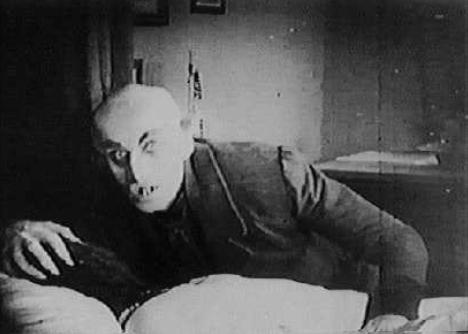
But what I wasn't expecting, and what I found most fascinating, was her interactions with the men of the story, human and inhuman alike.  Dracula's role in this is not the demonic, power-mad, lustful creep of a villain.  Or at least, not for the most part.  There is certainly a fair amount of lust and a good deal of power and submission.  But he bears no resemblance to this guy in looks or manner.   Though he is somewhat...unnatural, I guess you'd say, he's not really the villain of the piece.  Dracula doesn't appear to be all-encompassing evil.  He was terrifying to the Victorians for what he made them confront (lust, mortality), but a thinking, passionate woman need not necessarily fear, so Mina's reaction to him, slowly evolving, intrigued, is appropriate and enjoyable.

All of the domineering men, Drs. Seward and Von Helsinger, Arthur Holmwood/Godalming, even sometimes Mina's husband Jonathan, they're the ones you have to watch out for.  And they're the perfect types of villains to creep the bejeezus out of me, because they are overzealous fools given unchecked power they shouldn't have, over people who have no real defense against them.  Reasons this makes my skin crawl more than monsters under my bed: a) they feel completely justified in the awful things they do, b) their victims have no real recourse, because in the eyes of the law, they are justified, c) just by virtue of being men, they win control, and anything one could try to take control back would further cement their authority and add to their claims that everything they're doing is justified, and d) they are 100% real.  I mean, not these particular characters, of course.  But men like them, Victorian psychiatrists and the like, really did exist and practice horrific things on people whom we would consider completely sane.  It's this horrible vicious circle that meant that any woman in the Victorian era who had the audacity to express a lustful thought was fair game for their experimentation and "curing" and if she dared stand up for herself and fight, it was further proof that she was insane and needed curing.

I think this is where Essex's book shines.  Her human characters can be pretty monstrous, and her portrait of Victorian life and what it meant to be a woman, especially a passionate woman, is very well realized.  You can tell she has done a lot of research and a lot of work to bring Mina's world to life.  Mina herself straddles the line between proper Victorian woman and fully-realized, passionate woman.  She has friends in her life who aren't afraid to express their passions and break the mold, and they are presented in realistic ways, as forward-thinking suffragettes, etc, lending more authenticity to the tale.  Because of them, Mina doesn't feel out of place, and the story doesn't feel false or as unrealistic as it could have, given the setting.  It was reminiscent of the original, but modern and feminist and womanly enough to be believable.  I'm sure Mina would have struggled with some of the things she struggled with, and the feelings and dreams and ordinary experience of sexual awakening and how startling that is for her.  From this aspect, it is very well done.

There were some minor setbacks for me.  There were times, especially in the beginning, when I just wanted the story to move on.  I am not a big fan of excessive description; I am all for setting a scene, and for showing, not telling, but I get more than a little antsy when I feel like useless description has brought the action to a halt.  This is a style preference, and I know there are plenty of readers out there who love to have all the minutia described so that they can really see everything in detail.  But for me, there were times when I wanted to skim or set the book aside because it wasn't getting on with it at a quick enough pace for me.  This was less a problem for me as the story moved along and got into the meat of it, especially once they reached the asylum.

I think there are also those who will be put off by the sexualization of the story.   I never found it to be pornographic per se, but it certainly leans toward the erotic at some points.  I think this is in keeping with the original in a weird way, since it was so very much about repression and forbidden sexuality (ie, everything that screams Victorian...).  While it's never what I would really call explicit, it will most certainly make some people blush; I wouldn't suggest reading it to your grandma.  (Well,  I may have read this to my grandma.  She would have cracked up.)  There were times when everything was a little over the top for me, or a little timed ("It's been X pages, time for some writhing...").  But overall, I found it an interesting way to modernly explore what was actually a sexualized tale à la Victorian morés.

I don't remember Dracula enough to really compare specifics, but I think it's certainly an interesting riff on the story.  Especially to have Mina telling the tale, firmly and with conviction, because Mina was always the focal point for me anyway.  The added gothic elements,  like Mina's lifelong bouts with supernatural and Essex's take on the vampire mythology, as well as the very creepy, very gothic and very authentic use of early psychiatry, really brought the book to another level, and made it creepy in a new, modern way.  (That sounds like a contradiction, that the use of the Victorian beliefs made it creepy in a modern way.  But I think you know what I mean.  I hope.)  It didn't completely sweep me off my feet, but for the most part, I was pretty pleased with Essex's take and the Mina she presents.  If you're not adverse to a little lovin', and you enjoy the gothic ambiance, I'd recommend this one.
Profile Image for M—.
652 reviews111 followers
November 27, 2011
Beach Vacation Read #6: My habit of borrowing any ebook that sounds remotely interesting does not always pay off. DNF.

This is dire. It starts off with high purple prose in its pseudo-Victorian way, and it only gets worse from there. The heroine is sexually assaulted by page 11 and spends half her time during the assault fretting about what other people would think of her morals, in particular what her fiancé would think:
In my mind, I saw Jonathan receive the news, his stricken face turning white, shying away from me in disgust. How could any man, even one as kind as Jonathan, look upon a woman the same way after this kind of shame? (pp. 11-12)
This is a sentiment perhaps appropriate for the historical setting, but I found it appalling to read here. Luckily for the heroine, as the scene progresses, she did not need to fear for she was rescued from her rapist by page 13, still technically a virgin, by the fortuitous intercession of a mysterious and alluring man who then retreats into the night in a paragraph that makes me think the author secretly wanted to write a screenplay instead of a novel:
In the distance, I saw a shiny black coach with unlit lanterns and two strong black steeds to lead it. Thunder crashed again, and lightning darted through the open sky. The horses neighed, one rearing on its hind legs, while the other seemed to call out to the heavens. (pp. 13-14)
The prose actually gets progressively worse, until by page 45 the heroine is describing the joy of discovering masturbation (at age twenty-two, the precocious girl). Which leads me to my killscene for this novel, the line of which I absolutely could not read beyond:
I felt nothing but the wet, creamy, hot walls of my own body. (pp. 45-46)
One thing I have to say about ebooks: The format makes it terribly difficult to leaf through a book in the hope of coming across any scenes to reengage my interest. In lieu of that, I checked some other readers' reviews to see if there was any part of this book worth getting back into and found (aside from the fact I am not the only reader to have found the masturbation scene cringeworthy) a blurb for this book stating it was "the novel for Twilight's grownup fans." — according to Michelle Moran, an author I've never heard of before but am now actively avoiding. Only the fact I was reading this on my precious ereader kept me from flinging the book to the wall in disgust.

Quotes pulled from ISBN 9780385533614.

Beach Vacation Reading List (November 2011)
#1 | Silver Phoenix
#2 | The Steerswoman's Road
#3 | Kraken
#4 | Feed
#5 | Witches Abroad
#6 | Dracula in Love
#7 | A Moveable Feast
#8 | Speed of Dark
Profile Image for Willow .
263 reviews119 followers
November 9, 2012
I think Karen Essex has some beautiful prose. She has a sensual, seductive, and wonderfully descriptive way of writing that lured me in and made me think this would be a wonderful book. I love gothic books, and “Dracula in Love” is definitely that.

The problem with this book is there isn’t much of Dracula in it. Two-hundred words in, and he still hadn’t made much of an appearance The book wasn’t really about him, or his love. Yes, I got caught up in the rather fascinating story about the horror of hysteria and how women could be so easily incarcerated in mental hospitals, but I feel like if Essex wanted to write about that, she shouldn’t have dragged all the characters from Dracula into her story. People who are attracted to Dracula usually want to read about vampires, blood and hinted at sex, and there just isn’t enough of that in this book.

Anyway, I was still happily reading along, when all of sudden this book takes a swan dive into WTF. Talk about a lame ending. It was too rushed, too unbelievable, and had me rolling my eyes. It was almost like Essex was getting to the end and she realized, oops, I need to put Dracula in my story. Then she rushed through this implausible narration that I found I didn’t care about. For a book to start off so well, I thought it ended badly. I still will give the book three stars though. :D


Profile Image for Doria.
427 reviews28 followers
November 2, 2010
What an awful book. I thought, having read Twilight, that the reading market was sated - no, bloated - with fluff about fey blood-suckers and their fetchingly helpless "prey" (adoring idiot-girls with poor judgment). Sadly I was wrong, as this latest offering proved. As usual with these latest examples of the airport novel genre, the writing is just satisfactory enough to offer up a hope - soon dashed - that the book in question will offer some point of originality, perhaps in character development, or striking plot twist, or some such literary tidbit. Nope.

However, of all the injuries inflicted upon readers' sensibilities, the egregious use of the name "Dracula" is probably the worst slap in the face that author Essex inflicts upon her readers. I took offense at her abuse of the trust and hope that we readers would naturally place in anyone who dares to wield the title of the great and venerable Vampyr. Her ridiculous assertion - that this beloved and feared Dracula is not what he seems to be but something, er, else made me laugh out loud when I got to that "big exciting plot twist" that she had been so carefully leading up to. I'll save you the time you might otherwise waste in reading her book: her "dracula" (the lower case is intentional on my part) is a fairy.

Yes, you read that right, dracula is a one of the Little People, who flit about and cast spells, and marry mortals from time to time, and sort of like blood, but that isn't really necessary to their survival, but it's sort of nice for when they and their mortals engage in - sex? what is it that they do during those tiresome hot 'n heavy scenes ? impenetrable as far as I could tell. Blood is taken and sometimes exchanged, but not always because it can be toxic for the mortals, but sort of not, and WHAT IS SHE TALKING ABOUT, THIS MAKES NO SENSE AND IT IS STUPID!!!!! Sorry for the outburst, but reading this book was an exercise in futility and frustration. Essex's dracula doesn't sparkle, but he is just as far from being a vampire as was Edward Cullen. He scared me about as much as a day-old kitten, and had somewhat less personality. He loves her, he withdraws from her emotionally, he hates her 'cause she's pregnant and doesn't know it, (a pregnant sort-of-vampire? again??) but he wants to spend eternity with her, but only after she reincarnates after she dies (but wait, I thought she was an immortal vampire? sort of?), but oops now there's a fight scene, etc. Oh, enough already. Nobody buys this nonsense! And not because it's fiction, but because it is implausible and contrived. There's a difference.

I need to speak out about the recent proliferation of watered-down weak-tea books claiming to be about vampires. Enough already. Enough with the semi-effeminate pretty boy vampires who love stupid girls. Enough with vampires who aren't really vampires, who smell sweet and taste like strawberries, and don't want to hurt you because you are so fragile and they are so testosterone-powerful (despite the lack of facial hair). People, I'm only going to repeat this one more time: vampires are undead, terrifying, and smell like the grave. They are full of blood that they have sucked out of some poor person's body. Not out of philosophical angst, or a moody adolescent snit. They steal the blood of the living because they have an insatiable thirst for our blood, and an overwhelming instinct to survive, to make it through one more horrible undead night, no matter what the cost to humanity. Let's not over-romanticize this, shall we? Let's keep it scary, and - within the realm of fiction writing - let's keep it real.

Oh, another thing that I despised about "Dracula in Love" is the stomach-turning rape scene at the beginning of the book, a horribly commonplace occurrence in books of poor quality, where the author takes desperate measures to shock and appall and hold onto her readers, in a transparent attempt to make them feel sympathy and pity for her main female protagonist. Why do so many female writers of tepid fiction write these elaborate scenes of female violation and degradation, followed by interminable pages in which the female's helplessness is countered or "cured" by some kind of supernatural male solution to all her problems? No wait, please don't answer that.

As usual, I stuck it through, and finished the book, a kind of personal honor code of mine, whereby I feel compelled to finish a book that I dislike, if only to better criticize it when I am through reading it. But it wasn't until the end, when I read Essex's parting shot at Bram Stoker - who is dead and cannot defend himself, what cowardice!!! - that I got just plain angry. She says, and I quote:

"I do not know what will become of [Bram Stoker's] story. Thus far, despite its sensational tone and its gripping narrative, it has failed to sell many copies or capture critical acclaim. Like almost all works of fiction, I am sure that it will be read by a few, and in the coming years, all copies not thrown out with the rubbish or lost in fires or other disasters, will rot in musty libraries until the shelves are purged to make way for newer and more relevant stories."

The irony of this insult is that it is delivered by an author whose work cannot come close to that of Stoker's, either for literary excellence or sheer terrifying suspenseful drama. I strongly encourage readers to a) skip "Dracula in Love" and b) hie themselves to the "musty libraries" or bookstores that Essex's main character derides so unconvincingly, get a copy of Stoker's Dracula, and read it cover to cover. I promise you you won't be disappointed, the way I was when I read "Dracula in love". And, dear fellow readers, please let's all agree to demand - and read - higher quality vampire literature in the future. It's time I reread Interview With A Vampire, and Dracula, and any number of the other well-written vampire novels out there, just to clear the bad taste of strawberry-tasting blood out of my mouth.

This entire review has been hidden because of spoilers.
Profile Image for Amy.
Author 1 book37 followers
August 8, 2011
The dustcover of this book promises "Karen Essex breathes startling new life into the characters of Bram Stoker's Dracula." While it's true her novel is a retelling of the Dracula story from Mina Murray's point of view, there's nothing startling or lively about her characters.

I was intrigued at first, reading through a few chapters with hopeful enthusiasm. Fifty pages in, I was both disatisfied and bored. The only thing 'startling' about the book were a few egregious sexual scenes and the complete absence of Essex's Dracula character.

The author's characterization of the main character, Mina Murray, was downright maddening. She vacillated so swiftly and dramatically, a reader could get motion sickness: Mina was strong! No, she was weak, and cried, and had to be carried (a lot). She had decided! No, she had changed her mind - sometimes in the same paragraph. She raged and fought, she wept and sucuumbed.

The whole premise of this book is that Dracula had not just desired Mina, but had loved her. Essex gives us nothing in her characterization of the 'heroine' to love. Frankly, I disliked Mina from the beginning and learned to loathe her by the end. And although Essex insists that the characters of Count Dracula and Mina Murray love each other, there was nothing in their interaction that convinced me of the fact. I saw lust and desire, but nothing of a more tender nature (well, except for the parts in which he carried her, and frankly, I think that was out of an impatient need to get to the next part of the story).

Dracula was no better presented. He wasn't just brooding, he was pouty. He would MAKE Mina remember their love across time. No wait, he would be patient and let her remember on her own. The only thing Essex's characters did consistently was change their minds.

I'm not sure how or why I finished reading this book. Normally, any reading material that made me this frustrated would have been abandoned halfway through. Essex had a rather complicated sub-plot regarding Mina Murray's origins, however, and perhaps I was curious to see where she might take it. Like Essex's characterization, this subplot could have been written plausibly, but in the end, fell short, made me roll my eyes, and think 'Oh, puh-lease.'.

I finished Dracula in Love at 1am last night, with a muttered, "Well, that was a waste of my time." and promptly fell asleep. It didn't thrill or frighten me. It didn't seduce or titillate me. All I can say is, I'm glad I got this from the library rather than spending my hard earned money on it.
Profile Image for Theresa.
423 reviews53 followers
July 21, 2011
Everyone remembers Bram Stoker's "Dracula". It was a tale of horror and everyone knew that vampires were the "bad guys". But were they? Karen Essex takes Stoker's tale and gives it a twist. Following the same timeline, using the same characters and written in much of the same format "Dracula in Love" gives a total different view.

In the Prologue of the book, Mina Murray Harker states:

"Unlike most people whose lives remain private, my story has been written by another, sold for money and offered to the public for entertainment. The author of the fiction claims to be above reproach because his records are "exactly contemporary". But these "records" are falsified documents, based on the the lies of a cabal of murderers desperate to conceal their dark deeds."


She then continues on with the "real" story. The story of her life, her engagement, Lucy, the doctors, and of course, The Count. This story is a tale of erotic obsession and a romantic love that goes deep - centuries deep. It is also a tale of horror and sadness and a realization that all is not as it seems.

I adored the original "Dracula" and really was wondering how Ms. Essex was going to pull this one off. Ah, she did an impeccable job making me wonder and feel that her story was really the truth and the other was just a fabricated lie to make money. Oh, yes. Mina's story was powerful and captivating.

I took my time reading this novel. It screamed that it needed to be savored, and savor it I did. This book will be one that will stick with me for a while. Being a Dracula fan (it's one of my favorites) this novel shook and twisted my views of many of the characters. It now feels like it belongs with the original story - like the flip side of the coin.

If you haven't read Stoker's "Dracula", don't worry. You won't feel you are missing a thing, but you will most likely want to read it after you've finished "Dracula in Love" because you'll need to know what is in the original story. If you have read and enjoyed Stoker's Dracula, you will want to read this version!

This is one of my favorite reads this year! Highly recommended.

Parental warning: Contains some descriptive sexual content.
Profile Image for Deanna.
311 reviews25 followers
October 7, 2010
My eyes were riveted to the pages throughout the entire read. Does that give you clue as to how much I liked this book? It ought to, but just in case it did not, I loved this story. I feel a tad guilty that I liked this book far better than Stoker’s Dracula, as if I am not literary enough for Stoker, but whatever, I cannot deny the trance that Dracula in Love put over me. I cannot deny that it did indeed captivate and keep me throughout the whole story. It sucked me into the story, and the lives of the characters in a way that Stoker’s Dracula did not. So be it.


Yes, Dracula in Love is based off a Bram Stoker’s Dracula. Yes, that is true, and for me it worked. It worked really good. Even though this story worked for me, I do have a feeling for all you Dracula purists, this book will just not do. For me though, I do believe that the author did a fabulous job with staying true to the essence, and maintaining many aspects of Stoker’s Dracula while at that same time taking the freedom to change context from which the story derives, to change the relationships, and credibility.

Right from the beginning, the prologue to be precise, the author puts the story into context. She confronts Stoker’s Dracula by having Mina address his version; account of details. Mina makes it clear, that his version is not accurate and because of that she has written her memoir. Stoker is woven into the story in subtle ways to show how he obtained his inaccurate version of events. The building of this context gave Dracula in Love credibility…believability.

For Full Review: Polishing Mud Balls
Profile Image for Geraldine O'Hagan.
134 reviews168 followers
June 6, 2019
This is a terrible book. Not only is it derivative in concept and lacking in style, but it's also incredibly lazy. If you're going to write a faux-Victorian novel then I would think it wise to do at least some very basic research first, in order that it isn't full of glaring errors. With the best will in the world, even if the book had been otherwise fantastic it would have been hard not to laugh at an Anglo-Irish Victorian lady shouting at Dracula "Quit following me!", or the sight of vultures swooping over Whitby going unremarked.

None of the characters seem even half-way believable as either Victorians or people. Plus, having waited half the novel for Dracula to appear he turns out to be an ineffectual, sulking bore. Not as anticlimactic as The Historian (Elizabeth Kostova), nor, mercifully, as long. Don't take that as a recommendation though.

Every idea in this book has been done to death elsewhere, and almost certainly done better. A rethinking of Mina Harker? Try 'The League of Extraordinary Gentlemen' (Alan Moore). Mina and Dracula's romance? Try 'Francis Ford Coppola's Bram Stoker's Dracula', if you can stomach Keanu Reeves' "acting". Victorian Mental Institutes/Prisons? Try 'Fingersmith'/'Affinity' (Sarah Waters). Limitations of a Victorian Woman's Life? Try 'The French Lieutenant's Woman' (John Fowles), or an original text like 'The Woman in White' (Wilkie Collins). That's just off the top of my head. There are so many books I would recommend that you read before this; I couldn't possibly list them all.

Summary : A careless and dull genre rip-off which is neither intelligent nor entertaining, and at times is almost embarrassingly bad.
Profile Image for Staci.
1,403 reviews20 followers
September 8, 2010

About: A new take on Bramstoker's Dracula but told from the POV of Mina.

Descriptive Words: compelling, romantic, sexy, seductive....

Location or characters you met:

* Mina: I liked Mina when I watched the movie "Bramstoker's Dracula" and honestly it was Winona Ryder's face that I envisioned as I read this story. She is a character that I could relate to. She's someone who wants to please others, doesn't want anyone to think ill of her, yet she has this dark side that she's reluctant to admit to or even to talk about with her closest friends.
* The Dark Prince : Call me twisted, but I fell in love with Dracula a bit in this book. He has waited hundreds of years to be with Mina and yet, he doesn't force her to be with him. He wants everything to be her choice and is willing to accept her wishes, even though some of them will break his heart...again.
* Jonathan: I thought he was a namby-pamby...(is that a word?) What a weak man! Some of the things that he allowed to happen to Mina made me want to slap him. And the fact that he had carnal knowledge of more than one woman just meant that they (the temptress) were sent from the devil. Now, if a woman wanted to liberate her sexuality...watch out because they locked them up in the asylum for being nymphomaniacs!
* Dr. Von Helsinger and his gang of men- egomaniacs, control freaks, and men who were afraid of strong women.

What worked for me:

* Reading the story from Mina's point-of-view. This was brilliant and I couldn't help but feel sympathy for her and also I was cheering her on to be with Dracula.
* The sex scenes. I will admit to re-reading them more than once! Holy smokes were they scorching!
* I felt immense empathy for Dracula and never really thought of him as a monster. I guess that would probably mean I would let him suck my blood!!!!
* Dark, gothic, and Victorian- what more could you ask for?
* Never a dull moment...this was a page-turner and I couldn't put it down!

What didn't work for me:

* I honestly enjoyed everything about this book. I have nothing bad to say about my reading experience.

Recommend? Yes! For those who don't care for explicit sex scenes then you may want me to black out those passages for you, but if you're a fan of Dracula and find yourself intrigued by a GROWN-UP version of vampire love....then look no further because this is a great read!


My Rating: 4.5/5
Profile Image for Kristina Coop-a-Loop.
1,299 reviews558 followers
October 6, 2011
This was an odd book. I read the author notes and the author wanted to explore the Dracula story from the woman's point of view because apparently Bram Stoker portrays women in a bad light in his novel. I have not read Bram Stoker's Dracula so I cannot comment on that. I will admit to skimming much of the book and only stopping to read what interested me. I found the endless details of Min's life as a school teacher boring and her friends boring and the whole interlude with Lucy and her secret lover also not interesting. Because the book is titled Dracula in Love, I wanted to read about Dracula being in love, not all the other stuff. That was the compelling part of the book. I was intrigued by the notion that Min is being reborn and Dracula has been waiting quite a long time (centuries) for her to be immortal with him. The whole "Sidhe" aspect was weird, but the whole book is freaking odd so I went with it. The last third of the book was most entertaining to me, learning about Dracula and Min's long history together. The subplots (the women in the asylum, Kate's journalist career) were of no interest to me. Ironic considering the author added those details to balance out Bram Stoker's portrayal of women at that time. Ah well. I wouldn't read the book again or any other works by this author. I found her writing style fussy and annoying. This was a curiosity read for me--I'd heard about this book somewhere (probably NPR, they have a knack for reviewing odd books. I picked up Nicholson Baker's The Fermata because of an enthusiastic NPR review and found it not funny and annoying--and I have a very good sense of humor and a dirty mind!--but the book just wasn't to my taste)and wanted to give it a go. I must continue to express a big ole thank you to the inter-library loan system, otherwise I would have had to buy this book in order to read it.
Profile Image for Svetlana Kovalkova-McKenna.
Author 6 books27 followers
June 26, 2010
Ok, once I got past a nasty near-rape scene that opens the book, but does not seem to serve any other purpose other than to shock and disgust the reader, I was determined to read the book and give it a chance, because the book description promised hours of great read. Well, I should have quit right there. I do not think Mina and Dracula as a “fairies” angle worked for this particular story. There is so much thrown into the plot that clashes together: women’s rights, history of psychiatry, medicine, Avalon, Sidhe, Arthurian angle and more. It does not work well together at all, and the sex scenes are kind of nasty. I just had to mention that, because I was so put off by them and failed to understand how it was suppose to serve the plot.The author pretty much took apart Bram Stoker’s novel “Dracula” and gave a drastically different explanation to everything that happened in it. The result is a badly militated “Dracula” that did not transform into a new stand alone novel for the author. Reads like poorly thrown together fan fiction.
If anyone wants to read a fabulous retelling of “Dracula” that you won’t be able to put down or guess what will happen next, I would recommend “Historian” by E.Kostova. It is a book that uses the story of Dracula to spin an amazing new look into relationship between Mina and Dracula, instead of just twisting and borrowing non-stop from Stoker.
Profile Image for Sheila.
1,143 reviews113 followers
September 3, 2015
I shouldn't like this so well; Dracula is supposed to be a sexy alpha male but he struck me as a whining, sulking man-child. Still, I'm a sucker for gothic trappings, and the mixture of vampire and lore was interesting. I thought the section set in the was chilling--probably because of its historical accuracy.
Profile Image for Sarah.
232 reviews17 followers
December 19, 2011
Dracula in Love claims to be a retelling of the Mina-Dracula relationship from Bram Stoker's classic novel, Dracula. However, the story told by Essex is at best misleading and at worse implausible and annoying. Here's why:

1. The characters were inconsistent. Their personalities were all over the place, not a single one of them constant.

Jonathan Harker was a good man, then a bad man, then a good man. Morris Quince was a rotten scoundrel who wasn't.

The doctors from the lunatic asylum who treated women for sexual promiscuity were insane sexual deviates. The irony is lossed on no one, I'm sure. I'm still trying to figure out how this fits into the story as a whole, though.

Let us not forget the supposed "heroine" of the story, Mina Murray Harker, who has this unenviable ability to change her mind in the most drastic and dramatic fashion. I found it impossible to like her.

2. The connection between the characters was difficult to fathom, on so many levels. Many of the events that took place in Dracula in Love simply do not make sense when considered in light of the story as a whole. At the time, I quite enjoyed Essex's descriptions of the asylum, but in retrospect I struggle with understanding its purpose.

3. Despite the title, the Dark Prince himself (that is, Dracula) is almost completely absent for most of the book. He turns up for the last quarter, but then his role in the story is annoyingly and frustratingly told predominantly through dialogue. I couldn't help but feel that the author was in a hurry to finish, either to meet a deadline or simply because she could no longer be bothered with the story. A pity.

4. The reincarnated Sidhe concept had potential: It was a neat idea, but poorly executed. I think Essex could have achieved more with this storyline had she not waffled on and got distracted by other things earlier on in the piece. This portion of the story felt rushed and confusing. I think it was supposed to be that awe-inspiring supernatural twist to the story, but the author's inability to think it through ensured it completely fell flat.

5. The author seems to be lacking focus as the book has far too much filler, making the plot and characters seem inconsistent and undeveloped, especially at the end. Half the time I wasn't even sure I knew what she was talking about! Not even the ending was redeeming: Like most of the story, it was simply confusing and implausible.

6. I had expected a supernatural love story set during one of my favourite periods in history (Victorian England), but what I got instead was nothing more than misleading erotica: Dracula in Love contained a whole lot of lust, but little Dracula and absolutely no love whatsoever.

A disappointing read overall.
Profile Image for Sandi.
510 reviews317 followers
September 6, 2011
There seem to be quite a few books about Count Dracula lately. Maybe the popularity of vampires is making people re-visit the original popular vampire. Dracula in Love is far, far better than Dracula the Un-Dead and less boring than The Historian. It's got plenty of mildly graphic sex and sexual fantasy for those who like that kind of thing, but isn't so over the top that it's gulp-inducing for those who don't. My biggest complaint is the way it twists Bram Stoker's story and puts a completely ridiculous interpretation on Dracula's origins and why he's obsessed with Mina. It starts out pretty good, but really stretched my suspension of disbelief towards the end.

Fortunately, I won this book through FirstReads because it really would have been only worth the price of a mass-market paperback.
Profile Image for Lydia Presley.
1,387 reviews113 followers
July 23, 2010
Word of warning - do not read this book when you are out say.. babysitting and have to leave the house at 11PM.

I jumped at every. little. noise.

That said... Wow. This was quite the read. Michelle Moran, on the cover, dubs this the "Twilight for adults" and in a way, she's right. Only in this case, Mina.. as the new Bella, is not quite so chaste.

Wow, I'm still trying to wrap my head around this book.

Okay, so for those of you younger readers, this is really, really steamy in parts. Don't fall for the Twilight hook - this is definitely not as tame as Twilight (those are words I never thought I might say). But for those of you adults who want a "real" vampire story, one that includes dark, mysterious characters and focuses around the Sidhe and the old stories of powerful female vampires - yeah this is the book for you.

Dark, spooky, horrifying (blood transfusions and strait-jackets anyone?) and filled with a romance that will make you shiver and look over your shoulder.
Profile Image for Flora Smith.
581 reviews45 followers
July 30, 2011
This book tells the story of Dracula from Mina Harker's perspective. As the story unfolds you see the connection between Mina and the Count unfold from the time she was little til he revealed himself when she was older. We learn of their life together not only in this time setting but also in the past. How they have been connected over many lifetimes as soul mates. It was a love that didn't know the boundaries of time. We also see the cultural changes taking place with women during this time in history as women were fighting for their rights and others not wishing for change. And how women were treated that had normal sexual desires. Many were placed in asylums and treated cruely as men tried to subdue them. All in all this was a great read that I found hard to put down. I look forward to reading this one again.
1,925 reviews11 followers
July 17, 2011
Truly enjoyed this read. At first I was unsure as the book seemed to be a bit slow getting started but as the story unfolded I found myself eagerly turning the pages. This tale encourages me to return to Dracula by Bram Stoker which I put down after about 100 pages because I couldn't get into it and/or my imagination was getting the best of me. Or, perhaps I just wasn't in the mood for it. At any rate Karen Essex explains how she came to be interested in Mina enough to write this tale. She found the cultural changes that were occurring during that period intriguing and probed the thoughts and actions of women reaching out to secure equality in society as well as those inhibited by their traditionally accepted roles. Good, good read!
Profile Image for Lady Alexandrine.
326 reviews84 followers
April 26, 2019
Hmmm.... I enjoyed this book very much most of the time. The idea to retold the famous "Dracula" from a woman's perspective was done extremely well. When I read the original Bram Stoker's novel I was beyond shocked by how women were depicted there, their submissive role and constant bragging about the greatness of men as opposed to the weakness of women's psyche, physical constitution and mind. Oh, really? I wanted to ask the author with sarcasm, seeing things very differently from my perspective from the XXI century. But I don't hold the author's worldview against him. He was from a different time, his opinions were commonplace in Victorian England and hardly surprising for his contemporaries.

"Dracula in Love" is told from the perspective of Mina Harker and it is a totally different story that I read in "Dracula". First of all, it is not so obvious what and who we should fear. I found the suffocating rules of society, rigid boundaries of women's behaviour and limitations of propriety much more scary, than a horde of bloodthirsty vampires. The author shows the power of hidden, repulsed desire, sexual frustration and how they could govern the human behaviour.

Mina is confused most of the time, not knowing what is real and scared of the dark stranger, that is following her and calling to her. She is trying to lead a normal life and at the beginning she seems successful. Then a tragedy strikes and her young friend Lucy dies. Mina is determined to uncover the truth about Lucy's death, even if it means going to the asylum, where her friend was treated and died. Little does she know that she will soon experience the tender mercies there first hand. The novel takes place at different locations and the best part happens in the mental asylum. It was beyond scary! To be at the mercy of clueless, ignorant physicians, who want to experiment with blood...

I am not sure I liked the ending of the novel. It seemed a little rushed and it is hard to believe that everything fell so neatly into place. I would also prefer Dracula to remain mysterious and elusive till the end. When he finally explains who he is, it is like he can't stop talking... The greater mystery the more fascinating it seems, so I am not sure so much explaining was necessary.

Overall, it is an intriguing novel. The author offers a fascinating view of the Victorian fears and frustrations, that led to the creation of "Dracula".
Profile Image for Circa Girl.
516 reviews13 followers
May 1, 2019
The title doesn't fit and I feel like there's a darker, moodier cover out there that could have been used because the story inside focuses more on Mina's personal sexual awakening and her coming into her true nature of power and agency, with major creative drifts from the original story that reveal the misogynistic fears behind a lot of Helsing and his cast of masculine "heroes" motivations. Dracula makes a couple of brief appearances in the story, but he is largely a catalyst for Mina's journey of self discovery rather than a equal protagonist. So if you're going into this for steamy, blood play romance and vampire sexy times, it could be a disappointing read. Even the few times they couple up, the connection between them comes off as more conceptual or borderline transcendent of description that makes any sense. And I can respect that choice of intangible development for what are supposed to be a species of eternal creatures with god like senses and wisdom.

I appreciate that everything big or small in the story is resolved and eventually has a special place in the multiple twists. There's no fluff or wasted scenes, even in the multiple instances of folklore imposed on Mina. I also like the addition of the tomboyish Katie Reed journalist character and how Mina's origin story plays out to make her way more powerful, interesting and complicated than Dracula. The only issue I take with it is the cringy ending that went against literally everything Mina's journey as a character was supposed to accomplish. I would've even accepted that decision had it led to a more resolutely tragic demise or sacrifice, but instead it is such a lackluster nothing turn out for everyone, including Dracula. Yeah, they're not "finished" or whatever but it kind of insinuates that they are trapped in a cycle of the same mistakes.

Also, MAJOR spoiler here, and if I might indulge a dumb rant - would it really have been so hard for Mina to raise her son with Dracula and just have Jonathan keep him on the weekends or whatever like most separated families? I know that would have been outrageous for her time and her moral sensibilities, but hadn't she already kind of left those considerations behind when she accepted the reality of her nature and started screwing Dracula? Smh
Profile Image for Rachel.
218 reviews240 followers
July 2, 2011
In the author's note to Dracula in Love, Karen Essex asks her readers to take the book "in the spirit of fun and adventure in which it was written". Which I do - it is a clever book, better written than I could have expected, and very thoughtful. I appreciate it - I appreciate what Essex is doing, the very intelligent way in which she is lovingly dialoguing with her source text. This is a legitimately good novel, despite the ill-suited Proust allusion of the title which makes it sound like a cheap romance, and a much warranted critique of Stoker. But I have some problems with it, problems that I have with a great deal of the modern 'reclaiming' of 18th and 19th century Gothic texts. And I am going to voice them, with the assurance that I am, at the same time, taking the book in the spirit in which it was meant.

Dracula in Love is a feminist retelling - or, rather, rewriting - of the story of Dracula, and a good one. It teases out the misogyny and condescension implicit in the original book to create a reclaimed, feminist gothic in which the threat to Mina and Lucy comes, not from some supernatural stranger in the dark night, but from the very husbands and doctors who name themselves their protectors. This is not an unknown trope - the genre-changing 1979 Frank Langella film of Dracula did a similar thing in a more rudimentary, less developed form. This book does it intelligently, using the real horrors of asylum treatments for hysterical women to turn Van Helsing (he of the canonically bizarre and here terrifying dictum "A brave man's blood is the best thing on this earth when a woman is in trouble") into a mad eugenicist, Seward into a lecherous tyrant, and Holmwood into a callous aristocrat desiring only wealth. All of that - brilliant inversion of the original story. I approve, though wonder if perhaps Essex's point might have been better served by removing the supernatural aspect of the story entirely and making the men's fears of vampirism entirely unjustified.

Because here is where my problem with the novel starts. Essex tries, essentially, to have everything - a biting rewriting of a flawed source text and a lush Victorian gothic love story. Like probably dozens of directors and novelists and fan fiction authors before here, Essex turns the relationship between Dracula and Mina consensual, into a love story that can cross centuries. Essex makes the threat that Helsing and Seward attempt to protect their women from not that of sexual trauma but of sexual liberation. Essex's Mina calls Dracula to her with the unconscious power of her desire - her Lucy is confined and deemed a hysteric for her consensual affair with a rewritten Quincey Morris. There is nothing for Essex's characters to fear in the night and the mist, only exquisite and joyously welcomed pleasure-pain.

And while I like reclaiming, I like centering a story on the agency of a woman's desire, there is something fundamentally problematic about turning a rape narrative into a love story. And I don't know why no one ever brings this up.

Because I believe that, while the gothic novels of the eighteenth and nineteenth centuries, including Dracula, are about a lot of things (xenophobia, the upholding of sexual/social mores, class issues), at their core, many them are talking about trauma. And since they seem to have been one of the only avenues open to both men and women for the exploration of this issue, eliminating that aspect from them closes a lot of the paths we have for discovering what the men and women of these times actually feared.

And I've said this before and will say it again, but one of the things that will always make me love Dracula, despite all it's problems, is how, in it, Mina is allowed to be traumatized and survive.

This is radical. It doesn't look radical to us now (though how many rape victims in fiction and film and television still die?), but it is. A hundred years before, Clarissa was radical for allowing its heroine to be raped and maintain her selfhood. She died, it's true, but not before escaping Lovelace's control and making detailed instructions for how she should be buried, what should be written on her tomb, who should be allowed access to her body. And these instructions were obeyed. And this was radical. It was radical, even, that she didn't marry her abuser, and I know this may be shocking to you naive modern people, but this was the expectation. For not doing this, Clarissa showed incredible willpower, incredible sense of self.

And then, years pass, and Mina Harker undergoes a symbolic rape. And she doesn't die. She views herself as defiled, yes, 'unclean', she weeps at the thought of tainting her husband with her touch. But rape victims do the same thing now, and the burning of the holy wafer on Mina's forehead is only a literalization of the psychological effects that often go with rape. No, Mina fights. She is weak, and frightened, cursed with a mental connection to her attacker, but she fights to destroy him. And the men around her stand behind her, even with their condescension and casual misogyny. They never say it's her fault, they never waver in their devotion. And, eventually, Mina and her supporters are able to destroy her attacker, even though he is a rich and powerful aristocrat who, in the world outside the gothic novel, probably would never even be jailed for what he had done. Justice is served, and Mina acts as a participating agent in that justice.

Now, why aren't we telling that story?

The fact that Essex doesn't tell it wouldn't bother me if it were not for the fact that, really, no one else is either. I got into an argument with a woman online once who insisted that Dracula, in the original novel, liberates Mina and Lucy. I talked about the lack of consent, how what he does is symbolic rape, and she just kept insisting that being vampires gave Mina and Lucy more power and self-governance than they had as Victorian women. And eventually I just got frustrated and came to this statement - You can't liberate someone by violating them. It just doesn't work.

Essex doesn't have quite that problem - she emphasizes throughout the book Mina and Lucy's enthusiastic consent. But her Dracula still does a hell of a lot of commanding, and her often used trope of the body having one will and the mind another can too often, in other contexts, be a simple mask for rape apology. I also objected to her version of Dracula's vampire wives, who were far too close to the typical stereotype of the demonic, sexually insatiable woman to feel appropriate in the story she was trying to tell. Why not more sisterhood? Why this essentially patriarchal emphasis on jealousy and fidelity?

Anyway. This book was better than I expected and I am glad I read it. That's the only reason I'm being so hard on it.
Profile Image for Elizabeth ♛Smart Girls Love Trashy Books♛ .
244 reviews119 followers
June 4, 2017
-POTENTIAL SPOILERS-

Well, this was certainly unexpected. The book got a lot of bad and mediocre reviews, so naturally, I assumed I would love this book. I didn't. I don't hate the book, but it failed to really leave much of an impact on me.

There were PARTS of the book I liked. If just those parts were combined together, then there would probably be a really good story. I liked the parts where it actually followed the events of the book, except from Mina's perspective. I liked how it was written in the style of the original book too-in the form of a diary and several letters. I liked the overall gothic atmosphere of it.

However, a lot of it either felt rushed or way too slow-paced. There were many things that I wanted to have explored more, like Mina's time in the asylum, or her life with Jonathan after all these events were over. But all of that was fairly rushed over.

I wasn't too bothered with Mina becoming some sort of weird fairy/vampire hybrid, but I thought Dracula himself was a bit weird. The book never flat-out said whether he was a vampire or not, and I think he was intended to be handsome, but he reminded me too much of Alucard from Hellsing appearance-wise, and I don't think he's very handsome.

The whole 'reincarnated lovers' plotline also reminded me of Bram Stoker's Dracula, the one from the 90's, which also reminded me that I need to watch that movie again...

Overall, it wasn't a bad novel, but I also don't think the author fully realized what she intended to write either. I'm honestly not even sure if I would recommend this one or not. I suppose if any part of it sounds intriguing, then check it out, but don't come into it expecting a fully-formed novel.
Profile Image for ALPHAreader.
1,271 reviews
December 27, 2010
Historical novelist extraordinaire, Karen Essex, takes Stoker’s story and infuses new life into the old work.

The story opens with a promise from Mina Harker to the reader. The year is 1897, and in the wake of Bram Stoker’s ‘Dracula’ story being released, Mina wants to set the record straight and tell her side of events, lest Stoker’s fanciful imagination carry the truth away with time and embellishment. . .

The year is 1890, and Mina Murray (soon to be Harker) awaits the return of her fiancée from his work with an Austrian Count in Styria. Alone and pining for Jonathan, Mina starts to have wild and wonderful dreams – dreams of a strange man who she has never forgotten, but cannot remember. He is a man from her childhood, one who watched over her and kept her safe. Now he has returned to make appearances in her most carnal dreams. . . even when she ventures to Whitby and calls upon her dear friend, Lucy Westenra, the handsome stranger follows Mina’s dreams and waking fantasies.

We all know the story of Bram Stoker’s ‘Dracula’, whether from watching the various adaptations or reading the cliff-notes. The Irishman’s story is even more widely known today when the paranormal romance genre has gripped the hearts and imaginations of reader’s everywhere, and people venture back to the beginning of the vampire legend.

Karen Essex has imbued Stoker’s original story with fascinating folklore and heightened sensuality. Our protagonist is Mina Murray – an Irish orphan working as a teacher at a Ladies college when her life tumbles out of her control. With her fiancée’s absence comes hidden memories from Mina’s childhood, a sensuous stranger she can’t stop yearning for and secrets within herself she can no longer deny.

I will warn that a good portion of the book is in suspense as we await Mina coming face-to-face with the Count. She is visited by him in her dreams and remembers him from her past. . . but the first 100 pages or so details Mina awaiting Jonathan Harker’s return and her repressed London life. Essex imbues the first half of the novel with delicious suspense that reads like foreplay for Mina and Dracula’s anticipated meeting. . .

And when Mina does finally meet her monster, it is spectacular.

The real focus of this retelling is Mina herself, and Essex writing new and fascinating dimensions to the unwitting heroine of Stoker’s tale. And so, a big focus of ‘Dracula in Love’ is Essex explaining and deepening the connection between the Count and Mina – the monster and his muse. Essex does this by weaving a tale of reincarnated love across time and space, as Dracula lives his seven hundred years searching for his true love as she is continually reborn.

“I am dying,” I said, the words staggering out of my mouth.
“No, you are dying into me. And if you die into me again and again, I promise you will live forever. Do you want to live forever?”
“I do, my love, I do. I want to be with you forever.”
“You will not turn me away again? You will not sentence me to enduring your cycles of birth and death while I wait for you to remember who and what you are?”
“No, my love, I am yours.”


Essex is writing ‘Dracula in Love’ in the wake of renewed fascination with vampirism and Gothicism. So Mina and the Count’s love story is aptly sensual and daring – spread across different folklores and era’s to become something truly beautiful and heartrending.

As fascinating and sexy as Mina and Dracula’s love affair is, equally enlightening is Essex’s reimagining of other aspects of Stoker’s tale. She writes a number of checks and balances for the ‘Dracula’ story – at once shedding a more factual light on certain parts (like the real reason for Lucy Westenra’s wasting away) while also writing deeply disturbing explanations for characters like Dr. Von Helsinger, a psychiatrist with an unhealthy obsession with vampirism and medical treatments involving blood. This is the real Gothicism in Essex’s tale – the true darkness of Stoker’s original lies more in the world of mortal men than with the monster. Astounding.

I do wish that Essex had more fun with the ending, and given herself more freedom from Bram Stoker. Essex had done such a wonderful job of infusing the old ‘Dracula’ story with new dimensions and fanciful layers. Throughout the book she enlightens the character of Mina Murray and adds a sensual depth to her relationship with the fabled monster, Dracula. But then the ending, in complete contradiction to Essex’s previous character building, sticks to the Bram Stoker original. After heightening and romanticizing the love between Mina and the Count, and sullying Jonathan Harker’s reputation, the ending just didn’t ring true to all the reimagining that had come before it. Even more so when you think that Karen Essex is writing her novel in the aftermath of ‘Twilight’, ‘True Blood’ and Edward Cullen.

We are not a Victorian audience to anticipate a happy ending of good triumphing over the caricature monster evil. . . Indeed, I could not fathom Mina not choosing the monster over the mortal man. She and the Count had such a heartbreakingly epic romance, they reached such heights of sensuality and love that when Mina did choose Jonathan over him – I wasn’t buying it. This was the one aspect of Bram Stoker’s original story that I hoped Karen Essex would get carried away with. After she illuminated Dracula and Mina’s love affair, and ridiculed Jonathan Harker throughout the book – there was just no conceivable way that, as a reader, I could bite my tongue and accept that Mina would choose the ordinary over the extraordinary.

I sat up, and he sat with me, arms around me. We said nothing for a long while but simply held each other. I stared into the flames as they resurrected images and memories from my first days with him in this very room so many lifetimes ago. There is no explanation for love; no spoken words compare with its silent exhilaration. If that was true of the ordinary love between two mortals – if love is ever ordinary – then it was true of a love that has contorted itself into different bodies in different eras over the centuries.

I cannot deny that I read ‘Dracula in Love’ well into the night, consuming Essex’s fancifully sexual tale with absolute joy and fervour. I didn’t love the ending, and I do wish that Karen Essex had taken more of her own imagination into the finale, the same way she had with so many other aspects of Stoker’s tale. Regardless, ‘Dracula in Love’ is a full of spicy Gothicism and eerie sensuality, a darkened and awakened tale of reincarnated love for the most famous fanged fairytale.
Profile Image for Christine.
186 reviews21 followers
May 4, 2023
A fresh and interesting take on Dracula that was thought-provoking, scary and romantic. I loved it!

Dracula fans will recognize the protagonist Mina Murray, who was the Count's object of obsession in Bram Stoker's tale. In this novel, Mina tells her side of the story in first person, presenting a much different view. I loved the rich, Gothic prose and the feminine viewpoint.

Mina is an Irish immigrant living in England, the product of a very proper boarding school, and currently engaged to Jonathan Harker, who is away on a real estate business deal with the mysterious Count Dracula. Jonathan's communication has been sporadic, and Mina goes to stay with her friend Lucy in Whitby while she waits to hear from him. All her life, Mina has been plagued by weird dreams and visions, as well as strange sleepwalking incidents. These are about to get stranger. The novel is a slow burn, starting out very familiar, but eventually taking peculiar twists, which I never would have predicted. (No spoilers, but let's just say it ain't your Grandad's Dracula.)

I am genuinely surprised to see so many 2 and 3 star reviews. I thought this book was outstanding. (And I am one who has read many vampire novels.) I would recommend it for fans of Gothic literature, and those who like their fantasy dark, twisted, romantic and grotesque.
9 reviews1 follower
May 8, 2012
The reception for this novel seems to fall into one of two camps. Unfortunately, I am one of those readers that was expecting a little something more. I haven't had such an urge to slap a character around since Jane Eyre. I felt Mina and Jane were very similar characters in the sense they both were always changing their minds (literally in the same paragraph, and sometimes before even finishing a complete thought) and they both decided that their lives would be better spent with men who had broken their trust. This story is trying to be either a great horror story or a feminist resell of Dracula

Don't get me wrong, I am not some naive woman to think Victorian society allowed the same freedoms and choices of today, but seriously the need for a husband is so strong that you sacrifice your own morals and ethics. Though Mina's second choice of broody and anticlimactic Dracula isn't boding well for here either. I think they love each other about as much as two stray cats in heat. He says he loves. They have sex or something similar. She says she remembers loving him...oh wait, maybe not. More lust...oh and instead of any evidence we get more lust and sex. Except it isn't very well written smut in my opinion. And I have to say, what horror? The scariest thing in this book is Mina's miraculous ability to willingly be a non-person. If anything the story has its sad moments, the treatment of women in asylums though historically I will point out men also get horribly experimented on. Asylums of any kind were dirty filthy crowded laboratories for any psychologists with a dream and coke.
So in summation its not a horror story.

I know I'm supposed to find this to be my feminist story of Dracula, and give a cheer that someone questioned that old crap tale of the dangers of women's sexuality, but what is really different here? Mina's " true love" is killed and at the end when she is transformed into some femme fatale, she hopes off with the cheating indifferent husband and has two and a half kids and a white picket fence. Oh and her other friend Kate losing everything by becoming a mother, but it's okay they srtill hang out all the time. I also love the quote " for myself, I am still releived to not have the responsibility of voting..." What?! Oh-Kay. So she had an amazing adventure, transformed into a vampire, still aren't aging, own your own castle, and the real joy here is being arm candy for a cheating British businessman. That's a message to take home, Little Sally. You too one day can end with a rich man you can tolerate and babies....lots of them... and live next door to your bestest friends... Yeah, think I'll pass on that one this time.
Profile Image for Natasa.
1,425 reviews6 followers
July 11, 2022
Not the usual vampire story, instead an intriguing mix of history, romance, and the paranormal that combines for a pleasurable read.
Profile Image for Nara.
708 reviews7 followers
June 7, 2021
"O Sr. Darwin demonstrara que nós - homens e mulheres - decendíamos de animais selvagens. As mulheres, altamente considerada pelos homens e a quem fora dada tarefa de viver de acordo com os mais excelsos padrões, pareciam igualmente capazes de comportamentos bestiais. Jonathan afirmava que foram as mulheres que o seduziam. Fazia sentido, imagino eu. Não era como se os homens tivessem evoluído dos animais e as mulheres dos anjos. Mas se as mulheres também dessem total liberdade aos seus desejos, como fiz em meus sonhos, o que aconteceria com o nosso sociedade? Não haveria mais ordem no mundo. E eu necessitava de ordem para viver. E era isso que o casamento, especialmente o nosso, deveria propiciar: uma ordem bem-aventurada previsível, que se opusesse à natureza caótica e inopinada da vida humana."

Eu nunca levo em conta uma resenha que fale mal de um livro, nem mesmo minhas próprias. Tanto que reli um livro que julguei ser meia estrela (muito ruim).
Eu não estava com paciência, vontade, atenção ou tudo junto quando li pela primeira vez Drácula apaixonado, não absorvi toda a magnitude do poder feminino sendo subjugado em Drácula.
Aqui em Drácula apaixonado a escritora e historiadora Karen Essex, nos mostra como realmente seria a história de Drácula na época, como uma mulher por demonstrar seus sentimentos, desejos e opiniões acabava internada em um manicômio até sua morte!
Como as mulheres não podiam desejar nada, tudo era loucura e errado.
Que acreditavam que o tratamento com o sangue dos homens poderiam deixar as mulheres fortes, saudáveis e com melhor caráter, não se dando conta que transfusões sanguíneas de tipos errados acabavam em morte.
Mina aqui conta sua conexão de vidas passadas com o Drácula que foi a coisa mais linda e angustiante de tudo!
De meia estrela hoje passa a ser cinco! E favoritado!
Nunca levem em consideração opinião sobre um livro, seja ela boa ou ruim, afinal suas vivências, suas visões não são iguais as de outra pessoa. Leia por que simplesmente te interessa! Se você gostar ou não, isso é totalmente pessoal. Afinal você pode perder de ler um livro que seria favoritado por você, mas que você não leu por causa da opinião dos outros.
E se odiar um livro e tiver vontade de reler, releia! Pode ser uma boa surpresa. OU não!😌
Ah!! recomendo que leiam Drácula apaixonado depois de ler o Drácula original!
Profile Image for Alayne Bushey.
97 reviews13 followers
August 9, 2010
The advertisement for Dracula in Love by Karen Essex said: “If you read only one more vampire novel, let it be this one.” That’s a pretty bold statement so I took the bait. Dracula as told by Mina? Sounds pretty tasty, right? I bit (pun intended) on the posting for an advance copy. In hindsight, I should have probably just followed my gut telling me there’s too much vampire-fiction out there for all of it to be worthy of the hype.

While reading, I found myself comparing Essex’s retelling of Dracula with the original (how could I not?). It’s been several years since I read Stoker’s Dracula so I don’t remember all the details, but everyone knows the basic plot. Nearing the end of Dracula in Love I pondered the basic question any reader should think of when perusing a spin-off: Is the spin worthy of the original? I asked myself if Essex’s retelling was really anything new or original or markedly better. In the end I decided that Bram Stoker’s novel is a classic tragedy, making Karen Essex’s version a copy of a tragedy which came out underwhelming and fairly lifeless (which, although necessary for a vampire, is not so good for a novel). Her love scenes were hot and heavy, but her frequent use of the word “preternatural” annoyed me to no end. Knowing what happens in Dracula meant I knew what would happen in Dracula in Love, and although the story should to be in the telling, Essex didn’t inspire me with her version like good historical-fiction should.

For those of you in search for the next vampire novel, sure, maybe you’ll enjoy Dracula in Love because it’s got vampires and they’re attractive and it’s got women taking control and all that good stuff. But for me, if a writer is going to tackle something as venerable as DRACULA, they had better do it well. In this case, the aim fell far from the mark and the resulting product was another paperback to add to the growing pile of fang-related books on the market these days. Sigh.
Profile Image for Elizabeth.
59 reviews9 followers
September 7, 2010
Mina Murray is here to set the record straight. The red-headed Irish writer got it all wrong.

Dracula was not trying to control her in order to thwart Jonathon Harker...no wait, that happens in this book, too. Women with normal sexual appetites (that is, a physical attraction to men) were treated as crazy and dangerous. . .well, there is that entire section where Mina is committed against her will in the insane asylum. The male characters in Stoker's novel thought themselves morally and intellectually superior to all women...ah, I am beginning to see a pattern.

So, how is this book different from the original? Oh, it has a lots more sex. That's right. The sex makes it way different.

For a book that claims to be the only vampire book that you need, it is a little vampire lite. It takes almost two hundred pages for Dracula to become part of the story instead of a cat-and-mouse teaser. The character of Mina is weakly drawn and becomes more and more annoying as the story unfolds. Consider the following:
"There is no going back, Mina, not this time. I am answering your call. And you have answered mine.

"No," I said. "No going back."

Practically two pages later, she goes back. With a romance that spans several centuries, you would think that it would take her longer than fifteen seconds to kick him to the curb. Needless to say, this work left me frustrated.
Displaying 1 - 30 of 592 reviews

Can't find what you're looking for?

Get help and learn more about the design.