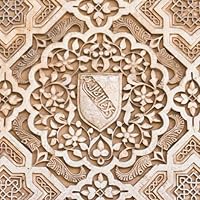
The Wolf Kingexplores how political power was conceptualized, constructed, and wielded in twelfth-century al-Andalus, focusing on the eventful reign of Muhammad ibn Sad ibn Ahmad ibn Mardanīsh (r. 1147–1172). Celebrated in Castilian and Latin sources as el rey lobo/rex lupus and denigrated by Almohad and later Arabic sources as irreligious and disloyal to fellow Muslims because he fought the Almohads and served as vassal to the Castilians, Ibn Mardanīsh ruled a kingdom that at its peak constituted nearly half of al-Andalus and served as an important buffer between the Almohads and the Christian kingdoms of Castile and Aragon.
Through a close examination of contemporary sources across the region, Abigail Krasner Balbale shows that Ibn Mardanīsh's short-lived dynasty was actually an attempt to integrate al-Andalus more closely with the Islamic East—particularly the Abbasid caliphate. At stake in his battles against the Almohads was the very idea of the caliphate in this period, as well as who could define righteous religious authority. The Wolf King makes effective use of chronicles, chancery documents, poetry, architecture, coinage, and artifacts to uncover how Ibn Mardanīsh adapted language and cultural forms from around the Islamic world to assert and consolidate power—and then tracks how these strategies, and the memory of Ibn Mardanīsh more generally, influenced expressions of kingship in subsequent periods.
This review is going to be bit different. I am a fan—a big one!--of Maimonides yet here I am reading a book about a certain Islamic ruler. Is there a connection? You bet and THAT is the reason why I’m taking on this book—to see if the connection is indeed present within these pages (yes, this is a pre-game preamble) and even if not, to connect some dots to see if the actions of one had any effect on the other.
Because, my friends, make no mistake: The Wolf King aka Muhammad ibn Sa'd ibn Ahmad ibn Mardanīsh began his reign in what’s now known as Spain and back then as al-Andalus in 1147, one year PRIOR to the exile of Maimonides, and given he was, as the noted in this book’s blurb “denigrated by Almohad[s]”, this thus seems less like a religious fanatic and more of a freedom fighter; perhaps the type that if he began his campaign just slightly earlier, Maimonides and his family may never had had to leave and thus could have greatly changed a whole chunk of Jewish medieval history.
It always pays to know more of a backstory and Spain in the 12th century for someone who wants to learn more about the Rambam (aka Maimonides, see above), the information covered in the surprisingly readable in spite of its academic focus The Wolf King: Ibn Mardanish and the Construction of Power in al-Andalus by Abigail Krasner Balbale really hits the nail on the head.
This was not a time of peace; far from it! Almohads coming in, Almoravids on their way out, Christians trying to make do, Jews on their way out, new Muslims on their way in, one kingdom to the east that was Muslim but not Muslim, kind of Christian, a ruler who may have been half Christian, full Muslim, allied with them, but who also was perhaps somewhat fond of the Almohads as well (after all, both his kids married in and later became their undoing!), a lot was going on in Iberia at this time and anyone who wanted to pen monumental treatises on Jewish law may have made the right decision to leave before things got too rough’n’tumble.
New information here and there’s more, as we sadly find out that historical revisionism is far from a new thing. Ibn Mardanīsh seems to have become something a beacon those can point to and say “see? A secular Muslim protecting the rights of Christians in Spain!” Conversely, others may view him for slightly similar reasons (he did in fact have Christian alliances) as being an “impious Muslim”. Balbale did the deep digging to paint a more accurate picture that he, like pretty much any notable figure, lived somewhere in between, both pious, but also doing what was needed to be done to ensure the continuation of his kingdom. Did he succeed? It depends. He did, as find out early on, went hard and heavy on producing his own coins, “one of the primary means of propaganda.” (eBook, page 198)
Going back now to what I noted near the top, does this tie in any way with Maimonides?
Honestly, not really. But again, this is a book I went into for two reasons and as honesty is key, the first simply is if one has the ability to learn more about Spain during such a time of change—the final days of the Convivencia, that snippet of time where somehow Jews, Christians, and Muslims lived relatively peacefully in the same land—and has the ability to read that book for free given its Open Access status, “The Wolf King” is absolutely a top-notch choice. The other reason is similar: to learn for the sake of learning and perhaps see if information gleaned about a rare English language history book that focuses almost entirely on Islamic culture will lead to me being able to connect dots from until now unfamiliar ground to roads more traveled. The book, thankfully, succeeds and then some.
First off, The author truly deserves credit for the depth and effort put into this book. To define Ibn Mardanish’s character, she has drawn from a broad range of sources—Pro-Almohad, Islamic, and Christian accounts, along with architecture, art, coins, and textiles. By using every resource at her disposal, she’s pieced together a complex portrait of Ibn Mardanish, leaving readers to form their own conclusions about him. Your view of him depends on your perspective.
In short, Ibn Mardanish was a persistent thorn in the Almohads side for nearly three decades—a highly ambitious figure who made his presence known through power. Minting your own coin? A bold statement of power. Constructing grand buildings of architectural significance? More power, this time through wealth. Ibn Mardanish allied with those who opposed his faith, maintaining relations through tribute—yet again, a testament to power. To solidify his authority, he needed religion. The intolerant and fanatical Almohads, who applied takfir on anyone refusing to adhere to their dogma, along with Northern christian incursions on former Muslim Territory drove around 100 faqihs and scholars to seek refuge in his territory. Ibn Mardanish welcomed them, as their presence allowed him to position himself as the last bastion of classical Sunni Islam in Iberia. By offering them haven, employing them, and having the khutbah recited in the Abbasid Caliph's name, he was legitimizing his rule aligning himself (unofficially) with the Abbasids in Baghdad and at the same time giving the Almohads the middle finger.
At the same time, your architecture and art reflect a story of decadence. You're infamous for womanizing, heavy drinking, extravagant feasts, the murder of your sister, and abuse of your wife (Courtesy of pro-Almohad sources). You're also known for your close ties with Christians—so much so that Pope Alexander IV praises you in two of his letters. What are you? Are you a paradoxical secular liberal Muslim (since, obviously, a Muslim can't be both Muslim and secular/liberal)? Are you a crypto-Christian (given your close relationships with Henry II and Alfonso VIII)? Are you a puppet king (as present-day Middle Eastern rulers are often seen as Western puppets, you were a puppet for Alfonso VIII, ruling Almería in his place)? Are you a loyal Almoravid fighting against the foes that toppled your allied dynasty (considering you adopted many of their policies, including their architecture and coinage)? Are you a staunch Sunni Muslim battling the heretical Almohad Mahdi doctrine (especially if a brief reference to a companion of the Prophet could move you emotionally)? Are you a proud Andalusian nationalist who views the Almohads as invading occupiers (Maybe Nationalism and the Andalusian identity came first before religion and politics)? Or are you simply another power-hungry taifa ruler willing to adapt however necessary to retain power, even if it means your family abandons you? The reader is left to decide how to interpret and portray Ibn Mardanish.
Given all this, one has to wonder what Ibn Mardanish was thinking. He held Murcia for almost three decades, and if he truly wanted to maintain power without issues, he would have submitted to the Almohads like other governors and rulers did after the fall of the Almoravids. Instead, he chose to go at it alone, refusing to align with the Almohads while the rest of Al-Andalus did. Most of those who didn’t comply met unfortunate ends, often with their families. Based on the available sources, the logical move would have been to submit if staying in power was his goal. But he didn’t. Ibn Mardanish remains a fascinating figure among the many rulers of Al-Andalus, embodying the "rey lobo" (wolf king) moniker. This nickname might stem from the possibility of his mixed Muslim and Christian heritage—a "wolfish union" as medieval authors described—or perhaps from his reputation as a fierce warrior. Or... Ibn Mardanish was a pragmatist, playing whatever role was necessary to retain power, a wolf whose allegiance was ultimately to himself.
Despite his close relationships with Christian kings, Ibn Mardanish's position was inherently unstable. Whatever his ties, at the end of the day he was a "Saracen" to the Christians. As a Saracen, the tribute he paid to his Christian allies eventually drained his kingdom's resources. He heavily taxed his people to keep his rule intact. The author suggests that Ibn Mardanish may have harbored long-term ambitions of unifying the Iberian Peninsula under his rule—an ambitious goal that, paradoxically, he undermined by giving away Muslim territory as tribute to Castile. This contradiction adds another layer of complexity to his character.
It was also in the interest of the northern Christian kings to maintain good relations with Ibn Mardanish, as he represented the last major resistance against the Almohad onslaught.
At the end of the book, the author has mentioned modern 21st century conceptions of the "Wolf". I find it both hilarious and ironic. Ibn Mardanish has become a poster child for what the West fantasizes a Muslim should be:
- Party animal? Check. - Drinking? Check. - Dancing? Check. - Patriot first, Muslim second or just chuck it out? Check. - Music lover? Check. - Fully Westernized in attire and lifestyle? Check.
This is the "ideal" Muslim for Western standards—a model of compliance and assimilation. Meanwhile, anyone who is religious and traditional is instantly branded a "bad" or "evil" Muslim. I'm not even adding fanatical as religiosity itself is enough of a reason for a guy to be viewed disapprovingly these days.
Now, moving on to the book’s weaknesses. My main criticism lies in the author's understanding of Islam. Below are two key examples where her approach was not only inaccurate but also veered toward an Orientalist perspective—or perhaps she was simply misinformed-
1) "Ibn Tūmart’s bloody purge (tamyīz) of those who were seen as insufficiently committed to the Almohad cause echoed the Prophet Muhammad's purge of Jewish tribes in Medina."
2) "Even in this earliest period of Almohad power, however, it was clear that anyone who accepted the tawhid of the Almohads would be spared, much like an infidel in early Islamic Arabia who converted to Islam would have been."
The comparison between Ibn Tumart’s dawah and the Prophet Muhammad’s (peace be upon him) actions is both wrong and misleading on several levels. Ibn Tumart and his fanatical successors committed wholesale slaughter. Where in the seerah do we find anything resembling such brutality? The author’s claim that the Prophet spared only those who converted is not just inaccurate—it’s a misrepresentation of early Islamic history. The Jewish tribes of Medina (Banu Nadir and Banu Qaynuqa) were expelled, and the men of Banu Qurayza were executed—not because they refused to convert, but because they had broken a pact with the Prophet, with Banu Qurayza’s betrayal occurring at a particularly critical moment. Not to mention, they were judged by their own scripture, not by the Qur'an. The execution of 700-900 men of the Banu Qurayza can even be challenged, as something that never even happened, which certain contemporary historians have done by citing the inconsistency present in the sources, The Medinan population, and the narrators regarding the whole affair.
On another note, I hope the author some day has the chance to analyse the blacked-out Qur'an. Wouldn’t be surprised if it ends up bearing the name of our enigmatic Wolf.
All in all, an excellent read for anyone with a passion for Andalusian history.