Jump to ratings and reviews
Rate this book

Patrick Melrose #3

מעט תקווה

Rate this book
תחילת שנות התשעים. פטריק מלרוז בן 30, נקי מסמים וחסר מטרה. את הסוד הגדול של ילדותו עדיין לא סיפר לאף אחד, והוא מרגיש שאינו יכול לשאת עוד לבדו את האמת הזאת. משהו חייב להשתנות, משהו חייב להשתחרר. מסיבה נוצצת של המעמד העליון הנבוב, שבה מתארחת בין היתר גם הנסיכה מרגרט, מספקת לו הזדמנות לפגוש כמה מכרים ותיקים, להשקיף אחורה על חייו ואולי־אולי לפתוח צוהר להתחלה חדשה.

מעט תקווה חותם את השלשה הראשונה של חמשת ספרי פטריק מלרוז, ואת שנותיו של פטריק כאדם צעיר. השילוב של עצב, ייאוש ואימה עם סאטירה חברתית נוקבת ומצחיקה עד דמעות כבר מוכר לנו שני הספרים הקודמים בסדרה, אין דבר וחדשות רעות. הפעם מתבלטים על רקע זה גם כמה רגעים נדירים ומרגשים של קרבה וגילוי לב - וכל זאת בפרוזה הצלולה, החדה והאלגנטית של אדוארד סנט אובין, מגדולי הפרוזאיקונים האנגלים של ימינו.

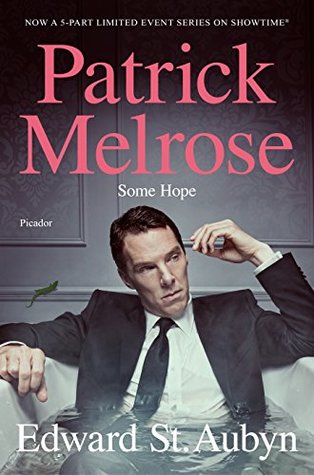
אדוארד סנט אובין הוא סופר אנגלי יליד 1960. סדרת ספרי פטריק מלרוז, שהחל לפרסם בשנת 1992, זכתה לשבחים רבים ואף עובדה למיני־סדרה בטלוויזיה בכיכובו של בנדיקט קמברבאץ'.

140 pages, ebook

First published January 1, 1994

168 people are currently reading
2146 people want to read

About the author

Edward St. Aubyn

20 books1,194 followers
Edward St Aubyn was born in London in 1960. He was educated at Westminster school and Keble college, Oxford University. He is the author of six novels, the most recent of which, ‘Mother’s Milk’, was shortlisted for the 2006 Man Booker Prize, won the 2007 Prix Femina Etranger and won the 2007 South Bank Show award on literature.

His first novel, ‘Never Mind’ (1992) won the Betty Trask award. This novel, along with ‘Bad News’ (1992) and ‘Some Hope’ (1994) became a trilogy, now collectively published under the title ‘Some Hope’.

His other fiction consists of ‘On the Edge’ (1998) which was shortlisted for the Guardian Fiction Prize and A Clue to the Exit (2000).

Ratings & Reviews

What do you think?
Rate this book

Friends & Following

Create a free account to discover what your friends think of this book!

Community Reviews

5 stars
1,100 (20%)
4 stars
2,290 (43%)
3 stars
1,585 (29%)
2 stars
267 (5%)
1 star
43 (<1%)
Displaying 1 - 30 of 457 reviews
Profile Image for Roman Clodia.
2,900 reviews4,657 followers
February 16, 2018
After hurtling through Never Mind and Bad News this is a somewhat disappointing end to the original trilogy. Patrick is now clean of his out-of-control drug habit, but is drifting, a bit lost, a bit bored. Most of the book is taken up by a snobbish house party filled with shallow, stupid and vacuous people, some of whom we met in the first book. The satire here is caustic and pointed but, for me, goes on too long - that said, the scenes with Princess Margaret are hilarious.

I wanted more of Patrick but he's strangely off-stage for large stretches. The emotional heart of the book is Patrick's friendship with Johnny: both recovering addicts, the scene where Patrick opens up about his childhood is cathartic for us as well as for him, and it's with relief that we experience Johnny's simple acceptance.

By the end something has changed for Patrick, the indicated hope of the title is hovering. For all that, I missed the intensity of being inside Patrick's head as we were in the last volume. Biting wit in the party scenes is all well and good but something is off in the balance of the book.
May 29, 2024
Мене вже дуже дратує, що усюди пхають згадку про росію, і ця книжка не виключення. Потім, один з персонажів вважає за правильне, зраджувати своїй дружині, і коли вони розмовляли, він думав про презервативи, скільки їх взяти перед зрадою. Ну, Патрікова залежність наркотиками якось пройшла, і він розповів хоча б одній людині про його дитячу травму, коли його гвалтував батько. І зняла бал за оцю принцесу, вона мені не сподобалась.
This entire review has been hidden because of spoilers.
Profile Image for Paul Bryant.
2,411 reviews12.6k followers
June 10, 2014
In Friends there's a character called Fun Bobby, everybody loves Fun Bobby, and although Friends was just a sit com, it made a telling point when Fun Bobby realised he was an alcoholic and quit drinking. And he wasn't fun anymore, and Chandler and Ross and Monica didn't want to hang around with him. It was a jarring and truthful note. So Some Hope is where Patrick Melrose is Fun Bobby. He's off the drugs, and like Chandler, Ross and Monica, I thought he just wasn't that much fun any more. Doesn't say much about me.

I therefore give Some Hope a dreadfully peevish two stars, because after the first two cracking horrendous books of the Patrick Melrose series this was er not bad, and not bad I can get from any Tom, Dick or Harry, from Edward St Aubyn I want cracking and horrendous.

This will give you a flavour of the proceedings :

"It's too bad your not being able to come," [to a big society party] said David Windfall to his wife, slipping a couple of condoms into the inside pocket of his dinner jacket, just in case.
"Have fun, darling," gasped Jane, longing for him to leave.
"It won't be fun without you," said David, wondering whether two condoms were enough.
"Don't be silly, darling, you'll forget about me on the motorway."
David couldn't be bothered to contradict the truth of this assertion.


So, mid-level acidic caricatures of the British upper crust. Or you could listen to Noel Coward.
Profile Image for Helle.
376 reviews452 followers
January 4, 2016
’There’s a blast of palpable stupidity that comes from our host, like opening the door of a sauna. The best way to contradict him is to let him speak.’

Some Hope is the third installment in what was a trilogy and only later became a pentalogy. It has the air of temporary finality about it but leaves us with the door open. By some unfathomable miracle Patrick Melrose, the protagonist but by no means hero of the series, has risen from his drug and incest induced hell hole and is, possibly, on the road to reclaiming his life. We are back in the realm of upper-class English snobs which is, on the one hand, Patrick’s turf – he, too, is a snob – but, on the other, the constant object of all his snarky ridicule.

With his dark English satire St Aubyn is back in the aristocratic, witty guise we saw him in in Never Mind. This time he even manages to deliver an anarchistic blow to Princess Margaret during a particularly gruesome party to which everyone with a background (but with very little foreground, to borrow from St Aubyn) is invited. If the dialogue with her even remotely resembles the truth, as we’ve every reason to believe it does because St Aubyn has met her, she had it coming:

’Oh,’ groaned the Princess, making a disagreeable face, a muscular contraction that cost her little effort.

‘I was in a taxi once,’ she began in a tone that invited Sonny to marvel at her audacity.

‘The Queen was saying only the other day that London property prices are so high that she doesn’t know how she’d cope without Buckingham Palace,’ Princess Margaret explained to a sympathetic Peter Porlock.


Some way into the novel, I realized that many of the characters we meet peopled no 1 in the series, Never Mind. But I couldn’t remember any of them. They are mostly flat characters, satirized versions of people St Aubyn has no doubt met in those upper social strata, but there is something just a bit too flippant in the caricature at times. But like Evelyn Waugh, I suspect he is more interested in dialogue than in round character studies, or rather in letting his characters reveal themselves through speech without the narrator getting in their way with descriptions. His gift is to write lightly about heavy subjects, but the irreverence seems deliberately over-the-top, if not implausible. For the first time, however, we begin to hope that one or two of the cardboard snobs will redeem themselves. Patrick’s friendship with Johnny, for one thing, is based on something real and good – unlike the rest of Patrick’s life.

Ultimately Patrick begins to wonder whether there might be something to this thing called life, even for him. But how does he sort out the mess he has made of things so far? He is exhausted by the hatred of his father, but where would he be without it?

What was the thread that held together the scattered beads of experience if not the pressure of interpretation? The meaning of life was whatever meaning one could thrust down its reluctant throat.

I am helplessly caught in the web of Edward St Aubyn’s prose, even if I’m not always entirely enamoured by his subject matter. His take on social satire, even at its darkest and most disheartening, is seen from someone on the inside and is for that reason inescapably relevant but also, often, unnervingly funny.
Profile Image for محمد خالد شريف.
1,025 reviews1,232 followers
December 30, 2023

"تجربتي في الحب تتجلى في أنك تنتعش عندما تفكر في أن شخصاً ما يُمكن أن يرأب قلبك الكسير، ومن ثم تغضب عندما تُدرك أنه لا يستطيع ذلك."

"بعض الأمل" هو الجزء الثالث من خماسية باتريك ميلروز"، وبعض نهاية "نبأ مشؤوم" التي قرر فيها "باتريك" أن يتعافى من إدمانه ويجد طريقه في الحياة، ومواجهة الماضي اللعين بأشباحه، فهل سينجح في مسعاه؟ أم سيغرق في دوائر إدمانه التي لا تنتهي؟

شعرت بأن الجزء الثالث هو خليط من الجزء الأول والجزء الثاني، هناك بعض الأفكار الفلسفية والسخرية من الطبقة المخملية بشكل واضح وصريح وأحياناً يكون فج، مع التركيز على خط أحداث "باتريك" الذي لا أقول أنه قد حدث فيه تطور هائل، ولكن هناك تطور ملموس في شخصيته، وهو أنه قد أصبح لديه فعلاً بعض الأمل.

دُعي "باتريك" إلى حفل تابع لتلك الطبقة المخملية مع وجود العديد من الشخصيات التي كانت مقربة لوالده، ومع تمسكه بالبقاء نظيفاً من الكحوليات والمخدرات، يواجه أوقات صعبة في هذا الحفل المليء بالأشخاص الفارغين إلا من سلطاتهم وثرائهم الهائل، وتملقهم وأحاديثهم التافهة حد الغثيان، ولكنه يضطر أن يتماشى مع كل ذلك، لوجود أشخاص حوله من معارفه الذي يهتم بأمرهم، ولكونه يبحث عن شغفه ويحاول أن يجد عمل يليق به يُمكن من خلاله أن يُحقق ذاته.

"لطالما اعتقدت أن الحقيقة سوف تُحررني، لكن الحقيقة دفعتني فقط نحو الجنون."

ومع توالي الأحداث والأحاديث الفارغة والمهمة، تضع الصدف حدث معين أو ربما اثنين في طريق باتريك، ليمنحه ذلك بعض الأمل، فهل سيتمسك به أم يتركه يفلت من بين يديه؟ هذا ما سنعرفه في الأجزاء القادمة.

ختاماً..
انهيت الجزء الثالث "بعض الأمل" ولدي مشاعر مُتضاربة حوله، فبين الملل الذي وجدته في الأحاديث الفارغة التي تدعي العمق والفهم، والذي كان سبباً مهماً لعدم حبي للجزء الأول، فكان هناك جزء عاطفي ومشحون عن حياة باتريك، ونظرته لما حوله، وتعريفه للأشياء، وهذا الخليط من العمق الفلسفي والنقد الصارخ والساخر لطبقة الأثرياء، وبين حكاية باتريك المليئة بالمشاكل النفسية المُعقدة، خرجت مُتقبلاً لهذا الجزء، رغم كثرة الشخصيات وعدم التمهيد لأغلبهم، ولكن، يظل الجزء الثاني "نبأ مشؤوم" هو الجزء المفضل عندي في السلسلة حتى الآن.
Profile Image for Elizabeth.
Author 2 books240 followers
April 29, 2022
Scathing (and very funny) analysis of the shallow nature of upper class society, told through many points of view. Every character is caught up in their own bubble of existence and Patrick is beginning to gain some awareness of what constitutes his own. In these later passages, we are afforded a glimpse into his nascent compassion, and his growing ambivalence to his own irony. Brilliant.
Profile Image for Joy.
546 reviews83 followers
January 7, 2021
(2021’ye ‘kitap kötüyse okuma ya’ desturu ile girdim.) Ben bu kitabın ikincisini ve üçüncüsünü neden okudum? Hadi ilkini seri çok övüldü diye okudum ama yani 3-4 satır beni etkilemişti diye kitabın devam serisini okumam mantıksızdı. İkincisini okurken daha da kötü olmaz zaar diye düşünüp başladığım kitap, daha da kötü çıktı. Öncelikle anlamsız alıntılar ne mana ? Adam tuvalette mesela ama Dante’den alıntı yapıyor? Tamam anldık çok zekisin de eğitimsiz zeka zeka değildir💅🏼. Sonra, saçma sapan benzetmeler? Yani ne mana cidden ? Baş karakter bomboş bir karekter. Anti-kahraman mı yaratmaya çalışmış ne yapmış yazar anlamadım ama ağzını açınca beni afakanlar basıyor. Yani bu kadar da saçma sapan konuşulmaz ki. O kadınlara üstten bakmacılık felan, off yani. Sanırım anlamışsınızdır, bu seriye verdiğim son şanstı ki ben Bir Genç Kızın Gizli Defterinin 5-6 kitabını okumuş bir insanım, öyle de düşkünüm serilere normalde.
Profile Image for This Kooky Wildflower Loves a Little Tea and Books.
1,071 reviews246 followers
August 31, 2017
Wildly uneven, Some Hope promises what's said on the tin for the series' protagonist, Patrick Melrose. However, we're provided sheer boredom and a cast of characters without compulsion to follow them.

Tis, the problem with book series. They start great. But once you reach the middle, they meddle. Patrick possesses potential. Yet, as his series continues, I find myself not giving one iota, despite pressing on to the next book. Maybe in my literal masochistic nature, I'll push through the pain to get pleasure.

In the third story, Patrick further contemplates his father's passing throughout the most boring party put on paper. He's a reformed addict, trying to make sense of his past, present, and future, as his identity molds itself around his father and the aftermath of their relationship.

Unfortunately, we're not given much time with him. As an annoying and unnecessary distraction, St. Aubyn writes a group of characters that bore and do not offer much difference in their misery and apathy. I simply didn't care about their tedious whining. They're awful and fail to deliver delectable tawdriness, which would save them otherwise.

While not one-star worthy, Patrick's scenes save the story. I wish St. Aubyn focused on his protagonist and not wash us in a bland gumbo.
Profile Image for Antonomasia.
986 reviews1,490 followers
September 9, 2014
Some Hope undoubtedly feels like the third of the trilogy the Patrick Melrose series was intended to be on its publication back in 1994. It mirrors the events of Never Mind as the clans gather again twenty-six years later, this time for a huge house-party in Gloucestershire.
(This is set in February 1991, Bad News took place in 1982 with a 22-year-old Patrick, but Never Mind used references of the late 60's and early 70's although he was 5 in the book, which would have been 1965.)

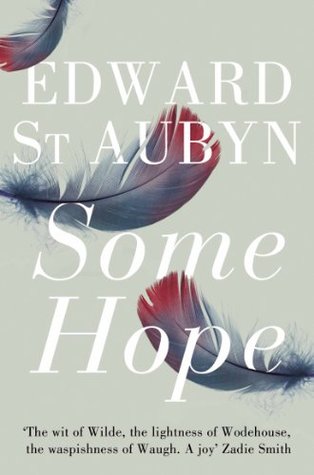
Certain events are effectively replayed with more satisfying conclusions, yet without overshadowing the plain differences brought by the passage of time. (I'll forgive one unlikely coincidence in an otherwise very satisfying novel.) And I love the arch reference in putting feathers on the cover.

For the first time in the series, there is a feeling of genuine friendship and human connection between characters, that which creates the hope: Patrick and Johnny Hall, both now recovering addicts, the former angrier than his friend. And Anne, probably the most empathic person in the earlier books, finally gets to say what she hoped to all along.

What stays the same is how awful most of the other characters are: "Hard dull people who appeared quite sophisticated but were in fact as ignorant as swans". Are swans notably stupid? I'm not sure, but in this phrase St. Aubyn captures everything I'd been struggling to describe succinctly about his people.

A quote from the New Yorker: "Perhaps because he is much more of an aristocratic insider than Wilde or Waugh ... [St Aubyn] retains no arriviste enamoredness of the upper classes he is supposedly satirizing." I am rather fond of that tone myself and remember the cold-shower shock when my own romanticised reflections on a summer residential course at a boarding school (mostly about wandering alone in the early-morning misty grounds or talking all night in obscure rooms with one new found best friend)opened an unmapped crevasse for a few minutes in conversation with someone who'd had horrendous experiences as an insider and is not much younger than the author. (Though the loathesomeness of dorms, even when the inhabitants are fairly benign, was agreed upon by both.)
St. Aubyn shows the clear coldness of so much of that world ... he does still like some of the physical surroundings and the vocab, I feel, but quite damns the inhumanity.

I struggle to remember (well, I struggle to remember a few things these days...) when, if ever, I last devoured a series like this. The instant availability of online purchasing makes it possible to gorge myself like a kid who's found a huge box of biscuits hidden in a cupboard, when once there would have at least had to be repeated trips to libraries or bookshops, or waits for deliveries. Having read a few reviews by people who've read the books one-a-day, it seems that for the susceptible, they have an addictiveness of their own.

[Nope, I was too upset by the first chapter of Mother's Milk so I may leave it for a while, if I ever read it.]
Profile Image for Mark Joyce.
336 reviews67 followers
June 12, 2015
Works neither as a standalone novel nor as an installment in the wider series. Most of the back story is taken as read but for those who have completed the first two novels the story is not developed in any but the most predictable of directions.

There is no real narrative, which wouldn’t necessarily be a problem in itself if St Aubyn did something interesting with characterisation, form or mood. Unfortunately he doesn’t. A lavish party at a country pile is used as the setting for a series of fairly unremarkable observations on the absurdities of an English social stratum that doesn't really exist anymore outside the imaginations of a few writers and directors who remain endlessly obsessed with it.

The dialogue tries to be Wildeian but falls a long way short. Some of the internal monologue borders on embarrassing. The caricatures are as one-dimensional as in books one and two and the hatchet job on Princess Maragaret, who I think is generally recognised these days as having been something of a piece of work, feels a bit like shooting fish in a barrel. Biting social or political satire this is not.

The only character who is remotely likeable or believable at this point is the post-addiction Patrick Melrose, who features as a largely detached, disillusioned and bored observer. I felt exactly the same way.

I’ve seen the Patrick Melrose novels described somewhere as one of the major achievements of twentieth century English fiction. This is arrant bollocks and I can only assume the author of those words was either joking, connected to the publisher in some way or hasn’t in fact read any of the genuinely major achievements of twentieth century English fiction.
Profile Image for Claire Fuller.
Author 14 books2,501 followers
September 3, 2021
This didn't work for me in a number of ways. I loved the first two novels in the Patrick Melrose series and I will continue reading them, but this one was a duffer. A lot of posh (and mostly rich) people go to a party in the English countryside with Princess Margaret. It's told from many different points of view as the guests prepare to leave for the party, attend a dinner before the party, and talk at the party, and I completely lost track of who was who. Maybe that was deliberate, in that all these posh rich people are indistinguishable but it meant that the scandals which they were all gossiping about were mostly lost on me. The sections from Patrick's point of view were often funny, especially when he was talking with his friend Johnny, but Johnny and Patrick are also almost indistinguishable from each other, and it felt like it was a single voice bantering wittily with itself (and being so witty, the repartee was often unbelievable). They whole felt like it was a vehicle for Patrick to try to come to terms with the abuse he suffered from his father, and these sections were so different from all the posh, rich chatter, that they felt like they came from a different book. Ah well. On to Mother's Milk, which I hope will be a return to form.
Profile Image for Joy D.
3,135 reviews330 followers
August 28, 2023
This is the third book in the Patrick Melrose series. I could hardly get through the first book (Never Mind) since it is focused on child abuse. In the second book (Bad News), Patrick's father dies in New York, and Patrick becomes addicted to drugs. In this third book, as the title indicates, there is Some Hope for Patrick. He is in his late twenties/early thirties and in recovery from drug addiction. He returns to England and his life takes a turn for the better. He finds the inner strength to confront what happened to him long ago at the hands of his father and focus on the future.

I wish I had read these three books together (there is an edition that combines the three.) The first two dwell almost exclusively on abuse and addiction, but this book is more well balanced and my favorite by far. Patrick still faces challenges and troubles, but there are a few positives. It also contains social commentary about the upper classes. Edward St. Aubyn’s writing is stellar as usual, and I enjoyed this one. I look forward to reading the final two books in this series, Mother’s Milk and At Last.
Profile Image for Tanja Berg.
2,279 reviews568 followers
June 23, 2018
“But then neither revenge nor forgiveness change what happened. They’re sideshows, of which forgiveness is the less attractive because it represents a collaboration with one’s persecutors. I don’t suppose that forgiveness was uppermost in the minds of people who were being nailed to a cross until Jesus, if not the first man with a Christ complex still the most successful, wafted onto the scene. Presumably those who enjoyed inflicting cruelty could hardly believe their luck and set about popularizing the superstition that their victims could only achieve peace of mind by forgiving them.”

Patrick is free of drugs. He doesn't even drink alcohol anymore. His best friend Johnny is narcotics anonymous, Patrick doesn't go, lest he would be pressured into telling about being abused by his father. In this book he is going to a party. The narrator switches between several of the attending guest's point of view. There are plenty of opportunities for glaring and acerbic socially commentary. It's mean, funny and astute.

I read somewhere else on that Edwards St Aubyn wanted to tell the truth in this book. He does. He goes straight for the jugular and leaves you gasping for breath, because you're not used to hearing the unvarnished truth. Everything is so politically correct these days.
Profile Image for Maria.
96 reviews61 followers
June 5, 2020
I don't mind if culture crumbles
I don't mind if religion stumbles
I can't hear the speakers mumble
And I don't mind at all

Ritratto impietoso e tragicomico della superficialità dell'upper class e dell'aristocrazia inglese.
Ma anche e soprattutto cronaca della crescita del protagonista, che finalmente affronta i suoi demoni e i suoi bizzarri passeggeri interiori. Un viaggio terapeutico per l'autoanalisi dell'autore, a quanto pare. Ma anche, a modo suo, per il lettore, a cui viene argomentato emozionalmente il tema della misericordia laica, tramite la voce moderata ed imprescindibile di Patrick.
Profile Image for Teleseparatist.
1,275 reviews159 followers
May 24, 2018
There is incisive wit, there are moments that make the hair stand on one's neck with pure existential horror at the depravity of humankind, and then there are moments of grace. This novel continues the exploration of its protagonist's darkness but offers the eponymous hope in the end. I am usually fond of 1st person and 3rd person limited POV novels for the voice they can achieve. Somehow, St Aubyn manages to achieve such a voice within a novel with omniscent narration. It goes beyond style; it is a way of looking at the world that he showcases.

I am microdosing these novels, so I expect to get to Mother's Milk in July, or thereabouts. And I'm a little excited about it already.
Profile Image for Carlo Hublet.
731 reviews8 followers
October 28, 2022
Pessimiste, superficiel, ennuyeux, sans intérêt. Abandon après un tiers, et je ne reviendrai jamais vers cet auteur....
Profile Image for Ashley.
3,510 reviews2,382 followers
September 11, 2018
On a prose level, I didn't enjoy this one as much as I enjoyed the first two, which were extremely clever and a bit raw. Here, with Patrick sober (for several years, it's implied), he once again is one among many points of view, just as he was in the first book as a five year old, when his parents' dinner guests held most of the narrative focus. Here the party is for some duke or other on his birthday, and the Princess Margaret is coming.

But he is still the center of the narrative, which sort of pivots around him at a fulcrum point in his life (and the series). Still in recovery from, well, everything, he's made the decision to finally tell someone about what his father did to him as a child, something he swore he'd never, ever do. Patrick does not want to be at this party or around these people, but he's there, and he struggles to make a real connection, and somehow miraculously mostly manages it when he does have that conversation with his best friend, Johnny (also a recovering drug addict). The moment when Patrick tells Johnny that his father raped him from the ages of five through eight is brilliantly written. Patrick struggles to put it into words, and he and Johnny talk in and around it, reaching towards each other and backing away again.

Meanwhile the most awful shits of the British upper class are farting around talking about nonsense and betraying their corrupt and insubstantial values. Princess Margaret, whom St. Aubyn portrays as deeply classist and rather cruel, is the key example, but they all strive to be her. Nicholas Pratt, Patrick's father's "closest friend" is still farting around, telling everyone what he thinks they want to hear at all times, and being as disingenuous as possible. There's an obsession in this book with characters saying and feeling different things, and a seemingly universal reaching for the shallow and insubstantial, even as they openly mock real emotion and effort.

(Many characters, including Johnny, mock the people in AA meetings. Johnny struggles with the contradictory facts that the meetings make him feel uncomfortable and cynical, with all those people so emotionally open and seemingly naïve and yet those meetings also help him. He finds comfort in them.)

The book ends with an image that seems to indicate that Patrick is going to be leaving the life he was born into, with all of these people, to try and find something genuine to live for, to reject irony and snobbery, and try to actually enjoy his life. I read this book very fast, so all of this is mostly a surface reading, but I can tell if I were to spend more time with it, all kinds of layered shit would start popping out. Anytime a British author goes after the upper class, you're going to get something meaty.
Profile Image for Ben Loory.
Author 4 books728 followers
May 14, 2013
seemed more like a breather in the series than an actual volume. the first book is so twisted and funny, and the second such an incredibly brutal ride... this one felt kinda staid by comparison and even dipped into cliche at times. (yeah, them rich folks is superficial, i get it!) but patrick melrose himself is (somehow) a charming character and his part in the book (though small) really carries it. i'm hoping this turns out to be a turning point and that he'll spring into action in the next book. and maybe be a real full-fledged human being by book five. in any case, i'm definitely hooked on the series.
Profile Image for Alice K.
101 reviews4 followers
March 10, 2024
Смішно, що життя-буття британського вищого світу тут і в першій книзі показується значно огиднішим за Патрікові наркоманські походеньки з 2ї частини.

"Тут доведеться копнути чимало тіл, перш ніж зумієш знайти хоч одне живе. Дурість, як пара в сауні, струменить усюди, бо її випромінює сам господар"

"Подібні персонажі постійно оточували мене в дитинстві - до всього байдужі, нецікаві людиська, котрі з боку здаються витонченими, а насправді такі ж дурнуваті та чванькуваті, як лебеді"

І принцеса Маргарет тут показана, як така собі квінтесенція цього лицемірного світу, вищій щабель бажань його мешканців.
Важко сказати, наскільки все це відповідає дійсності, я ніколи особливо не цікавилась її персоною, але образ у неї яскравий, не без того.

В цілому, тут ми, можна сказати, повертаємось до першої частини. Ті самі люди, ті самі розмови, ті самі внутрішні конфлікти. З тою лише різницею, що зараз Патрік вже в змозі свій конфлікт вирішити.

Дуже цікаво спостерігати за тим, як він вирішує, як ставитись до батька, ненависть до якого (хоч і абсолютно виправдана) отруює все його життя. І як прийняти те, що такі жахливі речі могла здійснити реальна людина, з реальними емоціями, власним досвідом, психічними проблемами, і при тому її не виправдовувати, як і не виправдовувати насилля, що вона вчинила.
Profile Image for Fraser Simons.
Author 9 books296 followers
July 29, 2023
Back in form. Possibly better than the first book, for me, which I liked quite a bit. There’s a lyrical, almost modern myth or folklore-type voice that transplants the realism of a man emerging from a heavy set of addictions the causation of which from childhood trauma. It opens the door for narratives typically about working class people dealing with these issues—and them not being Actual issues in privileged, beyond the upscale resort that makes treatment portrayed as blasé (typically)—into the upper crust in a manner that does class criticism and grounds recovery as a universality.

It also cleverly becomes cyclical, echoing certain motifs that make the emotional component resonate more so. It’s charming, well-written, and biting. I really like narratives that don’t kiss up to the privileged, and this is critical of the right people on the right way, contributing to the fairytale-esk quality mentioned previously.
Profile Image for gorecki.
266 reviews45 followers
January 8, 2022
Incredibly written, funny and honest as usual. A little less about Patrick in this one, and a little bit chopped up in many tiny little stories of so many other characters, but these chunks were all really masterfully woven together.
Profile Image for Jason Koivu.
Author 7 books1,408 followers
November 10, 2018
Patrick Melrose gets clean and goes to a fatuous party thrown for snobs. Some Hope is indeed the most hopeful of the first three Melrose books. However, it's still chockablock full of horrible people that the world would be better off without. Of course that's the point of it and Edward St. Aubyn does an admirable job of painting such hideous portraits for the us. He's an artist, who is a joy to read, even if you don't like his subjects.
Profile Image for Maxym Pushkar.
40 reviews7 followers
December 29, 2025
- Якось психоаналітик сказав, що в мене «одна депресія наклалася поверх іншої».
- Ну, принаймні, ти вибрався на поверхню хоч із однієї своєї депресії.
Profile Image for Nigeyb.
1,476 reviews404 followers
November 25, 2018
I was a little unconvinced by the first two Patrick Melrose novels - Never Mind and Bad News - and was even unsure whether to continue with the series. I'm now very glad I persevered.

Some Hope is the third Melrose novel and it's a brilliant satire of the English upper classes in all their glory and their ghastliness. The writing is superb and there's wit aplenty on every page.

It's now eight years since Patrick Melrose's father died and Patrick, and his best pal Johnny, are now both recovering addicts - one memorable chapter viciously skewers a Narcotics Anonymous meeting.

The various narrative threads all come together in Some Hope. It mirrors many of the events described in Never Mind and Bad News as many of the same people and families reunite at a lavish party in Gloucestershire also attended by a pitch perfect Princess Margaret.

There's even redemption, of a sort, for poor old Patrick who has been through the wringer what with the incest and drug addiction of the first two novels. As I understand it, these books are largely autobiographical and it is clear that Edward St. Aubyn knows of what he writes. I'm glad for him that he's managed to create something worthwhile out of such dark life experiences.

The first three novels make far more sense as one long book rather than three separate stand-alone novels. It's now clear why they have been published in two separate volumes - Patrick Melrose Volume 1: Never Mind, Bad News and Some Hope (1-3) + Patrick Melrose Volume 2: Mother's Milk and At Last (4&5). If anyone else is tempted then I'd recommend you read the books in quick succession. Each book is very short.

I am going to press straight on with the fourth and fifth books now - Mother's Milk and At Last.

I also still have the TV adaptation to watch, and will do that too once I've completed the books.

5/5


73 reviews
September 16, 2016
This wildly uneven novel is the least-compelling installment of the Patrick Melrose saga thus far, largely because Patrick himself really has no personality. The scorched-earth first book, "Never Mind," was driven by the sociopathic David Melrose, who is a fascinating character in the way that most sociopaths are--Patrick was very much a secondary character. In the sequel, "Bad News," Patrick is nominally the central character, but the actual driving agency of the book is Patrick's drug addiction, which commands him much in the way that his now-dead father used to do. In this third book, now that David Melrose is a thing of the past and so, supposedly, is Patrick's addiction, the book has no emotional or psychological center, and comes off as a curiously disjointed collection of anecdotes and bons mots. St. Aubyn's razor-sharp prose style and disillusioned wit are present, but the story only really comes alive when David makes some brief memory-based appearances. Dialogue spoken by Patrick is reliably unbelievable and stilted, and there is a particularly eyebrow-raising scene in which Patrick confesses the dark secrets of his life to his friend, in a restaurant, over dinner, prior to a party...information which he has told to none of his friends previously, and which he disgorges in so ludicrous a manner that one wonders whether the scene was meant to be satirical and didn't really get there. It's too well-written to be bad, and too unfocused and psychologically/emotionally unexamined to be good. I'm told that "Mother's Milk," the next book, is quite good, a fact which I am at this point taking on faith.
Profile Image for Jessica Woodbury.
1,929 reviews3,137 followers
October 16, 2017
In many ways, the 3rd Patrick Melrose book is a return to the form of the first. Once again, we follow the intolerable rich gentry of England through their preparations for a gathering and into the party itself. Some characters return (Bridget, hooray; Nicholas, ugh) but we do get to actually explore Patrick now that he is sober and trying to figure out what to do with himself when drugs don't fill his days.

This is still a darkly hilarious book, if not quite as packed with witticisms as the first. You dislike virtually everyone in it almost immediately, even the extended cameo from Princess Margaret, who would be absolutely delicious if she didn't think so highly of herself.

But we finally start getting down to it here. There is no active trauma taking place, finally. We can sit for a bit and get a hold of ourselves. In this novel, Patrick finally confesses his father's sexual assault against him as part of a search for catharsis and possibly even forgiveness. He is haunted by his father, his hatred of his father, and of the possibility that his father may have shown some signs of goodness. Patrick is the most likable character in the book in many ways, though there are at least a few you don't utterly despise this time.

I was a bit nervous after the harrowing events of the first book and the extended drug abuse of the second, but I think we may finally be settling down to what St. Aubyn is really about and I'm curious for the rest of the series.
Profile Image for ra.
554 reviews162 followers
August 28, 2025
2025 reread: coming back to this with the mercy of distance really didn't do much at all because every day I think about the one conversation between Patrick and Johnny where Patrick's like ugh but what the hell do i do if i stop being bitter and unpleasant/thinking about obliterating myself all the time and Johnny's like well probably not much. But think of what you could put there instead. i say it to myself at least once a day because so much of addiction has to do with momentum and just thrusting yourself headfirst and kind of thoughtlessly into the thing in question and it's very disarming to suddenly be thrown off kilter and realise the shape of your life is completely different than what you've been trying to fill yourself up with and it doesn't even really apply anymore and now you have the much more daunting task of imagination. Anyway .. i like this book

think i highlighted like 80% of this book truthfully

— "Oddly enough there was something about hearing the word mercy in Measure for Measure last night that made me imagine there might be a course that is neither bitter nor false, something that lies beyond argument. But if there is I can’t grasp it; all I know is that I’m tired of having these steel brushes whirring around the inside of my skull.”
Profile Image for Katherine.
405 reviews168 followers
January 6, 2015
Some Hope finds it's way back to a similar form as the first novel in the series, Never Mind. While I struggled to get through the second novel, Bad News, fast enough - I was happy to read more of Patrick's thought process, which this installment nearly lacked.

Edward St. Aubyn is an insightful writer. His portrayals of the shallow rich English are hilarious, if a bit copious. Though I was happy to gain some perspective from other characters, the point seemed to exclusively direct towards how awful people can really be to each other in this atmosphere. Patrick was still the star, and somehow, a voice of reason that carried the whole thing, but there wasn't enough of him. The first book is still my favorite in the series so far, but Some Hope leads the story back to the direction of the first novel that I really enjoyed. Still excited to continue.
Profile Image for Jamie Collins.
1,556 reviews307 followers
December 13, 2018
This one is not as dark than the first two books, and some would say it suffers for being a more ordinary, accessible story, but the prose is still gripping. I’m becoming steadily more impressed as I read, and I think when taken altogether these books will make up an amazing work.

This third vignette from the life of Patrick Melrose takes place when he’s age 30, completely sober, and trying to find a way to deal with the trauma associated with his abusive father. As usual the story takes place over about 2 days; this time the setting is a London party hosted by a wealthy sycophant and attended by a number of rich and aristocratic people, including the Princess Margaret.

This has a scathing portrait of the princess, who tells stories about “‘the ordinary people of this country’ in whom she had ‘enormous faith’ based on a combination of complete ignorance about their lives and a complete confidence in their royalist sympathies”, and who makes the French ambassador go to his knees to wipe off gravy he spattered on her dress.

“But then neither revenge nor forgiveness change what happened. They’re sideshows, of which forgiveness is the less attractive because it represents a collaboration with one’s persecutors. I don’t suppose that forgiveness was uppermost in the minds of people who were being nailed to a cross until Jesus, if not the first man with a Christ complex still the most successful, wafted onto the scene. Presumably those who enjoyed inflicting cruelty could hardly believe their luck and set about popularizing the superstition that their victims could only achieve peace of mind by forgiving them.”
“I was rather against forgiveness, and I still think that it’s detachment rather than appeasement that will set me free, but if I could imagine a mercy that was purely human… I might extend it to my father for being so unhappy.”
Profile Image for Tülay Tellioğlu.
478 reviews46 followers
November 30, 2020
3/5
Ve bu kitap ile seriye noktamı koyuyorum. 🙃 Kalan diğer iki kitabını okumayı tercih etmiyorum. Aslında karakter ve kurgu olarak olacakları çok merak ediyorum ve karakterin her kitapta yaşının büyüdüğünü görmek ve geçen zamanı onunla birlikte değerlendirmek çok keyifli. Fakat yazarın diline asla alışamadım. Çok dağınık ve iç konuşmalara fazlaca yer veren bir anlatımı var. Takip etmekte ve kendimi kitaba vermekte çok zorlandım. Üç kitap boyunca bu zorluğu atlatamayınca bende noktayı burada koymaya karar verdim.
Dizisini mutlaka izleyeceğim çünkü canım Patrick, canım Benedict❤️❤️
Displaying 1 - 30 of 457 reviews

Join the discussion

Can't find what you're looking for?

Get help and learn more about the design.