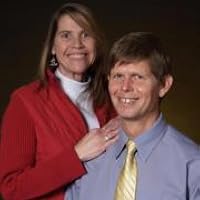
I have spent thirty years reconstructing the historical Jesus. I have done so self-consciously and self-critically and have tried to do the same on reconstructing myself. But what justifies this memoir is how my own personal experience, from Ireland to America, from priest to professor, from monastery to university, and ... from celibacy to marriage, may have influenced that reconstruction. Where has it helped me see what others have not, and where has it made invisible to me what others find obvious? -from A Long Way from TipperaryFrom his upbringing in Ireland to front-page coverage in the New York Times and mention in cover stories in Time, Newsweek, and U.S. News & World Report, John Dominic Crossan-who has courageously pioneered the contemporary quest for the historical Jesus-has dared to go his own way. In this candid and engaging memoir, the world's foremost Jesus scholar reveals what he has discovered over a lifetime of open-eyed, fearless exploration of God, Jesus, Christianity, and himself. Crossan shares his provocative thinking on such issues as how one can be a Christian without going to church; whether God is vengeful, or just, or both; and why Jesus is more like Gandhi or Martin Luther King Jr. than like the Pope or Jerry Falwell.Raised in the traditional Irish Catholic Church, Crossan inherited a faith that was "accepted fully and internalized completely but undiscussed, uninvestigated, and uncriticized." A dauntless spirit whose imagination was ignited not by piety but by the lure and challenge of adventure, he became a monk to travel and explore the world, unaware that his most thrilling quests would be scholarly and spiritual. "God had going the best adventure around," Crossan confesses.Because he could never subject his theological convictions and historical findings to the restrictions of the Church, Crossan chose to leave the monastery and priesthood. Speaking of this time in his life, Crossan writes, "Not even a vow of obedience could make me sing a song I did not hear." But he never abandoned the Roman Catholic community or tradition and never lost his faith. He has devoted his life and career to a reexamination of what he calls "necessary open-heart surgery on Christianity itself."
John Dominic Crossan is generally regarded as the leading historical Jesus scholar in the world. He is the author of several bestselling books, including The Historical Jesus, Jesus: A Revolutionary Biography, The Birth of Christianity, and Who Killed Jesus? He lives in Clermont, Florida.
John Dominic Crossan was born in Nenagh, County Tipperary, Ireland in 1934. He was educated in Ireland and the United States, received a Doctorate of Divinity from Maynooth College in Ireland in 1959, and did post-doctoral research at the Pontifical Biblical Institute in Rome from 1959 to 1961 and at the École Biblique in Jerusalem from 1965 to 1967. He was a member of a thirteenth-century Roman Catholic religious order, the Servites (Ordo Servorum Mariae), from 1950 to 1969 and was an ordained priest in 1957. He joined DePaul University in Chicago in 1969 and remained there until 1995. He is now a Professor Emeritus in its Department of Religious Studies.
If you are looking for a memoir that justifies a person's professional, theological views, this book weaves the two together rather well. Unfortunately for me, I was not as much involved in justifications of Crossan's work, and those portions were less interesting. I also thought he could have pushed himself to develop more about his struggles during his departure from the monastery, but that's probably my agenda.
There are speculations which are controversial in Crossan's reconstruction of the Historical Jesus. One cannot however say anything negative about the man.
This book is not simply a collection of Crossan's memoirs, but a portrait of how he developed his faith and how that faith interacts with his research on the historical Jesus.
The narrative follows Crossan's boyhood, through his years in Servites as a monk and priest, then through his decision to leave the order in order to Marry and because he could no longer be "obedient" to the church hierarchy.
We learn of Crossan's marriage and the death of his wife. And then later his second marriage (he refuses to use the terms first and second wives).
In the final chapters, Crossan concludes with a manifesto of his faith. We must choose, Crossan tells us, between a God of vengeance who is violent like us, or a God of egalitarian Justice who is non-violent, as revealed in the Life of Jesus.
The most important parts of this book for me, were Crossan's moving accounts of how his faith was taught to him in prayer, liturgy and song, and he therefore never thought he had to take the central stories and concepts as literal fact claims.
Finally, the books is worth reading for Crossan's incredible honestly about who he is and what he believes.
THE JESUS SEMINAR CO-FOUNDER SHARES ABOUT HIS OWN LIFE AND IDEAS
John Dominic Crossan (born 1934) is a New Testament scholar, historian of early Christianity, Professor Emeritus at DePaul University, and former Catholic priest known for co-chairing the Jesus Seminar; he has written/co-written many books such as 'The Historical Jesus: The Life of a Mediterranean Jewish Peasant,' 'The First Christmas: What the Gospels Really Teach About Jesus's Birth,' 'The Resurrection of Jesus: John Dominic Crossan and N. T. Wright in Dialogue,' etc.
He wrote in the first chapter of this 2000 book, "Those who planned my life thought, as I did, that they could make me both monastic priest and seminary teacher. They found, as I did, that it would have to be one or the other... Eventually, after nineteen years, I left the monastic priesthood to get married. Even if I could have stayed and married, I would not have done so. By then the more profound conflict was not between my vow of celibacy and marriage, but between my vow of obedience and scholarship. The truth may make you free, but it may also make a lot of other people extremely annoyed. Margaret and I were married. We swore ourselves to one another till death do us part. Death did." (Pg. xiii) Later, he notes, "I sometimes have to insist with interviewers that I left the Roman Catholic priesthood, NOT the Roman Catholic church." (Pg. 97)
He observes, "After thirty years and half as many books interpreting the historical Jesus, I wonder in this book how what I was and what I became must have filtered and fixed my understanding of Jesus... I ask only this: How have my own experiences in family and faith influenced my understanding of Jesus' family and faith, and how has that interaction been reciprocal, not just from present to past, but from past to present?" (Pg. 33)
He admits, "I knew, already in the 1970s, that there was an ethical problem with that story [the Virgin Birth]... I was teaching comparative religion at DePaul in that decade, so what about a similar story concerning the Buddha?... Did I tell the class that the Christian story was history, the Buddhist story parable... ours the truth and theirs a myth or lie? I said that both were parables, the fictionally wondrous birth of a factually wondrous person... I had never thought of it as a theological argument about what God could or could not do, but as a historical argument about what God had or had not done." (Pg. 137)
He argues that the miracle stories about Jesus "were not historical stories about Jesus' power over natural forces, but parabolical stories about Jesus' power over community leaders... They were not about a divine circus, but a divine church. I find it very interesting, by the way, that within a generation of Jesus' death evangelists had to warn church leadership about operating without Jesus, about sailing off alone or fishing out there alone without Jesus aboard." (Pg. 167)
He asserts that "I maintain that the mode of authority, the style of leadership, the primacy of obedience demanded by the Roman Catholic hierarchy is a crime, if not against humanity, then at least against divinity." (Pg. 199) He adds, "Let me be blunt: I refuse to accept heaven from a God who could invent hell... The God of hell is a divinity to fear but not to love, to dread but not to worship, and it is morally necessary to say that loudly and clearly. I will not hide behind divine mystery or human finitude. Hell is an obscenity, one more example of crimes against humanity." (Pg. 201)
Crossan is a profound historian of Jesus and his times, and this book provides insights into his life and thought in many other areas, and will be of considerable interest to those interested in the historical Jesus, as well as modern theology.
John Dominic Crossan has made the historic Jesus the subject of his lifelong study. Some of his critics have accused him of examining the life of Jesus under the light of Crossan’s own life experiences. In this book, Crossan does the reverse: he examines his life under the light of his findings about the historical Jesus. This book was a four-star pleasure for me for its first three-quarters. Unlike the books of his fellow Irishman Frank McCourt, this was no misery tale. Though Crossan left Ireland and left the priesthood as well, his looking back was not filled with bitterness. I liked the fact that he did not deny his own past and would have done it over again if given the same choices. But in the last quarter of the book his outlook seemed to dim a bit. He took umbrage at critics and belittled the words of journalists. The results of his study of the history of Jesus life are challenging for the average Christian, and he has little patience for their difficulties in assimilating them. His emphasis on God’s justice rather than God’s love made me uncomfortable. But then, wasn’t that what Christ urged of us: lose your complacency, become uncomfortable, pick up your cross and follow. All in all, I’m glad I read this book.
The five stars represent my affection for Crossan rather than the excellence of this book. It struggles, a bit, with finding the right balance between an explanation of Crossan's Biblical Scholarship and the recollection of much else in his life. But when I finally (after a day of reading) put the book down I like Crossan. I wanted to sit and talk. He has struggled with many of the same issues as I have; come to many of the same conclusions. He knew pain and joy. He has been plagued by people who jumped to conclusions about him. He has a difficult relationship with church. And so on. If you're a minister or priest or theologian, this one is well worth reading. If you are an informed layperson (or nonChristian!), this book is a great reminder that all theology is personal.
I've read several of Crossan's books and even attended a lecture by him. It was nice to learn about his life and loves and how his ideas developed. A lot of time is spent on his education in Ireland, Rome, and the US. Some parts are humorous (the joys of getting a house built under the patronage systems in Minorca, for instance). I wished at times for more clues about chronology. But all in all, a source of insight into his teaching.
I've read quite a bit of Crossan and have heard him speak, and so it was a treat to read his story. He acknowledges the critique that his view of the historical Jesus as a Mediterranean peasant in a subjugated land is informed by his childhood in Ireland, but goes no further. He shares painful moments in his life including the death of his first wife, and his decision to leave the priesthood. He keeps a difficult balance in loving the Catholic church and criticizing its hierarchy.
He uses his own story as a jumping off point to explain why he has done the work on the historical Jesus that he has done. At first it felt like he was veering too far from biography into theology, but by the end one realizes that they too intertwined to be separated in his life. Well worth reading, particularly if you have read some of his scholarly work.
This was my first Crossan book, which may not be the best way to go about it. I was very intrigued by some of his theology, and the anecdotes about growing up as an Irish altar boy were interesting and amusing. His stated purpose was to look at how his own life experiences may have influenced his construction of the historical Jesus, and I never quite saw that connection realized. Rather, he seemed to switch back and forth between the two. I suppose that's not a bad format for the memoir of a theologian though, and it gave me a good introduction to him both personally and professionally.
Crossan has lately (early March 2011) made the press and I thought it time to start adding several of his works that I've read in the not too distant past. I'll review/comment on this and two others in the near future. He is one of several modern theologians that I've read whose modern views, and thus not always popular among the establishment, are refreshing and that embrace the modern world and true scholarship.
I wasn't sure, at first, what I would think of this book. I was pleasantly surprised. Although I still don't agree with all of his theology or history, Crossan made some very poignant and timely points.
I enjoyed this book immensely. Crossan is quietly witty and though provoking. The book was a well-executed blend of autobiography and religious thought. I admire his work.