

What do you think?

Common-Sense Pest Control: Least-Toxic Solutions for Your Home, Garden, Pets and Community
This resource gives homeowners hundreds of ways to control garden pests. Here are remedies for ridding lawns, gardens, and trees of destructive invaders.
- GenresGardening
736 pages, Hardcover
First published May 1, 1991
About the author
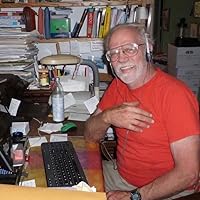
William Olkowski
11 books6 followersBS Entomology and Plant Pathology, MS Medical Entomology Univ. Delaware,
PHD Biological Control of Insect Pests, UC, Berkeley, and IPM Specialist for 40 years spent teaching people how to reduce pesticide use. Add to that an Ecological Innovator, Urban Agriculturalist and farmer, Teacher, Philosopher, Painter and Poet. Interests: Human and Animal Diseases, Archeology, Ethology, Bioethics and lots of other things. Always a student.
I Like to think of myself as a Scientific Ecological Rationalist (an “SER”), but now am a gardener and blogger called the Entomological Philosopher hoping the world will turn around some more before being engulfed by our expected-to be-exploding sun.
Publications
His books include “Common Sense Pest Control” and “The Gardeners Guide to Least Toxic Pest Control", The Integral Urban House, and The City People’s Book of Raising Food, among others. His publications include other books, scientific papers, government reports, book reviews, technical pest control manuals, and more extensively, articles in the “IPM Practitioner” and “Common Sense Pest Control Quarterly for over 30 years.” His blog covers book reviews on health, ecology, parasitology, medical entomology, among other subjects, essays, movie reviews, personal poems and rants, etc.
A website includes many of his published scientific papers, paintings, some selected letters, poems and project reports. He has consulted with the EPA, NPS, AID, NIH, private businesses and city, county, state agencies and school districts about least toxic pest control. He is familiar with various ecological social organizations from starting non-profit organizations, and is proud of helping to start the first recycling centers in the US, the first ecology center (in Berkeley), and the Farallones Institute, Antioch College West, and a small farm based school for educating disadvantaged young women, and the non-profit organization The BioIntegral Resource Center, publisher of two international Journals: The IPM Practitioner, and The Common Sense Pest Control Quarterly. Now based in Santa Barbara, CA.
PHD Biological Control of Insect Pests, UC, Berkeley, and IPM Specialist for 40 years spent teaching people how to reduce pesticide use. Add to that an Ecological Innovator, Urban Agriculturalist and farmer, Teacher, Philosopher, Painter and Poet. Interests: Human and Animal Diseases, Archeology, Ethology, Bioethics and lots of other things. Always a student.
I Like to think of myself as a Scientific Ecological Rationalist (an “SER”), but now am a gardener and blogger called the Entomological Philosopher hoping the world will turn around some more before being engulfed by our expected-to be-exploding sun.
Publications
His books include “Common Sense Pest Control” and “The Gardeners Guide to Least Toxic Pest Control", The Integral Urban House, and The City People’s Book of Raising Food, among others. His publications include other books, scientific papers, government reports, book reviews, technical pest control manuals, and more extensively, articles in the “IPM Practitioner” and “Common Sense Pest Control Quarterly for over 30 years.” His blog covers book reviews on health, ecology, parasitology, medical entomology, among other subjects, essays, movie reviews, personal poems and rants, etc.
A website includes many of his published scientific papers, paintings, some selected letters, poems and project reports. He has consulted with the EPA, NPS, AID, NIH, private businesses and city, county, state agencies and school districts about least toxic pest control. He is familiar with various ecological social organizations from starting non-profit organizations, and is proud of helping to start the first recycling centers in the US, the first ecology center (in Berkeley), and the Farallones Institute, Antioch College West, and a small farm based school for educating disadvantaged young women, and the non-profit organization The BioIntegral Resource Center, publisher of two international Journals: The IPM Practitioner, and The Common Sense Pest Control Quarterly. Now based in Santa Barbara, CA.
Ratings & Reviews
Friends & Following
Create a free account to discover what your friends think of this book!
Community Reviews
Displaying 1 - 5 of 5 reviews
June 20, 2020
A good pest control book, most of what I use is written there. But I, unfortunately, failed to get rid of the rats on my own. I used the services of A.N.T. Pest Control and they quickly saved me from problems. Everything went fine, I liked that I didn’t have to do something on my own
Read
August 28, 2013I wrote this book more than 20 years ago along with my former wife, Helga, and dear friend Sheila Daar, and I still use the information, although much has been revised in the new book Gardener's Guide to Least Toxic Pest Control, edited and revised by my colleague Steven Ash, with major help from Pam Wetherford. Common Sense Pest Control (CSPC), I view as a milestone book redirecting urban pest control toward the new systems orientation called Integrated Pest Control (IPM). This book functions as a text and reference even after all these years. I use it myself to remind me of what I thought years ago. I would like to revise it but don't have the time nor inclination, even though I think pesticide pollution, including pollution of the human body.
This book is really the result of over 20 years of work, including regular published in the IPM Practitioner, and the CSPC Quarterly. We wrote at least 14 issues of these newsletters every year from 1972-1998, when Bill Quarles took over editing and has carried on in the same vein, really running the membership organization we created. So this book summarizes those issues and articles we wrote over that span of years.
For more details about this organization and the non-profit we created (BioIntegral Resource Center) check out the website (www.WHO1615.com) and Birc.org. To communicate with me about these projects register on my blog (entomological philosopher) and by return email you will have my email and cell phone.
I am still committed to changing the world, starting with pest control and chemical pollution, but I also paint and manage a food production garden for myself and fiance, Shavda (Natalie) Young.
This book is really the result of over 20 years of work, including regular published in the IPM Practitioner, and the CSPC Quarterly. We wrote at least 14 issues of these newsletters every year from 1972-1998, when Bill Quarles took over editing and has carried on in the same vein, really running the membership organization we created. So this book summarizes those issues and articles we wrote over that span of years.
For more details about this organization and the non-profit we created (BioIntegral Resource Center) check out the website (www.WHO1615.com) and Birc.org. To communicate with me about these projects register on my blog (entomological philosopher) and by return email you will have my email and cell phone.
I am still committed to changing the world, starting with pest control and chemical pollution, but I also paint and manage a food production garden for myself and fiance, Shavda (Natalie) Young.
August 29, 2013
This is easily THE classic book on non chemical pest management for home and garden. I have used it constantly since it was published oh so long ago, use it as teaching tool for our farm apprentices, recommend it to my farm advising clients. Most gardening books are more full of lore than facts, this is packed with facts, and useful ones at that. The IPM approach is so clearly outlined for every problem discussed that its hard to not follow that logical path towards least toxic pest management. The Olkowski's and Daar are amazing writers and presenters, scientists who can talk lay lingo. The books only drawback are the lack of color pictures, and being several decades old now is missing the more recent research and thinking on some of the topics, although many are state of the art still today. The new book from Bill Olkowski goes quite a ways to update this classic to present science knowledge. Truly, the original book is a landmark in the annals of pest management. Long may it live!

November 25, 2007
The descriptions of dust mites and bed bugs are enough to make you want to clean your house every day. In addition to being a valuable resource, it is engrossing and entertaining (and sometimes horrifying) reading.

June 25, 2012
I keep this around as my go-to reference for controlling pests without over-poisoning my world.
Displaying 1 - 5 of 5 reviews