This Library of America volume is the second of three volumes that contain the most authoritative versions of the English works of the brilliant Russian émigré, Vladimir Nabokov.
Lolita (1955), Nabokov’s single most famous work, is one of the most controversial and widely read books of its time. Funny, satiric, poignant, filled with allusions to earlier American writers, it is the “confession” of a middle-aged, sophisticated European émigré’s passionate obsession with a 12-year-old American “nymphet,” and the story of their wanderings across a late 1940s America of highways and motels. Of its deeper meanings, Nabokov characteristically wrote: “I am neither a reader nor a writer of didactic fiction, and… Lolita has no moral in tow. For me a work of fiction exists only insofar as it affords me what I shall call aesthetic bliss, that is a sense of being somehow, somewhere, connected with other states of being where art (curiosity, tenderness, kindness, ecstasy) is the norm.” (Nabokov’s film adaptation of Lolita, as originally written for director Stanley Kubrick, is also included.)
Pnin (1957) is a comic masterpiece about a gentle, bald Russian émigré professor in an American college town who is never quite able to master its language, its politics, or its train schedule. Nabokov’s years as a teacher provided rich background for this satirical picture of academic life, with an unforgettable figure at its center: “It was the world that was absent-minded and it was Pnin whose business it was to set it straight. His life was a constant war with insensate objects that fell apart, or attacked him, or refused to function, or viciously got themselves lost as soon as they entered the sphere of his existence.”
Pale Fire (1962) is a tour de force in the form of an ostensibly autobiographical poem by a recently deceased American poet and a critical commentary by an academic who is something other than what he seems. Its unique structure, pitting artist against seemingly worshipful critic, sets the stage for some of Nabokov’s most intricate games of deception and concealment. “Pretending to be a curio,” wrote Mary McCarthy, “it cannot disguise the fact that it is one of the great works of art of this century.”
The texts of this volume incorporate Nabokov’s penciled corrections in his own copies of his works which correct long-standing errors, and have been prepared with the assistance of Dmitri Nabokov, the novelist’s son.
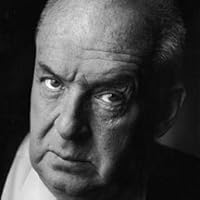
Vladimir Nabokov (Russian: Владимир Набоков) was a writer defined by a life of forced movement and extraordinary linguistic transformation. Born into a wealthy, liberal aristocratic family in St. Petersburg, Russia, he grew up trilingual, speaking Russian, English, and French in a household that nurtured his intellectual curiosities, including a lifelong passion for butterflies. This seemingly idyllic, privileged existence was abruptly shattered by the Bolshevik Revolution, which forced the family into permanent exile in 1919. This early, profound experience of displacement and the loss of a homeland became a central, enduring theme in his subsequent work, fueling his exploration of memory, nostalgia, and the irretrievable past. The first phase of his literary life began in Europe, primarily in Berlin, where he established himself as a leading voice among the Russian émigré community under the pseudonym "Vladimir Sirin". During this prolific period, he penned nine novels in his native tongue, showcasing a precocious talent for intricate plotting and character study. Works like The Defense explored obsession through the extended metaphor of chess, while Invitation to a Beheading served as a potent, surreal critique of totalitarian absurdity. In 1925, he married Véra Slonim, an intellectual force in her own right, who would become his indispensable partner, editor, translator, and lifelong anchor. The escalating shadow of Nazism necessitated another, urgent relocation in 1940, this time to the United States. It was here that Nabokov undertook an extraordinary linguistic metamorphosis, making the challenging yet resolute shift from Russian to English as his primary language of expression. He became a U.S. citizen in 1945, solidifying his new life in North America. To support his family, he took on academic positions, first founding the Russian department at Wellesley College, and later serving as a highly regarded professor of Russian and European literature at Cornell University from 1948 to 1959. During this academic tenure, he also dedicated significant time to his other great passion: lepidoptery. He worked as an unpaid curator of butterflies at Harvard University's Museum of Comparative Zoology. His scientific work was far from amateurish; he developed novel taxonomic methods and a groundbreaking, highly debated theory on the migration patterns and phylogeny of the Polyommatus blue butterflies, a hypothesis that modern DNA analysis confirmed decades later. Nabokov achieved widespread international fame and financial independence with the publication of Lolita in 1955, a novel that was initially met with controversy and censorship battles due to its provocative subject matter concerning a middle-aged literature professor and his obsession with a twelve-year-old girl. The novel's critical and commercial success finally allowed him to leave teaching and academia behind. In 1959, he and Véra moved permanently to the quiet luxury of the Montreux Palace Hotel in Switzerland, where he focused solely on writing, translating his earlier Russian works into meticulous English, and studying local butterflies. His later English novels, such as Pale Fire (1962), a complex, postmodern narrative structured around a 999-line poem and its delusional commentator, cemented his reputation as a master stylist and a technical genius. His literary style is characterized by intricate wordplay, a profound use of allusion, structural complexity, and an insistence on the artist's total, almost tyrannical, control over their created world. Nabokov often expressed disdain for what he termed "topical trash" and the simplistic interpretations of Freudian psychoanalysis, preferring instead to focus on the power of individual consciousness, the mechanics of memory, and the intricate, often deceptive, interplay between art and perceived "reality". His unique body of work, straddling multiple cultures and languages, continues to
I've only read LOLITA in this collection so this review will only reflect on that particular book. Will edit this review whenever I read the other books.
So, Lolita. It was a hard read. Knowing what it was about (thanks to it being a famous book), I kinda expected what I was going to face but I was still not ready for it. This book should have been subtitled: "In defence of paedophilia". From the early pages on, Humbert Humbert is an unapologetic paedophile. And like all paedos, he blames the girl (or nymphets as he calls them) for seducing him. It was never his fault!
Of course, HH is an unreliable narrator. The book is written as he is awaiting trial for murder and he wanted to set the record "straight". It is to Vladimir Nabokov's credit that he was able to make Mr Humbert both comical and disgusting at the same time. And which parts were true and which were embellished? As it was 'written' by a grown man who likes little girls and is trying to jusyify his actions, I would say most of it was hogwash. Again, credit to Nabokov for making Humbert Humbert so real.
(There is a book out called The Real Lolita which argues that Nabokov was inspired to write Lolita by the real life kidnap and rape case of Sally Horner. Well, that explains everything!)
In today's anything-goes sexually explicit era -- which is also the era of Amber Alerts and church pedophilia -- could anyone write a mainstream literary novel like Lolita? Not sure.
Still, Nabokov's nymphet has long rested securely in the literary canon,the result of its limpid gorgeous prose and the creation of Lolita herself, a character of such vividness and individuality, whose combination of innocence and calculation transcends that of merely being the unbearable object of Humbert Humbert's obsessions.
For me, Lolita moves from brilliance to greatness precisely because Humbert -- a familiar variation on the European intellectual both entranced and repelled by America -- recognizes his own monstrousness, understands fully that he is destroying Lolita's childhood, and Lolita herself, even as he remains helpless in his obsessive love for her. And by the end, in their memorable final encounter, I think love is the proper term for his feelings toward the married pregnant Lolita, who is emphatically no longer a nymphet.
Nabokov would sneer, but I can't help thinking that, on one submerged level, Lolita is indeed a parable of Nabokov's simultaneous love and distain for the intoxicating, crude, smug, vulgar, and seductive American society that he experienced in the late 1940s and 1950s.
Pnin is a far lighter weight enterprise, almost more a series of sketches of the hapless Russian academic Timofy Pnin, than a novel. But the end, however, it does deepen from comedy to, if not tragedy, to a profounder sadness about the past and present of Pnin's life.
(And as someone working on a story/novel about painters and painting, it contains a tour de force description of an artist contemplating the complexity of reflections and perspectives in the hood and headlights of a highly polished car.)
Pale Fire was a slog -- a book easier to admire than enjoy. The brilliant minute descriptions are all here -- Nabokov has to be one of the great visual writers of all time -- but the artifice becomes difficult to penetrate to reach the core of the story. First we have the forward, then the 999 lines of heroic couplets by the fictional John Shade, ostensibly centered around the tragic death of his daughter, and finally the academic commentary by Professor Charles Kinbote.
Kinbote, no surprise, turns out to be someone else entirely, just as the commentary becomes the tale of the King of the vaguely East European country of Zembla and his escape from the hands of revolutionaries ... a theme hard to discern in the poem itself. Very very clever and inward turning, like a tiny house of mirrors. But hard to grasp and care for its characters.
And then, at the end, in the last several paragraphs, it's as if Nabokov puts the pedal to the metal. With masterful ease, he uncorks a moving coda that dispassionately ties together the novel's characters with the flow of history in a manner that I associate with the greatest of Russian writers like Tolstoy and Chekhov.
I’ve already reviewed Lolita, Pnin, and Pale Fire separately so I will keep this review to just discussing this Library of America collection as a whole, as well as the Lolita Screenplay.
I’m not typically one for buying and reading from books that compile multiple novels in one. I usually do so out of necessity, as I find it more valuable to take on each novel as their own work. The only other LOA edition I own and read from was John Dos Passos’ USA Trilogy which I thought was actually a really good way to experience those books, as they really are just three parts of one major story. I found this Nabokov LOA edition at a thrift store last year for $2 and could not pass up the opportunity to have all three of these novels, especially given the near mint condition of it.
As far as content I haven’t previously reviewed, the Lolita Screenplay was probably the weakest aspect of the book. Half the page count of the novel it's based on, we get an introduction from Nabokov that gives context around what he is presenting with this. Nabokov gives the background around how the book came to be adapted and his relationship with Kubrick. He mentions that his original script was over 400 pages and that he really was just a consultant on the movie rather than a real creative force. He claims that while he was initially upset with the adaptation, he ultimately came around to acknowledging that Kubrick’s film was a well made piece of art but ultimately not his story that he wrote.
I have not seen the film, so it is hard to compare with the novel and this script but even from just reading the script there are a lot of changes that make the screenplay a very different story from the novel. Most obvious is aging up Dolly, referring to her mostly as Lolita, and giving her more of a flirty agency when it comes to her interactions with Humbert. Essentially this is where the stereotype of Lolita really is formed, as it is very different from the novel. The plot is also very abridged. I don’t think this is necessarily a bad thing until act 3 where the plot is raced through to the end, covering the best elements of the conclusion of the novel in a brief narration.
While I’m not the biggest fan of reading novels in a collection like this, I did think it worked well for this particular collection of Nabokov works. This is a very specific part of Nabokov’s career collected here. His most notorious and commercially successful, this is a great way to introduce yourself to Nabokov, as I did.
As for being a part of the Library of America. I thought this was a great example of what the series looks to cover. I believe Nabokov was one of the first naturalized Americans to be included in this series and if ever there was one to cover it would be him. These stories are all very American. Whether it be the cross country road trip aspects of Lolita, the “fish out of water” immigrant story of Pnin, or the American academia and xenophobia aspects of Pale Fire. All of these stories are as American as any native born writer’s works.
I mentioned this in my Pale Fire review but I will reiterate it here. With all of the metatextual elements and references to other Nabokov works in Pale Fire I found that self-referential aspect to be amplified even more having those other works included within the same binding. It enhanced the experience for me and really showed the expansive scope Nabokov was going for with that work.
My experience reading this collection was a great introduction to Nabokov. I’m excited to explore what else he has to offer. Ada or Ardor seems like the next step when it comes to progressing further in his bibliography but I’m most interested in reading something from his Berlin period next.
This review only covers Pale Fire. Pale Fire is a “5” reading, which means it is worth a reread whereas a “4” is not. I would also say that the Library of America books are some of finest editions made today. Good hardback bookbinding, great thick paper (it does not seem like cheap recycled stuff), crisp type that holds its ink, easy to hold (you wouldn’t think so for a 900 page volume, but it is), and good price (the three paperbacks of these novels along with the screenplay would cost you more).
Pale Fire is a masquerade of a exegesis of a poem by the same name by the poet John Shade. The scholar Dr. Charles Kinbote supposedly analyses the poem line by line, but the reader will soon discover that very little analysis occurs, and the novel is actually an autobiography by Kinbote. Kinbote is a pompous and egotistical college professor who, besides telling us how superior he is, relates a second story about the escape of Charles II, the last king of the country Zembla, from revolution in his country and possible assassination. Before long, we see that Kinbote is writing about himself and he is the supposed king from this mythical country. The plot thickens as the assassin Gradus is hot on Kinbote’s trail (supposedly).
Besides the satire on the literary academic community and the books they write, Nabokov delights in uncertainty (it seems at times that Heisenberg influenced writers as much as he did modern physics), for we do not know much for certain since the entire narrative is encased within Kinbote’s narration. Is he the last king of Zembla? Is he the writer of the poem and Shade simply an alter-ego? Are the other characters real or figments of his imagination? We do not know, but the character of Kinbote is a marvelous creation. If he is mad, he is the sanest insane character I have ever known. He is also one of the most intelligent and erudite narrators I've seen.
The style is incredibly good and Nabokov’s puns and allusions are fun. And the novel is more fun than sad.
And the poem is quite good, but don’t take anything too seriously, for it seems that Nabokov is just having great time. If you do not take it too seriously, you will too.
Had already read Lolita and Pale Fire, so reviewing this just for Pnin.
As is customary with Nabokov, Pnin is cleverly written, with some brilliant turns of phrase, and sometimes amusing. This is obviously heavily autobiographical, and one gets the sense that Nabokov himself was much like Pnin, though perhaps less bumbling. He was probably just as pedantic, though, and it is the pedantic nature of this character that annoys me. Who cares, for example, where the pronunciation emphasis of "interested" is placed? Just pronounce it in your own way, man. Strongly prefer Speak, Memory for a depiction of Nabokov's life, as the pedantry is better disguised there.
"Zadie Smith said this was her favorite book. Understandably so. Nabokov describes the most sympathetic misplaced Russian protagonist; I frequently found myself sputtering alliteratively along with the narrator: \""Poor, poor Pnin!\"" Few oddballs in literature garner as much fondness from readers as Pnin; Quixote and Raskolnikov come to mind, but both were violent in their delusions. Pnin is just depressing, in a wacky sort of way. Plus, Nabokov and Smith share the same interjecting style; every once in a while third person switches to first, as the busybody narrator feels compelled to color a few extra details from his perspective. A delightful, though dense, character study."
Lolita may be my favorite book ever, definitely top 5. Creepy as he is, Humbert's character, arrogant and crazy, is just great. The way Nabokov has him rationalize behaviors is wonderfully written.
Pnin was the least impressive of the three, however, it was a good read.
Pale Fire was the most difficult to read but the story structure is magnificent and I am not really in to poetry. The notes are great.
Listening to Jeremy Irons' perfect audiobook rendering of the perfect novel "Lolita" recently reminded me of the original work, so I welcomed the screenplay paired here for pleasure; I also re-read "Pnin" and "Pale Fire," which overlap obliquely. It's been forty-five years since I first enjoyed those three novels, and like Humbert Humbert, Charles Kinbote, and Pnin himself, and at least as of 2011 when I actually studied this anthology, I was about the same age-bracket as their creator was when he conjured up these erudite, erratic, and eccentric characters who in turn, of course, play off of himself, however much he may have denied it from his own niche in East Coast academia in postwar America.
"Lolita" as a novel I found rare: it needed not a word replaced; every adjective was necessary, each verb crafted, every sentence chiseled. My comments would be superfluous, but in the Library of America edition, Brian Boyd's notes pale before those in the annotated edition by Alfred Appel, whose version I recommend. If you lack not only fluent French but Russian, not to mention reams of insight into the worlds of art, butterflies, popular culture of the time, and wordplay that anyone less brilliant than Nabokov would not catch, Appel's edition supplants Boyd. Boyd drew upon Appel's notes and as his biographer, Boyd adds a few tidbits among those Appel did not in his reticence to expose certain facts gleaned from interviews with Nabokov a few decades ago. However, as with the rest of this handsome to hold LofA edition, Boyd's notes tend, as in many LofA commentaries, to skimp, perhaps due to pressure to keep the books easy to hold.
The sadness of "Lolita" lingers, with its beauty. The screenplay Nabokov first wrote for Stanley Kubrick was seven hours long, but from the shorter, if never produced conflation of two versions here, I would have liked to read whatever Nabokov created as he sought to transfer the gist of the novel into an entertaining, deft story for the screen. It's a great counterpart to the novel, best read after the printed text, naturally.
Pnin, who finds himself trying to get by at a college after the war, joins other Russian expatriates at a summer gathering. He laments a "'typical American college student' who does not know geography, is immune to noise, and thinks education is but a means to get a remunerative job." (387) Some things never change.
Later at that gathering, Pnin learns of the death in the Nazi camps of a woman he had loved, and he goes out to walk "under the solemn pines. The sky was dying. He did not believe in an autocratic God. He did believe, dimly, in a democracy of ghosts. The souls of the dead, perhaps, formed committees, and these, in quick succession, attended to the destinies of the quick." (395) But this reverie's snapped by the mosquitoes. Nabokov in these tales does not allow his haunted, thoughtful fellows to wander in the ether long.
A professor chats with another; they look up at the stars. "I suspect it is really a fluorescent corpse, and we are inside it." (417) Metaphorical images arrest one's attention in these often everyday tales, as characters jolt themselves out of themselves to look at a world that does not synchronize with their internal (dis)orientation.
Two academics dominate "Pale Fire"; Pnin gets a mention from one professor who mistakes Kinbote for him. Kinbote's commentary satirizes scholarly obsession, as this titular poem by John Shade gets wrenched by Kinbote, an emigre from Zembla with a complicated past, into Kinbote's own tale, even as he notes that he has "no desire to twist and batter an unambiguous apparatus criticus into the monstrous semblance of a novel." (495)
The odd delight of this challenging story lies in watching Kinbote's obsession take over his task. He does not appear to realize how far Shade's content lies from Kinbote's imagined reality, so details pile up. "But a commentator's obligations cannot be shirked, however dull the information he must collect and convey." (556) He loses his grip on what he set out to do: "Anybody having access to a good library could, no doubt, easily trace that story to its source and find the name of the lady; but such humdrum potterings are beneath true scholarship." (624)
Kinbote leaps into raptures, deriding Shade's seemingly secularized temperament. Nature herself is rightfully chided as "the grand cheat," who "puts into us" lust "to inveigle us into propagation." (621) Kinbote praises the "Divine Embrace," and "the warm bath of physical dissolution, the universal unknown engulfing the miniscule unknown that had been the only real part of one's temporary personality." (599) Even if Nabokov satirizes such faith, this is a marvelously written passage. Man's life, as Kinbote sensibly for once notes, may be that "human life is but a series of footnotes to a vast obscure unfinished masterpiece." (636)
These works show Nabokov at his best. I cited a few more off-beat sections to show the sometimes overlooked two works that nestle next to "Lolita." These four inclusions are highly recommended, and one only wonders, as Nabokov disingenuously confesses, how his English-language efforts compare to his native Russian ones, for he learned English as a baby, and he appears far more fluent than Pnin! As often in these works, the teller of a tale cannot always be trusted, or does not share omniscience.
I was the shadow of the waxwing slain By the false azure in the windowpane; I was the smudge of ashen fluff - and I Lived on, flew on, in the reflected sky.
The finest master of the art of the English language at the height of his magic powers. Enough said.
A bargain. Of course, PNIN is relatively short, and PALE FIRE is very short, and the screenplay of LOLITA is an adaptation of the celebrated 1955 novel, but a good one.
So it's a bargain if you need it or want it! I for one think it's worth it.
This is my second reading of Pnin; best bits: teeth replacement, psychoanalysis quackery and death camp evocation. The brief interpolation of Pnin's father in chapter five's summer retreat was confusing. Pale Fire is experimentally bizarre, a fun puzzle. Lolita a masterwork in one sock.
I was just planning to read Lolita but I’m so glad I picked up this copy of the book and read Pale Fire and Pnin too! The only part that didn’t really live up to me was the Lolita screenplay, overall great read unique and kept my interest for many many pages
I'm only writing about Pnin and Pale Fire, since I first read Lolita separately. The two actually work pretty well together since both contain strong elements of academic satire. Pnin was kind of painful right now, since the good professor can't get a decent job at an American university. I liked Pale Fire a lot. It's a prologue, a deliberately terrible narrative poem, and lengthy notes. The real story is about the editor, who it quickly becomes clear isn't entirely right. His notes cast the poem, which is actually a banal life story, as an allegory about his own life as an exiled king. It's a pretty funny and original setup.
I expected to be repelled, disgusted, condescending, and dismissive of this book. Yes I was repelled and at times disgusted, but I see why this book has stood the test of time. I was blown away by Nabokov's mind, his wordplay, and how he never, ever over-explains anything. He always says just enough and then he's tearing off again and my mind rushes to keep up. I can't recall reading another book with an "unreliable narrator" although I'm sure I must have. I certainly can't recall enjoying a book or hating the characters in it so much.
Not to be read back to back to back. The further I get, the more I think Nabokov 1955-1962 was a pretentious a-hole, and the less I get to really focus on the works. I'm glad I read Pnin first. Fantastic. Lolita's good, but not Pnin quality. Again, the verdict is not out on Pale Fire. Although I'm glad it has not yet turned into a TOTAL [a-hole:] regurgitation of the first two.
DON'T RECOMMEND. After reading the to about page 70, I put down the book and vowed never to return to it. The narrator of the book is a pedophile and his perverted thoughts about young girls are more than I can handle. I stopped reading because I was defintely not becoming a better person by continuing the book. His psyche was quite disturbing.
This entire review has been hidden because of spoilers.
Though english was third language of Nabokov, he has written such beautiful prose. but it was hard for me to decide what i liked more...the honesty and frankness that he adopted for his character to write what he does in the book or the plot itself....
I really enjoyed Lolita, up til about p. 188, when I began to get weary of the incessant descriptive passages about fondling and groping, etc. Nabokov is an amazing writer, so it's worth it to get through the novel, even though it's at times stomach-wrenching and other times, a snore.
i respect this book for it's beautiful language and ability to break through the perverse nature of the theme. Nabokov is an incredible writer and I enjoyed all the imagery. It's been awhile since I've read non-fiction literature though, so it was refreshing.
I borrowed this from the library to read Lolita. The playfulness of the language delighted me, and I enjoyed H.H.'s unreliable voice as narrator, but in the end, I was left cold by the novel.
OMG! My God but Mr. Humbert is a filthy, frightening perv. This book should be required reading for ALL parents of girls! What an eloquent representation of a sick bastard completely drowning in his pedophilic obsessions. Christ!
I finished Lolita, started Pnin, but didn't even begin Pale Fire. Sometimes I wonder what makes "classics" become "classics". I do find it remarkable though that anyone can become an author in a language not their native tongue.
I have set up a Tumblr blog, where I, Charles Kinbote, will be posting each couplet of John Shade’s Pale Fire. If you are interested, you can find it here
To me, Lolita is a fine example of how a disgusting and immoral subject matter can be turned into a thing of beauty through the use of perfect diction.