

What do you think?

The Last Frontier
Vintage paperback
253 pages, Mass Market Paperback
First published January 1, 1959
About the author
Alistair MacLean
343 books1,246 followersAlistair Stuart MacLean (Scottish Gaelic: Alasdair MacGill-Eain), the son of a Scots Minister, was brought up in the Scottish Highlands. In 1941, at the age of eighteen, he joined the Royal Navy; two and a half years spent aboard a cruiser were to give him the background for HMS Ulysses, his first novel, the outstanding documentary novel on the war at sea. After the war he gained an English Honours degree at Glasgow University, and became a schoolmaster. In 1983, he was awarded a D. Litt. from the same university.
Maclean is the author of twenty-nine world bestsellers and recognised as an outstanding writer in his own genre. Many of his titles have been adapted for film - The Guns of the Navarone, The Satan Bug, Force Ten from Navarone, Where Eagles Dare and Bear Island are among the most famous.
Maclean is the author of twenty-nine world bestsellers and recognised as an outstanding writer in his own genre. Many of his titles have been adapted for film - The Guns of the Navarone, The Satan Bug, Force Ten from Navarone, Where Eagles Dare and Bear Island are among the most famous.
Ratings & Reviews
Friends & Following
Create a free account to discover what your friends think of this book!
Community Reviews
Displaying 1 - 30 of 136 reviews

January 31, 2022
An early effort from Alistair MacLean, who churned out 29 thrillers in his career, this book impressed me when I read it at 15. A spy adventure novel, set in Cold War Hungry in the years directly after the Hungarian Uprising, it was the first book of its kind that I’d read.
I was considerably less impressed this time around. There are a few good action/suspense scenes, but even those get repetitive as the author goes through multiple, improbable capture and escape scenarios. The action scenes were drowned in a sea of excess verbiage, as far more space was given to long monologues on political philosophy, and preaching sermons on ethical morality. I resorted to skimming to finish this reread.
I was considerably less impressed this time around. There are a few good action/suspense scenes, but even those get repetitive as the author goes through multiple, improbable capture and escape scenarios. The action scenes were drowned in a sea of excess verbiage, as far more space was given to long monologues on political philosophy, and preaching sermons on ethical morality. I resorted to skimming to finish this reread.

July 11, 2014
"The Secret Ways" was a very significant work for Scottish author Alistair MacLean. His fourth novel out of an eventual 29, it was his first to feature a Cold War, espionage-type story, after three successive novels dealing with WW 2 adventure (1955's "H.M.S. Ulysses," 1957's "The Guns of Navarone" and that same year's "South by Java Head"). It was also the first MacLean novel to be given the big-screen treatment; the film version, released in April 1961 and starring Richard Widmark (miscast, I feel), beat "The Guns of Navarone" to the theaters by two months. And, if the host of the Alistair MacLean website is to be believed, it is the author's very best novel, and one that "catches MacLean at peak form." Originally released in the U.K. in 1959 under the title "The Last Frontier," the book was later renamed for its U.S. release. Both titles are ambiguous and unsatisfactory, it seems to me, especially since the novel itself is such a slam-bang thrill ride that features taut suspense, a realistic story, well-drawn characters and some stunning action sequences.
In the book, British secret agent Michael Reynolds is given a well-nigh impossible assignment. He must sneak into Communist Hungary, which at the time is being gripped by the worst winter weather in modern history, and somehow spirit back to freedom the English scientist Harold Jennings, the world's foremost expert on ballistic missiles. Jennings had been coerced to defect after the kidnapping of his wife and son, and is soon due to give a speech damning the West at a scientific convention in Budapest. Reynolds is aided in his mission by several members of the revolutionary underground, including their leader, Jansci; Jansci's daughter Julia, with whom the stolid Reynolds falls in love; the remarkably cool and efficient Polish character known as the Count; Sandor, a gentle but massively muscled ox of a man; and the youthful, whip-wielding Cossack. And Reynolds is going to need all the help he can get on this mission, as the Communists' spies are seemingly everywhere, and one misstep could land him in the hands of the dreaded AVO...the Hungarian secret police, which makes the Nazi Gestapo come off like a bunch of pansies....
"The Secret Ways" boasts at least four scenes that are sure to please fans of action/adventure fare. In the first, Reynolds and Jansci are forced to undergo a peculiar form of torture in an AVO prison, first dosed with actedron, mescaline and a new experimental drug and then placed into a steam room for the duration of their "trip." In another sequence, Reynolds must traverse the top and sides of a barreling locomotive, in a blinding and subfreezing blizzard (!), to effect the rescue of Prof. Jennings. In the third, our band of heroes faces off against the cunning Colonel Hidas and his AVO men on either side of a frozen river. And finally, there is the awesome spectacle of man mountain Sandor in a fight to the death with the even more massive AVO sadist Coco. These well-spaced action sequences alternate with scenes of great suspense (Reynolds infiltrating the Budapest hotel where Jennings is being held, for example) and interesting political discussions, during which Jansci gets to expound wisely on the desirability of peace and understanding in this crazy world. Surprisingly enough, although the Communists and the AVO are clearly the "bad guys" in MacLean's novel, the author takes pains to make us understand that the Russian people themselves are not to blame; as Jansci remarks, they are "likable, cheerful, and gay...there are no friendlier people on earth." The underground leader helps us understand the paranoid Communist leaders' mentality (even anticipating the Cuban missile crisis of two years later), and later gives Jennings, in an oral disquisition that takes up five full pages, a moving argument on the necessity for coexistence. Thus, though written at the height of the Cold War, "The Secret Ways" is refreshingly, almost startlingly modern in its political bent, evincing a forward-thinking mentality on MacLean's part that gives his finely written page-turner a right-on spirit.
Excellent as "The Secret Ways" may be, it yet comes freighted with a number of minor problems. For one thing, many of the characters speak almost too beautifully to admit of realism (Jansci's off-the-cuff political monologue is remarkably well composed and expressed), while some scenes (I am thinking most especially of that harrowing locomotive sequence) can be a tad hard to visualize. Surprisingly, MacLean even manages to bungle a few stated facts during the course of his novel. The AVO was disbanded in Hungary in 1956, yet seems to be fully functional in this book's post-Hungarian Revolution (of 1956). Similarly, the Polish UB (that country's secret police) is referenced as being fully operational, although it too had been, at that point, disbanded; in this case, in 1954. The distance from Budapest to the Polish city of Stettin is said to be 1,000 miles, whereas a casual look at a map reveals that it is only half that. (OK, I just researched this more closely...it is 465 miles.) Finally, to add to this nitpicking, the author makes reference to the famous Red Army commander of WW 2, Konstantin "Rossokovsky"; that should be "Rokossovsky." But these are minor matters that should in no wise interfere with any reader's thrills as he/she gets sucked into the action and adventure of this genuinely exciting piece of work. So is "The Secret Ways" MacLean's best novel, as mentioned up top? Well, this reader has only experienced three others--1961's "The Black Shrike," 1962's "The Satan Bug" and 1963's "Ice Station Zebra"--and based on that small sampling, I would have to say yes, if only marginally. And that simply means that Cold War thrillers don't come much better....
In the book, British secret agent Michael Reynolds is given a well-nigh impossible assignment. He must sneak into Communist Hungary, which at the time is being gripped by the worst winter weather in modern history, and somehow spirit back to freedom the English scientist Harold Jennings, the world's foremost expert on ballistic missiles. Jennings had been coerced to defect after the kidnapping of his wife and son, and is soon due to give a speech damning the West at a scientific convention in Budapest. Reynolds is aided in his mission by several members of the revolutionary underground, including their leader, Jansci; Jansci's daughter Julia, with whom the stolid Reynolds falls in love; the remarkably cool and efficient Polish character known as the Count; Sandor, a gentle but massively muscled ox of a man; and the youthful, whip-wielding Cossack. And Reynolds is going to need all the help he can get on this mission, as the Communists' spies are seemingly everywhere, and one misstep could land him in the hands of the dreaded AVO...the Hungarian secret police, which makes the Nazi Gestapo come off like a bunch of pansies....
"The Secret Ways" boasts at least four scenes that are sure to please fans of action/adventure fare. In the first, Reynolds and Jansci are forced to undergo a peculiar form of torture in an AVO prison, first dosed with actedron, mescaline and a new experimental drug and then placed into a steam room for the duration of their "trip." In another sequence, Reynolds must traverse the top and sides of a barreling locomotive, in a blinding and subfreezing blizzard (!), to effect the rescue of Prof. Jennings. In the third, our band of heroes faces off against the cunning Colonel Hidas and his AVO men on either side of a frozen river. And finally, there is the awesome spectacle of man mountain Sandor in a fight to the death with the even more massive AVO sadist Coco. These well-spaced action sequences alternate with scenes of great suspense (Reynolds infiltrating the Budapest hotel where Jennings is being held, for example) and interesting political discussions, during which Jansci gets to expound wisely on the desirability of peace and understanding in this crazy world. Surprisingly enough, although the Communists and the AVO are clearly the "bad guys" in MacLean's novel, the author takes pains to make us understand that the Russian people themselves are not to blame; as Jansci remarks, they are "likable, cheerful, and gay...there are no friendlier people on earth." The underground leader helps us understand the paranoid Communist leaders' mentality (even anticipating the Cuban missile crisis of two years later), and later gives Jennings, in an oral disquisition that takes up five full pages, a moving argument on the necessity for coexistence. Thus, though written at the height of the Cold War, "The Secret Ways" is refreshingly, almost startlingly modern in its political bent, evincing a forward-thinking mentality on MacLean's part that gives his finely written page-turner a right-on spirit.
Excellent as "The Secret Ways" may be, it yet comes freighted with a number of minor problems. For one thing, many of the characters speak almost too beautifully to admit of realism (Jansci's off-the-cuff political monologue is remarkably well composed and expressed), while some scenes (I am thinking most especially of that harrowing locomotive sequence) can be a tad hard to visualize. Surprisingly, MacLean even manages to bungle a few stated facts during the course of his novel. The AVO was disbanded in Hungary in 1956, yet seems to be fully functional in this book's post-Hungarian Revolution (of 1956). Similarly, the Polish UB (that country's secret police) is referenced as being fully operational, although it too had been, at that point, disbanded; in this case, in 1954. The distance from Budapest to the Polish city of Stettin is said to be 1,000 miles, whereas a casual look at a map reveals that it is only half that. (OK, I just researched this more closely...it is 465 miles.) Finally, to add to this nitpicking, the author makes reference to the famous Red Army commander of WW 2, Konstantin "Rossokovsky"; that should be "Rokossovsky." But these are minor matters that should in no wise interfere with any reader's thrills as he/she gets sucked into the action and adventure of this genuinely exciting piece of work. So is "The Secret Ways" MacLean's best novel, as mentioned up top? Well, this reader has only experienced three others--1961's "The Black Shrike," 1962's "The Satan Bug" and 1963's "Ice Station Zebra"--and based on that small sampling, I would have to say yes, if only marginally. And that simply means that Cold War thrillers don't come much better....
March 25, 2012
What can you say about Alistair MacLean? He's a great storyteller, but not such a good writer? Does that chime with you? I enjoy his books but sometimes find the narrative irritating and repetitive. He handles action very well and understands pace. Characterisation, which is the element of fiction I most enjoy, is thin almost to the point of stereotype.
In this tale of a Cold War spy sent on an impossible mission (of course), his protagonist is put through the mincer in so many ways. He survives torture, extreme physical and mental torment etc, etc.
I 'found' this old paperback amongst the books I've bought but yet to read and took it with me to read whilst away on a trip where my wife was fully engaged in other activities. It filled a space of time for me, but this type of fiction has probably had its day and had more significance and meaning when it was produced (the edition I read was published 1968) at the height of the tensions between East and West.
It recalled many similar novels and passed a few hours in a hotel lounge.
But, if you like your fiction full of improbable challenges with your hero set against unlikely odds, you'll probably enjoy this one.
In this tale of a Cold War spy sent on an impossible mission (of course), his protagonist is put through the mincer in so many ways. He survives torture, extreme physical and mental torment etc, etc.
I 'found' this old paperback amongst the books I've bought but yet to read and took it with me to read whilst away on a trip where my wife was fully engaged in other activities. It filled a space of time for me, but this type of fiction has probably had its day and had more significance and meaning when it was produced (the edition I read was published 1968) at the height of the tensions between East and West.
It recalled many similar novels and passed a few hours in a hotel lounge.
But, if you like your fiction full of improbable challenges with your hero set against unlikely odds, you'll probably enjoy this one.

October 6, 2010
What I disliked about this book:
The protagonist is unconvincing in his 'best man for the job' designation. He makes basic and glaring errors repeatedly (he basically blunders through the entire book), he is subverted within a few days by his Hungarian contacts (suggesting the UK didn't bother to screen agents), and he becomes emotionally involved with a woman in the middle of a job (see: romance novels for men). Sure, it's fun in an outlandish James Bond sense, but laughable in a practical sense.
More of MacLean's garrulous villains, more than matched by the protagonists in this book. It seemed like half the novel involved Reynolds being lectured by his contact who was trying summarize Animal Farm using twice as many words.
I did finish it, but it was more of an act of will towards the end.
I did like the action 'business/action' aspect of the book. More story, less blather!
The protagonist is unconvincing in his 'best man for the job' designation. He makes basic and glaring errors repeatedly (he basically blunders through the entire book), he is subverted within a few days by his Hungarian contacts (suggesting the UK didn't bother to screen agents), and he becomes emotionally involved with a woman in the middle of a job (see: romance novels for men). Sure, it's fun in an outlandish James Bond sense, but laughable in a practical sense.
More of MacLean's garrulous villains, more than matched by the protagonists in this book. It seemed like half the novel involved Reynolds being lectured by his contact who was trying summarize Animal Farm using twice as many words.
I did finish it, but it was more of an act of will towards the end.
I did like the action 'business/action' aspect of the book. More story, less blather!
This entire review has been hidden because of spoilers.

April 7, 2019
While this is not one of Alistair MacLean’s greatest books, there are many elements in it that are contained in his later works.
For those who crave action, there is plenty of it here. The author is wonderful at weaving danger and suspense together, and due to his creative writing, it is easy to become part of the story without even realizing it. There are also numerous fight scenes, and these are descriptive without becoming wordy.
The plot is good, a youthful precursor of what Mr. MacLean would be releasing in years to come. While the capture/escape formula was used a lot in this book, I didn’t find myself becoming bored with the storyline.
There are a few spots where the author dives into politics, and while some of the sentiments may still exist today in with different players, one must remember that this book was written 60 years ago. While passages like these allow authors to thinly cloak their thoughts in a novel, the passages still help with characterizations. This is especially true of the character Jansci, and I did find a few revelations to think on that I hadn’t heard voiced as they were in this book. Regardless, these dialogues don’t last long and the action always picks back up.
Overall, a good book and worth your time. Four stars.
For those who crave action, there is plenty of it here. The author is wonderful at weaving danger and suspense together, and due to his creative writing, it is easy to become part of the story without even realizing it. There are also numerous fight scenes, and these are descriptive without becoming wordy.
The plot is good, a youthful precursor of what Mr. MacLean would be releasing in years to come. While the capture/escape formula was used a lot in this book, I didn’t find myself becoming bored with the storyline.
There are a few spots where the author dives into politics, and while some of the sentiments may still exist today in with different players, one must remember that this book was written 60 years ago. While passages like these allow authors to thinly cloak their thoughts in a novel, the passages still help with characterizations. This is especially true of the character Jansci, and I did find a few revelations to think on that I hadn’t heard voiced as they were in this book. Regardless, these dialogues don’t last long and the action always picks back up.
Overall, a good book and worth your time. Four stars.

August 25, 2011
When a prominent scientist defects to the Soviet Union with a precious secret, Michael Reynolds is tasked with bringing him back.

September 1, 2013
WELCOME UPDATE: I spend considerable time below bitching about how MacLean's books are now out of print. Well, good news! The publishing world has apparently heard my singular voice, haha, because in 2020 HarperCollins reprinted most if not all of MacLean's works in a cool new format - so, yay me!
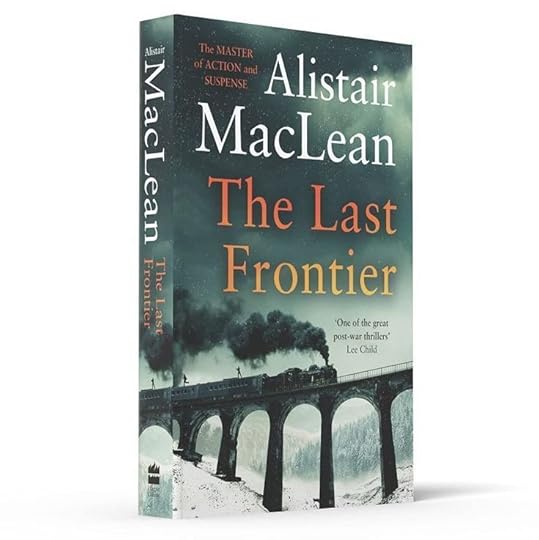
(Yeah, don't know why the title change - but it's the same book)
Read a bunch of Alistair MacLean about 40 years ago, and recently decided to reread a few of them just for fun. Obviously, some of held up better than others, and The Secret Ways isn't one of the best -- but considering it was written over half a century ago, it's still a pretty good Cold War story which still keeps you turning the pages. And let's be honest -- MacLean's books have certainly held up better than any of the James Bond novels, which are laughably outdated (if anyone actually still reads them today). Yet Fleming's books are still universally in print with titles familiar to everyone (thanks mainly to the movies), while none of MacLean's are in print anywhere -- even his classics like Guns of Navarone, Ice Station Zebra or Where Eagles Dare, all of which were made into successful (at the time) films.
Secret Ways certainly has its flaws, as other reviewers have pointed out. There are numerous (and sometimes endless) sections of kumbaya anti-Communist speechifying -- but you can skim through those, and they actually seem kind of sweetly naïve in retrospect. More serious, Reynolds is a fairly weak hero; he manages to get captured either three or four times -- and unlike James Bond, never manages to escape by himself, but always has to be rescued. Also, this is a curiously bloodless book -- every time our heroes turn the tables and capture some of the bad guys, they either just knock them out or let them off somewhere in the woods, so that the same baddies can come back and capture them all over again.
Still and all, not a bad book for its time, as one of the first generation of Cold War novels (written four years before The Spy Who Came In From The Cold), and certainly worthy of continued publication.
An interesting side note: an apparently awful film version was made in 1961 starring Richard Widmark -- the first MacLean book filmed -- and so forgotten today that it's not even listed on Rotten Tomatoes. According to what reviews are available, the film bore only a passing resemblance to the book, leaving out major characters, adding others, and turning Reynold's heroic (if incompetent) Secret Service agent into a "nasty piece of work, a middle-aged freelancer with an instant sarcastic answer to whatever anyone says, (and who) is doing this job only because he owes a lot of money and needs a quick payday." Fortunately, later movie adaptations fared better -- including those mentioned above as well as 1978's "Force 10 From Navarone," probably most famous for being Harrison Ford's follow-up to the original "Star Wars," as well as Robert Shaw's second-to-the-last film.
(Yeah, don't know why the title change - but it's the same book)
Read a bunch of Alistair MacLean about 40 years ago, and recently decided to reread a few of them just for fun. Obviously, some of held up better than others, and The Secret Ways isn't one of the best -- but considering it was written over half a century ago, it's still a pretty good Cold War story which still keeps you turning the pages. And let's be honest -- MacLean's books have certainly held up better than any of the James Bond novels, which are laughably outdated (if anyone actually still reads them today). Yet Fleming's books are still universally in print with titles familiar to everyone (thanks mainly to the movies), while none of MacLean's are in print anywhere -- even his classics like Guns of Navarone, Ice Station Zebra or Where Eagles Dare, all of which were made into successful (at the time) films.
Secret Ways certainly has its flaws, as other reviewers have pointed out. There are numerous (and sometimes endless) sections of kumbaya anti-Communist speechifying -- but you can skim through those, and they actually seem kind of sweetly naïve in retrospect. More serious, Reynolds is a fairly weak hero; he manages to get captured either three or four times -- and unlike James Bond, never manages to escape by himself, but always has to be rescued. Also, this is a curiously bloodless book -- every time our heroes turn the tables and capture some of the bad guys, they either just knock them out or let them off somewhere in the woods, so that the same baddies can come back and capture them all over again.
Still and all, not a bad book for its time, as one of the first generation of Cold War novels (written four years before The Spy Who Came In From The Cold), and certainly worthy of continued publication.
An interesting side note: an apparently awful film version was made in 1961 starring Richard Widmark -- the first MacLean book filmed -- and so forgotten today that it's not even listed on Rotten Tomatoes. According to what reviews are available, the film bore only a passing resemblance to the book, leaving out major characters, adding others, and turning Reynold's heroic (if incompetent) Secret Service agent into a "nasty piece of work, a middle-aged freelancer with an instant sarcastic answer to whatever anyone says, (and who) is doing this job only because he owes a lot of money and needs a quick payday." Fortunately, later movie adaptations fared better -- including those mentioned above as well as 1978's "Force 10 From Navarone," probably most famous for being Harrison Ford's follow-up to the original "Star Wars," as well as Robert Shaw's second-to-the-last film.
September 1, 2014
Better then James Bond and Jason Bourne put together, atleast this story makes sense with human emotions and last minute fallacies (that are bound to happen but are glossed over in other spy novels.

September 18, 2022
I couldn't really get into this one. I generally like MacLean's work, like The Guns of Navarrone and Where Eagles Dare, but I had difficulty connecting with anyone in this book.

May 2, 2025
The book wasn't terrible but...
Well, I really wanted to give it 3 stars because it was quite an interesting read but when I started writing this review I remembered so many facepalms and headdesks that I just had to lower the rating.
First of all, the pacing. The story gets waaaaay too long to get going, the ending dragged down but what will turn out to be the bane of this books: moralistic conversations about pacifism and communism.
Regarding pacifism: in the book taking place not long after the horrors of WW2 I can understand characters presenting both worldviews - 1) pro-pacifistic (the war was so evil, we don't want to see it ever again), 2) and anti-pacifistic (the war was so evil so we need to arm ourselves because we don't want to see it ever again). Now, I'm not entirely objective as I consider option 2) more realistic, but there are pragmatic rather than moral reasons for a certain amount of forgiving thy enemy (I know, easier said than done) - for example trying not to make it a forever war. But only the pro-pacifistic person brings these arguments, the anti- is all "we should kill all Russians/Commies" (putting aside that USSR was on the winning side of WW2).
That leads us to discussions about evils of communism. Despite being a disgusting leftie, I detest this form of government/economic governane quite a bit. However whenever character A brings examples to show that Russians/commies don't have monopoly on being evil, character B replies "communism is worse". Atlantic Slave Trade? Communism was worse. Holocaust? Communism was worse. Japanese brutality (rape of Nanjing etc.). Communism was worse. Now, I personally believe that making tier lists of who was the most evil is not a particularly worthwile way of spending free time, but there are some arguments that can be used if you want to stress that communism was the evil-est. The anti-intellectualism that permeated it. The fact that it lasted longer than fascism/nazism and spread wider etc. The only arguments character B gives: "communism is worse because it's Russian/from Russia". And why are Russians worse? Because they're communists, duh. Circular reasoning is circular.
This aside, by biggest issue is with the protagonist. It's not even that he has to be told everything, acts (he's a master spy, remember!) as if the whole concepts of 'deception' and 'lying' were completely alien to him. No, the biggest problem is that, despite us being told (repeatedly) that he's the best of da best, he tries to achieve something on his own five times and each time he fails, gets captured and saved (3 times by the same guy even, we're get to fifth time a bit later). Also, we're told that the protagonist is ALL ABOUT THE MISSION. No matter the cost. A thirty minutes conversation, a bowl of goulash and a fake kiss later, he's ready to abandon the mission for a girl he just met. No wrestling with doubts, just BAM! he knows this is the right thing to do. BUT! Then, at the almost very end, when they have all but tricked the bad guys and he can have the girl and the mission, without any buildup he decides to sacrifice the girl to complete the mission (which by this point is all but completed), but fortunately someone sacrifices himself and he again can get both the girl and the mission.
And the ending. OMG, the ending. See, our protagonist has an epiphany about all the things I wrote, how he screwed everything up and how everyone has to save him. So he makes a decision to kill the main bad guy by himself. Sneaks up to the main bad guy who is unguarded (this will be important later) and points the gun at him. Then they have another conversation about forgiveness and communism and our protagonist decides to spare the guy. Then he has another revelation - the bad guy, a colonel, was unguarded because the sneaky trickster sent his people to surround the good guys' hideout. So our hero rushes to save his friends (and the girl). Of course he fails, gets immediately captured... but fortunately the bad guys overlooked one of the minor good guys (one who appeared maybe in three scenes before) who saves everyone. THE END.
Sigh. Nope, just nope.
Well, I really wanted to give it 3 stars because it was quite an interesting read but when I started writing this review I remembered so many facepalms and headdesks that I just had to lower the rating.
First of all, the pacing. The story gets waaaaay too long to get going, the ending dragged down but what will turn out to be the bane of this books: moralistic conversations about pacifism and communism.
Regarding pacifism: in the book taking place not long after the horrors of WW2 I can understand characters presenting both worldviews - 1) pro-pacifistic (the war was so evil, we don't want to see it ever again), 2) and anti-pacifistic (the war was so evil so we need to arm ourselves because we don't want to see it ever again). Now, I'm not entirely objective as I consider option 2) more realistic, but there are pragmatic rather than moral reasons for a certain amount of forgiving thy enemy (I know, easier said than done) - for example trying not to make it a forever war. But only the pro-pacifistic person brings these arguments, the anti- is all "we should kill all Russians/Commies" (putting aside that USSR was on the winning side of WW2).
That leads us to discussions about evils of communism. Despite being a disgusting leftie, I detest this form of government/economic governane quite a bit. However whenever character A brings examples to show that Russians/commies don't have monopoly on being evil, character B replies "communism is worse". Atlantic Slave Trade? Communism was worse. Holocaust? Communism was worse. Japanese brutality (rape of Nanjing etc.). Communism was worse. Now, I personally believe that making tier lists of who was the most evil is not a particularly worthwile way of spending free time, but there are some arguments that can be used if you want to stress that communism was the evil-est. The anti-intellectualism that permeated it. The fact that it lasted longer than fascism/nazism and spread wider etc. The only arguments character B gives: "communism is worse because it's Russian/from Russia". And why are Russians worse? Because they're communists, duh. Circular reasoning is circular.
This aside, by biggest issue is with the protagonist. It's not even that he has to be told everything, acts (he's a master spy, remember!) as if the whole concepts of 'deception' and 'lying' were completely alien to him. No, the biggest problem is that, despite us being told (repeatedly) that he's the best of da best, he tries to achieve something on his own five times and each time he fails, gets captured and saved (3 times by the same guy even, we're get to fifth time a bit later). Also, we're told that the protagonist is ALL ABOUT THE MISSION. No matter the cost. A thirty minutes conversation, a bowl of goulash and a fake kiss later, he's ready to abandon the mission for a girl he just met. No wrestling with doubts, just BAM! he knows this is the right thing to do. BUT! Then, at the almost very end, when they have all but tricked the bad guys and he can have the girl and the mission, without any buildup he decides to sacrifice the girl to complete the mission (which by this point is all but completed), but fortunately someone sacrifices himself and he again can get both the girl and the mission.
And the ending. OMG, the ending. See, our protagonist has an epiphany about all the things I wrote, how he screwed everything up and how everyone has to save him. So he makes a decision to kill the main bad guy by himself. Sneaks up to the main bad guy who is unguarded (this will be important later) and points the gun at him. Then they have another conversation about forgiveness and communism and our protagonist decides to spare the guy. Then he has another revelation - the bad guy, a colonel, was unguarded because the sneaky trickster sent his people to surround the good guys' hideout. So our hero rushes to save his friends (and the girl). Of course he fails, gets immediately captured... but fortunately the bad guys overlooked one of the minor good guys (one who appeared maybe in three scenes before) who saves everyone. THE END.
Sigh. Nope, just nope.
This entire review has been hidden because of spoilers.

October 22, 2022
Michael Reynolds is a secret agent somewhat in the Bond style. Here he is to enter Hungary, then under Russian occupation, and bring to the west a scientist. From the outset his mission hits the skids when he is captured just across the border but who is the Colonel and whose side is he on? Reynolds continues in this fashion, stumbling from one disaster to another and from one beating to the next. The ending is inevitable as he finds the girl and the Professor.
In parts, this is a poignant story of the East and West and how they should live together and respect one another. I wonder if Alistair MacLean, who died in 1987, would see so many similarities in today's world. Unfortunately not much has changed for the better.
3 stars, as the tale has a rather worn out style for today.
In parts, this is a poignant story of the East and West and how they should live together and respect one another. I wonder if Alistair MacLean, who died in 1987, would see so many similarities in today's world. Unfortunately not much has changed for the better.
3 stars, as the tale has a rather worn out style for today.

March 31, 2020
The point I make is simply that cruelty and hate and intolerance are the monopoly of no particular race or creed or time.
And despite being a Cold War spy-and-action thriller, the book manages to convey just that point. The writing is what I would call clean: not simple and not overwrought. with hard-edges, clear meaning, not a word can be added or removed. In that sense the writing is ideal for a genre book, and is a valuable relic to be enjoyed in these post-post-writing times.
The plot itself is exciting enough, though somewhat predictable (especially the final couple of twists). More interestingly, the main character to whose third person point of view we are privy, is not the actual heavyweight of the book. Two other characters from the Hungarian resistance are given the spotlight, one for his ideology of peace, the other for his extraordinary, clever heroics.
The violence is implied; traumas are in the past, or are presently conducted with blunt objects. Emotional pull and long-term suffering provide the impetus.
Worth a read.

November 27, 2012
Used to read Maclean's books when I was a teenager. Have not read any since so it has been awhile.
This one is okay-the dialogue which at the time it was originally published was probably okay is now highly dated. The novel plot repeatedly gets bogged down in philosophical discussions that really take away from the progression of the plot. It does a good job of keeping the Cold War feel that was the basis for many, many novels from that era. Did not like the main character too much and the other characters are Maclean staples that pop up in all of his stories albeit with different names.
It did whet my appetite to read a few more of his novels though as I enjoyed them when I was a teen and will see how they hold up now some thirty years later.
This one is okay-the dialogue which at the time it was originally published was probably okay is now highly dated. The novel plot repeatedly gets bogged down in philosophical discussions that really take away from the progression of the plot. It does a good job of keeping the Cold War feel that was the basis for many, many novels from that era. Did not like the main character too much and the other characters are Maclean staples that pop up in all of his stories albeit with different names.
It did whet my appetite to read a few more of his novels though as I enjoyed them when I was a teen and will see how they hold up now some thirty years later.

October 9, 2017
3.5
I didn't know what I would be finding in this book, as it was the first time I read something like this. But I enjoyed the experience, and even though it could have been better, I am quite satisfied with the story, the characters and their past, but, most of all, with the ending, which, after a few disappointments, I think was refreshing. What I was most excited about was the fact that I could not foresee how things would go in certain situations, even though in the end I could see that there had always been some loose ends.
This book seems shaped by the western way of thinking and it would be nice to see a similar story in a reversed situation. All in all, it was a good read and it feels good to be back on track.
I didn't know what I would be finding in this book, as it was the first time I read something like this. But I enjoyed the experience, and even though it could have been better, I am quite satisfied with the story, the characters and their past, but, most of all, with the ending, which, after a few disappointments, I think was refreshing. What I was most excited about was the fact that I could not foresee how things would go in certain situations, even though in the end I could see that there had always been some loose ends.
This book seems shaped by the western way of thinking and it would be nice to see a similar story in a reversed situation. All in all, it was a good read and it feels good to be back on track.

November 13, 2011
This wasn't my favourite Alistair MacLean thriller. In this one, we find British agent, Reynolds, sneaking into Hungary during the Cold War, with the aim of bringing out British scientist, Jennings. Reynolds gets into trouble almost immediately but with the help of Hungarian underground, Janszi, the Major and their team, he continues with his mission. Reynolds continues to get into predicaments, but with the help of his new friends must try and get Jennings. There is a fair bit of action, but also considerable pontificating, on Communism, misunderstandings between nations, etc. As I say, not my favourite, but still entertaining.

February 3, 2020
The book is about Reynolds, a British secret service agent, entering Hungary to save Dr Jennings, a scientist held in captive by the Communists. He is pitted against the Hungarian secret service, AVO. At this assistance are Jansci and The Count, along with their team members, a bunch of underground agents in Hungary.
The books starts off quickly, but eventually seems to lose its steam. Reynolds is perhaps one of the less impressive secret service agents I've come across. Jansci and The Count, though, are shrouded in mystery and the way their characters are built is quite amazing. It makes me wonder if they're really the protagonists.
The books starts off quickly, but eventually seems to lose its steam. Reynolds is perhaps one of the less impressive secret service agents I've come across. Jansci and The Count, though, are shrouded in mystery and the way their characters are built is quite amazing. It makes me wonder if they're really the protagonists.

April 28, 2016
This was a deep book, and it took awhile to finish. It wasn't boring, but certainly not fast-paced.
The philosophy is so good, and the Count and Jansci characters so amazing, that this is a book to remember.
It is odd to read a Dick Lit Book that preaches loving one's fellow men, seeing beyond cultures and stereotypes to what is most important, and that advocates against revenge (while still doing everything in one's power to protect loved ones and friends from harm).
Most of these I pass on, this one I will keep.
The philosophy is so good, and the Count and Jansci characters so amazing, that this is a book to remember.
It is odd to read a Dick Lit Book that preaches loving one's fellow men, seeing beyond cultures and stereotypes to what is most important, and that advocates against revenge (while still doing everything in one's power to protect loved ones and friends from harm).
Most of these I pass on, this one I will keep.

October 19, 2016
Κατασκοπίας με ελληνικό τίτλο "το τελευταίο σύνορο".
Ποτισμένο στην δυτική προπαγάνδα, τυπικό της κατηγορίας του, με λυτρωτική κατάληξη που αποζητούσε ο βασανισμένος κόσμος τότε. Ο αγαπημένος τους συγγραφέας των κανονιών του Ναβαρόνε δεν τους απογοητεύει κι εδώ με το γνωστό ψυχροπολεμικό κλίμα ως πασπαλισμένη ζαχαρόσκονη.
Όλα αυτά στην μετά εποχή του ΒΠΠ. Το βιβλίο γράφτηκε το 1959. Ωραίο για τότε.
Σήμερα...σήμερα μυρίζει έντονα ναφθαλίνη. Και την επόμενη φορά καλά θα κάνω, όσα μυρίζουν έντονα ναφθαλίνη, να τα αφήνω εκεί που τα βρήκα. Στο μπαούλο του παππού.
Ποτισμένο στην δυτική προπαγάνδα, τυπικό της κατηγορίας του, με λυτρωτική κατάληξη που αποζητούσε ο βασανισμένος κόσμος τότε. Ο αγαπημένος τους συγγραφέας των κανονιών του Ναβαρόνε δεν τους απογοητεύει κι εδώ με το γνωστό ψυχροπολεμικό κλίμα ως πασπαλισμένη ζαχαρόσκονη.
Όλα αυτά στην μετά εποχή του ΒΠΠ. Το βιβλίο γράφτηκε το 1959. Ωραίο για τότε.
Σήμερα...σήμερα μυρίζει έντονα ναφθαλίνη. Και την επόμενη φορά καλά θα κάνω, όσα μυρίζουν έντονα ναφθαλίνη, να τα αφήνω εκεί που τα βρήκα. Στο μπαούλο του παππού.

September 4, 2014
Alistair MacLean is probably the author that started me reading books in the first place! I do re-read some favourites from time to time (and some that I have forgotten that they maybe weren't really worth another go...) and some of them, in particular the earliest ones, do have something that makes them worth the few hours it takes. "The Last Frontier", or "Secret ways" in the US, is one of them. A relentless and brutal thriller set in cold-war Hungary.
February 17, 2013
My favorite Alistair MacLean. The right mix of action, thought, and character development (with some unforgettable characters). Even the romantic subplot is handled far better than in most of his books. If the few pages about Communism bore you, skip them and enjoy the rest of the story. See my full review on my website: http://AlistairMacLean.com.
August 27, 2007
My favourite Alistair Maclean, very atmospheric.

June 7, 2009
If this is the same book that was also titled The Secret Ways, it was good.
July 21, 2012
Another fantastic fast paced book by MacLean that cannot fail to move and thrill you.
May 24, 2026
Alistair MacLean and Sir Arthur Conan Doyle both despised their most commercially successful stories.
In his memoirs Doyle recalls that Robert Louis Stevenson, writing from Samoa, once told him that the Sherlock Holmes tales were: “the sort of yarn I like to read when I have a cold.”
To my mind, this is high praise. If a story can entertain you when you’re not feeling well, it must be good.
I like many of Alistair MacLean’s novels in the same way. I can read them when I don’t feel well enough to read anything else. The sentences have so much momentum, they very nearly read themselves.
Lee Child has praised this narrative pace on several occasions and has called The Last Frontier “one of the great post-war thrillers.”
When phenomenally successful novelists praise each other it’s a good idea to sit up and take notice, but I disagree with Child. His idea of a successful novel is one that any reader will finish. But I had trouble finishing The Last Frontier.
MacLean’s greatest strength is to propel readers through taut, twisty plots using sentences that keep escalating the stakes without ever relaxing the tension. His speciality is to always remind you of what can go wrong. He is minutely attentive to danger and shows you what it feels like to exert yourself to the utmost when you are seconds away from death.
The things he is not good at are nuances of character, moral ambiguity and political complexity. He completely fails to understand or depict women. The best his male characters can do when they meet a woman is indulge in flirtatious banter and offer a protective embrace.
In The Last Frontier the usual weaknesses are present but what should be one of its greatest strengths — the plot — also lets it down.
The premise is sound enough. We’re in the early 1950s, shortly before the failed Hungarian Revolution of 1956. Reynolds, a British secret service agent must persuade a renegade British scientist to leave Hungary and come back to Britain.
The reason the novel falters is that Reynolds and his associates outwit the Soviet-led opposition with nothing more than implausible bluff and reckless bravado.
Time and time again, the good guys don’t have to kill anyone because the bad guys are completely useless and don’t pose any real threat.
To this shaky narrative foundation, MacLean tries to introduce moral complexity. Reynolds, the British secret agent, has to justify his actions to a disapproving woman. She is lovely, scared, and morally fastidious.
She reproaches him for bundling a man into a cupboard where he might suffocate. She reminds him that he hit another man on the head and left him outside in the snow where he might freeze to death. But her strongest criticism is that he is trying to coerce the scientist (“that poor old man”) to return to Britain by telling him lies about his family.
It’s terrible dialogue.
Later in the novel the woman’s Ukrainian father, Jansci, tries to convince the scientist to return to Britain by exposing the failings of communism. He says that the best hope for the world lies in peaceful co-existence.
The trouble with this rhetoric is not that it's naive but that it’s grafted onto a creaky plot and voiced by characters who are paper-thin.
Jansci is nevertheless the most fully developed character here and is the real hero of the novel. He is not just opposed to the Soviet Union. He also points out the culpability of the British and American governments. He is a man driven by a desire to speak the truth and rescue downtrodden people, regardless of personal sacrifices.
This is what Child admires. Jansci’s uncompromising ethical code is one of the inspirations for Jack Reacher, the protagonist Child puts into his own novels.
But by drawing attention to real-world political issues and giving his characters difficult moral choices, MacLean is exposing his weaknesses as a writer and neglecting his key strengths.
To his credit, the momentum picks up again here and there. The last 120 pages are very exciting and introduce a number of unexpected twists, as in his best thrillers.
But overall this novel is disappointing. It lacks the consistent, dizzying pace that MacLean is known for and weighs down an implausible plot with heavy themes that expose his limitations as a novelist.
In his memoirs Doyle recalls that Robert Louis Stevenson, writing from Samoa, once told him that the Sherlock Holmes tales were: “the sort of yarn I like to read when I have a cold.”
To my mind, this is high praise. If a story can entertain you when you’re not feeling well, it must be good.
I like many of Alistair MacLean’s novels in the same way. I can read them when I don’t feel well enough to read anything else. The sentences have so much momentum, they very nearly read themselves.
Lee Child has praised this narrative pace on several occasions and has called The Last Frontier “one of the great post-war thrillers.”
When phenomenally successful novelists praise each other it’s a good idea to sit up and take notice, but I disagree with Child. His idea of a successful novel is one that any reader will finish. But I had trouble finishing The Last Frontier.
MacLean’s greatest strength is to propel readers through taut, twisty plots using sentences that keep escalating the stakes without ever relaxing the tension. His speciality is to always remind you of what can go wrong. He is minutely attentive to danger and shows you what it feels like to exert yourself to the utmost when you are seconds away from death.
The things he is not good at are nuances of character, moral ambiguity and political complexity. He completely fails to understand or depict women. The best his male characters can do when they meet a woman is indulge in flirtatious banter and offer a protective embrace.
In The Last Frontier the usual weaknesses are present but what should be one of its greatest strengths — the plot — also lets it down.
The premise is sound enough. We’re in the early 1950s, shortly before the failed Hungarian Revolution of 1956. Reynolds, a British secret service agent must persuade a renegade British scientist to leave Hungary and come back to Britain.
The reason the novel falters is that Reynolds and his associates outwit the Soviet-led opposition with nothing more than implausible bluff and reckless bravado.
Time and time again, the good guys don’t have to kill anyone because the bad guys are completely useless and don’t pose any real threat.
To this shaky narrative foundation, MacLean tries to introduce moral complexity. Reynolds, the British secret agent, has to justify his actions to a disapproving woman. She is lovely, scared, and morally fastidious.
She reproaches him for bundling a man into a cupboard where he might suffocate. She reminds him that he hit another man on the head and left him outside in the snow where he might freeze to death. But her strongest criticism is that he is trying to coerce the scientist (“that poor old man”) to return to Britain by telling him lies about his family.
“Why, Mr Reynolds. Why?”
“You know why. Because I'm a nasty, amoral, emotionless machine of a Chicago gangster just doing what I'm told. You just said so, didn't you?”
“I'm just wasting my breath, am I not, Mr. Reynolds?” the tone was flat and dull.
“By no means." Reynolds grinned in the darkness. “I could listen all night to your voice...”
It’s terrible dialogue.
Later in the novel the woman’s Ukrainian father, Jansci, tries to convince the scientist to return to Britain by exposing the failings of communism. He says that the best hope for the world lies in peaceful co-existence.
The nationalism of those who cry, ‘We are the people,’ the jingoistic brand of patriotism — these are the great evils of our world to-day, the barriers to peace that no man can overcome. What hope is there for the world as long as we cling to the outmoded forms of national allegiance?
The trouble with this rhetoric is not that it's naive but that it’s grafted onto a creaky plot and voiced by characters who are paper-thin.
Jansci is nevertheless the most fully developed character here and is the real hero of the novel. He is not just opposed to the Soviet Union. He also points out the culpability of the British and American governments. He is a man driven by a desire to speak the truth and rescue downtrodden people, regardless of personal sacrifices.
This is what Child admires. Jansci’s uncompromising ethical code is one of the inspirations for Jack Reacher, the protagonist Child puts into his own novels.
But by drawing attention to real-world political issues and giving his characters difficult moral choices, MacLean is exposing his weaknesses as a writer and neglecting his key strengths.
To his credit, the momentum picks up again here and there. The last 120 pages are very exciting and introduce a number of unexpected twists, as in his best thrillers.
But overall this novel is disappointing. It lacks the consistent, dizzying pace that MacLean is known for and weighs down an implausible plot with heavy themes that expose his limitations as a novelist.

May 27, 2024
En esta oportunidad el gran Alistair Maclean nos lleva lleva detrás de la cortina de hierro; La Hungría comunista.
Como costumbre de sus novelas encontraremos diversos personajes, bien curtidos, llevando a cabo una misión que raya lo imposible al estilo James Bond.Brinda una entretención justa y necesaria, pero tampoco deleita de sobre manera.
Lo curiosamente llamativo es la reflexión propia que el autor realiza acerca del comunismo a través de uno de sus personajes. Una doctrina endiablada y mortífera, en esta obra vemos su brutalidad ambientada en Hungría y reflejada en su bestial policía política.
No es de lo mejor de Alistair Maclean, tampoco lo peor pero como primera incursión en el espionaje de la guerra fría para mí gusto está aceptable.
Como costumbre de sus novelas encontraremos diversos personajes, bien curtidos, llevando a cabo una misión que raya lo imposible al estilo James Bond.Brinda una entretención justa y necesaria, pero tampoco deleita de sobre manera.
Lo curiosamente llamativo es la reflexión propia que el autor realiza acerca del comunismo a través de uno de sus personajes. Una doctrina endiablada y mortífera, en esta obra vemos su brutalidad ambientada en Hungría y reflejada en su bestial policía política.
No es de lo mejor de Alistair Maclean, tampoco lo peor pero como primera incursión en el espionaje de la guerra fría para mí gusto está aceptable.

July 9, 2022
Solid 3.5. Almost gave up early on as first 2/3 had a lot of talking with very little action, but the finale made up for that with a mission impossible worthy train journey before a cross river shoot out.

May 21, 2022
Some genuinely exciting action scenes, but I agree with another Goodreads reviewer that MacLean wasn't really all that good a writer. Windy and repetitive descriptions, talky villains and heroes, unlikely romance in the middle of terrible atrocities. The ostensible hero is "the best man for the job," but he makes serious mistakes throughout the book. The real hero is a Ukrainian revolutionary who has been fighting the Russians since before WWII--in fact in 1941 he even joined the Nazis in order to drive the Russians out of Ukraine, (very timely right now) and then when the Nazis eventually lost, he joined the Hungarians to do it again in 1956. He has been imprisoned, sent to Siberia, and tortured so many times that it is impossible he could still be alive--except he is. And after all his tribulations, he has achieved a kind of Christ-likeness, preaching the brotherhood of man as the only way to end all this fighting--essentially loving your enemy. The intolerance resulting from ignorance (he says in a long preachy lecture) is the last frontier of the title, not (as I had thought) the Hungarian border that refugees must cross to get to a free non-communist Austria. It's a noble thought, and it is repeated in the final scenes, but it doesn't sit well in a book whose only raison d'etre is to treat us to the spectacle of good guys beating the bad guys against all odds.

April 12, 2013
The Last Frontier is a novel by the popular writer Alistair MacLean; with a story that takes place in the east of the Iron Curtain and not his usual World War II novel. In this Michael Reynolds, a British secret agent, is given the task of bringing a nuclear scientist, Dr. Jennings back to the UK. The task is not that simple, as Jennings is based in Soviet Union and is visiting Hungary for a conference and Reynolds, is to carry out the task in Hungary; beating all odds, including the brutal secret police of Hungary, the AVO. In this mission, he has the help of certain locals; mainly a former Soviet military general named Jansci and an insider within the AVO, known as The Count.
The novel follows the standard template MacLean uses; a near impossible mission, a romantic sub-plot, and an absolute hate rant against those whom the protagonist is against. For starters, the novel maintained a good pace and got straight to the point and in the very first chapter, Reynolds crosses the border into Hungary. I also appreciate the fact that the author chose Hungary as the place for setting the novel considering, there is a lot of literature available on oppression in Communist regimes, mainly by Soviet Union and I have even read one, in Romania (The Land of Green Plums) but there is very little available on Hungary. I loved the way the author built the character of The Count, in particular, shrouded in mystery with a lot of untold past and the author brought it out little by little as the story progressed. Jansci was yet another beautifully built character with many similar characteristics, such as a troubled past and his determination to bring freedom to the peoples under Communist regimes.
But then, while I praised the way the author built the sidekicks, my main problem was with the protagonist, Michael Reynolds. He is possibly the lousiest secret agent I have ever read about; walks into obvious traps, has no original ideas and ultimately, is completely dependent on The Count and Jansci. There wasn't a single instance where he accomplished something on his own and if ever he tried, he had to be bailed out either by The Count or Jansci. Moreover, the romantic sub-plot between Reynolds and Jansci's daughter was ... lifeless; could have rather not had it at all and last, the author told very little about Reynolds himself and as a reader, I was never able to connect with him as much as I was able to, with the other two characters. Moreover, Alistair MacLean was on his hate rant again, against all the Communists; though I commend him for the fact that he tried to defend them a little, through the Count or Jansci while the Japanese or the Germans in his earlier books did not have any such lawyers. It was all the more annoying with Reynolds snatching every opportunity to say the same naive thing; the fall of Communism would bring peace and is a solution to all problems. While I am not a Communist sympathiser myself, I still found his book too one sided and yes, to be honest, a lot of modern readers might not even be able to connect with the hate campaign considering, it is nearly three decades since the fall of Communism but then, I wouldn't exactly blame the author for the problems faced by readers in future.
My expectations on this book was rather high, considering this book was said to be among the best works of Alistair MacLean but then, it disappointed me, considering that it was a very ordinary thriller and yes, if it had an extraordinary protagonist like it did in The South by Java Head, I perhaps might have enjoyed it more but the biggest drawback of this book was Michael Reynolds. I would say that this book would perhaps appeal only to hardcore Alistair MacLean readers or those who are merely enthused by blind anti-Communist literature (PS: Once again, I am not a Communist sympathiser myself but MacLean went too far).
Coming to the question of rating the book, I would say that this book is a reasonable thriller, with a lot of flaws but then, a flaw in the protagonist is a very basic flaw and thus, I would not be able to deem the book as a good read with a rating of three and hence, my rating for this book would be a two.
The novel follows the standard template MacLean uses; a near impossible mission, a romantic sub-plot, and an absolute hate rant against those whom the protagonist is against. For starters, the novel maintained a good pace and got straight to the point and in the very first chapter, Reynolds crosses the border into Hungary. I also appreciate the fact that the author chose Hungary as the place for setting the novel considering, there is a lot of literature available on oppression in Communist regimes, mainly by Soviet Union and I have even read one, in Romania (The Land of Green Plums) but there is very little available on Hungary. I loved the way the author built the character of The Count, in particular, shrouded in mystery with a lot of untold past and the author brought it out little by little as the story progressed. Jansci was yet another beautifully built character with many similar characteristics, such as a troubled past and his determination to bring freedom to the peoples under Communist regimes.
But then, while I praised the way the author built the sidekicks, my main problem was with the protagonist, Michael Reynolds. He is possibly the lousiest secret agent I have ever read about; walks into obvious traps, has no original ideas and ultimately, is completely dependent on The Count and Jansci. There wasn't a single instance where he accomplished something on his own and if ever he tried, he had to be bailed out either by The Count or Jansci. Moreover, the romantic sub-plot between Reynolds and Jansci's daughter was ... lifeless; could have rather not had it at all and last, the author told very little about Reynolds himself and as a reader, I was never able to connect with him as much as I was able to, with the other two characters. Moreover, Alistair MacLean was on his hate rant again, against all the Communists; though I commend him for the fact that he tried to defend them a little, through the Count or Jansci while the Japanese or the Germans in his earlier books did not have any such lawyers. It was all the more annoying with Reynolds snatching every opportunity to say the same naive thing; the fall of Communism would bring peace and is a solution to all problems. While I am not a Communist sympathiser myself, I still found his book too one sided and yes, to be honest, a lot of modern readers might not even be able to connect with the hate campaign considering, it is nearly three decades since the fall of Communism but then, I wouldn't exactly blame the author for the problems faced by readers in future.
My expectations on this book was rather high, considering this book was said to be among the best works of Alistair MacLean but then, it disappointed me, considering that it was a very ordinary thriller and yes, if it had an extraordinary protagonist like it did in The South by Java Head, I perhaps might have enjoyed it more but the biggest drawback of this book was Michael Reynolds. I would say that this book would perhaps appeal only to hardcore Alistair MacLean readers or those who are merely enthused by blind anti-Communist literature (PS: Once again, I am not a Communist sympathiser myself but MacLean went too far).
Coming to the question of rating the book, I would say that this book is a reasonable thriller, with a lot of flaws but then, a flaw in the protagonist is a very basic flaw and thus, I would not be able to deem the book as a good read with a rating of three and hence, my rating for this book would be a two.

September 14, 2023
THE LAST FRONTIER
Rating 2.5/5
Engaging start, but interest fades as the plot moves on. Most of the descriptions are difficult to visualize, rather than it's a thrill read.
Rating 2.5/5
Engaging start, but interest fades as the plot moves on. Most of the descriptions are difficult to visualize, rather than it's a thrill read.

May 11, 2022
What's interesting to me here is the 1959 philosophising, of which there are a few passages:
Here it's really just presented in the text as one line of thought (several times over), but plus ça change: basically that's still the question that Europe et al can't quite agree on. The speaker is an incredible character who had witnessed literally everything the early 20th century had to throw at a Ukrainian, and consequently has a mystic (Christian) wisdom of the ages. This is early for Cold War thrillers and at a time when fundamentals were still debated (someone actually says "well it's pretty clear now that Communism is a crock" or words to that effect), and so it sort of seems like the transition to le Carré's cynicism - the transition personified I guess in the character of the English scientist who himself transitions from whataboutism to absolutism, but each of the main characters and even the baddies represents a different perspective on East-v-West and much of it born out of personal history. I find the Count to be the most interesting in this respect.
At least four types of male hero (because women support, endure, and support some more), tiresome action scenes, antisemitism, shallow sentiment - just what you expect. It's well-grounded in the history of the bloodlands though - set in Hungary post-1956 but with roots in the war and Ukraine, Poland and Russia including Kolyma. For 1959 and for an Anglosphere audience, it seems quite informed. Not any kind of art (as Maclean himself said, about all his work) but interesting anyway.
What I say applies to the Russians even more than the western world, but I think the first move must come from the western world - a maturer people a more politically advanced people - and not nearly so afraid of the Russians as the Russians are of them... It is essential, I think, to hammer home the idea of peace, the idea of disarmament, to convince the Russians, above all things, of our peaceful intentions. Peaceful intentions! The British and the Americans filling the armouries of the nations of Western Europe with hydrogen bombs - what a way to demonstrate peaceful intentions, what a way rather to ensure that Russia will never relax its grip on the satellites it no longer wants, what a way to drive the men of the Kremlin, scared men, I tell you, inexorably nearer the last thing in the world they want to do - sending the first intercontinental missile on its way: the last thing they want to do, the last act of panic or desperation, because they know better than any that, though in their deep cellars in Moscow they may survive the retaliation that will surely come, they will never survive the vengeful fury of the crazed survivors of the holocaust that will just as surely engulf their own nation. To arm Europe is to provoke the Russians to the point of madness.
Here it's really just presented in the text as one line of thought (several times over), but plus ça change: basically that's still the question that Europe et al can't quite agree on. The speaker is an incredible character who had witnessed literally everything the early 20th century had to throw at a Ukrainian, and consequently has a mystic (Christian) wisdom of the ages. This is early for Cold War thrillers and at a time when fundamentals were still debated (someone actually says "well it's pretty clear now that Communism is a crock" or words to that effect), and so it sort of seems like the transition to le Carré's cynicism - the transition personified I guess in the character of the English scientist who himself transitions from whataboutism to absolutism, but each of the main characters and even the baddies represents a different perspective on East-v-West and much of it born out of personal history. I find the Count to be the most interesting in this respect.
At least four types of male hero (because women support, endure, and support some more), tiresome action scenes, antisemitism, shallow sentiment - just what you expect. It's well-grounded in the history of the bloodlands though - set in Hungary post-1956 but with roots in the war and Ukraine, Poland and Russia including Kolyma. For 1959 and for an Anglosphere audience, it seems quite informed. Not any kind of art (as Maclean himself said, about all his work) but interesting anyway.
Displaying 1 - 30 of 136 reviews