

What do you think?

The World in 2050: Four Forces Shaping Civilization's Northern Future
A vivid forecast of our planet in the year 2050 by a rising star in geoscience, distilling cutting-edge research into four global forces: demographic trends, natural resource demand, climate change, and globalization.
The world's population is exploding, wild species are vanishing, our environment is degrading, and the costs of resources from oil to water are going nowhere but up. So what kind of world are we leaving for our children and grandchildren? Geoscientist and Guggenheim fellow Laurence Smith draws on the latest global modeling research to construct a sweeping thought experiment on what our world will be like in 2050. The result is both good news and bad: Eight nations of the Arctic Rim (including the United States) will become increasingly prosperous, powerful, and politically stable, while those closer to the equator will face water shortages, aging populations, and crowded megacities sapped by the rising costs of energy and coastal flooding.
The World in 2050 combines the lessons of geography and history with state-of-the-art model projections and analytical data-everything from climate dynamics and resource stocks to age distributions and economic growth projections. But Smith offers more than a compendium of statistics and studies- he spent fifteen months traveling the Arctic Rim, collecting stories and insights that resonate throughout the book. It is an approach much like Jared Diamond took in Guns, Germs, and Steel and Collapse , a work of geoscientific investigation rich in the appreciation of human diversity.
Packed with stunning photographs, original maps, and informative tables, this is the most authoritative, balanced, and compelling account available of the world of challenges and opportunities that we will leave for our children.
The world's population is exploding, wild species are vanishing, our environment is degrading, and the costs of resources from oil to water are going nowhere but up. So what kind of world are we leaving for our children and grandchildren? Geoscientist and Guggenheim fellow Laurence Smith draws on the latest global modeling research to construct a sweeping thought experiment on what our world will be like in 2050. The result is both good news and bad: Eight nations of the Arctic Rim (including the United States) will become increasingly prosperous, powerful, and politically stable, while those closer to the equator will face water shortages, aging populations, and crowded megacities sapped by the rising costs of energy and coastal flooding.
The World in 2050 combines the lessons of geography and history with state-of-the-art model projections and analytical data-everything from climate dynamics and resource stocks to age distributions and economic growth projections. But Smith offers more than a compendium of statistics and studies- he spent fifteen months traveling the Arctic Rim, collecting stories and insights that resonate throughout the book. It is an approach much like Jared Diamond took in Guns, Germs, and Steel and Collapse , a work of geoscientific investigation rich in the appreciation of human diversity.
Packed with stunning photographs, original maps, and informative tables, this is the most authoritative, balanced, and compelling account available of the world of challenges and opportunities that we will leave for our children.
336 pages, Hardcover
First published September 1, 2010
About the author
Laurence C. Smith
8 books13 followersLaurence C. Smith is the John Atwater and Diana Nelson University Professor of Environmental Studies and Professor of Earth, Environmental and Planetary Sciences at Brown University. Previously, he was Professor and Chair of Geography at the University of California, Los Angeles. He is a Fellow of the American Geophysical Union and of the John S. Guggenheim Foundation, and his scientific research has appeared in the New York Times, the Wall Street Journal, The Economist, the Los Angeles Times, and the Washington Post, and on NPR, CBC Radio, and BBC, among others. His first book, The World in 2050, won the Walter P. Kistler Book Award and was a Nature Editor’s Pick of 2012.
Ratings & Reviews
Friends & Following
Create a free account to discover what your friends think of this book!
Community Reviews
Displaying 1 - 30 of 113 reviews

December 3, 2012
In all honesty, this book almost made me more scared than anything. I'm not saying it's a bad book because I thoroughly enjoyed it. Some of the points he made and some of the facts he highlighted throughout the novel were absolutely astonishing. Laurence Smith is correct in 100% of this novel and he did it the easy way; with facts. The entire book reiterates the point of the world that we are going to leave behind for our children and grandchildren which is a chilling visual. The way that he paints a mental illustration in your head of what our world will be like when water is $5.00 a bottle and gas will be so rare that it'll cost a few hundred bucks just to fill your tank up once. It's those kind of thoughts and statements that kept me interested throughout the entire thing simply because it's all reality and not many people will face it. Smith doesn't only offer factual information, he mentions probable future scenarios on a global scale that are extremely gut wrenching to consider. For example he goes in depth on climate change and how it WILL happen rather soon and the effects of it will cause mass flooding, dry spells to most countries near the equator with 8 solid nations that will be stable. When I read that section of pages I had to stop and think for a few minutes. My exact thought was "there are 196 (give or take) countries on this planet we live on and you mean to tell me that within my lifetime I will see a vast depletion and be left with 8 stable, functioning countries?" That to me was one of the craziest call to actions in my entire life. Moving book. I loved it.

Read
July 8, 2014I had to read a lot of books to get past the political drama of today, trying to get a glimpse of what tomorrow will look like. Everyone these days needs to be an extremist to have their voice heard. So the airways are clogged with Fox and MSNBC and all things marketing and sales, not substance. Like an ecosystem under stress there is more thorns, pollen and other environmental shrapnel than any grounded data in this genre. That said, this book is an exception.
Not only do they stick a stake in the ground and allow it to be kicked at, they do so by tabulating lots of facts along with the normal in the field research. As a result the author comes up with 4 forces that will shape things in the next 40 years. Most importantly he sees past the drama and asked well - how will we cope with things and comes up with some very plausible possibilities. Further he has not drunk too much of his own Kool-Aid and is very clear about the assumptions he is making and the fact that you cannot know what you do not know.
After trudging through over a dozen books on this topic, each of which was likely written by adults raised as only children, assured they had a monopoly on truth and as such provided a very narrow and usually "we will all die by next year" ti-raid, it was nice to have some normalcy and grounding for once.
That said this is not a rosy picture - but everyone knows that. However, this does see past the drama and envisions part of how we got in this mess - humans adapting in order to stay the same waiting till the last possible minute to make real changes and doing so only when forced.
Not only do they stick a stake in the ground and allow it to be kicked at, they do so by tabulating lots of facts along with the normal in the field research. As a result the author comes up with 4 forces that will shape things in the next 40 years. Most importantly he sees past the drama and asked well - how will we cope with things and comes up with some very plausible possibilities. Further he has not drunk too much of his own Kool-Aid and is very clear about the assumptions he is making and the fact that you cannot know what you do not know.
After trudging through over a dozen books on this topic, each of which was likely written by adults raised as only children, assured they had a monopoly on truth and as such provided a very narrow and usually "we will all die by next year" ti-raid, it was nice to have some normalcy and grounding for once.
That said this is not a rosy picture - but everyone knows that. However, this does see past the drama and envisions part of how we got in this mess - humans adapting in order to stay the same waiting till the last possible minute to make real changes and doing so only when forced.

September 4, 2020
In his book The New North: The world in 2050, Laurence C Smith takes us in 2008/2009 into what he anticipates the evolution of humankind in the future next 40 years, i.e., into 2050
The first obvious remarque is that reading this book in 2020 allow us to disagree from some of the author previsions. Prediction are more accurate at the end of the game.
All these estimates start with the analyses in 2009 and the author finds four major forces that by that time where shaping our society and gives the guidelines for the next fourteen years. In that list he includes: population growth and demographic characteristics; consume and natural resources; economic and social globalization; and climate changes.
In the first art of this book the author approaches all these variables with criteria and exactitude. And if in all of them are exhaustive enough, the description of the overuse of the natural resources and globalization, were detailed analyses thar had reveled accurate in 2020.
In the second part of the book, and according the tendencies inherent to the described four forces, the author traces a scenario of the humankind and their implication on human distribution around the globe. In this distribution the author describes three major areas: under the parallel 45º north, between parallels 45º North and 63º North, and above the later.
In this part of the book L Smith analyses the way that those four major forces will shape our world, and life conditions in those different areas. Many of these predictions are already verifiable in 2020, and what the author describes as population migrations are already present by the time I write this text, with migration from vast areas of the globe were food and water resources scarcity and the pressure of demographic growth were scenarios well known to us, southern Europeans, and a warning to what migrations pressures could became in the next decades.
The author ends the book suggesting that many of the alterations described would be bad for us all, while others think that it would be an improvement for some of us, but not for the majority. In the world of 2050 with a population of 10 billion, these alterations could satisfactory for 1/10 of the world population but will be unbearably for the majority of our civilization.
The first obvious remarque is that reading this book in 2020 allow us to disagree from some of the author previsions. Prediction are more accurate at the end of the game.
All these estimates start with the analyses in 2009 and the author finds four major forces that by that time where shaping our society and gives the guidelines for the next fourteen years. In that list he includes: population growth and demographic characteristics; consume and natural resources; economic and social globalization; and climate changes.
In the first art of this book the author approaches all these variables with criteria and exactitude. And if in all of them are exhaustive enough, the description of the overuse of the natural resources and globalization, were detailed analyses thar had reveled accurate in 2020.
In the second part of the book, and according the tendencies inherent to the described four forces, the author traces a scenario of the humankind and their implication on human distribution around the globe. In this distribution the author describes three major areas: under the parallel 45º north, between parallels 45º North and 63º North, and above the later.
In this part of the book L Smith analyses the way that those four major forces will shape our world, and life conditions in those different areas. Many of these predictions are already verifiable in 2020, and what the author describes as population migrations are already present by the time I write this text, with migration from vast areas of the globe were food and water resources scarcity and the pressure of demographic growth were scenarios well known to us, southern Europeans, and a warning to what migrations pressures could became in the next decades.
The author ends the book suggesting that many of the alterations described would be bad for us all, while others think that it would be an improvement for some of us, but not for the majority. In the world of 2050 with a population of 10 billion, these alterations could satisfactory for 1/10 of the world population but will be unbearably for the majority of our civilization.

Read
December 18, 2016Flimsy. Compelling neither as analysis nor as description. Argument not so much unconvincing as simply uninteresting. First part is an ok overview of climate change trends but has little engagment with the Arctic region. A good book about the contemporary Arctic remains weirdly hard to find.
December 5, 2017
Professor Smith has spent much of his professional life visiting those parts of the world north of 60 degrees latitude in order to study and document the impact of climate change on those areas. What he has discerned from this work is that while, for the planet as a whole, climate change is proving to be a real bummer, for the Far North, there are some positives mixed in. For instance, while the polar bear may be doomed because of the disappearance of sea ice from which to hunt the seals, the same lack of sea ice is going to make large areas of the Arctic Ocean accessible to shipping for at least a part of the year. It may also increase the life expectancy of those seals. (This last observation is my own, not Professor Smith's). The author goes to great lengths to explain that the Arctic is not going to turn into the Caribbean, or even Long Island Sound, but it will make it easier to transport some of the resources of northern Canada and Russia to the rest of the world. In other words, although an ice-free Arctic may interest Exxon/Mobil, it will do nothing for Sandals. Professor Smith also points out that the land areas north of 45 degrees of latitude have more than their share of the world's fresh water resources. He suggests that, in the long run, water may become the region's most valuable export.
Smith's conclusions are fascinating, however the reader will have to get through the first 80% of the book, which to many, will appear to be the standard environmentalist story line of how the world is going to hell in a hand basket (and it's probably your fault).
Smith's conclusions are fascinating, however the reader will have to get through the first 80% of the book, which to many, will appear to be the standard environmentalist story line of how the world is going to hell in a hand basket (and it's probably your fault).

September 9, 2021
بالرغم من الصبغة العلمية للكتاب، استطاع مؤلفه لورانس سميث تبسيط المعلومات والاحصائيات العلمية وجعلها في متناول القارئ العادي، بل إن الكتاب بمجمله كتاب ممتع ويستفزّ فيك ذلك الفضول الذي يدفعك دفعا لأنهائه.
يتناول هذا الكتاب مستقبل العالم، وبالتحديد ما قد يبدو عليه عالمنا في العام 2050، وهو يبحث العوامل الرئيسية التي شكلت عالمنا والتي ستشكل مستقبلنا وتتمثل هذه القوى في التحولات الديموغرافية، والطلب على الموارد الطبيعية والتّبدل المناخي والعولمة.
يحاول الكتاب الإجابة عن الأسئلة التّالية: {كيف سيبدو عالمنا عام 2050؟ وكيف سيبدو توزع الناس والنفوذ؟ وحالة العالم الطّبيعي؟ أيّ دول ستتوّلى القيادة، وأيّ منها سيعاني؟}.
يضع الكاتب الافتراض التّالي: {سوف يشهد الربع الشّمالي من المناطق البعيدة عن خطّ الاستواء تحوّلا كبيرا في هذا القرن يجعل منه مكانا ينشط فيه البشر أكثر مما هو عليه الحال في الوقت الحاضر، ويزيد من أهمّيته الإستراتيجية والاقتصادية، وأعرّف عن هذا المكان بالشمال الجديد، أي كل الأراضي والمحيطات الواقعة شمال خط العرض 45 درجة شمالا، وتعود في الوقت الحالي للولايات المتحدة، وكندا، وإيسلندا، وجرينلاند، والنرويج، والسويد، وفنلندا، وروسيا.}، تارة يسمّي الكاتب هذه الدول بدول الشّمال وتارة أخرى بدول الحيد الشّمالي,
يتطرق الكاتب في مقّدمة الكتاب وفصله الأول للسبب الرئيس الذي دفعه للبحث واستشراف عالم 2050 بعد أن لاحظ التحولات البيئية والاقتصادية والسكانية التي يشهدها العالم بشكل مضطرد، وقد صنف مجمل تلك التحولات لأربعة قوى رئيسية، أولا، تضخم عدد سكان الأرض. فبحث عن أسبابه والمناطق التي يتركز فيها وفيما ان كان سيتوقف أم أنه فارتفاع مستمر. ثانيا، الطلب المتزايد على الموارد الطبيعية وعلاقته بتضخم عدد سكان الأرض وبمعدلات الاستهلاك، ثالثا، العولمة وعلاقتها بالاقتصاد وتكنولوجيا وأصل نشأتها، رابعا، تبدّل المناخ وكيف أن النشاط الصناعي البشري يبدل التركيب الكيميائي للغلاف الجوي مما يؤدي بدوره لارتفاع درجة الحرارة عموما ونتائج هذا الارتفاع.
بعد ذلك، قسّم المؤلف كتابه لثلاثة أقسام، القسم الأوّل يحتوي على الفصل الثاني والثالث والرابع، تطرق فيها {للاتجاهات العالمية القوية التي يشهدها السكان والاقتصاديات، والطلب على الطاقة والموارد، وتبدل المناخ، وعوامل أخرى شديدة الأهمية بالنسبة إلى حضارتنا العالمية ونظامنا البيئي}، أما القسم الثاني فيحتوي على الفصل الخامس والسادس والسابع والثامن وتتناول التطورات الحاصلة في دول الحيد الشّمالي سالفة الذكر. بينما يحتوي القسم الثالث على الفصل التاسع والعاشر ويتطرق لمفاجآت مستقبلة محتملة.
يتناول هذا الكتاب مستقبل العالم، وبالتحديد ما قد يبدو عليه عالمنا في العام 2050، وهو يبحث العوامل الرئيسية التي شكلت عالمنا والتي ستشكل مستقبلنا وتتمثل هذه القوى في التحولات الديموغرافية، والطلب على الموارد الطبيعية والتّبدل المناخي والعولمة.
يحاول الكتاب الإجابة عن الأسئلة التّالية: {كيف سيبدو عالمنا عام 2050؟ وكيف سيبدو توزع الناس والنفوذ؟ وحالة العالم الطّبيعي؟ أيّ دول ستتوّلى القيادة، وأيّ منها سيعاني؟}.
يضع الكاتب الافتراض التّالي: {سوف يشهد الربع الشّمالي من المناطق البعيدة عن خطّ الاستواء تحوّلا كبيرا في هذا القرن يجعل منه مكانا ينشط فيه البشر أكثر مما هو عليه الحال في الوقت الحاضر، ويزيد من أهمّيته الإستراتيجية والاقتصادية، وأعرّف عن هذا المكان بالشمال الجديد، أي كل الأراضي والمحيطات الواقعة شمال خط العرض 45 درجة شمالا، وتعود في الوقت الحالي للولايات المتحدة، وكندا، وإيسلندا، وجرينلاند، والنرويج، والسويد، وفنلندا، وروسيا.}، تارة يسمّي الكاتب هذه الدول بدول الشّمال وتارة أخرى بدول الحيد الشّمالي,
يتطرق الكاتب في مقّدمة الكتاب وفصله الأول للسبب الرئيس الذي دفعه للبحث واستشراف عالم 2050 بعد أن لاحظ التحولات البيئية والاقتصادية والسكانية التي يشهدها العالم بشكل مضطرد، وقد صنف مجمل تلك التحولات لأربعة قوى رئيسية، أولا، تضخم عدد سكان الأرض. فبحث عن أسبابه والمناطق التي يتركز فيها وفيما ان كان سيتوقف أم أنه فارتفاع مستمر. ثانيا، الطلب المتزايد على الموارد الطبيعية وعلاقته بتضخم عدد سكان الأرض وبمعدلات الاستهلاك، ثالثا، العولمة وعلاقتها بالاقتصاد وتكنولوجيا وأصل نشأتها، رابعا، تبدّل المناخ وكيف أن النشاط الصناعي البشري يبدل التركيب الكيميائي للغلاف الجوي مما يؤدي بدوره لارتفاع درجة الحرارة عموما ونتائج هذا الارتفاع.
بعد ذلك، قسّم المؤلف كتابه لثلاثة أقسام، القسم الأوّل يحتوي على الفصل الثاني والثالث والرابع، تطرق فيها {للاتجاهات العالمية القوية التي يشهدها السكان والاقتصاديات، والطلب على الطاقة والموارد، وتبدل المناخ، وعوامل أخرى شديدة الأهمية بالنسبة إلى حضارتنا العالمية ونظامنا البيئي}، أما القسم الثاني فيحتوي على الفصل الخامس والسادس والسابع والثامن وتتناول التطورات الحاصلة في دول الحيد الشّمالي سالفة الذكر. بينما يحتوي القسم الثالث على الفصل التاسع والعاشر ويتطرق لمفاجآت مستقبلة محتملة.

March 25, 2014
کتابی خواندنی و پر از آمارهای تلخ و ترسناک، خصوصا در زمینهٔ کمبود منابع آب و تغییرات اقلیمی
کتاب کمی تا قدری پرداخت ژورنالیستی دارد و بیشتر برای مخاطب عام و با زبان ساده نوشته شده. ارجاعات متعدد و پینوشتهای انتهای هر فصل از بزرگترین ویژگیهای این کتاب بود.
به شخصه، بعد از فصل مربط به منابع آب، فصل آخر کتاب برام از همه ترسناکتر بود.
در فصل آخر، نویسنده میگه تا اینجا هر صحبتی داشتم بر مبنای مدلسازیهای دقیق کامپیوتری و نظریات مورد وثوق دانشگاهی بوده. حالا میخوام حدسیاتی رو مطرح کنم که هنوز اطلاعاتمون دربارهش کافی نیست و مدلهای ریاضی براش نداریم. از اینکه روند گرمایش جهانی اگر کربنهای منجمد در توندرا را آزاد کند چه میشود تا بحث دربارهٔ اینکه تغییرات اقلیمی کار رو به جایی میرسانند که مدلهای ریاضی ساخته شده اعتبارشان را از دست بدهند و عملا برگردیم به چندین دههٔ قبل
کتاب کمی تا قدری پرداخت ژورنالیستی دارد و بیشتر برای مخاطب عام و با زبان ساده نوشته شده. ارجاعات متعدد و پینوشتهای انتهای هر فصل از بزرگترین ویژگیهای این کتاب بود.
به شخصه، بعد از فصل مربط به منابع آب، فصل آخر کتاب برام از همه ترسناکتر بود.
در فصل آخر، نویسنده میگه تا اینجا هر صحبتی داشتم بر مبنای مدلسازیهای دقیق کامپیوتری و نظریات مورد وثوق دانشگاهی بوده. حالا میخوام حدسیاتی رو مطرح کنم که هنوز اطلاعاتمون دربارهش کافی نیست و مدلهای ریاضی براش نداریم. از اینکه روند گرمایش جهانی اگر کربنهای منجمد در توندرا را آزاد کند چه میشود تا بحث دربارهٔ اینکه تغییرات اقلیمی کار رو به جایی میرسانند که مدلهای ریاضی ساخته شده اعتبارشان را از دست بدهند و عملا برگردیم به چندین دههٔ قبل

November 22, 2020
Smith seems to be a booster for the economic opportunities to be found in climate change and Arctic melting. He shows great energy and enthusiasm tracking down statistics, trends, and possibilities for global change, and then focuses mainly on nations bordering the Arctic Ocean. In scientific sea voyages, tours of Siberian petro-cities, or interviews with Aboriginal leaders across the Far North, he explores what could happen as the Earth warms up. The issues are sobering, but clearly many people in Alaska, Canada's Nunavut, Greenland, Scandinavia or Russia, are excited about their economic future -- regardless of what happens to the ecosystem.

March 18, 2013
كتاب رائع ومخيف ويتكلم عن مشاكل الاحتباس الحراري واستفاذ الثروات والمناطق الجديدة غير المكتشفه وكذلك الاختراعات التي يسرت التعامل مع ثروات كانت غير مستغلة مع ما قد يصاحب الاختراعات الجديدة من تأثير كبير في البيئة وما يؤدي أليه ذوبان الجليد وتشكل القوى العالمية التي ستبحث عن الثروة وكيف أن الثروة ستنحصر في الشمال القطبي .. كتاب جيد للاستشراف
October 7, 2017
It's not a bad book. But it's a book that entirely went in one ear and out the other. I barely retained anything from it -- and I finished it about 20 minutes ago. I guess I could re-read the book inside cover to refresh my memory on its main points - but if I have to do that, that's rather telling in and of itself.
Ah well, can't all be winners.
Why two stars instead one if I got so little out of it? Really, the book never struck me as bad. Each sentence and paragraph made sense. Maybe it's just me.
Ah well, can't all be winners.
Why two stars instead one if I got so little out of it? Really, the book never struck me as bad. Each sentence and paragraph made sense. Maybe it's just me.

July 4, 2012
What will the world be like in 2050? There's no science fiction here. This is a book of solid projections from major global trends written by a scientist.
Author Laurence Smith engages in a thought experiment: what will the world be like in 2050? He makes 4 assumptions upon which his predictions are contingent. 1) No Silver Bullets - no radical game changing technology (ex. cold fusion). 2) No World War III. 3) No Hidden Genies - no low probability, high-impact events (ex. a large meteorite impact). 4) The Models are Good Enough - current computer modeling capacity is adequate enough to make good projections. In other words, predicting from where we are now, with the tools we have now, assuming no major upsets in the next 40 years.
With the rules established, Laurence Smith tracks 4 major global forces, arguably the largest and strongest forces, to their logical conclusions at the target date of 2050. He tracks: 1) demography - birth rates, income, ethnicity, migration, etc. 2) resource demand - demands placed upon the natural resources, services and gene pool of the planet. 3)globalization - the interconnectedness of the world. 4)climate change.
What conclusions does this thought experiment reach? Mainly, we should prepare for a global shift to the North, specifically the eight NORC countries (Northern Rim countries). They are set to become formidable economic powers and migration magnets. Global warming ,while wrecking havoc on the environment, will also liberate a treasure trove of gas, oil, water and other natural resources previously unattainable in the frozen north, enriching residents and attracting newcomers. It will also open new shipping lanes in the Arctic resulting in new access and economic development in the North. Time to buy land north of the 45th parallel!
If human population and economic prosperity trajectories continue, prepare for water to become "blue oil" as demand exceeds supply. For wildlife to suffer the greatest rate of extinction since the disappearance of the dinosaurs 65 million years ago. For societies to be forced to choose dirtier power sources to keep up with energy demand.
I found one hypothetical in his conclusions particularly interesting. Might any of the 4 major global forces screech to a halt between now and 2050, changing predictions? His answer was that only one, globalization, could be derailed shifting world economies from globalization to regionalization. Perhaps as the result of global protectionism? Perhaps as a result of future lack of cheap energy for transport? Perhaps an energy shortage could even create a reversal of urbanization as farming returns to being labor-intensive, a return to domestic manufacturing, or a collapse of overseas tourism? Globalization might be the wild card that changes the equations.
In summary: An interesting book of solid projections on the world your children and grandchildren will likely inhabit.
Author Laurence Smith engages in a thought experiment: what will the world be like in 2050? He makes 4 assumptions upon which his predictions are contingent. 1) No Silver Bullets - no radical game changing technology (ex. cold fusion). 2) No World War III. 3) No Hidden Genies - no low probability, high-impact events (ex. a large meteorite impact). 4) The Models are Good Enough - current computer modeling capacity is adequate enough to make good projections. In other words, predicting from where we are now, with the tools we have now, assuming no major upsets in the next 40 years.
With the rules established, Laurence Smith tracks 4 major global forces, arguably the largest and strongest forces, to their logical conclusions at the target date of 2050. He tracks: 1) demography - birth rates, income, ethnicity, migration, etc. 2) resource demand - demands placed upon the natural resources, services and gene pool of the planet. 3)globalization - the interconnectedness of the world. 4)climate change.
What conclusions does this thought experiment reach? Mainly, we should prepare for a global shift to the North, specifically the eight NORC countries (Northern Rim countries). They are set to become formidable economic powers and migration magnets. Global warming ,while wrecking havoc on the environment, will also liberate a treasure trove of gas, oil, water and other natural resources previously unattainable in the frozen north, enriching residents and attracting newcomers. It will also open new shipping lanes in the Arctic resulting in new access and economic development in the North. Time to buy land north of the 45th parallel!
If human population and economic prosperity trajectories continue, prepare for water to become "blue oil" as demand exceeds supply. For wildlife to suffer the greatest rate of extinction since the disappearance of the dinosaurs 65 million years ago. For societies to be forced to choose dirtier power sources to keep up with energy demand.
I found one hypothetical in his conclusions particularly interesting. Might any of the 4 major global forces screech to a halt between now and 2050, changing predictions? His answer was that only one, globalization, could be derailed shifting world economies from globalization to regionalization. Perhaps as the result of global protectionism? Perhaps as a result of future lack of cheap energy for transport? Perhaps an energy shortage could even create a reversal of urbanization as farming returns to being labor-intensive, a return to domestic manufacturing, or a collapse of overseas tourism? Globalization might be the wild card that changes the equations.
In summary: An interesting book of solid projections on the world your children and grandchildren will likely inhabit.

August 7, 2019
The World in 2050 essentially does what it sets out to do, detailing the large-scale trends that the author argues will affect global society moving into the next few decades. They are demographic changes, natural resource demands, globalization, and climate change. He takes current trends, extrapolates them into the future to come up with conclusions, describing the book as "a thought experiment about our world in 2050." The general thesis of his book is that these four factors will drive the northern quarter of our globe to a place of prominence midway through the century.
I thought this was a very interesting claim, as I've always been fascinated with the boreal north of Canada and Russia, but most of his book disappointingly consists of common knowledge; nothing unfamiliar to a lay reader of National Geographic or some other magazine of that sort. Increased urbanization in the global south, climate change leading to more resource extraction in the Arctic, agricultural belts moving marginally polewards, increased global wealth contrasted with a progressively shakier global climate, and other things of that sort. All these claims are not new and are really only a summary of what research in these fields has told us. There seems to be nothing special buried in the "meat" of this book that gives any unique credibility to Smith's thesis. Additionally, he neuters his thesis midway through the book, talking about how ground instability caused by permafrost melting will prevent construction and large-scale habitation in warming northern latitudes. In short, he compares his image of Siberia and northern Canada in 1850 to the Louisiana Purchase circa 1800: huge potential, but it'll still take some time to grow into its own shoes. Again, nothing really new.
Perhaps this book doesn't seem fresh because it was published about ten years ago, when the global media frenzy over Arctic climate change was reaching a fever pitch, shortly before it was overwhelmed by the global financial crisis. The narrative has shifted a good bit since then, with climate-change and future-related media taking on more of an apocalyptic tone, in contrast to the cautious and scientific one expressed by Laurence C. Smith in this book.
Still, there were several interesting, albeit unexpected, points made in the book. Most of them had little to do with the central argument of the book. Apparently, no archaeologist has dug up the remains of anyone over 50. Additionally, globalization as we know it today did not come about as an organic process, but rather was largely facilitated by international conferences a la Bretton Woods, NAFTA, etc. However interesting, these little nuggets of knowledge are little more than occasional ancillary anecdotes.
I thought this was a very interesting claim, as I've always been fascinated with the boreal north of Canada and Russia, but most of his book disappointingly consists of common knowledge; nothing unfamiliar to a lay reader of National Geographic or some other magazine of that sort. Increased urbanization in the global south, climate change leading to more resource extraction in the Arctic, agricultural belts moving marginally polewards, increased global wealth contrasted with a progressively shakier global climate, and other things of that sort. All these claims are not new and are really only a summary of what research in these fields has told us. There seems to be nothing special buried in the "meat" of this book that gives any unique credibility to Smith's thesis. Additionally, he neuters his thesis midway through the book, talking about how ground instability caused by permafrost melting will prevent construction and large-scale habitation in warming northern latitudes. In short, he compares his image of Siberia and northern Canada in 1850 to the Louisiana Purchase circa 1800: huge potential, but it'll still take some time to grow into its own shoes. Again, nothing really new.
Perhaps this book doesn't seem fresh because it was published about ten years ago, when the global media frenzy over Arctic climate change was reaching a fever pitch, shortly before it was overwhelmed by the global financial crisis. The narrative has shifted a good bit since then, with climate-change and future-related media taking on more of an apocalyptic tone, in contrast to the cautious and scientific one expressed by Laurence C. Smith in this book.
Still, there were several interesting, albeit unexpected, points made in the book. Most of them had little to do with the central argument of the book. Apparently, no archaeologist has dug up the remains of anyone over 50. Additionally, globalization as we know it today did not come about as an organic process, but rather was largely facilitated by international conferences a la Bretton Woods, NAFTA, etc. However interesting, these little nuggets of knowledge are little more than occasional ancillary anecdotes.

February 22, 2011
The World In 2050 Four Forces Shaping Civilizations Northern Future by Laurence C. Smith
Laurence C. Smith is a geographer. He studies climate change in the arctic. This book is about much more than climate change. It is about how the arctic is changing. This change is fueling a race for new resources in oil, natural gas, fisheries, mining, shipping, and open land.
In the beginning of the book, he focuses on four forces that bring change to the world; demographics, climate change, natural resource demand, and globalization. All of these are increasingly important. Global temperatures are rising, there are more people, more people are moving to cities, there is less water and other resources, and trade is more interdependent worldwide.
I think he may be wrong about some things. He does not factor in new technologies like urban farming, wave power, or digital fabrication. He is basing his predictions on there being no major breakthrough technologies.
The book is fascinating. It is easy to follow the changes he is describing. Brazil, Russia, India, and China are becoming manufacturing powers. India's cities are going to be the largest in the world.
We get to read about the consequences both negative and positive of the four forces. One thing I found especially interesting was his description of how wildlife and plant life are starting to move northward towards the heating arctic. I especially liked his description of a hybrid grizzly/polar bear.
In the second part of the book, he describes how the NORC countries; Canada, Finland, Denmark, Sweden, Russia, and the United States are going to benefit in some ways from the opening of the arctic. Part of this description is how the United Nations arctic treaties are cementing the NORC countries peaceful control over the area.
Russia and Canada will be the futures largest suppliers of oil and natural gas. Also, there will be more water in the north as the arctic warms, and the southern countries water supplies dry up. The predictions show a pattern of rising importance for the northern countires.
We also learn how native populations in the Arctic will become more important, just like in Alaska where land and oil rights were given to many native Americans; in Canada, a whole new territory called New Nunavut has been carved out of the Arctic for the Canadian native peoples. It is being developed along a similar pattern to Alaska.
This is a fascinating story. I think the changes he is describing will be much faster than Laurence C. Smith anticipates. He is using very mainstream measurements.. There is a lot in this book worth thinking about.
Laurence C. Smith is a geographer. He studies climate change in the arctic. This book is about much more than climate change. It is about how the arctic is changing. This change is fueling a race for new resources in oil, natural gas, fisheries, mining, shipping, and open land.
In the beginning of the book, he focuses on four forces that bring change to the world; demographics, climate change, natural resource demand, and globalization. All of these are increasingly important. Global temperatures are rising, there are more people, more people are moving to cities, there is less water and other resources, and trade is more interdependent worldwide.
I think he may be wrong about some things. He does not factor in new technologies like urban farming, wave power, or digital fabrication. He is basing his predictions on there being no major breakthrough technologies.
The book is fascinating. It is easy to follow the changes he is describing. Brazil, Russia, India, and China are becoming manufacturing powers. India's cities are going to be the largest in the world.
We get to read about the consequences both negative and positive of the four forces. One thing I found especially interesting was his description of how wildlife and plant life are starting to move northward towards the heating arctic. I especially liked his description of a hybrid grizzly/polar bear.
In the second part of the book, he describes how the NORC countries; Canada, Finland, Denmark, Sweden, Russia, and the United States are going to benefit in some ways from the opening of the arctic. Part of this description is how the United Nations arctic treaties are cementing the NORC countries peaceful control over the area.
Russia and Canada will be the futures largest suppliers of oil and natural gas. Also, there will be more water in the north as the arctic warms, and the southern countries water supplies dry up. The predictions show a pattern of rising importance for the northern countires.
We also learn how native populations in the Arctic will become more important, just like in Alaska where land and oil rights were given to many native Americans; in Canada, a whole new territory called New Nunavut has been carved out of the Arctic for the Canadian native peoples. It is being developed along a similar pattern to Alaska.
This is a fascinating story. I think the changes he is describing will be much faster than Laurence C. Smith anticipates. He is using very mainstream measurements.. There is a lot in this book worth thinking about.

January 13, 2015
لو توقعت أن الكتاب عبارة قصة مشوقة لملحمة درامية أو حبكة كاتب خيالية لإستشراف المستقبل , فربما كنت مخطئا , لأن الكتاب هو محاولة اكاديمية لمقارنة توازن القوى في المستقبل بناء على عوامل أربعة سردها الكاتب في شكل أكاديمي عقلاني و ممل بعض الشيء
عوامل القوى الأربعة التي سردها الكاتب هي
1- التحولات الديموغرافية و النمو السكاني
2 - الطلب المتزايد على الموارد الطبيعية و الخدمات
3 - العولمة
4 - التبدل المناخي
- التحولات الديمغرافية -
سرد الكاتب النمو المطرد لعدد السكان من خلال الوصول لأول مليار نسمة عام 1800 ثم الوصول للمليار الثاني عام 1930 , ثم المليار الثالث عام 1960 , و الرابع 1975 ثم المليار السادس 1987
و من الواضح ان متسلسلة النمو أصبحت أكثر سرعة و أقرب في عدد السنوات , مما يبشر يمستقبل أكثر ازدحاما تتدفق فيه الأمم من المناطق المزدحمة الى المناطق الأقل سكانا
ينعكس هذا النموذج بشكل واضح على العديد من الدول التي تملك كثافة قليلة في عدد السكان مثل كندا و التي سيعاد نشكيل ديموغرافيتها في المستقبل مما أثر في قوانين الهجرة الكندية
على الجانب الأخر هناك المثال الروسي و الذي أضحى أكثر قلقا نتيجة هجرات العمالة من الصين و التي سيبلغ عددها 25 ضعف سكان روسبا مما يهدد القومية الروسية ذاتها
يشرح الكاتب أيضا تأثر مدن المستقبل بذلك مع توقع كبير بتقلص الزراعة و ازدياد المدن المليونية
- الطلب المتزايد على الموارد الطبيعية و الخدمات -
هذا الجزء من الكتاب هو المفضل لدي , حيث يشرح الكاتب خرائظ الطاقة في العالم سواء في روسيا أو امريكا أو الشرق الأوسط أو أذربيجان
و يتضح من الشرح مدى حساسية ملفات الطاقة والسباق الحميم للبحث عن موارد جديدة سواء متجددة أو حفرية
و يشرح الكاتب مدى أهمية الغاز الطبيعي في منطقة الشرق الأوسط تحديدا , يستطرد يعد ذلك للحديث عن الرحلات الإستكشافية في القطب الشمالي و اعادة رسم خرائط العالم و تحليلها
- العولمة -
يتحدث الكاتب عن ارتباط العولمة بالإقتصاد و جعل العالم أكثر اندماجا و نفعية و تأثرا ببعضع البعض
مع فيض من المعاهدات التجارية بين سياسيين العالم و رؤساء الشركات التنفيذيين
- تبدل المناخ -
شرح الكاتب أثر تبدل المناخ على هجرة الطيور و الحيوانات و ارتفاع مستوى سطح البحرو التي تهدد بغرف بعض المدن في المستقبل أو التأثير على المحاصيل الزراعية
السيء ان مصر مهددة بمسألة المناخ في نقطتين
1 - الاحتمال الكبير لغرق دلتا مصر نتيجة ارتقاع سطح البحر
تعتبر مدينة الأسكندرية من أكثر 10 مدن في العالم محتملة الغرق
2- تأثر الملاحة في قناة السويس نتيجة فتح مسارات أكبر للشحن في القطب الشمالي نتيجة الذوبان الجزئي للجليد
الكتاب في مجمله مهم و يستحق القراءة
عوامل القوى الأربعة التي سردها الكاتب هي
1- التحولات الديموغرافية و النمو السكاني
2 - الطلب المتزايد على الموارد الطبيعية و الخدمات
3 - العولمة
4 - التبدل المناخي
- التحولات الديمغرافية -
سرد الكاتب النمو المطرد لعدد السكان من خلال الوصول لأول مليار نسمة عام 1800 ثم الوصول للمليار الثاني عام 1930 , ثم المليار الثالث عام 1960 , و الرابع 1975 ثم المليار السادس 1987
و من الواضح ان متسلسلة النمو أصبحت أكثر سرعة و أقرب في عدد السنوات , مما يبشر يمستقبل أكثر ازدحاما تتدفق فيه الأمم من المناطق المزدحمة الى المناطق الأقل سكانا
ينعكس هذا النموذج بشكل واضح على العديد من الدول التي تملك كثافة قليلة في عدد السكان مثل كندا و التي سيعاد نشكيل ديموغرافيتها في المستقبل مما أثر في قوانين الهجرة الكندية
على الجانب الأخر هناك المثال الروسي و الذي أضحى أكثر قلقا نتيجة هجرات العمالة من الصين و التي سيبلغ عددها 25 ضعف سكان روسبا مما يهدد القومية الروسية ذاتها
يشرح الكاتب أيضا تأثر مدن المستقبل بذلك مع توقع كبير بتقلص الزراعة و ازدياد المدن المليونية
- الطلب المتزايد على الموارد الطبيعية و الخدمات -
هذا الجزء من الكتاب هو المفضل لدي , حيث يشرح الكاتب خرائظ الطاقة في العالم سواء في روسيا أو امريكا أو الشرق الأوسط أو أذربيجان
و يتضح من الشرح مدى حساسية ملفات الطاقة والسباق الحميم للبحث عن موارد جديدة سواء متجددة أو حفرية
و يشرح الكاتب مدى أهمية الغاز الطبيعي في منطقة الشرق الأوسط تحديدا , يستطرد يعد ذلك للحديث عن الرحلات الإستكشافية في القطب الشمالي و اعادة رسم خرائط العالم و تحليلها
- العولمة -
يتحدث الكاتب عن ارتباط العولمة بالإقتصاد و جعل العالم أكثر اندماجا و نفعية و تأثرا ببعضع البعض
مع فيض من المعاهدات التجارية بين سياسيين العالم و رؤساء الشركات التنفيذيين
- تبدل المناخ -
شرح الكاتب أثر تبدل المناخ على هجرة الطيور و الحيوانات و ارتفاع مستوى سطح البحرو التي تهدد بغرف بعض المدن في المستقبل أو التأثير على المحاصيل الزراعية
السيء ان مصر مهددة بمسألة المناخ في نقطتين
1 - الاحتمال الكبير لغرق دلتا مصر نتيجة ارتقاع سطح البحر
تعتبر مدينة الأسكندرية من أكثر 10 مدن في العالم محتملة الغرق
2- تأثر الملاحة في قناة السويس نتيجة فتح مسارات أكبر للشحن في القطب الشمالي نتيجة الذوبان الجزئي للجليد
الكتاب في مجمله مهم و يستحق القراءة
January 9, 2022
Laurence Smith has written a nicely-balanced, hyperbole-free account of the impacts of climate change - as we see changes happening now, as well as what reasonable assumptions tell us is likely to happen in 30 years (and beyond). Mr Smith starts from a conservative premise - models in use today aren't the be all and end all but are accurate enough, no major technological shifts will substantially soften or exacerbate how our behavior impacts the environment, no major disasters or other "hidden genies" will shift environmental evolution - and lets today's events and trends speak for themselves.
A notable departure from the Al Gore approach in An Inconvenient Truth, Mr Smith writes a very believable account of what we should expect in a couple generations. There will be changes, sea levels will rise, the polar ice cap will likely be ice free in the summers, etc. However, The World in 2050 does not spell gloom, despair and agony on we. Accompanying these changes will be new opportunities for energy exploration, new shipping routes, a rise of new energy/commerce centers in the far north. There will also be infrastructure/engineering challenges as permafrost becomes less perma, and water challenges grow in many of today's major population centers requiring trade in water - virtual and real - which has already started, but will become more imperative.
Mr Smith tells the story of how the Northern countries - Canada, US, Nordics, Russia - are positioning themselves for the outcomes of these changes. He also paints a surprisingly optimistic picture that cooperation on these matters has been, is, and is expected to continue to be quite good. [Review originally written in January 2011; China's attempts to buy its way into "the north" wasn't yet a thing.]
The conservative assumptions reflect a truism that people don't change their behavior until they recognize the need to; the conclusions show that we will need to; the reflection on what governments and businesses are doing today show that the preparation is underway, at least in some respects.
A notable departure from the Al Gore approach in An Inconvenient Truth, Mr Smith writes a very believable account of what we should expect in a couple generations. There will be changes, sea levels will rise, the polar ice cap will likely be ice free in the summers, etc. However, The World in 2050 does not spell gloom, despair and agony on we. Accompanying these changes will be new opportunities for energy exploration, new shipping routes, a rise of new energy/commerce centers in the far north. There will also be infrastructure/engineering challenges as permafrost becomes less perma, and water challenges grow in many of today's major population centers requiring trade in water - virtual and real - which has already started, but will become more imperative.
Mr Smith tells the story of how the Northern countries - Canada, US, Nordics, Russia - are positioning themselves for the outcomes of these changes. He also paints a surprisingly optimistic picture that cooperation on these matters has been, is, and is expected to continue to be quite good. [Review originally written in January 2011; China's attempts to buy its way into "the north" wasn't yet a thing.]
The conservative assumptions reflect a truism that people don't change their behavior until they recognize the need to; the conclusions show that we will need to; the reflection on what governments and businesses are doing today show that the preparation is underway, at least in some respects.

November 30, 2023
The New North
Laurence Smith shows how, by 2050, Canada, Scandinavia, Russia and the northern United States may be flourishing as formidable economic powers and migration magnets, but countries closer to the equator may be suffering from the effects of four key mega-trends: global warming, pressure on natural resources, globalisation and an exploding but aging population.
There are several interesting studies which have identified new findings on how climate pollution can impact of human behaviours. Dr Federica Nobile of the Lazio Regional Health Service found “recent studies have linked air pollution to the development of psychiatric disorders, including depression, anxiety, and psychotic episodes.
Consequently, this work by Smith is critical in his attempts to open up the climate debate as well as serving as a solid introduction for those who are looking at the effects of global climate forces and how such events are likely to shape our world over the next forty years. Smith’s book, The New North, is an interesting and somewhat worrying account of what can and could happen in the next forty years. His work is considered as predictable as it is realistic although, it can also be considered as a piece of imaginary fiction. After all who can see or predict the future? Our records do not go back far enough to show a reliably accurate pattern of our environment. After all some would argue our Earth is not that fragile that it would fall apart at the first signs of a global environmental spillage of our natural resources. However, we must observe that inside the mind of a sceptic lives the ‘mental gymnastics’ of climate change denial, it is important to note that the climate sceptic argument is a Sisyphean task. It obeys the Brandolini's law, well known to observers of the disinformation world, which states that proving the absurdity of nonsense is much more time-consuming and energy-intensive than producing it.
I was quite taken by chapter one which sets forth a frightening account of what the book intends to address and breakdowns the environmental catastrophes awaiting in anticipation of something horrifyingly specific for us if we do not correct our navigational-push and begin to take steps to reduce our so-called carbon footprint. The key focus of Smith’s work looks at various levels of change in the climate debate which directly effects:
- Hotter temperatures. As greenhouse gas concentrations rise, so does the global surface temperature;
- More severe storms;
- Increased drought and competition for water;
- A warming, rising ocean;
- Loss of species;
- Not enough food;
- More health risks;
- Poverty and displacement.

The work begins like a chilling thriller with all the ingredients of a horror story. Smith frequently, throughout the book dips into data analysis which begins to portray how past events have taken their toll on human life across the world. He applies a European example where he points out climate fluctuations. Smith wrote that in 2003 over 35k people died resulting from a climate influenced heatwave. Cross referencing this statistic I found others sources particularly contradicting this figure: CNN claimed it was 62k, and the U.K. government’s Met office claimed 20k.
One of the more interesting sections in the book he draws the reader towards a striking, informative and somewhat entertaining example when Smith talks about the concept of moonshine being a realistic alternative to fossil fuels to run the global transport system. He explains that when cars were first introduced over a century ago moonshine was a possible fuel substitute but, I suppose this idea failed when oil was discovered to be a better money spinner than old bottles of whiskey and wine. And of course, less likely for the driver drinking himself into a stupor while racing to pick up the kids from school.

Most of the chapters begin with some exciting historical facts about climate change edging towards future predictions on encapsulating environmental changes in society when compared to the various historical periods that came before and disappeared over thousands of years. However, towards the end of several chapters, Smith gets himself mired in demographics which sometimes sent me to sleep, loudly snoring until the neighbours woke me up.
The book is definably not a slow burn but I did begin to hop, skip and jump to the end with short periods of converging on the detail which eventually, were beginning to get fewer as I journeyed along this challenging path.
I wouldn’t say this was a merciless book. In fact, on the contrary, it’s a fascinating and refreshing experience with some real and occasionally cruel facts and figures setting out the challenges faced by humanity. There is a fair amount of predictions about how such facts will influence the future thus, create consequences for which much of the industrialisd world in not ready to face.
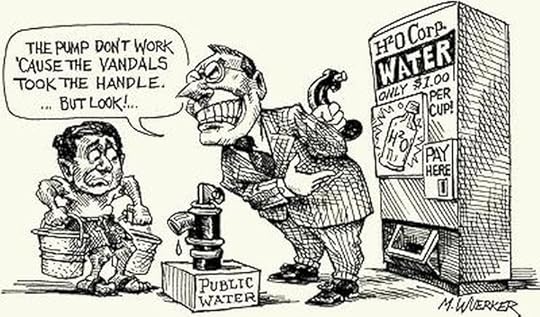
The chapter on the virtual water trade interestingly highlights how water, a critical commodity is almost entirely ignored by the world and conceptually, rarely debated by western states because it’s a product that most people do not wish to acknowledge that their water resource is sold to the less developed nations. But a failure in the global water trade, this would have a destructive impact on the global economies, it would be bad for energy consumption and bad for resource exploitation which the West heavily relies upon.
Smith’s work has been largely descriptive although interesting but not really what I expected. I anticipated it to be a bit of a thriller throughout yet frequently I was faced with a bedtime story falling asleep every few pages. This is not to suggest there are not exciting bits in the book, but they are mostly isolated to the beginning of each chapter and leading to more statistical data crunching towards the end.
The writing was clear but it did stray between facts and predictions and the munching of statistics at times got tiresome which made me hop and skip around various sections. However, when he did return to the analytical experiences of climate change basing his events on real experiences, this was far more revealing and captivating and made you wish for more.
I probably wouldn’t read any more of Smiths work, but what I have read wasn’t all bad.
Laurence Smith shows how, by 2050, Canada, Scandinavia, Russia and the northern United States may be flourishing as formidable economic powers and migration magnets, but countries closer to the equator may be suffering from the effects of four key mega-trends: global warming, pressure on natural resources, globalisation and an exploding but aging population.
There are several interesting studies which have identified new findings on how climate pollution can impact of human behaviours. Dr Federica Nobile of the Lazio Regional Health Service found “recent studies have linked air pollution to the development of psychiatric disorders, including depression, anxiety, and psychotic episodes.
Consequently, this work by Smith is critical in his attempts to open up the climate debate as well as serving as a solid introduction for those who are looking at the effects of global climate forces and how such events are likely to shape our world over the next forty years. Smith’s book, The New North, is an interesting and somewhat worrying account of what can and could happen in the next forty years. His work is considered as predictable as it is realistic although, it can also be considered as a piece of imaginary fiction. After all who can see or predict the future? Our records do not go back far enough to show a reliably accurate pattern of our environment. After all some would argue our Earth is not that fragile that it would fall apart at the first signs of a global environmental spillage of our natural resources. However, we must observe that inside the mind of a sceptic lives the ‘mental gymnastics’ of climate change denial, it is important to note that the climate sceptic argument is a Sisyphean task. It obeys the Brandolini's law, well known to observers of the disinformation world, which states that proving the absurdity of nonsense is much more time-consuming and energy-intensive than producing it.
I was quite taken by chapter one which sets forth a frightening account of what the book intends to address and breakdowns the environmental catastrophes awaiting in anticipation of something horrifyingly specific for us if we do not correct our navigational-push and begin to take steps to reduce our so-called carbon footprint. The key focus of Smith’s work looks at various levels of change in the climate debate which directly effects:
- Hotter temperatures. As greenhouse gas concentrations rise, so does the global surface temperature;
- More severe storms;
- Increased drought and competition for water;
- A warming, rising ocean;
- Loss of species;
- Not enough food;
- More health risks;
- Poverty and displacement.
The work begins like a chilling thriller with all the ingredients of a horror story. Smith frequently, throughout the book dips into data analysis which begins to portray how past events have taken their toll on human life across the world. He applies a European example where he points out climate fluctuations. Smith wrote that in 2003 over 35k people died resulting from a climate influenced heatwave. Cross referencing this statistic I found others sources particularly contradicting this figure: CNN claimed it was 62k, and the U.K. government’s Met office claimed 20k.
One of the more interesting sections in the book he draws the reader towards a striking, informative and somewhat entertaining example when Smith talks about the concept of moonshine being a realistic alternative to fossil fuels to run the global transport system. He explains that when cars were first introduced over a century ago moonshine was a possible fuel substitute but, I suppose this idea failed when oil was discovered to be a better money spinner than old bottles of whiskey and wine. And of course, less likely for the driver drinking himself into a stupor while racing to pick up the kids from school.
Most of the chapters begin with some exciting historical facts about climate change edging towards future predictions on encapsulating environmental changes in society when compared to the various historical periods that came before and disappeared over thousands of years. However, towards the end of several chapters, Smith gets himself mired in demographics which sometimes sent me to sleep, loudly snoring until the neighbours woke me up.
The book is definably not a slow burn but I did begin to hop, skip and jump to the end with short periods of converging on the detail which eventually, were beginning to get fewer as I journeyed along this challenging path.
I wouldn’t say this was a merciless book. In fact, on the contrary, it’s a fascinating and refreshing experience with some real and occasionally cruel facts and figures setting out the challenges faced by humanity. There is a fair amount of predictions about how such facts will influence the future thus, create consequences for which much of the industrialisd world in not ready to face.
The chapter on the virtual water trade interestingly highlights how water, a critical commodity is almost entirely ignored by the world and conceptually, rarely debated by western states because it’s a product that most people do not wish to acknowledge that their water resource is sold to the less developed nations. But a failure in the global water trade, this would have a destructive impact on the global economies, it would be bad for energy consumption and bad for resource exploitation which the West heavily relies upon.
Smith’s work has been largely descriptive although interesting but not really what I expected. I anticipated it to be a bit of a thriller throughout yet frequently I was faced with a bedtime story falling asleep every few pages. This is not to suggest there are not exciting bits in the book, but they are mostly isolated to the beginning of each chapter and leading to more statistical data crunching towards the end.
The writing was clear but it did stray between facts and predictions and the munching of statistics at times got tiresome which made me hop and skip around various sections. However, when he did return to the analytical experiences of climate change basing his events on real experiences, this was far more revealing and captivating and made you wish for more.
I probably wouldn’t read any more of Smiths work, but what I have read wasn’t all bad.
August 21, 2012
Presents the argument that climate change, population growth and natural resource depletion will drive populations and economic development north towards the Arctic Circle. As opposed to many 'futurists' this is not a one-dimensional attempt to align predictions with an ideological agenda. Instead, the author carefully statues his assumptions "The models are good enough.", "No magic bullets." and then identifies the factors which are likely to have the most impact.
"Nuanced" is probably overused in describing books like this, however, in this case both nuanced and balanced are appropriate adjectives.
"Nuanced" is probably overused in describing books like this, however, in this case both nuanced and balanced are appropriate adjectives.

July 12, 2020
Filled with eye-opening data, surprising insights, and bold predictions, "The World in 2050" isn't just another climate change worry stone. Smith informs geography, geopolitics, and grand strategy with his first book. I can't wait to read "Rivers of Power," which was just published in April.

December 26, 2023
Basically someone who just dismisses Ehlrich on the Population Bomb, and Huntington on Immigration weaking national unity
and it's all about economic opportunities ahead!
It's amazing how sour people are on this author, and many people say that there's still not a lot of good writing about the climate change in the arctic and how industry or geopolitics will deal with it.
Personally i think that stuff with the arctic is overrated, because strains on the economy and infrastructure and wages will go on with population growth and mass-migration.
And those factors will be far more problematic than China and Russia taking over the North Pole.
Having a living wage, job security, affordable homes (where a house is not a luxury), and healthcare and education that go back to the 50s-70s in terms of quality...
I'd say that Population Growth is the number one national security issue of our time, and we should have done that as priority one, but the Cold War threw us off on that track to Zero Population Growth, and well it'll be way way bigger of an issue to derail us than the Cold War did.
Sometimes you wonder where the competence is in government these days, where we talk about impossiblities like Lab Meat, or feel that Electric Cars won't triple our Power Grid, or we just don't try to fix pollution rather than going into a rather fringe world of carbon credits, and this danger that Hans Morganthau once spoke about, that people run to technological fads to solve difficult problems....
and the worst thing are the environmentalists or economists who seem to say, the technology is almost-there, let's double down on it.
.........
"Morgenthau's Scientific Man versus Power Politics (1946) argued against an overreliance on science and technology as solutions to political and social problems."
In a broader sense pessimism and realism has a better track record
......
The same weaknesses go on with some of the demographers, yes it can be an extremely powerful factor but people make incredible speculations about the Death of Japan and Europe and China population wise
and the rise of the middle east demographically
but they don't really see how the economics or how the infrastructure and freedom of speech have a nearly equally important facet to growth.
And where are all those Peak Oil people now?
...........
"As Kenneth Waltz reminds us, “Wars result from selfishness, from misdirected aggressive impulses, from stupidity.” Just as we are seeing evidence of power, fear, and glory driving Arctic behaviors, there is evidence of selfishness, aggressive impulses, and sheer stupidity emerging as well. From the realist perspective, the Arctic conflict scenario is predictable and preventable."

January 15, 2018
same UCLA professor with the endorsement from Jared Diamond...Smith only uses 4 basic directions to determine the approximate overview of 2050 of the northern hemisphere: demo, resource wars, climate, globalization..but with few disclaimers: no WWIII, no Godlike technological leap, no killer super ebola and resume the models are correct...I give credits to the disclaimer if everything goes well, then the four pillars determine the 2050 NORC...to be as predicted...as Smith said: resources war are ongoing..have been going..my interpretations of this as "national interests"..even between family members..Smith over-emphasizes probably 50% on climate change as human cause..yes, it does, but it does not, because do not attempt to follow the scandal IPCC has created few years ago to ignore sun spot activities that really affect Earth temperature, trees on Earth also contribute to the release of CO2 but it does not kill the Earth..we have duties to protect the Earth, of course..but they are not correlated to the hundred thousand years, and million years, and years ago the natural fluctuation of temperature due to sun spot activity...and Smith constantly emphasized..and ride along with what Jared said about consumption Index...there is really no over population..issue..but the world would reach aging population..somehow, reading along the line, I simply could not find the theme of this book...the bring ups of Stalin and killings of war: thanks to depop scheme? Yet..the hidden message seem to point at the Russia with vast land..and the migration issues and the empties of vast Siberian front which seem romantic, but rather abandoned...but the theme again? oh..Russia controls the LNG market which seem to be better solution than carbon based..better than Canada tar sand oil development..and towards the end..using Pentagon Paper to conclude the world is in fragility? Seriously? And at times seem to be satirical towards IMF, WTO, World Bank..but supportive of their data?? Smith is very weak in terms of being a professor, nor even a professional, he can qualify as researcher, but this is a grand observation that involves with civilization dynamic, individual behavior, group behavioral movement, anthropological development...political interests driver, etc, etc..rather than the basic 4 points (he cannot even establish as pillar) of "factors"...

September 1, 2017
A good view of four major forces that will drive our future. Peak oil, population growth, lack of water, and climate change. Any one of these would not be a problem if we weren't past peak oil. Population grow more food and provide more stuff using cheap oil. Lack of water, desalination or drill to deeper aquifers using cheap oil. Warming build dikes around the vulnerable cites including the third world countries, Bangladesh, who are most vulnerable to sea level rise and the heavy down pours of the new normal, using cheap oil. Peak oil, there is no substitute for oil. Not at a price the consumer is willing to pay. Also oil just adds to the warming issue but, one could use cheap oil to build the infrastructure needed to protect low lying areas. Even if by doing so we condemn our future children to a world of purple, sulfur eating algae as the dominant species in 3000 years. The world, earth will survive.
Our planet has been around for 4.5 billion years. Our planets life expectancy is around 12 billion years. If we do fall back to a purple algae planet and Hominids have a massive die off, the planet will survive. It took around 500 million years for the planet to go from purple algae to us today. The planet can cycle through this rebuild of life from simple purple algae to Hominids 14 times. Maybe what we should be looking at, as a back up plan, is how to tell some future Hominid that this warming you are seeing from the release of Carbon into the atmosphere, we did this 500 million years ago and killed our selves off. Maybe you can do better. I would suggest, just spit balling, that we engrave binary code on human bones and if we do enough some will fossilize. If they fossilize then some scientist in the future might just get the massage and save the future from the fate we seem bound and determined to inflict on our selves.
The second part is mine not the author's. Smith is actually hopeful that we slow our use of Carbon, slow population growth, and by doing so peak oil, and lack of water impacts can be minimized on life. By doing so 2050 will be harder but livable. I'm not as confident in our ability to do what is best for the species.
Our planet has been around for 4.5 billion years. Our planets life expectancy is around 12 billion years. If we do fall back to a purple algae planet and Hominids have a massive die off, the planet will survive. It took around 500 million years for the planet to go from purple algae to us today. The planet can cycle through this rebuild of life from simple purple algae to Hominids 14 times. Maybe what we should be looking at, as a back up plan, is how to tell some future Hominid that this warming you are seeing from the release of Carbon into the atmosphere, we did this 500 million years ago and killed our selves off. Maybe you can do better. I would suggest, just spit balling, that we engrave binary code on human bones and if we do enough some will fossilize. If they fossilize then some scientist in the future might just get the massage and save the future from the fate we seem bound and determined to inflict on our selves.
The second part is mine not the author's. Smith is actually hopeful that we slow our use of Carbon, slow population growth, and by doing so peak oil, and lack of water impacts can be minimized on life. By doing so 2050 will be harder but livable. I'm not as confident in our ability to do what is best for the species.
January 3, 2025
I would truly recommend this book to those interested in or teaching natural and human geography, geopolitics and climate change. This book is neither too "techno-optimistic", like many others from Diamantis, Ray Kurzweil and Max Tegmark; but nor too pessimistic, like the ones from jared Diamond. The author is presenting plenty of evidence of future changes based on four global forces: demographic trends, natural resource demand, climate change, and globalization.
Many of the changes happening until 2050 are not only due to climate change and global warming: the huge increase of population in some countries in Africa & Asia, the rush to the cities, the exponential growth of mega-cities, usually located in coastal areas or river deltas, the increase of city population versus villages and farms, the exponential use of drinking and irrigation water and the never-ending demand for metals, coal, oil and gas would all cause major changes without any climate change.
The world's population is exploding, wild species are vanishing, our environment is degrading, and the costs of resources from oil to water are going nowhere but up. So what kind of world are we leaving for our children and grandchildren? Geoscientist and Guggenheim fellow Laurence Smith draws on the latest global modeling research to construct a sweeping thought experiment on what our world will be like in 2050. The result is both good news and bad: Eight nations of the Arctic Rim (including the United States) will become increasingly prosperous, powerful, and politically stable, while those closer to the equator will face water shortages, aging populations, and crowded megacities sapped by the rising costs of energy and coastal flooding.
Remember, this book was written in 2009-2010, published first in 2011; and all that was before: 1) the shale-oil revolution in the USA; 2) the huge increase of electric cars worldwide; 3) the American political changes in 2016 and in 2024; 4) the Russian attempted invasion of Ukraine; 5) the major changes in European gas and oil consumption because of the Russian aggression and resource nationalisation. Even if all these happened after the book was published, this book gives a very good and realistic overview of the world in 2050: it is worth reading for everyone.
Many of the changes happening until 2050 are not only due to climate change and global warming: the huge increase of population in some countries in Africa & Asia, the rush to the cities, the exponential growth of mega-cities, usually located in coastal areas or river deltas, the increase of city population versus villages and farms, the exponential use of drinking and irrigation water and the never-ending demand for metals, coal, oil and gas would all cause major changes without any climate change.
The world's population is exploding, wild species are vanishing, our environment is degrading, and the costs of resources from oil to water are going nowhere but up. So what kind of world are we leaving for our children and grandchildren? Geoscientist and Guggenheim fellow Laurence Smith draws on the latest global modeling research to construct a sweeping thought experiment on what our world will be like in 2050. The result is both good news and bad: Eight nations of the Arctic Rim (including the United States) will become increasingly prosperous, powerful, and politically stable, while those closer to the equator will face water shortages, aging populations, and crowded megacities sapped by the rising costs of energy and coastal flooding.
Remember, this book was written in 2009-2010, published first in 2011; and all that was before: 1) the shale-oil revolution in the USA; 2) the huge increase of electric cars worldwide; 3) the American political changes in 2016 and in 2024; 4) the Russian attempted invasion of Ukraine; 5) the major changes in European gas and oil consumption because of the Russian aggression and resource nationalisation. Even if all these happened after the book was published, this book gives a very good and realistic overview of the world in 2050: it is worth reading for everyone.
August 19, 2017
This book explores the things that humanity has waiting for it in the next few decades.
The number of mega-cities (those with a population of over 10 million) will only rise, as the world's population will pass 9 billion. Some of those cities will be clean and efficient, like Singapore. It is much more likely that they will be over-crowded, polluted and crime-filled, like Lagos, Nigeria. The question is not will sea levels or the Earth's overall temperature rise, but, by how much will they rise.
As the world gets older and grayer, and as America's baby boomers start to retire, younger workers will be needed to keep the economy moving. Where will these workers come from? Water problems, and water shortages, in normally dry places like sub-Saharan Africa and the American Southwest, will only get worse.
The author spends much of the book looking at the New North, the countries that border the Arctic Circle, including America, Canada, Russia and Scandinavia. There is the potential for a lot of oil or natural gas under the ice. In Alaska and Canada, local indigenous groups have gained joint, or total, control, over the natural resources that lie under their feet. The extending of the temperate climate zone to the north makes agriculture more and more possible on formerly barren land (like growing potatoes in Greenland). The thawing of the permafrost makes building more difficult in remote northern towns. Digging foundations, or putting in pylons on which to build a building is impossible when rock-solid ice is only a foot or two below ground level. It also shortens the "trucking season," where those remote northern towns can be re-supplied by trucks, which is a lot cheaper than doing it by boat or helicopter (think of the TV show "Ice Road Truckers").
This is a fascinating book. For some people, the information here may not exactly be new, but the author does an excellent job. It is compelling, and very much worth reading.
The number of mega-cities (those with a population of over 10 million) will only rise, as the world's population will pass 9 billion. Some of those cities will be clean and efficient, like Singapore. It is much more likely that they will be over-crowded, polluted and crime-filled, like Lagos, Nigeria. The question is not will sea levels or the Earth's overall temperature rise, but, by how much will they rise.
As the world gets older and grayer, and as America's baby boomers start to retire, younger workers will be needed to keep the economy moving. Where will these workers come from? Water problems, and water shortages, in normally dry places like sub-Saharan Africa and the American Southwest, will only get worse.
The author spends much of the book looking at the New North, the countries that border the Arctic Circle, including America, Canada, Russia and Scandinavia. There is the potential for a lot of oil or natural gas under the ice. In Alaska and Canada, local indigenous groups have gained joint, or total, control, over the natural resources that lie under their feet. The extending of the temperate climate zone to the north makes agriculture more and more possible on formerly barren land (like growing potatoes in Greenland). The thawing of the permafrost makes building more difficult in remote northern towns. Digging foundations, or putting in pylons on which to build a building is impossible when rock-solid ice is only a foot or two below ground level. It also shortens the "trucking season," where those remote northern towns can be re-supplied by trucks, which is a lot cheaper than doing it by boat or helicopter (think of the TV show "Ice Road Truckers").
This is a fascinating book. For some people, the information here may not exactly be new, but the author does an excellent job. It is compelling, and very much worth reading.

March 30, 2021
The energy discussion in this book is hilariously dated, despite the fact that its only 10 years old. Coal is rapidly dying in developed countries, oil companies are more worried about stranded investments than peak oil, and its now reasonable to expect new renewables to be cheaper than using existing fossil fuel plants by 2030, even without subsidies.
Smith doesn't claim to be an energy expert so I don't think its fair to expect him to have predicted the rapid rise of fracking or the huge drop in the cost of renewables. He also begins by laying out his assumptions in creating his 2050 scenario, one of which is assume the consensus models at the time are correct, but notes that unexpected developments can and do happen. There's even a whole section of the book at the end dedicated to black swan events that are entirely possible, but hard to predict. My biggest complaint is that he didn't include energy technology in this section, since it now looks like we're headed for a world where Arctic communities have to deal with the downsides of climate change alongside reduced demand and lower prices for the fossil fuel resources they control.
Still, its an interesting book that covers a lot of ground and is fairly concise. It doesn't paint a fantastical picture of a 2050 filled with arctic mega cities, but one in which the warming climate opens up more of the north to settlement and how northern societies are likely to adapt to the changing world.
Smith doesn't claim to be an energy expert so I don't think its fair to expect him to have predicted the rapid rise of fracking or the huge drop in the cost of renewables. He also begins by laying out his assumptions in creating his 2050 scenario, one of which is assume the consensus models at the time are correct, but notes that unexpected developments can and do happen. There's even a whole section of the book at the end dedicated to black swan events that are entirely possible, but hard to predict. My biggest complaint is that he didn't include energy technology in this section, since it now looks like we're headed for a world where Arctic communities have to deal with the downsides of climate change alongside reduced demand and lower prices for the fossil fuel resources they control.
Still, its an interesting book that covers a lot of ground and is fairly concise. It doesn't paint a fantastical picture of a 2050 filled with arctic mega cities, but one in which the warming climate opens up more of the north to settlement and how northern societies are likely to adapt to the changing world.

December 11, 2022
Year 2050 and beyond.
POSTED AT AMAZON 2010
Wow!! This is probably the best, objective to the bones book about our future. It takes factors like: economy (trade, globalization), demographics, climate change (thanks to emissions of CO2 made and NOT made by humans) and search for resources under scrutiny. I have learned who and how science creates models that predict our future, many models: conservative and radical. The intelligence of Mr. Smith's writing is hard to describe - simply brilliant.
While author warns that recent models do not include (take under account) so called unexpected dangerous "genies", neither he sounds alarmist by spreading panic, nor states that life will be easy for the next generations. There is absolutely no sensationalism, just cool truth. Title could be different, since large part of the book teaches us not only about Northern Rim but about other parts of the globe as well. Whether you are a politician, economist, student, environmentalist, activist or just a parent - it is a must for reading. Then you will know !!
POSTED AT AMAZON 2010
Wow!! This is probably the best, objective to the bones book about our future. It takes factors like: economy (trade, globalization), demographics, climate change (thanks to emissions of CO2 made and NOT made by humans) and search for resources under scrutiny. I have learned who and how science creates models that predict our future, many models: conservative and radical. The intelligence of Mr. Smith's writing is hard to describe - simply brilliant.
While author warns that recent models do not include (take under account) so called unexpected dangerous "genies", neither he sounds alarmist by spreading panic, nor states that life will be easy for the next generations. There is absolutely no sensationalism, just cool truth. Title could be different, since large part of the book teaches us not only about Northern Rim but about other parts of the globe as well. Whether you are a politician, economist, student, environmentalist, activist or just a parent - it is a must for reading. Then you will know !!
June 16, 2021
I’m a bit conflicted about this book. On the one hand the mechanisms are well explained. On the other hand Smith seems to root for solutions that will destroy ecosystems and earth climate in favor of money. I know that is strongly put. The way the mechanisms are are explained as inevitable adds to the ‘rooting’ feeling. The conclusion on the last page is a big surprise. Unfortunately I feel that the conclusion needs a few more introductions to be in line with the rest of the book.
P.S. The chapter Iron, Oil, and Wind ignored a few glaring issues: production of nuclear plants, solar and other facilities from the perspective of contributing to the climate change. Another is the price of solar and it’s trends. In the year of the release of this book I installed solar privately and already cost effective in the tax regime of the time in the Netherlands.
P.S. The chapter Iron, Oil, and Wind ignored a few glaring issues: production of nuclear plants, solar and other facilities from the perspective of contributing to the climate change. Another is the price of solar and it’s trends. In the year of the release of this book I installed solar privately and already cost effective in the tax regime of the time in the Netherlands.

November 11, 2022
Livro já desactualizado (foi originalmente publicado em 2010). Por exemplo, um dos pressupostos que o autor assumiu é o de não vir a existir uma pandemia a nível global. Em 2022, tal pressuposto já não se coloca.
Embora não seja um pressuposto do modelo, algures no texto afirma que uma guerra na Europa é pouco provável (embora tenha como pressuposto a não eclosão de uma nova guerra mundial). Mais uma vez, em 2022, dizermos que será pouco provável uma guerra na Europa...
Nota negativa para edição portuguesa (Livros D'hoje, chancela do grupo Leya). Na página 352, lemos:
«Nenhum destes países ratificou a Convenção 169 da OIT, nem tão-pouco se houve falar (...)"
Este erro é imperdoável!
Embora não seja um pressuposto do modelo, algures no texto afirma que uma guerra na Europa é pouco provável (embora tenha como pressuposto a não eclosão de uma nova guerra mundial). Mais uma vez, em 2022, dizermos que será pouco provável uma guerra na Europa...
Nota negativa para edição portuguesa (Livros D'hoje, chancela do grupo Leya). Na página 352, lemos:
«Nenhum destes países ratificou a Convenção 169 da OIT, nem tão-pouco se houve falar (...)"
Este erro é imperdoável!

March 13, 2022
Una mirada general al futuro, en una primera parte excluyendo fenómenos mundiales que pueden ser imprevistos y tener graves implicaciones y en una segunda parte incluyendo estas posibles irrupciones. Abordado por ejes principales como el demográfico, cambio climático, recursos energéticos, disponibilidad de agua y geopolítica nos dan una visión superficial de los cambios que se avecina.
Al final nos quedan dos preguntas, ¿qué mundo queremos? ¿Se está moviendo el mapa geopolítico?
Al final nos quedan dos preguntas, ¿qué mundo queremos? ¿Se está moviendo el mapa geopolítico?

January 19, 2026
Picked this up from my local library just based off the title alone. Very interesting to read in 2026, especially where he opens with "the rules", one which being not assuming a pandemic or something similar would happen lol Overall a fine read and some spot on predictions of where the world would be as science suggests. Very US/western-centric, but hey it is about the 45°N latitude area. Definitely some standout quotes and great nuggets for thought.
December 24, 2024
Este livro trata sobre como as mudanças climáticas irão afetar o mundo até 2050. Curiosamente irá existir um grupo de certos países (países do Norte) que poderão se beneficiar destas mudanças enquanto que outros serão prejudicados. Estas mudanças irão provocar mudanças na no clima, mas como nas rotas de migração e próprias rotas de comercio internacional e uso de recursos naturais.
Displaying 1 - 30 of 113 reviews