In questo volume spartiacque per gli studi sulla classicità, composto nel 1949, Eric R. Dodds invita a ripercorrere l'evoluzione del pensiero ellenico in una chiave diversa da quella consolidata: un percorso in cui irrazionalità e ragione, lungi dal cedere l'una all'altra, non smettono di intersecarsi e coesistere. Dai tempi di Omero fino al II secolo a.C., Dodds mette in luce le credenze sul soprannaturale, l'importanza attribuita al sogno e all'influenza degli astri, i fenomeni psichici vicini alla trance e all'allucinazione, come l'ossessione dionisiaca e il furore profetico, la divinazione, l'orfismo e le pratiche magiche, delineando così aspetti e manifestazioni dell'irrazionalismo greco.
I first read this book during the height of my Greek phase in college--a phase, I should add, that lasted through grad school, when I did one of my fields in medieval Christian thought, largely so that I could trace the influence of Plato through to the early modern era. Joining the Group Read of Emily Wilson's translation of The Odyssey has provided me with an opportunity to revisit my love of ancient Greek literature and philosophy. Needless to say, a great deal has changed since the 1970s.
Dodds, I am sorry to report, has not aged well. If you're looking to explore the wondrous aspects of Homer's world, I would recommend Why Homer Matters by Adam Nicholson. For an overview of Athenian thought in the 4th century BC, start with Gregory Vlastos, Plato's Universe: with a new Introduction by Luc Brisson, which opens with the Presocratics and goes through to Aristotle. (I had the privilege of hearing Vlastos lecture, toward the end of his life, at the University of London. He was a rock star in the field of Classical Studies and I am not ashamed to admit to having been a groupie.)
But back to Dodds. The Greeks and the Irrational originated as a series of lectures delivered at Berkeley in 1949 and the book bears the marks of the era. Erich Fromm's Escape from Freedom (1941) and Karl Popper's The Open Society and Its Enemies (1945) were significant influences on Dodds. Both Fromm and Popper were refugees from Nazi Europe, the first a psychoanalyst, the second a philosopher. Both sought to apply the tools of their trades toward understanding how Totalitarianism was possible, in a world that seemed to be progressing toward freedom and enlightenment. Fromm found an answer in the still-primitive impulses within our psyche--paralleling the impulses that the cultural anthropologist Edward Burnett Tylor observed in primitive societies. (Freud was influenced by Tylor, I should mention.) Popper found evidence of these impulses in Plato's Republic, and speculated that the great philosopher was articulating the anxieties felt by members of his class toward the spread of Athenian democracy. He called Plato a proto-fascist. (Let me say right now that, notwithstanding Plato's paternalism in the Republic, I disagree with Popper. So did Vlastos. Vehemently.)
Dodds said that he wanted to approach the ancient world on its own terms, rather than succumbing to the tendency of some of his peers of viewing the past through the lens of the present. The depth of his scholarly understanding of the Greeks is fully evident as he traces notions of divine possession from the earliest parts of the Homeric epics through the classical period and beyond, but in terming these elements "irrational," and "religious," as if the two were synonymous, he shows his hand. By the time we get to the final essay in the book, "The Fear of Freedom," his allegiances are clear.
Mind you, I share his concern over the "recoil from rationalism" or, to put it in Existentialist terms (Dodds was also reading postwar French philosophers, as was I at the same time I was reading the Greeks and Dodds's book), "the unconscious flight from the heavy burden of individual choice . . ." This burden of responsibility drives some into the arms of conservative parties and authoritarian leaders who promise a return to simpler times. Did the Greeks go there first? Can we draw lessons from what Dodds ultimately confesses is the theme of his book -- "the failure of Greek rationalism" -- so that we, unlike the Greeks, will face squarely "those irrational elements in human nature which govern, without our knowledge, so much of our behavior and so much of what we think is our thinking" and subdue them?
Despite its age, this work by Dodds is still considered a seminal text for students of Greek history and classics. The usual survey-level understanding of the Greeks is that they were a culture which always put rationality on a pedestal at the expense of all else and ultimately ignored the irrational until well after the passing of the classical period. Dodds corrects this view, showing irrational impulses and institutions which were more widely accepted during the Archaic, Classical, and Hellenistic Periods than the works of rationalist philosophers such as Heraclitus and Plato. At a most fundamental level, this work is great for putting Greek intellectuals in their proper place at the fringes of society and in reaction to it.
This was one of the first works of ancient history to employ modern anthropological and psychological theory as a tool for interpreting the past. Though early efforts at this were almost always clumsy and driven more by the theory than by the facts, Dodds uses his modern insights cautiously, judiciously, and helpfully. The scope of the work is broad and every chapter addresses some different aspect of Greek irrationality. The chapter which several Classics professors seem to have memorized is the one on how Greece transitioned from being a shame culture in Homer's time to a guilt culture by the Archaic Period. This was based on studies trying to make sense of Japanese shame culture after World War II. This part seems a bit simplistic and is probably the most dated section, but since the Classics Department at my current university is rather geriatric, I can see why they are still bewitched by this section.
Other sections carry with them certain assumptions about the nature of religion which are out of vogue, such as the idea that the beliefs of the elite and common people were completely different. However, that does not necessarily mean that Dodds was wrong and at least his assumptions are out in the open and can be seen for what they are. Though what is here lacks the latest evidence and isn't the most in-depth coverage of any particular facet of Greek religion and psychology, it is still an excellent summary of classical scholarship up to 1951 and everything here seems like a reasonable interpretation of the evidence then available.
If you are a hardcore Hellenophile, then this is one of the best books ever. However, it is definitely not for the casual reader or a novice to the subject matter.
Dodds was a classicist and member of the Society for Psychical Research who apparently got fed up enough with the hackneyed portrayal of the classical Greeks as rationalists to pen this popular study of the irrational elements of their culture and beliefs. It's an easy read and somewhat of an antidote to the usual picture given students in high school and introductory college courses.
In his exploration of the irrational in Ancient Greek thought, Dodds argues that the Greeks explained away their irrational behavior and states of mind as the workings of higher powers. Someone behaving out of character, whether because he’s suddenly less sensible than usual, or more (!), is seen as being acted upon by external forces.
Dodds makes an interesting case connecting shamanism to puritanism (!). He traces the belief in a soul that travels to other realms—to the belief in dualism between soul and body—to the belief that the soul is trapped in the prison of the body, that embodiment is a sort of punishment. So pagan beliefs reached their full conclusion in anti-carnal Christianity. I found this a wholly original theory, and am curious to know what other scholars made of it.
I also liked his argument that the Greeks could not, in the end, handle the increasing rationalism of their culture, and that their unconscious fear of freedom forced them to regress back into magical thinking (Nietzsche makes the opposite argument in The Birth of Tragedy, claiming that Socrates has never stopped infecting the world with his rationalism). Very Sartrean — the anguish that comes with being condemned to freedom and all that.
Overall, I found the text difficult going. Dodds makes little effort to translate Greek for the English-speaking reader. As a result, virtually every page contains untranslated material. The huge number of footnotes (don’t read a PDF, get yourself a print or hyperlinked e-copy) often contain chunks of ancient Greek text, again untranslated. I don’t speak Greek and did make it through the book, so clearly it’s possible, but unpleasant. I was also turned off by his reduction of possession to epilepsy, and was shocked by how freely he throws around the word “primitive” with respect to both ancient and contemporary cultures.
Very much appreciated. The basic argument is how the progress of rationalism was impeded and reversed. It's not only about religion, but there is plenty of that. Goeteia, theurgia, delusion, maenads, possession. Great commentary on the interaction of sorcery and philosophy. Stuff about Homer, Hesiod, the tragedians, Plato, the stoics. Broad scope.
I suggest everyone should read chapter 2 on shame- versus guilt-culture, as well as the excellent concluding chapter "Fear of Freedom."
In the last chapter, Dodds asks how it's possible for a civilization to walk right up to the edge of reason and then, at the last minute, retreat into magic and superstition. What caused this turn away from an "open" society? He does a great job reviewing all the socio-economic arguments, which he dismisses one by one. That leaves him with one hypothesis: some deep, subconscious fears and desires must have driven the Greeks to embrace the irrational.
Okay, fine. But then he concludes in a way that makes me scratch my head. In his last two paragraphs, Dodds writes that the Greeks lacked an "instrument" for understanding and controlling those unconscious drives. Fortunately, though, we moderns do possess such an instrument. We could achieve a rational, open civilization, if only we choose.
I wonder what exactly that "instrument" might be? I'm afraid he might be referring to Freudian psychoanalysis. Were intellectuals of the 1940s really so optimistic about the potential for psychology to save the world? Nobody in the 21st century seems to believe that Freud is the answer. So I'm skeptical.
I came up well after the 1940s, so I didn't get much exposure to the mistaken idea that Ancient Greece was purely rational. My college professor was all about Dionysus and mystery cults. He made us read Walter Burkert. So I've pretty much always assumed the Greeks were just as weird and superstitious as modern Americans.
While Ancient Greeks are most known for the triumph of rationalism over superstition and magic, E.R. Dodds presents an alternate history which demonstrates that, despite the intellectual advancements in the direction of reason, the Greeks (particularly Plato) of the Golden Age fundamentally retained certain pre-5th century magical (read: irrational) thinking within their traditions. Dodds thinks this is a good thing, since we are not merely thinking but also *feeling* agents--a fact that Socrates and Aristotle understood well. Dodds argues that the progressive excision of "irrationality" in the Stoic and Epicurean traditions turns out to be a regression--a failure to appreciate the affective elements of living a human life. He sees this failure culminate in medieval Christianity's devaluation of earthly life.
This book is essential and utterly fascinating. Because it was first delivered as a series of lectures (each chapter is relatively short--approx 15-20 pages), it is eminently digestible and suitable for any audience. But boy, does he pack a lot of detail in: on average there are about 100 footnotes a chapter. This makes this a great bibliographical source in addition to being a spectacular read.
An expert analysis on some Freudian categories from ancient greek texts, creating a historical and interpretative scheme of the way the greeks saw and dealt with the irrational - from the mythological interpretation, down to a rationalistic and finally quasi-magical one. The author doesn't rely purely on Freudian analysis, recognizing its force in the exegesis of different texts, yet also recognizing it's limitations as a young and to-be-tested discipline. All this been said, the book is a tour de force through greek intelectual and religious history, a book not to be missed by any classicist and historian alike - having even some contemporary importance, seeing how the final chapter deals with the "fear of freedom", in the context of totalitarian Europe. 9.3/10
A fascinating read, but definitely requires knowledge of greek society and religion. Would not recommend for a casual reader, could get boring. Although in certain parts a bit outdated, it still has huge scholarly value and I could take so much out of this book (almost a third of the book is notes with references to primary sources I would never have found myself or even known they existed, or references to other scholarly debates). Starting from Homer and ending with neoplatonist movements, Dodds covers several ways to make sense out of the irrational element in human nature and religion. Didn't know that magic was such a big thing in the antiquity.
Evropljani vole u antičkoj Grčkoj da vide detinjstvo svoje kulture. Ovo detinjstvo, kao i svako drugo, idealizovano je. Staru Grčku volimo da zamišljamo kao mesto istinske demokratije, velikih mislilaca, umetnika i, ponajpre, kao kolevku evropske racionalnosti. Idealizovane predstave dugujemo uglavnom nemačkim klasičarima 19. veka (o ovome, ali i o mnogo čemu drugome, pogledati Chris Markerov dokumenatrac L’ heritage de la chouette). Dodsova studija Grci i iracionalno nam menja idealizovanu predstavu o racionalnim Grcima, pružajući nam istinsko udubljivanje u iraciolnalne slojeve antičkog sveta.
Božansko iskušenje ili zaslepljenost ( ate ), menos (što bi rekao Homer: neka žestina zabridi u nosu ), psyche, thumos ( Odisej u svom thumosu planira odmah da ubije Kiklopa ), božanski phthonos ili ljubomora bogova i njena najbliža rođaka nemesis ili pravedna ozlojeđenost bogova, prenošenje greške na potomke, gluvi telefoni između pitije i Apolona, demoni (ne nadam se, ne plašim se, nisam besan to je samo demon svratio u mene), skitski šamani, itd. Itd.
Za Grke postojali su ludi ljudi i božanski ludi ljudi. Sokrat u Platonovom Fedru razlikuje četiri vrste božanskog ludila:
a) profetsko ludilo (ako nam je Apolon blagonaklon), b) magijsko ludilo (njega finansira Dionis), c) pesničko ludilo (ako nas vole Muze), d) ljubavno ludilo (ako smo u milosti Afrodite i Erosa)
Dods ne primenjuje samo filološko- istorijski metod, već svoje zakljućke brani psihologijom i antropologijom, što knjigu čini daleko zanimljivijom. On se ne libi da se pozove na savremena iskustva ne bi li objasnio i približio neki fenomen. Tako pišući o proročištvu u Delfiju, Dods ne osporava proročište na onaj strogo racionalistički način po kome su Delfi bili odlično organozovan centar za manipulaciju, već se poziva na ljudsku psihologiju koja omogućava ljudima da veruju vidovnjacima. Koliko su ljudi spremni da lažu sami sebe može biti jasno svakoj osobi koja je imala priliku da prisustvuje najobičnijem čitanju sudbine iz taloga kafe. Važno je napomenuti i da je knjiga objavljena 1951. neposredno nakon Drugog svetskog rata i tokom zahuhtavanja Hladnog rata, te se iracionalnost u Antici posmatra u skladu sa iskustvom totalitarnih ideologija dvadesetog veka. To nekad može da bude zanimljivo, a nekad može da izgleda i prenaglašeno, gotovo maniristički, kao da se pedesetih godina krivac za totalitarizam tražio svuda (u prosvetiteljstvu, Kantu, nemačkom idealizmu, Ničeu - ovde je krivica diskretno spuštena na Platona).
Ono što je meni bilo najviše uzbudljivo jeste vizija religijskog razvoja koji je predstavljen kao jedan konglomerat. Religijski razvoj je nalik geološkom. Uvek su u pitanju naslage iz različitog vremenskog perioda. Osnovni vladajući princip je nagomilovanje, a ne zamena. Nov obrazac verovanja vrlo retko potpuno briše religijski obrazac koji je postojao pre njega: ili stari živi poput novog – ponekad kao nepriznat i elemenat koji smo polusvesni – ili oba traju jedan pored drugog, logički u neskladu, ali istovremeno prihvaćeni od strane različitih a ponekad i istih pojedinaca. U klasičnom dobu antičke Grčke već je bilo nagomilano tušta i tma različitih verovanja, a mogu da zamislim koliko je svega i svačega nagomilano danas, više od 2000 godina kasnije – čitav buvljak verovanja (second hand iracionalnost).
I read this book four times in a row. The premise is that the advent of Socratic rationalism did not lead to an enlightened society (at least outside of an intellectual elite) in ancient Greece, but somewhat disastrously led to a popular/mainstream backlash that ushered in a new society that became increasingly irrational, superstitious, and fundamentalist (not to mention lacking in innovation from scientific and artistic perspectives) in ways that have amazing parallels to divisions in modern society. The book is beautifully written and argued, and even the footnotes are worth scouring. I would give this book fifty thousand stars if I could.
Un interesante ensayo sobre la evolución del pensamiento "irracional", entendido como mágico-místico-religioso, en la Grecia clásica a través de los textos que han perdurado, desde Homero hasta Platón, al tiempo que muestra la forma que esos modos influyen y conforman nuestra forma de pensar contemporánea. Muy interesante. Aunque con exceso de términos en griego que me ha costado la vista desentrañar y comprender, y eso solo algunos. La edición española es la de 1986, de Alianza. Espero que en otras ediciones o revisiones se solucione el problema de la tipografía y se anoten los significados o traducciones de los términos. Un clásico para entender la evolución del pensamiento.
sexy sexy sexy sexy sexy sexy SEXY loved . essay on maenadism made me want to eat god 👍 sidenote v sexy to see where donna tartt may b got some inspo ... the epigraph of part 2 of the secret history is from here!
Interesting topic; the writing is as dry as the dust on the Acropolis; but overall too fascinating to dismiss as just pedantic. If you want to get to know Greek culture, this is a good means; because it invokes a 'thinking-about' process rather than just 'receiving the stories'. The author --discussing various aspects of mental irrationality and how they might have been perceived by the Greeks--draws on numerous references. At the end of each chapter (e.g., 'madness', 'spiritual possession', 'prophecy' or 'ghosts') you come away with much to mull over. Its an info-dump from the mouth of a howitzer. No 'hand-holding' or 'spoon-feeding', here. This kind of author would write rings around someone like Jared Diamond or Malcolm Gladwell. Copious notes and bibliography placed after each chapter, rather than all at the end. You rarely see that anymore.
Though this book is old (1951) and I'm using it for my thesis mostly only as historiography, I still very much enjoyed reading it. E.R. Dodds has a nice author voice, and explains his points in clear, understandable ways (most of the times, that is). The concept of this book already is interesting: the irrational actions of the Greeks. All the times that their progressive society filled with science and philosophy wasn't so rational at all. There were some chapters I liked more than others (I still can't tell you the difference of a shame-culture and a guilt-culture, but the chapter on Dionysian madness was extremely intriguing). I thought the chapter about dreams and culture-patterns was very interesting, while the shamans and puritanism kind of went over my head. So did the chapters on rationalism and Plato, but then he does drop the 'the major advances in civilizations are processes which all but wreck the societies in which they occur' quote that had my jaw drop. The last chapter was extremely well done, considering he aims to span a huge time span of 200 years in one chapter, and he does a good job at it too. The final bit about the parallel to our own modern civilization had me shocked yet another time. And the piece on maenadism in the appendix was wildly interesting too! I'm very happy I found that bit because it definitely gave me some inspiration for my thesis.
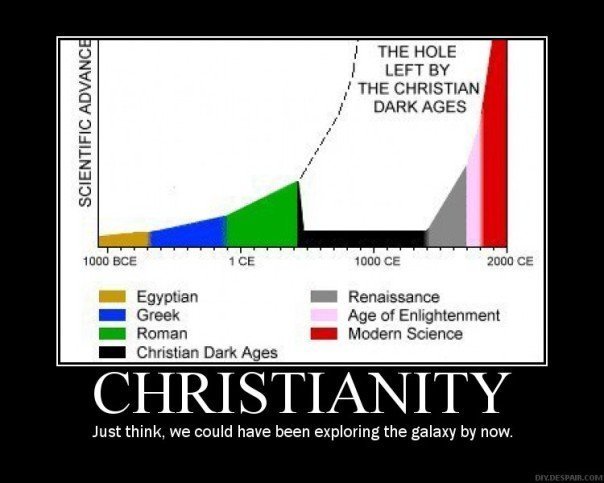
I've seen this book cited in many other books, but the one which made me especially want to read it was The Origin of Consciousness in the Breakdown of the Bicameral Mind. It turns out the problem with it is very similar to the problem with that one: its hostility to its own subject matter, in favor of a very High Modernist view of SCIENCE AND REASON as the be-all end-all of virtue and goodness, a view which seems to me very foolish, staggering drunkenly under the weight of its unexamined assumptions and prejudices. Except for the now-amusing unquestioned Freudianism, there's nothing in here which would give Gibbon pause--except perhaps insofar as the real Gibbon differs from the caricature Gibbon who saw the medieval period as a uniform Dark Age of superstitious ignorance, etc. Dodds certainly believes in that absurd notion, like a reddit atheist brandishing The Graph.
Which seems odd, considering the anecdote which begins the book. A student at the British Museum says the Greek art leaves him cold because "it's all so terribly rational", and Dodds wrote the book, more or less, to set him straight, to show that Ancient Greek culture was not "lacking in the awareness of mystery and in the ability to penetrate to the deeper, less conscious levels of human experience." And goes on to give examples of the truth of this, from Homer down to late Antiquity. So far so good. But like Jaynes, no doubt under Dodds' influence, was later to do, he pivots in his last chapter to essentially say, "however, all this irrationality is actually why the Greeks were stupid and terrible, and your desire for something else, student, means you desire totalitarianism." (In the first note to this chapter, he says, "A completely 'open' society would be, as I understand the term, a society where modes of behavior were entirely determined by a rational choice between possible alternatives and whose adaptations were all of them conscious and deliberate", which pretty much sets the tone for the bizarre, Gernsbackian sci-fi assumptions to come, that Man is poised on the edge of a Great Leap, if only we have the courage to face the Cold Equations of rationality, instead of, like, chickening out and having feelings.) It's true the entire book is full of clues: the constant use of words like "primitive" and "progress" and "Oriental" meaning weird, static, hierarchical, etc. But it's still a disappointment to slog through that last chapter, and realize yet again that I don't have an ally after all, that yet another famous book is dedicated to propositions that I find absurd and repugnant. It's like when Spock pronounces sagely that "logic dictates" some excellent moral precept: though I may agree with the precept, I cannot agree with the idea that "logic" or "reason" dictates anything. You can reach literally any conclusion (perhaps excepting a self-contradiction) using logic, it just depends on what assumptions you start from -- as the very expert logicians of those Dark and Superstitious and Ignorant Middle Ages knew quite well. Reason can't save you from being evil, and doing bad things. I'm much more inclined towards the view, disdained in these pages, that reason is mostly used to rationalize conclusions already reached in the heart. And certainly I find it hardly clear that the White Male Bourgeois Rational Technocrat is the apex of human life, guiding us Onward and Upward to the stars.
So it's yet another book where the content is wonderful, the information is fascinating (I don't know what modern anthropology thinks of the assumption, here as in Frazer etc, that every myth and ritual and story is actually just a cover for something else, usually human sacrifice -- but I enjoy that too), but the attitude is gross and dismissive. Honestly I begin to see why people responded well to Jung -- who else, in those Midcentury times, was saying that things don't have to "make sense" to be good, that the irrational can be healthy, that inchoate, unreasonable emotions are OK?
“Yet Eros also supplies the dynamic impulse which drives the soul forward in its quest of a satisfaction transcending earthly experience.”
People used to write scholarly books that were only 250 pages that were readable to a wide audience and that did ambitious things like covering the whole of Ancient Greek history. Postmodern ideas used to be cool and compelling before they became consumer capitalism and the PhDed ravings against it.
I like some contemporary historians, but I don’t know of many books that are as accessible as Dodd is here without turning into slop or losing me on its lack of credibility.
Interesting book addressing how Greece moved from a place of propounding very rational philosophy to a place where religion and superstition became typical.
One of the the first points the author makes is that Greece was never secular and rational as a post-modern would consider such a thing.
The author discusses a fair number of interesting things. He noted in the chapter on shame culture versus guilt culture, a city that for generations sent two women as sacrifices to another country in tribute, is a sign they believed in inherited sin that must continue to be atoned for over the years (The Locrian Tribute).
In discussing understanding Greek culture: "We must resist the temptation to simplfy what is not simple."
"Faith in the inevitability of progress had an even shorter run in Athens than in England."
"...new rationalism did not enable men to behave like beasts - men have always been able to do that. But it enabled them to justify their brutality to themselves... As someone has said in reference to our own enlightened age, seldom have so many babies been poured out with the bath-water."
"There is no hope in returning to a traditional faith after it has once been abandoned, since the essential condition in the holder of a traditional faith is that he should not know he is a traditionalist." - Al Ghazali
"The common man wants to be happy; but Plato, who is legislating for him, wants him to be good. Plato therefore labors to persuade him that goodness and happiness go together. This is true Plato happens to believe; but did he not believe it he would still pretend it true, as being "the most salutary lie that was ever told."
"Human nature is able to endure only a very little reality." T.S. Elliot
Of Plato's teaching - "Any teaching which weakens the conviction that honesty is the best policy he feels obliged to prohibit as antisocial."
Whitehead quote: "Religion is what the individual does with his own solitariness."
"... for a century or more the individual had been face to face with with his own intelectual freedom, and now he turned tail and bolted from the horrible prospect - better the rigid determinism of the astrological Fate than that terrifying burden of daily responsibility."
"Western civilization has begun to doubt it's own credentials." - Andre Malraux
A book on a somewhat loose and heterogeneous collection of concepts. Then, it was to combat the pop culture image of the Greeks as the perfect culture of rationality that the Enlightenment is so blameworthy for coming up with. (The middle ages get the equally and oppositely ridiculous image of the world of irrationality; for that I recommend C. S. Lewis's The Discarded Image.) To be sure, it uses the loose-goosey, pop culture notion of what's rationality and irrationality, but then, so does the image.
So it goes though monitions in Homer, whether the characters are said to be moved by gods, and the development of a guilt-culture from a shame culture and all the attendant development of pollution and catharsis, which originally meant ritual purification. An insane man might go through many ceremonies for many gods and goddesses known to cause insanity, and if it didn't work -- why, obviously, they had yet to propitiate the right god.
Inspiration as a form of madness, whether it caused prophecy, ritual dancing, or poetry.
Dreams. They did not think all dreams significant. (Unlike, say, Freud. I must say that it's a few decades and takes Freud rather more seriously than turned out to be wise.) But you have your premonitions and other abilities.
This took on a rather shamanistic slant -- he puts out a correlation to demonstrate that Orpheus was a shaman -- and the reason that the dreams can be prophetic is that the god-like soul is more god-like when semi-liberated by sleep. Logically, still more god-like when liberated by death. Which lead to Puritanism. One Pythagorean dictum was that pleasure was always bad, because souls were put in bodies to be punished, and they should be punished. (On the principle of taking your medicine as quickly as you could.)
The rationalistic culture and the dream of progress, rather like the Victorian. Also, like the Victorian, leading to a rapid backlash. Partly because questioning everything gave a good number of young men to believe in rights without responsibilities, Right Makes Might, and other beliefs that no society can possibly survive when they run wild. The persecution of which Socrates was perhaps the best known victim -- but there were other prominent ones. A great deal of discussion about society and whether it can survive such questioning. (I think his optimism in the last chapter is undercut by this one.)
Plato and his changing views on the irrational soul. Hellenism and the revival of magic and other irrationalities.
This is an important book because it affected the course of the discussion about ancient Greek culture, primarily by strengthening the position that the Greeks weren't as exclusively rational as many 18th and 19th century scholars had thought (and, consequently, as many in the public thought by the early-mid 20th century). Dodds takes a look at certain elements of Greek religious feeling and psychology, and shows that elements of the irrational were pervasive and often existed in tension with rationalism. Sometimes these two forces co-existed peacefully, sometimes rationalism sought to destroy traditions (which threatened to unravel the social order), and sometimes irrational beliefs surmounted rationalism (which stunted scientific and philosophical discovery/development). Among the manifestations of irrationality that Dodds demonstrates are a continued belief in the gods or fate as a determining factor in human experience, belief in possession or shamanic out-0f-body experiences, the emergence of astrology, and other belief systems.
The thing is that this is one of those books which largely achieved its purpose. While we do still popularly think of the Greeks as the founders of philosophy, science, scientific medicine, political science, etc. we (at least scholars) no longer think of the Greeks as purely rational. There is definite wide-spread acceptance of the irrational, superstitious, or fanciful in Greek culture. Dodds proved his point, and the debate he was entering simply isn't that important today.
This book is the reason why I don't like Academic Publications. Long sentences with poorly explained jargons used by Academia in a niche studying field. I feel bad for the author who had to waste so much of his time studying such a non-stimulating and useless subject. I feel even worse for my peers who have to read this book for class. This book should not be read in a high school Classical Civilization class. Teachers please don't torture your students with this book.
Se trata de un "clásico" (entre comillas porque la etiqueta de clásico es cada vez más vaga y confusa) de los estudios helénicos y, cabe decir, con todo merecimiento. Es cierto que leer en 2026 que la cultura griega tenía un importante componente "irracional", "espiritual", "supersticioso", etc., no supone, ni mucho menos, una sorpresa. Sin embargo, esto no estaba tan claro o, desde luego, no constituía una opinión generalizada en el momento en que Dodds publicó este libro. Por esta razón, sumada a los más que sólidos argumentos que ofrece el autor, este libro merece, como digo, la vaga y difusa etiqueta de "clásico".
Ahora bien, sucede aquí algo que ocurre con frecuencia en multitud de ensayos e incluso de tratados: no se explican con claridad los conceptos básicos sobre los que se construye la tesis. El ejemplo más claro en este caso es el concepto de racionalismo. ¿Qué es el racionalismo?
Para entender por qué la cultura griega (tanto la arcaica como la clásica y la helenística) presenta una importante presencia de elementos irracionalistas, debería saber primero a qué se refiere el autor cuando habla de "racionalismo", puesto que no se trata de un concepto exento de divergencias y discrepancias. Dodds "parece" (y remarco el "parece" porque no hay una sola explicación explícita de qué entiende por racionalismo o irracionalismo) entender el racionalismo en un sentido próximo al concepto de razón de la ilustración, o al que le daban los estoicos: como algo opuesto al pathos, al sentimiento, como una forma de intelectualidad fría y casi robótica, absolutamente crítica. Pero ¿es eso el racionalismo?
Realmente, no tiene por qué ser así. Existen numerosas corrientes que sostienen formas de racionalismo que no consideran que la razón deba oponerse al sentimiento. La oposición razón/sentimiento ha sido tan repetida como la oposición naturaleza/cultura, y ninguna de las dos tiene por qué estar tan claramente definida y separada como a priori podría parecernos. Con ello no me decanto por una opción u otra, no critico la noción de razón que sostienen unos u otros, pero sí puedo ser crítico con dar por sentados conceptos que no son claros en absoluto.
Creo firmemente que cualquier ensayo que trate sobre un tema o concepto determinado debería partir, al menos, de una breve explicación de lo que el autor entiende por dicho tema o concepto. En este caso, echo de menos esa explicación. Podrá ser más o menos acertada, pero, al menos, debería haber una aclaración sobre qué entiende Dodds por racionalismo.
Dicho esto, el libro es imprescindible para entender la cultura griega antigua, y Dodds tampoco tiene la culpa de una costumbre heredada desde no sé exactamente cuando, donde se dan por sentados conceptos que, como digo, por mucho que se manejen, no son en absoluto claros y distintos.
A well-researched study in which Dodds describes the persistence of irrational ideas and behaviors in classical Greece even as rationalism was emerging with Socrates and Plato. Subjects Dodds discusses include Greek religion and mythology, ghosts, demons, dreams, oracles and cults, for instance that associated with Pythagoreanism.
Much of the book is in the academic style that one finds in other studies of ancient Greece, such as works by W.K.C. Guthrie or Jane Harrison. However, there are also points at which Dodds's argument becomes interdisciplinary, citing recent work in anthropology or concepts from psychoanalysis: in such passages, I was reminded of writers like Mircea Eliade or Norman O. Brown.
I had some difficulties reading this. Dodds cites texts by authors I should have read, but have not (Plato, Thucydides, Herodotus, Pausanias, the list goes on), as well as texts I have read long ago and have since forgotten the details (Homer), and in general makes obvious to me the gaps in my knowledge. One of those gaps is the ability to decipher the passages Dodds includes that are in the original Greek, but that do not come with an English translation.
I also want to mention the endnotes. Generally, I do not like interrupting my reading of a page to go to a different page at the end of the book (or at the end of a chapter, in the case of Dodds's book) in order to read further commentary on something that apparently could not be included in the main body of the text, but had to be included somewhere (exceptions to this are Infinite Jest and House of Leaves, both of which I enjoyed a lot, endnotes and all). In this instance, however I found my enjoyment of the book increased as I started going to check the endnotes as they came up, which I started at around chapter 3. I would suggest that you do not skip them.
This is at least my third reading of Dodds's book. I have owned copies of it twice before, but each time resold my copy to a used book store in an effort to reduce the number of books on my (physical) shelves. This time I think I shall try to hang on to my copy. I feel the first times I read Dodds, I was looking for something in particular, and I was not finding it, or enough of it, in his book. This time, however, I actually made the effort to pay attention to the entire argument (and endnotes) and not just those few passages that interested me the most in my earlier readings. As a result, I see that there is a lot going on in Dodds's argument that I missed previously. I would definitely reread this.
Interesting read. Discusses how in Homer, the irrational element of human behaviour was attributed to psychic intervention by the divine. It also talks about how Greek thought success led to koros or complacency, leading to hubris. And hubris is the prime evil. This is very aligned with Sandel's argument against meritocracy.
It draws on Gilbert Murray to state that religion is like an "inherited conglomerate". It builds on agglomeration rather than substitution. But then, when it is no longer fit for reality, just a facade remains until an external pressure jolts the structure and the entire edifice crumbles (in the case of Greek, it was Christianity ). I feel the same is happening to religions in our time, with the rise of science and agnosticism.
Interestingly he points out that Greek Enlightenment was also a time of religious intolerance and persecution. Socrates, Anaxagoras, Protgoras, Euripides. He talks about how demagogues and politicians used Religion to suppress unwelcomed voices. Very similar to our time!
The question out of which this book grew is : Were the Greeks in fact quite so blind to the importance of nonrational factors in man's experience and behaviour as is commonly assumed both by their apologists and by their critics? The author's analysis is stimulating and richly supplemented with numerous footnotes. However, he calls orphic/pythagorean/platonic dualism "puritanical" and, in my opinion, fails to satisfactorily defend this use.
Ungherele sufletului, straturile mai întunecate, mai obscure ale firii sînt singurele locuri din lume în care putem surprinde realul în faptul constituirii sale. - William James
Există o serie de pasaje în Homer în care un comportament nesăbuit şi inexplicabil este explicat prin ate sau descris cu ajutorul verbului din aceeaşi familie de cuvinte, (...) ate este o stare de spirit - o întunecare, o confuzie temporară a conştiinţei normale. Este, de fapt, o nebunie parţială sau vremelnică; şi, ca orice nebunie, nu este atribuită unor cauze fiziologice sau psihologice, ci unui factor extern, „daimonic". într-adevăr, în Odiseea se spune că un consum excesiv de vin provoacă ate; implicaţia nu pare a fi însă că ate este un produs „natural", ci, mai degrabă, că vinul conţine ceva daimonic sau supranatural. (...) De asemenea, ate, în cazul unui anume Agastrophus care se depărtează prea mult de carul său şi este ucis, nu este o „pedeapsă" pentru nesăbuinţă; nesăbuinţa este ea însăşi ate, sau un rezultat al stării de ate, şi nu implică vreo vină morală - este doar o eroare inexplicabilă, ca şi tîrgul prost pe care l-a făcut Glaucos. Iar Odiseu nu a fost nici el vinovat sau imprudent atunci cînd a adormit tocmai cînd nu trebuia, oferind tovarăşilor săi ocazia să măcelărească boii sacri. A fost, cum am spune noi, un accident; dar pentru Homer, ca şi pentru toată gîndirea anistorică în general, nu există accidente - Odiseu ştie că somnul i-a fost trimis de zei, pentru orbire, ca „să-şi bată joc de el". Astfel de pasaje sugerează că ate nu avea, la origine, vreo legătură cu vina. (...) Iar cînd Agamemnon îşi învinuieşte moira, el nu se declară un determinist sistematic, la fel cum nu o face nici ţăranul grec modern atunci cînd foloseşte un limbaj asemănător. Întrebarea dacă eroii lui Homer cred în determinism sau în liberul arbitru este un anacronism; nu numai că ei nu şi-au pus-o niciodată, dar chiar dacă ar fi fost întrebaţi nu ar fi înţeles ce înseamnă. Ceea ce însă înţelegeau era deosebirea între fapte fireşti şi fapte săvîrşite în starea de ate. Faptele de tipul celor din urmă sînt atribuite nediscriminat moirei sau voinţei zeilor, după cum problema e pusă din unghi subiectiv sau obiectiv.
Cînd un bărbat simte menos în pieptul lui sau „urcîndu-i, ca un fum, în nări", el devine conştient de un misterios plus de energie vitală, de încredere şi elan. (...) este întrebuinţată, prin analogie, pentru a descrie energia devoratoare a focului. In cazul omului, ea este energia vitală, „ardoarea" care nu vine cînd ai nevoie de ea, ci funcţionează tainic şi chiar capricios. (...) Posedarea temporară a unui menos intensificat este, ca şi ate, o stare anormală care cere o explicaţie supranormală. (...) Pot face cele mai grele lucruri cu (prea) multă uşurinţă, ceea ce este un semn tradiţional al puterii divine. Pot chiar, asemenea lui Diomede, să lupte împotriva zeilor fără teamă de pedeapsă - o acţiune care, pentru oamenii în stare normală, este foarte periculoasă. De fapt, cei cărora li s-a indus menos sînt, în acest răstimp, ceva mai mult sau poate ceva mai puţin decît oameni. Ei sînt adesea comparaţi cu nişte lei înfometaţi.
Atunci cînd cineva are o idee strălucită sau prostească; cînd deodată îşi dă seama de identitatea altei persoane sau i se dezvăluie brusc înţelesul unui semn prevestitor; cînd îşi aminteşte de ceea ce ar fi putut uita sau cînd uită ceea ce ar fi trebuit să ţină minte, atunci el sau altcineva va vedea în aceste fenomene, dacă luăm cuvintele lor în sens literal, o intervenţie la nivel psihic a acestor fiinţe supranaturale anonime. Desigur, ei nu se aşteaptă întotdeauna să fie luaţi în sens literal: Odiseu, de exemplu, nu trebuie luat în serios atunci cînd atribuie faptul de a fi ieşit fără manta pe o noapte rece maşinaţiunilor unui demon. Totuşi nu este vorba de o simplă „convenţie epică", deoarece personajele sînt cele care vorbesc astfel şi nu poetul însuşi. Convenţia poetului este alta - el manipulează, ca şi autorul Iliadei, zei antropomorfi bine definiţi, ca Atena sau Poseidon, şi nu daimoni anonimi. Personajele sale folosesc o convenţie diferită, fiindcă acesta este felul de a vorbi al oamenilor: poetul este un „realist". Într-adevăr, astfel ne aşteptăm să vorbească oamenii care credeau (sau ai căror strămoşi au crezut) în avertismente zilnice şi de fiecare clipă. Recunoaşterea, intuiţia, amintirea, ideea strălucită sau perversă au o trăsătură comună, şi anume aceea de a trece omului „prin cap dintr-o dată". Adesea, el este conştient că nu a ajuns la ele cu ajutorul unui raţionament.
Înfricoşător lucru este să cădem în mîinile Dumnezeului celui viu. Evrei 10:31
În faptul creaţiei omul e smuls din sine. El cufundă în adîncurile subconştientului un soi de căldare şi aduce la lumină ceva care în mod obişnuit îi este inaccesibil. E.M. Forster
„Cele mai mari binefaceri - spune Socrate în Phaidros - ajung la noi pe calea nebuniei."(...)„cu condiţia ca nebunia să fie un dar divin". Se deosebesc apoi patru tipuri de „nebunie sacră", produse, spune Socrate, „ale unei schimbări provocate de divinitate în normele sociale curente". Cele patru tipuri sînt: 1) Nebunia profetică, al cărei zeu este Apolo. 2) Nebunia telestică sau rituală, al cărei protector este Dionysos. 3) Nebunia poetică, inspirată de muze. 4) Nebunia erotică, inspirată de Afrodita şi Eros.
[…] jeśli chcesz być jak bóg, musisz zjeść boga (bądź przynajmniej coś, co jest θειον). I musisz zjeść go szybko i na surowo, zanim krew z niego wypłynie: tylko tak możesz dodać jego życie do twojego, ponieważ „krew to życie”.
This one was really good. Dodds writes crystal clear about complex aspects of Greek culture, such as psyche, hybris, ate etc. It's undoubtedly a must read. 🌿