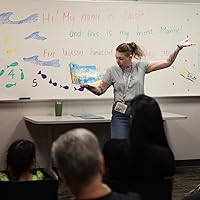
Through accessible language and candid discussions, Storytelling for Social Justice explores the stories we tell ourselves and each other about race and racism in our society. Making sense of the racial constructions expressed through the language and images we encounter every day, this book provides strategies for developing a more critical understanding of how racism operates culturally and institutionally in our society. Using the arts in general, and storytelling in particular, the book examines ways to teach and learn about race by creating counter-storytelling communities that can promote more critical and thoughtful dialogue about racism and the remedies necessary to dismantle it in our institutions and interactions. Illustrated throughout with examples drawn from high school classrooms, teacher education programs, and K-12 professional development programs, the book provides tools for examining racism as well as other issues of social justice. For every teacher who has struggled with how to get the "race discussion" going or who has suffered through silences and antagonism, the innovative model presented in this book offers a practical and critical framework for thinking about and acting on stories about racism and other forms of injustice.
I read this for my Storytelling for Social Justice course as a part of my Master of library and information science program and it's a good read! Though much of the book is an advertisement for the Storytelling Project curriculum, it puts words and definitions to often abstract concepts and gives real world examples of how educators can use its ideas to teach critical thinking. I recommend this to all educators.
the concluding chapter, a description of a five-day workshop for educators, brings together what may be seen as aspirational attempts at system change in specific, actionable ways in classrooms and communities.
well worth the time and energy and also exhaustive resources to support.
Especially now, as the right wing works to dismantle DEI, justice and democracy, important tools for using story as counter action to the supreme INjustices and ongoing threats of extreme racism, all the phobias and power and control of a very few over the very many.
Excellent little book - chock full of theory and ideas for teaching social justice through stories and storytelling. I bookmarked lots and lots of pages. Four stars is really for me, not for the book, I suppose. By the end, I was so interested that I really wanted more concrete examples - which wasn't really the purpose of the book. I've already gone ahead and bookmarked the project online: looks like there's a lot of information there. Now, to figure out how to work this into my classes.
I appreciate a lot of what this framework has to offer and plan to implement some of the lessons in my curriculum. I also pulled texts from the resource lists to continue my learning, but wish there were more ideas or perhaps the narrative of one example lesson instead of just essay testimonials.
"We uncover concealed stories, draw lessons from resistance stories, and generate emerging/transforming stories that can lead us toward a more just society shaped by all of us as active and valued citizens.".
As a history teacher, this is a great model for lesson planning.
Not quite what I expected, but pretty good book overall. The book is based on Bell's research and storytelling project. She has developed a curriculum for training educators in how to utilize storytelling within their teaching, to help students explore and understand social justice.