First, let me say, this is a brilliant account of growing up during the Chinese Cultural Revolution, which began in 1966 when Liang Heng was 12 and lasted until 1976 when Mao died. It was a very crazy period and Liang lived the life of a pinball in a political pinball machine. For anyone interested in this extraordinary period in China, this is a must read.
VIGOROUSLY CRITICIZE THE CAPITALIST ROADERS!
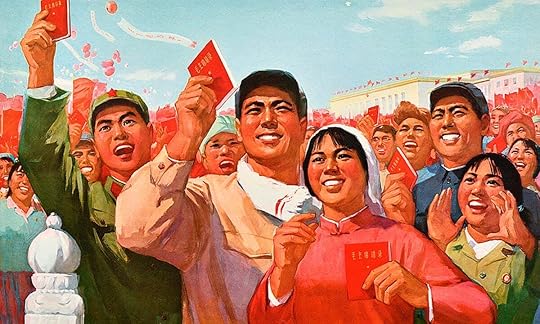
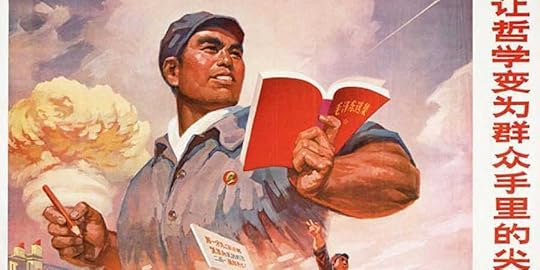
In the Great Proletarian Cultural Revolution children (young teenagers from 12 upwards) were encouraged to leave school and devote all their time to wildly enthusiastic and very often completely brainless promotion of “Chairman Mao Thought”. They were to “make revolution” against those elements of society determined to be “rightists”. Who and what was a rightist was the question, and the answer could plunge a person into years of Kafkaesque nightmare. Liang’s family were the perfect example. This is what happened. Warning : it’s hard to believe.
LET A HUNDRED FLOWERS BLOOM; LET A HUNDRED SCHOOLS OF THOUGHT CONTEND. OR NOT.
In 1957 Mao launched the Hundred Flowers campaign. He wanted to stop the party becoming a smug intolerant uncaring ruling class and, as Liang says, “to correct its shortcomings by listening to the masses’ criticisms”. So everyone at their workplaces were urged to vent forth their views on how the Party could improve. Liang’s mother loved the Party and could not think of any criticisms – the Party had given her a job and saved her from poverty! But her boss told her she had to come up with something, so she finally said that her section leader sometimes used crude language, that he let his housekeeper sleep on the floor instead of giving her a bed, and that the bosses in general were sometimes unfair in giving out raises.
At precisely that point, the Hundred Flowers campaign was ditched and replaced with the Anti-Rightist Movement, designed to smoke out anticommunists. Maybe, says Liang, the Hundred Flowers campaign had been a trap all along. Every factory and office was given a quota of Rightists to deliver to the authorities, and Liang’s mother’s name was among them.
This was the original sin which pursued the whole family through the next ten years like Inspector Javert’s fanatical pursuit of Jean Valjean. Wherever they went, they were “rightists”. The father comes across as pathetically obsessed with the godlike figure of Chairman Mao, reading his Thought every day, earnestly studying, and praising Mao to all and sundry; this guy had been a perfect Mao follower since the revolution, but it didn’t matter, because of his wife he became a known rightist and was hounded and humiliated for years to come.
STRIP AWAY THE SKIN OF THE RIGHTISTS! ANGRILY OPEN FIRE ON ALL REACTIONARY THOUGHT!
At first there was a point to the Cultural Revolution, it was used to thwart and confound those in the CP leadership who figured Mao had lost the plot after the Great Leap Forward, which didn’t work. Mao thought maybe they were going to give him the heave ho, so he sprang this weird wild cultural revolution on them – take that! See? I’m still lefter than all you stuffed shirts put together. But after a couple of years the wild Red Guard movement lost sight of what they were supposed to be doing and devolved into clans fighting each other, each swearing total devotion to Mao Zedong Thought. They were shooting each other. It was chaos.
A PROBLEM WITH MEMOIRS
There is a problem, I guess you’d call it, embedded in a memoir written by a 28 year old about his teenage years. There is an awful lot of (can we say) novelistic detail in here. This is from an account of a political meeting when he was age 15 :
Liu’s gold fillings sparkled in his expressive mouth, and a fine spray of saliva rained into the first rows at emphatic moments.
And from an account of some Red Guard fighting in the year before that :
The bullets whizzed through the air and, as if everything were in slow motion, the flagman fell in front of me and rolled over like a lead ball. The flag never touched the ground. Someone caught it and raised it, hardly breaking stride.
And
He had been in place less than a minute, firing in the direction of his vanished opponents, when he was struck in the belly with a shell and came tumbling down to my level, his guts spilling out in midair and falling back more or less into place as he landed.
There must be a strong desire to make your memoir as vivid and detailed as possible, to do justice to the events you are telling about, but alas, too much detail (and too much precisely recalled dialogue) I think can make a scene like the above one read like a movie, and therefore lessen us readers’ immediate belief. Maybe other readers are more indulgent than me. But this in no way takes away from Liang Heng’s frightening, bewildering account of his jawdropping teenage years. I would love to know what a modern Chinese person makes of all this.
This was a book I was assigned to teach in connection with the class “The World After 1945,” when I was a Teaching Assistant in History. As I recall, it came at a busy time in the semester, and I had to get most of the main teaching points from a meeting with the professor and other TAs just a day or so before class. I should have read the whole thing to prepare (as my students were required to), but judging by the condition of this copy and my fading memory of the contents, I suspect I did not manage it. I think the class went OK anyway.
The book is a memoir of growing up during Maoist China, written by a young man who ultimately emigrated from China, but who had been raised in a family of convinced Communists and aspiring party members. It covers the period of the Hundred Flowers Campaign, the Great Leap Forward, and the Cultural Revolution. In spite of the Liang family’s commitment to Maoist principles, his father is caught up in the repression of the time and accused of being a dissenter, which results in disgrace and difficulty for the whole family, and also drives wedges between the family members, who start accusing one another and taking sides. Liang learns that he can only rely on himself and uses his height and his talent for Basketball as a key to gaining an education and freeing himself from the repressive state.
In many ways, the book reminded me of Mark Mathanabe’s Kaffir Boy: The True Story of a Black Youth's Coming of Age in Apartheid South Africa Liang doesn’t live in quite the degree of squalor and daily violence that Mathanabe endures, but the ever-present threat of state terror makes every apparent comfort tenuous and uncertain. Friends may suddenly become enemies, important people may suddenly be imprisoned, personal belongings may be collectivized, and privacy revoked at any time. Liang does not enter into historical debates about the extent of the Cultural Revolution and its comparison with other acts of totalitarian mass murder, he simply reports what he saw and experienced, which is perhaps a more comprehensible view of state terror. As a survivor and escaper, he also brings a sense of hope and inspiration into his narrative.
This book is somewhat old now and probably doesn’t tell us much about the current situation in China or dissenting movements for democratization. It does give useful insight into a period of history that will continue to inform Chinese politics for many years to come. It is a good place for someone with little background in understanding China to begin
This is absolutely great, for many many reasons, but the main one, for me, is this: it shows the immense capacity for kindness, love, and joy that human heart can have. I will never forget some of the stories from this book; especially the one about the poor peasant couple whose most prized possession was a table, and who would gladly share whatever they could with their fellow human beings – and the wife was just such an extraordinary person; and the train conductor lady, who took upon herself a delivery of a written complaint so that it would reach the Party and the justice would be done.
Whenever I see and hear of xenophobic/racist attacks on Chinese people – and nowadays they are almost the norm – I’m reminded of this book.
Eye opening true story of life in China during the Cultural Revolution. Maybe a few lessons and insights into our current time and culture too.
Main concepts (for me): - Even in extreme times, people can and will find ways to be compassionate. - People will go to great lengths for self-preservation (even at the expense of others)
Tactics of the Cultural Revolution: - Country/Party before family - Goal of equality of wealth, not equality of freedoms - Population control - Property confiscation - Remove memories of the past and dissenting views (name changes, destruction of statues buildings, book confiscation, indoctrination in schools) - Blaming others (previous generations, foreigners, "intellectuals", etc) - Creating factions (us vs them)
A fascinating first-person account of the Cultural Revolution(s) in China. I would say this is a must-read for anyone who wants to understand China today.
When i finished this book i had mixed feelings, I enjoyed from beginning to end but the execution of such enjoyment was varied. At first when i read about half of it, i hated the main character because he never listen, he was spoiled and was over the top and he believed every thing he did was the right choice, but then i realized he was a kid which excuses it because he was a child, he did not knew that what he did was truly wrong, but it was his parents who taught him that the things he did from mocking his teachers and not being thankful towards them and ruining a funeral because of his blind rage was wrong. That was another thing about the book our character is becoming smarter every chapter and his personality changes from him having child-like enthusiasm to having extreme ignorance, this is good because it means that our main character changes when time passes. the other characters are good as well serving as a source of wisdom and lessons for our main character near the beginning of the whole story.
The presence and the atmosphere is very genuine from the large sirens on the top of the village, or the destroyed temples of old. The revolution is also used at the beginning as well, from the very first scene you get the theme and the atmosphere of the story, a utopia slowly destroying itself and turning into the opposite because of a leaders actions. Its very atmospheric. That was another thing i like about this book, but their is also something i didn't like and that was the more brutal scenes they seem not genuine and the the people who do such brutal scenes seems very two dimensional and thin as cardboard. So i recommend this story to people who want a life-time perspective of the cultural revolution, but it's also recommend for people who want a perspective of the environment of the cultural revolution and how it was really like. In the book it basically goes through the main character's life and how his life has been affected by the revolution. Such as a childhood without his mother, when he saw his father being beaten by search raiders and the privileges of being a rebel to begin with. The main character is then pushed into many different environments from the simple civilized town life to rural farmer life and then into the life as a Red guard.Some of the events in this book, the heart-breaking description of the family's disintegration and subsequent years of privation and otherwise desperation can really hurt a person and can show them some surprisingly brutal imagery . I recommend this book for people who wish to understand the Cultural Revolution and the hardships and challenges of such. It intrigues you and breaks you at the same time, wanting all of this madness to stop but its still continuing to show you some light in this abyss of pure darkness. Or something like that. It is amazing to see how difference and the clash of ideals can change a country . There is little trust among the common folks because one never knows who is going to turn you in as a righest. Add to that the system is totally corrupt. A system that destroys old tradition and otherwise anything because of one single man's influence it can even destroy family, something important in China. They are many elements of death and otherwise just pure immorality in some parts in this book from farmers starving to death and people's houses being destroyed in search raids
This is "Son of the Revolution" by Liang Heng & Judith Shapiro.
Dear the people, who read reviews on good read, At first I was like why read this book, and when I first read this I had disliked this book, but as I had got farther I had liked it and now I know way more about the movement. But I advise, if you are like me who likes action books like the Hunger Games and Divergent then you may not like this book.
The book is written by a young man who was about seven when the movement began. He is the middle kid with one sister younger and one older. It is written in the first person by the kid. The reader learns from his first hand experiences how pervasive this movement was. And, how incredible costly, in every way, it was to his family and to the country. It starts out with his parents having to divorce because his mom was viewed to be a rightist. Since the Chinese operate on group guilt, his mother's shadow (which was never proven) cast over the whole family unless there were to be a legal separation of the wife/mom from the rest of the family. Next the dad loses his job as a reporter because he is accused of being an intellectual which is very bad. The family is split up a sent off to work the land and nearly starve to death. This is all part of their "re-education"
It is amazing to see how paranoia can sweep the country. There is so little trust among the common folks because one never knows who is going to turn you in as a rightest. Add to that the system is totally corrupt. The Chinese call it the back door. One can never get anything done by knocking on the front door; deals are made through the back door. For workers’ paradise there is a very rigid caste system in terms of who has power and influence.
The book is short (300pp)moves right along and by the end the reader has a fairly good idea of how far off track a centralized, authoritarian system can go. Just the idea that a group of thugs can beat you up and there is no police to go to gives you an idea of how awful things can become. The police have a great line they use and the people believe: confess to your crimes and we will deal with you leniently; don't confess and we will torture you. Nice structure, especially when the charges are like "being a rightest"
I recommend the book but then again, if you are like me who only like action books like the Hunger Games and Divergent, then you may not like this book. Alijah McGinnis Whiting, 5th/6th period.
I stumbled on to this book while reading one of those "five best" books which are often listed in the WSJ when they interview an author. In this case it as a list of the five best books on social/cultural revolutions. The list featured this book on the Red Guards era roughly 1966 to Mau's dealth in 1976.
The book is written by a young man who was about seven when the movement began. He is the middle kid with one sister younger and one older. It is written in the first person by the kid. The reader learns from his first hand experiences how dragonian and pervasive this movement was. And, how incredible costly, in everyway, it was to his family and to the country. It starts out with his parents having to divorce because his mom was viewed to be a rightist. Since the Chineese operate on group guilt, his mother's shadow (which was never proven) cast over the whole family unless there were to be a legal separation of the wife/mom from the rest of the family. Next the dad loses his job as a reporter because he is acused of being an intellectual which is very bad. The family is split up an sent off to work the land and nearly stave to death. This is all part of their "re-education"
It is amazing to see how paranoia can sweep the country. There is so little trust among the common folks because one never knows who is going to turn you in as a righest. Add to that the system is totally corrupt. The Chineese call it the back door. One can never get anything done by knocking on the front door, deals are made through the back door. For a workers paradise there is a very rigid caste system in terms of who has power and influence.
The book is short (300pp)moves right along and by the end the reader has a fairly good idea of how far off track a centralized, authoritarian system can go. Just the idea that a group of thugs can beat you up and there is no police to go to gives you an idea of how awful things can become. The police have a great line they use and the people believe: confess to your crimes and we will deal with you leinently; don't confess and we will torture you. Nice structure, especially when the charges are like "being a righest"
Liang Heng recounts the frustrations of growing up in communist China, where the authoritarian government curtails its citizens' rights and thoughts at whim. The level of detail in this book would make it an excellent primary source for research on the topic; for a general reader like me, perhaps only the first few chapters were necessary to convey the gist of the nasty situation. Still, I slogged through, because of the
Lately I've been feeling nothing short of depressed about the situation back home. Reading this memoir curiously both deepened that fear and provided hope and consolation that no matter what happens, things have and will get better.
Another book I read for a Poli Sci class and I enjoyed this. An easier read and taught me a lot about Communist China, not only their government system but social system and strata as well.
This book is one man’s journey navigating the Cultural Revolution in China during the 1970’s. It is a compelling book on how people can turn against one another, even family members, due to oppressive governments. It’s an appropriate book to read during these troubling times all over the world, when people are attractive to unjust régimes.
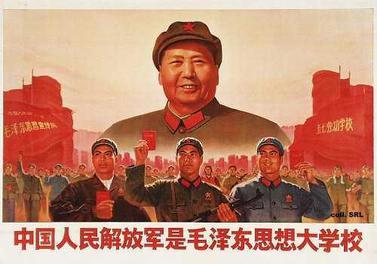
Liang Heng gives a first-hand account on how the Cultural Revolution tore apart his family, forcing his mother and father to divorce, set his mother aside from society and later turning on his father because he had been a journalist. He writes powerfully of the pain this Gang of Four in government caused his father being displaced to rural China as a peasant. This mass movement was only possible due to the hero worshiping of Chairman Mao.
This book makes some sense of a senseless revolution, a sea change in a large nation that just didn’t make sense to me as a child or teen – or today. This personal expedition is painful to experience but makes more sense of a nation that moved in such an impossible direction, making decisions that were both national and personal, dividing families, forcing people from their occupations, outlawing the former culture, and getting people to act in mean, direct ways. The Cultural Revolution was yet another hard turn, after the civil war that lead to the People’s Republic of China in 1949, the ‘Let a Hundred Flowers Bloom’ movement in 1956-57, followed by the ‘Great Leap Forward.’ Mass changes, like citizens of Germany felt in the early 1900’s through democracy after Hitler’s years.
Heng had a hard childhood with a father who loved the Party more than his wife, turning on her despite her support of the Party. Heng’s father thought the Party could do no wrong and couldn’t possibly make a wrong decision. Even after his father divorced his wife, he was still on the watch list and Heng had to secretly visit his mother. Rural life was tough and since everything was through the Party, when one was not in good graces with the Party, life was even more difficult.
Red China knew how to control society through fear, propaganda and activities that celebrated their leaders. People who wanted to get ahead learned to participate in the Youth League. When the government was trying to get a point across, they issued a paper printed in red ink. Names of those who violated the state were printed on posters. People were attacked – with words and actions. Radio and loudspeakers were used to announce those who were enemies of the state. No one was safe – not journalists, public officials, teachers, or even parents. The attacks were vicious, including re-educational camps, torture, bondage, beatings, and even executions. People were forced to give confessions against the backdrop of these threats and power. They were forced to shout things like: “I am a counterrevolutionary. I am wrong. Thank you, Chairman Mao for not making me die.”
As a child, Heng had all his books stolen except books by Chairman Mao, Marx, and Lenin. The aged homes in rural China had huge signs supporting the government like, “Our Red Hearts Yearn toward the Red Sun,” and Long Live the Great Leap Forward.” It was impossible to access true news but avenues were controlled by the government including plays, signs, media, and button. People’s movement were controlled by residence cards, restricting where people were able to live.
This book is a personal accounting of a tough time in China. But the institutions that were shut down and changed give us a glimpse at what can happen in a nation, how people can be forced into another reality.
This entire review has been hidden because of spoilers.
I first started this book about 5 years ago for a university course, and although i found it very interesting, I only had time to read about half. After recently reading a book about contemporary China, I decided to give this book another go in order to re-learn about the Cultural Revolution, in order to better understand the historical context of modern China.
I'll get the negatives out of the way first. Its not by any means the most interesting writing in the world....the way the story is told is very narrator-like, without much dialogue or variation in tone. It feels like exactly what it is, someone recounting their life story. I don't want to say this is a huge drawback, because after all this is someone's life story, but it did feel a bit dry at times. I often found it confusing in places. I would have liked better explanations of what some terms meant; there are SO MANY terms and political ranks and programs and factions and communist terms that it becomes really hard to keep everything straight, and at times I found myself confused.
Despite these relatively minor problems, this is a fascinating story. It is infuriating and frustrating, and almost unbelievable. Its amazing how much suffering and hardship the author endured, and escaped not only with his life but with his sanity and good humor. This book sheds light on the way in which the communist movement turned inwards on itself and caused those at all levels of society to denounce their friends and neighbors, turning family members into strangers and even enemies. Its a story of propaganda, personality cults, extremism, and cruelty, and a reminder of all the freedom we enjoy in the West. It shows the complete failure of a system, and how much people can be forced to put up with, without breaking, and how they endure. I often found myself at times reminded of certain aspects of Orwell's '1984,' horrified to realize that much of what seemed like an exaggerated dystopian fantasy was in fact very real. The amazing thing about this book is that, just when we as readers think it can't get any worse for Liang Heng, it somehow does. Its very interesting to read about his experiences, but also to see how far he is pushed before he finally becomes disillusioned with his once beloved Chairman Mao and Chinese socialism.
This was one of the more memorable and impactful documents that I read in university, and I'm glad I came back and managed to finish it in its entirety.
While I was reading this autobiography, I kept thinking it was a literal (Chinese) iteration of George Orwell's ANIMAL FARM. While the writing style can be a bit dry and the detail overwhelming (probably due to both authors academic backgrounds) the material is incredibly rich.
Despite the fact it was originally published 40+ years ago, it remains an invaluable first-person account of The Cultural Revolution, and the period preceding and afterwards. It simply has to be read to be believed, and even then, it's hard to comprehend. Families torn apart, physically and emotionally. Everything was shifting sand - virtually no one and nothing could be counted on.
There are bright spots of love and kindness, and people still, despite it all, trying to do the right thing. There are far more manifestations of people's base instincts and self-preservation.
I had hoped that Liang & Judith's love and their marriage would survive the test of time, but according to the internet, they divorced in 1991.
I highly recommend this book. It is incredibly easy to read, pulls at your heart, and provides information on the Cultural Revolution through one person’s account.
This is an interesting first hand account of the Cultural Revolution and all the turns it took. I went into the book not knowing much about it and was astonished for much of it. In how severely politics shaped average lives and the different programs and initiatives that were constantly changing.
The book follows one person’s perspective which helps follow the chronology of the Cultural Revolution and gives us insight into how he made decisions and how those decisions changed over time as well (due to growing up and past experiences) as how the people around him felt making decisions and how they saw those decisions in retrospect.
The lesson on blind obedience and its outcomes are still relevant today across the world. A reminder in not only the importance of thinking for oneself but also teaching young people how to critically think.
Stunning and enthralling memoir as told by an ordinary Chinese whose life was dictated by the cruel, all-powerful and constantly changing edicts of the Maoist government.
I have read several memoirs of this era and although they all share the same tales of austerity, brutality, and injustice, each story is unique and powerful and should be a part of our education as Westerners.
As we slide further from our freedoms and see increased disinformation, nationalism, xenophobia, suppression of the press, government propaganda, disrespect for education and science, and normalization of despotic leadership, Western readers would be wise to learn from Chinese history to understand what freedom really means and what kind of vigilance and hard work needs to be done to constantly protect it.
An in-depth look at the cultural revolution from one man's (and his family) point of view. I do enjoy books like this , looking back at the life of people in different times but I'm not too sure about liking this. Though it's avoidable, I feel that the writer , through his conveying of experiences and incidents, should not be adding too much of his resentments and feelings to the occasions and happenings experienced. That should be left to the reader. That being said, I still enjoy the scenes of life in 60s 70s China though not believing all that's being penned. Being of Chinese blood myself, this book greatest achievement lies in my comparing the Chinese mentality, thinking and happenings, particularly of the 60s cultural revolution masses and that which I am exposed to. Hence 3/5.
A heart wrenching tale, Son of the Revolution is Liang Heng's account of growing up in China during the Great Leap Forward and the Great Proletarian Revolution. Believing whole heartedly in the Party, he is disillusioned as he sees his parents, his sisters, and himself punished for expressing their doubts about what is happening to China. I highly recommend this book to all Asian studies' scholars.
This isn't dissimilar to "Wild Swans" only from a male perspective and a little more focus on his immediate family where as the former (also recommended) looks at three generations of Chinese women. What emerges is an inspiring story of someone who emerged from the upside-down, duplicitous world of the cultural revolution with his humanity intact. There's a follow up that I intend to read eventually
This is my first review using the app, but this book was extremely interesting for a few different reasons. It presented a view of many historical events from a very personal perspective. I was fascinated by the way it showed the effects political decisions had on many different segments of the population in China in the 1950’s through the 1970’s. It’s definitely a great educational memoir, as well as one that can enlighten anyone curious about 20th century history.
This book was a powerful account of the Cultural Revolution. Liang has a powerful story that is fascinating to read. The blurb on the back is entirely accurate when it says “His story is unique but at the same time it is in many ways typical. I could connect every part of his story to a story that my own grandparents told about their experiences. They too mourn that Chinese education today glosses over the cultural revolution at best and glorifies it at worst.
This book was an assigned reading for my Global past class. At first I was dreading this book. I love reading but I like to do it for myself I hate assigned books BUT i started this one and was hooked from chapter one. It has a wonderful voice and the imagery of the book makes you feel like you are there.
I really enjoyed this book. It was a great personal memoir of a boy who lived during the cultural revolution. The book covers how despite his beginnings of blind party support, he was beaten down and taken advantage of by his society at every turn. Seeing Liang Heng go from a hopeful and bright-eyed youth to a jaded, bitter man was telling of the times he lived in.
A riveting account from a young man who grew up in Mao's China. This read is very insightful to anyone who is curious about growing up in Maoist China or about the psyche of many people who live there even today. This is not a very long book and I would recommend it fully to anybody who wants to understand the mindset of contemporary China.
A good narrative style document for those interested in learning about the Cultural Revolution and Chinese history. Not a particularly gripping writing style, but lots of important stories to share and witness.
finally finished this book after a lot of procrastinations. plainly powerful, quietly emotional, with such huge and rich oral history. this shall not be forgotten. (one of the books on my future children's childhood reading list)