

What do you think?
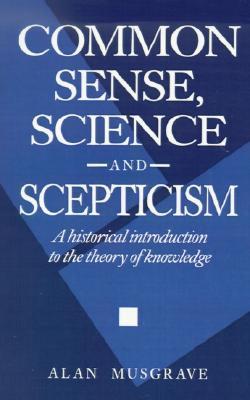
Common Sense, Science and Scepticism: A Historical Introduction to the Theory of Knowledge
Can we know anything for certain? There are those who think we can (traditionally labeled the "dogmatists") and those who think we cannot (traditionally labeled the "skeptics"). The theory of knowledge, or epistemology, is the great debate between the two. This book is an introductory and historically-based survey of the debate. It sides for the most part with the skeptics. It also develops out of skepticism a third view, fallibilism or critical rationalism, which incorporates an uncompromising realism about perception, science, and the nature of truth.
328 pages, Paperback
First published February 11, 1993
Ratings & Reviews
Friends & Following
Create a free account to discover what your friends think of this book!
Community Reviews
Displaying 1 - 8 of 8 reviews

October 20, 2007
Alan Musgrave rocks. I did all his philosophy papers at Otago University and even got him to autograph my copy of this book.
This is a great introduction to realist epistemology and Musgrave presents it in his no-nonsense way. It is very accessible and easy to follow.
This is a great introduction to realist epistemology and Musgrave presents it in his no-nonsense way. It is very accessible and easy to follow.

December 26, 2024
كتاب مش سهل، أوقات الكاتب كان بيسهِب بشكل زايد في بعض النقاط، ولكنه كتاب ممتاز ككل وهيضيف للي هيفهمه رؤية قوية وواضحة لتطوّر نظرية المعرفة.
Amazing book!
Amazing book!

January 5, 2014
This book is absolutely fantastic. It's structured very well and uses basic and familiar examples to demonstrate (for many) foreign concepts.
The man himself is a bit a gem too; having had the great fortune of studying under him in a handful of University papers, I'd say that I have a small man-crush.
This book and the accompanying course made me feel like a child again in the sense that it refreshed a sense of wonderment and awe towards the external world. Well worth reading as an introduction to Philosophy.
The man himself is a bit a gem too; having had the great fortune of studying under him in a handful of University papers, I'd say that I have a small man-crush.
This book and the accompanying course made me feel like a child again in the sense that it refreshed a sense of wonderment and awe towards the external world. Well worth reading as an introduction to Philosophy.

February 8, 2018
The short summary: Musgrave argues that the traditional philosophical notion of knowledge as justified true belief leads inevitability to skepticism and the de-legitimizing of much that we consider knowledge today, and so we should replace it with his "conjectural knowledge" according to which:
A conjecturally knows that P if
(1) A believes that P;
(2) P is true; and
(3) A is justified in believing that P.
where someone is justified in believing P if they have subject P to severe tests and failed to falsify it. Musgrave is clearly a Popperian and believes the key to answering this problem is to make a distinction between "A is justified in believing that P" and "P is justified":
"Talk of'justifying A's belief that P' is ambiguous between justifying P, the proposition A believes, and justifying A's believing that proposition. Traditional justification conflates the two, thinking that A is justified in believing P only if A can justify P (either conclusively or inconclusively). Critical rationalism separates the two, thinking that A may be justified in believing P even though A cannot justify P (either conclusively or inconclusively). In particular, the critical rationalist thinks that P's having ' withstood serious criticism' justifies us in believing P but does not justify P (either conclusively or inconclusively). According to critical rationalism, it is reasonable to believe P if we are justified in believing P, not if P is justified."
I'm not a Popperian so his solution just seems to be an illustration of what happens when you give up induction. But he goes through the history of rationalism and empiricism in a way that's critical and somewhat comprehensive (and I learnt that Locke took his idea of primary and secondary properties from Galileo!), so it's a decent read for anyone actually interested in this topic.
A conjecturally knows that P if
(1) A believes that P;
(2) P is true; and
(3) A is justified in believing that P.
where someone is justified in believing P if they have subject P to severe tests and failed to falsify it. Musgrave is clearly a Popperian and believes the key to answering this problem is to make a distinction between "A is justified in believing that P" and "P is justified":
"Talk of'justifying A's belief that P' is ambiguous between justifying P, the proposition A believes, and justifying A's believing that proposition. Traditional justification conflates the two, thinking that A is justified in believing P only if A can justify P (either conclusively or inconclusively). Critical rationalism separates the two, thinking that A may be justified in believing P even though A cannot justify P (either conclusively or inconclusively). In particular, the critical rationalist thinks that P's having ' withstood serious criticism' justifies us in believing P but does not justify P (either conclusively or inconclusively). According to critical rationalism, it is reasonable to believe P if we are justified in believing P, not if P is justified."
I'm not a Popperian so his solution just seems to be an illustration of what happens when you give up induction. But he goes through the history of rationalism and empiricism in a way that's critical and somewhat comprehensive (and I learnt that Locke took his idea of primary and secondary properties from Galileo!), so it's a decent read for anyone actually interested in this topic.
November 24, 2020
çok zorladığı bölümler olsa da (hume, tümdengelim; doğruluk, tarski'nin t-şeması) konuyu fazla basitleştirip eksiltmeden daha iyi anlatılabileceğini düşünmüyorum. dönüp dönüp bakılabilecek bir başucu kitabı. "bir şeyi nasıl bilebiliriz?" sorusunu merak eden, kendi inançlarını gerekçelendirmeye çalışan, mantık hataları yapan insanları görünce kendisinin de aynı hatayı yapabileceğinden şüphe duyan, sonuç olarak "bilme"nin önemli olduğunu ve davranışlarımızı yönlendirdiğini düşünen insanlar için iyi bir kitap. özellikle bilimle uğraşacak kişiler için faydalı olacağını ve benim gibi daha önce felsefeyle pek uğraşmamış olanların da anlayabileceğini düşünüyorum ama yavaş bir okuma olabileceğini (konu akışını anlamak için geri dönmeler, aynı yerleri tekrar okumalar ve genel olarak da düşünerek okudum) baştan kabul etmek gerek.

May 12, 2023
Very clear and helpful introduction to a Popperian theory of knowledge. Musgrave presents the major positions in epistemology in illuminating relationship to each other and to their historical development from the Greeks to present-day developments. Scepticism and science play significant roles in the progress of philosophical solutions to the problem of knowledge. Can be highly recommended to those with some philosophy background, and want to acquire an organized familiarity with one of the main branches of philosophy. Will handsomely repay close and careful reading.

January 12, 2024
Wirklich ein gutes Buch, wenn man eine Einführung ins Thema braucht und einen Überblick möchte. War mir dann aber etwas lang, sodass ich die letzten Kapitel nur noch überflogen habe. Stellenweise, materiebedingt, auch einfach sehr schwer. Insgesamt aber anschaulich geschrieben und empfehlenswert.

January 2, 2025
This book is a good introduction to the philosophy of knowledge. 👏 👍
Displaying 1 - 8 of 8 reviews