It is twenty-three years since a Macht army fought its way home from the heart of the Asurian Empire. The man who came to lead that army, Rictus, is now a hard-bitten mercenary captain, middle-aged and tired. He wants nothing more than to lay down his spear and become the farmer that his father was. But fate has different ideas. A young war-leader has risen to challenge the order of things in the very heartlands of the Macht. A solider of genius, he takes city after city, and reigns over them as king. What is more, he has heard of the legendary leader of The Ten Thousand. His name is Corvus, and the rumours say that he is not even fully human. He means to make himself absolute ruler of all the Macht. And he wants Rictus to help him.
Paul Kearney was born in rural County Antrim, Ireland, in 1967. His father was a butcher, and his mother was a nurse. He rode horses, had lots of cousins, and cut turf and baled hay. He often smelled of cowshit.
He grew up through the worst of the 'Troubles' in Northern Ireland, a time when bombs and gunfire were part of every healthy young boy's adolescence. He developed an unhealthy interest in firearms and Blowing Things Up - but what growing boy hasn't?
By some fluke of fate he managed to get to Oxford University, and studied Old Norse, Anglo-Saxon and Middle English.
He began writing books because he had no other choice. His first, written at aged sixteen, was a magnificent epic, influenced heavily by James Joyce, Samuel Beckett, Robert E Howard, and Playboy. It was enormous, colourful, purple-prosed, and featured a lot of Very Large Swords.
His second was rather better, and was published by Victor Gollancz over a very boozy lunch with a very shrewd editor.
Luckily, in those days editors met authors face to face, and Kearney's Irish charm wangled him a long series of contracts with Gollancz, and other publishers. He still thinks he can't write for toffee, but others have, insanely, begged to differ.
Kearney has been writing full-time for twenty-eight years now, and can't imagine doing anything else. Though he has often tried.
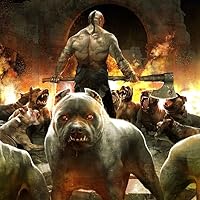
Rictus de Isca, legendario guerrero, es el comandante de los Cabezas de Perro, los mercenarios más solicitados de la raza macht. En su juventud, Rictus comandó la retirada del mítico ejército de los Diez Mil a través del Imperio asurio, y tras aquellos días de gloria, las actuales escaramuzas entre falanges que los macht llaman guerra ya no tienen el mismo sabor..
A punto de colgar su lanza y su escudo para retirarse con su familia al perdido valle donde ha construido una vida pacífica, Rictus recibe la intempestiva visita de otra leyenda andante: el misterioso Corvus, un hombre (o quizá más que un hombre) que ha conseguido lo imposible, conquistar una docena de ciudades estado y ponerlas bajo su mando.
Pero los sueños y ambiciones de Corvus son aún más alocados y constituyen un mayor desafío a las tradiciones macht. En su irresistible estela, ejércitos y ciudades se ven arrastrados hacia un futuro desconocido, Rictus no puede mantenerse al margen.
Pondrá su lanza al servicio de Corvus aunque nadie sepa dónde terminará su desenfrenada carrera, y aunque con ello pierda su última opción de felicidad.
Corvus no es el típico Macht. No está hecho del mismo molde ni tiene las mismas ideas pero lo que hace implacablemente es conquistar..
Suculenta secuela de 'Los Diez Mil' ambientada en un mundo muy cruel, duro en una antigua guerra llevada a cabo en pleno invierno. La muerte es la dama y reina que gobierna. Amigos convertidos en enemigos. Y sangre, mucha, mucha sangre.
Estimado Xabi volviendo atrás a tus reseñas creo que deberías haber dejado más espacio entre el primero y segundo. Menos cargante tanta batalla. Las batallas son sublimes, eso sí...
Os insto lectores a leer una joya de la fantasía muy, muy poco reconocida y a la altura de los grandes. De este mismo autor.
Batalla y más batallas y violaciones y sangre, mucha sangre. Y qué dura es la guerra y que nadie es del todo bueno ni del todo malo. O sea, lo de siempre.
Ameno es y se lee bien, pero no hay nada nuevo ni original ni brillante.
La cosa va de que al ya mayorcito protagonista del libro anterior (ya casado y padre) le obliga un tal Corvus a volver a la batalla. Y van conquistando ciudades-estado de esta Grecia alternativa hasta que... a poco que imaginéis ya sabéis cómo acaba.
¿Y leeré el tercero de la saga? Pues posiblemente xq ya digo que se lee bien, pero sin expectativas.
Corvus picks up 23 years after the epic march of The Ten Thousand (from The Ten Thousand if you were having trouble keeping up :D). Rictus' Dogsheads are the best of the best in all the Macht and really the only ones keeping the mercenary life alive. Rictus has become a legend as one of the few survivors of that march.
Because of his legendary status and because of the Macht's tendency toward fighting and war, Rictus is also somewhat of a target, especially for an up-and-coming leader named Corvus who wants to hire Rictus (whether he likes it or not) for his campaign.
Corvus is not your typical Macht. He doesn't quite look right or think the same, but what he does brilliantly is conquer and that's what he plans/has already partly done to the Macht people.
He needs Rictus because while Corvus is a conqueror, he wants to do so with as much aplomb and as little blood as possible and who wouldn't give up knowing Rictus and his Dogsheads are against you.
While Rictus is legendary and war is something he does best, he is also now a family man with family concerns. Stepping away from them could cost him dear especially if anyone wanted to use them against him.
After reading Corvus, it was pretty clear that Kearney uses (at least for this series) a common plotting scheme that I showed up in The Ten Thousand as well. Not that it's a bad thing either even though the word I want to use is "predictable" because it's not that. We grow attached to the characters, a minor plot is introduced that seems not to matter, set up to climax, climax, minor plot comes back to finish the reader out in the rest of the story. This is obviously a similar scheme to plenty of other authors, but I felt it really stood out in this series and mostly because Kearney is such a direct author - nothing is superfluous.
I quite enjoyed Corvus and possibly even a bit more than The Ten Thousand. While the costs don't seem as great as in The Ten Thousand, Corvus presents problems that are even greater on a personal level regarding decisions people make with their lives and families. For me, this was a more poignant novel than The Ten Thousand.
Corvus actually represents one of the main reasons I read fantasy - to be faced with situations that make you contemplate what it is to be human and what it means to do the right thing.
Why Should You Read Corvus?
This is a great second installment and as good if not better than the first. While the world that Kearney has created is an interesting background, the characters are what set this series apart. If you need a break from complicated worlds and series' and just want something straight-forward with great plot, this is for you.
I'm really looking forward to the final book in the Macht trilogy, Kings of the Morning.
An excellent sequel to 'The Ten Thousand' - a book about an unforgiving world, ancient war carried out in the middle of winter, death as a constant companion, friends turned to enemies, decisions that turn deadly on innocent bystanders. What singles out Kearney from the crop of authors subscribing to these so called "gritty realism" stories? A spare, clear form of expression that is at the same time charged with emotion. An awareness of the force and majesty of nature, distilled into rare but powerful metaphors. And most of all, the possibility of redemption through love and friendship. Too many authors let the cynical point of view rule the story, more concerned with bad-ass posturing and shocking plot twists that they hope will tittilate the jaded palates of modern readers. There's still hope for Kearney heroes of a life beyond the ravages of war.
Volvemos al mundo de los Macht en esta trilogía de Paul Kearney. Disfruté mucho del primer libro Los diez mil, que es una recreación con toques de de fantasía de los acontecimientos históricos de la anábasis de Jenofonte. Sin embargo, hasta donde yo sé, Corvus es una historia original, aunque el carisma y el genio militar del joven general que da el nombre al libro recuerda a Alejandro Magno.
Hay una trama apasionante en esta novela, fascinante y perturbadora. Este es el tipo de serie que gira en torno a batallas sangrientas. Si eso no es lo tuyo, entonces este libro no te va a gustar mucho. Pero si disfrutas del tipo de escenas de batalla que se hacen famosas por comics ( o peliculas) como Los 300, entonces Paul Kearney es tu hombre. La escena final que pone fin al asedio de XXX (spoiler) esta tan bien hecha que prácticamente puedes ver y escuchar en tu cabeza la aglomeración de hombres, los gritos de los heridos y moribundos y los ríos de sangre y olor a sudor y sangre y terror en medio de una batalla a gran escala.
Una cosa que que el autor hace mejor en esta secuela es el desarrollo de su personaje. El antagonista en esta novela es alguien a quien podrías respetar e incluso te puede llegar a caer bien, e incluso dudaría en llamarlo antagonista o villano, ya que claramente es un hombre honrado que acaba de ser atrapado en el lado equivocado de una guerra. Es fácil odiar a un chico malo cuando el autor lo convierte en un villano inmoral horrible, pero otra cosa es cuando Paul Kearney hace que este sea un hombre que se preocupa por su ciudad y que renunciaría a su cómoda vida para luchar con su gente. Probablemente sea uno de mis "villanos" favorito, solo por las muchas capas que tenía el personaje.
Aparte como dato interesante esta segunda entrega deja caer algunos fragmentos de historia de las corazas negras que llevan algunos de los guerreros Macht, las misteriosas armaduras que la gente dice que no son de su mundo y que llaman "La maldición de Dios"
Este libro se pueda leer perefectamente por sí solo, aunque leer Los diez mil primero te ayuda a ponerte en información de antecedentes. Una muy buena continuación a la saga.
I need to go slowly here. I think The Ten Thousand was one of the best military/military fantasy reads I've ever come across. This book while still good and pretty readable isn't quite as good as its predecessor.
The first book retells in a fantasy setting the story of the 10'000 which is a Greek classic. Here we pick up later and the book is an attempt to give us a fantasy fictional view of Alexander the Great's conquest of the Greeks. (Yes Corvus is our fictional Alexander).
In my humble opinion...get that, it's my opinion...this book has taken on far too much for the way it tells the story. The result is a rather scatter-shot tale that while getting told manages to stumble. There are instead of the insightful views of war and those that/who fight them in the first volume (The Ten Thousand) the story here bounces around and we get short and unsatisfying views of each...occurrence.
There are at first 2 points of view but then as we go along we get a third. None of these were for me satisfying and were always somewhat frustrating. Yes the book does complete its "thought" or finish its plot. So I'm not really happy with my 3 star rating but don't think I can go higher.
There is meat here. The book does tell a story full of pathos, tragedy and the sadness of war. We do see much of what brings wars, the utter frustration and ultimate horror of war. I just think it's not as good as it could have been.
Just me of course...
I could say more. I do plan to move on to the last book in this trilogy and I've seen others who claim it to be the best of the series so...hope springs eternal.
A estas alturas, con más de media docena de libros suyos leídos, ya puedo confirmar que Kearney me encanta y que es oficialmente uno de mis escritores de fantasía preferidos. En esta entrega seguimos las aventuras de Rictus, ya un poco mayor pero que sigue siendo un mito entre los macht por su hazaña con los Diez Mil, dos décadas antes de lo que se narra en esta entrega.
Con respecto al primer libro carece algo de la tremenda épica que marcaba aquel, tal vez porque se pierde la referencia al hecho real, narrada por Jenofonte en su obra Anábasis, en que se basaba libremente. Aquí Rictus vuelve a verse envuelto en un conflicto de enormes dimensiones, en el que se ve obligado a participar, pero que le atrae porque lo redime de los veinte años de mediocridad que vivió desde que regresó del Imperio. Aún así, esta guerra no alcanza los niveles de dramatismo de la primera, por lo que Kearney recurre al viejo truco de introducir una línea paralela que nos mantiene en tensión por si no nos llegasen las tremendas cargas a la carrera de los Cabezas de Perro, los últimos supervivientes de los legendarios mercenarios de las capas rojas.
Y todo ello con el estilo directo y sin pausas del autor. Sin demasiado relleno nos explica como Rictus se enfrenta a su propio ocaso como guerrero mientras asiste al del mundo que conocía. Y aprendemos que en una guerra no hay buenos ni malos y que cada contendiente hace lo que cree necesario para salvar a los suyos, mezclando actos de nobleza con otros de lesa humanidad.
Como no me canso de repetir, no entiendo porque Kearny no ha logrado la repercusión que se merece entre los lectores de fantasía, cuando otros, bastante peores escritores, no paran de recibir reconocimientos y alabanzas. Corvus, como todos los libros suyos que he leído hasta ahora, es muy entretenido, fácil de leer y muy recomendable.
An arc of Corvus/Kearney made its to my inbox today and once I opened it after work, i just could not put it down; a sort of sequel to The Ten Thousand - some 25 years later with Rictus still in charge of his now large mercenary company, fighting successful campaign after successful campaign in the spring and summer for whichever Macht city pays best and returning to his wife and daughters in a hidden mountain cottage for the winter
But now a young charismatic conqueror appeared out of nowhere and he is planning to unite the Macht at sword point if need be; and of course Corvus needs Rictus for credibility and for other reasons that are pretty easy to guess once you advance in the book a little
But the Macht love their "freedom", even if it is the freedom to war among themselves and enslave or kill the weak, so the job is not easy....
As good as The Ten Thousand and possibly even better - though to my mind mil-fantasy just does not come better than that - and highly, highly recommended
There should be at least one more novel to follow the adventures of the Macht, possibly more, but like The ten thousand, Corvus stands well on its own with a clear definite ending
FBc review here too:
INTRODUCTION: Two years ago in the series debut The Ten Thousand, Paul Kearney created the secondary world of Kuf which has a large landmass populated by numerous people who are currently under the sway of the Assurian Empire. To the north and east, separated by various seas and the remote fastness of the Harukush Mountains, lies the home of the legendary Macht people—warriors of great renown and ferocity who are divided into various city states under the aegis of Machran. So the Greeks vs the Persian Empire with some little touches of the fantastic and a twist or two, but otherwise The Ten Thousand was a pretty faithful retelling of the classic story with the same name.
Speculative fiction allowing both historical time-compression and event simplifications, fast forward 23 years only - rather than the roughly 50-70 from the historical timeline - and several years of events rather than several decades and Corvus an enigmatic young military genius has appeared out of nowhere in the Macht lands and is taking over them with force and sweet words and this book is his first part of the story; in an excellent narrative choice, the story is told through the eyes of others, most notably the former commander of the Ten Thousand, Rictus now the most famous and acclaimed mercenary leader of the Macht.
FORMAT/CLASSIFICATION: Corvus stands at about 460 pages divided into 27 named chapters and an epilogue. The book starts with a map of Kuf. There are several threads with various POV's, most notably Rictus and his sidekick/sub-commander Fornyx, Karnos - the Speaker of the most important Macht city of Machran - Phaestus, a friend of Rictus and leader of another Macht city, the smaller but geographical crucial Hal Goshen, while of the women, Rictus' wife Aise and Karnos' fiance Kassia who is also the sister of Machran's army commander Kassander are the most prominent.
Corvus is military fantasy; it stands well on its own with a clear definite ending, though of course the story continues next spring/summer towards its logical destination in The Kings of Morning.
OVERVIEW/ANALYSIS: “We just keep marching,” Rictus said softly. “That is what we do. We carry the Curse of God on our backs and go into the dark together.”
"Corvus" starts with Rictus in charge of his now large mercenary company, fighting successful campaign after successful campaign in the spring and summer for whichever Macht city pays best and returning to his wife and daughters in a hidden mountain cottage for the winter.
But now a young charismatic conqueror has appeared in the Macht lands and he is planning to unite them at sword point if need be; and of course Corvus needs Rictus for credibility and for other reasons that are pretty easy to guess once you advance a little in the book. The Macht love their "freedom", even if it is only the freedom to war among themselves and enslave or kill the weak, so the job is not easy.
"Corvus" is a page turner that will keep you hooked until the end even though you can easily guess its general thrust. It is also a novel of heroism and brutal fighting with explicit descriptions of gore, military camps, logistical considerations and life in a besieged city or in the besieging army.
Paul Kearney's major strength as storyteller of battles, fighting and war is on display here and as in all his previous similar work, whether in the just reprinted Monarchies of God series or in The Ten Thousand, he makes you root for both sides. The freedom loving Macht led by the city of Machran and its unlikely but brave and determined leader Karnos and the destiny man with a dream Corvus clash brutally and there can be only one winner; while we sort of know how it will end, the skill of the author is such that we are kept in suspense to the end and we somehow want both to win...
In addition to the big picture, there are several personal story-threads, some dark and violent, some domestic and of course the back story of Corvus himself - something not hard to guess anyway - but very well done and with great touches, not the least his Kufr Companion Cavalry and his reluctance to try his father's "Curse of God" black armor that is so prized among the Macht.
And in these side stories, we see the war and its human cost through the eyes of the women and children adding an extra dimension to the usual "band of brothers" blood-and-guts subgenre.
"Corvus" (A+) delivered what I expected of it with brio and reinforced the standing of Paul Kearney as a master of military fantasy.
What a tale of war. The dirty, muddy, bloody, fear-filled hell it is. The fighting face-to-face for your friends. The panic, press, pain and finally relief of it all. Rictus, one of the greatest warriors of all time and bearing one of the best names of all time, weathers a lot through this doozy of a story. You want blood and death and pain and some triumph, read this. The pain and loss is high though, full warning.
Roughly 25 years after Rictus and his Dogsheads returned from the epic march of The Ten Thousand, the man is still a mercenary, but this time when his contract ends he’s contemplating retirement. He’s no longer a young man. As he settles back into farm life, tales begin to reach his secluded farmhouse of a young upstart named Corvus who desires to unite the Macht under one king. Corvus is clearly a model of Alexander the Great in nearly every way but for his lack of royalty in Corvus, down to the Companion Cavalry. He’s a brilliant tactician, he’s charismatic, and he’s mightily ambitious. He’s heard the legend of Rictus, the Dogsheads, and the march of the Ten Thousand since he was a child, and he wants the man himself to aid him in his conquest of the Macht.
The spear by the door.
So says one of the part headings of Kearney’s Corvus. I think that it’s a very poignant phrase in its simplicity. Rictus wants to leave the life of soldiering, but he can’t – it’s such a part of him that he isn’t sure what he would do without it. The spear by the door is a constant reminder of what he is: a killer of men. And it’s something he knows, as is shown in his constant return to the life of a military man. He’s strikingly similar to Christian Cameron’s Arimnestos in his Killer of Men series. The two characters are very similar in that their lives and families have been brutalized by their choice of profession, but they simply can’t leave it or escape it. It’s a very relevant phrase to today’s life as well, as there are many soldiers who continue to re-enlist in the military because it’s all they know.
Not only are their characters alike, Cameron and Kearney are very similar authors as well. They both have a very strong grasp on historical accuracy, although Cameron writes historical fiction (and fantasy as Miles), and Kearney writes fantasy very strongly influenced by historical events. They’re both masters of throwing you into the phalanx, from the terminology such as aichme & sauroter – the two ends of a spear, to the chiton, the tunic worn by ancient Greeks, and so on. With both authors, you can see yourself in the phalanx with men shouting, gore soaking down your spear. Perhaps my favorite thing that both authors include in their Greek (or Greek-influenced) fiction is the inclusion of the Paean. The Paean was the battle-hymn that ancient Greek armies would sing upon marching into battle, both for a sort of motivation and to instill fear in your enemies. It’s chilling in the way each of them write it, imagining a body of soldiers singing as they charge at you with blood in their eyes.
Corvus, like The Ten Thousand and pretty much everything that Kearney writes is a brutal story. When shit hits the fan for Rictus or whoever he writes about, Kearney scoops it back up and tosses it right back into the fan. When you things can’t get any worse, they probably can. One of the author’s strength is his character development, and you end up rooting for the people on both sides of the conflict. Karnos is the Speaker of Machran, basically the head of the people for the most part, and he’s the main non-Rictus point of view character. Kearney makes you empathize with him, a man whose homeland and home city is under siege.
If you’re a fan of military fiction, Kearney writes some of the best.
Book 2 of the Macht trilogy takes place a number of years after the famous campaign of the Ten Thousand. Rictus has aged a bit, taken a wife, fathered some kids, and really wants to just sit back and relax for a while. Following the events of The Ten Thousand, Rictus and his Dogsheads have become living legends. While Rictus attempts to readjust to civilian life, a young upstart by the name of Corvus is carving his way through the Macht world. Corvus is no ordinary warlord; he wants to unite the Macht into one unified Country and give them something they have never had before…A King.
Corvus knows that he needs Rictus and his famous company of mercenaries in order to accomplish his goal of unity. (Or conquest depending on how one views the situation) Rictus reluctantly agrees to fight alongside Corvus, but that’s only due to the fact that he wants to keep his family safe. The majority of the novel follows Corvus and Rictus as they make their way across the Macht Kingdom. The finale is a great battle that determines the future of the Macht society. Will Corvus become King, uniting the Macht under one leader, or will the resistance defeat the ruthless tyrant?
This was another great book by Kearney, and I’m beginning to get a sense of his style. The book’s pace develops quickly, and Kearney doesn’t drag his feet in his storytelling. You won’t find lengthy descriptions of clothing or food, and the political discussions all advance the plot instead of dragging it down. Much like The Ten Thousand there are some great action scenes early on in the story, but the finale is really where Kearney shines. The man knows how to write a good battle scene, placing the reader right in the middle of the action. The smells, sounds, and fury of battle are all gorgeously realized.
The early chapters of the book really build around Corvus’s reputation. He is described as a younger man, who doesn’t quite look like a full blooded Macht. He is ruthless, and yet very fair and just to the subjects he conquers. I found myself intrigued by Corvus, and I really wanted to know just who this young man was that conquers such hard people with ease. I’m not a History major, but I think Kearny was inspired by Alexander the Great in terms of developing Corvus. Once again the “fantasy” here is very minimal; fans of historical fiction will find a lot to like.
This was a quick read, and one that I would recommend to people who are craving a good story but may not have a lot of time to dedicate to reading. My schedule is a bit hectic right now, and I don’t have much free time but I was able to pick the book up after a few weeks without being completely lost. If you’re a fast reader I’m sure you could knock this whole trilogy out in a weekend, I would if I had the time!
All in all this was a solid sequel that doesn’t suffer from the dreaded middle book syndrome. While the tragic despair of The Ten Thousand is missing, there is still a hell of a lot to enjoy in this one. Kings of Morning concludes the Macht trilogy, and I can’t wait to see how Kearney brings this story to a close.
Lo ideal sería 3.5 estrellas, hoy le pongo 4, igual dentro de un mes cambio de idea y le pongo 3...
Al final este libro no deja de ser más de lo mismo que lo anterior, mucha acción, buenas batallas narradas con mucha maestría, pero una trama poco original y una ambientación carente de detalles y profundidad.
Si como es mi caso te gustan los libros con temática bélica o te gusto el primero, este segundo te gustará seguro.
Ahora bien, si el primero te pareció que le faltaba más chicha a la trama, entonces es mejor que no comiences este segundo.
Os dejo el enlace a mi blog donde analizo la novela.
Corvus has all of the great story telling of Book 1 in the series, The Ten Thousand, but seems to be an appetiser for Book 3. A young man appears with his small army and goes about building an empire with the help of his loyal followers which includes the initially reluctant Rictus. This is an enjoyable book to read, maybe not as good as Book 1, but one which brings a new way of telling the story of Alexander the Great.
I loved 'Corvus' a tiny bit less than 'The Ten Thousand', which still leaves the book safely with five doubtless stars. On one hand, it was probably easier to read for me - more tightly focused, with fewer focal characters, and more fast-paced plot, with fewer large-scale events. On the other hand, I'm totally in love with how Paul Kearney writes epic things. He's really, really awesome with writing battles, in all their glory and terror, beauty and ugliness. I think the battle scenes are my favorite in both books. I probably didn't love Corvus all that much, even though he's the kind of character I normally fall for. Maybe it was that I didn't get to know him enough, could just see some sides of his personality that didn't quite gel together. Or maybe I was too worried about Rictus all the time to spare much emotional involvement for anyone else. Ah, but I loved the ending so much! Looking forward to reading the next book. And this series has awesome covers, IMHO.
The second book in the Macht series takes its inspiration from Alexander the Great's rise to power and the unification of the divided Greek city states into a kingdom (though that was in fact accompliced by his father Phillip). Corvus, whose heritage anyone who has read the first book instantly understands, is a young prodigy, a brilliant tactician and leader of men with the goal of making one kingdom of the Macht people with him at its head. Rictus, protagonist of the first book who has spend the past 20 years fighting endless wars and building a domestic life on the side with the hope of sometime retiring is pulled into Corvus' s dream. This book as well, though short, follows a number of characters and makes the reader care for them (or hate them). The depiction of warfare is excellent and i found the glimpses of everyday life among the Macht that were entirely missing from the first novel very interesting. Another solid read.
Corvus vine in continuarea lui The Ten Thousand si mai intregeste din peisajul lumii Macht. Intre noi fie vorba, mie mi s-a mai domolit un pic entuziasmul dupa autorul de fata, dar tot am ramas curios si despre cel de-al treilea volum al seriei, Kings of Morning.
Kearney este un autor “cinstit” prin faptul ca ofera o lume credibila, cu influente militare tocmai din istoria spartana, personaje variate si care mai de care mai colorate si actiune cat cuprinde.
La polul opus as sesiza totusi o oarecare superficialitate in dezvoltarea personalitatii eroilor, prea usor trec de cititor si nu reusesti sa te atasezi cam de nici unul, si o mitologie a Macht-ului care nu a fost exploatata la adevaratul ei potential nici acum (bine, nu zice nimeni ca trebuie sa fiu asaltat de “povesti”, dar in mod cert ar mai fi adaugat ceva savoare povestii).
Una peste alta, scopul a fost atins. Nu este un volum care sa puna piedici la lectura nimanui si nu am simtit ca ar fi existat vreun moment in care sa fi vrut sa-l las din mina, chiar daca am putut observa ca exista si o evolutie usor previzibila a actiunii. Fanii romanelor bogate in tactici militare si batalii destul de epice vor fi cu siguranta incantati.
23 de ani au trecut de cand Rictus s-a intors cu supravietuitorii celor 10.000 in lumea Macht-ului, dupa campania esuata din Imperiul Assurian. 23 de ani in care renumele sau a crescut enorm si bataliile purtate de-a lungul continentului l-au imbogatit (atata material cat si sufleteste), intr-atat incat se gandeste sa-si atarne sulita in cui.
Totusi, in aceste momente, un singur zvon se afla pe buzele tuturor si se raspandeste cu rapiditate. Se spune ca de la est s-a ridicat un nou conducator care ingenuncheaza oras dupa oras in drumul sau spre cea mai bogata zona a Macht-ului. Si cum faima lui Rictus l-a transformat intr-un personaj imposibil de neluat in seama, nici noua vedeta locala, Corvus, nu se dezminte si prin urmare incearca prin orice mijloace sa si-l faca aliat.
Si cum, indiferent ce ar spune el, Rictus nu poate sta mai mult de cateva zile fara sa-si incruciseze arma cu cineva, acesta se trezeste angrenat intr-o masinarie de razboi ce va scrie, in curind, istorie.
Despre cel de-al treilea volum al seriei s-a auzit ca ar urma sa apara cindva in cursul anului curent. Mai interesant este ca pe site-ul autorului acesta afirma ca pregateste o surpriza de proportii in privinta originii poporului Macht.
Stiam ca acestia vor porni razboi contra Kufr-rilor si vor sti toti care vor citi si volumul de fata (vezi previzibilitatea actiunii de care spuneam mai sus) insa ceea ce ne-ar astepta ar da peste cap intreaga perspectiva asupra seriei.
Eu as miza pe o surpriza reprezentata de niscaiva origini alienistice, mai ales ca se bate moneda destul de des si insistent ca armurile Cursebearer-ilor ar proveni din alta lume. Speculez ca va merge pe directia asta chiar daca a afirmat intr-un interviu recent ca in momentul in care porneste o carte nu se concentreaza asupra worldbuilding-ului, ci finiseaza intai povestea, si o lume cu origini aliene ar fi un pic peste puterile lui.
Nu am spus, dar Cursebearer sunt un fel de ofiteri ce poarta o platosa speciala care se muleaza pe trupul purtatorului si are proprietatea de a respinge sau de a absorbi majoritatea atacurilor inamicului.
This book can be read as a standalone, there is no significant history to connect it to the first book in the series.
I enjoyed this book more than the previous one, Paul Kearney has sharpened his already impressive writing skill, he was already great in portraying a realistic military campaign, in this one he adds heroism & tragedy to go on personal level. Rictus is back, older, more mature & a family man. It’s been about 25 years since the Epic Journey of the Ten Thousand, he is now a legend among the Macht. The book is more a historical fiction than a fantasy loosely based on a young Alexander the great character and his efforts to unify the Macht (Greeks). The world Kearney creates is realistic and one can imagine the Greek peninsula with its city states, rivalries & ethos of liberty. The characters he introduce are likable, the battles full of action. His writing never drags, its fast paced page turner. The description of the battle is so good it’s like watching a movie instead of reading it.
As usual when i read Paul Kearney i enjoyed his fine prose style,his mastery of military fantasy,his many compelling characters. He has a rare combo in fantasy these days that he can write good personal,human stories along with grim battles,wars,unglamorous death.
I look forward to third book of the series already, i know it will be about Asurian Empire, the Empire setting that made the first book The Ten Thousand a great epic story.
The second book in the trilogy (Corvus) was not as epic as the The Ten Thousand. While it had excellent action set pieces, it lacked in other places. The drama felt stale. Some of the significant characters lacked any form of complexity. They were just thrown in to meet the ends of a lazy story.
Ask yourself this: what is the purpose of having Rictus join in the conquest of Machran? A living legend who now commands the Dogsheads. The reasons that come to mind are insufficient for me to believe that this book had to have Rictus as a central lead. Take him out of the equation; you still have the same story. Why is Rictus so important? Is it because of the skilful league of Dogsheads? Or because of his legend? Given that the book attempted to answer some of these questions, the answers did not factor as much in the book because 1) there was insufficient time to establish a concrete story, and 2) we were thrown into the conflict without any form of build-up.
If you followed my reading journey, you might have noticed that I was troubled by a particular scene in the book. I'm not sceptical about the direction, as it provided some form of drama. But was it essential? I don't think so. Why? It has been done for so long that it has become boring.
Wow. I really liked The Ten Thousand, but Corvus really molded everything I liked into something different, something more powerful. This was a great sequel to what is shaping up to be one of the very best military fantasy series I've read. I'll be sad when there are no more Macht books to read. Kearney is a brilliant author.
Aunque en su primer tercio hay una batalla que palidece respecto al gran enfrentamiento de Los diez mil, nada más terminar se plantea la gran aportación de Corvus a la trilogía: el sitio de una ciudad. Ahí es donde está lo mejor de la novela, aderezado por la tensión del pequeño drama de la familia de Rictus. A ver si no tardo otros siete años en leerme el último volumen XD
Segunda entrega de la saga, más acción, más batallas, más sangre... quizá también algo de dramatismo con respecto a la primera, pero nuevamente Kearny en estado puro, directa y sin respiro.
Was feeling in the mood for a military fantasy, and for me it was a good opportunity to return to the world of the Macht in this trilogy by Paul Kearney. I very much enjoyed the first book The Ten Thousand which was a fantasy retelling of the historical events from Xenophon's Anabasis. As far as I know, however, Corvus is an original story, though the charisma and the military genius of the eponymous young general in the book naturally brings to mind the life of Alexander the Great.
There's a gripping plot in this novel, one that both fascinated and disturbed me, but I have to lay it out there and let it be known that this is the kind of series that revolves around bloody battles. If that's not your thing, then this book isn't going to appeal to you much. But if you enjoy war in your fantasy and lots of it, or the kind of battle scenes made famous by tales like 300, then Paul Kearney's your guy. The final scene ending the siege of Machran was so well done I could practically see and hear in my head the crush of men, the screams of the injured and dying and the rivers of gore and smell of sweat and blood and terror in the midst of such a large scale battle.
One thing I noticed the author did better in this sequel than in the last was his character development. I appreciated the fact that the antagonist in this novel is someone you could respect and even like, and I would even hesitate to call him an antagonist or a villain as he's clearly an honorable man just caught on the wrong side of a war. It's easy to hate a bad guy when the author makes him a horrible immoral lowlife, but it's another thing when Paul Kearney makes Karnos out to be a man who genuinely cares for his city, and would give up his cushy life to fight with his people for it. He was probably my favorite, just because of the many layers he had to his character.
One other thing that intrigues me about this series are the black cuirasses that some of the Macht warriors wear, the mysterious armor pieces that the people say aren't of their world and that they call "The Curse of God." Ever since reading the first book I'd been interested in learning more about them, and was happy to see that this second installment dropped more than a few pieces of lore about them to pique my curiosity further.
This book can probably be read on its own, though reading the The Ten Thousand first would help give a bit more background information and history. I read the first book a while ago and was probably fuzzy about half the events of it, but was still able to follow the story with no problems.
Though not as engaging in its tale, nor as exciting in its action sequences, Paul Kearney's sequel to The Ten Thousand is nevertheless cut from the same mould. Continuing the story of Rictus some 20 years after the events of the previous novel, Kearney introduces a range of new characters who square off on opposite sides of a war that will decide the future direction of the Macht. Though they may not be as well drawn as those in the preceding book, this is probably explained by the fact there is a larger cast of POV characters that Kearney has to juggle.
Kearney's prose remains lean and to the point, making for a very swift and enjoyable read. Even better is his ability to explore both sides of the conflict without resorting to either being clearly evil. In this way, the reader - assuming they aren't comparing the titular character to a certain historical figure - is kept on edge, as no-one is obviously safe and the victor in the war is not necessarily guaranteed. Aside from some cartoonishly bad thieves that make things more personal for Rictus, everyone is fighting for what they believe in, and this makes the story far more interesting than anything served up by the likes of, say, David Eddings.
Picked this up as someone had recommended Paul Kearney. The referrer had called it military fantasy, but I would call it historical military in a secondary world. There's only one fantastical element (magical breastplates passed down through the generations). The rest of it is a pretty straight military historical. That's not a knock against it; just not what I was expecting.
I didn't realize it was a sequel, but I didn't feel hampered coming into the second book. He did a nice job of setting up the characters and situations so that I could engage right away. The military detail is convincing and grim. The characters are nuanced. There's no real villain. Just a series of competing agendas that result in conflicts between the major characters. The ending is pretty grim, and I was a little disappointed in his treatment of one of the female characters (while arguably realistic, I think he took the easy way out rather than dealing with what happens to her). Still, if you're in the mood for some rough-and-ready military action, I don't think you could go badly wrong with "Corvus."
When rereading a beloved book there is sometimes a little fear that the person you are now may see it in ways that dampen your previous opinion of it. Having finished book two of the Macht Trilogy I am happy to say the feeling is still that of a masterpiece.
Over two decades after the events of The Ten Thousand, an apparent young upstart, Corvus, begins an audacious campaign to unite the Macht city states through the force of arms, and whose assistance does he seek but that of the leader of the legendary mercenaries, Rictus.
There was lot done well in this book, from the description of Rictus' home and family, to the world and politics of the Macht and finally the brilliant set piece battles of the campaign. The entire sequence of the siege of Machran and the final battle are among the top ten warfare execution I have ever read, just top class writing.
This book also had a dark, emotional depth comparing the glories of war to it's soul wrecking effects on innocents, I was especially moved by the fate of Rictus' wife.
A great book made so by an economic writing style free of fluff and rooted in cold, beautiful realism. A most remarkable and memorable reading experience.
In terms of technical skill, I have no complaints. It's well-written, well-paced, with solid battle scenes.
But it still feels like a totally unnecessary sequel. It's a personal failing, but I just can't agree with the "glorious chosen one unites bickering cities/tribes into a nation and forges an empire at the expense of neighbours" narrative. It never resonated with me, so, much like in Prince of Nothing, I find myself spending all my time cheering for the prodigy would-be conqueror to fail.
Also the variation from the "would-be Alexander" theme by introducing "the twist" really doesn't work for me.
Basically, the plot and themes is a 2, everything else is a 5.
Tenía pendiente desde principios de año la segunda novela de la trilogía de los Match desde principios de año y la verdad es que no me ha decepcionado.
Para mi Paul Kearney está por encima de la media de autores de fantasía, y me parece sorprendente la poca popularidad que tienen sus novelas en comparación con otras del género que son un tostón (supongo que cosas del marketing).
El mes pasado me llego la tercera parte... por lo que seguramente este verano le hinco el diente :)
Segunda entrega de la Trilogía Macht. La mejor novela que he leído de Paul Kearney hasta la fecha. Aunque la novela se llama como uno de los secundario de la historia; toda la historia se centra en el protagonista de la primera novela Rictus de Isca. Rictus es un personaje sencillo sin muchas contradicciones nada complejo, cumpliría con la personalidad canónica de un guerrero griego. Entre ellos los históricos, míticos por su dureza y crudeza; los Espartanos.
Hay referencias históricas en la novela a los Espartanaos como las capas escarlatas que utilizan los mercenario en las que se ubica la fuerza de ataca de Rictus que se hacen llamar Cabezas de Perro iguales a las utilizadas por los espartanos. El tipo de armas y forma de luchar forma parte de la historia con las estrategias en combate de los Hoplitas.
Paul Kearney añade en esta segunda novela mayores matices y razones a sus actos y desarrolla más a la personalidad de Rictus ya en su madurez. A la juventud e impetuosidad de Rictus, de la primera novela de la trilogía, la evocación de los conflictos propios de la madurez del personaje en esta segunda entrega. Rictus empieza a cuestionarse todo su propio mundo y su forma de vida, cada vez es más consciente de que no puede huir de aquello que sabe hacer bien que es luchar y matar. Su liderazgo en la batalla, es un mito viviente.
Una leyenda viva, el líder de los Diez Mil, que no puede huir de su gloria y fama; por ello mismo se convierte en una pieza que no puede estar al margen de los movimiento y ambiciones de los líderes de su tiempo. Un hombre con una estrella; con tanta suerte que supera cualquier realidad estadística de supervivencia pero que es necesaria para dar sentido a cada combate que transcurre en sus páginas. Siempre sobrevive aunque parece imposible. La viveza de los combates son insuperables. Paul Kearney debería formar parte de los escritores de fantasía del momento ni Martin, Sanderson, Abercrombie o Rothfuss (no añado a Erikson porque no he leído nada al completo) pueden competir con Kearney en la recreación de la ambientación de la narración de los combates. Se habla de la crudeza de Abercrombie pero Kearney es un maestro capaz de hacer sentir las batallas no solamente desde la acción del combate que es más un tema de coreografía sino desde la atmósfera de dureza con la que las adorna. Kearney te pone en medio de la batalla como pocos escritores puede hacerlo no solamente desde el pedestal del mariscal o la estrategia sino desde la visión del soldado experimentado que combate a cada segundo por su vida.
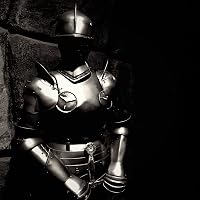
Aunque la trilogía tiene elementos de fantasía son absolutamente decorativos sobre la historia. Tienen tan poca relevancia en la narración que la novela con ciertos retoques y eliminandolos podría pasar por histórica. Los elementos de fantasía se ciñen a una geografía de un mundo con dos lunas, algunos animales desconocidos como variaciones del Yeti o de lobos y osos. Y finalmente están el elemento más fantástico las 'Maldiciones de Dios' que son una legendarias armaduras que tienen la propiedad de no estropearse nunca, de no reflejar el sol y que no se ensucian nunca y que se adaptan al cuerpo del que la lleva. Conseguir una Madición es convertirse en un guerrero total, determinar un estatus de gran guerrero y que no todo el mundo puede poseer ni llevar mucho tiempo si no se tiene una capacidad y experiencia en combate única. Aunque son todo un misterio no tienen ninguna importancia en la narración son solamente un trofeo y una característica de los grandes guerreros. Aún así evoca un pasado oscuro de tecnologías imposibles o Dioses implicados.
El paralelismo entre la Trilogía Macht y su anterior Serie las Monarquías de Dios es muy evidente y en todas ellas el recuerdo a los modelos de combate griegos y las culturas persas son cristalinas.
Existe un término que explica una situación de los combates que es el othismo que mediante falanges de soldados se lucha cuerpo a cuerpo escudo en mano. Mediante grandes lanzas y espadas cortas. El othismo acaba siendo ese momento sostenido en el tiempo donde solo hay sangre, sudor, muerte y un guerrero a 25 centímetros de ti con la única misión de matar o morir. Donde cada falange empuja a la otra con una presión inconcebible para romper la linea y poder acuchillar y destrozar al enemigo. Todo se reduce a disciplina y coraje y fe ciega en tus compañeros. La recreación es absolutamente feroz y llena de detalles crudos pero que dan una sensación de realidad extrema porque no hay nada gratuito en ello pero si mucho de la vileza humana inevitable en una situación como esta.
Mientras que la primera historia de los Diez Mil es una recreación en clave fantástica de la historia de Anábasis de Jenfonte. En este caso la historia de Corvus recuerda mucho a la historia y vida de Alejandro Magno en el proceso de unificación de las polis griegas y conquista de oriente-medio.
Mediante el hilo conductor de Rictus, la novela es la mas lograda por el escritor hasta la fecha. El desarrollo del conflicto del protagonista es claro y hace que la lectura sea interesante y satisfactoria.
De los grandes escritores de fantasía es uno de los más infravalorados de forma inmerecida. Y a mi cada novela me gusta más.