Between earthly passions and fear of The universal genius of the Renaissance
During the Renaissance, several great homosexual artists—from Leonardo da Vinci and Botticelli to Michelangelo and Raphael—transformed the history of art , striving for ever closer imitation of nature while shaping it to their tastes. In their art ambiguous beings were born, half man, half woman; female breasts were planted on male busts and a young man’s gaze peeped out beneath the eyelids of a Madonna.
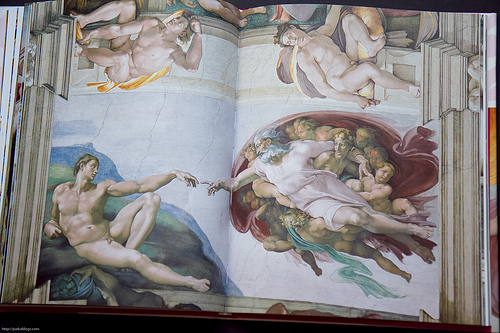
From his earliest youth Michelangelo (1475—1564) transformed personal torment into exquisite creativity —attempting to reconcile the apparently conflicting forces that inhabited his earthly passions and his fear of God. Hence the peerless monuments to beauty, celestial and infernal alike, that Michelangelo raised to the glory of God. His predecessors aspired to Heaven through faith alone; Michelangelo sought absolution through the contemplative exaltation of beauty—even on the ceiling of a papal the Sistine. This exposed him to a chorus of derision from prudish critics, who accused him of exhibiting paganism in a place of religion, and who clothed his immodest Titans in painted ‘breeches’.
It was Michelangelo’s curse to remain a colossus outside and apart from his time. It is the birthright of the comet to inspire fear and awe in the spectator; but the spectacle of such glory can sear the tender eye.
Gilles Néret (6 November 1933 - 3 August 2005) was a French art critic and historian, journalist and curator. He wrote extensively on the history of erotica.
He organized several art retrospectives in Japan and founded the SEIBU museum and the Wildenstein Gallery in Tokyo. He directed art reviews such as L’Oeil and Connaissance des Arts and received the Elie Faure Prize in 1981 for his publications. Since 1992, Néret was an editor for Taschen, for which he has written catalogues raisonnés of the works of Klimt and others, as well as the author of Erotica Universalis.
Sanat tarihine ilgisi olan herkese Taschen’ın Basic Art 2.0 serisini öneririm. Resim/fotoğraf kalitesi çok yüksek, oldukça bilgilendirici ve fiyatı da kalitesine göre iyi kalıyor. Gilles Néret bu serideki en iyi yazarlardan birisi. Okuru hiç sıkmayan çok hoş bir anlatımı var. Kitap, Michelangelo hakkındaki okuduğum en iyilerinden birisi. En detaylısı değil ama yeterince bilgi barındırıyor içerisinde. Bu kitap genel olarak Michelangelo’nun en önemli eserlerini (freskler, heykeller ve bazı çizimler) üzerinde duruyor. İçerisindeki fotoğraflar gerçekten yüksek kalitede: Baskısı, renk canlılığı vb. tatmin edici. Yazar eserlerin tasvirinin yanı sıra tarihi ve dini hikayelerden ve Michelangelo’nun kendi hayatından da bahsediyor, bu da resimleri çok daha iyi anlamamıza olanak sağlıyor. Fakat daha detaylı bir kitap arıyorsanız muhtemelen yine Taschen’a ait Michelangelo- The Complete Works eserini almanız daha iyi olur.
When I was in NYC recently in the Met - I saw the Taschen book series in the gift shop. I bought this, along with one on Raphael. This is a very impressive, easy, paperback book that shows in beautiful photographs most of the artist's work (in this case Michelangelo) with good historical information and limited commentary. Great book for someone interested in art history.
This book is part of the Taschen Basic Art series which I'm learning is excellent if you want to look at beautiful plates of an artist's best work and read an introduction to their life. Their small size is great for anyone who doesn't want to lift a massive coffee table style book.
I'm taking some time to learn about the Ninja Turtles painters, and like any history that you unravel it's always a bit funnier, odd, and more compelling than you thought you understood.
I knew that Michelangelo was a sculptor, but in this book I learned that it was his primary passion, so. much so that he looked down upon painters. Which is surprising when you think about how after his statue of David his paintings of the Sistine chapel are most his most known works.
The Sistine Chapel commission was a bit of a bait and switch by an indecisive pope, who initially commissioned a marble tomb for himself. After Michelangelo gleefully spent months in a quarry gathering marble, he was told to paint the chapel instead. With frescos. Which I learned are awful to paint because unlike murals they are painted into the drywall and worked wet like a watercolor.
The funny thing is that Michelangelo tried to get out of it and actually said, "get Raphael to do it." haha
Other things I learned: he hated Leonardo Da Vinci, he was petty enough to paint his enemies into unflattering figures in his frescoes, and he believed the nude human form was a living representative of divine beauty. He was difficult and short tempered, he wrote poems complaining about working on the Sistine Chapel. Pope Julius once threatened to throw him off the scaffolding because he wanted to the work finished early but I imagine part of it had to do with Michelangelo's attitude.
The author of this book really breathed life into this historical figure, which is always unexpected to me, as history writers aren't always the most psychologically adept.
I especially appreciated the author's acknowledgment of Michelangelo's gayness as both something that drove him and also tormented him. Anyone who has seen his paintings or sculptures is immediately alerted to his love of the male form -- he loved it so much he used at as a model for women and tacked the breasts on as an afterthought.
He wasn't a very easy man to like, I think he would have been "cancelled" today over his sexism, but I I came away respecting the talent he was born with. He finished his life as an architect of St. Peter's Basilica. How can someone just pick up architecture later in life? His contributions to art are irrefutable and if you're interested this is a neat little book full of his work.
Taschen published two books on Michelangelo this year. One is this 96-page hardcover to celebrate Taschen's 25th anniversary. The other is the 388-page hardcover titled Michelangelo - Life and Work.
The photos in this book are very beautiful. They cover the main works of Michelangelo: the marble sculptures, the fresco paintings at Sistine Chapel and some sketches. Since this book is rather thin, there aren't any multiple angle shots of the sculptures or the entire Sistine Chapel ceiling. But of those that are included, they are really great. The pictures and in high resolution and colours are wonderfully reproduced. The art is brilliant, needless to say.
The commentary is an interesting read, touching on Michelangelo's life and the work that are featured in this book.
It's a wonderful book at an attractive price. However, if you feel like you want more, which you probably would, you should get Michelangelo - Life and Work.
"The work is the man; in it we perceive the duality that was central to his character, the discrepant worlds that sought contradictory and simultaneous issue. Brute materialism confronts serene idealism. The intoxication of pagan beauty and strength confronts Christian mysticism. Physical violence infuses intellectual abstractions. The Platonic soul endues athletic physique. This indissoluble union of opposing forces, the well-spring of his suffering, was also the source of his unique and universal genius."
Art only possible in the High Rennaissance - combining the expertise of human anatomy, forgotten since Ancient Greece and Rome, and the newly developed sciences with the raw passion and suffering of the human soul. Art that is religious in theme, yet strips itself free of moralistic boundaries. Grandiose, yet meticulous.
The book itself also contains relevant historical information regarding the time period and some of the politics involved between the Medici Family and the Catholic Church that created that backdrop for which Michelangelo could produce works.
He disfrutado este libro tanto por el texto como por las imágenes. Te hace sentir dentro de la piel de un Miguel Ángel lleno de pasión por todo lo mundano y con una lucha espiritual enorme: lo q el cuerpo le pide y lo q las creencias en Dios del momento le dicen. Sometido como artista a los muchos Papas que rigen la Iglesia mientras él vive, se rebela contra ellos desde su arte. El es sobre todo escultor más que pintor pero le piden que pinte y la Capilla Sixtina será su gran obra. Rompedor, innovador: los desnudos, los escorzos, la terribilidad... Un Cristo que es un atleta, desnudo, joven, sin barba. Un Cristo crucificado completamente desnudo por primera vez en la historia y un tanto femenino. Un Moisés inigualable, cada músculo, cada vena, la expresión contenida del rostro... Estatismo de la piedra y movimiento juntos. Lo masculino y lo femenino se mezclan en su obra. Arquitecto, escultor, pintor y poeta. Genio, rebeldía y pasión. Cuerpo y espíritu. Soledad de un gran genio. Me ha encantado.
This entire review has been hidden because of spoilers.
I am not sure what I was expecting but it wasn't this - an eloquently written short narrative about how Michelangelo's passion and sexuality tormented him while the world benefited from it by the art he created.
The book is mostly art work and I'm not a critic but I don't think the man ever saw a boob before (or had zero interest in them) but he was really really good at drawing muscular men, even his paintings of women were based on male models.
It turns out I knew practically nothing about this man; glad I read it. I might follow up with another from a different pov. Michelangelo is known for his religious art but now when I look at it all I see is erotica 😁.
Η βιογραφία του Μιχαήλ Αγγέλου του Gilles Neret είναι μεν αρκετά επιφανειακή και δεν εμβαθύνει ιδιαίτερα στην προσωπικότητα του μεγάλου καλλιτέχνη, δίνει όμως επαρκείς πληροφορίες για τη ζωή και το έργο του, ό,τι πρέπει για μια πρώτη επαφή με τον Μιχαήλ Άγγελο και το αξεπέραστο έργο του. Οι εικονογράφηση, σε χαρτί καλής ποιότητας και με ζωντανά χρώματα, είναι από τα πλεονεκτήματα της συγκεκριμένης έκδοσης.
Michelangelo's life was consumed by passion. He was caught up in a whirlwind, like Dante's Inferno, which he remembered by heart. In the work that emerged from this vortex, the faces of handsome adolescent boys play a prominent role. There were many clumsy attempts to conceal it, out of a misplaced sense of the artist's dignity. Censorious morality, unable to comprehend Micheangelo's monumental creative strength, drew a veil over these figurations of love at once carnal and mystic. Yet, in Michelangelo's work, passion and creation are born of the same fire. The torment of this perpetual flame was such that he sometimes wished he had plucked out his eyes and thus denied himself the knowledge of beauty. He writes: "If in my youth I had realized that the sustaining splendour of beauty with which I was in love would one day flood back into my heart, there to ignite a flame that would torture me without end, how gladly would I have put out the light of my life!..."
Een prachtig boek dat je meteen naar Italië wil laten vertrekken om zijn verbazingwekkende creaties te bewonderen. De meeste mensen zullen direct denken aan zijn fantastische schilderijen, zoals die in de Sixtijnse kapel. Maar Michelangelo haatte schilderen; hij was een beeldhouwer met grootse ideeën. Helaas werden meesters zoals hij vaak gevraagd om hun werken te maken in opdracht van de zittende paus of een belangrijke familie, zoals de Medici. En de paus wisselde regelmatig. Hoewel hij vaak gedwongen werd om werken uit te voeren in opdracht van hogere machten, toont hij in al zijn werk de ziel ervan, in plaats van slechts een schilderij met kleuren, lucht, mensen... Naast het verhaal van een geniale kunstenaar, werpt het boek ook licht op hoe het er in zijn tijd aan toe ging, een stukje geschiedenis.
I was astounded that this artwork or book was in the reference section; however, the synopsis admits there are bust (breasts) and nakedness, which is considered art but obscene material where I work and had to be removed off shelf/system. There's much more material as such but amazing artwork even by Frida and her husband.
finally read this museum gift shop book that I bought in a thrift store for a $1 (mostly because I want to give it back to a thrift store)
quick and easy read - the right amount of art history without losing me. a solid foundation of Michelangelo the artist and his commissioned work. makes me want to book a flight to Rome but for now I’ll admire the art prints in this book
Perfect art history book and admirers of the frescoes.
The print work is amazing and feels like a personal art gallery. It documents his work wonderfully and encourages another visit to Rome with an entirely different viewpoint in mind.
Excellent introductory biographical account of Michelangelo. Places the artist's work into context; the circumstances of their commissioning. Supporting pictures are full colour and excellent quality
These Taschen books are terrific. The print quality is great and the recounting of Michelangelo's life and artistry is to the point but also well detailed. Highly recommended!
Very accessible book with beautiful work by one of the greats. In many ways, peerless. The art history is an added bonus that doesn't intrude on the experience.
I loved learning about Michelangelo and seeing detailed explanations about his work as a learned about his lore. Bought this in Rome when I missed seeing the Vatican in person by accident, so this was my version of witnessing his art. Very quick and easy read and will become a coffee table book.
This book contains pictures of many of Michelangelo’s artworks and some basic facts about the artist.
The pictures in the book are very impressive and high-light the skill and passion of the artist. But the text is not detailed enough to give the reader any real understanding of the artist’s life or the age that he lived in.
s. 12 Michelangelo žertoval, že své povolání nasál společně s mateřským mlékem, které pil z matčina prsu. Snad s mlékem kojné, která byla manželkou kameníka, ne?