
What do you think?
Rate this book

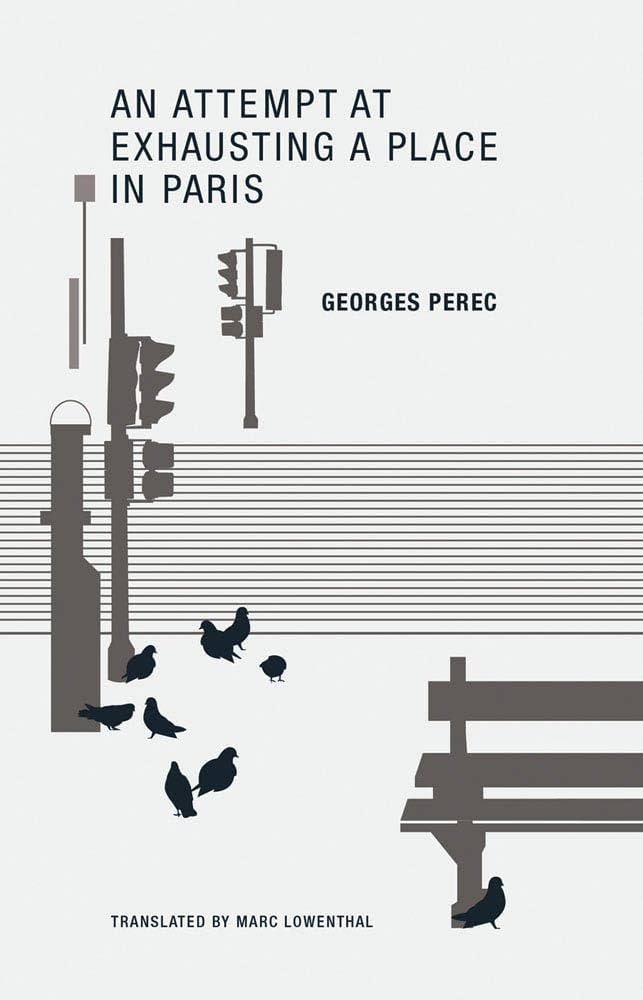
55 pages, Paperback
First published January 1, 1975


A 96 goes past. An 87 goes past. An 86 goes past. A 70 goes past. A ‘Grenelle Interlinge’ truck goes past.
Calm. No one at the bus stop.
A 63 goes past. A 96 goes past.
The traffic lights turn red (this happens to them often)
Passe un jeune papa portant son bébé endormi sur son dos (et un parapluie à la main)
Update 8/1/2012: I have revised this Goodreads book review into a proper essay, now published on the Eyeshot website (thanks to Lee for taking an interest! And thanks to all of you for for your likes and comments). I am leaving my original Goodreads review below, as a document of the first draft of this essay, flaws and all.


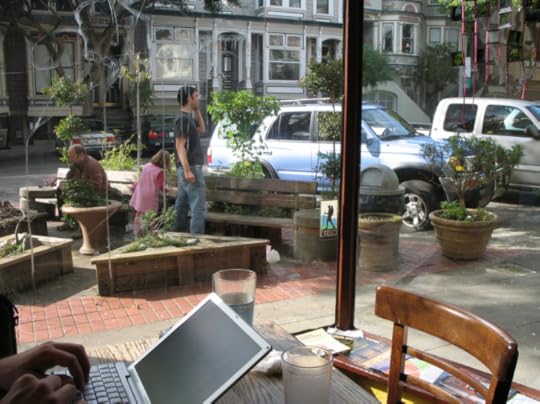
I again saw buses, taxis, cars, tourist buses, trucks and vans, bikes, mopeds, Vespas, motorcycles, a postal delivery tricycle, a motorcycle-school vehicle, a driving-school car, elegant women, aging beaus, old couples, groups of children, people with bags, satchels, suitcases, dogs, pipes, umbrellas, potbellies, old skins, old schmucks, young schmucks, idlers, deliverymen, scowlers, windbags. I also saw Jean-Paul Aron, and the proprietor of the Trois Canettes restaurant, whom I had already seen this morning.Perec was a member of the Oulipo group (Organization for Potential Literature), which sought to discipline writing though artificially imposed constraints—most famously in Perec's La disparition (translated by Gilbert Adair as A Void ), a 300-page novel entirely eliminating the letter "e". But the beauty of constraint comes, not from the demonstration of what you cannot do, but from the glorious emergence of what you can. In his self-imposed objectivity, Perec attempts an exhaustive catalogue of the everyday objects in a Paris square. But everywhere, life sneaks in; the impersonal has become personal again, magnificently so.


