This bestselling memoir from a seasoned New York City reporter is "a vivid report of a journey to the edge of self-destruction" (New York Times). As a child during the Depression and World War II, Pete Hamill learned early that drinking was an essential part of being a man, inseparable from the rituals of celebration, mourning, friendship, romance, and religion. Only later did he discover its ability to destroy any writer's most valuable tools: clarity, consciousness, memory. In A Drinking Life, Hamill explains how alcohol slowly became a part of his life, and how he ultimately left it behind. Along the way, he summons the mood of an America that is gone forever, with the bittersweet fondness of a lifelong New Yorker.
"Magnificent. A Drinking Life is about growing up and growing old, working and trying to work, within the culture of drink." --Boston Globe
Pete Hamill was a novelist, essayist and journalist whose career has endured for more than forty years. He was born in Brooklyn, N. Y. in 1935, the oldest of seven children of immigrants from Belfast, Northern Ireland. He attended Catholic schools as a child. He left school at 16 to work in the Brooklyn Navy Yard as a sheetmetal worker, and then went on to the United States Navy. While serving in the Navy, he completed his high school education. Then, using the educational benefits of the G.I. Bill of Rights, he attended Mexico City College in 1956-1957, studying painting and writing, and later went to Pratt Institute. For several years, he worked as a graphic designer. Then in 1960, he went to work as a reporter for the New York Post. A long career in journalism followed. He has been a columnist for the New York Post, the New York Daily News, and New York Newsday, the Village Voice, New York magazine and Esquire. He has served as editor-in-chief of both the Post and the Daily News. As a journalist, he covered wars in Vietnam, Nicaragua, Lebanon and Northern Ireland, and has lived for extended periods in Mexico City, Dublin, Barcelona, San Juan and Rome. From his base in New York he also covered murders, fires, World Series, championship fights and the great domestic disturbances of the 1960s, and wrote extensively on art, jazz, immigration and politics. He witnessed the events of September 11, 2001 and its aftermath and wrote about them for the Daily News.
At the same time, Hamill wrote much fiction, including movie and TV scripts. He published nine novels and two collections of short stories. His 1997 novel, Snow in August, was on the New York Times bestseller list for four months. His memoir, A Drinking Life, was on the same New York Times list for 13 weeks. He has published two collections of his journalism (Irrational Ravings and Piecework), an extended essay on journalism called News Is a Verb, a book about the relationship of tools to art, a biographical essay called Why Sinatra Matters, dealing with the music of the late singer and the social forces that made his work unique. In 1999, Harry N. Abrams published his acclaimed book on the Mexican painter Diego Rivera. His novel, Forever, was published by Little, Brown in January 2003 and became a New York Times bestseller. His most recently published novel was North River (2007).
In 2004, he published Downtown: My Manhattan, a non-fiction account of his love affair with New York, and received much critical acclaim. Hamill was the father of two daughters, and has a grandson. He was married to the Japanese journalist, Fukiko Aoki, and they divided their time between New York City and Cuernavaca, Mexico. He was a Distinguished Writer in Residence at New York University.
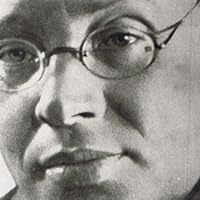
Author photo by David Shankbone (September 2007) - permission is granted to copy, distribute and/or modify this document under the terms of the GNU Free Documentation License, Version 1.2 or any later version published by the Free Software Foundation.
I was expecting more of a story about alcoholism and specific drunk events in Hamill's life. This is much more than a story about alcoholism, it is a story about Hamill's life, and alcohol just so happens to be pervasive throughout his childhood and adulthood. This is truly a complete picture of a man, of his boyhood in the Neighborhood, his family, marriage, his career, and alcohol touched every aspect of his life. Drinking was a constant throughout Pete's journey--a way to celebrate with friends, a way to get through your anger, a way to be social in the Neighborhood, and a way to relate to your co-workers as a newspaperman. In Hamill's boyhood, it was a point of pride in the Neighborhood to be able to handle your liquor, not to be a drunk, but to keep a steady stream of drinking while trading jokes and stories and songs.
Hamill doesn't push any kind of 12-step program in this book. He got sober on his own, in a snap, and he is unusual in his ability to do so. For this reason, for alcoholics looking to relate and to get some insight into their disease, I would recommend Caroline Knapp's book instead. For anyone looking for a fascinating memoir, a touching journey through life, and an inside look and the life of being a reporter, Hamill's memoir is highly recommended.
How can you not love Pete Hamill...? In this remarkably candid memoir Hamill opens up about a lifelong love/hate relationship with alcohol, recounting his upbringing and dreams - all memories revolving around the power and comfort of a drink. I knew of Pete Hamill, newspaperman and writer with heart, reporting on his New York with only true love and soul, but I did not know the extent of it... A Drinking Life reveals the man and the boy behind the stories, in all his sensitivity and vulnerability. This is Hamill at his best...
What a bore! Mistakenly, I thought this book would be about growing up in an alcoholic household and how that experience molded the writer. Instead I got a simpleminded coming of age story in an all too familiar atmosphere: Brooklyn in the 40's. Man, the way some people write about their youth in New York, you'd think they all attended the same writing seminar. Dodgers - check. Abusive father- check. Angelic mother - check. Hanging on the corner with your friends - check. Playing stick ball in the street - check. Freaking lame - check. If you're going to write about this boring, shit, at least have your main character join the mafia or become a junkie at some point because these New York/Americana nuggets of nostalgia aren't valuable in themselves. Honestly, I thought I was reading the novel to A Bronx Tale for the first seventy five pages... except A Bronx Tale was never a novel, and this piece of shit didn't even have any mafia dudes in it.
This was a lazy memoir. Period. We've all heard this story before, except this one doesn't end, it just keeps masturbating about stupid, boring shit which might be important to the writer, but is really dull for the reader (unless you get a hard-on for candy, warm popcorn and baseball - oooh whoopee!). Let's put it this way, unless you grew up in NY during the war, you might just want to throw this book in the fireplace.
So, when the story fails the reader, you delve into the narrative, right? Wrong. Hamill's writing is so plain, so goddamn simple, you'd think you were reading the directions for a lawnmower. And the story... or whatever you call it... Jesus. Get to the point, man. I couldn't wait till the writer lost his virginity or got hit by a car so I could stop reading about dumb baseball games and candy and dull American pastimes. Shit, James Joyce made Dublin sound like a beautiful grotesque fantasy - that's writing - fifty pages into The Dubliners and you're in tears. Hamill's version of Brooklyn is about as dramatic as a bad HBO movie with Shia Lebouf.
Honestly, I'm tired of New Yorkers claiming their adolescence was somehow richer and more special than everyone else's. There are so many NY writers spouting off about these kind of memories with a gusto and arrogance that makes my skin crawl. Give me some context. Give me something dangerous or interesting. Christ. I'll take Less Than Zero's coke fueled Los Angeles over this hokum any day of the week. Stories like this make me proud of being a Los Angelino, where sports doesn't govern our lives, danger lurks in the most unexpected places and existentialism is not just a philosophy, but a damn reality. We encounter the worst part of the human character from the moment we're born in this town. We have to uproot ourselves from the shallow graves of rich junkies, gang members, empty streets, crowded freeways, Hollywood assholes. That's context. That's conflict!
Yeah, we might not be as deep and wise as New Yorkers, but we're also not as sanctimonious. God, this book pissed me off.
I will live my life from now on, I will not perform it. This was the author's mantra as he took the final step to shake a lifelong drinking habit built since his nursery days (through his family's acceptance of drinking as a way of life, coping with all that comes in hard family living). Once he was beyond childhood, he, too, took it up as a way to cope.
Pete Hamill's autobiography is contained in this book, and explains all the roads that led to his Rome - a drinking life - and how he got himself out of it. On the way there are beautiful descriptions of New York, his part of New York, and other places of the world. The yearnings of a young man in that world, wanting to draw, getting kicked down, rising up, trying a different direction within that desire. There are very graphic descriptions of all the devils of a young and growing human, and later unrestrained explorations. His way up in the newspaper world, journalism and writing at large is noted, landmark by landmark. His family members, his Irishness, his women and his children. All are here.
I do so love his writing. He does such a great job of showing how becoming a drinker, a life drinker, was an act of loyalty and commitment to family, friend, tribe, local gang, region and was just a breath short of being a religion - it was a mantle, a jacket, a uniform. Then, just as deftly, he shows the day it stopped, ways and reasons which informed the moment on the day it stopped. Short of inserting some of those words here, I'm without means to pass it along to you, dear reader, this magic of his, and if I could would feel the cheat that is to you. I don't want to do anything that would prevent you from picking up this book and reading every word for yourself. Pete Hamill ends with the tests to his decision to stop drinking, and how he weathered them and I promise you satisfaction. A thirst quenched.
Passing by my writing desk my daughter saw "A Drinking Life" and turned to me with her question face. . .she touched the book and said, "Why this?" as my drinking life was short-lived and long before she was a twinkle in the universe. I responded, "You should read it. It's a great book." I wished I had said more - that this book could help anyone who has suffered from addictions passed on through family tradition and habits carefully nurtured into them by people who were just barely surviving the world as they knew it.
There is explicit language and sexual topics present in this book. . . if you are a shy type, well: You've been warned. As much as I enjoy Hamill's work, this did feel a little gratuitous and perhaps like he was bragging a little. Oh well, I get it. Bragging feels a lot different when you are ancient (as I am - and he is older than I) - it is more a wistful hope that all was truly as exciting as are the greatest-hits memory playbacks. If they were not, hopefully all participants are no longer in a position to be able to so testify.
4 sober and shining stars, over Brooklyn. Of course. Somewhere close to Paddy Mcginty's goat.
The title of Pete Hamill's novel (memoir) is "A Drinking Life," but the title is slightly misleading. Yes, the novel is definitely about drinking, but it is also a brilliant sociological study of the Irish/American and Irish immigrants living in Brooklyn during the 40's through the 60's. Or as Mr. Hamill puts it, The Pre-War World II era and the post World War II era.
It is a time when the Catholic Church reigned supreme, where almost all the men worked at working class jobs, where families were quite large, five children or more, living in relatively small apartments, all democrats, and acceptance into manhood meant drinking hard and hanging out in bars.
Mr Hamil followed this pattern perfectly, except that he was also an avid reader, drew comics, read newspapers and travelled the world as a columnist for the NY POST, Novelist, and screenwriter. Whether in Mexico, Vietnam, Spain, Italy or Ireland the one constant was drinking in bars, with on and off girlfriends, at parties, and alone.
At a relatively early age, his late thirties, he stopped drinking completely and never touched a drop for the next 50 years he lived.
Recently, I have read a number of fabulous writers who for ninety-nine percent of their work have written wonderfully and constructed their novels perfectly, but in too many cases the writers have taken the easy way out at the end... The predictable way, but that is not the case with Mr. Hamill's novel. It is perfect from the very beginning to the last line of this marvelous book.
I often think I can't remember that much about my childhood, comparatively speaking. You know those people who can provide you intricate detail of what they wore, and how they felt towards every teacher they ever had, and aesthetic details about houses? I thought I did not belong among them, until I read this book. It is probably very strange that a memoir set from World War Two onward, set in New York City, about a poor Irish American kid, would prompt such strong memories for me (and an identification) but it did, because Hamill and I share something in common, and I imagine you do too: the drinking life. And I don't mean that in the sense that I am (or you are) an alcoholic - although I do identify on the personal level, having had very close relationships with those who are - but also in the sense that I am part of a deeply entrenched Western drinking culture, one where celebrations, failures, monotonies, weekends, weekdays, can all reasonably be reacted to with a drink. When remembering childhood through the lens of drinking remarkable memories resurfaced, which I decline to share but acknowledge in my own way.
And this is what is remarkable about this book: Hamill could have just opened the shame file, recounting only embarrassing and humiliating stories from the depths of his alcoholism (which he does do a bit of). If he had done that, this probably would have been a sad little book that we could have appropriately distanced ourselves from because, after all, we have never broken the door of a brothel and been fired at by Mexican police as a result. And, I mean, that's all interesting to read about, and the name dropping if fabulous (Norma Mailer et al). But, by making this a memoir from childhood, he illustrates a deeper issue with drinking culture that transcends the individual and he illustrates the ways in which such a culture facilitates, in some ways, the naturalisation and denial of alcoholism even in the face of its devastating consequences. In this way the realities of his particular struggle become more real and the decisions more understandable, at the same time that they stop being uniquely his.
I will note two more things: firstly, the title should not have an 'A' at the front - it should just be Drinking Life because it is not just the story of a singular drinking life and then it would more readily have the double meaning of 'drinking life'; secondly, the accounts of alcoholics who have a flash of clarity and never drink again are really quite astounding to read (Bill Wilson, one of the founders of AA is one such case)
My friend Sally thinks Anna Karenina should be called Levin; I always thought you might as well complain that Moby Dick isn't about the whale. I think I have found, however, the winner of the least apt title: this book has almost nothing to do with the author's drinking problem. It's a memoir, and the struggle with drink is no more a thread to his story than is the fact of his Irish ancestry. It's an interesting book, written in a forceful, journalistic style, but there are some questions it raises in my mind about memoir. Question 1: How do people remember all these things? I, for one, can hardly remember my childhood, so how is it that these people writing memoirs can describe scenes from age 6 with such clarity? Question 2: Would you write a tell-all autobiography while your mother is still living? This guy's mother appears to have been a nice Irish Catholic lady, so how could he announce to the world (and to her) his sexual exploits at age 15, 16, 17, all in lurid, foul-mouthed detail? I mean, doesn't he have any sense of shame? And why do we all rush to call it "unflinchingly honest" (NYT) instead of bizarrely indiscreet? Poor Mum. Question 3: At what age does it become idiotic to blame all your moral failings on your father? Towards the end of this book, when our anti-hero is telling us how he wrecked his marriage (and finally is getting around to mentioning drinking as a serious theme), he speaks of how he didn't have much sense of how you behave as a father because of his father blah blah blah. OK, dear reader, there is this little thing called The Golden Rule, and here's how it works. Did you like it when your father ignored you and went to a bar to drink? No? It made you feel bad inside? Then you try *not* to do that to your kids -- see? You do the *opposite* of the things that made you feel bad. I miss St Augustine. Sure, agonizing over those apples might be a bit tiresome, but at least Auggie made a real effort to understand his past and why he did things. Atheist or not, isn't it an interesting problem to figure out how morals work? What constitutes the good life? And if you haven't lived it properly, aren't you ashamed?
With A Drinking Life, Hamill has written the great American proletarian memoir. Which is no small feat considering, aside from his working class roots, Hamill has become anything but a proletariat. I’m not disputing he was a hard working journalist who put his time in writing for the New York Post – a profession almost as hard as his former two fisted drinking binges. But what I find interesting is Hamill’s insistence on romancing his working stiff upbringing as if it somehow not only justifies his drinking, but also allows him the credibility to poetically philosophize the psyche of the entire working class.
Well written, concise, compact and prose driven A Drinking Life is Hamill’s narrative of his attempts at several careers, school, love, marriage, and his relationship with his father – all of which he lost, abandoned, or simple ignored, due to his alcoholism. Waxing nostalgically he chronologically leads us through his life: from birth, to adolescence, and finally adulthood. The majority of the book concentrates on his rather tough childhood in Brooklyn New York. Where, due to his father’s inability to work as a result of his alcoholism, at the age of 16, Hamill left school to work in the Navy shipyards. Torn between earning money for his family, and resuming his education, Hamill follows in his father’s footsteps and begins drinking as a way of coping with the difficulties of life.
195 pages into his book, the entirety being 265 pages, Hamill hasn’t taken us far. He’s in his twenties and is attending College in Mexico. Due to his drinking he has run afoul of the law and is incarcerated in jail. Not the best of circumstances to begin with, his experience is brutally horrendous. From his detailed and lengthy depiction of this episode, one would think it a pivotal turning point for him. Knowing he was there due to his drinking it would seem Hamill is showing us this scene because it influenced him, or gave him reason to reevaluate his lifestyle. Instead it appears his inclusion of this scene is primarily for establishing his credibility as a libertarian of the underprivileged. Although thoroughly mortified by what he has witnessed, Hamill does nothing, and flees Mexico, returning to New York to attend the prestigious Pratt Institute to continue his studies, and eventually become a journalist/reporter.
Interestingly this is when Hamill’s drinking began to escalate in earnest, only he caulks it up as merely a hazard of the profession, sort of gentleman’s club activity for journalists. Leaving me wondering if Hamill was ever going to take responsibility for his drinking. Yet what is of further interest, and what pretty much answers that question with a resounding “kind of,” is his leaving only the last 52 pages to describe the next twenty years of his life: his final days of drinking, his failed marriage, abandoning his children, his extramarital affairs, his workaholic behavior. As if it was all something he preferred to forget rather than admit. However in these last few chapters Hammill writes some of his strongest work, allowing to reader to catch a glimpse of who he really was.
Yet unfortunately in the final five-page epilogue titled “Dry,” Hamill simply tells us he just quit drinking and than attempts to explain it away as a decision he made, rather than it being a result of trying to repair all the damage he has done to himself and those around him. Hardly the insightful summary I had expected. Yet maybe that was my problem from the very beginning. I expected more. I wasn’t so concerned with the colorful tales of his childhood, or his youthful transgressions, instead I would have been more interested in the factual, not so glamorous, aspect of his drinking life. But then, having already been swayed by the book’s hype – the least of which coming from the New York Times’ book review: “Tough-minded, brimming with energy, and unflinchingly honest.” I came prepared to read a much different story.
My dad gave me this book because it resonated with him and his life. He was barely one-year-old for V-E day, and he grew up in Harlem, not Brooklyn, so his life wasn’t in lock step with Hamill’s Drinking Life, but there were similarities. Both went to Catholic school, drank in the same bars, found early solace in the public library, and hated Cardinal Spellman. Like most boys in New York in the 50s they ran up against, and with, gangs. For this and other reasons, when it was time for my dad to raise a kid, he left the city.
Like my father, Hamill has great stories and fondness for the difficulties he had while growing up in New York. They both remember more about their early years, than I do, and though there were difficult times, they had adventures in a city and time that had fewer restrictions and more tribal segregation. Some of these tales sound only good in the re-telling. One thing I’ve come to realize is that an “adventure” is something that was uncomfortable-to-painful at the time, but makes for a great story. Hamill had a few adventures in his time, which makes me jealous I haven’t lived out in the world more, but then again, I don’t think I would ever follow his footsteps to Mexico, Paris, or even Bay Ridge.
There is also a certain Forest Gump quality to this memoir. Famous people and events happen in a flurry. It seems like people were more accessible in a pre-information age time. Surely I’ve lived a quieter life as I’ve never been in a situation to party with the Rolling Stones or Jack Kerouac.
One important difference between my father’s upbringing and Hamill’s was that my dad didn’t grow up with a drunk. A Drinking Life illustrates how corrosive alcoholism can be, even if you ignore the cirrhosis. I can’t imagine a life with someone so absent and useless as Billy Hamill. When you live a drinking life, you miss out on the rest of your life.
Hamill’s life of drinking did not lead him to the expected depraved-low-point. In fact he takes his last drink during a swinging New Year’s Eve event. He stops drinking because he doesn’t like what it has done to his life and the lives around him. He stops drinking to embrace life and to be clear of thought. He stops drinking so that he can remember all that he has done.
I'm nearly done with this book. I don't drink more than wussy sweet wine, no higher than 4% alcohol. I do not think I am so dorky for this. Pete Hamill talks about growing up surrounded with alcohol, having his first drink around the age of 11 and how drinking shaped his life. He talked about wanting to be an artist and a writer and having the pressure to not rise above his station thrust-ed on him by his peers.
I say, screw that. Live life the way you want to. Don't just drown your feelings in booze. Feel them! Live them! This book is about how he opens his eyes to this fact and decides to break the pattern. To stop drinking to deal with the agony of not living the life the way he wants to. It's very inspiring. Especially since he, like me wanted to be a writer and also an artist. I say let's work on making our dreams come true. The only thing is folks go on about how great the past is and how it was so much nicer than it is nowadays, but they had the same problems only no one TALKED about them. No one talked about alcoholism, they just scorned people who could not handle their booze and folks didn't talk about their bad marriages they just struggled through them. I wonder if that's actually healthy.
8/18/18
I read to it again and it makes me seriously hate alcohol. At the culture behind it. I am not judging drinkers but the larger society. I'm not saying teetotal totally but there's something warped about society and how it handles drinking and gender roles and life in general and I really don't know what to do about it. Also he married a 17 year old. Gross.
The booze kept him from dealing with why his life sucked and why his decisions sucked and he realized he was acting through life and wanted to change thatat least.
This book was published in 1994. I ran across the title in a list of "must read memoirs." The book more than lived up to its billing. Hamill is a journalist, essayist, and novelist who began his writing career with the New York Post.
Hamill tells the story of his Irish Catholic upbringing in 1940s and 1950s Park Slope, Brooklyn, his professional ascendancy as a writer in the 1960s and 1970s, and the role of beer and whiskey in his undoing personally. In Hamill's world, strong drink accompanied life's high and low points and every point in between.
Hamill discloses his disenchantment with the Roman Catholic Church, his frustration with The Neighborhood [his immediate blocks in Brooklyn], his struggle to be both good boy and bad boy, and his love of the writers of the Lost Generation, especially Hemingway. His account of his search for his "Great Good Place" as a writer leads him to Mexico City, Barcelona, Belfast, and London as well as other locales in which to ply his trade.
Drink costs Hamill his first wife and their daughters. Drink made Hamill a stranger to himself. He concludes that he "played" his life rather than "lived" it. This realization provides him with the power to get and stay "on the wagon."
The story is gripping. Hamill's prose makes it all the more gripping.
This book is an autobiography of Pete Hamill, a reporter and writer from Brooklyn, New York. He grew up in the forties, during the war. His father was (yawn) an Irish immigrant who drank too much (yawn), was mean to his family (yawn). Pete's mother was a loving, intelligent woman who does not get nearly enough credit in this book.
Unfortunately, Pete resembles his father in the selfish way he lives his life. The best part of this book is the early part, with descriptions of life in Brooklyn during the 40s. He plays games with other kids, runs around the neighborhood, and loves comic books. There is a real street life because no one has TVs yet.
As the oldest in his family, his perspective is unique, but Mr. H. does not delve into much discussion there, something I would have been interested in. I am one of the youngest, and it was very interesting to contemplate the space of the olders... His experience was far different than, say brother number five, or only sister number 3.
The major grievance I have with this book is that I started to realy dislike the narrator and his pick and choose method of telling his story. For example, bartenders get more attention than his siblings. Only two brothers get any attention. This is likly because, he did not spend much time with the younger ones?
It the same w/ his first marriage. He marries a very young woman (Age 18 to his 26 or more years), and doesn't really explain why. He also doesn't explain why, after divorcing, he sends his two kids to boarding school in Switzerland. We hear about his early sex live, his relationship w/ Shirley McClain, but not why they broke up.
It is partly the price of reading an autobiography, I admit, but still.
The title is "A Drinking Life" and he tracks his drinking, from a young teenager and beyond. Finally he gets sick of it and stops. This is well after his marriage has ended. His kids probably benefited from this, but he does not bring them home, since Shirley is not into being any kind of step mom.
This is a case of the man quitting the drink and is still a selfish ass hole!
He loved comic books as a kid and tries to tie comic book characters who drink potions to transform into super heroes to his view of alcohol and its allure of transformation. He sees his father drink and become mean and abusive. He sees his mother work work work and have babies indefinitely.
The author goes on and on about his relationship with his father, but after he is about 12, his mother gets mentioned less and less. I started to resent this. Hamill is in Belfast with his father the time JFK was assassinated. What a self indulgent piece of work. Ohhh boo hoo for you and your drunk daddy. I'm not dismissing his emotions, it is just he is such a selfish bastard it is hard to look over his horrible husbandry to feel empathy for him howling in the dark streets, and everyone knows the Kennedys are a bunch of fake heros.
So, this book held my interest because my contempt for it grew and grew.... I did like the neighbors drinking tea in the hot summer nights. Also, there are some fierce sex scenes, if you are into that.
Two books really. The first half, covering his early childhood in Brooklyn and his father’s alcoholism, is not compelling (3-stars); the second half, his maturity (which began at age 15), is (4.5-stars). Entirely self-made, brilliant, intense, ultimately honest with himself, this details his struggles with alcohol and his final liberation from it.
I can certainly understand why high schools select Angela's Ashes instead of A Drinking Life. This could never be read or analyzed in a classroom filled with minors. But the message is more powerful; the story more thrilling. The author, in my opinion, a better one. Frank McCourt, rest his soul, was accused of exaggerating his poverty (including by his own mother). Pete Hamill's account, by my inspection, never blurs the line between what sounds good and what actually happened. Pete's account is credited as the direct inspiration for Angela's Ashes being written and that's quite the honor.
We have this emotionally-charged agenda against heroin. I get it, there are social consequences that accompany the opioid epidemic. Is someone going to prick my arm with a syringe loaded with dope while I walk down Jackson St? Eh. A book like this makes you angry that nobody seems to complain about alcohol anymore except when it comes to driving.
A Drinking Life isn't an account of someone's rapid disintegration and degeneration into addiction. It's just about the central place that alcohol had in the author's life, with the larger implication being, hey, reader, maybe you should evaluate alcohol's role in your own life. While Angela's Ashes may be remembered as an empathy-builder for immigrants and the dregs of society, this one weaves introspection with a heroic narrative--the only common thread being the Irish-Catholic guilt complex (well, not really, but the rest are evident).
There are no truly gruesome or stomach-turning scenes caused by alcohol in this book. Many saddening, but few scarring, which helps to underline the slow process of alcohol dependence and the virtual impossibility of emerging from a drinking life scot-free. Aside from the widely-agreed-upon DUI, at which point are we comfortable blaming alcohol? I'm a bit melancholy writing this review because I'm 24 and there are already clear signs of it damaging the lives of young people I know. How can we not debate this social cost? The lost hours of productivity, the muddled emotions, the erased memories--don't these things count for something? Hamill outlines the pressure he felt, in his poor community in Brooklyn, to be mediocre in school and in life. Alcohol plays a major part in wasting his time and talents. As we cast aside some of the perils he faced as being "from a different time," is it not appropriate to examine the aspects of the book that are playing out the exact same way today?
In a word, and I really do hate myself for writing this, sobering.
Pete Hamill nailed it at the end when he talked about “acting” at life vs. living life. It’s this authenticity – this striving for whatever it is that’s real that’s driven me in my own life. And it’s the escapism in substances that’s illusionary in that the positive it offers is intense and as short as a second. The problem is the negatives always outweigh it no matter how you try to rationalize it. And the negatives increase the longer the use continues.
I thought this book as centered around alcohol was fascinating in the way the story of New York was told around and through the inclusion of alcohol in the narrative. It’s almost as if the book wasn’t meant explicitly to center around alcohol yet there it was. That’s precisely the insidious and damaging nature particularly of alcohol in society. It’s not only the legality of a dangerous substance but the full-on social acceptance and ritual of it. Breaking away from or quitting drink is not as simple as simply not picking up a drink for most people. It’s also the breaking of a way of living in society - the places you go, the people you’re around, the friendships you’ve made, etc… it’s a death in a way – dying to one life and often to many friendships – no matter how substantive they might have been.
Hamill is a master of prose, and the book is a great read from a man who has obviously discovered a great deal about life from his clarity and decision to stay lucid.
Extremely sentimental, A Drinking Life waxes nostalgic while deftly building a case for the rationality of Hamill's alcoholism. From reading most of the book's reviews, it seems to have worked. Three-quarters of the novel are devoted to the first 14 years of Hamill's life; it's obvious to this reader, if not to Hamill, that most of the book is an excuse and a dishonest apology for his alcoholic behavior. The prose is good enough, it's well-written in that sense, but it lacks the brutal honesty of a book like Revolutionary Road, or even one of David Sedaris' vignette. I never found myself nodding in sympathy, little Truth or mimesis to be found here, and I'm a recovering alcoholic - I should have been laughing and nodding in sympathy the whole time. Fear and pride keep Hamill from acheiving any real honesty, any true disclosure, and that's one of his problems; he wants us to like him too much. What an alcy. Although he's dry, Hamill needs a meeting more than ever.
An engaging, well-written memoir of a lower class Irish man who grows up in New York City during the Great Depression, World War II, and the 1950s. His is a typical, lower-class working family. The author, unlike many of his peers, from an early age, shows a talent for art, reading and writing. This sets him out in his very working class family and neighborhood. The author is hard on his father from the outset, which I feel is somewhat unfair. Despite being uneducated and having lost a leg in a time before disability or any social welfare, the father always tries to keep a job, work hard, and support his family. Perhaps unsurprisingly, he also becomes a hard drinker. His only real respate is drinking at the local watering holes. The son is introduced to this drinking at an early age and while initially scornful, comes to be his father's son.
The author, through his intelligence and initiative, is able to enroll in a gifted academic catholic high school. While he is clearly able and intelligent enough to do the work, he is slowly pulled back by wanting to fit in his neighborhood. He begins drinking, hangs out with the lesser accomplishing neighborhood gang, and has a sexual affair with an older woman. Eventually he quits high school and takes a laborer job while drinking heavily and living in a rented room before he is 20. He becomes all that he despised in his father.
Through some inherent talent and good luck he later enters the newspaper business and becomes and accomplished writer but his drinking gets out of control. Just as it seems he will crash, he abrubtly quits drinking, and the book abrubtly ends. My only quibble with this book is the abrubt ending.
This is a great memoir of growing up in a lower class city life in the 1940s and 1950s a time that immediate memory of is almost gone. It is very well written, interesting and engaging. Not quite as dramatic as Thomas Wolfe's epic quasi biographical epic novels of the 1930s, Look Homeward Angel and Of Time and the River, but a succinct next step successor. A very good read.
Pete Hamill is a famous New York journalist, and I must have read many of his articles over the years, but I knew nothing about his personal story. I read his memoir because I was doing research on alcoholism, but the story of his growth as an artist was what fascinated me. I might have given the book 5 stars, but I thought he went on way too long about his childhood and raced through his recovery at the end. But now that I know so much about the writer's life, I'm intrigued to check out his fiction.
A no hold barred story of his upbringing in a tough working man’s area of Brooklyn. He had many hopes and aspirations growing up, however he had much trouble succeeding . Mr Hamil has what is commonly referred to as the Irish Curse. A heavy drinker following in his father’s tradition . Made me wince on many occasions as to the amount of beer consumed . Well written. 4.5
When I picked up Pete Hamill’s 1994 memoir “A Drinking Life,” I expected endless stories about the Lion’s Head pub and New York in the mid-‘60s, filled with Clancy Brothers’ singalongs, crazy newspaper stories and how Hamill recovered from his lost weekends. To my surprise, “A Drinking Life” is truly about Hamill’s life, all the way back to the 1930s and ‘40s, and spends maybe a couple dozen pages on the ‘60s.
Was I disappointed? Only slightly. Because “A Drinking Life” is one hell of a tale well told.
You have Brooklyn, the world where Hamill grew up and where he spent his first couple decades viewing Manhattan as a land that may as well been as far away as Alaska. You have his father, who spent whatever extra money he had at the bar; and his mother, long suffering; and his ever-growing family, somehow keeping it together.
And you have the booze – first in occasional sips, then in regular quaffs, finally in barely remembered rivers. But “finally” is relatively late in the book; before that, his memory is clear and discerning, with colorful snapshots of his varied life.
Hamill wonderfully confounds at several turns. At one point he qualifies for a free education at one of the best Catholic high schools in New York. At this point I expected him to find his bearings and sail through, a rich newspaper career just ahead. Nope; he left after a year. He talks about how much he loves drawing and art, and I expected him to realize he wasn’t that good and land that newspaper column we all know him for; nope, he actually WAS pretty good, even had a successful agency, but after writing a letter to the editor of the New York Post, found himself in the newsroom and decided to try a new trade.
He has a heartbreaking affair with an artist’s model while still a teenager; he lives in Mexico; he quits the Post and free-lances and rejoins the Post; he has a failed marriage. His life is the opposite of a cliché. Even the drinking isn’t as oppressive as he suggests, though there’s obviously a lot of it – “Much of my memory of those years is blurred, because drinking was now slicing holes in my consciousness,” he writes at one point – but you never get the feeling that he’s truly lost. He was a man who drank, then drank too much, then had enough sense to stop before he fell off a cliff. He remembers almost all of it – certainly enough for dozens of good stories.
“A Drinking Life” is 265 pages. Even without the Lion’s Head and the ‘60s, I could have read three times that many. I raise a glass to you, Pete Hamill -- with whatever you’re drinking.
Like all great memoirists Hamill doesn’t pull any punches; he reveals all in beautiful spare language. Like Mary Karr tells in her coming of age memoirs “Cherry” and “The Liars Club’ Hamill grew up in a poor working class family but unlike Karr he was raised in the mean streets of Brooklyn, the son of a drunken Irish father he disdained he saw himself as bounded by the limits of his immediate Brooklyn environment and expected to grow up to work a day job and hang at the bars at night only to do it again the next day. It was his discovery of cartoons like “Steve Canyon” and “Bomba The Jungle Boy” in the 1940's that ironically saved him from this fate. He began inking his own cartoons and later broke away to study at an arts institute in Manhattan and eventually stumbled onto the writing of James Cain, Hemingway and Fitzgerald where he learned that he could maybe break the mold. He first struck out for Mexico on his search for the “Great good Place” as he calls it in homage to Hemingway where he enrolls in another art school in Mexico City but ever the slave to drink he has some hilarious encounters including a stint in jail that pushed him to escape back to NYC. His early cartooning work lead him to a small time position in an ad agency and as the result of a letter to the editor of the NY Post he ends up landing a position that became his avocation as a Journalist for the Post. Off and on over the next 30 years he continued his drinking and carousing, meeting up with the likes of Norman Mailer, dating Shirley Maclaine and hanging out with other lesser luminaries in 1970’s NYC. He moved again and again looking for that great good place with his growing family to Spain, Ireland, Rome but was always pulled back to NYC and ultimately Brooklyn where he managed to harness the power that made him a self-taught writer to give up drinking and escape the legacy his father left him. If you happen to have seen Ken Burns documentary ‘Prohibition” released in 2011 you’ve seen Pete Hamill as one of the talking heads whose comments are interspersed throughout the series. One thing you will immediately realize is that this guy has a way with a story, a great delivery and that is exactly what Hamill delivers with “A Drinking Life”.
Memoirs about giving up drinking usually follow a formula: The author relates a series of embarrassing ancedotes that happened while drunk, he "bottoms out" and realizes he has a problem, book ends with something uplifting about them getting their lives back. This book, however, totally breaks with that formula. In fact, alcohol, while present just about everywhere in the book, plays a mostly background role in the narrative until the very end. The author spends much more time on his memories of growing up in 1930's New York, writing, art, relationships, and family than any sordid tales of alcoholism. There is, of course, the usual "this could be you" warning to the reader, but it's so muted, so understated, that it's easy to forget that this is supposed to be a book about someone getting off the sauce and not a sepia-toned journey into the lives of poor "Shanty Irish" in old New York. Hitting the reader subliminally with a message they don't even know they're getting is the mark of a truly great writer.
Any reader looking for stories about the author stumbling drunk and doing stupid shit will find a few, but deeper and better and more interesting stories and observations are strewn throughout: The author's introduction at a young age to the evil side of humanity at summer camp, a string of broken relationships that serve as stepping stones from adolescence to young adulthood, his passion for literature and the escape it brings, his thoughts on family and fatherhood, and the liberation that writing brings to the soul. But, throughout the entire book, one theme looms larger than the others: The author's wish to love and be loved by his father. This isn't a book about drinking, it's a book about life.
I have read ten or more drinking memoirs in the past couple of months, as I try to assess the role of alcohol in my life. This and Caroline Knapp's Drinking: A Love Story are my two favorites. But unlike Knapp's, which very much is a drinking memoir, Hamill's book is more of a complete memoir. A Life much more than just a "drinking" life. Alcohol is not central to many parts of the book, even though it's always there. And there is no moralizing whatsoever. (Of course, no memoir worth its salt would do this, especially not one penned by a seasoned journalist.)
As many reviewers and critics have noted, perhaps the most lasting thing about this book is the incredibly evocative imprint of mid-century Brooklyn that Hamill paints in the first half of the book. I have read few books where place is so clearly portrayed, with what seems like the perfect dose of sentimentality.
But even beyond Brooklyn, during his time in Vietnam, his expatriate pilgrimages, and his return to New York, the book remains gripping. It's honest, frank, and plainly laid before the reader. By the time alcohol starts to become questioned, rather than just an uncritically central theme, there are only thirty or so pages left in the book. Yet, there is still enough "drinking memoir" there to leave _that_ reader breathless and satisfied. Truly brilliant, highly recommended. Clearly, a genre-defining book. Imitators should be very wary.
WHAT A SELFISH EGOMANIAC. Your classic fragile ego entitled man woe is me bullshit. Not to mention a disgusting misogynist, seriously move on, nothing to learn here.
I don’t know how to review this book but want to say something lest I forget I have read it. I don’t think I will forget it actually. It was a painful read as Hamill let drink and poor decisions make his life miserable and also that of others—like his wife and daughters. His mother is a saint in the book. His father is a drinker too and I think he learns to understand him at least. The best chapter is when he quits drinking—had one last drink and no more. Did it for one month; and then another, and on from there. Good!
I thought Snow in August was an amazing book. I thought I wanted to reread North River and now I am not so sure because Hamill’s life makes me so sad. His growing up in Brooklyn certainly influenced the two novels I have read. Amazingly, he lived to be 85 after all that hard living earlier. North River was a loving, sweet book as I recall. This book was sordid full of crass language.
He’s an outstanding writer, because I enjoyed reading about his childhood (which is the first 50% of the book) despite having zero curiosity about Brooklyn during the 1930s and ‘40s. The title is a misnomer, but he’s so honest about his interior life adjusting to his father’s emotional absence and describing his escapades through boudoirs and foreign lands—that I didn’t mind. He’s lucky to have eventually found journalism to provide a career with both security (though not fail-proof, even today) and adventure.
Easily one of the most incredible memoirs I have ever read. Direct, self-aware, melodic, and wise.
I read Hamill's "My Manhattan" and was put off by all of the random personal clippings he had inserted within, distracting from the plot. But all of those ramblings deserved a tight, heartfelt book.
This work — wholly focused on him, his life, his art, his drinking, his family — is extraordinary for its stories and vulnerability. Highly recommend.