What remains when you eliminate all matter? Can empty space—a void—exist? Frank Close takes the reader on a lively and accessible tour through ancient ideas and cultural superstitions (including Aristotle, who insisted that the vacuum was impossible) to the frontiers of current scientific research. These newest discoveries tell us extraordinary things about the cosmos and may provide answers to some of our most fundamental What lies outside the universe? If there was once nothing, then how did the universe begin?
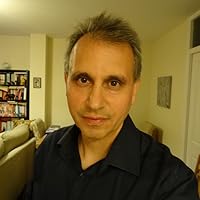
In addition to his scientific research, he is known for his lectures and writings making science intelligible to a wider audience.
From Oxford he went to Stanford University in California for two years as a Postdoctoral Fellow on the Stanford Linear Accelerator Center. In 1973 he went to the Daresbury Laboratory in Cheshire and then to CERN in Switzerland from 1973–5. He joined the Rutherford Appleton Laboratory in Oxfordshire in 1975 as a research physicist and was latterly Head of Theoretical Physics Division from 1991. He headed the communication and public education activities at CERN from 1997 to 2000. From 2001, he was Professor of Theoretical Physics at Oxford. He was a Visiting Professor at the University of Birmingham from 1996–2002.
Close lists his recreations as writing, singing, travel, squash and Real tennis, and he is a member of Harwell Squash Club.
There are many books devoted to the standard model,the Higgs field and Higgs boson,each one with its own personality.
This book is foccused in the concept of void,and is in some way a more philosofical book.
Begins with the concept of void by greek philosofers and tells the history of the concet till the absolute space time of Newton,the space permeated by the ether inth Maxwell electomagnetism,the defeat of the ether by Einstein and the revival of the idea as now the void is a geometry filled with quantum fields and swarms of virtual particles as the Casimir effect has proved,but this is a relativistic concept of ther ether.
The book ends with cosmological questions.The universe created as a quantum fluctuation of near zero energy,balance between kinetic and gavitational negative potential energy, and by that with a long lasting as the uncertainty principle says(this is the idea of the book "A Universe fron Nothing" by Krauss),the phase transition and forcé decoupling by Higgs field,the mas as the interaction of particles with this field,the possibility of existence of infinite universes in the spontaneous simetry breaking as a pencil that can falls in any direction,each universo with its own hierarchy of forces and fundamental constants (we have the luck of live in the one fitted for us ,this could explain the fine tuning and the inteligent design),but where is the fluctuating field coming from?,or what is the ultimate cause of that field?.
The autor is honest insaying that the asking of who or what is before big bang is a nonsense question in the physics realm as the time was created in the big bang.This is for me a metaphysical question beyond science,if we trespass this limit enter in the realm of methaphysics of a infinite starcaise of causes or accept the concept of incaused cause.
Also there is the hypotesis by Hawking that the universe is a four dimensional surface of a fifth dimensional sphere and by that the time unlimited and circular without begining nor end,a sort of revival of steady state cosmology,that of Hoyle, and so our universe simply is, (here the tomist idea of God ,the existence is the esence,or in spanish-yo soy el que soy-i dont know the english translation) .But the fundamental question remains.
A easy to read book ,clarly explained and that present deep questions.
By the way the book has a humoristic anonimous quote:"Why dont the big bang happened before".
Frank Close isn't kind to his readers. The book is full of science fact and scientific gobbledygook that will fly over the heads of the layman.
I learned a thing or two about the nature of atoms and electromagnetism, but that's not what I started reading this book to learn. The author gives us an almost complete breakdown of the matter that makes up the universe, proving it with equations that mean nothing to me. I wanted more philosophy less textbook.
This is one of my favorite scientific books.. Frank Close is a great author, someone who knows how to deliver some of the most complex and abstract concepts in science and physics in a very smooth way.. Einstein said that if you can’t explain it to a child then you don’t understand it yourself.. Close understands what he is talking about!
Definitely worth reading...and may even require re-reading to grasp it all. But Frank Close has certainly given me a lot to think about and given me more of a grasp of "the Void" that I ever had before. When I was trying to explain to my friend Miles, what it was all about, he had difficulty grasping the idea that something could be a vacuum yet have "something" in it. I think the Physicists need to work on the terminology a bit because they are using the term "vacuum"to mean different things. And I recall one Physicist, Kraus...author of a world from nothing debating fiercely on TV when people pointed out to him that when he spoke of "nothing" he was still obviously talking about "Something".....be it virtual fields or aether or whatever. But he seemed to merrily dismiss all the objections and claim his vacuum had no matter (and, I think, not electromagnetic fields) so it was, indeed nothing. I was fascinated by Close's descriptions of the void. (Sometimes his language is hard to follow. But p103: "after removing matter, fields, everything to reach a void" the emptiness that ensues [when viewed at large scale is not reflected at the] atomic scales wharf the void is seething with activity, energy and particles"....."Particles can radiate energy (eg in the form of photos) in apparent violation of energy conservation, so long as tht energy is reabsorbed by other particles within a short space of time". And p108, Imagine a region of vacuum, for example a cubic metre of outer space, devoid of all of the hydrogen and other particles removed. Can it really be devoid of of matter and energy? In the quantum universe the answer is no.......You might remove all matter and mass, but quantum uncertainty says there exists energy: energy cannot also be zero. To assert there is a void, containing nothing of these, violates the uncertainly principle. There is a minimum amount known as zero point energy, but that is the best you can do..... You can remove all the real particles until you reach the ground state, but quantum fluctuations will still survive. The quantum vacuum is like a medium....And something that I don't understand..."The zero point motion of electromagnetic fields is ever present in the vacuum'....and electron in flight wobbles slightly as it feels the zero point motion of the vacuum electromagnetic fields"....and something more that I didn't understand: Dirac's idea of the vacuum is of being filled with an infinite number of electrons who's individual energies occupy all levels from negatively infinite up to some maximum value. Such a deep calm sea is everywhere and unnoticeable unless it is disturbed. We call this normal state, the ground state which is our base level, relative to which all energies are defined". So is Close endorsing this view or is it just Dirac'wes view? I remain confused. If there are electrons in the vacuum ...then it has particles in it....Close says that "the energy fluctuations in the vacuum can spontaneously turn into electrons and positrons but constrained by the uncertainty principle to last for a brief moment of less than 10 to the power of minus 21". This time is so small that light would only have been able to travel about one thousandth the span of a hydrogen atom.....and it's possible to observe this "pair creation" in a bubble chamber. The two virtual particles thus becoming real. Close suggests that the quantum vacuum is like a medium and never truly empty. It can be organised in different phases. Close uses the example of phase change in water going from liquid to ice and for magnetised iron that loses its magnetism above 900 degrees C.....though I don't really see how either of these relate to the vacuum. I guess he's just saying that we can expect the vacuum to have phases changes also. So his answer to the question..."Does nature allow a vacuum is NO (in that the void is actually filled with an infinite sea of particles together with quantum fluctuations) or YES ...there are many different types of vacuum, depending on how the quantum vacuum is organised". The, on p136, we get the news that the favoured theory in physics is that the Higgs field pervades the vacuum and gives mass to the fundamental particles....not just to w and z bosons but to electrons quarks and other particles too. If this is true If this is true then in the absence of the Higgs field particles could never be stationary but would all travel at the speed of light. However, space is filled with the Higgs field. As you read this page you are looking through the Higgs field: photons do not interact with it and they move at the speed of light.
The Higgs field is indeed bizarre. Particles such as electrons travelling through space at speeds below that of light are doing so because they have mass, which they have gained as a result of interacting with the omnipresent Higgs field. Yet they continue to travel without resistance: Newton's laws work, the particles continuing to move at constant velocity as no external force appears to act on them. A partial answer to this conundrum comes if we realize that a particle's energy determines its velocity; as the Higgs field is the vacuum state of lowest energy, no energy can be transferred by the particle to or from the Higgs field, and so the particle maintains its speed. It is not possible to determine an absolute value of the velocity relative to the Higgs field.* [n the technical jargon: "The Higgs vacuum is a relativistic vacuum.'] I must confess that I find this most confusing. If an electron gets its mass by "interacting" with the Higgs field, then doesn't this mean that some sort of energy is involved because, from Einstein's equation, mass is equivalent to energy...so some external force appears to be involved ...else, why would electrons not travel at the speed of light?
Close throws in some interesting facts: the Higgs field exists only at temperatures below 10 to power 17 degrees C. (After the first trillionth of a second from big bang these conditions applied..giving masses to the fundamental particles). And as ripples in electromagnetic fields produce quantum bundles (photons) so too should the Higgs field manifest itself in Higgs bosons. And the Higgs boson itself "feels" the all pervading Higgs field and so has mass. It's been recently measured at 125 GeV.
The rule is that raising the temperature causes structure and complexity to melt away giving a 'simpler system. Water is bland; ice crystals are beautiful.
The universe today is cold; the various forces and patterns of matter are structures frozen into the fabric of the vacuum. We are far from the extreme heat in the aftermath of the Big Bang, but if we were to heat everything up, the patterns and structures would disappear. Atoms and the patterns of Mendeleev's table have meaning only at temperatures below about 10,000degrees C; above this temperature atoms are ionized into a plasma of electrons and nuclear particles as in the Sun. At even hotter temperatures, the patterns enshrined in the Standard Model of particles and forces, where the electron is in a family of leptons, with families of quarks and disparate forces, do not survive the heat. Already at energies above 100 GeV, which if ubiquitous would correspond to temperatures exceeding 10 to power 15 degrees, the electromagnetic force and the weak force that controls beta-radioactivity melt into a symmetric sameness.
In his last chapter, Close seems to indulge in various flights of fantasy...like a lot of physicists seem to with "accessible" books. He ranges over string theory, multiple universes, multiple (around ten) dimensions. Then toys around with the basic idea behind the vacuum...that positive energy within matter can be counterbalanced by the negative sink of the all pervading gravitational field such that the total energy of the universe is potentially nothing. When combined with quantum uncertainty this implies that everything is indeed some quantum fluctuation living on borrowed time. Everything may thus be a quantum fluctuation out of nothing. And then he throws in his odd bit of mysticism...."what encoded the quantum possibility into the void"? And god gets a mention. OK so he doesn't have all the answers but this is more or less the first time that he admits that. A good book in so many ways yet I'm left with the feeling that I've been conned. That Frank was going to let me into the secrets of the void and it turns out that he knows a bit ...but certainly doesn't explain to my satisfaction how the Higgs field is interacting with particles to give mass. Nor does he explain how...with all these particles bobbing on and out of existence...how do we get permanency ...for anything... are various parts of me bobbing in and out of reality?
Despite these objections I still rate it as a five star book.
This book wasn't my first foray into advanced science writing and it will not be my last, but I did find myself lost in a few of the more advanced ideas discussed in this book. I can understand quantum physics from a layman's standpoint and I believe I catch on fairly quickly with most general ideas dealing with advanced physics so be prepared for a difficult time if you have no background with the history or basic concepts that lead into the last half of this book.
I very much enjoyed the connection of past philosophers and scientists to the current research and theories on the creation of the universe and the atomic structure of all things. It is truly amazing how far we have come in our collective knowledge to take an idea as simple as "what is nothing" and being at a point where this simple question has led us to possibly solving how the universe was created.
Be prepared to have your mind worked overtime to digest all this. I admit there are paragraphs where I struggled to understand the science, but Close does a good job with consistently slowing the formulas and theories down to let the reader catch up and breathe. Very well worth the effort to tackle.
This is a basic history of physics. I bought this book when I was in college and I've read it twice.
Many would find this book flat boring, but if you are curious to know the nature of reality then this is a book for you. It is a skinny book that is fairly easy to read in terms of language -- but the ideas being expressed can be very hard to wrap your head around. I think I had to read every page twice before going to the next when I read this book many years ago.
Most of the same content is explored in the first few episodes of Neil Tyson's Cosmos but you will retain the information much more clearly if you take the time to read it from a book. Tyson's show and this book make for a great pairing. There's no reason you can't enjoy both at the same time.
This sounded like an interesting book - and the parts I read were interesting - but I didn't even make it to page 50 before I realized I'm just not smart enough to understand all this. Heck, I couldn't even understand half the REVIEWS...
So instead I think I'll watch the movie version, which according to Rotten Tomatoes has somehow adapted Close's book into a story about "police officer Carter (who) discovers a blood-soaked man limping down a deserted road, (and) rushes him to a local hospital. As cloaked, cult-like figures surround the building, the patients and staff inside start to turn ravenously insane. Trying to protect the survivors, Carter leads them into the depths of the hospital where they discover a gateway to immense evil."
80% of the book is about science history (common in many authors to fill up pages) When it comes to tackling the real question, the subject of the book, Frank tells us we basically don't know what the heck is going on, the last info gained was from Higgs in the 60s, and he switches the subject to the Big Bang and Cosmology. No mention about dark energy, no in depth discussion about the quantum foam..
The field of physics is definitely the kookiest of the sciences, and the Void is an interesting, bite-sized book about physics camouflaged as a book about nothing. It covers the everyday (how airplane doors open and how stars move across the sky at night) as well as the Very Deep (the notion of "ether" and what nothingness means at the quantum level). From the looks of the reviews, Close continues this discussion in his new biography of Higgs.
Coupled with "A Universe from Nothing," this has to be one of my preferred popular physics books that I have read so far this year. Frank Close gives a survey over "the Void" and the concept of Nothing; his writing is very accessible.
The only thing I can think to hold against this book, is the overall 'rushed' feeling to it. Close drops some heavy equations into his explanations of relativity and the notion of quantum "nothingness," which may be totally new and unfamiliar to people who haven't taken a couple semesters of physics or advanced mathematics in college.
Overall, I really enjoyed this. Check it out if popular science is your thing.
In fact, the title of this book might be a little misleading because it is so jam-packed with info. It was a wonderful read, swirling with currents of energy and supercharged particles of knowledge. A thoroughly amazing little book with content - and an approach - that mirrors the subject matter: nothingness is but energy misunderstood. Read it and prepare for a trip across unimaginably small distances that will change you forever.
"What is left if you take all the matter away? The nature of 'nothingness', the concept of the Void. has puzzled scientists and philosophers for centuries." Space is not empty...new models showing the real nature of space have been produced...take a look at the nobel.org website for the presentation on "Asymptotic Freedom" if you want a graphic of this model of the true "nature of space" let me know I'll send it to ya. George
This book is a pretty good short read. It starts off with explanations that are a too basic for my interest, and then it ends with concepts so advanced (e.g. imaginary time) that they can only be explained in relatively unsatisfactory cursory ways. In the middle there were a few descriptions of concepts like the "infinitely deep sea" of particles in the vacuum and symmetry breaking that were mostly familiar, but each time I hear it I feel like I understand it a little more.
The early chapters were philosophy, and the rest was all physics. A torrent of ideas, which read like an extended exam paper or thesis in physics. What at first seemed to be an interesting investigation quickly dwindled into a monotonous march of ideas. A shame as this could have been much better done.
Despite some of the reviews I've read, I thought this was a fantastic read. It does mostly talk about the history of the concept of nothingness and about the evolution of physics principles to explain it. If you like most modern physics reading books, particularly quantum and particle physics stuff, this is an excellent read.
Really enjoyable read. Excellent job at explaining the important physics concepts ad orienting the reader. A good way for me to refresh and get back into more complex books about theoretical physics. Recommend to anyone who's curious about the subject are and looking for a way to get their feet wet.
Another great little science book by a great science writer. Convinced me that there might be more to absolutely nothing than first meets the eye. A thorough and digestible history of the search for the beginning of everything, with relatively easy to understand descriptions of the worlds of relativity and the quantum.
Really interesting read, but a little more academic for my tastes. However, Close does not drone on like Hawking in his explanation of quantum physics. Really like that's its short. The introduction was really well written and I enjoyed the concepts in it.
Pretty heavy going for a post Xmas afternoon. Interesting though. Slowly the pieces of the universe are falling in to place (with a significant number whizzing right overhead!)
The Void is a fascinating little book about all the little bits of stuff bouncing around in nothing, and how we came to find them. Highly recommended for the scientifically curious.