Jump to ratings and reviews
Rate this book

El libro negro de los cuentos

Rate this book
Una alquimia de magia y deleite sensual. Unas niñas se refugian en el bosque durante la guerra, donde tendrán una visión aterradora que las mantendrá unidas para siempre. Una mujer se convierte poco a poco en piedra y un escultor la reconoce como parte del mundo oculto de la mitología islandesa. Un hombre se encuentra con el fantasma de su propia esposa antes de que ésta muera...

Cargadas de tensión dramática, las cinco fábulas de El libro negro de los cuentos concentran todo el poder evocador de las leyendas infantiles, el misterio del escenario gótico, las conmovedoras descripciones de los cuentos de hadas y constituyen una deslumbrante reflexión sobre el modo en que afrontamos nuestros miedos y deseos más ocultos.

212 pages, Paperback

First published January 1, 2003

104 people are currently reading
2558 people want to read

About the author

A.S. Byatt

175 books2,829 followers
A.S. Byatt (Antonia Susan Byatt) is internationally known for her novels and short stories. Her novels include the Booker Prize winner Possession, The Biographer’s Tale and the quartet, The Virgin in the Garden, Still Life, Babel Tower and A Whistling Woman, and her highly acclaimed collections of short stories include Sugar and Other Stories, The Matisse Stories, The Djinn in the Nightingale’s Eye, Elementals and her most recent book Little Black Book of Stories. A distinguished critic as well as a writer of fiction, A S Byatt was appointed CBE in 1990 and DBE in 1999.

BYATT, Dame Antonia (Susan), (Dame Antonia Duffy), DBE 1999 (CBE 1990); FRSL 1983; Chevalier de l’Ordre des Arts et des Lettres (France), 2003 , writer; born 24 Aug. 1936;

Daughter of His Honour John Frederick Drabble, QC and late Kathleen Marie Bloor

Byatt has famously been engaged in a long-running feud with her novelist sister, Margaret Drabble, over the alleged appropriation of a family tea-set in one of her novels. The pair seldom see each other and each does not read the books of the other.

Married
1st, 1959, Ian Charles Rayner Byatt (Sir I. C. R. Byatt) marriage dissolved. 1969; one daughter (one son deceased)
2nd, 1969, Peter John Duffy; two daughters.

Education
Sheffield High School; The Mount School, York; Newnham College, Cambridge (BA Hons; Hon. Fellow 1999); Bryn Mawr College, Philadelphia, USA; Somerville College, Oxford.

Academic Honours:
Hon. Fellow, London Inst., 2000; Fellow UCL, 2004
Hon. DLitt: Bradford, 1987; DUniv York, 1991; Durham, 1991; Nottingham, 1992; Liverpool, 1993; Portsmouth, 1994; London, 1995; Sheffield, 2000; Kent 2004; Hon. LittD Cambridge, 1999

Prizes
The PEN/Macmillan Silver Pen Of Fiction prize, 1986 for STILL LIFE
The Booker Prize, 1990, for POSSESSION
Irish Times/Aer Lingus International Fiction Prize, 1990 for POSSESSION
The Eurasian section of Best Book in Commonwealth Prize, 1991 for POSSESSION
Premio Malaparte, Capri, 1995;
Mythopoeic Fantasy Award for Adult Literature, California, 1998 for THE DJINN IN THE NIGHTINGALE''S EYE
Shakespeare Prize, Toepfer Foundation, Hamburg, 2002;

Publications:
The Shadow of the Sun, 1964;
Degrees of Freedom, 1965 (reprinted as Degrees of Freedom: the early novels of Iris Murdoch, 1994);
The Game, 1967;
Wordsworth and Coleridge in their Time, 1970 (reprinted as Unruly Times: Wordsworth and Coleridge in their Time, 1989);
Iris Murdoch 1976
The Virgin in the Garden, 1978;
GEORGE ELIOT Selected Essays, Poems and Other Writings , 1979 (editor);
Still Life, 1985
Sugar and Other Stories, 1987;
George Eliot: selected essays, 1989 (editor)
Possession: a romance, 1990
Robert Browning''s Dramatic Monologues, 1990 (editor);
Passions of the Mind, (essays), 1991;
Angels and Insects (novellas),1992
The Matisse Stories (short stories),1993;
The Djinn in the Nightingale''s Eye: five fairy stories, 1994
Imagining Characters, 1995 (joint editor);
New Writing 4, 1995 (joint editor);
Babel Tower, 1996;
New Writing 6, 1997 (joint editor);
The Oxford Book of English Short Stories, 1998 (editor);
Elementals: Stories of fire and ice (short stories), 1998;
The Biographer''s Tale, 2000;
On Histories and Stories (essays), 2000;
Portraits in Fiction, 2001;
The Bird Hand Book, 2001 (Photographs by Victor Schrager Text By AS Byatt);
A Whistling Woman, 2002
Little

Ratings & Reviews

What do you think?
Rate this book

Friends & Following

Create a free account to discover what your friends think of this book!

Community Reviews

5 stars
712 (25%)
4 stars
1,109 (39%)
3 stars
749 (26%)
2 stars
210 (7%)
1 star
43 (1%)
Displaying 1 - 30 of 373 reviews
Profile Image for Cecily.
1,320 reviews5,331 followers
Read
December 3, 2021
Reading Byatt is like casting a net in a tropical fish tank: each dip brings a different combination, mostly of startling variety and beauty. But sometimes I catch some pondweed, rocks, or detritus as well.

I had a similar experience with this collection of five stories from 2003, ranging from 5* to 2*. I admire her work, but often find aspects that detract and distract. But the best are so good, I keep coming back.

They are superficially very different in style, setting, and plot, but they are connected by undercurrents, many with a sharp, dark, and sometimes shocking edge.

Art, especially colour
Byatt is consistently brilliant at conjuring mood and period by meticulous attention to the rich and atmospheric details of nature, textiles, textures, fabrics, and furnishings: both concrete and metaphor.

That is especially true of The Thing in the Forest and A Stone Woman, and descriptions of the colour black in Raw Material. See also her The Matisse Stories.

Flesh, especially scarred or aging
Many characters exhibit a revulsion of flesh and of things “the colour of flayed flesh” or “raw flesh”. But Byatt’s delicate descriptions betray her fondness for unexpected beauty. An old woman’s eyes “held to the outer world by the most fragile, spider-web cradle of lid, and muscle, all stained umber, violet, indigo as though bruised by the strain of staying in place”.

Belief, and the loss or absence of it
We all want to be believed, however extraordinary what we say. Many in these stories also have beliefs in the supernatural that they don’t want to be challenged.

Some fear not being believed and thought crazy. Some are crazy. A doctor loses his faith - but not quite enough to free him of it. A child learns the truth about Father Christmas: “The vanishing of magic, a breath-taking blow.” But one fortunate character finds new life in folklore.

The power of the unsaid
In all the stories, what is not said is significant, usually as misguided self-protection. But there are also characters who lose the power of speech, as well as a mute whose crimes are never spoken of.

Dreams, imagination, muddled memories, and mental decline
Several of the stories have an explicitly magical realist aspect, but all have people wrestling with what’s “real” and what is not.

Transformation, beginnings, and endings
Life to death: animal and plant to gems and coal, coal to heat. Abortion and euthanasia. Sane to not.

(Auto)biography
This is a common thread in Byatt’s books. Here, Penny, a thin “reading child” is like the bookish Byatt as the “Thin Child in Wartime” in Ragnarok (see my review HERE). However, as an adult, Penny is not the one who becomes the storyteller.

Some characters in the writing class of Raw Material may be drawn from personal experience, and the disagreements over what is good writing might reflect Byatt’s estrangement from her novelists sister, Margaret Drabble.

Reviews of individual stories
To include them here would exceed the character count (GR deleted the whole review!), so here are links:

The Thing in the Forest, 5*, review HERE.

Body Art, 2*, review HERE.

A Stone Woman, 5*, review HERE.

Raw Material, 4*, review HERE.

The Pink Ribbon, 3*, review HERE.

Profile Image for Dolors.
605 reviews2,814 followers
October 6, 2016
Beguiling perplexity.
This is what Byatt’s five tales provoke in the spellbound reader.
But why are they black?
Byatt’s writing brims over with multichromatic imagination, but among the seemingly disparate storylines there is a common theme that binds them together: the imminent presence of death, lurking ominously around every corner, changing shapes and costumes, appearing as a blind, slimy monster from the depths of a forest during WWII, a walking metamorphosis from flesh to stone or in the form of conventional illness related to growing old.

The temporary condition of mankind’s existence reigns over the pages of this collection, a fact that becomes obvious in the constant change the human body suffers with the passage of time.
Natural ageing, psychological trauma, self-inflicted abuse, paralizing grief… the body is the gravitational center around which revolves the sinister spectre of death, changing masks, threatening everything that is fresh and bright.

A pragmatic but troubled gynecologist confronts his religious upbringing and the real meaning of free will when he crosses paths with an enigmatic arts student in Body Art while a woman goes through an inexplicable transformation that reveals her true identity in Iceland, helped by a mystic stonemason in A Stone Woman. The fantastical prevails in Byatt’s stories, but always without belittling the piercing realism that orbits around the narrative duplets that become the protagonists in the five fables. What do they have in common? The questioning of the traditional division between reality and myth and the nightmarish quality of the quotidian.

Life can be spent in total darkness if we do not dare to turn on the light to confront the invisible ghosts that haunt us. These tales concentrate the evocative power of books for children, the mystery of the Gothic atmosphere and a postmodern outlook that leads to a seductively dark meditation on how we struggle against our most secret fears and primal desires.
The best of the ancient folklore seen through bountiful imagination, this is where Byatt’s greatness lays, in her cultivated prose, alive and probing, which traps the reader in a permanent spell that won’t ever completely dissipate, no matter how long ago childhood and fairy tales were left behind.
Profile Image for Rowena.
501 reviews2,773 followers
August 27, 2013
One of the reasons I adored this short story collection was Byatt's ability to describe things so well. Her descriptions of nature and colour were especially wonderful. I think it's safe to say I have never read any short stories quite like these, they were all unusual and came with twists. My favourite story was "Stone Woman" in which a woman finds herself turning to stone. As a geology-lover, her descriptions of the different rock formations and minerals resonated with me and I had to read that story twice.

Reading these stories also made me realize how much great vocabulary and general knowledge can enrich a story. It's obvious Byatt does possess a great repository of general knowledge and her vocabulary usage is phenomenal.

Wonderful, magical stories that will stay with you well after you finish reading them. I even feel inspired to sign up for a creative writing course after reading this collection. I am looking forward to reading my next Byatt book.
Profile Image for Zanna.
676 reviews1,089 followers
January 10, 2019
Why black? Because black absorbs and radiates? Because the subjects are full of pain? Because the black book contains our connections? Because the dark is where we paint our fears and hopes?

I am cursed with this line-seeking mind. I abandoned Ariadne. Why will this story not lie flat and hand me the thread? Literature, why do you merely intrigue me, draw me deeper, without ever solving the labyrinth?

When I read Byatt I argue with my inexplicable sense that this is the only literature: be calm child, there are millions of books! (is this even true?) I'm dissatisfied, I'm lucid, I beat the walls. There's only this place! I'm dreaming and there are only dreams!

The Thing In The Forest
When I went to see War Horse I was very upset, even though the ending was happy, because there is no consolation for the war that mowed down a generation; when I think of it I ache. In contrast when I saw a production of Antigone I actually laughed aloud when they all came back to bow covered in blood (spoiler: everyone dies). I think this story gives shape to the ineffable aching grief that WWII wrought in the hearts of Byatt's generation. An actual shape.

Nightmare strays into the world, like the demon in The Ring who crawls through the television (it took me six weeks to repair the breached boundary in myself and I'll never watch a horror film again, ever, of any kind). I suppose the war was like that to the children in the story, an unreal horror that lurched across the bridge of fairyland and stole the people who protected them.

The girls react differently. The women react differently. The world reacts differently. And I must find my own way out.

Body Art
Byatt is baiting me and I am wriggling on that hook. I will wriggle and writhe all she wants. I'm saying my piece. Stop right there male protagonist and rewind. That moment where you, the maternity specialist, noticed the homeless art student you had taken in standing by your bed in her underwear and you decided it would be 'rude' not to have sex with her... Argh! I have no spoiler-free words for my rage

While rape culture looms LARGE and very UGLY in this story, art, as so often in Byatt, threatens to steal the show gloriously from that mess. And while the ending hardly delivered justice, it gave our survivor-hero a shred of power-through-love.

A Stone Woman
Byatt just can't resist revelling in the paradise of sonority and etymological delight that is geology. I loved the introductory part about the love between daughter and mother, and all the sensuous description, and the smallness of sentimental Christian iconography in the shadow of geological time. This made me want to go to Iceland even more than I do already. The cherry though is the folk-tale inclusion that Byatt's tale spectacularly mirrors. Not since Dracula's dem die Todten reiten schnell* has a line in a foreign language delivered such a delicious chill.

*for the dead ride fast (sorry if my German sucks)

Raw Material
I often fail to get the unlikeable protagonist thing. I'm a naïve reader, easily led and oblivious. Not only do I hunt for the thread and the exit, I also conjure a minotaur where really there is a man, human and redeemable. This story about a creative writing class at first bubbles along full of cartoon villains, mimicking the teacher's lack of inspiration... I imagine Byatt didn't know what to do with these beautifully written ethnographic essays, and at last settled on weaving them into this cunning demonstration not exactly of how to write, but of how open minded we might need to be about writing? A pat conclusion seems imminent when... something totally horrible and unexpected and melodramatic happens. But as with all these stories, the pain is real, like the war that made me cry at War Horse. Did I learn the lesson ma'am?

The Pink Ribbon
Another white male lead who behaves with subtle delusions of entitlement (I know, you're stunned). I don’t know the idea of the Fetch, but I do enjoy how she gives the protagonist's wife the voice she dared not use until it was too late. I wonder why she comes clothed in his desire. I wonder if it's signifying the unintentional nature of male privilege - it's structural! It's automatic! You have to actively work to turn it off! I'm projecting feminism. But feminism is my project... And yes, we need so many more stories about getting old.
Profile Image for Ubik 2.0.
1,073 reviews294 followers
September 27, 2020
Piccolo libro nero di racconti

Cinque novelle, più che racconti, particolarmente variegate come tema, sviluppo, ambientazione ma accomunate dal nitore dello stile della Byatt che si conferma raffinatissima cesellatrice di storie che manifestano una profonda erudizione ma allo stesso tempo un’intima partecipazione per i sentimenti e l’umanità dei personaggi, soprattutto quelli femminili.

Difficile per me stabilire una gerarchia perché proprio nessuna delle novelle sembra minimamente rivestire una funzione di riempitivo ed ognuna di esse potrebbe rappresentare la base di un emozionante romanzo da sviluppare; perché qui non si tratta di quadri, di fotografie, di momenti colti nel loro divenire ma invece, pur fruendo di un episodio chiave come fulcro, sostengono tutte uno sviluppo dinamico, quasi sempre imprevedibile e sorprendente, un’avventura della fantasia.

Vi si ritrovano alcuni dei temi e delle situazioni care all’autrice come l’educazione artistica e letteraria che rimanda alle tematiche del “quartetto di Frederica Potter”, in particolare all’episodio che ricordo come il più riuscito, “La torre di Babele”. Oppure le sensazioni di smarrimento determinate dalla Guerra e dai bombardamenti su Londra, vissute soprattutto nello stato d’animo dei bambini con evidenti risonanze autobiografiche (la Byatt è nata nel ’36).

Ma con riferimento al titolo originale della raccolta, “The Little Black Book of Stories”, ricorre una componente “nera” in queste storie, che le distingue dall’abituale luminosità e fiducia nella cultura e nell’intelletto, caratteristiche della Byatt. Ogni novella contiene un’implicazione inquietante, esplicita come nel racconto che dà il titolo all’edizione italiana, o più spesso sotterranea che cova lungo le pagine per esplodere nel finale o viceversa, come nel magnifico “La donna di pietra”, vira verso la conclusione liberatoria di un’estasi incantata.
Profile Image for Jonfaith.
2,146 reviews1,747 followers
May 1, 2018
The human world of stones is caught in organic metaphors like flies in amber. Words came from flesh and hair and plants.

A collection of slightly stories which appear to announce in all-caps, IF I CARED MORE I WOULD PLAGIARIZE. Yet it doesn't. I am not sure about our own state either. Byatt is always will suited for the epic scale (As long as she avoids Babel) but the shorter pieces appear to stumble.

The Blitz features a few times here, as do geriatric concerns, obstetrics and gynecology. There's a fallen Creative Writing teacher and a woman becoming mineral--albeit with poetic panache. The arc is situated to inspire the broken logic of the nightmare but I feel Angela Carter has a better handle on such. There has been a theme in reviews regarding the characterization of a black book of stories. I offer no insights.
Profile Image for Deea.
365 reviews102 followers
April 11, 2016
The Thing in the Forest ****
Body Art ***** (lovely)
A Stone Woman ***** (exquisite)
Raw Material ***
The Pink Ribbon ****

ONCE UPON A TIME there was magic immersed in real life. Magic! And magic was palpable…just like in fairy tales and people believed in it. When exactly in the evolution of humanity did we lose the ability to believe in what we could not see? When did we forget that there are things which cannot be explained by science, that our world is not only populated by visible beings, but also by invisible creatures? These are some of the questions that Dame Byatt wants to make the reader of this book think of.

Usually fairy tales have happy endings: the prince and the princess get married after struggling with opposite forces, the dichotomy good versus evil is ever-present and good defeats evil with no exception. In Byatt’s stories however, real life takes over: rather than focusing on how people get together and stopping at that, Byatt’s princesses and princes, heroines and heroes (who are actually real people) have to face consequences after an important moment from their lives. In Byatt’s imagined worlds there is no such thing as happy ending…maybe this is why the volume is called “Little BLACK Book of Stories”.
All the stories from this volume are good, but there are two which are really amazing: “Body Art” and “Stone Woman”. I will only talk a little bit about the second one because it’s fresher in my mind.

Ines, whose mother has recently died, starts noticing after a surgery that her body is turning to stone. While looking for a place where to stay when her metamorphosis is complete, she meets a stone mason from Iceland. He tells him her secret and he invites her to Iceland, after telling her stories about trolls and their transformation over time. They go together to this “primal chaos of ice, stone silt, black sand, gold mud” (Iceland) and her metamorphosis is completed there. Byatt explores in this story many aspects related to stones and she creates very plastic descriptions:

“The mind of stone lovers had colonized stones as lichens cling to them with golden or grey-green florid stains. The human world of stones is caught in organic metaphors like flies in amber. Words came from flesh and hair and plants. Reniform, mammilated, botryoidal, dendrite, haematite. Carnelian is from carnal, from flesh. Serpentine and lizardite are stone reptiles; phyllite is leafy-green.”

or

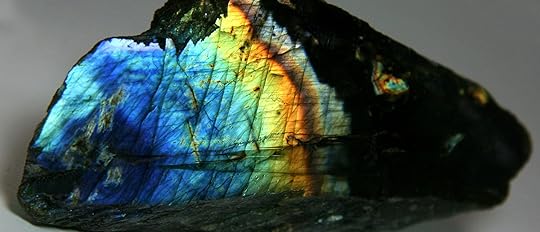
Labradorite “Labradorite is dark blue, soft black, full of gleaming lights, peacock and gold and silver, like the aurora borealis embedded in hardness.” In the context of this story which takes place in Iceland, the valences of this phrase are simply exquisite.
A wonderful book which made me highly appreciate Byatt's sharpness, eloquence and way with words, a book which made me want to see Iceland very soon and made me read about artists such as Matisse and his contemporaries and a book which convinced me to explore her literary abilities further in the near future. Highly recommended for anyone who still believes in magic.
Profile Image for Olya Nestor.
95 reviews73 followers
August 25, 2025
Колись у мене закінчаться нечитані книги Байетт і від цього вже зараз стає дуже сумно.
Profile Image for Lisa (NY).
2,139 reviews823 followers
July 4, 2018
I read all of these dark, fairy-tale like stories dutifully but was glad to be finished. Byatt writes paragraphs of lush, descriptive prose but I found the language overpowering - I had an urge to skim. My favorite was "The Stone Woman" -- I can still see the images vividly in my mind.
Profile Image for Sharon.
142 reviews26 followers
May 3, 2009
Having heard good things about A.S. Byatt's mastery of the short story, I was anxious to read this book. Unfortunately, I found myself disappointed.

Byatt certainly knows how to begin a story. The first offering in this collection is "The Thing in the Forest" and it begins, simply and intriguingly, with this sentence: "There were once two little girls who saw, or believed they saw, a thing in the forest." Note the deliberate phrasing here with the word 'believed'. It is pivotal to the whole story. Everything that happens to these two little girls, and to the women that they become, revolves around that thing and the question of whether they actually saw it. After the incredible buildup of the girls' evacuation from London during wartime and their encounter with the thing in the forest, however, I found the denouement of the story to be a letdown. Something strange happened to these two at a young age. Byatt wants us to understand that how they dealt with it and incorporated it into their lives determined who they ultimately became. The ending is set up to be an a-ha moment, but for me, it fell flat because it failed to live up to the promise of that wonderful beginning.

I felt that each story in this collection had a hinge within it, some important pivot point around which the story turned and became something else. Sometimes the hinge is an event, like the formation of a scar after surgery, and sometimes it is an encounter with an unexpected person, like the young, fragile artist or an elderly woman with vivid memories. Although it's not always clear in what direction the story is turning, these points are like huge signs that blink to get our attention, and I found myself wishing the machinations were a little more subtle.

Byatt's writing is strong, in a conversational style that is warm and easy to read. Sometimes I found her overuse of adjectives to be annoying, as if she were a journalist desperate to get down every nuance of a scene. I also found the pacing to be a bit slow for my taste, with some stories dragging on interminably. "A Stone Woman" had the wonderfully surprising premise of a woman literally turning to minerals but there were only so many times I could read about the crystal growths under her skin and the clinking, chinking noises she made when she moved, before I began skimming those descriptive passages.

I thought my favorite story was going to be "Raw Material," about a disillusioned writer living in a trailer and teaching creative writing to a group of talentless wannabes. An elderly woman joins the class and begins to turn in essays on things she remembers from the past. Her writing is clear and clean, both descriptive and evocative, both literal and metaphorical. It sparks the jaded writer's own urge to write well, his own passion for the written word. Unfortunately, this story fell apart for me at the end. The final turn of events came completely out of left field and felt forced to me, almost as if Byatt had been writing along and couldn't figure out how to end the story, then suddenly came up with this shocking revelation. The pieces did not fit together, which I think is how Byatt wanted the reader to feel, as a mirror to the main character's own reaction. But for me, it simply knocked the whole story down and made it too unbelievable.

Much of the disappointment I felt in these stories came from a lack of interest in the characters and situations, as well as the very open nature of the endings. The writing is quite engaging and I always felt a keen sense of anticipation upon starting one of these stories. Unfortunately, by the end, I usually found myself saying "so what?" Ultimately, I came away feeling unfulfilled despite the promise of some very interesting beginnings.
Profile Image for Ava Catherine.
151 reviews1 follower
December 19, 2015
I love Byatt's ability to take a simple idea and create a lovely story with a strong theme.

In "The Thing" she uses echoes of Hansel and Gretel with a modern twist. We are reminded that the wounds of our childhoods scar and shape us for the rest of our lives. Each person has to figure out how to cope with her Thing from the forest in order to survive. Setting this story in WWII is a stroke of genius. The children being evacuated from London during the war are vulnerable before they go into the forest.

"Body Art" cleverly reminds us of the overwhelming love a parent feels for his/her child, and Byatt masterfully emphasizes that a baby is a separate person.

"The Stone Woman" is a tale of transformation. It is a beautiful, uplifting story celebrating a woman's beauty, courage, and joy. I love this story.

I enjoy reading Byatt's stories for the overall themes as well as the language. Her creative use of language and her depth of knowledge keep me going back and rereading her works and finding something new each time. Little Black Book of Stories is fascinating because it differs from many of her other works.

"Raw Material" is a story about a failed writer, Jack Smollett, who is reduced to teaching creative writing classes to losers. Although he warns them about inventing melodrama and tries to convince them to write about something they know, the writers in the class are determined to write melodrama. The stories they write are awful overdramatized pieces loosely based on their lives. When Jack can make no inroads in changing their writing, he gives up and lets them write whatever they want to write.

Cicely Fox, an eighty-year-old spinster who is a new student, turns in an extraordinary piece of writing, and Jack is inspired to write again himself. However, Cicely's piece is "How We Used to Black-lead Stoves," which is not a very personal piece. The other students in the class shun her and become jealous of her writing. She is not concerned at all by the students' banter or jealousy, nor is she concerned by Jack's adoration of her writing. It seems that she merely enjoys writing and constructs her pieces as a way of pleasing herself.


In the"The Pink Ribbon," which is set around the time of WWII, James has lost the love of his life, Madeline, to Alzheimer's and is fighting a battle everyday to care for her with the help of a Jamaican woman, Mrs. Bright. Each morning he brushes Mado's hair, braids it, and ties a lovely pink ribbon in it. He only has a short period of time to run his errands while Mrs. Bright is sitting with Mado, so he must choose between the bookstore or the pharmacy. No time for both. He is exhausted all the time, and Mado does not know him.

Madeline was in Intelligence in the war; she sent spies out on missions. James was in the Air Force. The war conspired against them, and there was no time for children. Now it is just the two of them, and he is floundering. Although he fought in the war and knows how to fight, this war is much more difficult.


I think the main thing Byatt is trying to say in this story is that although men and women fight in wars and are heroic on the battlefront, it it in our everyday lives that we soldier on and fight the really difficult battles of our lives. Often these battles are unrecognized by anyone else, and the loneliness makes it even more difficult to bear. Our lives are destroyed, just like in a literal war, but no one notices, and we are expected to carry on with our normal daily activities. Byatt's clever analogy strikes a deep chord in me.

reply | edit | delete | flag *
Profile Image for Littleflamy.
25 reviews51 followers
November 20, 2015
Sono pochi i libri che ho voglia di rileggere interamente. Questo l'ho riletto. Penso sia una delle raccolte di racconti più attraenti che abbia letto negli ultimi tempi. Devo assolutamente recuperare tutto quello che ha scritto!
Profile Image for Laura.
96 reviews1 follower
October 24, 2016
Sono rimasta affascinata, è un libro di non molte pagine, ma ogni volta che finivo un racconto lo trovavo così bello che non riuscivo immediatamente a passare al successivo, sentivo la necessità di chiudere il libro e lasciare che quello appena letto liberasse la mia mente e la mia attenzione per passare al successivo. Il primo e il terzo racconto sono i miei preferiti. Il primo, La Cosa nella foresta, per dirla con le parole del libro ha il tessuto di "... quei rari sogni - quasi tutti incubi - che hanno la qualità della vita stessa", il terzo, Una donna di pietra, racconta una metamorfosi, e qui Byatt riesce a fare magia con le parole, anche geologia e minerali diventano poesia. Anche gli altri tre sono belli, ma quelli che hanno avuto più presa su di me sono stati questi due.
Da rileggere.
Profile Image for Eh?Eh!.
393 reviews4 followers
May 22, 2011
From what others have said, Byatt has the sort of background where I know I'm missing quite a bit when I read anything she writes, not even catching a stray ripple. That first story, whuh? Even the other four, where I caught my breath or found myself with a sore back from unconsciously hunching as I became enrapt with the stories, I wonder what I'm missing. Still, those four, thumbs up. My take on them may be the obvious take, but they dance on my mind. Loss and parenthood, grief and geology (literally becoming stone), a sly (or obvious?) dig at writers who mine or steal experience, obligation.
Profile Image for Sam.
3,454 reviews265 followers
August 13, 2012
This is the first of Byatt's work I have read and I must say I did rather enjoy these stories. Each one has a darkly Gothic feel combining tragedy and horror with a human element to stop the story becoming unfeeling and flat. My two particular favourites were The Thing in the Forest and A Stone Woman both of which combined strong women in somewhat unusual circumstances where they have to dig deep and find their own strength to face their demons. Definitely an author I will look out for in future.
Profile Image for Richard Newton.
Author 27 books595 followers
October 14, 2017
Rather wonderful. Beautifully written, adult stories which mix a little fantasy with a deep understanding of the human condition. These are long short stories - some really novellas. Intelligent writing showing that the best reading experience is best when less is explained. I liked all the stories, but the last two - Raw Material and The Pink Ribbon were particularly fine.
Profile Image for Berfin Kanat.
424 reviews174 followers
April 22, 2017
Hikayeler korku ögeleri taşısada ürkütmekten ziyade tuhaf hissettiriyor. Hepsini beğenerek okudum diyemem ama yazarın tarzı hoşuma gitti, diğer kitaplarını da okumak istiyorum.
Profile Image for Marica.
411 reviews210 followers
May 20, 2020
In questi 5 racconti ritrovo la Byatt nelle sue varie voci. Body art è il più realistico e racconta con onestà intellettuale l'incrocio improbabile delle vite di un medico severo e determinato e di una giovane artista senza fissa dimora, più una curatrice d'arte che fa da tratto di unione e da angelo riparatore.Per questo racconto la Byatt attinge alle sue conoscenze di arte e vita e ho trovato il risultato toccante e per niente caramelloso, come deve essere. Mi è piaciuta la palingenesi di La donna di pietra, dal lutto alla danza liberatrice nella tempesta, qui B rivisita la cultura norrena che faceva parte della sua formazione. La cosa nella foresta e Il nastro rosa sono accomunate dai due piani paralleli, realtà storica (bombardamenti e gente sfollata) e mondo fantastico: nel caso delle bambine, l'orrore assume una forma e un odore, nel caso del vecchio signore, il mondo fantastico viene ad aiutarlo ad affrontare la realtà: capisce che non deve fermarsi a riflettere sul destino di Mado e sul suo, se vuole esserle di aiuto. Di Materiale grezzo mi sono piaciuti i saggi di Cicely, il senso del racconto nel suo complesso mi è sfuggito. Nel complesso mi sembra che i racconti abbiano un messaggio positivo: non cedere ai rovesci della vita, è possibile una evoluzione positiva o almeno non essere totalmente privi di controllo sul proprio destino.
Profile Image for Murat Dural.
Author 19 books626 followers
January 17, 2023
İyi başlayan okuma gittikçe daha zor, kurgu dalgalı bir hal alıyor. Korku öğeleri ilerleyen öykülerde azalıyor. Başlangıçta bayıldım, kitap aktı. Ancak sonrasında daha komplike, zorlu bir hal aldı. A.S. Bayt iyi bir yazar. Diğer eserleri de bakmak istiyorum.
Profile Image for MarinaLawliett.
547 reviews54 followers
December 12, 2025
Me pilló en el peor momento, además esperaba una cosa completamente distinta por la sinopsis y el título, pero bueeeeno~

#BibliotecaPúblicadeCádiz
Profile Image for Felicity.
Author 10 books47 followers
January 26, 2008
A good story makes me want to read the next one; a great one makes me close the book, almost involuntarily. I want to read the next one, but not yet, not yet. There were several such stories in this little volume of five short stories.

Byatt, here, is inventive and unexpected. She brings characters rapidly to life and into their strange fates, and captures moments of vivid humanity. The stories are both dark and luminous.

The least strong, in my opinion, is "Body Art," which seemed slightly contrived; my favorite, I believe, was "The Pink Ribbon."
Profile Image for Bandit.
4,946 reviews578 followers
June 30, 2016
Second time trying Byatt, looks like this time her stories fared marginally nicer, but still...something about her writing just doesn't sing for me. I was able to appreciate it more now, see the beauty of it, but these modern fairy tales (with exception of the first one maybe) lacked the magic and fun and all those other fairy tale prerequisites that make them so delightful. Quick read, but unengaging and unmemorable. Probably an acquired taste sort of thing, judging by the author's popularity.
Profile Image for Gearóid.
354 reviews150 followers
September 29, 2013
Wow!
Incredibly good stories.
Each story was so different and each story felt like a novel.
They were so complete and beautifully written.
You can see A.S Byatt really loves words......
pyrolusite,ignimbrite,omphacite,uvarovite,glaucophane,schist,shale,gneiss,tuff.
Sounds so cool!
"A Stone Woman" really stands out to me as an exceptional short story.
But all the stories are awesome in different ways.
Another 5 star's.

Profile Image for Santiago Gª Soláns.
895 reviews
May 8, 2019
2.5/5

Uf. Decepción sería el resumen básico para calificar en conjunto los cinco relatos reunidos en este volumen.

Empieza genial, “La cosa del bosque” es una maravilla notable, casi sobresaliente. Si todo hubiese sido así...
“Arte corporal” baja el nivel hasta extremos insospechados. Qué mal.
“Una mujer de piedra” tiene una muy interesante historia, con un planteamiento estupendo e intrigante, con una plasmación torpe e innecesariamente alargada, se hace eterna.
“Material en bruto” peca de los mismos defectos que los alumnos del taller de escritura impartido por el protagonista achacan a la nueva asistente. Pesado.
“La cinta rosa” consigue levantar un tanto de nuevo el nivel, pero para un tema tan importante termina resultando demasiado facilón.

Esperaba mucho más (sobre todo después del estupendo inicio). Igual ha sido culpa mía y de mis expectativas. No lo sé. La prosa es buena, las ideas son interesantes, los temas sugerentes, pero...
Profile Image for Susanna Rautio.
435 reviews29 followers
June 30, 2025
Pieni musta kirja sisältää viisi tummasävyistä novellia, joissa liikutaan mahdollisen ja mahdottoman välillä. Tarjolla goottisävyjä, vastustamattomia voimia ja älykkäitä taidehistoriallisia viittauksia. Byatt yhdistelee tuttuun tapaansa taiteen, myyttien ja ihmismielen kerroksia.

Tarinoissa on kiinnostavia ideoita ja tunnelmia, mutta ne ovat niin lyhyitä, etteivät kehity. Varsinkaan niiden henkilöt eivät kehity vaan jäävät jotenkin muutoksen pyörteissä itsensä vangeiksi.

Moni tarina päättyi juuri, kun se alkoi kiinnostaa.

Byatt on kirjailijana aika viipyilevä, minkä takia hänelle sopii paremmin pitempi tyyli. Niissä aihe, idea ja kieli saavat tilaa kasvaa täyteen upeuteensa.

Suosittelen niille, jotka haluavat lukea Byattilta jokaisen kirjan. Tosifaneille.
Profile Image for Charlie.
765 reviews26 followers
November 15, 2025
3 STARS

This was an interesting mix of stories and I'm glad I discovered A. S. Byatt's writing. The stories are a little weird, don't really give you answers to all the questions you might have but there is still something that resonates in each tale. The one that surprised and impressed me the most was probably "Body Art", I just had not expected to variety of how the title relates to the story and I enjoyed reading it a lot. "Raw Material" was also great and the others I enjoyed but not as much as these two.

Overall, I think checking Byatt's work out is definitely worth it and I already have two of her novels on my shelf, curious to see how her long-form writing compares to her short stories.
Profile Image for Frabe.
1,196 reviews56 followers
August 28, 2017
Il "sapiente intreccio di elementi fantastici e di realtà quotidiana, di paure ancestrali e spaventi domestici, di emozioni e di sogno" (quarta di copertina) proprio non mi ha preso, in nessuno dei cinque racconti di questa raccolta.
Profile Image for Susan DeFreitas.
Author 4 books75 followers
April 26, 2017
Feminist fairytales by a living master. She is to England what Ursula K. Le Guin is to the US, what Margaret Atwood is to Canada--but she might be my current favorite of the three because it is clear that the real, old, weird, hard tales of magic are in her blood.

To say that I loved this book would be an understatement. I wanted to eat it for all three meals of the day and sleep with it under my pillow. It's that good.
Profile Image for Mikko Saari.
Author 6 books258 followers
March 29, 2018
Oivallinen kokoelma, viisi kiinnostavaa ja tummasävyistä novellia. Kaksi tyttöä kohtaa sotavuosina metsässä hirviön; taiteilija putoaa lääkärin syliin yllättäen ja mitä siitä seuraa; nainen muuttuu pikkuhiljaa kiveksi; kirjoittajapiiri saa tarinoihinsa uutta materiaalia; mies hoitaa muistisairasta vaimoaan.

Aika tavanomaisia tarinoita, toisaalta; toisaalta omituisia ja synkkiä. Musta on monisävyinen väri, eivät nämä kaikki samaa synkkyyttä ole. Byatt on taitava kirjailija, jonka tekstiä on ilo lukea.
Profile Image for Sacha Rosel.
Author 12 books78 followers
September 24, 2025
A stone woman is a masterpiece. The rest of the stories are interesting, but less than the ones in Medusa's ankles.
Displaying 1 - 30 of 373 reviews

Join the discussion

Can't find what you're looking for?

Get help and learn more about the design.