‘A rare glimpse of Assamese society, portrayed with deep understanding and love by a master craftsman’—Mamoni Raisom Goswami, acclaimed author of The Moth-eaten Howdah of the Tusker and winner of the Jnanpith Award‘She had given her husband four children, had bared her body and soul to him…why did he want to remarry? Today, what made him dress in a new silk kurta, become a bridegroom once again, and leave on elephant-back to take another woman as his wife?’When Menoka’s dissolute husband Mohikanto takes a second wife she is devastated by the heedless manner in which he squanders her unquestioning loyalty. But after the initial anguish she finds new strength—in her womanhood when she embraces a tender but illicit relationship with a village outcast; in her role as a fiercely protective mother; and, eventually, in a compassionate humanity towards her frail and battered co-wife and needy stepchildren. The story also poignantly explores Menoka’s troubled but ultimately redemptive relationship with Indro, her first-born son, who is unwittingly exposed to a bewildering world of adult complexities and feels compelled to leave the village.Translated from the original Assamese novel Antoreep by renowned writer and film-maker Bhabendra Nath Saikia, The Hour before Dawn is set primarily in pre-Independence India and vividly reflects the intensely verdant life of a small village in Assam. This is a haunting story of conjugal betrayal and retribution, a woman’s hidden strength in her darkest hour and the unforeseen bonds that develop between unlikely people in unexpected circumstances.About The AuthorDr Bhabendra Nath Saikia (1932—2003) was born in Assam and made his mark both as a prolific and popular writer and as an outstanding film-maker. He received the Sahitya Akademi Award in 1976 and the Padma Shri in 2001.
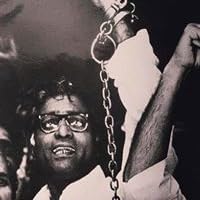
Dr. Bhabendra Nath Saikia (Assamese: ড˚ ভবেন্দ্ৰ নাথ শইকীয়া; 1932– 2003) is recognised as one of the top ranking writers of Assam. Many stories have been translated into English, Bengali, Hindi, Telugu, Malayalam, Marathi, Gujarati etc. He had also written a large number of plays for All India Radio (AIR). The plays Kolahal, Durbhiksha and Itihaas were taken up by the AIR as national plays. Kolahal was selected for broadcast from foreign centres. He has been associated actively with the stage as a playwrit and director. He has written many plays for 'Mobile Theatre' of Assam, and a number of One Act Plays.
He had directed eight feature films. These films have been screened at International Film Festivals held at various places such as Cannes, Madras, Hyderabad, New Delhi, Bangalore, Calcutta, Karlovy Vary (Czechoslovakia), Nantes (France), Valladolid (Spain), Algiers (Algeria), Pyong Yong (North Korea), Sydney, Munich, Montreal and Toronto. Has also directed one episode of a Doordarshan series on Rabindra Nath Tagore's stories in Hindi. Seven out of his eight films have been selected for Indian Panorama Section of the International Film Festival of India. • He received the Sahitya Akademi (India) Award in 1976, the Rajat Kamal Award of the Government of India for the film Sandhyarag in 1978, Anirban in 1981,Agnisnan in 1985, Kolahal in 1988, Sarothi in 1992, Abartan in 1994 and for Itihaas in 1996. He was adjudged as one of the "Twenty one Great Assamese Persons of the twentieth century" in a literary weekly news magazine of Assam.
Bhabendra Nath Saikia was born on 20 February 1932 at Nagaon town. He passed his matriculation examination in 1948 and the Intermediate examination in Science in 1950, both with first division marks. He passed BSc Examination in 1952 with honours in Physics from the Cotton College of Gauhati University. He received a post graduate degree in Physics from the Presidency College of Calcutta University. He obtained his PhD in physics from the University of London in 1961. He also obtained a Diploma from the Imperial College of Science & Technology, London in 1961. He later worked as reader in Physics at the Gauhati University. He became a Member, Sangeet Natak Akademi, India.
Saikia edited the Prantik (প্ৰান্তিক), an Assamese monthly magazine, and a children's magazine named Xaphura (সঁফুৰা), both in the Assamese language. He was also the president of the Jyoti Chitraban which was for a long time the only film studio in Assam. He had the unique distinction of having won the National Awards for each of his seven Assamese films. For his services to the literature, culture and cinema of Assam, Dr Saikia was awarded the Padma Shri in 2001.
Having spent his childhood in poverty, Dr Saikia established the Aarohan Trust in Guwahati using the money he received from the Assam Valley Literary Award to provide free training to poor children interested in art, theatre and music. Dr. Saikia died on 13 August 2003 in Guwahati and is survived by his wife Preeti Saikia and two daughters. The Assam Government has named a road in Guwahati and a state award in his honour.
Hello people! After procrastinating for 16 days. I picked this one after my pals finished and shared their views. I couldn’t hold on anymore there and started reading and finished. Uffff!!! Just a great book, and it turned out to be my best read of the month.
The hour before dawn is translated from Assamese. After a long time, read a strong female character that stands still in my heart forever. What a life Menoka had!
Set in the backdrop of beautiful Assam Village, Menoka, who got married to Mohikanto, had four children. Suddenly, after a decade, her husband brought a second wife who is named Kiron. At this, what we will do if we were in her place. Of course, we would have divorced and moved on with life. But Menoka never did that; instead, she had evolved into a fiercely strong woman.
A line she said to her son:
“Keep your thoughts to yourself. Don’t try to explain right and wrong, good and bad to me. What I have thought, what I have done, is right. I have said this before, and I repeat myself now. If you think your mother has done something wrong, break all ties with her. I’d rather let go of you than my PRINCIPLES. You can’t make me budge even so much.”
The author wrote this back in 1980; the story takes you to the pre-independence era. One might feel a usual bit of story, but no, it was Menoka who arose and started exploring the world in a new way. Indro, you are a man who matured very young, and you understood and spoke openly with your mind. A warm hug for you, man.
A must-read for everyone who wishes to know about Menoka’s life. Finally, after a year, I got back to my favorite genre, which is none other than translated literature.
Just a few short words, for I cannot described this book's brilliance at length for being speechless. Just—
Stunningly radical. An otherwise scandalous tale becomes stripped of its sensationalism to bask in its psychological glory: a tale of female rage and revenge, and of the pursuit of unequivocal justice (within marriage, or without), even by amoral means if need be.
Few Indian novels have managed to capture a woman's pain, desperation, and strength in the way this novel did, not even today. The resolution and ultimate boldness of the strong-willed Menaka will continue to ring through Indian literature.
The premise? It is the 1930s. Middle-aged Menaka's husband, a wealthy businessman whose money and attendant ego has gone to his head, decides to get a younger second wife. Menaka (in a trajectory that is more than a little reminiscent of the classical Medea), who has never taken a decision in her life hitherto, now decides to enact revenge. Her actions turn family and society into ashes, and haunt (not to mention her husband) her young son for decades to come.
I believe অন্তৰীপ has been translated into English, but nothing compares to the unaltered prose of Dr. Saikia.
Some books we plan to read strategically based on our moods and needs, but a few others land up in our lives unplanned to change our entire perspective. One such book that made me thank my stars (metaphorically) for accidentally uncovering a gem is this one. There is no doubt I loved it more than I expected. How did I get this lucky? Really!
This is the story of Menoka, who devoted herself to her husband, Mohikanto, and their four lovely children, toiling every day and finding joy in little things in life. But she wonders where she must have faultered when Mohikanto brings home a young girl, Kiron, unannounced as his second wife. She breaks, she shatters, she screams within herself. But she never lets anyone see her wreckage. Instead, she grows resilient and makes a few decisions that will forever change her relationship with Mohikanto and her elder son, Indro. It is the story of the making of a matriarch, Menoka, who goes from a caring, innocent wife to a stronger, self-sufficient mother.
To imagine that a man wrote this book, that too in the 1980s, more so in an Indian regional language, gives me exceptional joy. I do a little happy dance whenever a male author depicts an assertive woman exceptionally for who she is. The story is so nuanced, and every person and even material things in the book seem to have a life and purpose. There is no doubt that Menoka has become my favourite protagonist for her bold, straightforward stance. But also, many other characters managed to impact my mind, including Chitra, Kiron, Poornima, Indro, Modon, and many others.
I am glad I discovered a treasure, and I recommend that all of you read it, too. It’s not just another coming-of-age story or multigenerational saga but a powerful tale of womanhood, sisterhood, and finding oneself among chaos.
I don't know what to think. This book made me lonely. It's a poignant sort of book. A slice of life view of a family and it's goings-on in a village in Assam. It was very nice to read about pre-independence life in this Assamese village. The writing was amazing and just brought the scenes to life. The characterisation was very good. I felt sorry for Mohikanto as well. Just like real life, where one can't really be angry at anyone in these situations. This society was quite patriarchal, just like the Hindu society of the rest of India.
An intense read. Set in a small Assam village of pre-Independence India, The Hour before Dawn is a deeply moving story of a strong-willed woman's reaction to her husband's betrayal and second marriage. How she copes with the development and sticks to her decisions form the central plot of the story.