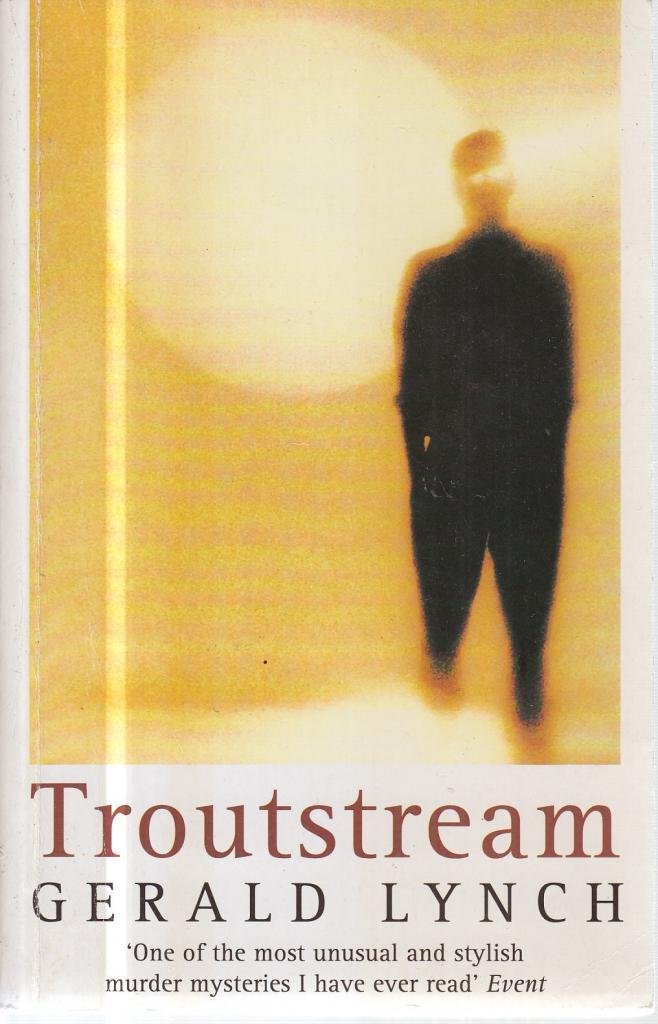
Explores the nature of evil, as it affects the life of a sleepy suburban community. Beneath the staid surface of community life rages a riot of tensions, rivalries and suspicions. Does Iris O'Connor really see evil in her tea-leaves Can young Michael, blind and psychic, sense its presence also
Gerald Lynch was born on a farm at Lough Egish in Co. Monaghan, Ireland, and grew up in Canada. His latest novel is *Plaguing Jake,* published in 2024 by At Bay Press. *The Dying Detective* (2020) was the concluding novel of a trilogy comprising *Omphalos* and *Missing Children.* These novels were preceded by *Troutstream,* *Exotic Dancers,* and two books of short stories, *Kisbey* and *One’s Company.* He has published numerous short stories, essays, and reviews, as well as having edited a number of books. He has also authored two books of non-fiction, *Stephen Leacock: Humour and Humanity* and *The One and the Many: Canadian Short Story Cycles.* He has been the recipient of a few awards, including the gold award for short fiction in Canada’s National Magazine Awards.
I’ve been wanting to read this novel since not long after it came out in 1995 because it is set in a fictionalised version of the neighbourhood of Ottawa (the eponymous Troutstream) where I grew up. In some ways, reading this was a bit of a nostalgia trip – the Garden Homes area, connected by forested paths, copies the well-to-do part north of the main road, the Complex of the south side matches the middle-class area where I lived, and the Project (also on the south side, right next to the shopping plaza), matches the subsidised housing development and plaza that actually existed there (they still do – my old neighbourhood hasn’t changed much in the 25 years since I moved away). Every location described – the hardware store, the donut shop, the video rental place, and even the British pub, were placed exactly where they really were and loosely described as I remember them. Mr. Lynch even had the pub owner print his own “newsletters” that were little more than pamphlets full of anti-government and anti-immigrant vitriol – which again matches my memory of the real pub and its owner in the 1980s (the pub’s still there, but the original owner is long gone). Full marks for capturing the mood of the place, but how about the story itself?
Troutstream is described by some reviewers as “darkly satirical” novel that looks at suburban evil in a community at war with itself. Perhaps as a commentary on modern suburban life this is accurate; however, I don’t believe there is anything in the portrayal of the characters or the prevailing class divide as exemplified in the various neighbourhoods of Troutstream and how that affects their life circumstances and the choices they make, that makes the novel stand out. I enjoy dry, British humour but I didn’t find this particularly humorous, nor did I find many of the characters sympathetic – most came across as aloof and very self-interested. Although there is some overlap between some of the characters’ storylines, the overarching narrative (a murder of a local teen) doesn’t tie them all together and I finished with the feeling that I read a collection of vignettes that happened to take place in a single neighbourhood. Frankly, I skimmed the last 40 pages because it all seemed to fall apart and I was looking for a satisfying wrap-up of the various storylines.
As an author I respect Mr. Lynch’s effort, but it just didn’t work for me.