From the highly acclaimed author of Little Growing Up in the Nation of Islam comes a taboo-breaking memoir about a Muslim girl who explores her freedom through the expression of her sensuality and sex, defying the cultural boundaries that denied her a full life.
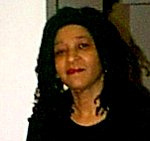
Do Me Twice is the triumphant life story of the highly intelligent, courageous, and charismatic Sonsyrea Tate as she breaks the cultural and religious molds set in place by her upbringing. A former African American Muslim, Tate has raised awareness for that community by bringing personal and enlightening answers to a curious audience.
Who are African American Muslims? What do they stand for and why? How far-reaching are their lifestyle choices? With the global focus on terrorism and interest in the Islamic state, readers are hungry for answers that aren't influenced by government spin or newscast ratings. They will find those answers here.
Do Me Twice inspires young women while exploring Tate's conscious separation from Islam, her abusive husband, and the prejudices and stereotypes set on her by others' misconceptions.
Author and journalist Sonsyrea Tate wrote in this 2007 memoir (which is a follow-up to her previous book, ‘Little X: Growing Up in the Nation of Islam’), “I am reminded of when, as an African-American Muslim child I had been taught to despise America. Islam was the fastest-growing religion in the United States through the 1990s, and most of the growth the result of African Americans converting to the Arab-born religion. I was a part of the first wave of new American Muslims back in the 1970s. The second wave of conversions in the 1990s did not surprise me. I was three years old when I was first taught in my Muslim school---Muhammad’s University of Islam in Washington D.C.---that America was one of the most wicked and vile nations on earth, one that would someday be destroyed. I was nine when my Muslim school closed down and I entered a public school but was told at home to reject the morning Pledge of Allegiance. I would not stand, place my hand over my heart, and pledge allegiance to the flag of the United States of America. I sat out the Pledge of Allegiance every morning and tried to explain to some of my 6th grade African-American classmates why they should reject it, too.” (Pg. 1)
She continues, “I need to tell why, after 20 years of Muslim girl training, I married the Muslim man next door but quickly divorced him after marital rape and his infidelity proved too much even for me, who had been trained to be a stereotypical domesticated little Muslim woman. Free from the marriage, I rolled over men one after the other for a time, and three men in one week did not strike me as being nasty, unhealthy, stupid, or any of the things my friends said they were because sex was something to do to express myself now. Sex was for me no more than stress relief at the end of a long day working in a job I’d dreamed of as a newspaper reporter.” (Pg. 2)
She goes on, “I need to tell how I found my humanity… This is a story I need to tell as much as the world suddenly needs to know more about Muslim women behind the veil. People need to know how real and humane individuals who happen to have been born into Islam really are. I was raised as a Muslim girl in the African-American community, but mine really is a universal coming-of-age story. I began questioning Islam by the time I was twelve, and by 21 I was sure Islam was not for me. My transformation out of Islam coincided with my coming of age as an African-American woman, and the story of that transformation is a story I feel compelled to share.” (Pg. 2)
She adds, “I want to tell of my choice to marry into a family of journalists or authors or politicos rather than a traditional family of parents and children… I need to tell the story that shows I’m no forsaken sinner because I turned from Islam. Thank God in America, so-called apostates aren’t executed or imprisoned as they are in some Muslim countries. For years I was afraid Allah would reach down from heaven and strike me dead for leaving Islam…. I want to tell how I came to know that faith and religious doctrines are not one and the same… When the world as I knew it, the Nation of Islam that was my life, crumbled after the death of Elijah Muhammed in 1975, I was only nine, but it was the death of my innocence in many ways. This is a story I must tell… Here is the story of my life after Islam. It is a story of cultures clashing---my Islamic upbringing clashing with opportunities I was entitled to as a young African-American, and both of these cultures clashing with my urban ghetto life.” (Pg. 3-5)
She recounts in Chapter 1, “Ron [her future husband] had been in and out of juvenile detention centers and jail since he was fourteen. The last time he was in, charged with attempted robbery and attempted murder, he converted to Islam and changed his name to Dawud. Of course I didn’t know the extent of his lawlessness… when I embraced him. Ron considered himself my life coach or street teacher in some ways. Yes, he was my first sex partner. His stepfather told him I looked like an upright little girl and he needed to turn me out. He did that promptly, and I made him marry me shortly after by guilt-tripping him.” (Pg. 7)
Soon enough, she was pregnant, and had an abortion. “I felt more powerful after the abortion. I saved a little person from a messed-up life…. I didn’t tell [Ron] about the abortion or the [birth control] pills… I was thinking of marrying him to make sex legal… Over the next twenty years, I would think about the abortion from time to time, like when I was a reporter covering abortion marches… and when I was 35 and realizing maybe I was never going to get married again or have kids. But I looked back and thanked God that I had the opportunity to choose a different life for myself.” (Pg. 16-17)
She states, “All Ron’s friends clearly were hustlers, and proud of it. It was in their swagger, their steely eyes, their general mannerisms… Besides, it wasn’t really stealing to take back a little something from the large corporations that exploit poor folks’ labor, paying minimum wage with little or no benefits… And Ron’s friends respected me.” (Pg. 59-60)
She notes, “In Islam, Muslims jumped in and out of marriages like regular folks jump in and out of romances. It was common for men and women to marry three and four times because they married for the wrong reasons… When I got through with Ron, it would be a long time before I put some paperwork around a mess and call it a marriage… If there really was a God, all I needed Him to do at this point was get me out of this mess with Ron.” (Pg. 68-69)
She reports, “I had been raised in the Nation of Islam from ages 3 through 10, then practiced the Sunna Islam… until I was about 18. Then a new interpretation of the Quran was published and I was told the old Sunna Islam was questionable… The new interpretation … claimed that the number [age] 19 was God’s most important number, not the number 3, as we initially believed. So much nonsense. I wasn’t sure I wanted to be bothered with any religion at all.” (Pg. 95) Later, she adds, “I no longer called myself a Muslim once I got to college. I might mention my Muslim upbringing when the occasion called for it. But, I really didn’t feel like a Muslim anymore. I felt even less affinity for Islam after my fiasco of a marriage to Ron. We both had misused or innocently misunderstood the religion to destructive ends.” (Pg. 97)
She explains, “As far as religion went, I figured I could do without it. Increasingly, I became more interested in the spirit of the rules and regulations I had been trained in through the Nation of Islam than through the practice of Sunni (Orthodox) Islam… I would realize… that training our thoughts on living in harmony with others by praying five times a day could be as ineffective as once-a-week worship if the believers believed in the rituals more than the spirit of those rituals.” (Pg. 103)
Later, she adds, “I believed there must be a Being, a Force in the world bigger than myself. But I wasn’t sure there was a sure way to access it… I was losing my faith in religion for sure, but maybe there was a God somewhere. For the most part, I tried not to think about it. There was so much I could do with my life other than sitting in the house reading and learning about... God’s purpose for my life in particular… The adults in my Muslim community had not yet evolved to understand that just because God or nature designed my body to carry embryos… It did not mean that motherhood would be the … highest achievement I as a woman could aspire to.” (Pg. 141-142)
She recalls, “The rift between Louis Farrakhan and [Elijah Muhammad’s son] Warith Deen Muhammad had been nasty and public… Nation of Islam members berated former members for embracing the traditions of Arabs who denounced Nation of Islam theology as heresy, and former Nation of Islam Muslims who converted to Sunni Islam condemned those who lined up behind Farrakhan to rebuild the old Nation of Islam as people stuck in the past. I did not realize at that time that at least three other Nation of Islam splinter groups had formed, all claiming to be the real ‘Original N.O.I.’ But Farrakhan had, by far, the largest following…” (Pg. 161) She observes, “Come to think of it, I couldn’t remember us hating the Jews when I was in the Nation of Islam. This was new race-baiting for Farrakhan. In the Nation of Islam under … Elijah Muhammad we opposed white people across the board, not singling out Jews. That would’ve been too much to put on this brother trying to pull me into a Farrakhan lecture now.” (Pg. 164)
She explains, “If I was going to return to … any religion, it would be Christianity, the religion of my grandparents and great-grandparents… and I would be careful not to confuse what I was doing culturally with some divine mandate from God.” (Pg. 165-166) Later, she concludes, “By now, I felt like it was all good. I mean it had all worked together for good, just like the good book says.” (Pg. 266)
This book will be of less interest than her first book for those mostly interested in her American Islam and NOI experiences (rather than her own sexual awakenings, etc.).
Sonsyrea Tate was raised in a ten children, devout Muslim family. Sonsyrea's mother thought that it was a woman's duty to take care of her family and that having ten children was a blessing from Allah. As Sonsyrea aged, she began to question the wisdom of having children that you can barely afford to take care of. In their household, it was the oldest daughter's duty to help with the other children and as Sonsyrea grew older this caused problems between she and her mother. As the family struggled to survive, she thought that it was unwise for her mother to not step up to the plate and get a job to help with the expenses of living; this caused their personalities to clash. Sonsyrea was determined to go to college and have a career and not have a house full of children, as did her mother. Not only was Sonsyrea dealing with the problems between her mother and herself, but Sonsyrea's favorite uncle was dying and to make matters worse her father was arrested for dealing drugs, causing the family even more financial problems. Just as most religions teach that fornication is wrong so does Islam. Dealing with her sexuality became a major problem . In order to have guilt-free sex, Sonsyrea married at a young age. She un-wisely married a man in constant trouble with the law.
I admire Sonsyrea because she did not let past mistakes ruin her life and went on to get the career that she wanted. The problem that I had with this offering was that it seemed to be written out of sequence. And she could have put in a little more excitement; this did not stop me from receiving the point of view that she was making. This book was an uncorrected proof so if she gets the chapters in better order it will be an enjoyable read.
3.5 stars In a bid to run through by paperback tbr, I started a reading challenge. This book was selected for " a genre you never or rarely read." I've often defended this book as not being about sex because of its name. But I think I was wrong. However, I must say I like her take on female sexuality. I enjoyed that. The book seemed to drag initially, but some parts were really interesting. I'm a bit undecided about keeping the book, but I think I will for the sake of our shared beliefs in female sexuality.
little disjointed, and being somewhat of a cynic I wasn't surprised by anything in the book. Her courage regarding her sex life, having it and especially writing about it, is truly admirable considering how judgemental people tend to be, not just Muslims by any stretch! The ending was uplifting, overall an enjoyable read.
A moving testimony of a clash of religions in an individual and liberation from within. Sonyrea puts across what most people undergo during puberty and youth. She is one of the best authors I have ever read. Please get a copy, you wont put this book down when you start reading.
I absolutely love that book. That book really open my eyes to what really see what the life in Islam is. Absolutely would recommend that book to a friend, very good book.