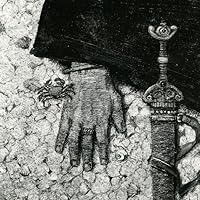
In April of 1968, at the age of thirty-three, Henry Dumas was shot and killed by a New York Transit Authority Policeman at 125th Street Station in a case of "mistaken identity." At the time of his death, he had already finished several manuscripts of poetry and short stories.
Dumas' poetry, short fiction, and novels have been published posthumously in large part due to the efforts of Eugene Redmond, Toni Morrison, and Quincy Troupe. Poetry for My People first appeared in 1970 and was later published as Play Ebony, Play Ivory. When Play Ebony, Play Ivory appeared in 1974, Julius Lester in the New York Times Book Review called Dumas "the most original Afro-American poet of the sixties." Dumas' first collection of short fiction, Arks of Bones and Other Stories, was first published in 1974. Redmond has also helped to bring out an unfinished novel, Jonah and the Green Stone (1976), as well as the collections Rope of Wind and Other Stories (1979), Goodbye, Sweetwater (1988), and Knees of a Natural Man: The Selected Poetry of Henry Dumas (1989). Authors including James Baldwin, Gwendolyn Brooks, and Maya Angelou have celebrated his writing for its mixture of natural and supernatural phenomena, music, beauty, and revolutionary politics.
I always enjoy being introduced to an author's canon first through a selected works collection as it allows me to identify what era of their work I am most likely to enjoy. Duma's first two poetry books have firmly made it to my "must-read" list and I cannot wait for the opportunity to explore his non-poetic pieces. It is a tragedy that the world does not have more of Dumas' work and that he has not received greater recognition.
Dumas' ability to construct poems in a wide range of voices that reflect different socio-economic backgrounds and perspectives shows him to be a master of language. A strong, socially conscious storyteller who effortlessly incorporates musical elements into his work, Dumas manages in his poetry to touch on everything from the romantic and sensual to the harshness of being a minority in the United States. This is the kind of collection that begs you to find a quiet corner to read it from as you take in the weight of Dumas' words.
Poems that really stood out to me: "Hunt," "Son of Msippi," "Somnus," "Island Within Island," "My Little Boy," "Rose Jungle," "A Song of Flesh," "Love Song," "Tis of Thee," Concentration Camp Blues," "Mississippi Song," "Take This River," "Fingers," "America," "Kef 27," "Kef 2," "Kef 30," "Ikef 18: Breathe with Me," "Shaba," "Saba: Joy," "East Saint Hell," "Brown Sound"
Monumental gathering of poems from Henry Dumas, an overlooked and nearly lost legend and among the Founders of the 1960's Black Arts Movement. His work is spare as a razor blade and equally sharp. Important and powerful work.
I'd never heard of him; most people don't. A widely read poet friend gifted me this and what a discovery for me it was.
A beautiful book. The spacing, the crisp outlines, sharp edges, the reverent and impassioned introduction by a poet who knew him. Dumas didn't publish any books, just things in small probably out of print journals during his lifetime. Which, mysteriously, was cut short by a NYC policeman who shot him in 1968 while he was walking through a turnstile. No one quite knows what the fuck happened there, and it's not the kind of thing you hear of happening every day. Or is it, now?
And what a brutal robbery that was. These poems have a cinematic scope even though their lines are relatively short. Resonant. The terms come from Africa and Arabia and the blues and almost a haiku-like sense of satori, of spontaneous impressions that are nevertheless held together by profound thought. They are so musical, speechlike but with soft insistent rhythms, like the rain.
Here's one:
Mississippi Song
I was a mist in the caverns of your mind. I was without shape, without sound, without color, without depth, without voice, and then I heard distant voices moaning in the night, and I felt my people calling me.
Heated, I expanded. I broke your skull-bone.
And I found your face looking at me: dark lines waiting for the light.
Come, my people, we have work to do. All the days of my capture I dreamed of seeing you.
Come, we will put the bones together. We will stand in the sun and make a sound with uplifted voices. We will let the sun splatter a thousand colors over our skins.
We will reach down into our souls and bring up the son of man. We will call the world by our name. We will give the world our voice. We will sing. And when we sing, they will hear us, and they will remember the days of calling out, the days of groaning, and they will sing with us, and then I will say:
I was mist. Now I am water.
Damn, it just felt good to type that just now. I also really love these short, pithy, imagistic things he does.
Fingers
Between the great silver veil of the water moon and the thirsty hot soil of the earth valley,
I touched you softly with fingers of rain.
Nice, right?
Thought
Lord, how I wept when I came upon a land whose people thought that they could make boats sail the stormy ocean between the color of my skin and my humanity.
Or try this one out for size if you'd like...
Valentines
Forgive me if I have not sent you a valentine but I thought you knew that you already have my heart Here take the space where my heart goes I give that to you too
Or...
Image
The universe shrank when you went away. Everytime I thought your name, stars fell upon me.
Give this stately, subtle, and sinuous collection a steady, attentive, appreciative read. There's much more where this came from. And yet, there isn't anything left, either. Bullshit violent reasons. A fucking travesty. Though then at the same time the triumph of collation. Which is something.
Thought
One of the greatest roles ever created by Western man has been the role of "Negro."
One of the greatest actors to play the role has been the "Nigger."
Ouch, if it hurts, then that's when you know you're doing it right.