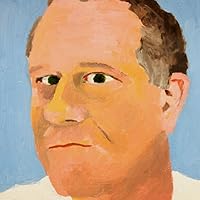
Gerhard Richter, born in Dresden in 1932, is one of the foremost painters of his generation. A great deal has been written about the bewildering heterogeneity of his work over the past 30 years. His seemingly willful and defiant movement between abstract and figurative modes of representation and his seemingly inconsistent methods of applying paint to canvas are consistent, if nothing else, with Richter himself—the master of the paradoxical statement. Although he has emphasized that he is first a painter and has never been a theorist, he has, throughout his career issued provocative, contentious, and memorable statements.
Over seven years in preparation, this book makes available a selection of Richter's texts from all periods of his career, many translated for the first time. There are public statements about specific exhibitions, private reflections drawn from personal correspondence, answers to questions posed by critics, and excerpts from journals discussing the intentions, subjects, methods, and sources of his works from various periods. The writings are accompanied by 87 biographical illustrations of paintings from the artist's personal collection.
Published in association with the Anthony d'Offay Gallery, London
German visual artist. Richter has produced abstract as well as photorealistic paintings, and also photographs and glass pieces. He is widely regarded as one of the most important contemporary German artists and several of his works have set record prices at auction.
This book's influence far outweighs its actual content. It is foremost a meditative experience. It could be that it just feels good to be reading Gerhard Richter, and that his gravitas rubs off through the book. Whatever the reason, I inexplicably often reach for this book when I'm stuck and, inexplicably, it works.
I picked this up after listening to a lecture at the National Museum of Art in D.C. which inspired me to attempt to paint again. Unfortunately, I deployed to Iraq before I was able to read the book, so I read it while there, but all I had were pencils and a notebook. I need to re-read it and pick up the brush again.
"Being authentic gets you nowhere. Every picture is authentic. The worst pictures are the ones that tell you what's up with the painter and with painting in general. That's what makes them so uninteresting." - Gerhard Richter on autofiction
Cool and focused -- Richter's writings over this span of 30 years display a remarkable consistency, one I have a hard time believing anyone actually experiences. His writings on ideology are a great way into the work (though, it's fair to say that his anti-ideological stance exhibits itself through the language of ideology). His explanations of his choices feel very familiar, though I couldn't help but wonder if, based on his criteria -- criteria I feel I can agree with on most occasions -- Richter would not particularly like my work, or the work of most of my friends for that matter. Regardless, his assesments of Anselm Kiefer and George Baselitz are right on, and the October 18, 1977 series is, taken as a whole, one of the greatest series of paintings made during my lifetime.
This book should be required reading in every art program nationwide.
The first half of the book is a little tedious - he's younger and combative/defensive. The interviews are mostly repetitious, but then around 1980 things get more interesting...
Although I greatly admire Richter, this book has a few good, earnest tidbits from daily notes, and many usually boring interviews with journalists who ask inane questions. Every few pages there is another picture of Richter. The artist left East Germany and came to Dusseldorf to school. So this seems to generate many political questions, logically so. His favorite artist is Joseph Beuys, who founded the Fluxus Pop movement. This does not conform at all with the Richter we know through his paintings. Richter is colorful, creative, serious, and motivated to keep painting...so unlike Fluxus.
He's one of the most horrible painters I've ever read about. He's not really an artist, he's a business man who sells art.[return]His work is striking and empty the first time I see it. The second time I view it the work is empty and depressing.[return]He seems to be proud of his nihilism. I'm a progressive idealist who values humor so Richter is opposite of me.
I'm generally a fan of letters & notes, and Richter is definitely funny & paradoxical. Getting this book for the photos alone is worth it. But he does tend to repeat himself, as anyone would in their private philosophizing, so I'm not sure if I'll make it the whole way through.