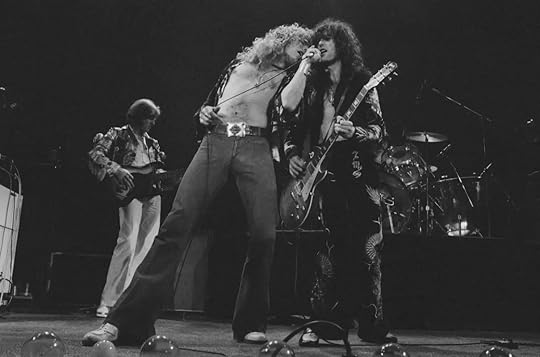
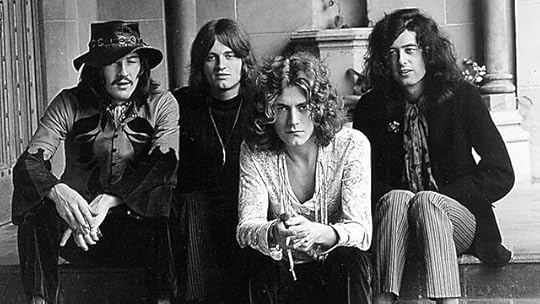
Led Zeppelin a enflammé et révolutionné le monde de la musique dans les années soixante-dix. Ils sont les parrains du Heavy Metal et il sont entrés dans la légende. Entre histoire et mythe, rumeurs, scandales et chronique patiemment construite, cet ouvrage retrace avec brio les grandes heures de Led Zeppelin, de l'adolescence des membres jusqu'à l'entrée du groupe au Hall of Fame. Hammer of the Gods est la biographie de référence du groupe et a connu un succès retentissant. Ele est accompagnée d'une bibliographie et d'une discographie détaillées.
Stephen Davis is is a rock journalist and biographer, having written numerous bestsellers on rock bands, including the smash hit Hammer of the Gods. He lives in Boston.
Librarians note: There is more than one author in the Goodreads database with this name.
The age-old question: Beatles or The Rolling Stones? Me, an intellectual: Led Zeppelin.
A couple of months back, I stumbled upon a YouTube video titled The Curse of Led Zeppelin | Music's Dark Side, made by Mr. Mythos. There's nothing that feeds my life force quite like some scandalous rock gossip, which is why I decided to dive into this book. I knew Led Zeppelin was known for their awesome music, banging groupies, and wrecking hotel rooms, but I had no clue they were into FREAKING WITCHCRAFT.
While other rock stars were off indulging in their wild lifestyles, Jimmy Page was diving into the occult and applying to Hogwarts. Something wicked this way comes, indeed.
Allegedly.
And these rumors weren't even so bad, considering the times: America, especially Southern California, 1969. Nixon in the White House; genocide in Vietnam; Charles Manson out in Death Valley, frustrated by the music business, waiting to send one of his rat patrols of field hippies into Beverly Hills to kill record producers and chop them up. These were witchy times. Led Zeppelin's antics were merely the sadistic little games of young English artistes loose in the United States with dirty minds and unlimited resources. They set an unattainable standard of depravity, mystique, luxury, and excess for the rock bands that tried to follow them, but by the cold light of day they were all really quite nice, even gentlemen. But there was always something else whispered about Led Zeppelin, something more sinister than a rock group's after-hours vices.
If you've had the chance to listen to Led Zeppelin, you might have noticed that their music draws a lot from English and Nordic mythology. They even created a few tracks that pay homage to J.R.R. Tolkien's "The Lord of the Rings" series. If you happen to own any Led Zeppelin vinyl records, you may have spotted some intriguing symbols and mystical phrases on them.
According to the legend, Jimmy Page convinced his bandmates to participate in a ritual that would ultimately come back to bite them. They were also supposedly cursed by someone who felt slighted by them. I’m not entirely convinced by these stories, but they certainly add to the enigmatic aura surrounding Led Zeppelin. What’s undeniable is that the band experienced some bizarre occurrences, but whether these were due to supernatural influences or simply their wild rock 'n' roll lifestyle is still up for discussion.
★ Jimmy's bandmates when he told them he sold their souls to you-know-who:
Allegedly.
Jimmy Page owned a famous manor in the Scottish Highlands, which many who have visited say is both haunted and cursed. I won't mention its name because it gives me the creeps, but you can look it up if you're curious. None of the owners have stayed for long, and some have even met untimely ends there under mysterious conditions. Guests and staff have reported seeing ghostly figures during twilight and nighttime. Even Jimmy Page, known for his interest in the unusual, only owned the place briefly and noped out of there as fast as possible.
Before diving into the unusual events, I’d like to take a moment to reflect on the origins of this legendary band and their lasting impact on the music scene. Led Zeppelin came together in London in 1968. Jimmy Page, the guitarist and founder of the band, was 24 years old. John Paul Jones, the bassist, was 22, while drummer John Bonham and lead vocalist Robert Plant were both 20.
What truly set this band apart was the extraordinary talent each member brought to the table. Jimmy Page is regarded as one of the greatest guitarists in history, alongside Jimi Hendrix, Eric Clapton, and Eddie Van Halen. John Bonham is celebrated as the greatest drummer, while Robert Plant, alongside Freddie Mercury and Mick Jagger, is regarded as the best rock frontman ever. John Paul Jones, the more reserved member of the group, showcases his incredible skills by mastering a wide range of instruments, including the bass guitar, electric organ, electric piano, harp, clavinet, keyboards, mandolin, guitar, ukulele, sitar, banjo, cello, and violin, among others.
I've dedicated so much time to writing about the occult that I hardly have any left to share the wild stories with the groupies and the hotel shenanigans. Perhaps it's for the best, as I wouldn't want to put you through any trauma, gentle reader. The book includes the notorious 'mud shark incident.' You might be wondering what a mud-shark has to do with Led Zeppelin. The story involves a few band members, a mud shark that John Bonham and the band's road manager caught during a tour, and a groupie. I won't spill the beans on the specifics but feel free to let your imagination run wild about what happened. It's hard to figure out which Led Zeppelin tales are real and which are just legends, but I have a feeling this one actually went down.
The most memorable moment in the book was when Lori Maddox discovered Bebe Buell (Liv Tyler's mom) in Jimmy Page's hotel room and dragged her out by her hair. 10/10 would read again.
★ John Paul Jones witnessing Jimmy Page playing with the occult, Robert Plant banging any woman with a pulse, and John Bonham drinking himself into an early grave:
Big props to JPJ for keeping it cool and steering clear of all the chaos.
Everybody around Led Zeppelin knew that John Paul Jones was its only real survivor. He hadn't died, or lost a child; he never got into hard drugs. Instead he retired to his farms with a great fortune and his dignity intact. From time to time, Jones' good luck was attributed to his refusal to join Led Zeppelin's legendary ritualistic pact.
Delving into the importance of Stairway to Heaven was incredibly fascinating, as many consider it the finest rock song ever composed. The woman in the song is a paradigm of Spenser's Faerie Queen, Robert Graves' White Goddess, and other famous Celtic heroines - the Lady of the Lake, Morgan La Fay, Diana of the Fields Greene, Rhiannon the Nightmare.
"All this success and fame," the elder Plant said, "what is it worth? It doesn't mean very much when you compare it to the love of a family."
Led Zeppelin does not permit its music in films or TV shows. However, they made exceptions for Almost Famous and School of Rock, for which I am grateful because I love both movies. Led Zeppelin ranks among the top 10 best-selling music artists of all time, alongside legends like The Beatles, Michael Jackson, Elvis Presley, Elton John, Madonna, Queen, Rihanna, Pink Floyd, and The Rolling Stones. They're known for their iconic songs like Stairway to Heaven, Immigrant Song, Kashmir, When the Levee Breaks, Babe I'm Gonna Leave You, Over the Hills and Far Away, Since I've Been Loving You, Dazed and Confused, Whole Lotta Love, Going to California, Black Dog, That's the Way, What Is and What Should Never Be, Ten Years Gone, The Rain Song, Achilles Last Stand, In My Time of Dying, The Song Remains the Same, Houses of the Holy and many more.
Led Zeppelin soared to incredible heights, but they were soon plagued by misfortunes. Jimmy Page became consumed by drugs and alcohol, while John Bonham struggled with his own battles with alcohol. Robert Plant survived several serious car accidents. However, the most devastating blow came in 1977 when Robert's cherished son, Karac, passed away at just five years old. Then, in 1980, John Bonham tragically died from asphyxiation due to vomit at the age of 32. This marked the end of Led Zeppelin. Although the band had weathered many storms, the remaining members felt they could not continue without John Bonham, believing it would be impossible to replace him. The group may have dissolved, yet the myths and legends associated with them continued to persist.
Led Zeppelin is not the only musical act accused of making a deal with you-know-who. This theme has long been present in rock, blues, and metal music, with Robert Johnson being the most notable example. Rock music and its sub-genres have faced unprecedented levels of demonization and misunderstanding throughout history. Did Led Zeppelin truly tap into some mystical powers, or was that just a perception shaped by their image, lyrics, and album art? While Jimmy Page certainly had some unusual interests, can we really compare him to the rock n roll equivalent of Severus Snape? I wasn't as shocked or disgusted by this book as some other reviewers were, which makes me think I might be more messed up than I realized.
Word on the street had it that Robert Plant blamed Jimmy Page's occult dabbling for the disasters that had landed on Robert's family. Visibly distressed at allusions to the now fabled "curse" on Led Zeppelin and the suggestion that the band was now reaping its bad karma, Jimmy spoke in a barely audible whisper: "All that was really tasteless.... It's not karma at all. I don't see how the band would merit a karmic attack. All I or we have attempted to do is go out and really have a good time and please people at the same time."
Finally Jimmy was asked what exactly he wanted. Without missing a beat, Jimmy Page answered what he was looking for: "Power, mystery, and the hammer of the Gods."
I've heard it said that "rock'n'roll ain't pretty".
I never it expected it to be quite so repugnant, however. Read this book if you want more information than anybody needs about what goes on when young adults are allowed to have no limits absolutely.
I'd have to blame most of the raucous behavior on the road manager, Richard Cole, and the band's manager, Peter Grant. I'd only been a casual fan of Led Zeppelin (collected all their cds but preferred my 70's hard rock a bit more Purple or Black), so I had not previously heard of either of these guys. Between the two of them, they basically set the musicians of Zeppelin as idiot kings, able to satisfy every whim and never worry about consequences. Not a good recipe.
I'd read a similar account in the Alice Cooper book (Billion Dollar Baby). Their manager, Shep Gordon, used this tactic to vault the band to stardom. If you act like stars, and are treated like stars, then the confidence you gain might actually make it true. In Alice Cooper's case, it was also to the eventual detriment to the band. Only Alice himself (a true sheep-in-wolves-clothing) was able to get past these excesses, although his battles with alcoholism were not minor.
What price, fame?
And in Led Zeppelin's case, you can read in this book how things fell apart. Jimmy Page starts out as quite a nice young man, wise with session experience and seemingly smart enough not to get spaced out like the elder Yardbirds he had joined. In fact, it's his vision that helped allow Zeppelin to craft such superior-quality music.
But you'll find out too many disappointing things about Jimmy as you read the book to its end.
Robert Plant comes across as a pretty nice guy. He goes wild at first but does seem to rein things in a bit as time goes on.
John Paul Jones may be the only one to retain his good sense throughout the band's tenure. Not coincidentally, the book speaks at length about the distance he kept from the band. He was not one to spend his time with the carousing crew like Bonzo.
And Bonham... what can be said? Described as a nice guy with a heart of gold when he's sober, he's probably the kind of guy who would have troubles fitting in (due to his temper and love of drink) in an ordinary life. But with Richard Cole and Peter Grant around to keep encouraging the worst sort of behavior, and also to help him avoid any serious consequences, it's no surprise that he eventually met with tragedy.
But enough with the excesses of rock'n'roll. Being only a casual fan, I did learn quite a bit about the band.
- in the early days of recording rock groups, the producer would bring in the group of choice. Often he'd have a song picked out for them. If some of the musicians couldn't play their parts quickly enough, a session musician would immediately step in to finish the track. That's how Jimmy Page (pre-Led Zeppelin) got such great experience. (It's also the way that Ritchie Blackmore got his start before Deep Purple, but that's another story.)
- Jimmy's first "real" group was the Yardbirds, but he joined at their zenith. They fell apart, leaving him the name. In fact, the first set of shows that Led Zeppelin did was under the name "The New Yardbirds".
[image error]
- Led Zeppelin really did steal a lot of musical ideas. They crafted their songs well, but it would have been appropriate to share some credit.
- Led Zeppelin's double album "Physical Grafitti" was not all recorded at the same time. Nearly half of it were tracks unused from previous sessions. It's probably not that much of a secret to diehard fans, but it was news to me.
- Led Zeppelin was unlike other landmark 70's hard rock bands (Deep Purple and Black Sabbath) because they were highly famous almost at the start. Jimmy Page was able to take his session experience and his Yardbirds experience and use that to orchestrate a band with a lot of appeal and drive right from the start. What's my proof? I do have a quite a few early bootlegs that I've collected over the internet in the past 10 years, and I've always wondered why Led Zeppelin had more available than other notable bands. Right from the start, fans were appreciating Zeppelin enough to archive their every performance. Other bands have far fewer such recordings available in their early years. It's all due to Jimmy Page, his previous experience, and his uncanny musical vision of the new supergroup Led Zeppelin.
** Deep Purple had a similar story in that Ritchie Blackmore also had a lot of session experience, but without strong group experience (like Jimmy in the Yardbirds), the first incarnation of Deep Purple (with singer Rod Evans) was basically the training ground for when the vision would be clarified with new singer Ian Gillan (who brought with him experience with Episode Six, to add to organist Jon Lord's experience with the Artwoods).
** Black Sabbath had no such session experience to draw on, nor any previous group experience. They benefited from a strong vision of their musical style from their first recorded output. But it takes time for a following to build up, and hard rock had no radio airplay at that time.
One Final Word -------------- Many reviewers here have critized the author's "poor writing skills". I'd have to argue, but I'll pick my spots carefully.
If you dwell on the list of hedonistic excesses, the book gets monotonous. However, if you go back and reread only those sections that deal with the songs (or the performances themselves), you'll see that the author really has a way of describing the music in ways to make it come alive. Nearly every time the author was describing a song, I felt the urge to pull up that track from the album (or from the bootleg of the show he was describing) and listen to it. The author truly does have a skill in describing the music. It's by the far the best parts of the book, and worthy of your attention. Like writing numerous love scenes, it cannot be easy to write about numerous songs and make them come alive.
this was really a crappy book; i give it two stars because of the interesting but lifeless information it gave me. facts. they had a lot of groupies. they fucked some girl with a shark they caught fishing out the hotel window. they did cocaine, then heroin. bonham bought a lot of cars but couldn't drive. jimmy had a 14-year old girlfriend he kept locked in his hotel room. robert plant's dog's name was strider. john paul jones... played bass. some other shit. most of it interesting. some not.
but no insight into any of the guys in the band. at all. i don't even think the guy who wrote the book ever even talked to them. most of it seemed to be info from the manager and tour manager. this happened, then this, then we went here, there were girls, we fucked them with fishes, etc.
and john bonham was a DICK. and i was glad when he died. true fact. of course then the band broke up, because you need the insane violent drunk asshole to hold the band together by making everybody else bond with each other to deal with him while he's assaulting people and trying to rape female reporters and stewardesses. he's gone, suddenly there's no shared sense of purpose and everyone wanders off to do heroin and make shitty albums with david coverdale.
First of all, no rock and roll book could possibly be any more shocking then Motley Crue's The Dirt. lol. Hammer of the Gods is a must read for any Zep fan, really. A classic book about a classic band. It is completely up to date, until 2007 - that's only last year people! :P I really enjoyed it, I always wanted to know what was coming next and I just about cried when it reached 1980 and it was time to say goodbye to Bonzo. Maybe because I love the band so I'm emotionally attached anyway. I loved getting to know Jimmy and Robert and co. more, insight into their personalities and lives. Highly recommended for Zep fans and rock and roll fans in general. A must read!
Also, I'd like to note, that I read this book exactly forty years after the inception of the band: 1968-2008. Sweet.
Great band. Actually THE greatest ever, in my opinion. Not a great book. I've read it twice. Just not written very well. I'd like to find a better bio on Zeppelin and read it, if I could actually part from romance/erotica long enough!
This book is disappointing, which is odd because the story it tells should be so interesting. Unfortunately, the author simply doesn't write very well.
The story reads more like a list of events than a narrative, and to provide interest and emphasis his primary tool seems to be the use of italics.
The redeeming quality of the book is that the author takes each studio album and breaks it down song-by-song, citing influences and inspirations behind the music.
Otherwise, apart from the infamous 'shark incident' (which through his insipid writing he even manages to make sound dull) this book doesn't have much to offer.
I have to believe there are better Led Zeppelin books out there--if anyone knows of any, please let me know!
Ci sono due principali motivi per cui le mie aspettative erano alle stelle, e forse anche sopra: per prima cosa, i Led Zeppelin sono i Led Zeppelin, e ci sono poche cose, nel panorama sonoro, capaci di farmi andare fuori di testa come la loro musica; secondo, io dell'autore avevo già addentato la biografia di Jim Morrison, che ho adorato.
La verità è che questa lettura mi ha spiazzata, perché se da un lato intrattiene, raggiungendo quello che immagino fosse lo scopo finale, dall'altro il testo è veramente raffazzonato. Si parte bene con la giovinezza di Pagey, si prosegue in modo strano perché agli altri non viene dedicato lo stesso spazio. O meglio, non compaiono proprio, fino al battesimo Zeppelin. Ogni tanto, con un intervallo di circa trenta pagine, ci si ricorda con improvviso stupore che esisteva anche John Paul Jones. Si mescolano informazioni che vanno dal sensazionalismo e lo scandalo che da sempre accompagnano lo scenario rock, ad un elenco di tracce, date ed indirizzi. I punti davvero approfonditi sono purtroppo pochi, spesso ci vengono date informazioni anticipate che verranno poi riprese, in modo assolutamente disomogeneo e discontinuo, alcune pagine dopo. Clamorosamente, il libro si apre con la leggenda della presunta vendita delle anime della band a Satana, cosa che poi non verrà mai approfondita. All'apice della mia perplessità, ho letto un po'di recensioni e ho trovato molto spesso il mantra "poorly written", pensiero che in fin dei conti devo condividere.
Nonostante la stonatura di tutto questo intermezzo, la lettura di questo manifesto firmato Stephen Davis offre un piacevole svago e accompagna il lettore appassionato di musica sulle tracce della leggenda.
I grew up thinking Led Zeppelin was a bit over-rated and kinda bloated with their "Everyone gets a 20 minute solo" concert structure. I also thought that Robert Plant wanted to try to be "majestic-lion-man". I was wrong on one of 2 of those.
This book was great insight to not only how Zep operated, but how the whole music industry operated back in the 70s. I have a whole new respect for Zep as musicians, but the stories of debauchery is what makes this book.
Everyone has heard of the fish incident, but the things that you hear about that are somehow glossed over in music history are how Jimmy Page dated a 15 year old, how Bonzo would order 20 drinks at a time(crush TEN of them immediately and tear though the other ten in the next hour), how Jonsey was the true creative force in the band, how they lived double lives between England and LA. In England, they were all family men, in LA....things were different.
In their prime, Zep would play 3 hours shows, no opener with minimal stage setup. As time grew on, they still did 3 hours, but the stage setups got more and more elaborate(and if you ask me, exposed them to be attacked as bloated, over-spending rock stars) which made them an easy target for punk bands who all went after Zeppelin as an "establishment" band.
I also now see that Moby Dick wasn't a waste of time with a 20 minute drum solo. Bonzo was such a savage that the rest of the band had to get fake hotel rooms so he wouldnt crash on them all drunk and aggresive. I see now that that 20 minutes what Bonzo was banging away on drums was probibaly the only time the rest of the band could have a beer together in peace.
This is a great book if you love stories of debauchery. This book is allegedly also the first ever book that covers a band like this
Before I read this I was on what some might call a "Zeppelin kick", listening to only their music for about two months straight. This is what brought me to the book. Hammer of the Gods was recommended by a good friend of mine who is solely responsible for my delayed interest in the band. Initially wanting to read more about the music and lyrics Led Zeppelin is noted for, Stephen Davis offers a more complete appraisal of arguably one of the commercially successful and influential rock bands in history.
Apart from the anecdotes about the early formations of the band and each members' musical journeys, I found Davis' discussion of the musical roots of the band most fascinating. Tracing the bands's sound back to the Blues styling of black musicians in the Mississippi Delta, Davis offers a comprehensive survey of some of Zeppplin's early influences.
Hammer of the Gods covers everything from the band's infamous road antics to guitarists Jimmy Page's interest in Aleister Crowley and the occult. Well researched and informative, Hammer of the Gods is a must read for Zeppelin fans and those interested in music history.
'Hammer of the Gods' is the cult classic Led Zeppelin biography, famous for its unflinching portrayal of the band's legendary exploits with groupies, orgies, violence, hotel destruction, black magic, and drugs. With this book, Stephen Davis captures the true spirit of the "sex, drugs and rock and roll" philosophy of the 70s and vomits it up on the curb for all to see. If you have an aversion to seeing the word 'fuck' in print, or to reading descriptions of groupies getting fucked by dead sharks and whipped by live octopi, then definitely do not read Hammer of the Gods. Wild offstage behaviour aside, Stephen Davis expertly documents the bands musical career from their Yardbirds beginnings right through to their tragic breakup after John Bonham's death in 1980 and Page's descent into a daily heroin addiction that lasted seven years. Stephen Davis covers the musical side of the Led Zeppelin saga very well and dissects each of the albums they put out song by song, and also details the set lists of some of their key live performances out of the 600+ they performed during 1968-1971 and their tours in 1973, 1975, 1977, and 1979. The author has updated the book since its original publication to include extra chapters detailing the post-Zeppelin days, up to and including their 2007 reunion concert; however, most of this material is boring and unnecessary (it mainly focuses on Robert Plant's solo career because Page was too strung out on heroin and John Paul Jones was too much of a recluse for either of them to have done anything interesting) and I found myself speed reading the rest of it till I hit the finish line. Besides the boring new material (Part 3: Hammer of Robert Plant) the rock biography lives up to all its hype and made for a very entertaining travel read (I read it in Japan). I'll close by recommending a couple of Led Zeppelin live albums to buy or download should your ears be unfortunate enough to not have met with their music.
Ate this book up in just a few days. Haven't read something that quickly in awhile.
Sure, you don't really get into the heads of most of the musicians and this is why the book doesn't get five stars. You never feel you're getting all the dirt from the people in the band itself. Most of the information is from secondary sources who worked for the band or were on the fringes (groupies, managers, roadies, etc). Therefore, one is never really certain about its accuracy.
Sure, the book is just a bunch of shit Zeppelin did from one month or year to the next in chronological order, with the focus clearly on bad behaviour. That said, this is a great collection of pretty amazing stories, some of which will make you respect the band more, but more often less. Bonham, in particular, seems like a nasty prick. Page is a bizarre and oftentimes creepy dude. Plant comes away mostly unscathed. John Paul jones is....well, what is he? Mostly absent. All this darkness contibuted to some fantastic hard rock.
Anyway, enjoyed reading it and listening to the tunes along the way. Own some albums now I've never had before and am enjoying them loudly with the windows rolled down...
I must say that the Led Zeppelin 'family', mainly the manager, Peter Grant, Richard Cole and their road crew behaved more like a violent mob at times than a rock and roll entourage. The fact is they were bullies. They bullied their way on and off of stages, beat onlookers up for little or no reason, etc.
Luckily, this author does focus on the music somewhat and does offer some balance between the mayhem and the artistry of the band.
It was a rather quick read. I enjoyed most of it. My favorite parts: tyring to picture Jimmy Page working his 'black magic'; Page and Plant's admiration for Joni Mitchell; realizing that Bonham was much a bully and a 'beast' as he was an unbelievable drummer; John Paul Jones passed out with a drag queen in New Orleans; his less-known inclination to subvert others.
Despite enjoying the read and learning more about them, I still think of Robert Plant sounds like a blues muppet most of the time.
'Hammer of the Gods' may be a good place to start before moving on to a denser book on the band.
An absolute must read if you're a Led Zeppelin fan, and yes this was written for their fans--not the general public! The story of the red snapper hotel room incident as a for instance. This is the greatest band that has ever walked on this earth and that's a fact, not an opinion--just like McDonald's has the best fries. Again, a common-knowledge fact. When you read this you get a real gritty feel for the ins and outs of the rock industry and how these guys absolutely obliterated it, creating the new hard rock era we see today. Great (anything) don't do it the way everyone else does. They re-shape the world into the way they want it! That's what Led Zeppelin did!
Very enjoyable book about my favorite band of all time. Reading this really puts it into perspective that these rock and roll legends were really just four friends with their own fears and insecurities like everyone else. This book incredibly illustrates the perfect synergy that was Led Zeppelin.
Hammer of the Gods by Stephen Davis is often cited as the definitive rock ‘n’ roll tell-all—and while it certainly doesn’t hold back, it’s far from my favorite biography of one of my all-time favorite bands.
This was the third Zeppelin biography I’ve read (yes, I’m a bit obsessed), and unfortunately, it was the least satisfying. Many of the stories are incendiary, and a good number of them have since been discredited. It’s frustrating to read what you suspect—then later confirm—was exaggerated or outright fabricated. Some roadies interviewed for the book were reportedly paid to sensationalize their stories, which makes it hard to trust the narrative or respect the portrayal of the band.
Instead of focusing on the groundbreaking music, the creative dynamics, or the cultural impact of Led Zeppelin, Davis leans hard into the sleaze. The pages are packed with lurid tales of debauchery, excess, and moral decay, with very little insight into the artistry that made Zeppelin a legend. While I understand that the chaos is part of the story, it felt like the only story being told.
By the time I finished the book, I honestly felt like I needed a shower. It left a sour taste, stripping away the mystique in a way that felt less like revealing the truth and more like exploiting it. If you’re looking for a more balanced or respectful portrait of the band, I’d recommend other biographies over this one.
That said, Hammer of the Gods does have its place in the Zeppelin literary canon. It’s sensational, gritty, and undeniably part of the myth-making. But for me, it veered too far into tabloid territory and lost sight of what really matters: the music and the legacy.
I read this book because it's one of the only books that my husband has ever read more than once. I wanted to see what was so great about it, so off I went.
First off, this book is not for me. In my view, this is a zero star book. (Smack-headed pedophiles, angry violent drunks, and dudes who marry a women, have kids with her, divorce her, then marry her sister and have kids with her also, don't really do it for me. Seriously -- those kids are siblings AND cousins. WTF?)
Not only did my husband love this book and read it multiple times, he wrote an entertaining book report about it way back in 1990, when he was a wee lad of 13. He rated the book "excellent", so I've gone ahead and given it three stars --that's a nice balance between his five-star rating and my zero-star rating.
Because it is highly entertaining, here is my husband's book report, verbatim and [sic]:
Hammer of the Gods, the Led Zeppelin Saga. Rating: Excellent. March 12, 1990.
"Led Zeppelin was a rock group of the late '60s, all of the '70s and the early 80s. the band consisted of four members, Robert Plant, who was the lead vocals, Jimmy Page, electric guitar, John Bonham, drums and John Baldwin, alias John Paul Jones, bass and keyboard. The group started in 1968 when they recorded their first album called "Led Zeppelin." It only cost 1,750 pounds to produce, but grossed over $7 million by 1975. Their second Album named "Led Zeppelin II" was recorded the following year. It was Attacked by critics, but the kids loved it. It sold 800,000 copies in forty weeks. Led Zeppelin's Third album...you guessed it "Led Zeppelin III" was also critisized heavily but the common people thought it was great. When they put their fourth album out "Led Zeppelin IV" in 1971 the assault from the critics was quite slight. In 1972 and 1973 they went on a world tour while writing the lyrics to and recording the next album "Houses of the Holy." They put the album out after the tour and it went platinum. They took some time off after that. Their next album, made in 1975 called "Physical Graphitti" was also a smash hit album. By 1976 they started to loose some of the sparks they had in the last 7 years. They put out an album named "Prescence" which not many people liked and neither did the critics. They were also drug addicts or Alcoholics by then. Led Zeppelin had split up for a little less than two years and Roberts son, Karac Plant had died from a respirritory disease. Elvis Presley had died too who was a good friend of the bands. In 1979 the band got back together to make another album called "In through the Out Door." It did fair on the charts and the critics didn't like it that much. They released it in 1980. One night in 1981, John Bonham got really drunk and passed out. They laided him down at the Hotel he was staying at and the next morning he was dead. The group put out one last album named "Coda" from songs never put on the other albums. It was put out in 1982 and the group split up. Each member going solo Robert was the most successful.
Hedonistic - Devotion to pleasure. Gendarme - A French National Policeman. Truncheon - A short stick carried by Policemen. Troth - good faith Therme - A unit of heat equal to Umbrage - Offense Fracas - noisy quarrel Wrangle - to dispute Angrily Spiel - to say at length Tumescent - swollen
Robert Plant - Was a tall, slender, young man with blonde hair, blue eyes and had quite light skin. He wasn't emotional or shy, he was quite strong and had an average endurance.
How many children did each group member have? Robert Plant had three kids, one girl, two boys. One of the boys died. John Baldwin had three girls. John Bonham had one son who has his own band now.
This is the first of the "tell all" books on the greatest rock band ever. Stephen Davis uses most of the hangers on as well as their road manager, Richard Cole, to recreate the feel of Zeppelin in the 70's. There are more technical as well as fan driven books on Zeppelin. However, for your average Zeppelin fan, this is a good entry level book.
Hammer Of the Gods Led Zeppelin Unauthorised by Stephen Davis.
Well with Led Zeppelin about to play there first gig in eons it seemed the time was right to read this book that tells the tale in all it's gory details of one of the biggest rock bands ever, and one that I don't own any albums by. But am certainly more than familiar with, how could you not be!! It is incredible to think of how many hit records both Jimmy Page and John Paul Jones had played on before they decided to put together a new band together as the Yardbirds were falling apart. They then found two unknown Midlands yokels in Robert Plant and John Bonham and with Jimmy and John Pauls exstensive inside knowledge and the great management of Peter Grant they cut themselves a truely ground breaking record deal and concert ticket deals as they conquered the world and had some very strange sex and drugs and rock and roll stories that includes the shark incident and Jimmy shacking up with a 14 year old girl back when a girls parents wouldn't mind such things happening such was the lure of LA La Land and the Riot House hotel on Sunset strip. Jimmy Page even had Iggy pop as his personal Heroin dealer at the hotel!! The book deals the dirt and chronicles the highs and lows of this band very well and makes me want to actually buy an album or two by them. The book is a great read for anyone who likes rock and roll mythology as these guys lived the Myth to the full and saw the down side as well as the ups as John Bonham's and Karac Plants death's certainly showed the downside as did the death threats and riots at gigs. This book is available for dirt cheap as part of a five book box with books on Black Sabbath Aerosmith ACDC and Status Quo making up the box for the price of a single book!!
This book is the equivalent of reading the National Enquirer. It is a horrible book intentionally written to defame Led Zeppelin strictly for the profit of the author. The main source for the book is fired tour manager Richard Cole, who admitted later to selling stories to Stephen Davis when he was hard up for money. Tales from others in the book also reek of an exchange of money for dirt.
I can’t say it any better than Charles Cross said it in “Led Zeppelin Heaven and Hell”: “…Most of the stories revolve around Richard Cole himself rather than the members of Led Zeppelin. ‘Hammer of the Gods’ is one of the best-selling books ever written on any rock band, and a surprising number of fans actually seem to believe that it is an authorized biography done with the support of the band. Yet even while Cole dishes the dirt on his former bosses (who fired him in the late 1970s), he admits to having a drug problem while working for Zeppelin. In ‘Hammer of the Gods,’ Cole says he was ‘smacked out of my mind on heroin’ by the time he was fired, so perhaps his perspective is not the one to judge Led Zeppelin from in the first place.”
Nie wiem, czy to najlepsza biografia Led Zeppelin, bo żadnej wcześniej nie czytałem ani nie znałem historii zespołu. Jednak mnie zdobyła tym, że już na pierwszej stronie pierwszego rozdziału Jimmy Page został muzykiem. Czyli autor oszczędził mi wszystkiego, czego w biografiach nie cierpię i co zawsze kartkuję: męczenia buły o rodzinie, dzieciństwie i młodości, co zabija niekiedy całą radość lektury. Chwała autorowi za to, że od razu przeszedł do rzeczy. A o młodości Planta, Jonesa i Bonhama dowiadujemy się chyba jeszcze mniej. 😈
W trakcie lektury byłem dazed and confused 😂 że większość legend o zespole okazało się prawdą. Brednie o satanizmie nie, ale też miały swoje ziarno prawdy, bo Page fascynował się Aleisterem Crowleyem. Trochę oszałamiające były jednak te wszystkie dzikie imprezy, czy wręcz orgie, które panowie urządzali (choć nie wszyscy brali w nich udział). Dziś to by nie przeszło. Ale i w latach siedemdziesiątych budziło to zastrzeżenia natury moralnej i prawnej (związek Page’a z czternastoletnią fanką).
Jednak nie z tego powodu pociągała mnie legenda zespołu. Ich muzykę pokochałem stosunkowo późno, bo dopiero pod koniec studiów. Oczywiście, piękną „Stairway to Heaven” znałem wcześniej, niemal od początku swojego świadomego słuchania muzyki. Potem „Since I’ve been loving you”, wreszcie prowokującą, trochę nawet obsceniczną, ale totalnie porywającą „Whole lotta love”. Potem przyszła reszta a na koniec hołd. Jako zespół żyli krótko, ale intensywnie, porywająco i treściwie - wystarczająco, aby za życia stać się legendą. Pamiętam, jak w 2007 był moment, kiedy była szansa na reaktywację, z Jasonem Bonhamem zastępującym zmarłego ojca na perkusji. I jak się tym ekscytowałem i planowałem, że jeśli będzie trasa… Ale ostatecznie Robert Plant nie chciał. Może to i lepiej, nie zamienili się w emerytów obsługujących własną legendę.
Świetna książka. Na pewno dla każdego kto chciałby poznać historię zespołu i dać się porwać klimatowi dzikiego, mistycznego grania, które ich w końcu spaliło.
Zep is one of my favorite bands, but in all honesty, I just started reading this because I needed something to do while I waited for NK Jemisin's Stone Sky to come out.
--
This book feels like it was written by multiple people, like a college class had an assignment where each student wrote a chapter, then they just threw them together into a book. The author has a really inconsistent writing style and I never could figure out if he liked the band or not. In one sentence he would refer to Plant's lyrics as "banal" or "insipid" and in the next talk about how amazing his singing was and the effect it had on the crowd. Also, he uses the N word in here which just ... I mean, even though the first printing was way back in the 80s, that was *the 80s* and COME ON you should know better. Sheesh.
Bonus: learning how much music LZ outright stole from other musicians, like Whole Lotta Love (Willie Dixon) and Dazed and Confused (Jake Holmes). Dixon sued them and won. (Seriously: check out Whole Lotta Love, recorded by Muddy Waters.) ("The Above Ground Sound of Jake Holmes" is ... interesting... but Dazed and Confused is immediately recognizable.) This has given me a whole bunch of new-to-me music to check out.
Book is not well written, but informative nonetheless. Despite claims by many people,this book did make clear that Zepplin is far from approaching any type of godhood status. While I was expecting some best/worst of bachanaal/ Dionysian debauchery... I didn't really get a sense of this band approaching either. Their antics fell more into a general malaise of just plain dumb, low class human debauchery that is related to people acting out that can't handle excess. I found many interesting contrasts between band's and people's perceptions of Led Zepplin and what they actually were in real life. For example Jimmy Page's persona as "shy and sensitive" and his adoration of Joni Mitchell, just don't mesh when he makes statements related to women being inferior. Fun read, but not very in-depth. However there is enough information that readers can read in between lines and make their own connections and judgements to the material and what they believe it means or says.
It turns out, at least for me, reading about the rowdiest rock band ever wasn't that exciting. I enjoyed reading about how songs came together, bandmember roots/influences and how the band and it's management shaped music industry standards in regards to touring and promotion. But I really didn't enjoy reading about all the drugs and groupies; it's not that I was uaware of it before, I just didn't care about reading about it...it's just a sad reality of fame, fortune and being adored by millions and nothing to brag about in my book. Regardless, the music Led Zeppelin put out into the world is the best legacy and I will continue to enjoy it.
The book I have is from 1985, but I won't bother adding it to the database since it's just a mass-market paperback with the same cover shown here.
OH MY GAWD, I read this book literally to PIECES in high school!!!! And I have carried it around with me all these years b/c it was just such an obsession for me then, along with my first soulmate, Laura Puffer. (In fact, it was "Led Zepplin #1" written on my shoe that first brought her to my desk in our 10th grade study hall!) I even made notes of all the band member's biographical information and listed their birthdays on my freaking calendar! (I STILL remember Jimmy Page's: January 9, 1944!) :)
FUCK YEAH LED ZEPPELIN! Обожавам биографии и още повече биографии на любими банди. Тази е 6-та, която чета след тези на Metallica, Iron Maiden, Slayer, Дейв Мъстейн от Megadeth, както и биография на самия Джими Пейдж, която прочетох по-рано тази година.
Страхотни книги са не тези, които представят групите в целия им блясък, а тези, които представят и най-големите им падения. Защото няма спор, че Led Zeppelin са били далеч от светци. И може да са били мразени, но музиката им и цялостният им образ са променили музиката завинаги.
Well they are just as legendary as I imagined but maybe you shouldn’t learn too much about your heroes or they become human…or worse. As I am an older man now their childhood rock ‘n roll antics don’t feel as glamorous and actually bring up more pangs of sorrow than anything else.
If you read and listen at the same time it is a mystical journey to revisit every album and listen through the influences, locations and states of mind they were in as they crafted each. The truth is every single album holds up.
generally a good overview of zeppelin’s history, but the writing is atrocious, offensive and impossible to see past.
myriad slurs are used to describe fans, colleagues and friends of the band. the tone is that of a younger brother wishing he could join in on horrific acts like the infamous shark episode. the mind boggles at how this edition was okayed by editors in 2008.