This fascinating memoir begins with the author leaving his home in California at the age of nineteen to enter a seminary on the outskirts of Rome. The seminary has a resident "saint" who is later discovered to be far more human than spiritual. The author struggled to be faithful to his commitment by suppressing his emotional needs, and thought about changing his life, but eventually ended up at the North American College, the premier American seminary at the Vatican. Sexual identity became an issue for him and many other within the seminary walls. This identity crisis reflected a greater conflict between the spiritual and the human: could he be a truly spiritual person while he was at war with himself? Mark Tedesco entered the seminary in 1978, was ordained in 1988 and served in the priesthood until 1994. But he slowly began to realize that in order to be a complete person, he would have to leave the priesthood and find his own way. He finally understood what it meant to embrace all of his past, all of his experiences, both good and bad. He came to accept that the flesh and the spirit do not have to be at war. This is the engrossing story of the one man's struggle with himself and the church, resulting in a redemptive happiness and peace. It deals with such questions as the search for meaning, spirituality versus humanity, faith in God and being gay.
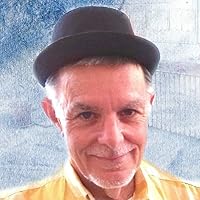
Mark Tedesco writes historical fiction set in the ancient world — I Am John, I Am Paul and The Dog on the Acropolis among them — combining meticulous research with vivid storytelling to uncover the human struggles at its heart. His most recent novel, Magi, is the culmination of years of study into first-century Parthian, Jewish, and Roman cultures.
He also writes about the place that reshaped him: Italy. She Seduced Me: A Love Affair with Rome and Stories from Puglia draw on years of living in Rome and, now, a stone house in Santa Fiora, Tuscany, where he splits his time with California.
Glaser and Tedesco cover the same sort of ground though one from a free Church Protestant background and one from a Catholic one. However they both stride across the same area, looking in the same way, strugging with the same questions and, dare i say it, whining in the same self justifying manner.
I ordered this because i had read some comments about it on other places and I thought it would be a genuine journey in which we would see a man coming to terms positively with his sexuality, rejoicing in the graces and gifts his gayness released in him and enabling that to make him grow into a vibrant and, in his turn, life enhancer of those around him.
Instead it was more of the same. He criticizes one of his 'friends' for expecting the world to revolve around him
Marcus' family had always granted his every wish, and he seemed to expect that response from everyone. I couldn't help thinking that this might be God's way of breaking down marcus' need to be in control all the time'
Pot, kettle and black leap to my mind. Only a few pages further on and Tedesco defies his bishop because he wants to do something different from that which his Bishop wishes. Now Tedesco may well have been right and it may well have been the right decision but why does he assume he is correct and knows the mind of God but that his friend did not.
At another time he is speaking of a 'living saint' who he wishes to get to know and be welcomed by. He is intent on having private time with this man and feels full of joy when he does and down hearted when he does not and yet then he is holding forth at great length about the people who focus on the saint and settle down in his presence rather than using the encounter to move onwards to God. Again, he might be right about them but his reaction appears to smack of the same.
He talks of the different men with whom he gradually moves into intimacy and although, in fairness, he recognizes his neediniess and the way he clings to them unhealthily he is always at pains to make it clear they are the main driving force of the initial intimacy, they are the 'starters'.
His family do not care or are not interested, the other trainee priests seem either to be kind, and die young or cynical, hard hearted and unspiritual. The whole of the North American College Seminary in Rome during the early 80's appears to have been crammed with ambition or laziness or dishonesty. He remarks how there were lots of openly homosexual students in the College at the time, this he is criticizing, they joke about oral sex and behave in an effeminate manner, he says disapprovingly. This from the man who trolls out to a nudist beach on a regular basis to indulge in gay sex. Now do not get me wrong, i am not criticizing him for the struggle he was undergoing nor for the courageous journey he finally makes out of priesthood and into a far more, for him, healthy lived positive sexuality but my frustration was with his blaming and criticizing and sneering at everyone but himself.
This is not a 'frank and engrossing account of his spiritual and sexual awakening', it does not 'reveal how the discovery of true self leads to the ability to have successful relationships and the unltimate understanding of love', I only wish it had been because that is the reason i bought the book. It was not however, it was the story of a gay man in denial who, without any real explanation of why he did, entered seminary to train to be a priest, taking refuge for the worst possible of reasons in what he thought would be a bastion of security against reality and when it did not left seemed to leave at the earliest opportunity.
He did not appear to have any calling of care. At one point he tells how he ripped the bell off his wall because he had had enough of being called down to the door to deal with people's silly and unimportant requests whereas he needed time to study and pray and do other such centrally important things. This moment is described in terms that suggest we, the reader, are aupposed to nod approvingly at this. Well correct me if i am wrong but isn't being a priest about dealing with all sorts of stuff and what the priest might feel is unimportant might be of central significance to the person at the door.
He made sweeping judgements of people in the book, now again to be fair this might have been after a period of experiencing of the situation but cold on the page it just appears they are knee jerk and almost instantaneous. This person is
A troubled man who longed to be an authority figure
and of this one
It became clear to me that he had probably been sent to Rome because of sexual impropriety (My emboldening to show the sweeping contradiction of clarity and prhaps).
There are others but i will not load them on. Suffice it to say, this was a disappointing account of what could have been a moving and powerful story. Instead it struck me as a mealy mouthed disingenuous passing the buck, if the buck is taking responsibility for your own journey to maturity and self-hood. Mark Tedesco, I have no reason to doubt, is a totally sincere and honest man but I do not feel he serves himself or his journey well in this book.
I was contacted by the author, Mark Tedesco, and asked to contribute an honest review of his 'coming-out, 'coming-of-age' priestly memoir, which I'm happy to do. The journey of self discovery Mark underwent during his years in seminary and priestly ministry is an important one for all gay Christians, because, as he explains, he was so thoroughly embedded in a highly conservative, homophobic culture. He was associated with three very conservative Catholic institutions, the San Vittorino seminary of the Oblates of St. Mary outside Rome, the Pontifical John Paul II Institute for Studies on Marriage and Family, and lastly the now notorious 'sect' Communion and Liberation, part of the triumvirate of authoritarian movements (together with the Legionaries of Christ and Opus Dei) so dear to Popes John Paul II and Benedict XVI. Non Catholic readers may not appreciate the significance of these institutions, but an informed Catholic reader will recognize them immediately.
As a result, the breakthrough Mark achieved, recognizing the inherent goodness of his sexual nature and accepting this as the ultimate 'sign of God's will' in his life, in contradistinction to the values of the institutions he was so closely associated with, is all the more remarkable because he 'did it' almost entirely alone. He succeeded in freeing himself from an entire system of psychological 'brainwashing' simply by becoming attuned to the force of his own inherent good nature. And he emerged from this conservative cocoon remarkably free of bitterness and with no loss of love for his Church. That is an achievement.
To put this in perspective, I was undergoing my theological studies during the same time frame as Mark, 1983-1988, at the Jesuit School of Theology at Berkeley and the Graduate Theological Union, one of the most progressive centers of theology in the world. I was surrounded by renowned professors working in the fields of Christian ethics and morality who were already fashioning an ethic of positive, sexually expressive homosexual love. And I was associating with openly gay professors - and seminarians, some of whom were sexually active (!). Friends from my novitiate days who had left the order also contributed to my own 'coming out' by sharing their own experiences as gay Catholics. So one could say that my own journey was a 'piece of cake' in comparison. I can't imagine what it must have been like for then 'Father' Tedesco as an active member of the highly homophobic, tradionalist sect, Communion and Liberation. Freeing himself from that environment required enormous courage, tenacity and determination.
Having said this, however, I did have some problems with the telling of the tale, the manner in which it unfolds. The book is written in a very simple style and with surprising brevity for such a complex story. At only 200 pages, it reads very much like a young adult book, and given that Tedesco is a high school history teacher, perhaps that was part of his intention - to make his story more accessible to young readers who would not have the patience for extended theological commentary.
However, the lack of a fuller explication does make the narrative somewhat confusing and opaque. It's difficult to get a handle on the motivations of the young man who first enters San Vittorino, what is the nature of his experience of faith, his own theological outlook, the outlook of the seminary itself. Once he finds himself enrolled in the North American College in Rome, he feels drawn to the Pontifical John Paul II Institute for Studies on Marriage and Family, where he wishes to pursue graduate studies, against the wishes of his superiors at NAC. Tedesco says he finds the courses at the Pontifical Institute 'refreshing and new', but he doesn't tell us specifically why nor give us a clear understanding of the institute's theological framework - and how it relates to John Paul II's 'Theology of the Body,' which formed the foundation for the Pontiff's theories of gender complementarity - with men on the top of the hierarchy and women below, and - gay people far below that. That is a huge subject and I would have welcomed some theological reflection from a liberated gay priest who attended courses at the Institute.
While in Rome he also finds himself drawn into the active community of "Communion and Freedom" founded by a Father Guardini, which is a thinly disguised reference to Communion and Liberation, founded by Father Luigi Giussani. Again, anyone with a Catholic theological background will recognize instantly the significance of this fact, Tedesco's association with this highly authoritarian, hierarchical sect in which obedience is the prime virtue and which set itself vehemently against Liberation Theology and most of the currents of Vatican II (I'm a bit more harsh in characterizing it than Tedesco's more tolerant approach. See Matthew Fox's The Pope's War: Why Ratzinger's Secret Crusade Has Imperiled the Church and How It Can Be Saved) for the most devastating critique of these sects.). Wow, I thought. What an interesting development, an insider's view of Communion and Liberation from a liberated gay Catholic. But unfortunately, the author - for reasons of his own, perhaps to spare his younger readers - gives us no description of the organization's practices or theological outlook and goals. It is all kept very vague and nebulous, and one can't help asking why? Where is the theological reflection? This is a really important facet of Tedesco's story that still needs to be told.
This is already much too long a review for Good Reads, so I'll summarize it simply be saying that I feel Mark Tedesco has a very important story to share here, he simply hasn't yet fully told it. Much has been held back. In a way, the book itself looks as if it is still in process of 'coming out'. That's fine, and perfectly understandable. I only hope that in the future Mark can revisit this work and expand it in a revised edition to a more 'adult' length and fill in the necessary gaps in this very fascinating compelling story.
THE STORY OF A PRIEST WHO DISCOVERS HIS OWN NATURE
Author Mark Tedesco now teaches history at a Los Angeles high school, and has also written 'Loving, Hoping, Believing' and' I am John I am Paul: A Story of Two Soldiers in Ancient Rome.'
He wrote in the first chapter of this 2006 book of his first year: "The seminary itself was a three-story building: a floor for the priests, a floor of dorm rooms for the seminarians and on the bottom floor a cafeteria or refectory, a chapel and a recreation room. A series of bells regulated the day: up at seven, Mass at 7:30, followed by breakfast. On school days the vans would leave for classes in Rome and return by 1:30, after which the afternoon would be devoted to study; then there was 'the holy hour,' a period of community prayer in the chapel, followed by dinner at eight.
"This schedule suited me. I had always tried to have a prayer life and go to Mass whenever I could, but here it was all organized for me." (Pg. 5) He adds, "recreation became a daily ritual for the next five years. After lunch and dinner, an obligatory time was set aside for us to gather outside to talk, get to know one another, occasionally play sports, or take long walks. It was sort of a forced 'get to know one another session,' but I liked it." (Pg. 20)
He recalls a retreat: "The retreat consisted of two talks each day, prayer and silence. During the times set aside for meditation I often found myself asleep in bed: I was exhausted from the months of commuting to Rome, learning Italian, studying philosophy and living in the seminary. I decided not to feel guilty about it." (Pg. 40)
He explains ("Year Seven"), "I hadn't really been exposed to divisions in the Catholic Church; now I encountered them at North American College. There were those was wanted an American Catholic Church that would be progressive, open-minded and reasonably independent from the Vatican; these were opposed by conservatives who considered themselves true Roman Catholics. These two camps detested each other...
"The staff at the NAC had to walk a fine line; being in the shadow of the Vatican they had to appear to be more conservative than they actually were. We were forbidden to wear the cassock, the black robe, on the seminary grounds because this violated the spirit of the American Church, but when we were asked to do a service at the Vatican we were required to show up in the cassock. I came to see that it was all about appearances." (Pg. 114-115)
He admits, "Another thing I noticed at the NAC was the large number of effeminate seminarians there. Some were openly homosexual. If there was any homosexuality in the Oblates, it was well hidden. Men there did not act like women... Open sexuality, especially homosexuality, seemed shameful to me. How could anyone be comfortable with that, especially in this life we had chosen? I dared not talk about this with anybody; the subject made me extremely uncomfortable." (Pg. 116-117)
He muses after discovering that he himself was gay: "Self-acceptance led to a gradual re-evaluation of my place in the world and in the Church. I had never felt alienated from the Church and I did not feel that way now, even though my life-style conflicted with its sexual teachings. I could only understand this by starting, not with the teachings but with more essential and direct evidence: myself.
"I am who I am through few choices of my own. Part of who I am is that I am gay, which encompasses not only my sexuality but my way of looking at the world and of relating to everything. God had to have made me this way, whether directly or through circumstances. He must be pleased with me, He must love me for whom I am. That is how I found peace with myself and with God... I would continue to be true to myself and to participate in the life of the Church that held so much meaning for me. All other judgments I would leave to God." (Pg. 189)
This is one of the most interesting "coming out" stories of someone in the religious life, and will greatly interest a wide variety of readers.
The author entered a seminary at a young age and studied to become a priest. He was eventually ordained, but ended up leaving the priesthood. It was interesting learning about what life was like in a seminary – he went from one extreme to the other, first at a very conservative seminary in Rome, then to a liberal one in the United States. He talks a lot about the politics that went on. It was an interesting look at the world I'll obviously never see. One major problem the author had was with his sexuality – he writes about his emotional neediness and his transition to accepting himself as a gay man. One thing I didn't like about the book is that the author comes across as being very self-centered at times – maybe that's just because the book focuses exclusively on his journey, but I found it annoying at times. Everything seemed to be about him. When he leaves the priesthood, he just dumps all his old friends and those who depended on him. I know what it's like to be cut out of someone's life, with no explanation or consideration, and its sad that he did that to people. Everything revolved around him and his journey, and he didn't seem to have a lot of consideration for other people. It also was hard to accept that he was functioning as a priest yet going out and having anonymous sex with men. I know I shouldn't judge that, but it just seemed so deeply hypocritical. I know he did the right thing in leaving the priesthood, and he is now a teacher. But how much of his education did the Catholic Church pay for? It makes me wonder if he really was fair to them.
That Undeniable Longing: My Road to and from the Priesthood by Mark Tedesco Deep thoughtful book of how one becomes an ordained priest. Have grown up in the younger years attending Catholic school til high school days where the whole family of 5 switched to public schooling due to costs of uniforms for all. Our local town has a Novitiate and churches and a nunnery at one time, seminary school, etc. Never though of the process that Mark and Marcus took over the years to become ordained. Lots of new travel to me to Rome and other foreign countries. Love hearing of all the places, famous and some quiet peaceful settings. Think I could people watch for months in these locations. Describes in detail all the young men go through in daily life and when they return back to the states for a summer break to return to Rome again. So fascinating to me because of things I learned. Very descriptive at times I feel as if I was there. Wicked honesty. Bit shocked on how things turn out at the very end but as long as he's happy is the important thing. Received this review copy from the author and this is my honest opinion.
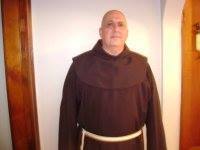
I didn’t find anything I disliked about the book. I found this book to be very inspiring. Also, it shows how one must confront the unknown of oneself and come to a sound decision and grow from it. Mark is a very wonderful person. I am glad that I had the pleasure of meeting him and being a part of his journey. I always enjoyed your friendship, although it was a short one. I was honored and touched that you put me in your book. I am Chuck from the San Vitorino days. I enjoyed very much going down memory lane. I am now a Franciscan Friar. Your Brother -Chuck
Mark Tedesco's recounting of his journey of faith alongside his search for authenticity is truly inspiring. His ability to locate and share the movements of his heart is laudable, but also illuminating for those reading his work.
A beautifully written story of self-discovery and fulfilment, full of lessons about expectation and disappointment, friendship and loneliness, serendipity and grace.
The author of That Undeniable Longing: My Road To And From The Priesthood, Mark Tedesco, contacted me through this site and asked if he could send me a copy of his memoir in hopes I’d be able to review it. I was glad to make his e-acquaintance and said; “by all means, do send me a copy.”