

What do you think?

America in the King Years #2
Pillar of Fire: America in the King Years 1963-65
From Pulitzer Prize-winning author Taylor Branch, the second part of his epic trilogy on the American Civil Rights Movement.
In the second volume of his three-part history, a monumental trilogy that began with Parting the Waters, winner of the Pulitzer Prize and the National Book Critics Circle Award, Taylor Branch portrays the Civil Rights Movement at its zenith, recounting the climactic struggles as they commanded the national stage.
In the second volume of his three-part history, a monumental trilogy that began with Parting the Waters, winner of the Pulitzer Prize and the National Book Critics Circle Award, Taylor Branch portrays the Civil Rights Movement at its zenith, recounting the climactic struggles as they commanded the national stage.
768 pages, Paperback
First published February 2, 1998
About the author
Taylor Branch
34 books243 followersTaylor Branch is an American author and historian best known for his award-winning trilogy of books chronicling the life of Martin Luther King, Jr. and some of the history of the American civil rights movement. The third and final volume of the 2,912-page trilogy — collectively called America in the King Years — was released in January 2006. Branch lives in Baltimore, Maryland, with his wife, Christina Macy, and their two children, Macy (born 1980) and Franklin (b. 1983).
-Wikipedia
-Wikipedia
Ratings & Reviews
Friends & Following
Create a free account to discover what your friends think of this book!
Community Reviews
Displaying 1 - 30 of 210 reviews

March 12, 2025
This is the second volume of Taylor Branch’s trilogy on Martin Luther King and the Civil Rights movement. This volume covers the years from 1963 to 1965. These were pivotal years in American History with the beginning of the Lyndon Johnson presidency, the passage of the Civil Rights and Voting Rights bills in Congress, and the early decisions on our involvement in South Vietnam.
In this volume Martin Luther King is more of a secondary character. When he is described it is in connection with J. Edgar Hoover’s obsession with linking him and the Civil Rights movement to Communism. The FBI used extralegal surveillance efforts to record the telephone calls and plant listening devices in the hotel rooms used by King. Hoover was especially interested in securing sexual activity by King and used that information to tarnished his name.
We also learn about Malcolm X and the Black Muslims. It was interesting to read about the different strategies used by these two leaders to achieve equal rights for Black Americans. King brought attention to the hardships Black Americans experienced in the segregated South. His nonviolent protests generated sympathy and positive attention for the Civil Rights movement. Malcolm X pushed for Blacks to respond physically when confronting racism, which gave White Americans reasons to blame Blacks for the trouble.
A large part of this book deals with the Freedom Summer in Mississippi where efforts were made to register Black Americans as voters. Here we read about the torture and murder of three Civil Rights activists: James Chaney, Andrew Goodman, and Michael Schwerner. Hoover at first refused to have the FBI involved in the case, but was convinced by President Johnson when he threatened to have Hoover’s arch-rival, ex-CIA director Allen Dulles, lead the investigation.
Like any organization the Civil Rights movement, and the Black Muslims, were plagued with politics and jealousy. In the Civil Rights movement various organizations disliked King deflecting attention from their efforts and accused him of wanting all the publicity. For the Black Muslims the popularity of Malcolm X caused a split within the Nation of Islam. This would lead to the assassination of Malcolm X.
This volume deals with an important period in American History. It describes the transition following the assassination of President Kennedy to the presidency of Lyndon Johnson. It also serves as an introduction to the final volume which takes us to the year 1968. This period of American History from the Kennedy Assassination to the election of Richard Nixon is one of the most critical periods in American History. This leads me to the third and last volume of the series.
In this volume Martin Luther King is more of a secondary character. When he is described it is in connection with J. Edgar Hoover’s obsession with linking him and the Civil Rights movement to Communism. The FBI used extralegal surveillance efforts to record the telephone calls and plant listening devices in the hotel rooms used by King. Hoover was especially interested in securing sexual activity by King and used that information to tarnished his name.
We also learn about Malcolm X and the Black Muslims. It was interesting to read about the different strategies used by these two leaders to achieve equal rights for Black Americans. King brought attention to the hardships Black Americans experienced in the segregated South. His nonviolent protests generated sympathy and positive attention for the Civil Rights movement. Malcolm X pushed for Blacks to respond physically when confronting racism, which gave White Americans reasons to blame Blacks for the trouble.
A large part of this book deals with the Freedom Summer in Mississippi where efforts were made to register Black Americans as voters. Here we read about the torture and murder of three Civil Rights activists: James Chaney, Andrew Goodman, and Michael Schwerner. Hoover at first refused to have the FBI involved in the case, but was convinced by President Johnson when he threatened to have Hoover’s arch-rival, ex-CIA director Allen Dulles, lead the investigation.
Like any organization the Civil Rights movement, and the Black Muslims, were plagued with politics and jealousy. In the Civil Rights movement various organizations disliked King deflecting attention from their efforts and accused him of wanting all the publicity. For the Black Muslims the popularity of Malcolm X caused a split within the Nation of Islam. This would lead to the assassination of Malcolm X.
This volume deals with an important period in American History. It describes the transition following the assassination of President Kennedy to the presidency of Lyndon Johnson. It also serves as an introduction to the final volume which takes us to the year 1968. This period of American History from the Kennedy Assassination to the election of Richard Nixon is one of the most critical periods in American History. This leads me to the third and last volume of the series.
January 28, 2017
The second volume of Taylor Branch’s towering trilogy about Martin Luther King, Jr. and the Civil Rights movement covers so many momentous events, such as the assassinations of John Kennedy and Malcolm X, the Mississippi Freedom Summer, King’s Nobel Prize, and America’s entry into Vietnam, that it is difficult to believe that it spans a mere two years that also witnessed the exodus of black America from the Republican party to the Democratic.
King’s commitment to nonviolence in the face of overwhelming provocation is stunning. Branch often embeds events in an avalanche of detail about day-to-day goings-on that can be somewhat deadening but serves to make the point that there was no inevitability to the ultimate triumph of King. Throughout his career, he was beset by criticism, rivalry, and divisiveness from both within and without his ranks. The forces arrayed against him were formidable. This book is one more argument toward solidifying J. Edgar Hoover’s status as one of the great villains of modern American history, with his underhanded and unconstitutional persecution and surveillance of King, even, at one point, sinking to the depths of having evidence of his infidelities sent to him along with a message urging him to commit suicide. Lyndon Johnson emerges as a pivotal figure, ever mindful of political reality but favorable toward black suffrage in a way that Kennedy wasn’t.
Writing in the early days of the Trump administration, I am reminded by this book that the most worrisome terrorists are the homegrown variety and encouraged by the precedent of citizens standing up to corrupt power and prevailing.
King’s commitment to nonviolence in the face of overwhelming provocation is stunning. Branch often embeds events in an avalanche of detail about day-to-day goings-on that can be somewhat deadening but serves to make the point that there was no inevitability to the ultimate triumph of King. Throughout his career, he was beset by criticism, rivalry, and divisiveness from both within and without his ranks. The forces arrayed against him were formidable. This book is one more argument toward solidifying J. Edgar Hoover’s status as one of the great villains of modern American history, with his underhanded and unconstitutional persecution and surveillance of King, even, at one point, sinking to the depths of having evidence of his infidelities sent to him along with a message urging him to commit suicide. Lyndon Johnson emerges as a pivotal figure, ever mindful of political reality but favorable toward black suffrage in a way that Kennedy wasn’t.
Writing in the early days of the Trump administration, I am reminded by this book that the most worrisome terrorists are the homegrown variety and encouraged by the precedent of citizens standing up to corrupt power and prevailing.

December 12, 2012
This matches the greatness of the first volume. The first one hundred pages recapitulate some of “Parting the Waters”. It is astonishing how Taylor Branch can expertly weave between the high and mighty – President Johnson, Martin Luther King and the low and mighty – Fannie Lou Hamer, Bob Moses.
The level of brutality in the Southern States, but particularly Mississippi, is unforgivable. Who are these people who beat Civil Rights workers and bombed churches to stop their fellow citizens from voting (or registering to vote) and attending university. There is a moral chasm which is difficult to fathom. The murder of black people was rarely punished or investigated, but Martin Luther King was prosecuted by the state of Alabama for borrowing a car from the federal justice system.
J. Edgar Hoover is most reprehensible. He waged a personal vendetta using all F.B.I. forces to frame King as well as other federal politicians. His hold on power would be admired by any KGB stalwart. The F.B.I. was used more for nefarious information gathering than to solve crimes. Most of the time, Hoover was a master at avoiding the limelight.
Malcolm X strikes me as more interested in the celebrity status while mouthing witticisms – most of which were true – than in actually resolving the race issue in America.
By contrast King, SCLC, and SNCC wanted to progress and reach a peaceful non-violent resolution to segregation and voting rights. King is once again portrayed as a tormented individual. He was often absent from his family. He was persecuted by the F.B.I. for having alleged communist infiltrators in his organisations. It is admirable that Johnson did not resort to scare tactics like the Kennedy’s did.
This is essential reading for having a deeper understanding of these years of change in the United States.
The level of brutality in the Southern States, but particularly Mississippi, is unforgivable. Who are these people who beat Civil Rights workers and bombed churches to stop their fellow citizens from voting (or registering to vote) and attending university. There is a moral chasm which is difficult to fathom. The murder of black people was rarely punished or investigated, but Martin Luther King was prosecuted by the state of Alabama for borrowing a car from the federal justice system.
J. Edgar Hoover is most reprehensible. He waged a personal vendetta using all F.B.I. forces to frame King as well as other federal politicians. His hold on power would be admired by any KGB stalwart. The F.B.I. was used more for nefarious information gathering than to solve crimes. Most of the time, Hoover was a master at avoiding the limelight.
Malcolm X strikes me as more interested in the celebrity status while mouthing witticisms – most of which were true – than in actually resolving the race issue in America.
By contrast King, SCLC, and SNCC wanted to progress and reach a peaceful non-violent resolution to segregation and voting rights. King is once again portrayed as a tormented individual. He was often absent from his family. He was persecuted by the F.B.I. for having alleged communist infiltrators in his organisations. It is admirable that Johnson did not resort to scare tactics like the Kennedy’s did.
This is essential reading for having a deeper understanding of these years of change in the United States.

December 29, 2014
This book is the second of three volumes that comprise America in the King Years, a history of the civil rights movement. Taylor Branch won the 1989 Pulitzer Prize for his work on this project. This book covers the history of the civil rights movement between the years of 1964 to 1965. I listened to an audio version which was abridged. I usually shun abridged versions, but I don't have time to make it through the unabridged 2,500 pages of the three volumes.
Lyndon Johnson successfully encouraged passage of the Civil Right Act which was passed in 1964. It banned discrimination based on "race, color, religion, sex or national origin" in employment practices and public accommodations. But that didn't mean compliance was immediate. Voting rights continued to be a problem.
Much of the civil rights action during 1964 and 65 was focused on getting African Americans registered to vote. But state and local governments in the "old south" utilized all sorts of creative (and terroristic) ways to slow down and stall registration efforts. Probably the most infamous incident was the murder of three civil rights workers in Mississippi by the Ku Klux Klan. One fascinating detail learned from the confessions of the murders is that one of victims seconds before being shot said, "I know exactly how you feel." It was said in answer to the question shouted by the gunman into his face, "Are you the n--- lover?" I won't take time to list here all the lives lost in acts of violence in this era. Probably the most disheartening part about this history is how difficult it was to get a jury to convict any Ku Klux Klan member.
Martn Luther King was awarded the Nobel Peace Prize late in 1964. J. Edgar Hoover was clearly not sympathetic to the civil rights movement, and he particularly did not like King. I learned from this book that the tapes sent (it had to have been sent by FBI at Hoover's instructions) to MLK's house for the purpose of persuading him to commit suicide prior to acceptance of the Nobel Price were not noticed until after he had already accepted the prize. Hoover had a face-to-face meeting with MLK prior to the package with the tapes being opened, and Hoover probably marveled at how cool MLK acted (because Hoover would have thought that MLK knew about the tapes). I didn't have a good opinion about J. Edgar Hoover prior to this book, and now I have an even lower opinion.
The internal battles of the African-American Muslim leaders (Malcolm X vs. Elijah Muhammad) are described in this book. Malcolm X was assassinated early in 1965.
March 7, 1965 became known as Bloody Sunday. Civil rights workers in Selma, Alabama, began the Selma to Montgomery march but are forcibly stopped by a massive Alabama State trooper and police blockade as they cross the Edmund Pettus Bridge. Many marchers were injured. This march, initiated and organized by James Bevel, becomes the visual symbol of the Selma Voting Rights Movement.
The Voting Right Act was signed by President Johnson on August 6, 1965. It eliminated literacy tests, poll tax, and other subjective voter tests that were widely responsible for the disfranchisement of African-Americans in the southern states and provided Federal oversight of voter registration in states and individual voting districts where such discriminatory tests were used. Again compliance with the law was slow, but it made a difference in the long run.
Lyndon Johnson successfully encouraged passage of the Civil Right Act which was passed in 1964. It banned discrimination based on "race, color, religion, sex or national origin" in employment practices and public accommodations. But that didn't mean compliance was immediate. Voting rights continued to be a problem.
Much of the civil rights action during 1964 and 65 was focused on getting African Americans registered to vote. But state and local governments in the "old south" utilized all sorts of creative (and terroristic) ways to slow down and stall registration efforts. Probably the most infamous incident was the murder of three civil rights workers in Mississippi by the Ku Klux Klan. One fascinating detail learned from the confessions of the murders is that one of victims seconds before being shot said, "I know exactly how you feel." It was said in answer to the question shouted by the gunman into his face, "Are you the n--- lover?" I won't take time to list here all the lives lost in acts of violence in this era. Probably the most disheartening part about this history is how difficult it was to get a jury to convict any Ku Klux Klan member.
Martn Luther King was awarded the Nobel Peace Prize late in 1964. J. Edgar Hoover was clearly not sympathetic to the civil rights movement, and he particularly did not like King. I learned from this book that the tapes sent (it had to have been sent by FBI at Hoover's instructions) to MLK's house for the purpose of persuading him to commit suicide prior to acceptance of the Nobel Price were not noticed until after he had already accepted the prize. Hoover had a face-to-face meeting with MLK prior to the package with the tapes being opened, and Hoover probably marveled at how cool MLK acted (because Hoover would have thought that MLK knew about the tapes). I didn't have a good opinion about J. Edgar Hoover prior to this book, and now I have an even lower opinion.
The internal battles of the African-American Muslim leaders (Malcolm X vs. Elijah Muhammad) are described in this book. Malcolm X was assassinated early in 1965.
March 7, 1965 became known as Bloody Sunday. Civil rights workers in Selma, Alabama, began the Selma to Montgomery march but are forcibly stopped by a massive Alabama State trooper and police blockade as they cross the Edmund Pettus Bridge. Many marchers were injured. This march, initiated and organized by James Bevel, becomes the visual symbol of the Selma Voting Rights Movement.
The Voting Right Act was signed by President Johnson on August 6, 1965. It eliminated literacy tests, poll tax, and other subjective voter tests that were widely responsible for the disfranchisement of African-Americans in the southern states and provided Federal oversight of voter registration in states and individual voting districts where such discriminatory tests were used. Again compliance with the law was slow, but it made a difference in the long run.

March 27, 2025
All three volumes of Branch's history of the civil rights movement are well worth reading. I read them out of order, starting with the first, followed by the third and ending, finally, with this, the second.
For me, the history intersected with memory in that I was alive during the period 1954-68. My parents, especially Dad, were politically engaged. They subscribed to The Chicago Daily News and to a variety of magazines. Meanwhile, my grandparents always had Time and Life magazines around. From an early age, often bored by surrounding adult activities, I perused these publications. Further, during those years when we had a television, I regularly saw the various news programs Father followed.
My sense of there being a race issue, however, was abstract, something in the news and in the South. Until 1962 we lived in housing subsidized for veterans, housing that was not segregated. For me, as a grade-schooler, skin color was as unremarkable as hair or eye color. It was only when we left that rural development for the Chicago suburbs that I existentially discovered the concept of race as an issue--and this in a lily-white community! (later, I also learned about prejudices against gays, Catholics and Democrats)
Although exposed to politics early on, even being taken to city council meetings by Dad, I really didn't become an independent agent until 1964, and then as a Democrat campaigning against Goldwater and the Republican slate in Cook County. High school followed and with it a number of older friends who introduced me a much larger world of ideas ranging from the old left of the Socialist Party to the new left of the S.D.S. However, while participating in anti-imperialist, anti-war work with the left on one hand, I also campaigned for Gene McCarthy and for Open Housing ordinances on the other.
By 1968, I was torn between support for the revolutionary independence movements domestically and in the Third World and what I saw as the reformism of the NAACP and SCLC. I never read one of King's many books. I did read publications of the Black Panther Party and of those associated with it.
Reading Branch's trilogy has made me rather ashamed of my youthful extremism. His accounts, almost overwhelming detailed, of the extraordinary heroism of ordinary people frequently brought me to tears.
For me, the history intersected with memory in that I was alive during the period 1954-68. My parents, especially Dad, were politically engaged. They subscribed to The Chicago Daily News and to a variety of magazines. Meanwhile, my grandparents always had Time and Life magazines around. From an early age, often bored by surrounding adult activities, I perused these publications. Further, during those years when we had a television, I regularly saw the various news programs Father followed.
My sense of there being a race issue, however, was abstract, something in the news and in the South. Until 1962 we lived in housing subsidized for veterans, housing that was not segregated. For me, as a grade-schooler, skin color was as unremarkable as hair or eye color. It was only when we left that rural development for the Chicago suburbs that I existentially discovered the concept of race as an issue--and this in a lily-white community! (later, I also learned about prejudices against gays, Catholics and Democrats)
Although exposed to politics early on, even being taken to city council meetings by Dad, I really didn't become an independent agent until 1964, and then as a Democrat campaigning against Goldwater and the Republican slate in Cook County. High school followed and with it a number of older friends who introduced me a much larger world of ideas ranging from the old left of the Socialist Party to the new left of the S.D.S. However, while participating in anti-imperialist, anti-war work with the left on one hand, I also campaigned for Gene McCarthy and for Open Housing ordinances on the other.
By 1968, I was torn between support for the revolutionary independence movements domestically and in the Third World and what I saw as the reformism of the NAACP and SCLC. I never read one of King's many books. I did read publications of the Black Panther Party and of those associated with it.
Reading Branch's trilogy has made me rather ashamed of my youthful extremism. His accounts, almost overwhelming detailed, of the extraordinary heroism of ordinary people frequently brought me to tears.
June 7, 2019
Volumes I and III were two of the best books I have ever read. But this one was annoying, because Branch spent hundreds of pages reviewing the background facts of the first volume I guess to get the reader up to speed in case they had not read the first volume. Who does that? What sane person is going to start a trilogy at volume II? Besides, the review was in such a shotgun fashion that I'm not even sure it would have been real useful or informative for a new reader. Anyway, once he got through the review, the book picked up and was really just as good as the other two volumes. But four stars, because the lengthy review was that painful. Mercifully, he did not repeat the review mistake in Volume III. And so, it bears repeating, volumes I and III were two of the best books I have ever read. What an incredible trilogy.
January 3, 2021
This was a very densely packed narrative of the civil rights movement in the US from the years 1963-1965. The first two hundred pages or so recapped the first volume (“Parting the Waters”) at a very breakneck pace, although it did begin to include the history of the NOI during the early 1960s that the first volume left out. The recap would be hard to follow for anyone who did not read Parting the Waters given how quickly it went through events. The rest of this volume was packed with many different aspects of the civil rights movement, jumping from Atlanta to Mississippi to Alabama to the White House, to Vietnam, to the 1964 presidential elections to the FBI surveillance of King and Malcolm X. I learned a lot but thought the narrative of the first volume was easier to follow. I’m still looking forward to the last volume in the trilogy and will tackle it after I take a short break and give my brain some time to absorb the weighty times of the mid 60s.

April 28, 2024
Predators, Bystanders, and Samaritans: (Three Philosophies from a King Sermon)
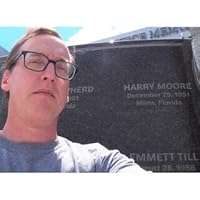
Pillar of Fire: America in the King Years 1963-65 by Taylor Branch, published in 1998, is the second book in a trilogy that examines the life and work of Martin Luther King Jr. It focuses on a crucial period during the civil rights movement. This is book two of a three volume paperback set I found at the King Memorial Center and National Civil Rights Museum in Memphis at the Lorraine Motel where King was assassinated by a sniper in 1968. Each book is like a textbook in itself, covering what could take a year's material in a college level course, but the reading is average conversational level.
This book picks up with the Birmingham campaigns, with children marching and singing as they are led off to jail, the 16th Street Baptist Church bombing that killed children at church, and the assassination of John Kennedy. During this time, a Commission on Religion and Race was formed to address concerns. The book's narrative continues throughout the Mississippi Freedom Summer, and the passing of the Civil Rights Act of 1964. The story winds its way through the ordeal of the Atlantic City Compromise at the Democratic National Convention, the Tonkin Gulf Incidents of August, and Johnson’s landslide victory versus Goldwater, with almost a 16 million vote margin. The book winds down with Dr. King’s acceptance of the Nobel Peace Prize, the Watt's Riots, and the assassination of Malcolm X.
Branch explores King's leadership, the challenges he faced, and the impact of his efforts on the broader struggle for civil rights in America through organizations like the SNCC, SCLC, and the NAACP. Much is to be learned about Elijah Mohammad and the Nation of Islam, and the orbits of Malcolm X and Cassius Clay/ Muhammed Ali around that powerful organization. The violent history of St. Augustine, Florida is compellingly described. LBJ’s presidency, his War on Poverty, and his civil rights efforts are detailed. You read about the continuing efforts of Hoover to undermine King’s work, and the continued wiretapping by the FBI. The early years in Vietnam stew throughout these struggles.
The book provides a detailed and compelling narrative of this pivotal time in the civil rights movement, shedding light on the complexities of the era and the individuals involved: such as Ralph Abernathy, Hosea Williams, Bayard Rustin, Medgar Evers, Harry Truman, Robert F. Kennedy, Andrew Young, Alex Haley, Bob Moses, Ross Barnett, and even Ronald Reagan. It offers insights into King's strategies, his relationships with other civil rights leaders, and the evolution of the movement during these two years.
A pair of direct quotations follow:
Pillar of Fire: America in the King Years 1963-65 by Taylor Branch, published in 1998, is the second book in a trilogy that examines the life and work of Martin Luther King Jr. It focuses on a crucial period during the civil rights movement. This is book two of a three volume paperback set I found at the King Memorial Center and National Civil Rights Museum in Memphis at the Lorraine Motel where King was assassinated by a sniper in 1968. Each book is like a textbook in itself, covering what could take a year's material in a college level course, but the reading is average conversational level.
This book picks up with the Birmingham campaigns, with children marching and singing as they are led off to jail, the 16th Street Baptist Church bombing that killed children at church, and the assassination of John Kennedy. During this time, a Commission on Religion and Race was formed to address concerns. The book's narrative continues throughout the Mississippi Freedom Summer, and the passing of the Civil Rights Act of 1964. The story winds its way through the ordeal of the Atlantic City Compromise at the Democratic National Convention, the Tonkin Gulf Incidents of August, and Johnson’s landslide victory versus Goldwater, with almost a 16 million vote margin. The book winds down with Dr. King’s acceptance of the Nobel Peace Prize, the Watt's Riots, and the assassination of Malcolm X.
Branch explores King's leadership, the challenges he faced, and the impact of his efforts on the broader struggle for civil rights in America through organizations like the SNCC, SCLC, and the NAACP. Much is to be learned about Elijah Mohammad and the Nation of Islam, and the orbits of Malcolm X and Cassius Clay/ Muhammed Ali around that powerful organization. The violent history of St. Augustine, Florida is compellingly described. LBJ’s presidency, his War on Poverty, and his civil rights efforts are detailed. You read about the continuing efforts of Hoover to undermine King’s work, and the continued wiretapping by the FBI. The early years in Vietnam stew throughout these struggles.
The book provides a detailed and compelling narrative of this pivotal time in the civil rights movement, shedding light on the complexities of the era and the individuals involved: such as Ralph Abernathy, Hosea Williams, Bayard Rustin, Medgar Evers, Harry Truman, Robert F. Kennedy, Andrew Young, Alex Haley, Bob Moses, Ross Barnett, and even Ronald Reagan. It offers insights into King's strategies, his relationships with other civil rights leaders, and the evolution of the movement during these two years.
A pair of direct quotations follow:
“We killed two-month-old Indian babies to take this country... and now they want us to give it away to the niggers.”
Rather than appeal and participate in her oppression, Diane Nash chose to give birth behind bars.“This will be a black baby born in Mississippi,’ she declared before being led off to the Hinds County Jail, ‘and thus wherever he is born, he will be in prison… I have searched my soul about this and considered it in prayer. I have reached the conclusion that in the long run, this will be the best thing I can do for my child.”

March 20, 2015
This is the second book in the 3 book series and follows what may be my favorite history of all time--Parting the Waters. I'll admit this book confused me at first because it was repeating events from the first book but not an actual duplicate. As a result it jumped around for slightly more than the first hundred pages. My patience was rewarded. When he got to the new part this book covers, it was every bit as remarkable as the first book. One of Branch's greatest strengths is letting us know what else is going on in our country--simultaneously with the Civil Rights movement. It is easy to see why there was so much I didn't know--because the newspapers weren't picking it up--and I wasn't smart enough to put things together. Branch tells about the war between Elijah Mohammed (founder of the Black Muslims)and his former lieutenant Malcolm X. Yes, it's relevant to the movement even though it didn't take place in the South. We also begin to see how incredible Lyndon Johnson was. I know he gets a bum rap because he was ugly and charmless especially next to the glittering Kennedys. The truth is that the Voting Rights Act and many other positive things would not have happened had Kennedy been able to complete his term. Kennedy was all about keeping on good terms with everyone so he could win re-election. Johnson was the master at whipping Congress into shape. The tragedy is he got stuck with Vietnam and couldn't figure a way out. As he pointed out, the American people would never accept a withdrawal. So against his better judgement he felt compelled to go for a win he knew was impossible. One final word--J. Edgar Hoover was either crazy or the most evil person within our borders. He tried to sink King on a daily basis but, fortunately, he kept striking out.

June 9, 2018
The second volume of Taylor Branch's trilogy on America in the Martin Luther King years begins with a recap of the previous volume. In fact the first quarter of the book revisits 1954-1963 and the incredible events of those years. Normally such a lengthy recap of a previous book would be tedious but Branch manages to retell the story and yet do it in a fresh way, from different perspectives, that makes it come alive again.
Once he does bring us into the years 1963-1965, we have a fuller appreciation for how astonishing the events of those 3 short years were. As in the previous volume, Branch's focus is on King, as well as the FBI's obsession with wiretapping and discrediting him. These passages make for some difficult reading in that King while certainly flawed as a human being(aren't we all) seemed to be a man who gave every ounce of himself to make the world a better place. It makes the FBI harassment of him that much more unsettling and jarring.
What really enjoyed here though was the focus on other people on King's orbit. Branch does a masterful job of following the work of SNCC and Bob Moses, LBJ, and the final years of Malcolm X.
After 2 volumes I've become emotionally invested in these people, and while I'm looking forward to volume 3, I already know I'll be sad to say goodbye to them when I finish. Perhaps there is no better testament to great writing than that.
Once he does bring us into the years 1963-1965, we have a fuller appreciation for how astonishing the events of those 3 short years were. As in the previous volume, Branch's focus is on King, as well as the FBI's obsession with wiretapping and discrediting him. These passages make for some difficult reading in that King while certainly flawed as a human being(aren't we all) seemed to be a man who gave every ounce of himself to make the world a better place. It makes the FBI harassment of him that much more unsettling and jarring.
What really enjoyed here though was the focus on other people on King's orbit. Branch does a masterful job of following the work of SNCC and Bob Moses, LBJ, and the final years of Malcolm X.
After 2 volumes I've become emotionally invested in these people, and while I'm looking forward to volume 3, I already know I'll be sad to say goodbye to them when I finish. Perhaps there is no better testament to great writing than that.

October 27, 2020
This is part 2 of Branch’s magisterial 3-volume history of the civil rights movement. It’s quite thorough— for better and worse. I think this history is very important for every American to know, but these long dense books are just not easily absorbed. There really isn’t any analysis here. It’s basically straight narrative history, which sometimes means the highlights get lost in the details. Perhaps listening to the abridged audiobooks would be a better option for most people?
Nevertheless, I’m still planning to tackle volume 3.
2020 MGM BAB Challenge:
1. The Fellowship (656 p)
2. Lonesome Dove (964 p)
3. These Truths (960 p)
4. Wind-up Bird Chronicle (607 p)
5. Parting the Waters (1120 p)
6. Gone with the Wind (1037 p)
Bonus round:
7. The Count of Monte Cristo (1138 p)
8. Pillar of Fire (746 p)
Nevertheless, I’m still planning to tackle volume 3.
2020 MGM BAB Challenge:
1. The Fellowship (656 p)
2. Lonesome Dove (964 p)
3. These Truths (960 p)
4. Wind-up Bird Chronicle (607 p)
5. Parting the Waters (1120 p)
6. Gone with the Wind (1037 p)
Bonus round:
7. The Count of Monte Cristo (1138 p)
8. Pillar of Fire (746 p)

August 3, 2019
The Civil Rights movement profoundly affected American history and the nation’s race relations for a generation. Some of the big moments, like the March on Washington, are indelibly etched into popular imagination. But what was the movement like at its peak and what lessons does it hold for us today? In this second volume to his trilogy on the era, Mr. Branch catalogues the ins and outs of the movement at its peak.
This volume starts by retreading some ground from the last chapters in the previous book. For those who have read it, you might wonder why Mr. Branch decided to do this. However, Mr. Branch not only helps to refresh the memories of folks who may not have picked up the first volume in a while (almost a decade separates the publication of each of them volumes from each other) while also approaching it from a new perspective. While some of the first part will be familiar, much of it is also new too.
What is also much appreciated in this volume is how Mr. Branch expands his scope to include other voices that were not as prominent or even ignored in the previous volume. Specifically, Malcom X and the Nation of Islam finally make their appearance in Mr. Branch’s history and provide a much needed counterpoint to Dr. King’s nonviolent protest. While acknowledging the stark differences in philosophy, Mr Branch also injects Malcom X with enough nuance to upset the seemingly black-and-white narrative. It should be thought-provoking to many who have not given much though to Malcom X before.
Another great improvement in this sequel from the previous volume is how the chapters have been shrunk. With the exception of the last chapters, the average chapter length is about 10-20 pages; some are even shorter than that. This is a much welcome relief from the previous volume as 30-40 page chapters one after another could get a little tiresome.
Lastly, this book does a tremendous job of showing the forces that were only hinted at in the previous volume coming to a head. By the end of the book, the violent white backlash has come into full swing and the charges of infidelity against King and other members of the movement have come close to undermining the movement and even dissolved some marriages.
As we face another moment in our history where race relations and nonviolent protests are at the forefront of our politics, the lessons one can draw from this book are innumerable. For those who are looking for a definitive history of the Civil Rights movement, look no further than this history. I look forward to wrapping up the final volume in the trilogy soon.
This volume starts by retreading some ground from the last chapters in the previous book. For those who have read it, you might wonder why Mr. Branch decided to do this. However, Mr. Branch not only helps to refresh the memories of folks who may not have picked up the first volume in a while (almost a decade separates the publication of each of them volumes from each other) while also approaching it from a new perspective. While some of the first part will be familiar, much of it is also new too.
What is also much appreciated in this volume is how Mr. Branch expands his scope to include other voices that were not as prominent or even ignored in the previous volume. Specifically, Malcom X and the Nation of Islam finally make their appearance in Mr. Branch’s history and provide a much needed counterpoint to Dr. King’s nonviolent protest. While acknowledging the stark differences in philosophy, Mr Branch also injects Malcom X with enough nuance to upset the seemingly black-and-white narrative. It should be thought-provoking to many who have not given much though to Malcom X before.
Another great improvement in this sequel from the previous volume is how the chapters have been shrunk. With the exception of the last chapters, the average chapter length is about 10-20 pages; some are even shorter than that. This is a much welcome relief from the previous volume as 30-40 page chapters one after another could get a little tiresome.
Lastly, this book does a tremendous job of showing the forces that were only hinted at in the previous volume coming to a head. By the end of the book, the violent white backlash has come into full swing and the charges of infidelity against King and other members of the movement have come close to undermining the movement and even dissolved some marriages.
As we face another moment in our history where race relations and nonviolent protests are at the forefront of our politics, the lessons one can draw from this book are innumerable. For those who are looking for a definitive history of the Civil Rights movement, look no further than this history. I look forward to wrapping up the final volume in the trilogy soon.

March 19, 2019
I spent 11 weeks reading Taylor Branch's second volume of a biography centered on Martin Luther King, Jr. Checking back in my reading log, I was surprised that it has been about four years since I read Volume I, Parting the Waters. During those years I read the first three volumes of Robert Caro's biography of Lyndon B Johnson. These two biographical feats dovetail perfectly, especially in Pillar of Fire, because the two men became inextricably entwined in the history of mid-20th century America.
Though I can only read these tomes at a rate of 10 pages a day, so dense are they with persons and events, I am thrilled to be experiencing what I was hoping to find by taking history in college. Especially in what I consider very trying times these days, learning all this history about my country (and much of it was just as trying) gives me courage and hope in some ways while it also has me laughing helplessly at how absurd it all is.
Pillar of Fire focuses intently on the entire Civil Rights Movement during 1963-1965, so it is about much more than MLK himself. The movement in those years had become fractured into numerous groups and organizations, much of the time unaligned and full of conflict. Taylor Branch follows all of this on an almost day by day basis. The continuous actions of non-violent protest in the South, the friction between King and Malcolm X, the entry of white college students and ministers from the North and West, and the riots in Northern Cities are all covered in great detail.
President John F Kennedy was assassinated before he could manage to get much done for racial equality. Lyndon B Johnson in his first years as President did get the Civil Rights Bill through Congress. However the KKK kept on bombing churches and killing Black people, getting away with it in the courts of the South.
Thanks to J Edgar Hoover and his obsessions, LBJ could not find a way to provide Federal support for integration despite his new law. He also had the growing situation of Vietnam to deal with. That left King and all the other civil rights leaders to carry on basically without backup.
What struck me hardest as I read was how long and hard it can be to bring about social change, how tirelessly all those thousands of people kept at trying to make the law a reality and getting Blacks the right to vote.
Ten years after Rosa Park's refusal to give up her seat to a white man on a Montgomery, Alabama bus, segregation was still the everyday practice in the South. Malcolm X was assassinated. By 1968 Martin Luther King would be too. Today, Black Americans are still at the mercy of brutality, poverty, and incarceration in what we are told is "our great nation." Over 150 years have passed since we freed our slaves, on paper.
So, next up for me is Robert Caro's The Passage of Power, the parallel story of LBJ's years 1958-1964. Another 605 pages. Then one more volume about MLK. Then, God willing, the final LBJ volume from Caro. I sure hope he is able to finish it.
Though I can only read these tomes at a rate of 10 pages a day, so dense are they with persons and events, I am thrilled to be experiencing what I was hoping to find by taking history in college. Especially in what I consider very trying times these days, learning all this history about my country (and much of it was just as trying) gives me courage and hope in some ways while it also has me laughing helplessly at how absurd it all is.
Pillar of Fire focuses intently on the entire Civil Rights Movement during 1963-1965, so it is about much more than MLK himself. The movement in those years had become fractured into numerous groups and organizations, much of the time unaligned and full of conflict. Taylor Branch follows all of this on an almost day by day basis. The continuous actions of non-violent protest in the South, the friction between King and Malcolm X, the entry of white college students and ministers from the North and West, and the riots in Northern Cities are all covered in great detail.
President John F Kennedy was assassinated before he could manage to get much done for racial equality. Lyndon B Johnson in his first years as President did get the Civil Rights Bill through Congress. However the KKK kept on bombing churches and killing Black people, getting away with it in the courts of the South.
Thanks to J Edgar Hoover and his obsessions, LBJ could not find a way to provide Federal support for integration despite his new law. He also had the growing situation of Vietnam to deal with. That left King and all the other civil rights leaders to carry on basically without backup.
What struck me hardest as I read was how long and hard it can be to bring about social change, how tirelessly all those thousands of people kept at trying to make the law a reality and getting Blacks the right to vote.
Ten years after Rosa Park's refusal to give up her seat to a white man on a Montgomery, Alabama bus, segregation was still the everyday practice in the South. Malcolm X was assassinated. By 1968 Martin Luther King would be too. Today, Black Americans are still at the mercy of brutality, poverty, and incarceration in what we are told is "our great nation." Over 150 years have passed since we freed our slaves, on paper.
So, next up for me is Robert Caro's The Passage of Power, the parallel story of LBJ's years 1958-1964. Another 605 pages. Then one more volume about MLK. Then, God willing, the final LBJ volume from Caro. I sure hope he is able to finish it.

March 17, 2025
Another great audiobook, covering the events between JFK's assassination and the start of the Vietnam war / death of Malcolm X.
Having listened to all of Robert A. Caro's books on LBJ, it is interesting to crush other LBJ-ful content in the same era.
Hard to find fault in this book but I enjoyed book 1 more, so 4 stars. Book 1 was more raw and grassroots whereas this book covered more "high politics".
Having listened to all of Robert A. Caro's books on LBJ, it is interesting to crush other LBJ-ful content in the same era.
Hard to find fault in this book but I enjoyed book 1 more, so 4 stars. Book 1 was more raw and grassroots whereas this book covered more "high politics".

May 24, 2018
This is fascinating. It’s unsurprising how little I know, considering I’ve never taken any kind of American history and this, even in abridged audiobook, is quite detailed. In particular, I learned a great deal about Malcolm X and I’d be interested to read more about him, if anyone has any book suggestions.

June 6, 2021
Who Should Read This Book - People who are REALLY into American history and want a DEEP DIVE into the story of the Civil Rights movement.
What’s the Big Takeaway - Branch stays focused on the story and avoids drawing lessons for today, so any take-always are up to the reader. That said, I’d say the big takeaway is this history is quite recent and we’re still working towards King’s dream.
And a quote:
“In Selma, Martin Luther King confronted furies ahead. In order to win the vote, movement spirits in many small places would have to lift politics into history. Beyond the vote lay Vietnam, which would spoil the celebrations of freedom that had been set in train over the past two years. King’s inner course was fixed downward toward the sanitation workers of Memphis. It was his course, but it was getting lonely. Neither King nor the movement could turn America into a mass meeting, but for three more years they could look to a distant one, at Canaan’s edge” (613)
This book is thick and filled with lots of names. I’m not gonna lie and say I read every word. I could have used a bit more focus and a bit fewer names. But then it would be a different book and this book (this series) is one we need. Even if only professional historians read it closely and amateurs read it less closely, its fitting because we’re still living it.
After finishing, I looked up some of those names that all kind of run together - Bob Moses, Diane Nash, James Bevel - and a lot of them are still alive! Look at arguments about the filibuster and voting rights - we’re still in the same struggle and the way voter suppression is going, we may be going backwards.
Three points from the book:
1. This is Malcolm X’s book. He did not appear in the first one but we got a lot of him here. His autobiography covered much of his life, but if I recall, was less about his later life after leaving the Nation of Islam. Branch picks up the story, without going into Malcom’s roots as much, so the autobiography would be a good supplement. I was surprised to learn Malcolm spoke at Selma at one point and how connected he was in 1964 and 1965 to King.
2. 1964 Democratic Convention looms large. Prior to the 1960s the Democrat party was dominated by white southerners. This began to shift and the 1964 convention was huge. While most white Democrats said they’d stay in the party, a few said if the Democrats embraced black southerners they’d leave. And they did. Soon the parties would look like what they do today.
3. Legacy - I was struck by the words and actions of so many sheriffs and politicians in the south, fighting against integration. This is what they are remembered for. That’s sad. May we be remembered not for our hate, but for our love.
Overall, a long book full of names that is a necessary and brilliant work of history.
What’s the Big Takeaway - Branch stays focused on the story and avoids drawing lessons for today, so any take-always are up to the reader. That said, I’d say the big takeaway is this history is quite recent and we’re still working towards King’s dream.
And a quote:
“In Selma, Martin Luther King confronted furies ahead. In order to win the vote, movement spirits in many small places would have to lift politics into history. Beyond the vote lay Vietnam, which would spoil the celebrations of freedom that had been set in train over the past two years. King’s inner course was fixed downward toward the sanitation workers of Memphis. It was his course, but it was getting lonely. Neither King nor the movement could turn America into a mass meeting, but for three more years they could look to a distant one, at Canaan’s edge” (613)
This book is thick and filled with lots of names. I’m not gonna lie and say I read every word. I could have used a bit more focus and a bit fewer names. But then it would be a different book and this book (this series) is one we need. Even if only professional historians read it closely and amateurs read it less closely, its fitting because we’re still living it.
After finishing, I looked up some of those names that all kind of run together - Bob Moses, Diane Nash, James Bevel - and a lot of them are still alive! Look at arguments about the filibuster and voting rights - we’re still in the same struggle and the way voter suppression is going, we may be going backwards.
Three points from the book:
1. This is Malcolm X’s book. He did not appear in the first one but we got a lot of him here. His autobiography covered much of his life, but if I recall, was less about his later life after leaving the Nation of Islam. Branch picks up the story, without going into Malcom’s roots as much, so the autobiography would be a good supplement. I was surprised to learn Malcolm spoke at Selma at one point and how connected he was in 1964 and 1965 to King.
2. 1964 Democratic Convention looms large. Prior to the 1960s the Democrat party was dominated by white southerners. This began to shift and the 1964 convention was huge. While most white Democrats said they’d stay in the party, a few said if the Democrats embraced black southerners they’d leave. And they did. Soon the parties would look like what they do today.
3. Legacy - I was struck by the words and actions of so many sheriffs and politicians in the south, fighting against integration. This is what they are remembered for. That’s sad. May we be remembered not for our hate, but for our love.
Overall, a long book full of names that is a necessary and brilliant work of history.

December 15, 2008
After a long hiatus I've returned to Taylor Branch's amazing trilogy. The extremity of the South's determination to prevent people from having the most basic of rights is mind-boggling. And the lukewarmness of the response from outside the South is nauseating.
I often wonder what I would have done in those times. Would I have been brave enough to enter the fray? Or would I have merely been intellectually outraged?
I often wonder what I would have done in those times. Would I have been brave enough to enter the fray? Or would I have merely been intellectually outraged?

November 16, 2024
Sickening to hear the details of the violence black people in the southern United States faced while trying to register to vote during the 1960s. Dozens of black churches and homes burned or bombed by the KKK, non-violent protestors being beaten by white mobs and then the protestors themselves being charged with assault, nearly every perpetrator of these crimes exonerated by all white juries. The descriptions of what it was like for black people to travel in the south during this time are terrifying.
I learned a lot about the details of Malcolm X’s life while listening to this book. The narrative mostly jumps between MLK, Malcolm X, and LBJ. I think the main flaw of this book is that it tries to cover too many things in too much detail all at the same time. At some points from sentence to sentence it will jump between events in Vietnam, back to the white house, then to an MLK speech in Alabama. Often I found it very hard to follow, but overall the subject matter was very interesting and the direct descriptions of the events were well done.
I learned a lot about the details of Malcolm X’s life while listening to this book. The narrative mostly jumps between MLK, Malcolm X, and LBJ. I think the main flaw of this book is that it tries to cover too many things in too much detail all at the same time. At some points from sentence to sentence it will jump between events in Vietnam, back to the white house, then to an MLK speech in Alabama. Often I found it very hard to follow, but overall the subject matter was very interesting and the direct descriptions of the events were well done.

Read
February 23, 2026it’s both a blessing and a curse that this covers such fertile historical ground: it races from major event to major event (with, for example, the dispatch of the first combat troops to Vietnam, the assassination of Malcolm X, and the escalation of protest in Selma all occurring more or less simultaneously), but the sheer amount and speed of events leaves it as something of an awkward middle child, with a wobbly in medias res opening an ending that cuts off halfway through the Selma campaign. still, what I’m looking for from this series is a panoramic, highly-detailed account of the civil rights movement, and this delivers, although you can tell (a bit more, perhaps, than with the first) how much of a pain in the ass it must’ve been to write

July 12, 2020
600 pages covering 3 years! Although a lot occurred from 63-65, Taylor Branch may have tried to cover to much. At times it was hard to keep up with the changing events: JFK, Robert Kennedy, LBJ, Herbert Hoover, the FBI, DOJ, Martin Luther King Jr., the civil rights movement, the challenges between the civil rights groups, the KKK, the Vietnam War; and all of the individuals associated with these individuals and groups. I loved “Parting the Waters”, this was not as good.
April 18, 2020
An exhaustive, detailed history of civil rights battles during an amazing time to have been alive. It weaves the efforts of Martin Luther King to achieve racial justice into a tapestry that includes JFK, rfk, lbj, j Edgar Hoover, Malcolm x, Muhammad Ali, George Wallace, and many others. One problem I had with the book was the short shrift given to king's "I have a dream" speech.

March 3, 2021
The second incredible installment in this terrifyingly detailed series about the history of the Civil Rights Movement, the era's major players (plus a good many of its minor ones), and America's first faltering steps toward racial justice and equality.
February 10, 2025
The more I read about the civil rights movement, the more I realize I didn’t know, and the more I find myself looking at certain things differently. Very happy I read this and looking forward to the third volume.
February 10, 2025
Great book, I learned a lot. I listened to it on Audible, and the narrators were very good as well. It's so fortifying to read about the courage of such amazing, impressive people, especially the lesser-known figures.
December 13, 2024
It almost took me 4 months to finish this book! It was worth all the time spent. Pillar of Fire expands the King years with such great history! This book highlights incidents during the Civil Rights Movement and key players! Two books down, one more to go!

July 20, 2026
This book is the 2nd volume of a trilogy chronicling the civil rights movement in the 1960s. This volume mainly covers the events of 1964. It is well-written but extremely detailed and chronological, bouncing around the country as dramatic things happened day by day (or hour by hour). This structure, while normal and sensible, made it hard to follow the overall story of what happened in any given place.

January 21, 2013
Not much of a review here. More of a celebration with a dash of self-critique: I'm finally done! This might be the book it took me the longest to read ever. I even posted this on March 1 (almost three months ago):
I really can't get into this book. The first section was such a slog, in part because it is more cluttered and devoid of the seamlessness of Parting the Waters. Or maybe it is a retread? Part 2 hasn't been going very well either, and it's not holding my interest. I'm surprised, considering how much I loved Parting the Waters, one of my favorite all-time books. Not quite sure why my stomach drops before I pick this up. Anyway it's been since January 21st and I'm probably 1/3 of the way through. It's going to take some time, and I divert time - clearly - to other books in the interim. I hear things pick up at At Canaan's Edge, so I'm going to do my best to plow through it. But man, it's a hard, and it's such a shame that, well, it's hard.
After that I took another break around Chapter 20 - "Mary Peabody Meets the Klan," and then another at the beginning of Part Three. I have plowed through it since taking a vacation over Memorial Day weekend.
I do not know why - for the first 400 pages - this was such a slog for me. A four-month slog. I loved the first one. Why did the second sometimes feel so unpleasant and frustrating to pick up? Here are some theories: the small, episodic chapters; the lack of critical analysis for the sake of full-throttle summary and exposition; the sometimes unclear phrasing and unclear modifiers of who did what to whom; general incoherence; shoddy editing; oscillating rapidly back and forth between places; run-ons; lower stakes...I don't know. But at some point I gave up trying to parse out all the different yarns and awkward pacing and convoluted writing and just pushed forward for the sake of just completing the thing. Up until about page 400, this book is all over the place. Sometimes I had to let the organizational hodgepodge wash over me like a warm bowl of alphabet soup.
But why? What is the X factor, considering I loved Parting the Waters so much. I could not put that book down. This one I was more than happy to put down, take a break, step away from it until eventually drudging my way through it out of obligation. I wish I could find a more legitimate critical analysis here, and I wish I could articulate it. But I'm having trouble seeing through my own guilt: Did I not show up? Is it all my fault? Am I just too stupid for this book? But all I know is I'd be reading (and re-reading) for thirty minutes to see I'd barely made a dent in one chapter. No other book gave me this sinking, wrenching feeling of endlessness quite like this one. Parting the Waters never made me think "Wait...what?" Or "Come again?" And after a diligent hour of reading I'd still have 500 pages to go. To paraphrase Lewis Black, it was like flying to New Zealand trying to read this thing. Fifteen hours in, and there's still eight hours to go. Parting the Waters is 300 pages longer and has a narrative magic to it that is simply unparalleled.
But once you get to the Malcolm X assassination plot and the Democratic Convention, things really take off from there. While the first 2/3rds of the book were a slog, I read the last 1/3 or so in a week and a half. From there on out until the close of the book, things are pretty spectacular. Bob Moses's story arc gets rather heartbreaking. The moment that SNCC coordinator James Bevel actually commits an act of violence against his wife is similarly staggering. The material on Elijah Muhammad is eye-opening. The book starts to coalesce quite nicely, and it casts a rosier light on the previous 2/3 of the book.
I can't figure out why my reaction to this one was so markedly different from my wall-to-wall admiration of the first in the series. I didn't want that to be the case. But - whether it was me or Branch, or a combination of both - I don't know. This one felt rushed and slipshod early on: the writing definitely wasn't as clear, and it bounced back and forth and re-treaded some things. But when it kicks off, it reaches the same heights.
So while I do recall the difficulty of its beginning, I also look back on it fondly as an accomplishment, and ultimately a pretty exhilarating marathon run. I learned a lot, and really, it was glad to be back in the world Branch created, even if it was more opaque and a bit more frustrating this time around. Even though it's got more balls in the air compared to the first book, there's still plenty of greatness to salvage here. And Branch's installment ends up looking good in retrospect. What else can you ask for?
I really can't get into this book. The first section was such a slog, in part because it is more cluttered and devoid of the seamlessness of Parting the Waters. Or maybe it is a retread? Part 2 hasn't been going very well either, and it's not holding my interest. I'm surprised, considering how much I loved Parting the Waters, one of my favorite all-time books. Not quite sure why my stomach drops before I pick this up. Anyway it's been since January 21st and I'm probably 1/3 of the way through. It's going to take some time, and I divert time - clearly - to other books in the interim. I hear things pick up at At Canaan's Edge, so I'm going to do my best to plow through it. But man, it's a hard, and it's such a shame that, well, it's hard.
After that I took another break around Chapter 20 - "Mary Peabody Meets the Klan," and then another at the beginning of Part Three. I have plowed through it since taking a vacation over Memorial Day weekend.
I do not know why - for the first 400 pages - this was such a slog for me. A four-month slog. I loved the first one. Why did the second sometimes feel so unpleasant and frustrating to pick up? Here are some theories: the small, episodic chapters; the lack of critical analysis for the sake of full-throttle summary and exposition; the sometimes unclear phrasing and unclear modifiers of who did what to whom; general incoherence; shoddy editing; oscillating rapidly back and forth between places; run-ons; lower stakes...I don't know. But at some point I gave up trying to parse out all the different yarns and awkward pacing and convoluted writing and just pushed forward for the sake of just completing the thing. Up until about page 400, this book is all over the place. Sometimes I had to let the organizational hodgepodge wash over me like a warm bowl of alphabet soup.
But why? What is the X factor, considering I loved Parting the Waters so much. I could not put that book down. This one I was more than happy to put down, take a break, step away from it until eventually drudging my way through it out of obligation. I wish I could find a more legitimate critical analysis here, and I wish I could articulate it. But I'm having trouble seeing through my own guilt: Did I not show up? Is it all my fault? Am I just too stupid for this book? But all I know is I'd be reading (and re-reading) for thirty minutes to see I'd barely made a dent in one chapter. No other book gave me this sinking, wrenching feeling of endlessness quite like this one. Parting the Waters never made me think "Wait...what?" Or "Come again?" And after a diligent hour of reading I'd still have 500 pages to go. To paraphrase Lewis Black, it was like flying to New Zealand trying to read this thing. Fifteen hours in, and there's still eight hours to go. Parting the Waters is 300 pages longer and has a narrative magic to it that is simply unparalleled.
But once you get to the Malcolm X assassination plot and the Democratic Convention, things really take off from there. While the first 2/3rds of the book were a slog, I read the last 1/3 or so in a week and a half. From there on out until the close of the book, things are pretty spectacular. Bob Moses's story arc gets rather heartbreaking. The moment that SNCC coordinator James Bevel actually commits an act of violence against his wife is similarly staggering. The material on Elijah Muhammad is eye-opening. The book starts to coalesce quite nicely, and it casts a rosier light on the previous 2/3 of the book.
I can't figure out why my reaction to this one was so markedly different from my wall-to-wall admiration of the first in the series. I didn't want that to be the case. But - whether it was me or Branch, or a combination of both - I don't know. This one felt rushed and slipshod early on: the writing definitely wasn't as clear, and it bounced back and forth and re-treaded some things. But when it kicks off, it reaches the same heights.
So while I do recall the difficulty of its beginning, I also look back on it fondly as an accomplishment, and ultimately a pretty exhilarating marathon run. I learned a lot, and really, it was glad to be back in the world Branch created, even if it was more opaque and a bit more frustrating this time around. Even though it's got more balls in the air compared to the first book, there's still plenty of greatness to salvage here. And Branch's installment ends up looking good in retrospect. What else can you ask for?

July 1, 2023
Today not everyone knows how hated Martin Luther King and the entire civil rights movement were, including in much of the mass media. Today, practically all politicians pay lip service to King. There’s a national holiday, although people forget that it took strikes on that day by Black workers and then demonstrations to win that. Now that’s it’s been won, it’s often treated as another day off, not a day of struggle. Malcolm X was even more hated, but even he has become acceptable—Manning Marable’s book tries to present Malcolm X in the image of the author—an opportunistic social democrat. At least he admits that Malcolm X refused to support the Democratic (or Republican) Party.
Taylor Branch writes quite accurately about Malcolm X in this volume, as his story becomes intertwined with the story of SNCC, and to some extent even Martin Luther King. All the biographies of Malcolm X have serious problems; I recommend two books which don’t pretend to be biographies but have a lot to say about him—The Last Year of Malcolm X: The Evolution of a Revolutionary, and especially Malcolm X, Black Liberation, and the Road to Workers Power. And then there are the books of his speeches from his last year, starting with Malcolm X Speaks and By Any Means Necessary.
While a few sections of the book seemed a bit slow, for the most part Taylor Branch maintains the same high quality hard-to-put down excitement as in the first volume. He revisits the “Battle of Birmingham” again, from different points of view, and it’s wonderful, but for still more some readers may want to pick up Carry Me Home: Birmingham, Alabama: The Climactic Battle of the Civil Rights Revolution. Jim Crow segregation was smashed by a mass movement, but institutional racism remains, including segregation in housing.
Many liberals have convinced themselves that the election of Trump is because white workers who had twice voted for Obama suddenly became racist, I recommend The Clintons' Anti-working-class Record: Why Washington Hates Working People. The working class has not become more racist; it is having second thoughts about the Democrats because of the world capitalist economic and social crisis. There were, I believe 201 counties where people who had twice voted for Obama voted for Trump. The fact that their lifespan is 20 years less than the US average seems far more relevant than their attitude toward Black people, which probably hasn’t changed. And the arrogant elitism of Hillary Clinton pushed them to vote for what they thought was “the lesser evil.” But every strike, every demonstration against cop brutality or for abortion rights is more important than the personality contest that’s called an election. I also recommend Are They Rich Because They're Smart?, and Is Socialist Revolution in the US Possible?: A Necessary Debate Among Working People.
There one minor error in the book, which should be corrected. Branch writes of “the white supremacist government, which was defying Britain’s grant of independence to the colony of Southern Rhodesia (now Zimbabwe).” The problem really was that this colony declared a “unilateral declaration of independence” in 1965, to maintain white supremacy. He lost track of time.
Taylor Branch writes quite accurately about Malcolm X in this volume, as his story becomes intertwined with the story of SNCC, and to some extent even Martin Luther King. All the biographies of Malcolm X have serious problems; I recommend two books which don’t pretend to be biographies but have a lot to say about him—The Last Year of Malcolm X: The Evolution of a Revolutionary, and especially Malcolm X, Black Liberation, and the Road to Workers Power. And then there are the books of his speeches from his last year, starting with Malcolm X Speaks and By Any Means Necessary.
While a few sections of the book seemed a bit slow, for the most part Taylor Branch maintains the same high quality hard-to-put down excitement as in the first volume. He revisits the “Battle of Birmingham” again, from different points of view, and it’s wonderful, but for still more some readers may want to pick up Carry Me Home: Birmingham, Alabama: The Climactic Battle of the Civil Rights Revolution. Jim Crow segregation was smashed by a mass movement, but institutional racism remains, including segregation in housing.
Many liberals have convinced themselves that the election of Trump is because white workers who had twice voted for Obama suddenly became racist, I recommend The Clintons' Anti-working-class Record: Why Washington Hates Working People. The working class has not become more racist; it is having second thoughts about the Democrats because of the world capitalist economic and social crisis. There were, I believe 201 counties where people who had twice voted for Obama voted for Trump. The fact that their lifespan is 20 years less than the US average seems far more relevant than their attitude toward Black people, which probably hasn’t changed. And the arrogant elitism of Hillary Clinton pushed them to vote for what they thought was “the lesser evil.” But every strike, every demonstration against cop brutality or for abortion rights is more important than the personality contest that’s called an election. I also recommend Are They Rich Because They're Smart?, and Is Socialist Revolution in the US Possible?: A Necessary Debate Among Working People.
There one minor error in the book, which should be corrected. Branch writes of “the white supremacist government, which was defying Britain’s grant of independence to the colony of Southern Rhodesia (now Zimbabwe).” The problem really was that this colony declared a “unilateral declaration of independence” in 1965, to maintain white supremacy. He lost track of time.

November 23, 2020
Review title: Into the fire
I started reading Branch's three-part study of America in the King Years in February 2020 (see Parting the Waters: America in the King years 1954-1963) with the intent of better understanding Martin Luther King, his dream, and the United States in which he worked to give the dream life and breath. It was a different America, both from 1963 to February 2020, and from February (before Covid-19 and George Floyd) to today. I had no expectation that my review would involve so many direct connections to the moral, cultural, and political forces at play in 2020, but reading a 1998 history of a 1963 event in the Black Lives Matter year of 2020 is a startling reminder of how little progress we have made from the world of our grandfathers two generations removed from King's Dream speech.
Branch opens this followup to Parting the Waters by calmly recreating from police, court, and newspaper accounts the beating, murder, and arrest of a group of Black Muslims in Los Angeles that began as it still does too many times with two unarmed men during a traffic stop with no provocation. (p. 4-13). As African Americans in 1965 attempt to exercise their constitutional freedoms of expression by marching peacefully and of voting by registering to vote, they are attacked by police dogs, blasted by fire hoses, bombed out of homes and churches, arrested and held without bail, and lynched and murdered without justice, all while newspapers report any of their activities by default as "riots.". When television news networks attempted to cover the white violence truthfully, in contrast to the 250,000 peaceful citizens--most of them black--at the March on Washington, governor Ross Barnett of Mississippi
In 1998 Branch could identify Barnett as "segregationist" without disagreement from any contemporary reader, and in 1963 his constituency could unashamedly identify themselves as proud, white, racist Mississippi voters. In 2020, the same proud racism and the same alleged conspiracy are now national brands promoted by QAnon, Donald Trump, the Republican Party, and Fox News Network. Meanwhile, unarmed black men and women going about their daily lives are still shot and subject to systemic racism, and media who report it truthfully are still branded as "fake news".
Indeed how little progress we have made; I wonder what our grandfathers would think of us now. The nonviolent Freedom Summer protestors of 1964, who faced down legalized police brutality and the encouraged attacks of violent armed Klansmen, are mirrored in the Black Lives Matters protestors of 2020, who are accused of rioting by armed bands of violent Proud Boys whose instigation of the rioting is tolerated by police indifference and encouraged by a criminal justice system that excuses the shooting of unarmed African Americans during traffic stops but allows white right-wing militia carrying automatic weapons to storm the Michigan state capital building and spit in the face of police without response or retaliation.
The events of 1964 form the centerpiece of this history. Beset by Cold War crises abroad (Cuban Missile Crisis, Diem assassination by CIA agents in South Vietnam) driving him one direction and the civil rights movement demanding movement in the other direction, the northern liberal Kennedy had hesitantly presented a civil rights bill to Congress which he might have personally supported but couldn't publicly push too far at the risk of losing southern votes. After the Kennedy assassination, Lyndon Johnson, the quintessential Old-South Dixiecrat, lobbied in his inimitable fashion by telling callers "You're either for civil rights or you're not, you're either the party of Lincoln or you ain't." (p. 180). It was a leadership style and a historical moment that pushed the bill into law in 1964 and is sorely needed today.
As Branch chronicles the 1964 Republican National Convention that nominated arch conservative Barry Goldwater, the party of Lincoln became the party of white supremacy as African American delegates from Tennessee were run out of the convention and replaced as part of an all-white Southern Republican delegation for the first time since Reconstruction; of the nearly 1,400 delegates, the 14 African Americans who were seated reported being "shoved, pushed, spat on, and cursed with a liberal sprinkling of racial epithets". (p. 403-404). The monumental Civil Rights Act of 1964 was the fulcrum that flipped the century-long solid South from Democratic to Republican, and set the party of Lincoln on the path to become the party of Trump. See chapter 34 on the 1964 Democratic National Convention where Southern Democrats, led by racist Alabama governor and presidential candidate George Wallace, threatened to throw their support for the Republican Goldwater who now better represented their political position, the Mississippi delegation faced replacement by a black slate, and Johnson, fretting over losing control of the convention to either Wallace or Bobby Kennedy, prepared a bombshell 1964 statement, never released, mirroring his 1968 withdrawal of his name from nomination. I'm not sure Johnson is properly credited for the personal and political skill with which he steered the country through this perilous and momentous transition year.
King and others in the civil rights movement by words and deed, by intention and action, tried to show that as all politics is local, all politics is moral, and that equal treatment under the law is not a political, legal, or cultural movement, but a moral commitment. Branch's history of this intense period, through its thoroughly documented and dispassionate approach, serves as a powerful reminder that this bedrock principle of the American dream from its very founding in 1776 was indeed a moral, indeed a spiritual commitment based on the inalienable God-given rights of men created equal by that same God. That so many Christians supported racism through violence and the legal system in 1963, and continue to do so today, is a source of great sadness for those Christians who attempt to match their lives to their beliefs , and of great disdain for those who see the unchallenged hypocrisy by those who call themselves Christian but act and support others whose lives deny the equality and humility of every human before their creator God.
Make no mistake: Pillar of Fire is no moral tract. Branch is writing and documenting history with all its gritty political, legal, and cultural differences and conflicts preserved: black vs white, North vs South, farm vs city, Democrat vs Republican, young vs old, male vs female, religious vs secular, Christian vs Muslim vs Jew, local vs out-of-town. The civil rights movement itself was fractured into multiple alignments of agreement and argument; King advocated for nonviolent activism to realize his dream of an equal society while Malcolm X and fellow Black Muslims (themselves working through a violent internal split) argued for aggressive separation of races to protect the superior black race from sinking to the degraded level of white society. Neither King nor Malcolm X are sanitized heroes, as Branch documents (often through the clandestine and legally questionable FBI wiretapping and surveillance) their sometimes conflicting and conflicted personal conduct and political compromises.
Branch doesn't moralize or varnish the conduct and compromises, and while his focus is on civil rights and the movements led by King, Malcolm, and others, he doesn't isolate the events from their surroundings. He paints them in their sometimes surprisingly direct context of domestic and international events. The bodies of three Freedom Summer volunteers murdered in Mississippi by the Klan were found buried beneath an earthen dam the same day US patrol boats were reported to be attacked by North Vietnamese fishing boats in the Gulf of Tonkin. The Mississippi news was delivered to President Johnson in the midst of a National Security Council meeting to decide the US response to the claimed attack (Air Force planes called to support the patrol reported seeing no Vietnamese boats, and historical concensus is that the attack never happened), resulting in the Tonkin Gulf Resolution that provided and remained the justification for the American presence in Vietnam. (p. 430-438). The coincidence gives context if not always justification to the sometimes halting federal government response to the systemic and racist violence facing black Americans.
With its focused attention on the pivotal events of 1964, which have had such a powerful effect on the direction of American politics and culture since, I found this second volume of the King Years series worth the extra star of a classic. It isn't always easy to read or enjoy, but it documents with brilliance the fire by which King and the rest of the civil rights movement attempted to lead us out of the wilderness, and the flames of race, culture, and politics that seem to draw us in 2020 back Into the fire.
I started reading Branch's three-part study of America in the King Years in February 2020 (see Parting the Waters: America in the King years 1954-1963) with the intent of better understanding Martin Luther King, his dream, and the United States in which he worked to give the dream life and breath. It was a different America, both from 1963 to February 2020, and from February (before Covid-19 and George Floyd) to today. I had no expectation that my review would involve so many direct connections to the moral, cultural, and political forces at play in 2020, but reading a 1998 history of a 1963 event in the Black Lives Matter year of 2020 is a startling reminder of how little progress we have made from the world of our grandfathers two generations removed from King's Dream speech.
Branch opens this followup to Parting the Waters by calmly recreating from police, court, and newspaper accounts the beating, murder, and arrest of a group of Black Muslims in Los Angeles that began as it still does too many times with two unarmed men during a traffic stop with no provocation. (p. 4-13). As African Americans in 1965 attempt to exercise their constitutional freedoms of expression by marching peacefully and of voting by registering to vote, they are attacked by police dogs, blasted by fire hoses, bombed out of homes and churches, arrested and held without bail, and lynched and murdered without justice, all while newspapers report any of their activities by default as "riots.". When television news networks attempted to cover the white violence truthfully, in contrast to the 250,000 peaceful citizens--most of them black--at the March on Washington, governor Ross Barnett of Mississippi
argued [in an NBC News interview] that the national turmoil was a sinister illusion created by television itself. . . . He introduced a pregnant new ideology rooted in the assertion that the news media were driven by a secret racial agenda.. . . as "a smoke screen to hide the biggest power grab in American history." Barnett concluded that "the real goal of the conspiracy is the concentration of all effective power in the central government in Washington." (p. 134-135)
In 1998 Branch could identify Barnett as "segregationist" without disagreement from any contemporary reader, and in 1963 his constituency could unashamedly identify themselves as proud, white, racist Mississippi voters. In 2020, the same proud racism and the same alleged conspiracy are now national brands promoted by QAnon, Donald Trump, the Republican Party, and Fox News Network. Meanwhile, unarmed black men and women going about their daily lives are still shot and subject to systemic racism, and media who report it truthfully are still branded as "fake news".
Indeed how little progress we have made; I wonder what our grandfathers would think of us now. The nonviolent Freedom Summer protestors of 1964, who faced down legalized police brutality and the encouraged attacks of violent armed Klansmen, are mirrored in the Black Lives Matters protestors of 2020, who are accused of rioting by armed bands of violent Proud Boys whose instigation of the rioting is tolerated by police indifference and encouraged by a criminal justice system that excuses the shooting of unarmed African Americans during traffic stops but allows white right-wing militia carrying automatic weapons to storm the Michigan state capital building and spit in the face of police without response or retaliation.
The events of 1964 form the centerpiece of this history. Beset by Cold War crises abroad (Cuban Missile Crisis, Diem assassination by CIA agents in South Vietnam) driving him one direction and the civil rights movement demanding movement in the other direction, the northern liberal Kennedy had hesitantly presented a civil rights bill to Congress which he might have personally supported but couldn't publicly push too far at the risk of losing southern votes. After the Kennedy assassination, Lyndon Johnson, the quintessential Old-South Dixiecrat, lobbied in his inimitable fashion by telling callers "You're either for civil rights or you're not, you're either the party of Lincoln or you ain't." (p. 180). It was a leadership style and a historical moment that pushed the bill into law in 1964 and is sorely needed today.
As Branch chronicles the 1964 Republican National Convention that nominated arch conservative Barry Goldwater, the party of Lincoln became the party of white supremacy as African American delegates from Tennessee were run out of the convention and replaced as part of an all-white Southern Republican delegation for the first time since Reconstruction; of the nearly 1,400 delegates, the 14 African Americans who were seated reported being "shoved, pushed, spat on, and cursed with a liberal sprinkling of racial epithets". (p. 403-404). The monumental Civil Rights Act of 1964 was the fulcrum that flipped the century-long solid South from Democratic to Republican, and set the party of Lincoln on the path to become the party of Trump. See chapter 34 on the 1964 Democratic National Convention where Southern Democrats, led by racist Alabama governor and presidential candidate George Wallace, threatened to throw their support for the Republican Goldwater who now better represented their political position, the Mississippi delegation faced replacement by a black slate, and Johnson, fretting over losing control of the convention to either Wallace or Bobby Kennedy, prepared a bombshell 1964 statement, never released, mirroring his 1968 withdrawal of his name from nomination. I'm not sure Johnson is properly credited for the personal and political skill with which he steered the country through this perilous and momentous transition year.
King and others in the civil rights movement by words and deed, by intention and action, tried to show that as all politics is local, all politics is moral, and that equal treatment under the law is not a political, legal, or cultural movement, but a moral commitment. Branch's history of this intense period, through its thoroughly documented and dispassionate approach, serves as a powerful reminder that this bedrock principle of the American dream from its very founding in 1776 was indeed a moral, indeed a spiritual commitment based on the inalienable God-given rights of men created equal by that same God. That so many Christians supported racism through violence and the legal system in 1963, and continue to do so today, is a source of great sadness for those Christians who attempt to match their lives to their beliefs , and of great disdain for those who see the unchallenged hypocrisy by those who call themselves Christian but act and support others whose lives deny the equality and humility of every human before their creator God.
Make no mistake: Pillar of Fire is no moral tract. Branch is writing and documenting history with all its gritty political, legal, and cultural differences and conflicts preserved: black vs white, North vs South, farm vs city, Democrat vs Republican, young vs old, male vs female, religious vs secular, Christian vs Muslim vs Jew, local vs out-of-town. The civil rights movement itself was fractured into multiple alignments of agreement and argument; King advocated for nonviolent activism to realize his dream of an equal society while Malcolm X and fellow Black Muslims (themselves working through a violent internal split) argued for aggressive separation of races to protect the superior black race from sinking to the degraded level of white society. Neither King nor Malcolm X are sanitized heroes, as Branch documents (often through the clandestine and legally questionable FBI wiretapping and surveillance) their sometimes conflicting and conflicted personal conduct and political compromises.
Branch doesn't moralize or varnish the conduct and compromises, and while his focus is on civil rights and the movements led by King, Malcolm, and others, he doesn't isolate the events from their surroundings. He paints them in their sometimes surprisingly direct context of domestic and international events. The bodies of three Freedom Summer volunteers murdered in Mississippi by the Klan were found buried beneath an earthen dam the same day US patrol boats were reported to be attacked by North Vietnamese fishing boats in the Gulf of Tonkin. The Mississippi news was delivered to President Johnson in the midst of a National Security Council meeting to decide the US response to the claimed attack (Air Force planes called to support the patrol reported seeing no Vietnamese boats, and historical concensus is that the attack never happened), resulting in the Tonkin Gulf Resolution that provided and remained the justification for the American presence in Vietnam. (p. 430-438). The coincidence gives context if not always justification to the sometimes halting federal government response to the systemic and racist violence facing black Americans.
With its focused attention on the pivotal events of 1964, which have had such a powerful effect on the direction of American politics and culture since, I found this second volume of the King Years series worth the extra star of a classic. It isn't always easy to read or enjoy, but it documents with brilliance the fire by which King and the rest of the civil rights movement attempted to lead us out of the wilderness, and the flames of race, culture, and politics that seem to draw us in 2020 back Into the fire.

August 2, 2011
This, the second book of Branch's trilogy on the Civil Rights Movement of the 1950's and 1960's ramps up the action starting after the assassination of JFK.
Though the Montgomery bus boycott was the first civil rights breakthrough and involved Martin Luther King, Jr., it was students and their sit-ins that broke things open, starting a train of events including the Freedom Rides and a full court press against segregation in the South.
King is the center around which the books are built and we follow him in his doubts, his defeats, his infidelities, his initiatives, his conflicts with fellow civil rights leaders, his jailings, his confrontations, his philosophical development, but most of all in his strict adherence to the principle of non-violence.
At the same time we have our ear to the headphones of the FBI teams that travel the country bugging every available location where King stays. We are privy to J. Edgar Hoover's hatred for MLK, a man he calls a degenerate and a pervert. Looking back now on the two men, I can only marvel at how history brings out the truth about men and their deeds. Yet I also wonder if anything has been learned - the FBI is still a creature of the Justice Department far too eager to go after innocent Americans for exercising their freedom to protest against what their government does.
In Pillar of Fire, we are introduced to Malcolm X, Elijah Muhammad and the Nation of Islam, a major story of the time. Famously denouncing "the White Devils", the Nation operates under the idea that African-Americans should stay to themselves. Elijah is treated almost as a god by "Black Muslims" and the militancy of the devotees reaches the point of violence against those who question Elijah's ideas. Malcolm changes from a top lieutenant of Elijah to a dedicated opponent, though he never quite drops his appeal to violence as an answer to violence and this, of course, is what makes his story a powerful counterpoint to that of MLK.
In a notable response to a question by Chicago TV personality Irv Kupcinet asking if he is apologetic about his past comments on violence, Malcolm responds that no black person should have to apologize for anything - because of the dire situation all find themselves in.
Remarkably, Malcolm X survives for some time as a marked man. Living on the run, he gathers adherents, makes public appearances, gives speeches and keeps just ahead of assassination attempts, some of which take place in broad daylight on city streets in the presence of police and one that ends up with him holding a pistol for defense while standing in an alley watching his house burn with his wife and child beside him in pajamas.
There's plenty of violence as well in the rural south as the Ku Klux Klan goes on the rampage, burning African-American churches, running people off the road or pitting their cars with shotgun pellets. Tireless Bob Moses of the Student Non-Violent Coordinating Committee amazingly survives his continual trips into tiny southern hamlets where not only the KKK but the local police (often the same people) are hostile.
Branch moves easily from events in Mississippi jails, to share-cropper farms, to white-tie political dinners, to the streets of the Chicago ghetto and to the White House where LBJ wrings his hands over the crisis in Vietnam.
The detailed account of the Civil Rights Bill making its way through Congress over the adamant opposition of entrenched Southern legislators will give you respect for the extraordinary ability of Lyndon Johnson to wheel and deal with the men he knew so well from his days in Congress. We shouldn't rush to think that Congressional experience is a bad thing in a President. LBJ got things done by winning over even those least likely to support his initiatives, but the man was destroyed - hoist on his own petard - by Vietnam. Pillar of Fire gives a close account of the phony Gulf of Tonkin incident that provided the excuse for U.S. direct intervention.
This book could not be more exciting while at the same time educating the reader about the history of the United States; the subtitle is perfect: America in the King Years. You'll close it with a deep acquaintance with the leading personalities of that time (not all famous by any means) and a profound appreciation of the courage shown by so many people who risked their lives and their livelihoods to try for a dream.
And now - I'm running to my bookshelf to grab the final book of the trilogy: At Canaan's Edge
Though the Montgomery bus boycott was the first civil rights breakthrough and involved Martin Luther King, Jr., it was students and their sit-ins that broke things open, starting a train of events including the Freedom Rides and a full court press against segregation in the South.
King is the center around which the books are built and we follow him in his doubts, his defeats, his infidelities, his initiatives, his conflicts with fellow civil rights leaders, his jailings, his confrontations, his philosophical development, but most of all in his strict adherence to the principle of non-violence.
At the same time we have our ear to the headphones of the FBI teams that travel the country bugging every available location where King stays. We are privy to J. Edgar Hoover's hatred for MLK, a man he calls a degenerate and a pervert. Looking back now on the two men, I can only marvel at how history brings out the truth about men and their deeds. Yet I also wonder if anything has been learned - the FBI is still a creature of the Justice Department far too eager to go after innocent Americans for exercising their freedom to protest against what their government does.
In Pillar of Fire, we are introduced to Malcolm X, Elijah Muhammad and the Nation of Islam, a major story of the time. Famously denouncing "the White Devils", the Nation operates under the idea that African-Americans should stay to themselves. Elijah is treated almost as a god by "Black Muslims" and the militancy of the devotees reaches the point of violence against those who question Elijah's ideas. Malcolm changes from a top lieutenant of Elijah to a dedicated opponent, though he never quite drops his appeal to violence as an answer to violence and this, of course, is what makes his story a powerful counterpoint to that of MLK.
In a notable response to a question by Chicago TV personality Irv Kupcinet asking if he is apologetic about his past comments on violence, Malcolm responds that no black person should have to apologize for anything - because of the dire situation all find themselves in.
Remarkably, Malcolm X survives for some time as a marked man. Living on the run, he gathers adherents, makes public appearances, gives speeches and keeps just ahead of assassination attempts, some of which take place in broad daylight on city streets in the presence of police and one that ends up with him holding a pistol for defense while standing in an alley watching his house burn with his wife and child beside him in pajamas.
There's plenty of violence as well in the rural south as the Ku Klux Klan goes on the rampage, burning African-American churches, running people off the road or pitting their cars with shotgun pellets. Tireless Bob Moses of the Student Non-Violent Coordinating Committee amazingly survives his continual trips into tiny southern hamlets where not only the KKK but the local police (often the same people) are hostile.
Branch moves easily from events in Mississippi jails, to share-cropper farms, to white-tie political dinners, to the streets of the Chicago ghetto and to the White House where LBJ wrings his hands over the crisis in Vietnam.
The detailed account of the Civil Rights Bill making its way through Congress over the adamant opposition of entrenched Southern legislators will give you respect for the extraordinary ability of Lyndon Johnson to wheel and deal with the men he knew so well from his days in Congress. We shouldn't rush to think that Congressional experience is a bad thing in a President. LBJ got things done by winning over even those least likely to support his initiatives, but the man was destroyed - hoist on his own petard - by Vietnam. Pillar of Fire gives a close account of the phony Gulf of Tonkin incident that provided the excuse for U.S. direct intervention.
This book could not be more exciting while at the same time educating the reader about the history of the United States; the subtitle is perfect: America in the King Years. You'll close it with a deep acquaintance with the leading personalities of that time (not all famous by any means) and a profound appreciation of the courage shown by so many people who risked their lives and their livelihoods to try for a dream.
And now - I'm running to my bookshelf to grab the final book of the trilogy: At Canaan's Edge
Displaying 1 - 30 of 210 reviews